
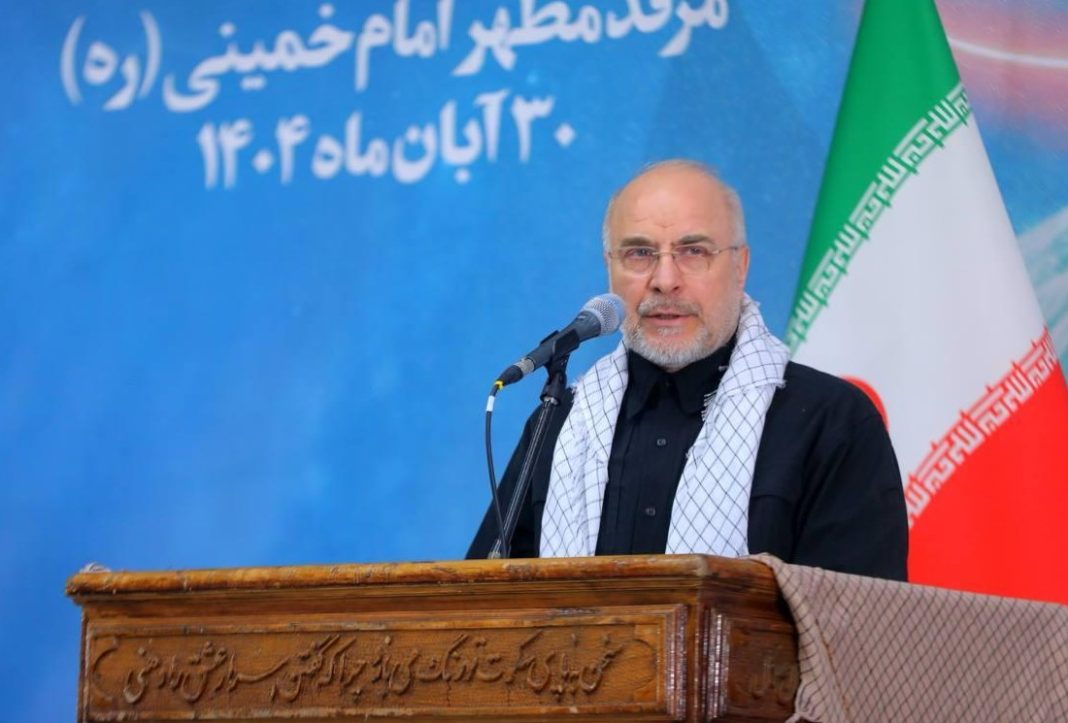
“If the Zionist regime were to stand alone against Iran, it would not endure for even a week,” he stated, adding that its prolonged resistance was due to support from the U.S. and NATO.
He further noted that even that assistance was insufficient, pushing Washington toward “direct involvement,” referring to the U.S. bombardment of Iran’s safeguarded nuclear facilities.
Qalibaf also emphasized that Iran’s true source of strength lies not only in its military arsenal but in its popular backing.
“We take pride in our missile capability, but our main power is the heart of our people,” he said. “If the people are with us, we are strong; without them, even missiles will not create real power.”
He described the war as a “window of opportunity,” stressing that Iran’s military response, combined with public resilience, thwarted foreign plans to destabilize and fragment the country.
Qalibaf also urged officials to rethink traditional approaches and pursue reforms to address domestic challenges.
