Monday, January 12, 2026
Home Blog Page 651

Senior aide says conveyed Ayatollah Khamenei’s message of support for resistance to Syria, Lebanon

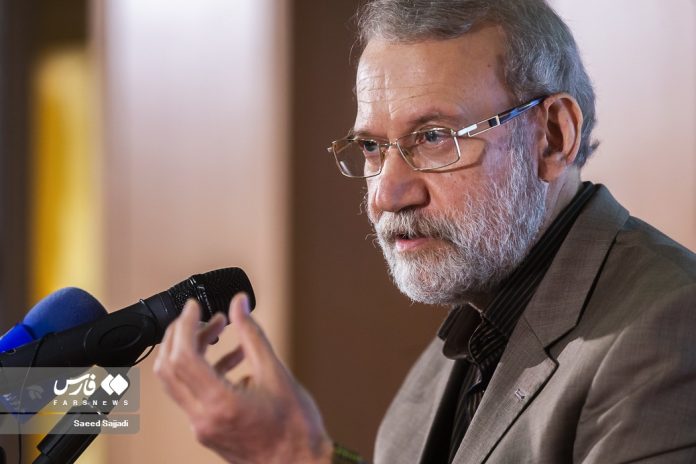
Ali Larijani

In an exclusive interview with Al-Mayadeen TV Channel, Larijani referred to his recent trip to Syria and Lebanon, stating that he conveyed the message to Bashar al-Assad and Nabih Berri, without going into details about its content.

Larijani added that he had traveled to the region as a sign of support for anti-Zionist resistance in Syria and Lebanon.

In response to a question regarding Israeli Prime Minister Netanyahu’s efforts to create a new Middle East, he noted that former US Secretary of State had previously sought this, spending a lot of money but ultimately fleeing the scene.

Larijani emphasized that what matters in drawing the maps for the new Middle East is the developments on the ground.

Regarding the Israeli regime’s raids on Damascus during his stay in the Syrian capital, Larijani described this as a cowardly act, stating that respectable governments do not behave this way and do not send messages by attacking residential buildings.

He stated that Iran has clear ties with the countries of the Resistance Axis, adding that the Islamic Republic will support any decision made by the Lebanese government and resistance in resolving the ongoing issues in the country.

Regarding the proposal put forward by the US ambassador to Lebanon aimed at ending the conflict in the country, Larijani said that the draft resolution has some positive points, but others need further study. This issue concerns the Lebanese government and Iran seeks to protect the people and the resistance of Lebanon.

The Iranian official also denied an Israeli TV claim that Iran imposes its will on Hezbollah’s decisions, stating that they are a seasoned organization and decide independently.

Iran reaffirms commitment to pursuing legal action regarding assassination of General Soleimani

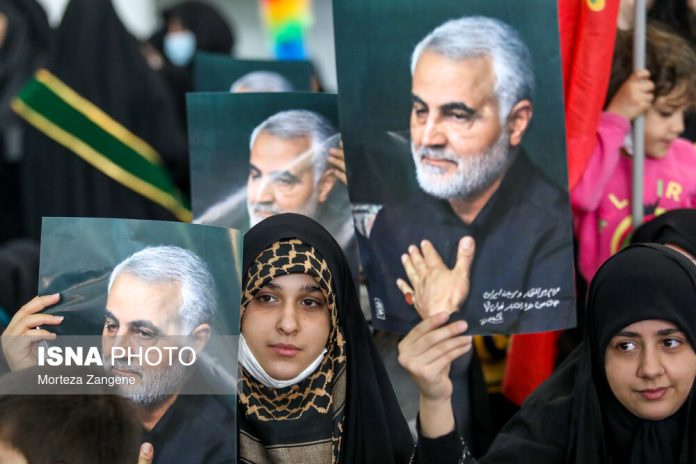
General Ghassem Soleimani

“The Islamic Republic of Iran has announced for years that it is pursuing the assassination case of General Soleimani through legal and judicial resources,” Iran’s permanent mission to the United Nations said on Friday.

The Iranian mission emphasized that it does not make any comment about the details of the official messages between the two countries.

In pursuing General Soleimani’s assassination case, Iran is completely committed to the recognized principles of international law, it added.

The Iranian mission made the announcement in response to a question regarding a Friday report by the Wall Street Journal. The report cited sources claiming that Iran had given “written assurances” to the Biden administration last month, indicating that it would not attempt to assassinate current US President-elect Donald Trump.

The “secret exchange” was meant to cool tensions between Tehran and Washington amid growing instability in the region, claimed the report.

The US has repeatedly accused Iran of attempting to assassinate American officials in retaliation for the assassination of General Soleimani, the commander of Iran’s Quds Force, along with Abu Mahdi al-Muhandis, the second-in-command of Iraq’s Popular Mobilization Units (PMU), and their companions. Tehran has denied Washington’s allegation.

The anti-terror commanders were assassinated in a US drone attack authorized by then-President Trump in Iraq in early January 2020.

EU has ‘convincing’ evidence of Chinese attack drone production for Russia: Report

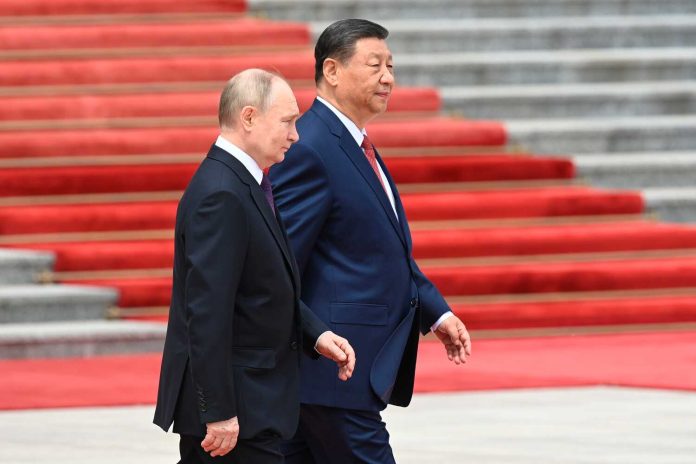
Putin Xi

The lethal aid in question reportedly refers to a Chinese firm’s role in attack drone production for Russia in its war against Ukraine. Reuters reported in late September citing European intelligence sources that Russia has secretly established a development and production program in China for attack drones to be used in the war.

“We have had reports from intelligence sources on the existence of a factory inside China producing drones which are shipped to Russia,” a senior EU official told Politico on Friday.

The official stated that the EU has yet to determine whether Beijing is aware of the firm’s drone production. China’s foreign ministry has previously denied knowledge of the project.

In a separate comment to FAZ, a EU diplomat acknowledged that while there is not any direct evidence to implicate Beijing in the drone production, it was difficult “to imagine that something like this would happen and the Chinese government wouldn’t know anything about it at all”.

China has positioned itself as neutral in the Russia-Ukraine war but has simultaneously deepened economic ties with Moscow and backed the country against Western sanctions.

Beijing has also emerged as one of Russia’s leading sources of dual-use goods that feed the Russian defense industry.

In an interview with ABC News aired in September, President Volodymyr Zelensky stated that Russia is using Chinese satellites to take pictures of Ukraine’s nuclear facilities for possible future attacks.

Although it is unclear what concrete steps the EU will take in response to the reported drone production, implementing additional sanction may be on the table for the European bloc — including adding more Chinese companies to a list of firms facing EU sanctions, an EU diplomat told Politico.

US President Joe Biden is also expected to discuss China’s support for Russia on the sidelines of the Asia-Pacific Economic Cooperation (APEC) Summit summit in Peru in mid-November.

According to the White House, Biden is expected to voice his “deep concern” regarding China’s “support for Russia’s war against Ukraine”.

IAEA head tours two key Iranian nuclear sites

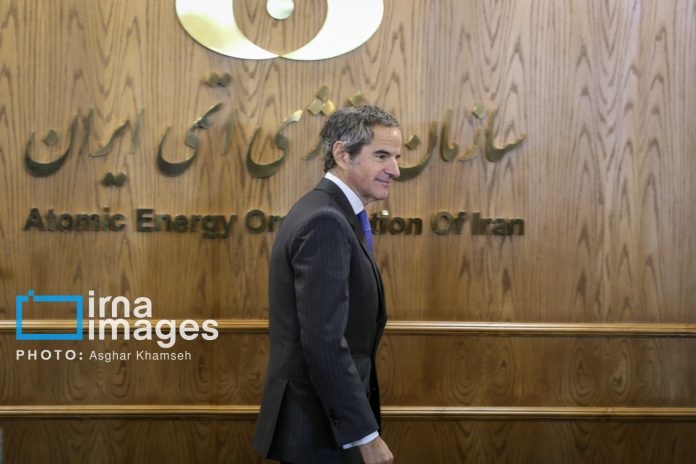
Rafael Grossi

During his visit on Friday, Grossi was accompanied by Behrouz Kamalvandi, Deputy Chairman of the Atomic Energy Organization of Iran (AEOI) for International, Legal and Parliamentary Affairs, and Kazem Gharibabadi, Iran’s Deputy Foreign Minister for Legal and International Affairs.

Heading a delegation, Grossi arrived in Tehran Wednesday night to continue interactions between Iran and the IAEA. The trip was in line with the joint statement issued during Grossi’s visit to Tehran on March 4, 2023.

In their joint statement, Tehran and the UN nuclear agency recognized that bilateral positive engagements can pave the way for wider agreements among state parties.

They also agreed that bilateral interactions will be carried out in a spirit of collaboration, and in full conformity with the competencies of the IAEA and the rights and obligations of Iran based on the comprehensive safeguards agreement.

On Thursday, Grossi held separate meetings with Iranian Foreign Minister Abbas Araghchi, the AEOI head Mohammad Eslami and President Masoud Pezeshkian.

“Tomorrow will be a very important step in my visit this time, since I am going to be visiting important facilities in Fordo and Natanz, which are also going to help me in having a full picture of the evolution of the program,” Grossi said alongside the Iranian foreign minister.

In a post on his X account following his “important and straightforward” talks with Grossi, Araghchi stated, “The ball is in the EU/E3 court.”

“Willing to negotiate based on our national interest & our inalienable rights, but NOT ready to negotiate under pressure and intimidation,” the top Iranian diplomat wrote.

Iran’s top nuclear chief later warned of an “immediate response” to any resolution by the UN nuclear agency against the country’s peaceful atomic program.

“Any resolution against Iran’s nuclear program will be met with Iran’s immediate response,” Eslami stated, emphasizing that the Islamic Republic, undeterred by pressure, will advance its nuclear activities within the framework of its national interests.

In 2015, Iran proved the peaceful nature of its nuclear program to the world by signing the multilateral nuclear agreement, formally known as the Joint Comprehensive Plan of Action (JCPOA) — with six world powers.

However, Washington’s unilateral withdrawal in 2018 and its subsequent re-imposition of sanctions against Tehran left the future of the deal in limbo.

In 2019, Iran started to roll back the limits it had accepted under the JCPOA after the other parties failed to live up to their commitments.

US denial of Gaza ‘genocide’ makes it complicit in Israeli war crimes: Hamas

Gaza War

In a statement, Hamas said: “The statements made by the US State Department, claiming they have not witnessed forced displacement in Gaza and dismissing the UN Committee’s report on genocide as baseless allegations, are a clear reflection of an aggressive US policy that is in line with the ongoing war crimes in Gaza, backed by American support.”

Hamas further emphasized: “The policy of the US administration denying the massacre, genocide, and ethnic cleansing in Gaza, and its continued political and military support for the occupying government, make it complicit in the war crimes.”

“US Secretary of State Antony Blinken and the Israeli war criminals are deluded if they think they can impose projects for the ‘post-war phase’ that undermine our national rights,” Hamas added.

The US government has denied reports of forced displacement, with Deputy Spokesperson Vedant Patel stating Thursday that they had not witnessed “any kind of specific forced displacement.”

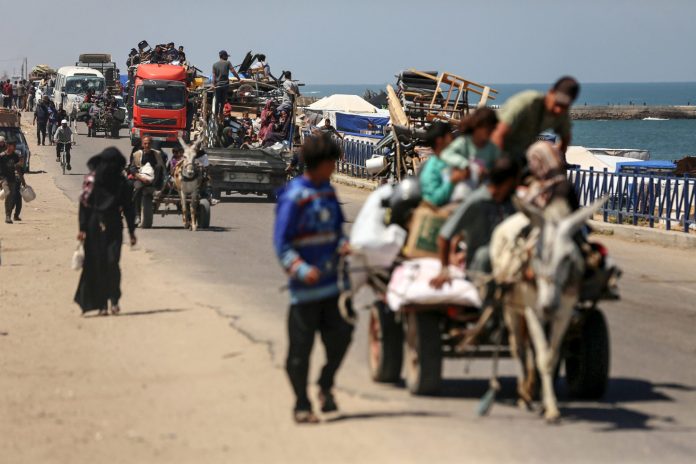
This claim directly contradicts reports from human rights organizations, which accuse Israel of forcibly displacing nearly 1.9 million Palestinians.

Patel also rejected findings by a UN committee that described Israeli military actions in Gaza as consistent with “genocide”.

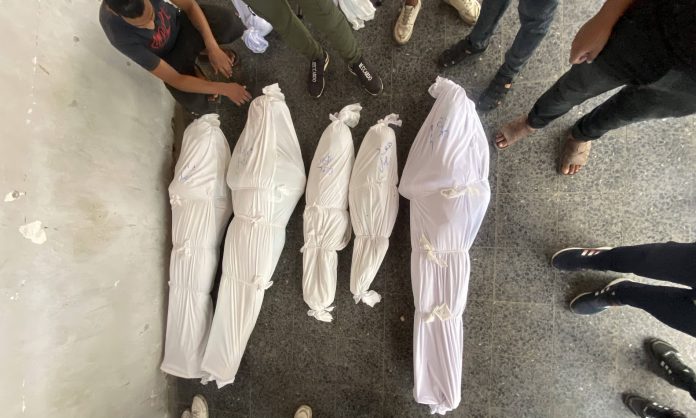
Israel has continued its devastating offensive against Gaza since a cross-border attack by Hamas on Oct. 7, 2023. The onslaught has killed more than 43,700 people and rendered the enclave almost uninhabitable.

Israel also faces a genocide case at the International Court of Justice for its deadly war on Gaza.

Israel’s actions in Gaza ‘consistent with characteristics of genocide’: UN committee

Gaza War

The special committee comprised three member states – Malaysia, Senegal and Sri Lanka.

The report, released amid ongoing scrutiny of Israel’s military response to the October 7 Hamas attack, highlights the difficult conditions facing Gaza’s 2.3 million residents, particularly in terms of restricted access to food, water, medical care and shelter.

“The policies and practices of Israel during the reporting period are consistent with the characteristics of genocide,” the report states, urging immediate steps to be taken to protect civilian lives.

The special committee also concluded that Israel is committing several violations of international law, and not just in Gaza.

“Civilians have been indiscriminately and disproportionally killed en masse in Gaza, while in the occupied West Bank, including East Jerusalem, Israeli colonial settlers, military and security personnel have continued to violate human rights and humanitarian law with impunity,” its report said.

The committee added that Israeli government and military officials must be held accountable, including for using dehumanising language and inciting violence.

The report goes further than just actions taken by Israel during its devastating war on Gaza.

The committee accuses Israel of “discriminatory” legislation and measures that maintain a near-complete separation of Palestinians from Israeli settlers, in breach of article 3 on racial segregation and apartheid under the International Convention on the Elimination of All Forms of Racial Discrimination.

Israel’s violations of UN Security Council resolutions and orders of the International Court of Justice (ICJ) are “weakening” the international rules-based order, the committee said.

The report recommends that UN member states exercise their leverage to stop Israel from practices and policies that violate Palestinian human rights; halt all offensive arms transfers; hold Israelis accountable and review financial policies that allow religious and charitable organisations from funding activities in Israel.

The report comes at a time when international legal actions are being pursued against Israel.

In the wake of the October 2023 attack, South Africa filed a case at the International Court of Justice (ICJ), accusing Israel of committing genocide.

This case marks only the second instance in which a state has sought to bring another to court under the Genocide Convention, following the Gambia’s case against Myanmar in 2019, accusing it of genocide against the Rohingya population.

Israel recently moved to sever ties with the United Nations Relief and Works Agency for Palestine Refugees (UNRWA), which has been the primary provider of humanitarian aid to Palestinians in Gaza and the West Bank.

Israeli lawmakers cited allegations of Hamas infiltration within Unrwa as the reason for this decision, prompting concerns from UN officials that the move could further hinder relief efforts.

The report urges international bodies to increase support for UNRWA, both politically and financially, as the agency faces growing challenges in delivering vital services to the Palestinian population.

“Since the escalation of the conflict, Israeli officials have publicly supported policies depriving civilians of food, water, and fuel, indicating their intent to instrumentalize the provision of basic necessities,” the report concludes.

The UN’s findings are corroborated by the investigation from the ICJ brought by South Africa’s case.

In response to the case, the ICJ has ordered Israel to take interim steps to prevent genocide, ensure humanitarian aid reaches Gaza and preserve evidence of potential genocide.

However, Israel has rejected the court’s ruling, with Prime Minister Benjamin Netanyahu asserting that Israel’s commitment to international law was “unwavering”.

Lebanese officials study US ceasefire plan

Lebanon War

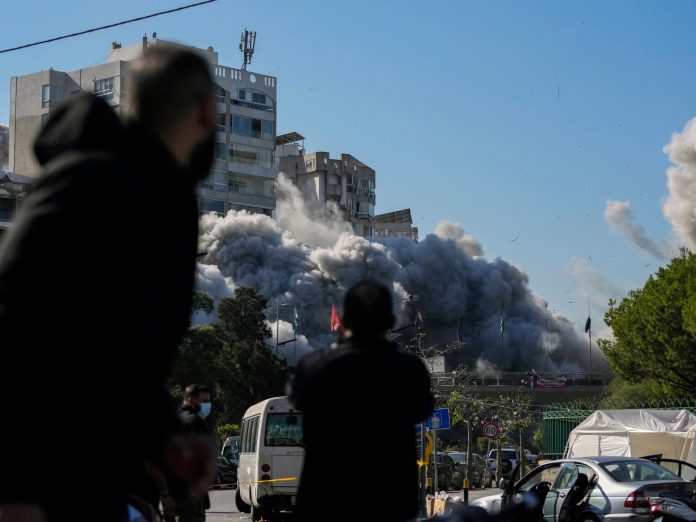
Israeli air strikes flattened five buildings in the Lebanese capital’s southern suburbs on Friday.

Israel’s military escalated its attacks on Lebanon in late September after almost a year of cross-border hostilities with the Lebanese armed group Hezbollah in parallel with the Gaza war.

Israel’s attacks on Lebanon have forced more than one million Lebanese to flee their homes, igniting a humanitarian crisis.

It has dealt Hezbollah serious blows, killing its leader Seyyed Hassan Nasrallah and other commanders. Hezbollah has kept up rocket attacks into Israel and its fighters have been battling Israeli soldiers in the south.

Diplomacy attempting to reach a ceasefire has shown tentative signs of progress this week.

The Reuters news agency reported on Thursday that the US ambassador to Lebanon had presented a draft ceasefire proposal to Lebanon’s parliament speaker Nabih Berri, citing two senior political sources.

The AFP news agency reported that senior Lebanese officials are reviewing the US proposal.

A senior Iranian official said on Friday that Iran would back any decision made by Lebanon in truce talks, signalling Tehran wants to see an end to the conflict.

Asked at a news conference whether he had come to Beirut to undermine the US truce plan, Ali Larijani, a senior advisor to Iran’s leader Ayatollah Seyyed Ali Khamenei, said, “We are not looking to sabotage anything. We are after a solution to the problems.”

“We support in all circumstances the Lebanese government. Those who are disrupting are Netanyahu and his people,” Larijani added, referring to Israeli Prime Minister Benjamin Netanyahu.

World powers have announced a Lebanon ceasefire must be based on United Nations Security Council Resolution 1701, which ended a previous 2006 war between Hezbollah and Israel. Its terms require Hezbollah to move weapons and fighters north of the Litani River, which runs some 20km (30 miles) north of the border.

Israel has demanded the freedom to attack, should Hezbollah violate any agreement – a demand that Lebanon has rejected.

Nearly 3,400 people have been killed and 14,500 wounded in Israeli attacks on Lebanon since October 2023.

Saudi Arabia scales back Neom plans to focus on sports

Saudi Arabia Neom

The $500bn new Saudi project – which organisers claim will be 33 times the size of New York City – was planned to include a 170km-long city built in a straight line (known as The Line), an eight-sided city that floats on water, and a ski resort with a folded vertical village, amongst other grandiose schemes.

However, rising costs and fast-approaching deadlines have forced Saudi authorities to rein in some of the plans, according to three sources cited by Reuters.

“When the [Neom] project was first pitched as an idea, costs were $500bn. However, The Line alone was going to cost over a trillion which was why it’s been scaled back,” a consultant with knowledge of the matter said.

One of the sources added that work on The Line was now solely focused on the completion of 2.4km stretch that would include a stadium expected to host the final of the 2034 World Cup.

The kingdom is the only country bidding for FIFA’s 2034 football tournament, and is expected to be confirmed as hosts during a vote next month.

Saudi Arabia announced in August that Neom Stadium – one of 15 stadiums to be used during the 2034 competion – would be built within The Line and would stand 350 metres above the ground.

“The Line changed its plans [in] September and October to integrate the stadium which brought utility to the project because it will be used for the World Cup,” one of the sources told Reuters.

The same source stated that Neom had been “scaled down and broken into chunks”, adding that the planned mountain resort Trojena was a priority, as it is set to host the 2029 Asian Winter Games.

It comes days after the unexpected departure of Nadhmi al-Nasr as the chief executive of Neom.

Two sources familiar with the matter told Reuters the departure was partly due to an inability to deliver key goals.

Nasr had earned a chilling reputation managing Neom. He reportedly bragged that he drove everyone “like a slave”, adding: “When they drop down dead, I celebrate. That’s how I do my projects.”

A documentary released last month, Kingdom Uncovered: Inside Saudi Arabia, found that labourers working on The Line were being forced to work gruelling hours far beyond legal limits.

According to an undercover reporter, workers were regularly working longer than the 60 hours maximum, including overtime, prescribed each week under Saudi law.

Many labourers were also forced to take an unpaid, three-hour bus commute to get to the desert site and back on top of their long shift, which left them with around four hours to sleep.

The Neom megacity is a centrepiece of Saudi Crown Prince Mohammed bin Salman’s Vision 2030 strategy to move the Gulf kingdom away from oil reliance and enhance its reputation on the global stage.

In May, Middle East Eye reported that Saudi security officers were ordered to use lethal force to kill people who resisted eviction from areas earmarked for the city, according to a former Saudi intelligence officer.

The Saudi government has been accused of forcibly displacing members of the Howeitat tribe, who have lived for centuries in the region of Tabuk, to make way for Neom.

At least 47 members of the tribe have been arrested or detained for resisting eviction, including five who have been sentenced to death, according to a report by the UK-based Alqst rights group.

Britain threatened with court-ordered ban on weapons exports to Israel

Israel Fighter Jet

The case, brought by the UK-based Global Legal Action Network (Glan) and human rights group Al-Haq against the business secretary, is scheduled to resume in the High Court on Monday.

When the challenge was launched last December, the groups argued that the UK should ban all arms exports due to a clear risk that Israel might use British-made weapons to violate international humanitarian law in the Gaza Strip.

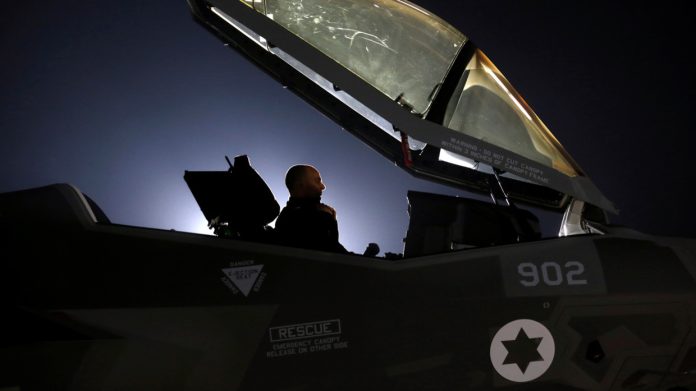
This September, after the newly elected Labour government suspended 30 arms export licences to Israel after a review showed a clear risk they could be used in such violations, the focus of the case shifted to UK-manufactured F-35 components, which can still be exported through third countries, with Israel as the final destination.

Arms control experts and researchers say Israel has relied on F-35s for a high volume of air strikes in Gaza and, more recently, in Lebanon over the past 13 months. UK-made parts make up 15 percent of the jets.

The government announced it cannot suspend components exported through third countries without undermining the global F-35 programme, saying that tracking parts across the programme’s complex, 20-plus country supply chain is difficult.

Foreign Secretary David Lammy has defended the decision, recently telling MPs that restricting the programme could have serious unintended consequences globally.

“I am not prepared to ground planes that are saving lives in other theatres, which is why we made this decision, and I stand by it. It was the right decision,” he stated on 29 October.

Glan and Al-Haq argue that the government has not properly reviewed its decision to exempt the parts from indirect export, nor developed red lines about what, if anything, would compell it to suspend them.

Had a thorough review been conducted, the groups say it would have determined that suspending all exports, directly or indirectly, was the only lawful option.

Such an assessment, they argue, is particularly critical given recent developments in northern Gaza, where 15 leaders of UN and humanitarian agencies warned on 1 November that the entire population “is at imminent risk of dying from disease, famine and violence”.

Earlier this week, lawyers for the groups gave the government until 4pm on Friday to reverse course on its F-35 “carve-out”.

If it does not comply, they say will seek a mandatory order from a judge which, if granted, would enforce a full suspension of UK arms exports to Israel as an investigation was carried out.

Charlotte Andrews-Briscoe, a lawyer with Glan, told Middle East Eye on Friday that they had imposed the deadline “due the the extreme urgency of the situation”.

She noted the General’s Plan, an Israeli strategy to ethnically cleanse northern Gaza which soldiers have been reported as saying is being carried out, and Israeli air strikes earlier this week that killed at least 40 people.

“British-made F-35s are playing a crucial role in that extermination campaign so that’s why the short deadline,” Andrews-Briscoe added.

The Department for Business and Trade declined to comment on the deadline on Friday, citing the ongoing legal case.

A Foreign Office spokesperson stated: “We have suspended relevant export licences to Israel for use in military operations in the Gaza conflict, following a review which concluded there is a clear risk that UK export items might be used to commit or facilitate serious violations of international humanitarian law.”

“We would not comment on ongoing or potential future legal proceedings.”

Amnesty and Human Rights Watch (HRW), which have intervened in the case and provided evidence to the government and the High Court of Israel’s lack of commitment to comply with their obligations under international humanitarian law, said on Friday that the government was long overdue to ban all arms exports to Israel.

“The Government is in court defending the indefensible,” Yasmine Ahmed, HRW’s UK director, said, adding, “International law is not discretionary and failing to adhere to it consistently not only risks the lives of innocent civilians, but weakens the entire system, not just in the Middle East but in Ukraine, Sudan and every other conflict.”

Sacha Deshmukh, Amnesty International UK’s chief executive, said: “It should never have required a legal challenge to the Government over its arms to Israel policy, but if ministers won’t uphold international law of their own accord then there was little choice.

“Evidence of Israeli war crimes and other violations in Gaza and the West Bank is overwhelming. All UK arms transfers to Israel need to be halted immediately – with no exemptions and no loopholes,” Deshmukh added.

Monday’s hearing at the Royal Courts of Justice in London is scheduled to begin at 10:30 am.

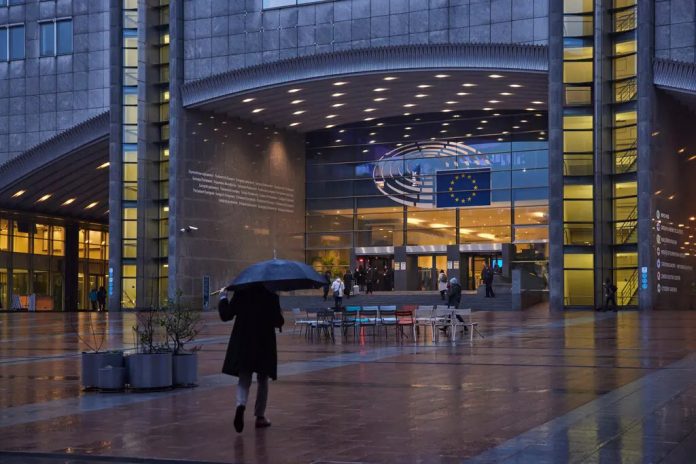
EU’s top diplomat proposes suspension of ‘political dialogue with Israel’, citing Gaza, Lebanon wars

European Parliament

In a blog post, Borrell highlighted that in other cases of violations of international law, the EU had imposed numerous sanctions, but that “until now Israel has been spared from any meaningful consequences”.

“This has to change. This is why I have proposed an import ban on illegal settlement products, based on the recent advisory opinion of the International Court of Justice, similar to the existing import ban on products from occupied Ukrainian territories – because even-handedness is the lynchpin of Europe’s credibility,” he stressed.

The Foreign Affairs Council will discusses the proposed measures next week.

Israel launched the war on Gaza on October 7, 2023, after the Palestinian resistance movement Hamas waged the surprise Operation Al-Aqsa Storm against the occupying entity in response to the Israeli regime’s decades-long campaign of bloodletting and devastation against Palestinians.

The regime’s bloody onslaught on Gaza has so far killed more than 43,730 Palestinians, mostly women and children, and injured over 103,000 others. Thousands more are also missing and presumed dead under rubble.

Israel launched a massive air campaign in late September in Lebanon against what it claims are Hezbollah targets in an escalation in a year of cross-border warfare between Israel and the group since the start of Israel’s brutal assault on Gaza.

More than 3,300 people have been killed and over 14,500 injured in Israeli aggression since last October, according to Lebanese health authorities.

Israel expanded the conflict by launching an incursion into southern Lebanon in early October.