Wednesday, January 7, 2026
Home Blog Page 5141

Velayati and Rinkevich In the meeting

Iran - Litvia - Velayati and Rinkevich meeting


Iran is keen to enhance its relations with the European Union member states including Latvia, Velayati and Rinkevich In the meeting.

Rinkevich, for his part, welcomed development of bilateral ties with Tehran.

In the meeting, Velayati and Rinkevich also discussed the latest regional and international developments.

Rinkevich is the first senior Latvian official to visit Iran since independence of that country in early 1990s.

Latvia, Estonia and Lithuania are the Baltic group of states. Latvia is also a member of the European Union (EU) and the North Atlantic Treaty Organization (NATO). It joined euro countries in 2014.

Islamic Republic News Agency

Iran seeks to extend ties with Latvia

zarif - Edgar Rinkevich - Iran - letvia

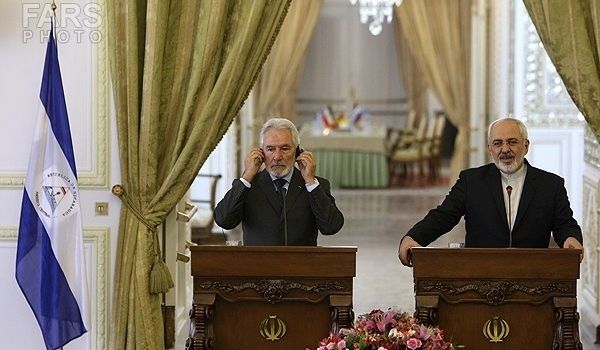
Mohamamd Javad Zarif attending a joint press conference with Lativian counterpart Edgar Rinkevich who is in Tehran heading a delegation to Iran said that Islamic Republic of Iran seeks expansion of ties with Latvia.

“I am pleased to have Latvian foreign minister in Tehran and to talk to him, who is in his first visit to the country,” Zarif told in the press conference. “Their non-resident ambassador had submitted his credentials which were a prelude to expansion of political, economic and financial relations,” added Zarif, who believed that Latvia was EU’s cultural capital.

Zarif also pointed to the subjects in his meeting with Latvian delegation as being “a group of businessmen has also come along with Mr. foreign minister and we discussed the grounds for economic cooperation.”

“Another subject was expansion of Iran-the EU relations, with the intention being improved bilateral relations with the EU,” said Zarif, “Afghanistan, Syria, Ukraine, and Iraq were also discussed with Latvian counterpart.”

“As you know, Latvia will be president of the EU beginning in 2015 and it is important to us in terms of developing easy relations with the EU,” Zarif asserted.

Latvia is among the first former USSR republics which are EU and NATO member. The country joined the Euro zone in early 2014. It will be EU president by the beginning of 2015.

US still has a positive view of Maleki

Dr. Ahmed Chalabi
Dr. Ahmed Chalabi


The Iraqi elections will be held in this country in less than two weeks. These elections could determine Iraq’s political fate, deciding the country’s president, prime minister, and head of parliament. The position of prime minister, the country’s most executive one, is the one most sought after. One of current Iraqi Prime Minister Noori al-Maleki’s most serious rivals is Dr. Ahmed Chalabi, a prominent Iraqi politician and one who has been called the architect of the new Iraq. An MIT graduate, he is currently a part of the Citizen Coalition in these elections. Iranian Diplomacy recently spoke with Dr. Chalabi about the Iraqi elections and the situation in this country today.


Iraq’s political scene is very tumultuous these days. The Iraqis are preparing themselves for the upcoming elections and the campaign hype is very high. How would you assess the political scene in Iraq today?

These are Iraq’s golden days. Although there are numerous problems and we are not happy with the current situation inside the country, there is an excitement about the election and the people are preparing themselves to participate in a decisive election. Following years of dictatorship by the Ba’thist regime and Iraq’s involvement in futile wars which led to oppression and other major problems for the people, now the situation is more desirable in many aspects. Despite the shortcomings, the present situation is much better than the past. Although numerous threats and different problems still exist and the security and stability of the country are threatened by some opportunistic terrorist groups, this is a golden opportunity for us to build our own future and the future for the next generations. Anyone who believes in Iraq, the people and the regime and seeks to achieve democratic ideals and a better future for himself and his children and to reconstruct the country must comprehend that he must participate in the election and the political process of the country so that the country would enter the right path of major reconstruction. Iraq must progress through a well-studied program and be promoted to a better status. We must be able to move forward based on long-term programs and the existing situation and act in a way to not only reconstruct ourselves but to also impact the future of the region.

Dr. Chalabi, you were one of the critics of the Maleki administration in the past. But these days we do not hear many criticisms from you. Could you frankly express your opinion about the policies of Mr. Noori al-Maleki?

When Mr. Maleki followed an improper path, I expressed my criticisms against his policies. But when he was moving in the right path, I, along with many others, supported him. The statements that I have made with regard to different issues can be found and referred to. Right now the policies of Mr. Maleki have unfortunately failed. He has not succeeded in administering the country. It is very unfortunate that he has not left any solution for his failed policies. Perhaps the clearest approach was expressed by the Shiite Marja’ who has explicitly mentioned his failures. Unfortunately the policies of Mr. Maleki are individualistic. His viewpoint is limited to a defined framework and do not allow other outlooks to be presented about the situation of the country.

Do you assume that Mr. Maleki would be able to win this election?

The fact is that I do not expect the people to leave the destiny of their country to such a person who has not been successful in running the country in the past. I know that many people who use Mr. Maleki will not be happy with my statement but this is a fact that cannot be ignored.

Is it possible that you might replace Mr. Maleki?

Anything is possible but I cannot make predictions. It is the people who will determine the next prime minister, as they also elect the president and the head of the parliament. I cannot make any predictions and whatever I say today would be unrealistic and hasty.

What should, in your opinion, the priorities of the next Iraqi administration be?

The response is very simple. Iraq is a country which suffers from poverty, unemployment and a shortage of housing. These problems are directly related to people’s lives, thus, they must be placed among the priorities of the next administration. Any government would be duty bound to pursue these matters to strengthen the interdependency of the people with their country and also the relations between the people and the government. The new administration must also redefine its economic policies to improve the unsuitable present situation, especially in the area of reconstruction and creation of industries which is the introduction to any progress. Today Iraq relies only on the oil incomes, and this is very unfortunate. In the Citizen Coalition, we have designed an inclusive program to which you could refer.

You had said in the past that sectarian division in positions would not succeed in Iraq and that political participation must be pursued. How would this be possible while sectarian tensions in Iraq are at their climax? Every day, many Iraqis, whether Shiite or Sunni, lose their lives due to the same sectarian outlook. Don’t you think that under such conditions, sectarian division would happen anyway?

Yes this is true. Unfortunately our country is faced with sectarian divisions, but this is wrong. The country must not be administered based on sectarian divisions. The results of such an approach can be seen now. We support the government of political majority separate from these sectarian divisions; a government which is based on patriotism and is established on the basis of expertise and not friendship and partisanship. We support powerful parliamentary opposition to supervise the activities of the government. Many things could be done through this approach in the path of the progress of the country. Many policies of the government have now failed. The activities of the parliament are not desirable. It could be said that the parliament has not had a good track record either. In the future parliament, subcommittees must be formed with the presence of the representatives of different factions to accurately follow the economic, political, social and cultural issues of the country. Financial corruption must also be seriously fought against. Unfortunately, no measure has, hitherto, been taken in this regard or, if it has, it was with the help of arms. When there is no practical framework for the fight against corruption, the simplest path which is resorting to arms would be pursued. But this is not the right approach and has not been successful. We must have a defined framework for all issues including the fight against corruption, a corruption which has infiltrated all aspects of the government and seriously impacted the entire situation of the country.

How would you, as an economist who has been successful in economic activities, assess the future of Iraq’s economy?

I predict a very good future provided that the country is administered by a group of economic experts. In that case, we can then think about the reconstruction of Iraq and be hopeful about its future.

The Americans have played a significant role in the establishment of the new government in Iraq; from their military attack to supporting the reelection of Noori al-Maleki in 2009. How would you evaluate the US’ policies, especially those of Barack Obama, with regard to Iraq? Is the present situation acceptable for them?

The White House is dissatisfied with the actions of the Iraqi government particularly with regard to its failure in dealing with security threats which has led to the killing of thousands of Iraqis and also regarding the expanded financial corruption and lack of economic and construction projects despite the fact that Iraq’s income during the past eight years has exceeded 800 billion dollars. This amount could certainly help to reconstruct the country. The US administration is not satisfied with the present situation.

Would the US administration support Maleki again in this election?

Despite all the criticisms against Noori al-Maleki and his administration and the many shortcomings of the country, the US still has a positive view of him. One of their reasons is that there is no one who could seriously compete with him. Nevertheless, the US states in the end that everything would be related to the outcome of the elections. One must wait and see what the results of the election would be. Everyone must accept the outcome of the elections.

Interview by: Ali Mousavi Khalkhali – April 22, 2014
Irdiplomacy.ir

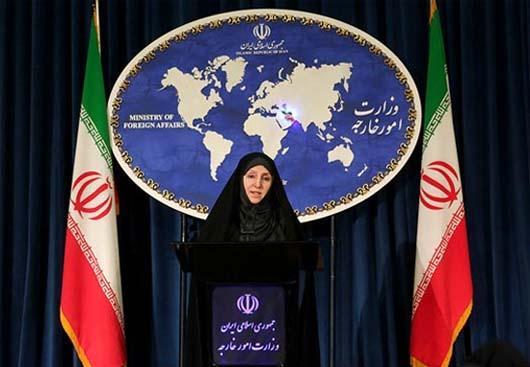
Official Refutes Bahrain’s Allegations against Iran

Iran Summons Swiss Envoy over US Accusations
Iran foreign ministry


On Sunday, a Bahraini court sentenced 12 men to life in prison on a charge of spying, receiving training from Iran and processing weapons and explosives. The court has also sentenced two others to 15 years behind bars.

In the meantime, an informed official in Iran’s foreign ministry, speaking on the condition of anonymity, rejected the trumped-up charges against Tehran, saying the allegations are baseless.

The official also called on the Bahraini authorities to fulfill the civil demands of their own nation instead of projecting and raising allegations against other sides.

He further urged the Manama regime to refrain from adopting security and ethnic approaches in that country and take confidence-building measures to pave the way for serious dialogs.

The recent court ruling in Bahrain marks the latest in a series of harsh sentences handed down to protesters in the Persian Gulf nation.

On April 14, a court in Bahrain sentenced eleven anti-regime protesters to five years in prison for taking part in an unauthorized demonstration in a village, south of the capital Manama last year. The prosecution also convicted the Bahrainis of assaulting police during the rally.


Tasnim News Agency

Iran Exporting Tractors to 13 Countries

Tractors made in Iran


Abolfath Ebrahimi told reporters on Tuesday that tractors manufactured in Iran are exported to 13 countries.

He said his company has manufactured a total number of 22000 tractors.

Ebrahimi noted that the domestic market is the first priority for selling the company’s products.

According to Ebrahimi, the Iranian Tractor Manufacturing Industrial Group is the largest producer of agricultural equipment in the Middle East and has tractor assembly plants in several other countries such as Venezuela, Tajikistan and Zimbabwe.

The first tractor manufacturing plants in Iran was established more than 40 years ago and now the country is a major manufacturer and exporter of tractors.


Tasnim News Agency

MP suggests Iran, Powers change negotiation venue

mohammad saleh jokar


A member of Iran’s Parliamentary  National Security and Foreign Policy Commission told Mehr News that since US denied a visa for the Iran’s new envoy to UN, Abutalebi, “ we can suggest the group P5+1 to change the place for the negotiations.”

Mohammad Saleh Jokar said that “Iran condemns US refusal to issue a visa of its envoy and in a reaction suggests that Iran and Powers change place of negotiations.”

Next round of Iran, Powers negotiations will be held on the sidelines of a meeting for revision in NPT in New York.

Envoy: Iran-Turkey trade ceiling set at $16bn

iran-turkey-flags
iran-turkey-flags


Bigdeli told reporters that the trade volume stood at $1.2 billion in the first three months of 2014 based on the available monthly reports.

He said the figure is expected to reach $20 billion once a preferential trade agreement is signed and enforced by Iran and Turkey.

He added that the Iranian government plans to enter into talks with the Turkish party to set up a border terminal in the region.


Islamic Republic News Agency

MP: Islamic, western human rights differ basically

Ali Motahari
Ali Motahari

Independence and freedom, which were two important mottoes in the Islamic Revolution and were later on included in the Constitution of the Islamic Republic, set the foundations for the citizenship rights and justice in Iran, said the Tehran constituency Parliament Member Ali Motahhari in an address for Isfahan Industrial University students, titled The Nationˈs Rights.He said that the motto of the French Revolution was freedom, the motto of the Russian Revolution was justice, and the justice and freedom demanded in our revolution were based on the Islamic foundations, which definitely differ with the freedom and justice in the West.

Referring to some of the articles of the Iranian Constitution on the citizensˈ civil rights, he said that any type of inquisition, eavesdropping, revealing the peopleˈs private communications, illegal banishing, torture to gain confessions, and the like are forbidden in Iran, according to the IRI Constitution.

The MP elsewhere in his address focused on some of the differences in Islamˈs cognition of the human being versus the western conception of the humankind, arguing, ˈAlthough the international Charter of the Human Rights is acceptable for us, but there are fundamental differences in details between these two mentalities.

He said that it is wrong to assume that the entire mentalities and beliefs are based on thoughts, because there are some mentalities which are inherited from the fathers and ancestors, or pursued due to following the path of a majority, not because of sound reasoning and thoughtful deductions.

ˈTherefore, freedom for all mentalities is not permitted, because in the way of life of the prophets (p) there are their campaigns against the false beliefs, such as idol worshipping,ˈ he said.

The Tehran constituency MP added, ˈThe divine prophets never said that the beliefs of the whole human beings are respectable, but in the Declaration of the Human Rights the beliefs of the entire human beings, even the false ones among them, are regarded as respectable.ˈ

Motahhari said that the human nature from the Islamic and the western viewpoints differ, adding, ˈIn the western mentality any creature with two legs that walks straight is a human being, with a fixed and respectable entity.ˈ

He added, ˈIn Islam, though, the entity of the human being differs, because the human beings are considered with their free wills and rights to choose.ˈ

Motahhari said that such Islamic verdicts as punishments and execution are based on related philosophical foundations, adding, ˈFor instance, a criminal human being for whom killing the others is a common practice can annihilate the others easily and the continuation of his life poses a threat for the society. He therefore must be executed.ˈ

The Iranian lawmaker referred to the roots of the western liberties, saying, ˈThe basis for the western types of freedoms should be sought in the Middle Ages and the extremism observed by the heads of the (Catholic) Church; therefore, the human beings who were trying to escape from that kind of extremism were fallen preys to another type of radicalism.ˈ

Motahhari said that kindling the flames of war between the religion and rationalism, between having faith and loving the sciences, faith and love of wealth, faith and love of positions, or faith and sexual desires were among the other mistakes of the church during the Middle Ages.

ˈThe church in those days considered marriage as a non-sanctified practice and remaining unmarried as a holy status, while in Islam the opposite has always been true,ˈ he said.

He referred to his late father Martyr Morteza Motahhariˈs viewpoints on freedom and his farsightedness and deep insight in that respect, arguing, ˈMartyr Motahhari believed in an Islamic country even the non-Islamic parties can have activities, on condition that they should not act pretentiously, so that the people could freely choose their paths.ˈ

Zarif: Iran, Russia constantly consulting on various issues

Lavrov - Zarif
Iran and russia PM

ˈTeheran and Moscow have regular consultations on issues such as our countryˈs nuclear program, the ongoing Muddle East developments, and the current status in Syria,ˈ said Mohammad-Javad Zarif moments after his arrival in Moscow in a meeting with the press.

Referring to his schedule for attending the Tuesday Caspian Sea Littoral States Foreign Ministers Conference, he said, ˈThe discussions on the Caspian Sea, as a shared water body among its littoral countries are among the significant issues pursued as of many years ago.ˈ

He said that the expertsˈ level meeting of the Caspian Sea littoral states was held on Monday and the Tuesday ministerial meeting, too, will focus on preparing the ground for the Caspian Sea Littoral States Summit Meeting in the fall season of 2014 in Russia.

ˈOur colleagues have held several meetings in the course of the past few months on the legal regime of the Caspian Sea and they have achieved important results,ˈ he said.

The Iranian top diplomat hoped that the meetings on the status of the Caspian Sea would improve the conditions for the peoples living by the coasts of that water body.

Pointing to his planned visit with his Russian counterpart Sergei Lavrov on the sidelines of the 3rd Caspian Sea Littoral States Foreign Ministers Conference, Zarif said, ˈWe also have constant consultations with the foreign ministers of the other littoral states of the Caspian Sea, which will continue tomorrow.ˈ

He said that such issues as Syria and Afghanistan were top on the agenda of the Iran-Russia consultations, adding, ˈAfghanistan, keeping in mind the recent presidential elections there, has high significance in our consultations.ˈ

ˈWe also regularly consult with the Russian officials on the Syrian developments and harmonize our stands in that respect,ˈ he said.

Zarif said that the efforts aimed at peace making as well as the campaign against terrorism are high on agenda of Iran-Russia shared interests in Syria.

After arrival in Moscowˈs Vnukovo Airport, Zarif was officially welcomed by the Russian Foreign Ministry officials, the Iranian ambassador to the Russian Federation, and the heads of the Iranian organizations in Moscow.

During his two-day visit of Moscow the Iranian top diplomat is scheduled to meet his Russian counterpart Sergei Lavrov tomorrow (on Tuesday) on the sidelines of the Caspian Sea Littoral States Conference.

Among the issues of high importance in Zarif-Lavrov meeting there will be the most significant developments in bilateral ties, the latest status of the Caspian Sea legal regime, international and regional developments, such as the aggravating status in Ukraine and the resolving crisis in Syria.

The Iranian foreign minister is meanwhile scheduled to have a meeting with the Iranians residing in Russia in the residence of the Iranian ambassador in Moscow on Tuesday.

Zarif and Lavrov will hold a joint press conference at the end of the Iranian foreign ministerˈs visit of the Russian capital city.

The Moscow 3rd Caspian Sea Littoral States Foreign Ministers Conference, comprised of the top diplomats of Iran, Russia, Turkmenistan, Azerbaijan, and Kazakhstan and will be held in Moscow on Tuesday.

Atop the agenda of the Moscow conference there is preparing the draft of the 4th Caspian Sea Littoral States Conference communiqué, which is scheduled for September 2014 in Astrakhan, Russia.

The preliminary meeting of the legal affairs experts of the 5 Caspian Sea littoral countries was held today (on Monday) at Moscow World Trade Center and the head of the Iranian delegation in it was Deputy Foreign Minister for Asian and Pacific Affairs Ebrahim Rahimpour.

This is Zarifˈs second visit of Moscow as the Iranian foreign minister. His first visit was in March, 2014.

Rahimpour had earlier on Monday told IRNA that the Caspian Sea legal regime has not been finalized yet by the littoral states.

Talking to IRNA, he noted that despite the constructive talks among Caspian Sea littoral states, resolving the legal status of the world’s largest inland sea needs more discussions.

Ministerial meeting of the Caspian Sea littoral states aims to prepare the ground for the fourth Caspian summit due to be held in Astrakhan in autumn, the deputy foreign minister added.

He noted that foreign ministers of the Caspian Sea littoral states will discuss the program and agenda of the summit as well as the final document.

The issue of the Caspian Sea’s legal regime has gained importance following the breakup of the USSR and the emergence of newly independent states.

The meeting will also analyze the work done since the last Caspian summit in Baku in 2010.

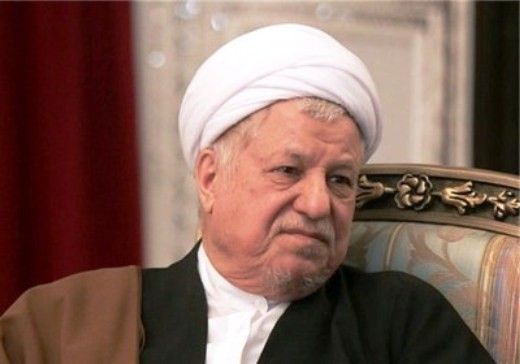
Rafsanjani: New criterion for cooperation among Muslim World should be defined

rafsanjani - Abdur-Rahman bin Gharman al-Shahri
rafsanjani - Abdur-Rahman bin Gharman al-Shahrirafsanjani - Abdur-Rahman bin Gharman al-Shahri


Rafsanjani made the remarks in a meeting with the new Saudi Ambassador to Tehran Abdur-Rahman bin Gharman al-Shahri.

Referring to the status of Iran and Saudi Arabia in regional developments, Rafsanjani said ambassadors play vital role on expansion of relations and cooperation between governments.

Rafsanjani highlighted the significant roles of ambassadors in bringing world nations much closer.

He wished the Saudi ambassador to be successful during his tenure in Iran.

Close cooperation and coordination between Iran and Saudi Arabia in dealing with regional developments as well as those in the Muslim World will deprive the intruders of sowing discord among Muslim sects, he said.

If Ulema were to resolve differences, the hardliners and extremists could not kill the people and divide the Islamic states which is to the benefit of arrogant powers, he said.

The Muslim World with a population over 1.7 billion in some 60 independent states with huge access to sources of energy and strategic locations with full of religious and cultural commonalties fail to make use of their capabilities in rendering services to the World Muslims, he said.

Expansion of cooperation and relations between Iran and Saudi Arabia would meet mutual interests and help improve the status of other Islamic countries, he said.

The new Saudi ambassador, for his part, conveyed the special greetings of Saudi King and Crown Prince to Rafsanjani and said the Saudi officials and its people attach importance to your status and hereby I would like to re-extend the invitation of Saudi King to you to pay a visit to Saudi Arabia.

Developments leave transient impacts on relations but all should mind cultural and historical affinities which consolidate us as Muslim, he said.

The new approach adopted by the government of President Hassan Rouhani has left positive impacts on Iran-Saudi Arabia ties and with other Islamic states, said the Saudi ambassador.

Exchange of visits between the Iranian and Saudi officials help broaden and deepen relations between Iran and Saudi Arabia, he said adding that it is expected the visits of foreign ministry officials to prepare the ground for the visit of high ranking officials.


Islamic Republic News Agency