Sunday, December 21, 2025
Home Blog Page 5105

Meeting with Sri Lankan president

Iran president Rouhani and Sri Lankan president meeting in China


Meeting Iran-sri lankan

Dr.Rouhani confers with Sri Lankan counterpart

President Hassan Rouhani and Sri Lankan President Mahinda Rajapaksa on Wednesday discussed bilateral ties and the latest regional and international developments.

During the meeting held on the sidelines of the 4th Summit of the Conference on Interaction and Confidence-Building Measures in Asia (CICA), the two presidents called for promotion of all-out mutual ties.

Iranian, Russian Presidents Meet in China

rouhani and putin meeting in china

In the meeting held on the sidelines of the 4th Summit of the Conference on Interaction and Confidence-Building Measures in Asia (CICA) in China, the two sides voiced readiness to bolster consultations over regional and international issues, and called for reinvigorating mutual cooperation.

Rouhani said the two countries’ relations are growing warmer and more intimate each day, adding that the two states’ reciprocal trust and mutual interests have increased in favor of establishing durable relations.

“Russia is not just a neighboring nation with profound historical and age-old ties with Iran, but expansion of the two countries’ cooperation and partnerships will certainly pave the ground for creating a secure region,” he said.

Rouhani said Iran-Russia cooperation on the establishment of peace in the region in the last few months has been “much effective”.

“Development of relations between Iran and Russia will not just benefit the two countries and nations, but also serve the interests of all the regional nations,” the Iranian president stressed.

Putin, for his part, voiced pleasure in the meeting with his Iranian counterpart, and described Iran and Russia as two neighbors and “reliable partners” with an age-old history of ties.

“The two countries’ stances have been parallel even under the conditions of international crises,” the Russian president added.

Putin said Iran and Russia are working on joint projects, “but there are still some other abundant possibilities and capacities existing on both sides which we should utilize for expanding the (bilateral) relations”.

He said both Iran and Russia are entrusted with a grave responsibility for protecting stability, security and development of the Caspian region, which can be seen as a major and vital agenda of both states.

President Rouhani, at the head of high-ranking delegation, arrived in Shanghai on Tuesday to participate in the fourth summit of CICA.

The fourth CICA summit started work on May 20 and will end on May 21.

China has been elected as the president of the CICA for the period from 2014 to 2016.

The CICA is an international forum for strengthening cooperation to ensure peace, security and stability in Asia.

The idea of the CICA was first announced by President of Kazakhstan Nursultan Nazarbayev at the 47th UN General Assembly session October 5, 1992.

The CICA Summit is held once every four years and CICA foreign ministerial meeting in held once every two years.

The CICA member-states include Afghanistan, Azerbaijan, Bahrain, Cambodia, China, Egypt, India, Iran, Iraq, Jordan, Kazakhstan, Kyrgyzstan, Mongolia, Pakistan, Palestine, South Korea, Russia, Tajikistan, Thailand, Turkey, the UAE, Uzbekistan and Vietnam.

The non-member states include Armenia, Bhutan, Brunei, Cyprus, Georgia, Kuwait, Laos, Lebanon, Maldives, Myanmar, Nepal, Oman, North Korea, Saudi Arabia, Singapore, Syria, Taiwan, East Timor, Turkmenistan and Yemen.

The observer member-states are Bangladesh, Indonesia, Japan, Malaysia, the Philippines, Qatar, Sri Lanka, Ukraine and the US.

The Arab League and the Organization for Security and Cooperation in Europe (OSCE) are also international observer organizations.

Iran and Russian in recent years have doubled their joint efforts to promote their relations in various political, economic, educational, cultural, social and military sectors.

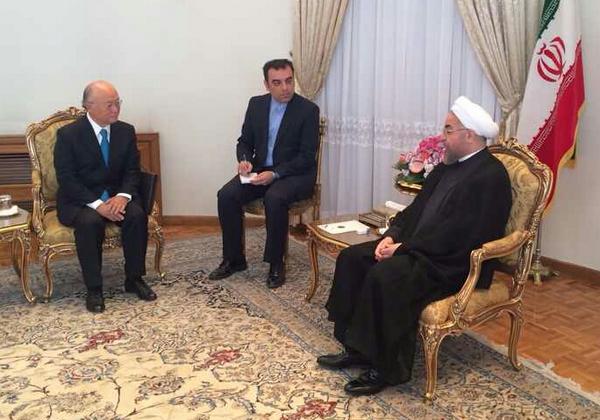
Iran, IAEA release joint statement, agree to take five practical measures

IAEA - IRAN - Iran Nuclear program


During the meeting the two sides reviewed the good progress that had been made on the seven practical measures that were agreed three months ago.

Iran and the Agency also reached agreement on five additional practical measures to be implemented in the next step.

Iran and the IAEA agreed on the following practical measures to be implemented, pursuant to the Framework for Cooperation, by Iran by 25 August 2014.

1. Exchanging information with the Agency with respect to the allegations related to the initiation of high explosives, including the conduct of large scale high explosives experimentation in Iran.

2. Providing mutually agreed relevant information and explanations related to studies made and/or papers published in Iran in relation to neutron transport and associated modelling and calculations and their alleged application to compressed materials.

3. Providing mutually agreed information and arranging a technical visit to a centrifuge research and development centre.

4. Providing mutually agreed information and managed access to centrifuge assembly workshops, centrifuge rotor production workshops and storage facilities.

5. Concluding the safeguards approach for the IR-40 reactor.

Iran president arrives in Shanghai

Iran President Hasan Rouhani in China


Rouhani was welcomed by Chinese Deputy Foreign Minister, Deputy Shanghai mayor, Chinese Foreign Ministry envoy to the CICA, Chinese new Ambassador to Tehran, Iran’s Ambassador to China Mehdi Safari and Iranian Consuls General in Shanghai, Hong Kong and Guangzhou. Leaders of the member states including Iranian president will deliver a lecture to the Summit. Iran Minister Mohammad-Javad Zarif, Presidential Advisor and Secretary of the Free Trade Zones’ Coordination Council Akbar Torkan, Minister of Roads and Development Abbas Akhoundi, Oil Minister Bijan Namdar Zanganeh, chief of staff of Presidential Office Mohammad Nahavandian and special presidential aide Hossein Fereidoun are accompanying the president. Bilateral meetings with counterparts, meeting with Iranians residing in China, including traders, directors of Iranian companies and Iranian representative offices, and meetings with Chinese elites make up for the agenda of the president.


 Photos by Mehr News Agency

Iran Strongly Rejects Western Report on Recruiting Afghans for Syria War

Iranian Foreign Ministry Spokeswoman Marziyeh Afkham


“The claim by the American paper is completely baseless and is aimed at damaging Iran’s face in Afghanistan,” the spokeswoman said Tuesday afternoon commenting on the WSJ report.

She further lamented that the report “induces a fully inhuman look at the citizens of the friendly and neighboring country of Afghanistan”.

“Afghan officials have also rejected this allegation,” Afkham reminded.

She said the failure of the strategy of launching a Taliban war in Syria has pushed those who had pinned hope on this strategy to resort to promulgating lies and fabrications and provoking the sentiments of the people in Iran’s neighboring country, Afghanistan.

“The report is an insult to the Afghan people and the Wall Street Journal needs to extend its apology to the people of Afghanistan for this insult,” the spokeswoman reiterated.

The WSJ claimed in a report on Friday that Iran has been recruiting thousands of Shiite Afghan refugees to fight in Syria, offering $500 a month and Iranian residency to help the Syrian government beat back rebel forces.

The WSJ report said Spokesman of the Iranian mission at the UN Hamid Babaei, in response to a question by the American paper, has rejected the claim, saying the “allegations that Iran is sending Afghan refugees to Syria as fighters are unfounded”.

“Iranian presence in the country is solely advisory in nature in order to help counter the extremist… al-Qaeda groups from committing more massacre and bloodshed,” Babaei added, according to the paper.

Iranian state and military officials have repeatedly rejected the western governments and media claims that Iran has soldiers in Syria, stressing that the country is only helping Damascus with military advice in compliance with the two states’ defense and security pacts.


by Fars News Agency

Iran’s Economy Minister in Kazakhstan to Attend 4th ECO Ministerial Meeting

Iranian Economy Minister Ali Tayyebnia

The Iranian economy minister, accompanied by his deputy Behrouz Alishiri, is due to address the ECO meeting as chairman of the Council of Ministers.

Tayyebnia will also attend the Seventh Astana Economic Conference to be held in the Kazakh capital on May 20-21.

The Second Conference of Confronting International Financial Crisis is also slated to be held in Astana during the said period.

Senior officials from over 150 countries are in Kazakhstan to attend the Seventh Astana Economic Conference in that country.

Tehran hosted the 21st Meeting of the Council of Minister (COM) of the ECO on November 24-26.

ECO is an intergovernmental regional organization established in 1985 by Iran, Pakistan and Turkey, which provides a platform to promote economic, technical and cultural cooperation among member states.

The organization was expanded in 1992 to include seven new members, including Afghanistan, Azerbaijan, Kazakhstan, Kyrgyzstan, Tajikistan, Turkmenistan and Uzbekistan.

Iran Launches First Gamma Radiation System

Atomic Energy Organization of Iran (AEOI) Head Ali Akbar Salehi


The system was launched in a ceremony attended by AEOI Head Ali Akbar Salehi in Bonab city, Northwestern Iran, on Tuesday.

Last week, Gholam Hossein Rahimi, the Head of Large-Scale National Plans Center affiliated to the Presidential Office’s Department of Science and Technology, said that the system can be used for preventing the spoilage of agricultural products, sterilization of medical equipment and food, as well as long-term storage of food.

“Another Gamma radiation system is currently under construction by the private sector,” he informed.

Natural sources of gamma rays on Earth include gamma decay from naturally occurring radioisotopes, and secondary radiation from atmospheric interactions with cosmic ray particles. Rare terrestrial natural sources produce gamma rays that are not of a nuclear origin, such as lightning strikes and terrestrial gamma-ray flashes.

Addressing the ceremony today, Salehi referred to the enemies’ efforts to prevent Iran from progressing in the development of its peaceful nuclear program, and said, “Enemies’ pressures against the Islamic Republic are not just for nuclear issues.”

Noting that the enemies are aware that Iran is not seeking to move towards military use of the nuclear technology, he said while the country has not received much support, it has been able to stand against the enemies, specially the US, pressures.

Washington and its western allies accuse Iran of trying to develop nuclear weapons under the cover of a civilian nuclear program, while they have never presented any corroborative evidence to substantiate their allegations. Iran denies the charges and insists that its nuclear program is for peaceful purposes only.

Tehran stresses that the country has always pursued a civilian path to provide power to the growing number of Iranian population, whose fossil fuel would eventually run dry.

Despite the rules enshrined in the Non-Proliferation Treaty (NPT) entitling every member state, including Iran, to the right of uranium enrichment, Tehran is now under four rounds of UN Security Council sanctions and the western embargos for turning down West’s calls to give up its right of uranium enrichment.

Tehran has dismissed West’s demands as politically tainted and illogical, stressing that sanctions and pressures merely consolidate Iranians’ national resolve to continue the path.

Tehran has repeatedly said that it considers its nuclear case closed as it has come clean of International Atomic Energy Agency (IAEA)’s questions and suspicions about its past nuclear activities.


by Fars News Agency

Ashton’s Spokesman Describes Iran-Powers Talks Tough, Complicated, Precise

Iran nuclear Talk - Michael Mann


“We had three days of tough work. As we have said before, the negotiations are complicated and precise and we are trying to compile an agreement,” Mann told FNA early Saturday, hours after Iranian Foreign Minister Mohammad Javad Zarif and Ashton ended their last meeting in Vienna on Friday evening without holding any press conference.

Asked why Zarif and Ashton had called off their joint press conference, Mann said, “Nothing has been agreed. (We will announce it) when everything is agreed upon. That’s the reason we don’t want to break things into pieces and announce after any meeting where we are.”

After three days of talks, Iran’s deputy chief negotiator Seyed Abbas Araqchi said on Friday evening that the Vienna nuclear talks with the world powers will continue until achievement of results, but meantime reiterated that Iran will not accept a discussion of its defense program and will only agree to a deal which respects its rights.

Speaking to reporters after three days of intensive negotiations with the delegations of the six world powers in Vienna on Friday night, Araqchi, also a deputy foreign minister, said, “The nuclear talks ended an hour ago, and the negotiations were very serious.”

“Our discussions were more or less free from tension, and everyone favors attainment of a final agreement,” he explained.

Araqchi pointed out that “the generalities, the framework and principles have already been agreed in the Geneva deal. Thus, We intended to start drafting the deal, but we couldn’t due to some wide differences”.

“Drafting the deal will be impossible until we reach a single view about all issues,” he continued.

Yet, the senior negotiator voiced pleasure in the trend of the talks, saying, “The trend of the talks is good and constructive, but has not led to any specific result yet. The talks continue and have not failed.”

“No tangible results were made, but talks will continue.”

Asked about the cause of the differences, Araqchi rejected the reports by some western media outlets claiming that Iran and the world powers hold different views over 13 topics, and said such reports “are just speculations and should not receive attention”.

He said the differences are even more in number. “Differences exist; were there no difference, there wouldn’t be any need to negotiation. Our duty is resolving these differences, bringing views closer and working out a single text (for a final agreement). There was no specific progress in the first session, and this is not unnatural; we hope to make up for that in other sessions.”

The deputy chief negotiator said Iran will not retreat. “We stand firm on our rights. We will have 6 more months if we fail to work out a deal by July 20.”

He said Iran will not allow a discussion of its missile or defense program in the nuclear talks. “Our defense equipment can no way go under discussion in the negotiations.”

Araqchi stressed that Iran is not in a rush to push the talks into a final phase of concluding an agreement at any price. “There is no push to obtain an agreement by July 20 at any price.”

“We (only) concede to an agreement which will be in line with our interests, meet our demands and establish the Iranian nation’s rights,” he continued.

“Yet, there is still a chance for striking a deal by July 20 only if our demands are met and our people’s nuclear rights are observed,” he reiterated.

“If we come to conclude such an agreement by July 20, it will be good, but if we won’t, that would not mean a catastrophe and that wouldn’t be the end of the world, (as) we will have 6 more months to negotiate.”

“We hope that the talks continue in a logical, rational and realistic manner and yield result within the deadline.”

Asked if the Ukrainian crisis has affected the trend or results of the nuclear talks between Iran and the world powers, Araqchi said the Ukraine issue is a very serious global challenge, but it has not affected the Iran-powers nuclear talks. “All parties, including the Russian side, want the (Iran nuclear) talks to remain unaffected by any other issue, including the Ukrainian issue… .”

He said the nuclear talks will be continued at different levels, “depending on the needs and topics of the sessions; the negotiations should continue as much as needed, we are ready and there have been some planning in this regard”.

Senior diplomats of Iran and the six world powers convened in Vienna on Wednesday for another round of negotiations on a permanent and final solution to their nuclear standoff.

The Iranian negotiators had several rounds of bilateral talks with the delegations of the EU and the Group 5+1, including a rather lengthy meeting with the US team, in the last three days.

A few hours before Araqchi’s final statements to reporters, a senior diplomat close to the Iranian team of negotiators urged the Western states to stop their excessive demands, reiterating that Iran is standing firm on its rights.

“The West should give up its excessive demands and gather a precise assessment of the realities existing on the ground,” the diplomat told FNA in Vienna on Friday afternoon, stressing that the policy of pressuring Iran has always proved futile and backfired.

The source said the Iranian negotiators have come to Vienna to establish the nation’s rights, reiterating that they would never retreat along this path.

He said “difference in views, specially around such a vital discussion as Iran’s nuclear issue, is considered to be natural”, but “given the recent developments, the western states are displaying that they are not practicing the pragmatism that seemed to have developed in them to a certain level”.

Yet, the diplomat underlined that “the window of opportunity is still open for the western parties to step onto the realm of pragmatism”.

When Zarif, and his team of aides and experts, arrived in Vienna, he told reporters Tehran would participate in the talks with firm determination.

“We have come here with a decisive will” and seek to defend the Iranian nation’s nuclear rights, Zarif said.

Noting that Iran and the G5+1 are scheduled to hold three other rounds of talks by July 20, he said none of the seven delegations had prepared any draft agreement, although they had certain issues in mind.

Then after two days of talks with the top negotiators of the sextet, Zarif hoped Friday morning that the opposite parties would be as determined as Tehran for striking a final nuclear deal in Vienna.

“The will is the most important parameter for success in any negotiation and we are determined and we hope that our counterparts will also be the same,” Zarif wrote on his Twitter page on Friday morning.

On Thursday, Araqchi said the nuclear talks in the Austrian capital were “slow and very difficult, although dominated by an atmosphere of good will”.

Earlier on Thursday, Mann voiced satisfaction in the outcomes of the morning meeting between Zarif and Ashton, saying the talks were “useful”.

“Well, it was a useful meeting,” Mann said in a phone interview with FNA on Thursday afternoon.

The negotiations between Tehran and the Group 5+1 are part of efforts to seal a final deal on Iran’s nuclear energy program.

On November 24, Iran and the Group 5+1 sealed a six-month Joint Plan of Action to lay the groundwork for the full resolution of the West’s decade-old dispute with Iran over the latter’s nuclear energy program.

In exchange for Tehran’s confidence-building bid to limit certain aspects of its nuclear activities, the sextet of the world powers agreed to lift some of the existing sanctions against Tehran and impose no nuclear-related sanctions on Iran during the six-month period.

Following the breakthrough interim agreement, Iran and the sextet accepted to send their senior negotiating teams to monthly meetings to discuss a final and comprehensive deal until July. If the seven nations fail to agree on a final deal by then, the Geneva interim agreement will be extended for another 6 months.

Since the November agreement, the seven delegations have met several times, including the last round in Vienna on April 8 and 9.

At the beginning of the last round of the talks on April 8, the Iranian Foreign Ministry issued a statement reiterating that its team of negotiators would not discuss any topic but the country’s nuclear standoff with the West in its talks with the six world powers.

This round of the talks was the first Iran-powers meeting focused on drafting a final deal.


by Fars News Agency

Commander: 5th Iranian Border Guard Still Alive in Pakistan

Hossein Zolfaqari
Hossein Zolfaqari

“Based on the proofs and evidence we have, sergeant Jamshid Danayee-Far, one of the border guards abducted by Jeish al-Adl grouplet, is alive,” Zolfaqari said, addressing a ceremony in the Southern province of Hormozgan on Wednesday.

He said that diplomatic efforts are underway to provide the ground for his freedom.

Noting that the Islamabad government has held a special meeting chaired by Pakistani Prime Minister Nawaz Sharif for restoring security to its borders with Iran, Zolfaqari said, “The result of these negotiations was the development of security relations (between Iran and Pakistan), specially at border crossings to fight outlaws and armed grouplets.”

After Jeish Al-Adl claimed late February that it has killed Danayee-Far, Zolfaqari rejected the claim and said it was not substantiated by any proof or evidence.

“Don’t accept any quotes about the issue of the border guards, there is no proof substantiating the martyrdom of Danayee-Far and no evidence has been presented to us in this regard,” Zolfaqari told reporters in Tehran in late February.

The five Iranian border guards were abducted in Jakigour region of Iran’s Sistan and Balouchestan Province on February 6 and taken to Pakistan. Reports said earlier that one of them, Danayee-Far, was killed late February but the official sources haven’t confirmed his death yet.

Iranian Interior Minister Abdolreza Rahmani Fazli said in April that Tehran will continue pursuing the fate of the 5th border guard abducted by Jeish al-Adl terrorist group.

Tehran would by no means accept the death of the fifth kidnapped border guard, Jamshid Danayee-Far, and will increase diplomatic efforts to find him, Rahmani Fazli said.

The Iranian interior minister took the Pakistani government responsible for following up the case of the last kidnapped Iranian border guard.

Vienna Nuclear Talks: Senior Negotiators Start Bargaining over Text of Nuclear Deal

Vienna nuclear talks


The afternoon talks started at 16:30 local time. Unlike the morning session which was held at the UN offices in Vienna, the afternoon session is underway at Hotel Cobourg and is just attended by the Iranian team of negotiators headed by Foreign Minister Mohammad Javad Zarif, and EU foreign policy chief Catherine Ashton and her aides.

The two teams are due to start drafting a comprehensive deal to end years of differences between Tehran and the West over the former’s nuclear program.

The negotiating team from Iran and the Group 5+1 (the US, Russia, China, Britain and France plus Germany) ended their first session in Vienna this morning. The talks that started in the Austrian capital at 10:00am (local time), and ended after almost half an hour was an introduction to the main negotiations.

Following the morning session, Michael Mann, the spokesman of EU foreign policy chief Catherine Ashton, wrote on his Twitter page that the seven delegations had “useful discussion”.

“Now internal consultations (among the G5+1 members) will take place. (The Iran-six powers) talks will resume this afternoon,” he added.

After Mann’s comments, the delegations of the six world powers held a meeting with Ashton, who presides the Group 5+1 negotiators in the talks with Iran.

The Iranian team of negotiators, accompanied by a team of legal advisors and experts, arrived in Vienna on Tuesday.

Upon arrival at Vienna airport on Tuesday, Iranian Foreign Minister and head of the country’s delegation in talks with the world powers Mohammad Javad Zarif said Tehran would participate in the talks with firm determination.

“We have come here with a decisive will” and seek to defend the Iranian nation’s nuclear rights, Zarif said.

Noting that Iran and the G5+1 are scheduled to hold three other rounds of talks by July 20, he said none of the seven delegations have prepared any draft agreement, although they have certain issues in mind.

Zarif and Ashton held a working dinner in Vienna on Tuesday night to confer on the latest developments in the talks between Tehran and the Group 5+1.

Also, a senior member of Iran’s negotiating team in talks with the six major world powers underlined that Tehran is resolved to do its best to remove possible barriers in the way of concluding a permanent deal with the Sextet, and urged the opposite side to do the same.

Iranian Deputy Foreign Minister for legal and international affairs Seyed Abbas Araqchi told reporters in Vienna late Tuesday evening that Iran is fully prepared to achieve an agreement before the deadline.

He went on to say that we are very hopeful and so is the other side that an agreement can be reached before July 20, if there is goodwill and real political determination.

Araqchi added that there would be three additional rounds of negotiations besides the current one to make headway towards a permanent nuclear deal.

Two rounds of talks would be held in June while the third round could be stretched as long as 20 days in July, if there is a need for it, the Iranian official said.

He stressed negotiations were at the most sensitive stage, saying the start of drafting a final accord was the most difficult and complicated phase.

Araqchi acknowledged some of the issues were really difficult and there remained some big gaps.

Bridging the gaps is very difficult but not hopeless, he said.

The last round of negotiations between Iran and the G5+1 took place in Vienna on April 8 and 9.

The Iranian Foreign Ministry in a statement on April 8 reiterated that its team of negotiators would not discuss any topic but the country’s nuclear standoff with the West in its talks with the six world powers.

The talks between Tehran and the G5+1 are part of efforts to seal a final deal on Iran’s nuclear energy program.

Iran and the Group 5+1 representatives had several sessions of talks in Vienna on March 18-19 too. Following the breakthrough interim agreement between Iran and the six powers, the two sides accepted to send their senior negotiating teams to monthly meetings to discuss a final and comprehensive deal until July. If the seven nations fail to agree on a final deal by then, the Geneva interim agreement will be extended for another 6 months.

On November 24, Iran and the Group 5+1 sealed a six-month Joint Plan of Action to lay the groundwork for the full resolution of the West’s decade-old dispute with Iran over the latter’s nuclear energy program.

In exchange for Tehran’s confidence-building bid to limit certain aspects of its nuclear activities, the sextet of the world powers agreed to lift some of the existing sanctions against Tehran and impose no nuclear-related sanctions on Iran during the six-month period.


by Fars News Agency