Thursday, April 9, 2026
Home Blog Page 5100

Air accidents in the court of public opinion

Iran planes
Iran planes

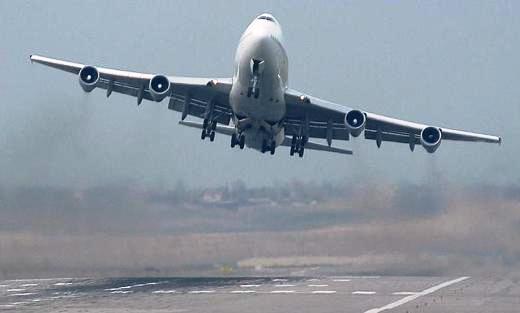
On August 24, Iran, a Tehran-based daily, ran an op-ed dubbed “Air accidents in the court of public opinion” in which director of Iran Flight Association Mehdi Iranmanesh analyzed the attitude of members of the public toward the aviation industry. He also shed light on measures that can be taken by Non-Governmental Organizations to reclaim the lost public trust in the industry. The following is a translation of his thoughts on the matter:

It seems that a public perception has been already formed when it comes to air accidents, and people are under the impression that air travel is equal to accident and possible loss of life. Wide circulation of satirical text messages about air crashes and individual comments coupled with rumors are the result of a climate of distrust in the aviation industry.

It is worth noting that in terms of severity and extent of damage, air accidents have caused Iran’s civil society irreparable damage in recent years. Among other things, public doubt over air travel, distrust in flight crew, underappreciation of the tireless efforts of pilots, aircraft engineers, flight attendants, aircraft maintenance technicians, control tower experts, airport staff members and other aviation experts are striking examples of such profound distrust in the industry.

In light of the distrust hanging over the industry, however, one can claim that the services presented by Iran’s aviation society in recent years at a time when the country has been under unfair Western sanctions have been unrivalled and unique.

The Civil Aviation Organization and NGOs can play a noticeable role in efforts to win back the lost trust in the industry. Unfortunately, the Civil Aviation Organization has failed to present the public with enoughand adequate information. In other words, it has appeared weak when it comes to dissemination of information.

NGOs should hold different meetings and lend support to the aviation industry in order to give reassurances to the public. The following measures could improve the image the public has in mind about the aviation industry:

  1. NGOs can raise public awareness about public legal rights as far as air travel is concerned.
  2. NGOs should seek transparency when information about air accidents is released by state organizations and also demand further clarification about precautionary measures to stop similar accidents in the future.
  3. They should also fight for civil and social rights of aviation experts, and victims of air accidents, including flight crew as well as anyone who is injured, through legal means.
  4. They can finally study the impact of unfair sanctions on the aviation industry and try to elaborate on what unfolds in the aftermath of an air accident in Iranian families and then inform the countries who claim to be human rights advocates of the destructive effects of sanctions on Iranian people and flight crew in a bid to have the sanctions lifted.
Palestinians Joy as Israel Agrees Gaza Truce

Palestian is happy
Palestian is happy

The Palestinian president, Mahmoud Abbas, said on Tuesday from the occupied West Bank that a formula had been accepted by all parties and that a ceasefire had gone into effect at 1600 GMT.

He hailed the agreement as a chance to “build a new nation and end the occupation”, before thanking Egypt, Qatar and the US for their roles in brokering the agreement made during indirect talks in Cairo.

Hamas’s exiled deputy leader, Moussa Abu Marzouk, said the agreement was a “victory for the resistance”.

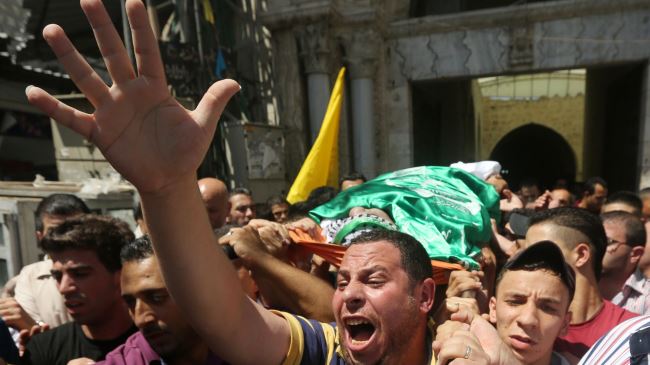
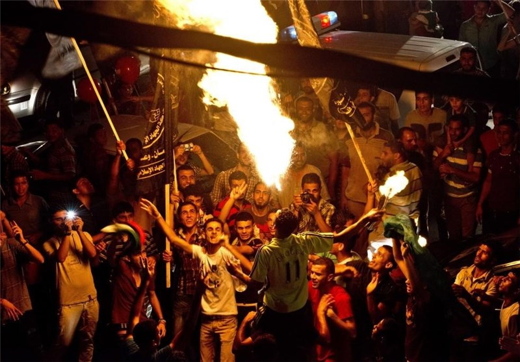
Crowds took to the bombed-out streets of Gaza to celebrate the end of hostilities. Many used the v-sign to signify Palestinian victory over Israel.

Al Jazeera’s Andrew Simmons, reporting from Gaza, said that the deal agreed an immediate easing of Israel’s blockade of crossings into Gaza, and a gradual lifting of restrictions on fishing off the coast of the strip.

“The embargo will be lifted and the five border posts will see considerable changes, with the Rafah border crossing opening,” he said in reference to the crossing between Egypt and Gaza.

Discussions on the creation of a seaport and airport will take place in a month, when indirect talks betwen Israel and Palestinians are scheduled to resume.

A total of 2,142 people, most of them civilians including more than 490 children, have been killed in Gaza since war broke out on July 8. A total of 69 people have been killed on the Israeli side, nearly all of them soldiers.


Int’l Ebola response ‘dangerously inadequate’

Ebola
Ebola

Nurse Anja Wolz, the emergency coordinator for the group, wrote in the New England Journal of Medicine on Wednesday that while the Ebola outbreak has been out of control for months, it has taken the international health community a long time to react.

“The current international Ebola response remains dangerously inadequate,” she said, warning that the situation is more than an Ebola outbreak and that the humanitarian crisis is getting worse every day.

Meanwhile, the United Nations (UN) health agency the World Health Organization (WHO) confirmed the death of Ebola doctor Sahr Rogers, who was infected with the deadly virus while working in a clinic in Sierra Leone.

The WHO also said a Senegalese epidemiologist was airlifted this week to Germany for treatment. The infected doctor reportedly received treatment in a Hamburg hospital on Wednesday.

More than 1,400 people across Sierra Leone, Guinea, Liberia and Nigeria have been killed in the world’s deadliest Ebola outbreak in history, with the number of infection cases now standing at over 26,000.

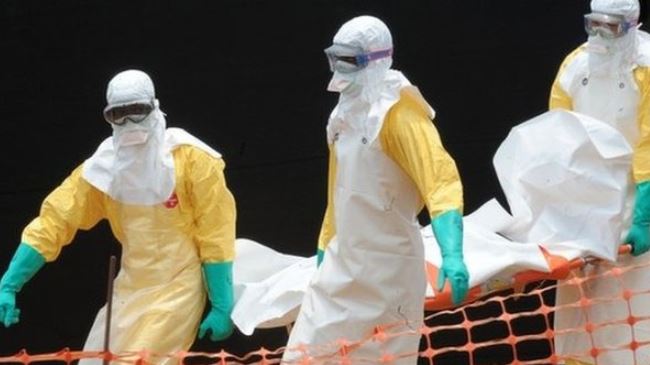
Ebola is a form of hemorrhagic fever whose symptoms are diarrhea, vomiting and bleeding. The virus spreads through direct contact with infected blood, feces or sweat. It can also be spread through sexual contact or the unprotected handling of contaminated corpses.

Ebola remains one of the world’s most virulent diseases, which kills between 25 to 90 percent of those who contract the virus.


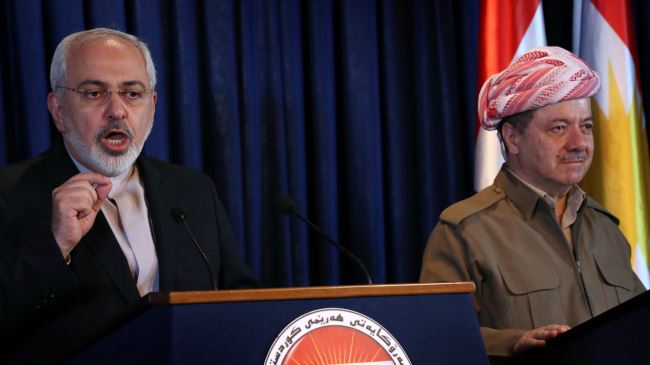
Barzani hails Iran’s support for Iraqi Kurds in fighting ISIL

Iran Zarif and Barzani

Speaking in a joint press conference with Iran’s Foreign Minister Mohammad Javad Zarif on Tuesday, Barzani added that Iran was the first country that supplied the Kurdish forces with arms and helped them fight ISIL terrorists.

He emphasized that Iraqi Kurds would never forget Tehran’s support that came at a crucial timing without any expectation for reciprocation.

Barzani also underlined the need to continue fighting ISIL terrorists and said the final defeat of these Takfiri militants is only possible through a joint effort on the part of all regional countries.

The Iranian foreign minister, for his part, said fighting the ISIL Takfiri militants is a comprehensive campaign that must be pushed ahead until a crushing defeat is inflicted on the terrorists.

“The ISIL is not an enemy only to Kurds, Arabs and Shia [Muslims] but is the enemy of all of us in the region,” Zarif said.

The Iranian foreign minister described ISIL as an “international threat” and added, “We call for unity and the establishment of security and stability in Iraq because we regard this country’s security as our own security.”

He threw Iran’s weight behind any agreement between Kurdistan Regional Government and Baghdad’s central government, hoping that formation of a “broad-based government” would settle all problems in Iraq.

Zarif, however, made it clear that Tehran has not sent any troops into Iraq, saying Iran believes that Iraq has no need to military aid.

The Iranian foreign minister arrived in Iraq’s semi-autonomous Kurdistan region on Tuesday for the second leg of his two-day visit to the Arab country.

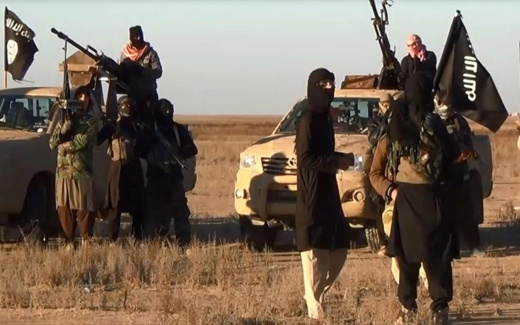
The visit came as Iraq has faced turmoil caused by the ISIL in the north and west since early June. The crisis deteriorated in recent weeks, as the militants swept over new towns in the north, forcing members of the minorities out of their homes.

The ISIL terrorists have threatened all communities, including Shias, Sunnis, Kurds, Christians, Izadi Kurds and others, as they continue their atrocities in Iraq.


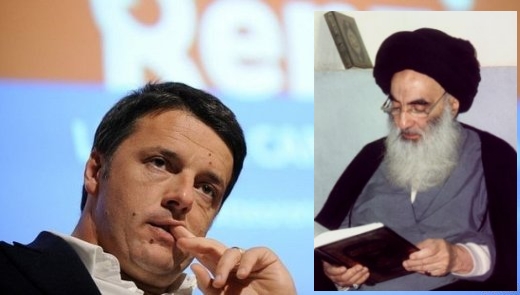
Ayatollah Al-Sistani’s stance will go down in history

Matteo Renzi-Ayatollah Sistani

Italian Prime Minister Matteo Renzi has praised Iraqi top Shiite cleric Grand Ayatollah Ali al-Sistani for his remarkable role in preserving Iraq’s national unity, and painting a true picture of Islam in the face of attacks by the Islamic State of Iraq and Syria (ISIS). Ettela’at daily, on August 25, 2014 quoted the Italian PM as saying that the West came to know the true picture of Islam through his humanitarian fatwas [religious edicts]. The following is the translation of a short report the daily released on the comments of the Italian premier:

Renzi went on to say that crimes that Iraqi people have witnessed over the last four decades outnumber those experienced by the Jews in Germany.

As for brutal attacks at the hands of ISIS terrorists and Baathist loyalists since the ouster of Saddam Hussein in 2003, he acknowledged that despite such heinous crimes, not only have top Shiite clerics not persuaded Shiites to take revenge on followers of other faiths, but they have treated them as equals and part of their own community.

The Italian prime minister stressed the humanitarian stance taken by Grand Ayatollah Sistani will live on in history.

During impeachment there was no disrespect for science minister

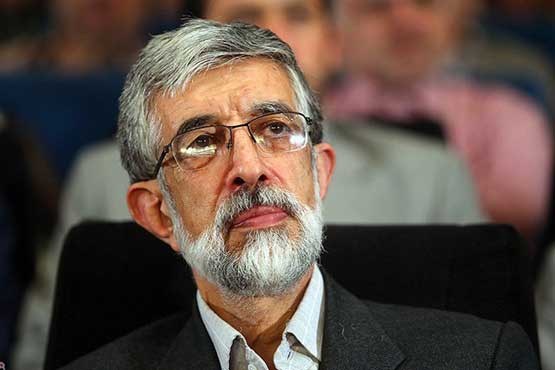
Golam-Ali Haddad Adel

Following the impeachment of the minister of science, research and technology there were claims and counterclaims that political motives played a role in the dismissal of President Rouhani’s science chief. On August 24, Aftab-e Yazd Newspaper published the comments of a principlist deputy who was once the speaker of the chamber:

In terms of naming an acting minister, no one was more set than Mr. Najafi,” he added. As for his assessment of the event, he stressed, “I don’t regard the appointment of Mr. Najafi as an act of defiance against parliament.

“Impeachment is not unusual as far as interactions between parliament and the government are concerned. Almost every government has to deal with such a thing. Mr. Rouhani was in parliament for two decades and is well aware of this parliamentary procedure,” Golam-Ali Haddad Adel, a member of the Islamic Consultative Assembly who was once the Speaker of parliament, commented on the impeachment hearing of Science, Research and Technology Minister Reza Faraji-Dana, who failed to re-win a vote of confidence from MPs and was dismissed on August 20, 2014.

“In terms of naming an acting minister, no one was more set than Mr. Najafi,” he added. As for his assessment of the event, he stressed, “I don’t regard the appointment of Mr. Najafi as an act of defiance against parliament.”

“Had the former minister paid more attention to concerns expressed by the MPs, the impeachment could have been averted. Parliament deputies granted Faraji-Dana a vote of confidence nine months ago, but certain developments led to his impeachment,” he went on to say.

Calling maintenance of stability and calm as the major concern of MPs, Haddad Adel, a member of the Education and Research Committee in the 9th parliament, reiterated, “Some falsely identified the issue of scholarships as the cause of the impeachment which was indeed a wrong impression. Instead, the real reason behind it was the return of a disturbed atmosphere to universities thanks to the admission of starred students [University students who were banned from continuing their education for committing offenses], presence of professors who did not fit the job, and other matters which were raised during the impeachment session. Personally, I am sorry that an experienced professor and a respected character like Dr. Faraji failed to carry on as a result of his performance.”

The impeachment hearing was truly serious. Those who were for and against it defended their stance with tenacity and in earnest, but the atmosphere sweeping the parliament was not poisoned by illogical behavior and there was no disrespect for any side, including proponents, opponents and even the minister.

He added: “The impeachment hearing was truly serious. Those who were for and against it defended their stance with tenacity and in earnest, but the atmosphere sweeping the parliament was not poisoned by illogical behavior and there was no disrespect for any side, including proponents, opponents and even the minister. Aside from a few comments made prior to the vote of confidence by the Speaker Ali Larijani which drew flak from a number of MPs, he otherwise handled the session very well.”

As for the formation of a “Moderation Caucus” in parliament he said, “The Commission does exist already, whether or not it hangs out its shingle will change nothing on parliament floor.”

On the nomination of Mr. Najafi as the acting science minister, Mr. Haddad Adel, who is also a member of the Expediency Council, stated, “In my opinion, given the short time that the president had to pick one to take the helm of the ministry temporarily, he did not come across anyone who is fitter than Mr. Najafi, and I don’t regard the appointment as an act of defiance.”

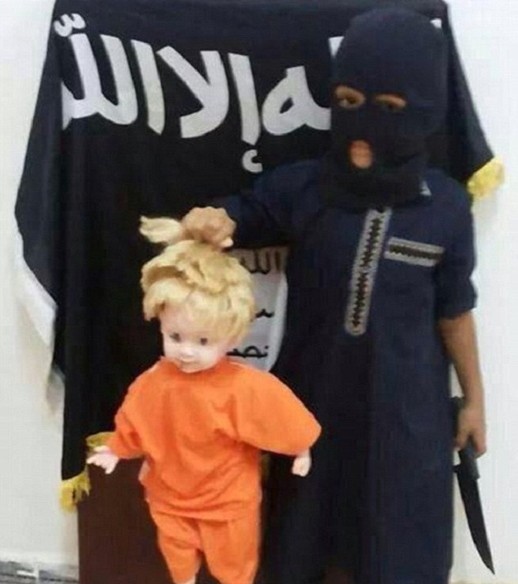
IS teaches child recruits how to sever heads

IS teaches child recruits how to sever heads

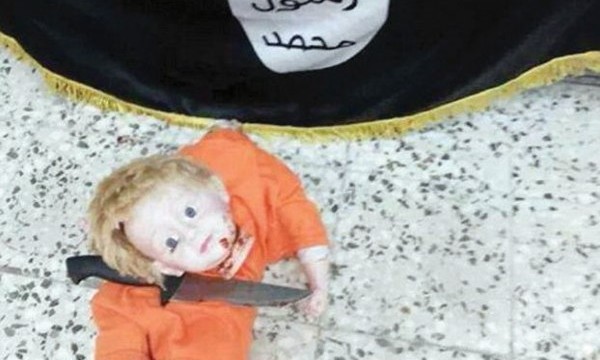
Alalam.ir news website reported on August 25 that websites operated by the Islamic State (IS) formerly known as ISIS have released images of a Libyan child decapitating a doll in imitation of the beheading of US journalist James Foley. Here is the translation of the story by Alalam:

“Teach your children how to behead so that they could help you out. There will be too many rotten heads [to be severed] tomorrow,” runs the caption of one photo.

In another photo a hooded child holding a knife in one hand and a doll in an orange jumpsuit in another poses for the camera with a black flag of the terrorist grouping in the background. In yet another photo the severed head of the doll lies on its chest.

The London-based daily Alhayat reports the terrorist group has set up training camps for children. And the Syrian Observatory for Human Rights, also based in London, has reported that IS has recruited thousands of children aged between 12 and 16 in Iraq, Syria, and other Arab countries. These children are being trained at special camps in Iraq’s Nineveh province.

Alhayat further reported that IS is training a new generation of terrorists, a generation that takes up arms at an early age and is devoid of any human feelings by the time they are grown up.

IS teaches child recruits how to sever heads


ISIS, a product of Western Irresponsibility

ISIL
ISIL

An August 24, 2014 issue of Arman-e Emrooz Newspaper featured a column by Jafar Golabi on those who share the blame for the rise to notoriety of the Islamic State, formerly known as the Islamic State of Iraq and Syria (ISIS). The following is the translation of the op-ed in its entirety:

The emergence of ISIS in Iraq is not a simple question to be overlooked. In fact, it has roots in multiple historical events, and therefore we cannot be totally immune to its direct or indirect consequences or to similar phenomena. After the emergence of ISIS in Iraq, when US President Barack Obama officially declared that America would not intervene militarily, he could never imagine that if the “cancer” of ISIS triggered bloodshed in Iraq, it would inflict suffering on Americans and put US interests in the region on the line.

An analysis of the issue and a detailed study into what gave rise to ISIS in Syria and Iraq calls for scientific dissection in the field as well as consideration of all regional and international factors at play. Nevertheless a cursory examination of how the West dealt with the issue can be food for thought for Iran.

After the outbreak of civil war in Syria, initially the West directly and indirectly supplied Syrian rebels, among them fundamentalists, with arms. However, when it saw their actions in rebel-held areas which posed a potential threat to the West as well as to Israel, it made extra efforts to make sure the aid was solely channeled to the Free Syrian Army.

When the demon of ISIS suffered overwhelming defeat in confrontation with the Syrian army in Syria, it took shelter in Iraq and drew international attention to its savage and inhumane measures. Apparently, such moves which defy political logic put Saudi Arabia and Qatar, which initially supported ISIS, in a dilemma and are likely to lead to international consensus on taking on the group.

The question that matters most is what set the stage for such groups to surface in the Middle East. Undoubtedly, these groups live on economic woes, discrimination, ignorance, superstition, and dogmatism. Such social ills help rebels recruit an army of disgruntled youth who are at their wits’ end.

However, if political conditions do not contribute to the emergence of such extremist groups, if governments stop taking sides and backing such groups, and if the interests of dominant powers do not play a role, the energy driving such violence – either orchestrated or haphazard – will find a vent in the form of sporadic incidents. Rare shooting incidents in which civilians are targeted in the West are examples of such eruption.

As long as Western interests lie in the establishment and the rise to power of the Taliban in a showdown with the Union of the Soviet Socialist Republics (USSR) at some time, and in providing Syrian rebels with arms and in capitalizing on and even inflating the ignorance and menacing religious divisions gripping the region at another, it won’t be a difficult task to locate the likes of Abu Bakr al-Baghdadi – the head of ISIS – and supply them with financial aid and weaponry.

In addition to this global chronic, nagging and agonizing pain, a phenomenon is in the making in which fomenting terrorism and provoking divisions and ignorance act like a double-edged sword which will come back to haunt those behind the scenes even more rapidly than the Taliban. Who would have thought that ISIS would ever surface in Iraq and brutally behead American journalist James Foley?

Probably, by now the West has come to the conclusion that it is not always possible to maintain stability, equilibrium, and welfare at home and send away crises to this part of the world.

In the aftermath of 9/11, former Iranian President Mohammad Khatami in his address to the United Nations pointed out that in order to avert such disasters, measures should be taken to stop people from getting so world-weary that they might want to claim numerous lives by killing themselves.

As a matter of fact, there should not be a deepening gap between the North and South, and as long as such widening and threatening chasm persists, there is always the danger of an eruption of spite and hostility.

Only if America gives up its presence in the Middle East and leaves, will it be able to escape such conflicts unscathed. Even if it is not planning to do so, it should not pursue its interests in stoking divisions and discord or keeping forces engaged. Taking advantage of Third-World indiscretions could one day bear inconceivable consequences.


Pentagon: US preparing military options against ISIL in Syria

US army
US army


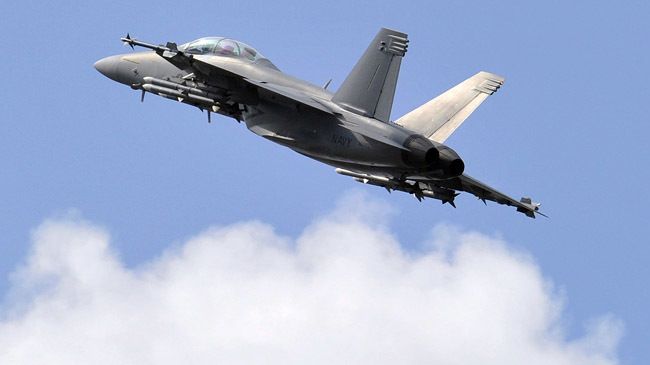
The spokesman of the Joint Chiefs of Staff on Monday said all military options to address ISIL, including airstrikes, are being reviewed, both in Iraq and Syria.

“With Central Command, [Dempsey] is preparing options to address [ISIL] both in Iraq and Syria with a variety of military tools including airstrikes,” Colonel Ed Thomas said.

He also highlighted the need to form a coalition with regional and European countries in the campaign against the militants.

President Barack Obama has made no decision on obtaining Syria’s approval, but the Defense Department says it is ready to use force against the militants operating in Syria to disrupt the groups’ operations and kill its senior leaders.

Last week, General Martin Dempsey, the chairman of the Joint Chiefs of Staff, said the group’s threat needed to be addressed in both Iraq and Syria.

The Pentagon has already begun airstrikes on the militants’ positions in Iraq.

ISIL, also known as ISIS, controls large parts of Syria’s northern territory. The savage group sent its fighters into neighboring Iraq in June, quickly seizing large swaths of territory straddling the border between the two countries.

American officials say the militant group is growing in strength and is much more capable than the one US forces faced when the group was called “al-Qaeda-Iraq” during the US war in Iraq from 2003-2011.

On Monday, Syrian Foreign Minister Walid al-Moallem warned the US and its allies against attacking ISIL targets on Syrian soil.

“Syria is ready to cooperate and coordinate with regional and international efforts to combat terror in accordance with UN resolutions and respect of Syrian sovereignty,” he told reporters in Damascus.

“Everyone is welcome, including Britain and the United States, to take action against ISIS and Nusra with a prior full coordination with the Syrian government,” Moallem continued.

Senior US officials said Monday that the Pentagon was sending in manned and unmanned surveillance flights over Syria, using a combination of aircraft, including drones and possibly U2 spy planes.

The Obama administration has been planning military intervention in Syria since ISIL carried out what US officials called its first “terrorist attack” against the US, referring to last week’s killing of American journalist James Foley.


Israel launches attack on UN-run school in Gaza

Israel attack gaza
Israel attack gaza


According to Palestinian media reports on Monday, several people were injured in the attack on the school in Jabalia, north of Gaza City.

Several UN-run schools have been hit since Israel launched its deadly offensive on the blockaded area.

Dozens of Palestinians have been killed in Israeli attacks on UN schools in the blockaded territory.

Israel shelled Abu Hussein School in Jabalia, located 4 kilometers north of Gaza City on July 30.

According to Gaza’s Health Ministry officials, at least 17 Palestinians were killed by Israeli shelling against the UN-run school.

Scores of people also suffered injuries in the deadly attack on the UN-run school.

On July 24, Israeli tank shells slammed into a school in Beit Hanoun in the northern Gaza Strip. Sixteen people were killed and hundreds of people were also wounded in the attack.

More than 2,130 Palestinians, including around 570 children, have been killed since Israel launched its onslaught on Gaza on July 8. Some 11,000 others have been wounded.

The United Nations says over 80 percent of the killed Palestinians have been civilians.

Nearly 400,000 Palestinian children are in immediate need of psychological help due to “catastrophic and tragic impact” of the Israeli war, according to the United Nations Children’s Fund (UNICEF).

Tel Aviv says 68 Israelis have been killed in the conflict so far, but Hamas puts the number at more than 150.

The Ezzedine al-Qassam Brigades, the military wing of the Palestinian resistance movement Hamas, has been launching retaliatory attacks against Israel.