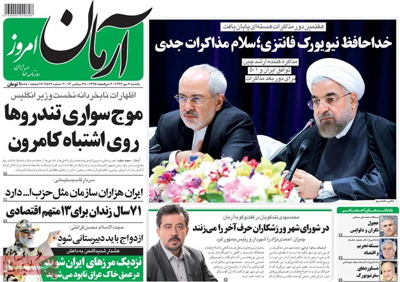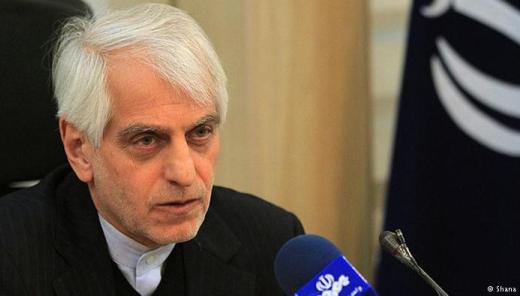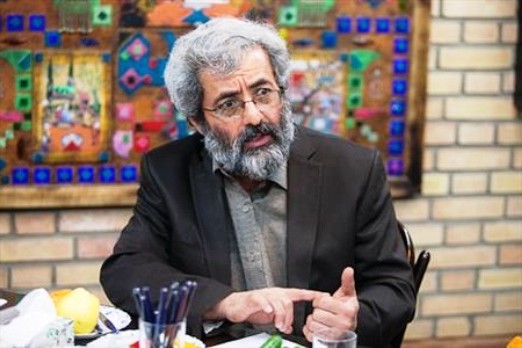
Arman-e Emrooz newspaper (in its 2,576th issue on September 24) ran an interview with Abbas Salimi Namin, [director of the Center for Contemporary History Studies, historian and a Principlist journalist] on Iran’s [direct] ties with the US, President Rouhani’s trip to New York and the conduct of hardliners. Here is the translation of the interview in its entirety:
Tehran-Washington ties are hot-button issues not only in Iran and the US, but also in other countries. How important would a likely resumption of ties be to the two nations and the international community?
What matters most for countries is to have interaction with other nations in order to pursue their stated objectives, but this does not mean they should close their eyes to realities on the ground and seek establishment of relations at any cost. As for ties with the United States, the Islamic Republic [of Iran] has always tried to see if such relations would be appropriate. That’s why the two nations still stay far from each other.
Well, the two nations have not had relations for years. Preparations should be in place if they possibly seek to hold ties. How do you view this?
If the status quo brings Iran to the conclusion that establishment of ties with the US does not harm its independence and dignity and that such relations come with some benefits, this would be seen as a politically correct decision.
Do such ties matter more for Tehran or Washington?
The Americans should come forward first because they are to blame for the bulk of problems between the two countries and the strained ties. They should show in practice that they have changed, something which seems highly unlikely [at the moment].
Ties between Iran and the US seem to have changed in one way or another.
The differences between the two nations are rooted in the historical animosity the US has borne against the Iranians. The fact that Washington has described the superiority of the Zionist regime as its top priority in the Middle East means it would not allow any other country to grow economically, politically and militarily and pursue its goals.
A question which arises here is: How can one accept that the US will seek to cooperate with Iran at a time when it intends to see all Islamic states in the region lag behind the Zionist regime? The Americans are struggling to strengthen the Zionists, whereas Zionism is the common enemy of all divine religions, Islam in particular. The terms for establishment of such ties have yet to change. Basically, we cannot wait for a change of heart in Washington in dealing with Iran.
They can begin to improve relations with Iran only when they drop their support for the Zionist regime. Of course there are some inside Iran who, intentionally or unintentionally, back the Americans, but it is not an orthodox move. They keep talking about establishment of ties or possible meetings between the two governments’ officials only to serve the US interests.
Are you saying ties with the US would bring no benefit for Iran?
Let me elaborate on the previous question a bit more. Why are some backing the Americans insistently trying to make the Iranian people believe the US has changed? If the Americans have changed, why don’t they admit the change themselves and only a group in Iran insists that they have?
They are saying that the atmosphere between the two nations has changed.
What kind of change? They hold up bilateral meetings between Iranian and US top diplomats, [President] Obama’s phone call with [President] Rouhani and the two sides’ more serious efforts toward arriving at a consensus in nuclear talks as the reason for what they claim.
To shed more light on the existing ballyhoo [on ties with the US] and prove that this America is the very America for which hostility toward Iran and its people is a top principle, the political system in Iran prepared for some meetings to practically test the Americans, trying to show that their words contradict their deeds. We can even say that they have openly and boldly said they take into account the interests of the Zionist regime. On what grounds do they say the Americans have changed for the better?
By better, they mean a relative improvement of atmosphere between the two countries.
It is not true at all. The atmosphere would get better when the Americans show more leniency toward the Iranian people. Following the talks, smiles, and so forth, the Iranian president himself said that the US insists on its enmity toward Iran. Despite the changes which are in place, they keep imposing sanctions on Iran, apply more pressure and try to aggravate the situation for Iran.
Some Principlists persistently want to see sanctions eased.
What matters is that something should be done in practice. One cannot only claim that the world has decided to recognize the rights of the Islamic Republic.
What is President Rouhani’s government expected to do when it comes to Iran-US relations?
Government officials, especially the president, do know that submission and compromise in dealing with the US are unjustifiable as long as Washington fails to correct its policies. If the eleventh government intends to seriously defend Iran’s national interests, it should stand up to the acquisitiveness of the West, the US included.
How was [President] Rouhani’s second New York trip different from his first?
The big change was that optimism on the part of those close to Rouhani about a change of heart at the White House was less intense this time around, so unlike what happened last year, nothing was heard this year about a possible meeting between Rouhani and Obama. They used to think that a single meeting would be enough to solve all problems, but they have now understood they were wrong and learnt that they [the Americans] would do nothing to repair the [rocky] relations [between the two countries].
Despite what you think, the Democrats have openly taken a softer line as compared with the Republicans.
No. The White House, no matter whether a Republican is the boss or a Democrat like Obama, has always taken a specific line on the Middle East and that is defending Israel’s interests. That’s why although the US public opinion is seeking calm and détente, the US administration under pressure from the Israeli lobby puts Israel’s interests ahead of those of the US. As long as this trend persists, nothing will change.
Let’s talk about something other than the US. Do you see any logic in the eleventh government’s decision to give [top] priority to nuclear talks or …?
The prevailing mindset in the government was that they could reduce problems, especially economic restrictions, by easing sanctions, so they invested heavily in foreign policy.
One year on, they have learned that they should take everything into account. As a result, they seriously opted for the Resistance Economy and included interaction with non-Western countries in their plans. Now they are cooperating with such countries as India and China. They have also decided to tap into domestic potential and boost production.
Do you confirm that the current government began its tenure in tough times?
Severe sanctions were slapped on Iran to make it hard for the government to run the country, but it does not mean Iran cannot remove the problems. If we can stand the problems associated with production, we can have growth and progress as much as we need in order to stop relying on the West.
Another point is extremist measures by certain hardline groups who stand in the way of government and do not let it go ahead with its job. They are struggling to penetrate the government in order to find the opportunity to pursue their extremist agenda.
Who do you mean exactly?
I mean extremist members of the Reform Movement who thought the rise to power of the Rouhani administration could provide them with another opportunity to work toward their goals following eight years on the sidelines. I hope the government could act in a way not to let them obstruct the performance of the Cabinet.
Your words come at a time when concerns have been raised about those hardliners who are trying to vilify the government.
The truth is that the hardliners of rival factions have been reined in, and those who are seeking to paint a black picture of the Cabinet are not a headache for the government, so there is no need for any concern.
As for the hardliners in parliament, they are not strong enough to affect the Cabinet or the chamber through their words and deeds. For instance, when Ansar-e-Hezbollah decided to launch [motorbike] patrols to promote virtue, not only were they given no support by the Principlists, but also they came in for harsh criticism.
Concerns come with the territory given the behavior of the Principlists; for example, words spread on a nuclear agreement although everybody knows nuclear decisions are made by the high-ranking authorities and not the government alone, or a Cabinet minister was threatened with impeachment only because of his meeting with [former President] Khatami.
One should admit that some behaviors are not justifiable under any circumstances and failure to admit that is far from logical. But the words and deeds of some should not be regarded as what all Principlists stand for. The Principlist current is comprised of different groups. That’s why besides collective extremism over the past year we have also seen that logical-minded Principlists treat the government in a logical way. They have even tried to defend the government.
Anyway, you cannot turn a blind eye to some behaviors.
In a political atmosphere there are varying views and analyses. How they are managed is important. The onus to deal with obstructionists is on everybody. We need to carefully and properly distinguish between criticism and vilification. In conclusion, I should say we shouldn’t follow the US and this is our principle.