Friday, May 8, 2026
Home Blog Page 498

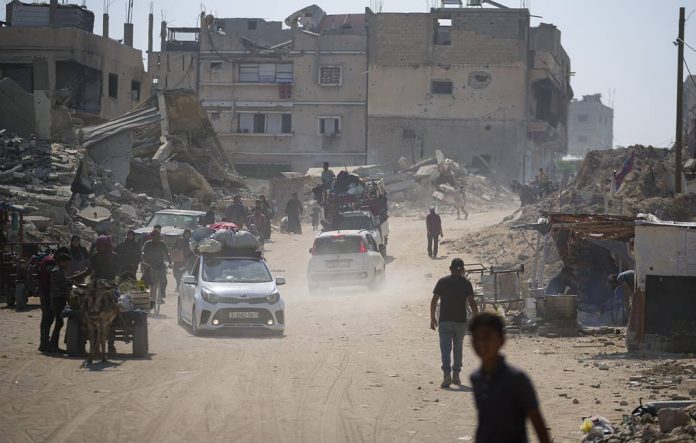
2 Gazans killed, 3 injured by Israeli military despite ceasefire

Gaza War

A medical source said two people lost their lives in a drone strike in central Rafah city in the southern Gaza Strip.

Three more people were injured when a missile attack in western Khan Younis in southern Gaza, medics said.

The Israeli army escalated its attacks across Gaza since Sunday, shortly after the expiry of the first phase of the Gaza ceasefire agreement.

Four Palestinians were killed in similar Israeli attacks in the Gaza Strip on Sunday.

The Israeli government halted the entry of humanitarian aid into Gaza on Sunday as Prime Minister Benjamin Netanyahu refused to start negotiations on the second phase of the ceasefire deal.

The agreement has halted Israel’s genocidal war on Gaza, which has killed more than 48,380 people, mostly women and children, and left the enclave in ruins.

Last November, the International Criminal Court issued arrest warrants for Netanyahu and his former Defense Minister Yoav Gallant for war crimes and crimes against humanity in Gaza.

Israel also faces a genocide case at the International Court of Justice for its war on the enclave.

Israel conducts air attacks near Syria’s Tartous

Israeli Air Force

An Israeli army statement on Monday said that its forces “struck a military site where weapons belonging to the previous Syrian regime were stored in the area of Qardaha”, the hometown of deposed Syrian President Bashar al-Assad, some 60km (37 miles) north of the Tartous port.

Syrian state news agency SANA reported “air strikes carried out by Israeli occupation aircraft on the surroundings of Tartous city, without recording human losses so far”, adding that “civil defence and specialised teams are working to confirm the location of the targets”.

In the wake of the lightning opposition offensive last December that toppled Syria’s longtime leader al-Assad, Israel has carried out hundreds of air strikes on Syrian military assets in what it said was a bid to prevent them from falling into hostile hands.

Last Tuesday, the Israeli army announced it carried out air strikes targeting military sites containing weapons in southern Syria, just days after Israeli Prime Minister Benjamin Netanyahu called for demilitarising the area.

Israel has moved forces into a United Nations-monitored demilitarised zone within Syria after al-Assad’s removal, a move that violated the 1974 disengagement agreement with Syria. Israel has also taken control of areas outside of the buffer zone, including Mount Hermon, and has conducted repeated bombing raids on military sites.

Last week at Syria’s national dialogue conference participants affirmed their rejection of “provocative” statements by Netanyahu and urged the international community to pressure Israel to stop any “aggression and violations”, condemning “the Israeli incursion into Syrian territory”.

The conference also opposed Israel’s attempts to stoke sectarian tensions by indicating it was willing to protect Syria’s minority Druze community, many of whom live in the south of the country.

UNICEF warns of severe impact on Gaza children as Israel stops aid deliveries

Gaza War

“The aid restrictions announced yesterday will severely compromise lifesaving operations for civilians,” said Edouard Beigbeder, UNICEF Regional Director for the Middle East and North Africa, in a statement.

Describing the Gaza ceasefire as “a critical lifeline for children,” the statement noted that the deal allows rapid flow of aid to scale of humanitarian response on the ground.

The statement further stressed that the conditions remain dire and said: “Seven newborn babies reportedly died from hypothermia over the past week because they lacked access to sufficiently warm clothes and blankets, shelter, or medical care.”

With 19 out of 35 hospitals only partially functioning, UNICEF noted that Gaza’s health system “has been stretched far beyond its limits.”

UNICEF added that it has provided warm clothing to 150,000 children, expanded medical care to 25,000 people, and increased water distribution for nearly 500,000 people daily.

“While the ceasefire has allowed us to significantly expand lifesaving aid, the level of devastation in Gaza is beyond catastrophic,” Beigbeder said in the statement, adding that “the ceasefire must hold, and more aid must be allowed in to prevent further suffering and loss of life.”

Saudi crown prince, Lebanese president hold meeting in Riyadh

The meeting took place during Aoun’s first foreign visit since assuming office in January of this year.

The Saudi Foreign Ministry said on its official X account that bin Salman “received His Excellency the President of the Lebanese Republic at the Royal Court in Al-Yamama Palace, where an official reception ceremony was held.”

The ministry added that the two leaders “held an official discussion session,” without providing further details.

Aoun’s visit comes after an eight-year hiatus in official Lebanese visits to Saudi Arabia. The trip is part of efforts by Lebanese authorities to repair relations with Arab countries and boost Beirut-Riyadh ties.

Aoun, a former army chief, was elected the Lebanese president in early January, ending more than two years of a presidential vacuum in the country due to political disagreements.

Last month, Nawaf Salam formed a new government in Lebanon, the first since 2022, after securing votes from 95 members of the 128-seat parliament.

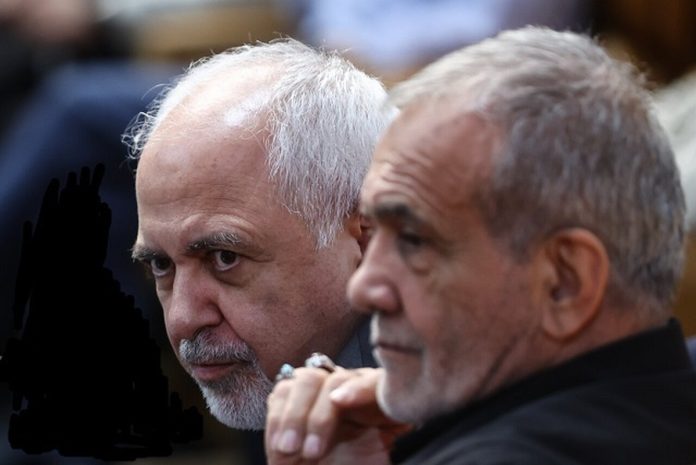
Govt. spokeswoman: Zarif’s resignation not yet accepted by Iran President

Zarif tendered his resignation to Pezeshkian on Sunday.

Mohajerani said the president’s acceptance is necessary for the resignation to be finalized.

She further spoke about the possibility of other changes in the Pezeshkian administration, voicing hope that decision-making processes will be as such that all the country’s possibilities will be used for the good and welfare of the Iranian people.

Mohajerani in other comments referred to the Law on the Appointment of People to Sensitive Posts and said the law makes it impossible to use the capacities of elites in all sectors including membership in academic boards of universities.

The government spokesman referred to Sunday’s impeachment of the ousted minister of economy, Abdolnasser Hemmati, saying 6 months is not sufficient to test the capabilities of a cabinet member.

She acknowledged that parliament is entitled to impeach officials but said economic woes have not been created overnight.

Mohajerani stressed that Hemmati’s impeachment had a negative impact and that the stock markets plummeted due to the issue.

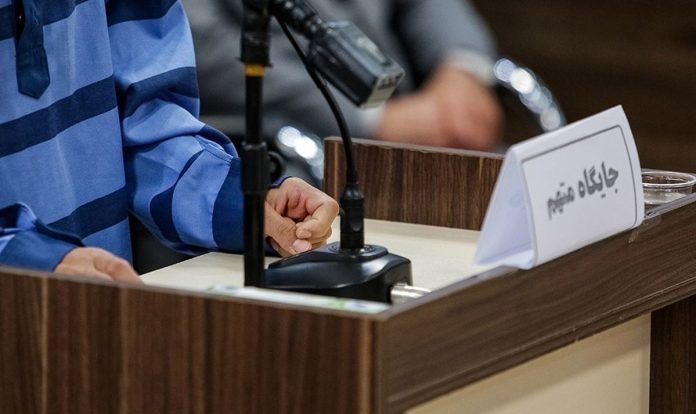
Iranian court convicts 44 people in massive fraud case

Iran Court

Iran’s Fars News Agency said the verdicts for 44 of the 61 main defendants in the Debsh Tea case have been issued by the first branch of the Special Court for Economic Crimes in Tehran.

The primary charges against the first defendant include significant disruption of Iran’s economic and currency system, extensive disruption of the monetary system through the illegal sale of currency in the free market, and bribing government officials and bank employees.

According to this report, the first defendant has been sentenced to a total of 82 years in prison for committing multiple crimes and is also required to return to the government more than two billion euros, equaling three to ten times the value of smuggled tea, and all proceeds from the sale of currency in the free market.

The report says the first defendant’s total fines exceed 60 trillion rials. The two ministers convicted in the case are Seyyed Javad Sadatinejad, the former minister of agriculture, and Seyyed Reza Fatemi Amin,the former minister of industry, mines, and trade.

Sadatinejad was sentenced to two years of imprisonment and Fatemi Amin to one year. But these jail terms were given after the court decided to reduce their sentences per Article Six of the Law on Reducing Imprisonment Sentences and on the ground they their played an insignificant role in the crime.

Earlier, an inquiry by the General Inspection Organization of Iran showed that a company named Debsh Tea received $3.37 billion to import machinery and tea but instead sold the currency on the free market at a much higher rate.

Old man dead in stabbing attack in Israel’s Haifa

The attack took place at a bus station on Monday, Israeli police said, adding that the suspected assailant was killed.

“Paramedics and EMTs have pronounced the death of a man around 70 years old and are providing medical treatment to and evacuating four injured individuals,” Israel’s Magen David Adom emergency service said.

It added a man and a woman, both aged about 30 years, as well as a 15-year-old boy, were seriously injured.

Earlier, Eli Bin, head of emergency rescue service Magen David Adom, told Israeli media that four people were wounded in the stabbing attack, one of whom later succumbed to his injuries.

It was not immediately clear who killed the attacker, whose identity was not immediately known.

The attack came as negotiations between Israel and the Palestinian group Hamas over Gaza’s ceasefire stalled after the deal’s first phase ended over the weekend.

On Sunday, Israel blocked the entry of humanitarian aid to Gaza after a disagreement with Hamas over extending the ceasefire agreement.

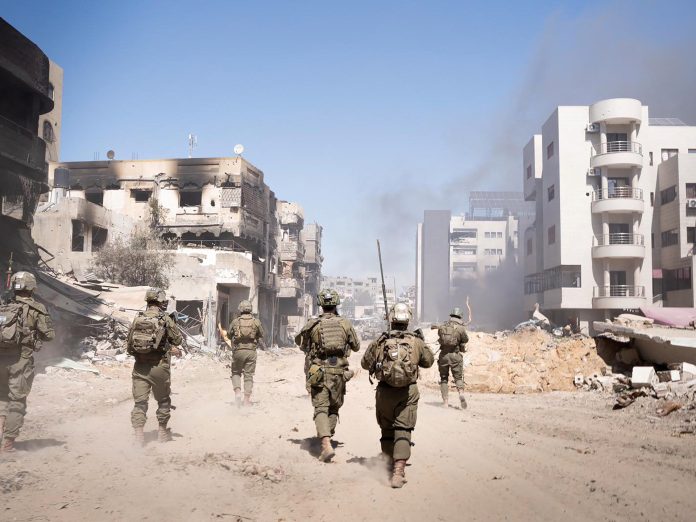
Israel plans escalation in Gaza within a week: KAN

Israel Army

Israel’s public broadcaster KAN, citing unnamed informed sources, reported that the plan—dubbed “Hell”—will include the complete cutoff of electricity, mass displacement and a full-scale military offensive.

The sources described it as an unprecedented escalation compared to recent weeks and months.

The Israel Hayom newspaper added that the plan also involves cutting water supplies and carrying out targeted assassinations to pressure Hamas into accepting a new US proposal.

Earlier on Sunday, Israel announced it agreed to a temporary ceasefire in Gaza during the Muslim fasting month of Ramadan and the Jewish holiday of Passover following a proposal from US President Donald Trump’s Special Envoy to the Middle East, Steve Witkoff, after the expiry of the first phase of the ceasefire.

Israeli Prime Minister Benjamin Netanyahu claimed that Hamas had rejected the temporary ceasefire proposal and he then ordered a halt to humanitarian aid deliveries to Gaza starting Sunday.

Israel has effectively turned Gaza into the world’s largest open-air prison, maintaining an 18-year blockade and forcing nearly 2 million of its 2.3 million residents into displacement amid dire shortages of food, water and medicine due to restrictions.

Hamas has called on mediators to ensure Israel adheres to the ceasefire agreement and urged immediate negotiations for the second phase. The group condemned Israel’s aid blockade as “cheap blackmail, a war crime, and a blatant coup against the ceasefire agreement.”

Netanyahu’s decision to block humanitarian aid has drawn sharp condemnation from Arab nations and criticism from Israeli politicians and the families of Israeli captives, who accused him of jeopardizing hostage negotiations.

Israel estimates that 59 hostages are still being held in Gaza, with at least 20 of them alive, and they are expected to be set free in the second phase of the ceasefire, which would require Israel to fully withdraw its forces from Gaza and end the war permanently.

The first six-week phase of the ceasefire agreement, which took effect on Jan. 19, officially ended at midnight on Saturday. However, Israel has not agreed to move forward to the second phase of the deal to bring an end to the war in Gaza.

The agreement, originally designed to unfold in three phases, was disrupted when Netanyahu refused to enter negotiations for the second stage, seeking to secure the release of more Israeli prisoners while avoiding commitments such as ending the genocide and withdrawing from Gaza.

The ceasefire agreement has halted Israel’s genocidal war on Gaza, which has killed more than 48,380 people, mostly women and children, and left the enclave in ruins.

Last November, the International Criminal Court issued arrest warrants for Netanyahu and his former Defense Minister Yoav Gallant for war crimes and crimes against humanity in Gaza.

Israel also faces a genocide case at the International Court of Justice for its war on the enclave.

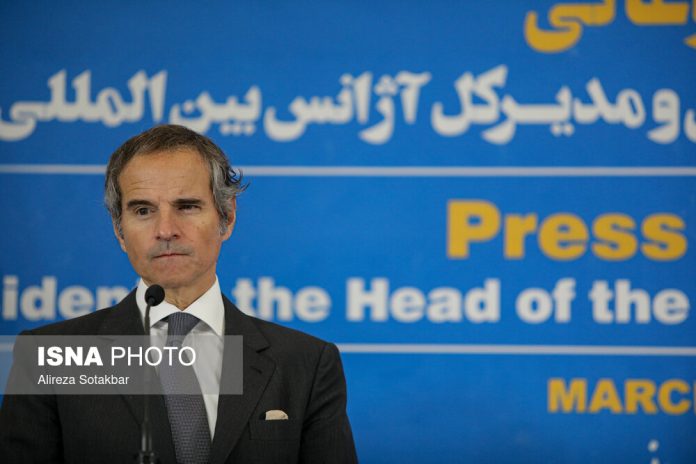
Iran slams IAEA chief’s ‘speculative’ nuclear bomb claims, vows to continue diplomacy with Europe

IAEA Grossi

In his weekly press conference on Monday, Baqaei stated that such speculative remarks are outside the IAEA chief’s mandate and undermine constructive engagement.

He emphasized that Iran’s nuclear program operates within the framework of international law, including the Non-Proliferation Treaty (NPT) and safeguards agreements, and urged the IAEA to act within its statutory limits.

Baqaei also addressed ongoing diplomatic efforts with European nations, confirming that talks would continue.

Regarding regional tensions, the spokesperson criticized recent comments by Turkey’s Foreign Minister Hakan Fidan, who claimed on Wednesday that Iran has paid a heavy price to maintain its influence in Iraq and Syria, yet its costs outweigh its gains in the region.

Describing the remarks as ‘unconstructive,’ the Iranian spokesperson warned of the growing assertiveness of Israel in the region and stressed the importance of managing differences with Turkey through wise and pragmatic approaches.

On Iran’s frozen funds in Qatar, Iraq, and Turkey, Baqaei acknowledged the challenges posed by US sanctions, noting that the Iranian Foreign Ministry, in coordination with the Central Bank, is actively working to resolve the financial restrictions.

He emphasized that the situation varies across the mentioned countries and remains a priority for Iran’s diplomatic efforts.

FBI Director urges US Congress to investigate Ukraine aid transparency

FBI

“I’ve asked Congress to investigate where this money has gone. The American people are owed that answer because it’s our money. It’s our taxpayer dollars,” Patel said.

Opinion polls show that Americans significantly overestimate the proportion of the US federal budget that is spent on foreign aid, believing it to be around 25 percent when in fact it was only around 1 percent in 2023, amounting to just 0.25% of GDP.

He also criticized the scale of US aid to Ukraine.

“The issue is not about the US sending a billion dollars, but rather that the amount sent to one country is one hundred times that billion.”

Patel then questioned President Volodymr Zelensky’s credibility, and referenced a missile incident in Poland.

“Zelensky went on the world stage and said ‘Russia fired a rocket into Poland,’ which would be an act of war. It turned out that Russia fired no such rocket,” Patel claimed.

Poland has scrambled jets amid Russian attacks on Ukraine several times over the past year, as missiles sent to western Ukraine have violated Polish airspace.

He concluded with further skeptical statements and additional calls to investigate Ukrainian funds.

“We just can’t have full faith and trust in giving a leader $100 billion and then having him say, ‘I’m not telling you where the money went.’” Patel concluded.

Numerous US government organizations have been keeping up with oversight and transparency measures of aid to Ukraine since the start of the full-scale invasion.

Aside from military aid, US funds have been vital in supporting numerous Ukrainian programs and initiatives.

Since the start of Russia’s full-scale invasion, the US Agency for International Development’s (USAID) has provided Ukraine with $2.6 billion in humanitarian aid, $5 billion in development assistance, and more than $30 billion in direct budget support, helping to rebuild schools after Russian attacks, pay for bomb shelters, advanced medical equipment for hospitals and much more.

USAID’s efforts have also included supporting judicial reforms and anti-corruption initiatives, and promoting transparency and accountability in governance.

The Donald Trump administration announced that it would be terminating over 90% of USAID foreign aid contracts, cutting $60 billion in foreign assistance.

Patel previously served as a federal prosecutor, and he held various intelligence positions in Trump’s first administration. He has been considered a Trump loyalist, and his views align with the current administration’s escalating criticisms of Zelensky’s government, including Trump’s recent false claims that the US has sent $350 billion in assistance to Ukraine.

Patel also received $25,000 in 2024 from a film company run by pro-Kremlin filmmaker Igor Lopatonok, according to a report.

The payment came after Patel participated in a documentary about Trump that aired on TCN, the online network of right-wing commentator Tucker Carlson.