Thursday, December 25, 2025
Home Blog Page 4916

Iran unveils domestic cruise missile ‘Soumar’

Iran Soumar missile

A new domestically-manufactured land-based cruise missile named ‘Soumar’ has been unveiled and delivered to IRGC Aerospace Force along with long-range land-to-land ballistic missiles.

The unveiling of the land-based cruise missile Soumar and the delivery of long-range land-to-land ballistic missiles named ‘Qadr and ‘Qiam’ took place during a ceremony Sunday in Tehran, attended by senior Iranian officials, including Defense Minister Brigadier General Hossein Dehghan and IRGC Aerospace Force Brigadier General Amir Ali Hajizadeh.

During the event, Dehghan said Soumar had been designed and produced by Iranian experts at the Aerospace Industries Organization (AIO), adding it “enjoys different characteristics in terms of range and pinpoint accuracy in comparison with the previous products.”

Dehghan also maintained that such significant achievements are “considered as crucial steps toward increasing the country’s defense and deterrence might.”

Dehghan also announced that the long-range ballistic missiles of Qadr and Qiam have been delivered to the Aerospace Division of the Islamic Revolution Guard Corps (IRGC). “These missiles have the ability to destroy a variety of targets under any circumstances due to their high tactical abilities, long endurance in the battlefield and stealth,” he said.

In recent years, Iran has made great achievements in its defense sector and reached self-sufficiency in producing essential military equipment and systems.

Iran has repeatedly assured other countries that its military might poses no threat to other states, insisting that the country’s defense doctrine is entirely based on deterrence.

Supreme Leader stresses frank, serious action to solve air pollution

Supreme Leader-Environment-7

Supreme Leader of the Islamic Revolution Ayatollah Seyyed Ali Khamenei stated serious planning, good management and constant efforts are required to fight air pollution and particulates.

The Supreme Leader made the remarks in a meeting with a number of officials and activists in the field of the environment protection on Sunday. The meeting was held to mark Iran’s Natural Resources Week which started on March 6.

During the week, particularly on March 6, the Tree-Planting Day, the Iranians attend ceremonies in parks, gardens, and also plant trees in the private gardens of their house yards.

He stressed that it was for the government to protect the environment by compiling necessary documents and carrying out projects.

He said damaging the environment should be regarded as a grave offense.

Referring to environmental woes as being global, the leader said the experience of different countries prove that many of the problems could be prevented even before they afflict Mother Nature.

IAEA team planning Iran visit on Monday to discuss two remaining issues

Behrouz Kamalvandi

Spokesman of the Atomic Energy Organization of Iran (AEOI) Behrouz Kamalvandi announced that a high-ranking team from the International Atomic Energy Agency (IAEA) is due to arrive in Tehran on Monday to discuss the two remaining issues in Iran’s nuclear dossier.

“The IAEA team will have a two-day visit to Tehran on Monday and they plan to hold negotiations with the AEOI officials and experts,” Kamalvandi said on Saturday, adding that “the team will be headed by the IAEA Deputy Director General (and Head of the Department of Safeguards Tero Varjoranta). ”

Noting that the IAEA has delayed declaring the results of its analysis of the information sent by Iran about the two recent issues that were mentioned in the third stage of their cooperation agreement, he said one of these cases is about the alleged initiation of explosives in Marivan, and the other one is related to papers published in Iran in relation to neutron transport and associated modeling and calculations and their alleged application to compressed materials.

“Iran has told them that if they think some explosions have taken place, they should specify its location so that we will give them access (to such alleged sites),” Kamalvandi said.

He explained that Iran and the IAEA’s step-by-step cooperation is based on the agreement that the two sides can start to deal with other steps only after finalizing different subjects mentioned in the previous step, and thus, Tehran and the UN nuclear watchdog will not deal with other issues before wrapping up the issues of Marivan and neutron transport case.

[…]

Mideast to see security when Israel crimes stopped: Iran’s Rouhani

Rouhani-Jordan-FM

Security and stability in the Middle East will only reach “an acceptable level” when the international community and regional countries make concerted efforts to compel the Zionist regime to stop its acts of aggression and crimes, Rouhani said in a meeting with Jordanian Foreign Minister, Nasser Judeh, in the Iranian capital, Tehran, on Saturday.

“It would be possible to establish sustainable security and stability in the region if all regional countries play a positive role,” he added.

Rouhani said Iran seeks regional security, stability and development, stressing that only regional countries, through collective cooperation, can solve the problems of the region.

“Today, terrorism is a challenge and threat to all and this is an undeniable fact. The Islamic Republic of Iran has warned against the spread of terrorism from the very beginning, stressing that the only way to stop it is cooperation and a collective campaign,” he said.

Pointing to regional developments including those in Syria, Iraq, Lebanon and Yemen, the Iranian president said regional issues can only be settled through diplomatic solutions without any foreign interference in the domestic affairs of countries.

Rouhani also said Tehran is ready to work with Amman for the full restoration of the Palestinians’ right and the liberation of the holy city of al-Quds (Jerusalem) from Israeli occupation.

Touching on bilateral ties, the Iranian president said the Islamic Republic sees no limits to the improvement of relations with Jordan and called for the enhancement of Tehran-Amman cooperation.

The Jordanian official, for his part, underlined the development of ties with Iran, describing the Islamic Republic as a significant neighbor for the Arab world.

Judeh added that Jordan supports the Palestinian nation’s right to establish a government with Quds as its capital.

He also voiced his country’s support for Iran’s talks with P5+1 – the US, the UK, Germany, France, Russia and China – to settle the dispute over the Islamic Republic’s nuclear program.

Possibility of Iran-P5+1 nuclear deal over 50%: Zarif

Mohammad Javaz Zarif-Iran FM

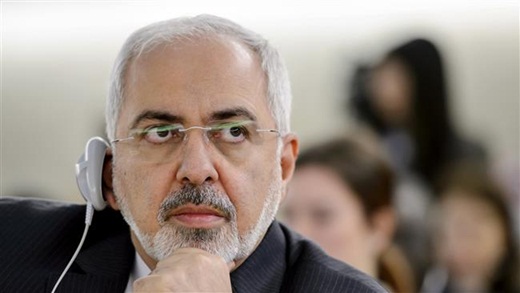
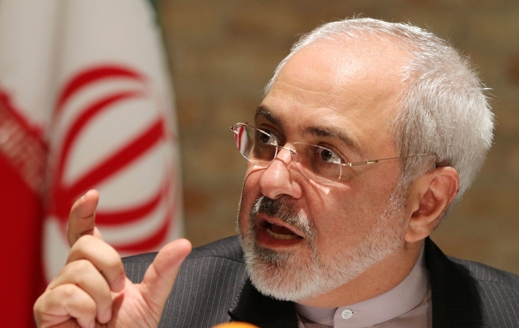
Foreign Minister Mohammad Javad Zarif says the removal of the UN Security Council’s sanctions on Tehran is contingent upon ‘political will’, adding the two sides are likely to clinch a final deal.

“Lifting the Security Council’s sanctions has no complications and only depends on political will,” Zarif said in an interview with a weekly affiliated to the Islamic Republic of Iran Broadcasting (IRIB) published on Saturday.

He said parties to the negotiations over Tehran’s nuclear program are likely to reach an accord.

“I believe chances of success are greater than failure,” said the top diplomat.

“The odds of [reaching] a [final] deal are more than 50 percent,” he said

“I feel both sides believe it will be more useful if the talks yield an agreement rather than break down,” he underscored.

Nevertheless, he emphasized that everything should be agreed on before a final deal is to be struck.

“Nothing is agreed upon unless everything is agreed on,” said the foreign minister.

“The negotiations will go on, and as long as [Iran and P5+1] have not agreed on all details, there is the possibility of the talks breaking down,” Zarif pointed out.

Iran and P5+1 – Britain, France, the United States, China, Russia and Germany – are seeking to seal a comprehensive nuclear deal by July 1. The two sides have already missed two self-imposed deadlines for inking a final agreement since they signed an interim one in the Swiss city of Geneva in November 2013.

Deputy foreign ministers of Iran and the six powers wrapped up deputy-level negotiations over Tehran’s nuclear program in the Swiss city of Montreux on Thursday.

The deputy-level talks came a day after Iran’s Foreign Minister Mohammad Javad Zarif and his American counterpart, John Kerry, wrapped up intense negotiations in Montreux. Head of the Atomic Energy Organization of Iran (AEOI) Ali Akbar Salehi and US Energy Secretary Ernest Moniz also attended the talks.

An informed source close to Iran’s negotiating team has said that a next round of talks at ministerial level is slated for March 15-20.

US, Israeli advisors arrested in Iraq’s offensive on ISIL: Report

ISIS group

In an operation in an outlying area in Iraq’s province of Nineveh, counter-terrorism forces arrested four foreign advisors – three of them from the US and Israel – who were employed as military advisors to the ISIL fighters, Iraqi sources said.

According to Iraq’s Sama News Agency, three of the arrested advisors have American and Israeli passports, and the fourth is a national from a Persian Gulf Arab state.

The foreign advisors have been captured in a headquarters responsible for the control of ISIL operations, located in the northern province of Nineveh.

The report also added that a number of other ISIL fighters have been killed in the operation, codenamed the Scorpion Sting.

The detained foreign advisors have been transferred to a security center in capital Baghdad.

Since March 2, the Iraqi troops, backed by voluntary forces, have launched an offensive to recapture Tikrit and the surrounding province of Salahuddin.

The offensive is the biggest military operation in the province since the ISIL terrorists seized swaths of north Iraq last June and advanced toward the capital Baghdad.

A look at Iranian newspaper front pages on March 8

Iranian Newspapers Headlines

The report that the Expediency Council has started to draft the 6th Development Plan dominated the front pages of Iranian dailies on Sunday. Also on the covers of newspapers were the meeting between the visiting Jordanian foreign minister and President Rouhani and reports that France is erecting new hurdles in the way of a deal between Iran and P5+1.


Abrar: UNESCO has denounced as war crimes the destruction of ancient heritage in Nimrud by IS terrorists.


A look at Iranian newspaper front pages on March 8


Afarinesh: Countdown is on for the complete defeat of IS in Saladin Province in Iraq.


A look at Iranian newspaper front pages on March 8


Aftab-e Yazd: Plans to offer free opiate to drug users will be examined [in parliament].


A look at Iranian newspaper front pages on March 8


Arman-e Emrooz: The Jordanian foreign minister is in Iran on a strategic visit.

Nasser Judeh has called for talks between Iran and the Arab League.


A look at Iranian newspaper front pages on March 8


Asrar: A planned 5 percent increase in fuel prices next year has been scrapped.


A look at Iranian newspaper front pages on March 8


Ebtekar: France is throwing a wrench into the works despite agreement over technical issues.

The French foreign minister has described Iran’s commitments as insufficient and called for a review of the talks.


A look at Iranian newspaper front pages on March 8


Eghtesad-e Pooya: “The Supreme Leader has sent a draft of the general policies of the 6th Development Plan to the Expediency Council,” said the government spokesman.


A look at Iranian newspaper front pages on March 8


Emtiaz: The minister of culture and Islamic guidance has said that Fajr Clothing and Fashion Festival has made remarkable progress.


A look at Iranian newspaper front pages on March 8


Ettela’at: “Regional problems should be solved through collective efforts,” President Rouhani told the visiting Jordanian foreign minister.

The president further said that regional and international pressures should be brought to bear to compel the Zionist regime to stop committing crimes.

“The only thing the Islamic Republic of Iran seeks is to cement regional security, stability and development,” the president added.

Ettela’at: “Transparency and competitiveness hold the key to curing the country’s economic ills,” said the president’s chief of staff.

Ettela’at: Each year some $5 billion worth of fuel is smuggled out of the country.


A look at Iranian newspaper front pages on March 8


Hemayat: “Iran has the safest skies in the Middle East,” said the commander of Khatam al-Anbia Air Defense Base.


A look at Iranian newspaper front pages on March 8


Jomhouri Islami: One hundred Islamic thinkers have protested against Saudi Arabia’s support for terrorism and the animosity of Al Saud family toward faith.


A look at Iranian newspaper front pages on March 8


Kaenat: Reports that Iranian nationals based in the UAE are being deported have been denied.

Kaenat: Gasoline consumption has jumped 1.8 percent.


A look at Iranian newspaper front pages on March 8


Kayhan: The President has named the presidents of eight universities across the country.

Kayhan: Israeli and American military advisors have been taken captive in a raid on an IS command center by the Iraqi army.


A look at Iranian newspaper front pages on March 8


Qods: A second presence of an Iranian squadron in the Strait of Malacca.


A look at Iranian newspaper front pages on March 8


Sayeh: More than $33 billion is spent on cigarettes in the country each year.

Sayeh: “Talks are more likely to produce a deal than to collapse,” said Iranian Foreign Minister Mohammad Javad Zarif.


A look at Iranian newspaper front pages on March 8


Shahrvand: More than 91,000 residents have suffered injuries in street brawls and road rage violence in the capital.

Shahrvand: A school guardian has returned a briefcase containing some $500,000 in cash and check to its owner.


A look at Iranian newspaper front pages on March 8


Israel seeks to distract Mideast nations from major issues: Zarif

Zarif-Jordan-FM

“The Zionist regime is trying to distract regional countries from major issues to minor matters and vigilance in the face of this Israeli ploy will benefit all in the region,” Zaif told his Jordanian counterpart, Nasser Judeh, in the Iranian capital, Tehran, on Saturday.

Denouncing crimes by terrorist groups, including the recent burning alive of a Jordanian pilot by ISIL Takfiri militants, Zarif underlined the need for consultations and cooperation among regional countries on fighting extremism and terrorism.

“The bestial terrorist measures, an example of which we witnessed in the death of the Jordanian pilot, are unacceptable and will result in the tarnishing of the image of Islam,” Zarif said.

On February 3, ISIL released a video online showing the Takfiri terrorists purportedly setting alight Jordanian pilot, Moaz al-Kassasbeh, who had been taken hostage in December 2013. Kassasbeh was captured by ISIL on December 24, 2014, after his F-16 jet crashed while flying over northern Syria on a mission against the terrorists.

Elsewhere in the meeting, Zarif said Iran seeks serious interaction with regional countries on various issues.

He also described relations with neighboring countries as a top priority in Iran’s foreign policy, saying, “Iran is ready to cooperate with all regional countries on long-term plans for different issues.”

The Jordanian foreign minister, for his part, described Iran as an important country in the region and called for Tehran-Amman talks on different challenges facing the Middle East.
Judeh said terrorism and extremism are the main challenges in the region, saying both Sunnis and Shias are targeted by such threats.
Instability, violence, and extremism have plagued the Middle East over the past few years, and Jordan believes that stability and security must be restored to the region as soon as possible, Judeh said, calling for unity and solidarity among all Islamic countries toward this objective.

The ISIL terrorists control parts of Iraq and neighboring Syria. They have engaged in crimes against humanity in the areas under their control, committing crimes against different minorities and communities.

Renowned director to auction prize to help build a shelter for women rough sleepers

Rakhshan Bani Etemad

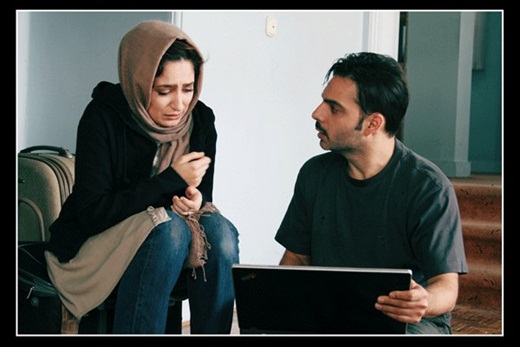
Rakhshan Bani-Etemad, an internationally and critically acclaimed Iranian director and screenwriter, has offered the last international award she has won for The Tales – a series of seven short stories – to an initiative to build a shelter for homeless women in Tehran.

The Tales, Bani-Etemad’s latest drama, took one of the two jury grand prizes of the 8th Asia Pacific Screen Award (APSA) held in Australia in December 2014.

The Iranian Students News Agency (ISNA) reported the famous filmmaker’s decision to build a shelter for women with no housing on March 7. The following is the translation of the report:

The award will go under the hammer in an international auction and the proceeds will be invested in a housing project by Toloo Bi-neshanha Society, a charity, to accommodate female rough sleepers in the capital.

In a few days, her award will be transferred to the location of the housing project to be later sold to the highest bidder in an international auction.

Earlier the leading filmmaker had said her prizes would be sold after her death for establishing a foundation – supervised by her children – to support damaged women.

On Friday (March 6), Unruled Paper a film by Nasser Taghvai was screened at the charity institute to support the housing project for homeless women. After the screening, The Tales’ award was handed over to the institute.

[The Tales is composed of seven short episodes, in which Bani-Etemad reveals the fate of some of the main characters in her previous films like The Blue-Veiled, Under the Skin of the City and Mainline.]

Does Kerry’s Saudi visit mean a nuclear deal is looming?

Kerry-Saudi-FM
Kerry-Saudi-FM

US Secretary of State John Kerry flew to Saudi Arabia on Wednesday to explain a potential deal on Iran’s nuclear program to the conservative US ally that has expressed concerns about the terms of a deal.

Arman-e Emrooz daily on March 7 published an opinion piece by Reza Raeesi on Secretary Kerry’s Saudi visit, Riyadh’s tentative agreement to a possible nuclear deal between Iran and P5+1 and whether such a trip could produce positive or negative results. The following is a partial translation of the piece:

[…]

The visit of Secretary Kerry to Saudi Arabia immediately after intense, face-to-face talks with his Iranian counterpart in Switzerland could be studied from different angles.

On the one hand, his flight – with no delay – to Riyadh could be a sign that the progress made in the Swiss city of Montreux has been so remarkable that the American negotiator has headed to the Persian Gulf kingdom to consult with Saudi officials and win them over on a nuclear deal with Iran.

Kerry also seems to want to give reassurances to Saudi Arabia that a final nuclear deal with Iran will not pose any threat to the monarchy.

Kerry in Saudi Arabia, on the other hand, raises concerns that nuclear talks could once again face a new challenge in the buildup to the conclusion of a final deal thanks to obstructionism by Saudi Arabia. If so, like what happened in Vienna, this will derail efforts [made so far].

Whether the trip is viewed as a promising sign or an alarming concern, two issues could not be overlooked. First, conclusion of a nuclear accord is around the corner. Second, Saudi Arabia – a regional heavyweight and a strategic US ally – cannot be removed from regional equations and from efforts to have a nuclear deal inked.

[…]