Sunday, December 28, 2025
Home Blog Page 4911

Culture minister condoles with nation on demise of pop singer

Ali Jannati
Ali Jannati

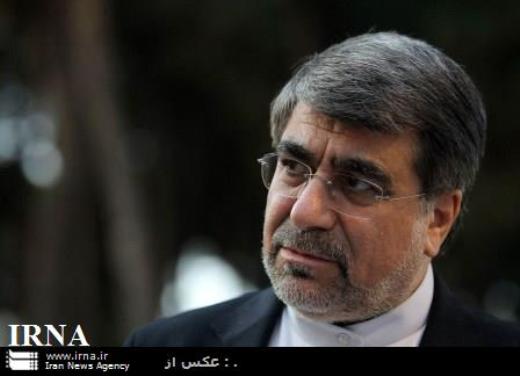
In a note appearing on his Facebook page on Sunday, Culture and Islamic Guidance Minister Ali Jannati condoled with the Iranian nation on the untimely death of young, popular pop singer, Morteza Pasha’ie.

“I hereby condole with the entire elites, artists and fans of the popular singer of the Iranian nation Morteza Pasha’ie, especially with his revered family members, on his heart breaking demise and pray to Almighty Allah for the salvation of his soul and for granting patience and peace of mind to those who love him,” reads the culture minister’s note.

Iranian pop singer Pasha’ie died from acute stomach cancer on Friday morning at the age of 30 in a Tehran hospital.

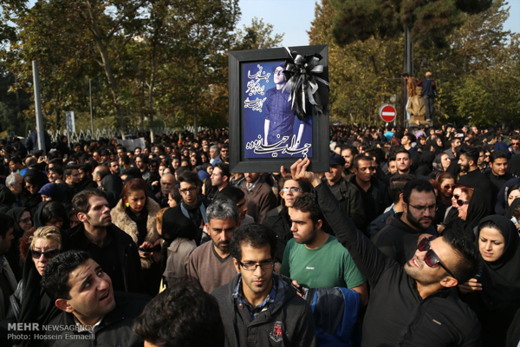
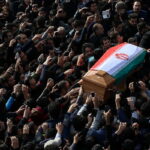
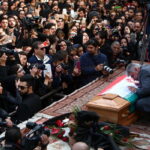
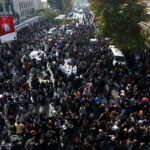
His funeral procession began on Sunday afternoon in front of Tehran’s Vahdat Concert Hall moving towards the city’s Behesht-e Zahra Cemetery followed by a large crowd of his fans, some of whom were singing a number of his famous songs.

Due to the dense population of Pasha’ie’s fans, his burial was delayed for a couple of hours till the police forces at the cemetery managed to somehow disperse the crowd.

It was earlier announced that the burial had been delayed to a later time.

Iran plans to offer Alamut Fortress to UNESCO

Alamut-Fortress
Alamut-Fortress

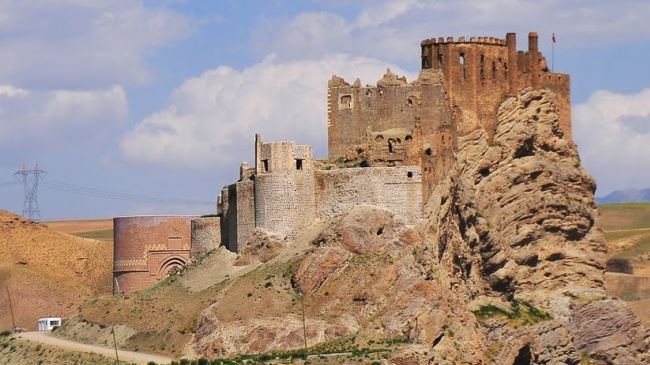
Iran plans to offer the historical Alamut Fortress to UNESCO to be listed as a World Heritage site.

Located in Alamut region in Iran’s Qazvin Province, the castle is a mountain structure built on a massive rock in an altitude of 2,100 meters above sea level.

The fabled ruin of Alamut Castle which is of historical significance dates back to around 1090 AD, when Hassan Sabbah, the leader of Ismailites in Iran, chose the Alamut region as his headquarters.

The origins of the Alamut Fortress can be traced back to the Kings of Daylam, a Justanid ruler, at the end of the 8th century, who selected the area for the construction of a fortress.

The fortress was demolished and set ablaze by Hulagu of Mongolia in 1256. Later the site was only used as prison and a place of exile.

World Heritage site is a title that is given to locations that have “outstanding universal value” to humanity, according to the UNESCO description.

Armenian monastic ensembles of Iran, Bam and its cultural landscape, Bisotoun, Naqsh-e Jahan Square, Pasargadae, Persepolis, Sheikh Safi al-din shrine, Shoushtar historical hydraulic system, Tabriz historic bazaar complex, Chogha Zanbil and the Persian garden are some of the Iranian historical heritage sites that have been inscribed on the UNESCO World Heritage List.

Iranian researchers develop anti-cancer nano-drug

anti cancer research

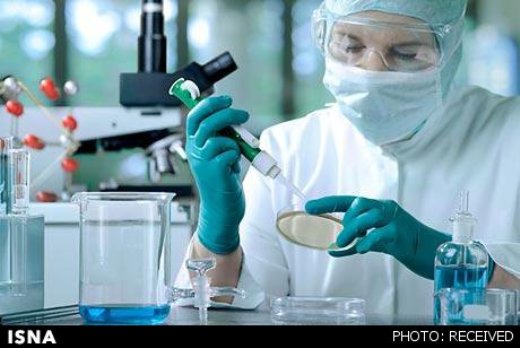
Iranian researchers have developed a new anti-cancer nano-drug using artificial biocompatible and biodegradable polymers.

Mohammad Irani, a Ph.D. student in chemistry engineering at Amirkabir University of Technology and lead author of the study, said the project aims to design and build a nano-drug which increases the chemo efficiency and reduces the poisonous effects of anti-cancer drugs.

He said he and his fellow researchers have designed a nano-fiber scaffold carrying multi-walled nano-carbon pipes as drug carrier.

Using the nano-fiber scaffold carrying the Doxorubicin, the anti-cancer drug improves the treatment process and lowers the level of poison in the drug.

It takes the scaffold 30 days to get released. The anti-poison properties stay in the scaffold for three days.

An electro process method has been used to produce the nano-drug. The research also studied the way the drug is released into cancer cells in laboratories.

The results of the study have been published in Applied Polymer Science Journal.

Iran: Any nuclear deal should lift sanctions entirely

Iran-shamkhani
Iran-shamkhani

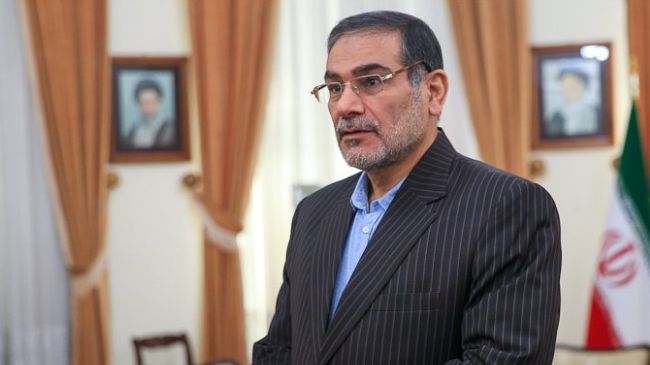
Secretary of Iran’s Supreme National Security Council (SNSC) has emphasized that any nuclear deal between Tehran and world powers should have the whole “cruel sanctions” imposed on Iran removed.

The full abolition of cruel anti-Iran sanctions and Tehran’s entitlement to the whole legal rights within the framework of the nuclear Non-Proliferation Treaty (NPT) should be stipulated at any nuclear agreement, Ali Shamkhani said of a long-awaited nuclear deal between Iran and the sextet of world powers.

He made the remarks in a meeting with Meng Jianzhu, a member of the Central Committee of the Communist Party of China, in Tehran on Sunday evening.

“In case the other side takes a logical, non-political approach on the basis of realities, reaching an agreement in the nuclear talks will be possible immediately,” Shamkhani added.

The senior official also made it clear that “internal problems” among P5+1 members or the “excessive demands” will have no bearing on the resolve of the Iranian team of negotiators in the course of talks.

The Chinese politician, for his part, reaffirmed Beijing’s support for Iran’s civilian nuclear program, and stressed, “Iran has the right to enjoy peaceful nuclear energy, and we will definitely support Iran in the 5+1 talks.”

Iran and P5+1 (Russia, China, the US, Britain, France and Germany) are in talks to hammer out a final deal to end a decade of impasse over Tehran’s peaceful nuclear energy program.

On November 24, 2013, Iran P5+1 signed an interim nuclear deal in the Swiss city of Geneva. Based on the interim deal, the world powers agreed to suspend some non-essential sanctions and impose no new nuclear-related bans in return for Tehran’s decision to freeze parts of its nuclear activities.

The Geneva deal (the Joint Plan of Action) came into effect in January and expired in July, when the parties decided to extend negotiations until November 24 in the hope of clinching a final deal that would end a decade of impasse over Tehran’s peaceful nuclear energy program.

In July, Tehran and the six countries agreed to extend negotiations until November 24 in the hope of striking a final deal.

Iranian president, Omani foreign minister meet in Tehran

Oman-foreign-minister

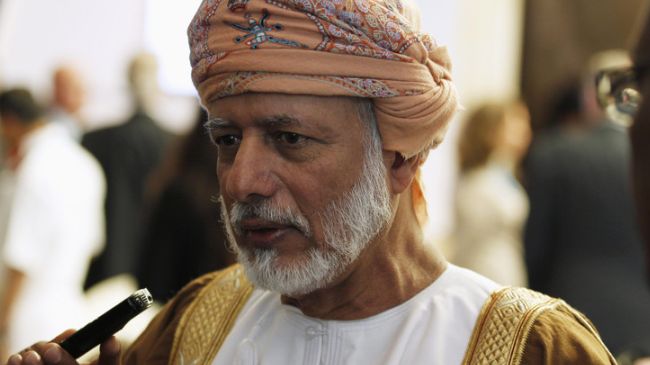
Omani Foreign Minister Youssef bin Alawi bin Abdullah has paid an unofficial visit to Iran and held talks with Iran’s President Hassan Rouhani over regional developments in the capital, Tehran.

In his Sunday visit, Alawi also met with his Iranian counterpart Mohammad Javad Zarif.

An informed official told IRNA that Alawi’s one-day visit was aimed at discussing bilateral ties and ways to tackle extremism in the region.

The visit came a week after the Omani capital, Muscat, hosted three days of nuclear talks between Iran, the United States and the European Union. The talks were meant to facilitate the conclusion of a final deal between Iran and P5+1 over the Iranian nuclear program before a November 24 deadline.

On the top of the agenda of the Muscat talks were the extent of Iran’s uranium enrichment and the timetable for the removal of anti-Iran sanctions.

On November 11, Alawi expressed optimism that a final nuclear agreement between Iran and P5+1 – Russia, China, Britain, France, the US and Germany – is within reach.

Oman has played an intermediary role between Iran and the US since Tehran and Washington severed diplomatic ties in 1979.

In late August, Oman’s Sultan Qaboos bin Said Al Said visited Iran at the head of a high-ranking delegation.

Iran’s economy is in for a big shock: Economist

Mehdi Taghavi
Mehdi Taghavi

Khabaronline filed an interview on November 16 with Mehdi Taghavi, an economic analyst and a member of faculty at Allameh Tabatabaei University, about the likely ramifications of a recent drop in oil prices on Iran’s economy. What appears below is the translation of part of the interview:

Since oil prices on the global market have hit a 4-year low and international institutions have projected that the prices will see additional decline in 2015, concerns among oil producers have heightened.

OPEC (Organization of the Petroleum Exporting Countries) has reported that countries whose economies are dependent on oil revenues should sell their crude at no less than $100 per barrel to balance their budget. However, over the past few weeks, oil prices have plunged $20 below that level.

In the run-up to a 166th ministerial meeting of OPEC, Iran’s oil chief Bijan Namdar Zanganeh said that a return to $100-plus prices is difficult but that prices should be set in keeping with what the market warrants.

The question is how Iran’s economy which is dependent on oil revenues will fare in the months to come. Masoud Nili, an economic advisor to President Rouhani, says realistic projections about crude prices and oil revenues must be taken into consideration in putting together the spending package and steering the economy, especially now that it is in recession and the way out passes through a more active development sector.

Mehdi Taghavi is of the opinion that the fall in oil prices will have a serious impact on Iran’s economy and its budget plan.

“Traumatic effects lie ahead, because Iran’s economy has been long dependent on oil revenues. Oil is Iran’s staple export item and if we want to keep our economy afloat, oil exports will have to go according to plan. However, global oil prices are slumping by the day, this might send shockwaves into our economy,” he said.

He went on to say, “As oil prices dive, there will be a fall in foreign currency revenues. A decline in exports will see imports go down and send inflation surging.”

Estimating that a constant drop in oil prices will take a toll on production in industrial units, he added, “The government should not turn to quantitative easing to ride out the budget deficit, because such a measure will fuel inflation.”

“From my perspective, in these conditions, no matter what the government does, it will harm the economy. The government might be advised to lower its spending, but will it help put our financial house in order? In my opinion, it won’t, because the question is what sector can survive a reduction in spending. Anyway, I am of the conviction that the decline in oil prices will shock Iran’s economy to the core,” he concluded.

Tehran bids tearful farewell to pop singer Morteza Pashaei

Morteza Pashaei
Morteza Pashaei

Morteza Pashaei

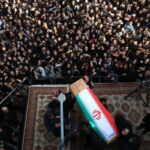
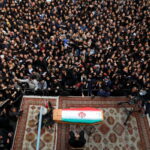
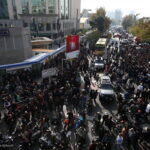
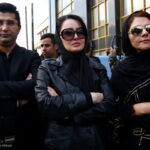
Thousands of people from the capital and elsewhere in the country turned out for the funeral procession of the late Morteza Pashaei, an Iranian musician, composer and pop singer, on Sunday (November 16), according to Fararu, a news website.

The emotion-filled farewell ceremony caused gridlock on the streets of Tehran, and the capital’s subway was almost brought to a standstill as a large influx of the late singer’s fans tried to reach the funeral procession.

The ceremony went off to a euphonious start when some of Pashaei’s songs were played in his memory with participants repeating the lyrics, among them Mohammad Alizadeh, a famous singer. Sounds of Senj (Cymbal) and Dammam were all in the air as more people joined the huge crowd.

Carrying photos of the late singer, the young music lovers had a strong presence in the ceremony joining other attendees to express condolences to the bereaved family of Pashaei.

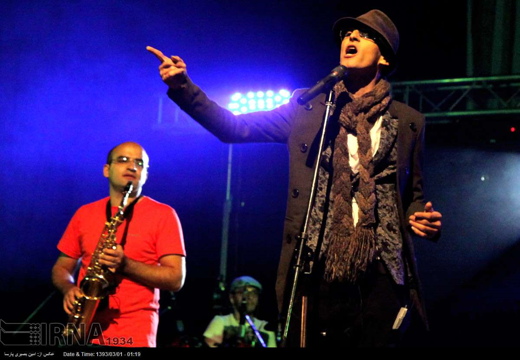
Pashaei gained fame for singing Negaran-e Mani (You Are Worried About Me), the closing credit song of Maah-e Asal (Honeymoon) – a famous anthology TV talk show in Iran which goes on air each year in the holy month of Ramadan in the hours leading to Iftar, when the faithful break their day-long fast.

The 30-year-old Pashaei passed away on Friday November 14 after a long battle against gastric cancer.


[Dammam is the Persian drum which is played with a wooden stick and/or with hand. In southern Iran it is played in religious ceremonies.]

ISIL militant beheads US aid worker

Peter-Kassig
Peter-Kassig

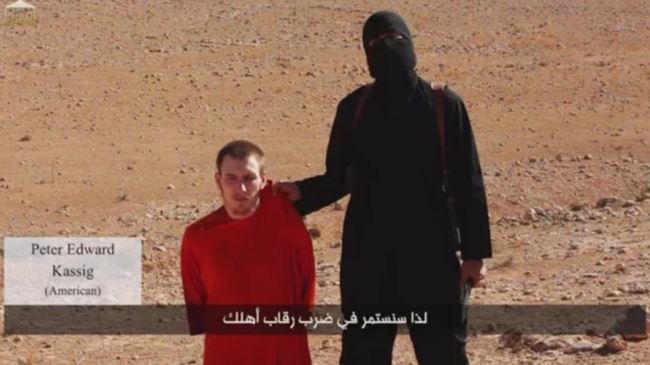
The footage, which was aired on Sunday, shows the masked terrorist claiming to have chopped off Kassig’s head as a warning to the government of the United States. However, there has been no verification of the clip.

The 26-year-old American was kidnapped in October 2013 on his way to Syria’s eastern city of Deir al-Zour.

The nearly 16-minute video also shows what appeared to be the mass execution of several abducted Syrian soldiers.

The ISIL militants first showed Kassig in the video of the beheading of British aid worker Alan Henning in early October. The terror group has posted numerous videos of its atrocities as a terror tactic.

ISIL have executed several foreign nationals including American journalists James Foley and Steven Sotloff and British aid workers David Haines, and Henning.

The ISIL terrorists currently control large areas of Iraq. The group sent its militants into Iraq in June, seizing large parts of land straddling the border between Syria and Iraq.

Oil Minister: Iran has tools to minimize damage by drop in oil prices

bijan namdar zangeneh

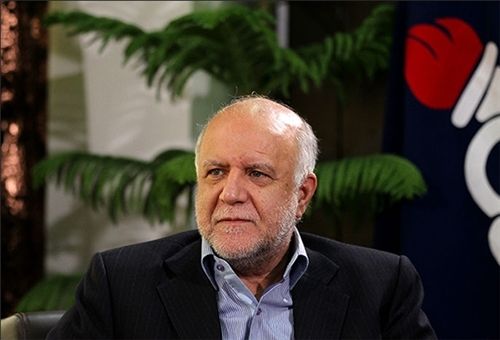
Oil Minister Bijan Namdar Zanganeh has said that Tehran has been affected by the recent plunge in the oil price but there are tools to minimize the damage.

[…]

By withdrawing money from the National Development Fund of Iran (NDFI), which is the country’s sovereign wealth fund, and paying those who are working in the upstream sector of oil industry, Iran will cushion the damage caused by the fall in oil price, the minister said in an interview with Azerbaijan’s Trend News Agency.

[…]

Turkish architects urge Pope not to visit Erdogan’s palace

Erdogan palace
Erdogan palace

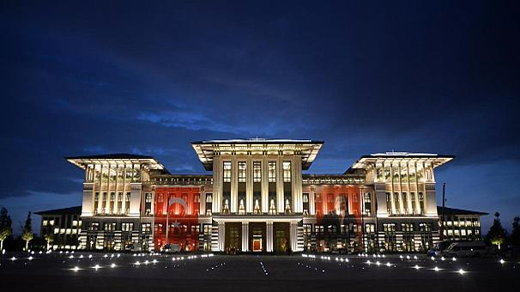
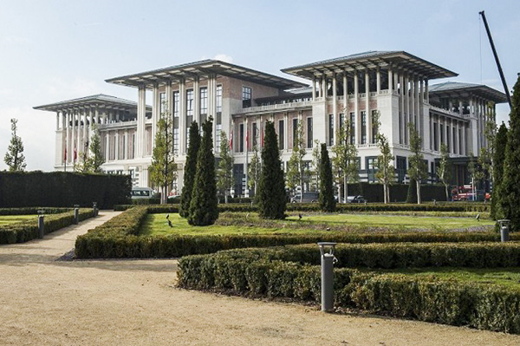
The controversial decision by Turkey’s Recep Tayyip Erdogan to build a new presidential complex near Ankara continues to meet with outcry at home. On November 12 Alef website reported that Turkey’s Chamber of Architects has taken its opposition beyond national borders, asking Pope Francis not to go to the Ak Saray (White Palace) when he visits Turkey in late November. What you go through below is the translation of the report:

The Ankara branch of the Chamber of Architects has in a letter asked Pope Francis to turn down an invitation by President Recep Tayyip Erdogan to go to his palace when he visits Turkey on November 28.

The leader of the Catholic Church is the first foreign guest Erdogan is to host in his new palace.

The Turkish architects have argued that the palace has been erected illegally and that the Pope should not legitimize the construction of the [sprawling] palace during his [three-day] stay.

The Chamber has also stressed in the message that it would send similar letters to heads of states, Ankara-based foreign embassies, and heads of international organizations urging them not to show up in the new presidential palace if and when they make a trip to Turkey.

The letter comes against a backdrop of fierce opposition to the gigantic palace by members of the public and environmentalists who say Erdogan has destroyed one of the few remaining green spaces in the capital to construct his mega mansion.

Several court orders blocking the project failed to halt the construction of the presidential palace [which was inaugurated on October 29 when Turkey celebrated the 91st anniversary of the Republic Day].


Erdogan’s new palace is a reminder of Iran’s Alighapoo


Turkey-Erdogan-Illegal-100-Room-New-Presidental-Palace