Friday, April 10, 2026
Home Blog Page 4009

A couple’s married life gets off to a road start

life in a truck cab

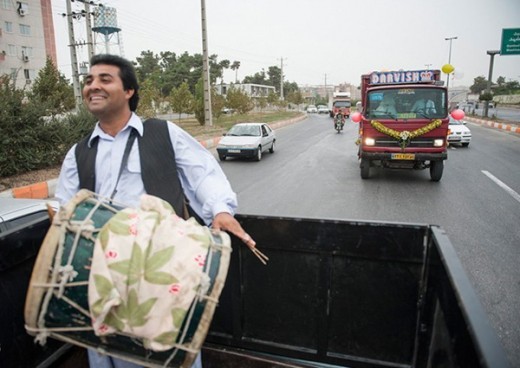
Sajad Miri, a 33-year-old truck driver from the southeastern province of Sistan and Baluchestan, lives in a village in Golestan Province [northeastern Iran].

Sajad, who thinks of his truck as his second home, has just started his married life in his truck. The following photos – by Tasnim news agency – feature the happy groom and bride in Sajad’s truck festooned with flowers:


G77, China slam unilateral sanctions against Iran

G77
G77

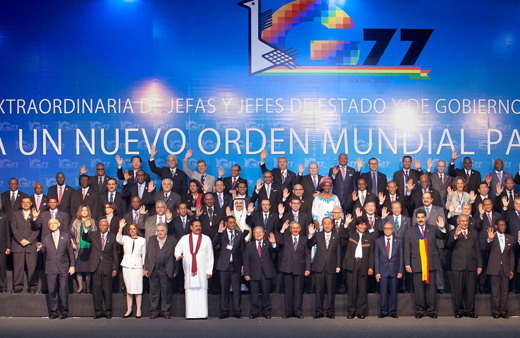
G77 member states together with China condemned imposition of illegal and unilateral sanctions against Iran.

In a statement in New York on Friday, G77 and China termed the sanctions as unacceptable.

The statement, unanimously adopted, was issued during the 28th annual meeting of the G77 foreign ministers on the sidelines of the 69th meeting of the United Nations General Assembly.

Based on the statement, the member states strongly dismissed the use of overseas laws and unilateral action in any form like sanctions against developing countries.

It further highlighted the need for speedy removal of all forms of such sanctions.

It was the first time that the foreign ministers of the G77 and China adopted an explicit tone in condemning the unilateral sanctions against Iran as unacceptable.

The statement also focused on the negative impact of the sanctions on prosperity and development of the Iranian nation and called for their speedy removal.

The Group of 77 (G77) was established on 15 June 1964 by seventy-seven developing countries at the end of the first session of the United Nations Conference on Trade and Development (UNCTAD) in Geneva. Now the ranks of its members include 133 countries.

The Group of 77 is the largest intergovernmental organization of developing countries in the United Nations, which provides the means for the countries of the South to articulate and promote their collective economic interests.

No agreement on major issues in nuclear talks: Iran official

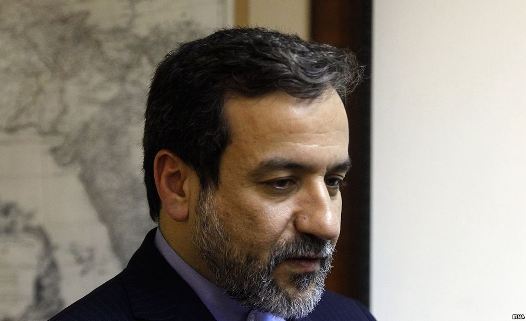
Iran-Abbas-Araqchi
Iran-Abbas-Araqchi

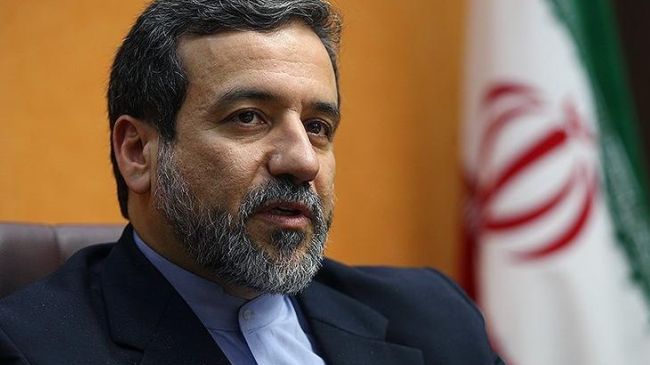
Speaking to reporters on Friday, Abbas Araqchi, who is also Iran’s deputy foreign minister for legal and international affairs, said although a preliminary understanding exists between the two sides, they are still discordant on major issues.

“We have not yet arrived at a mutual understanding that can serve as the basis of an agreement,” but there has been progress with regard to the details of technical issues, Araqchi added.

“We are absolutely ready to make the negotiations work out, and the same resolve can be seen in the other side as well. Naturally, they have their own stances and we have our own and it takes time to bring them close,” the Iranian official said.

The official noted that Iran’s Foreign Minister Mohammad Javad Zarif, his American counterpart, John Kerry and EU’s foreign policy chief, Catherine Ashton, held a tripartite negotiation on anti-Iran sanctions.

“As you know, sanctions is one of the main topics [of negotiations] and these sanctions have been for the most part imposed [on Iran] by the United States or Europe. As a result, most of our talks are with the United States and Europe,” Araqchi noted.

He noted that the tripartite meeting has been relatively constructive, adding, “This can be a good sign that a common understanding will be probably reached at.”

Earlier on Friday, Araqchi said nuclear negotiations between Iran and the six countries – the United States, Russia, China, France, Britain and Germany – have reached a breathtaking point and both sides have entered into many details.

Acknowledging that the two sides are still divided over “key issues,” Araqchi said, “We will by no means leave the negotiating table, but will not retreat an iota from Iran’s rights either.”

Iran and the six countries clinched an interim deal in Geneva, Switzerland, last November. The agreement took effect on January 20 and expired six months later. In July, they agreed to extend the negotiations until November 24.


Iran nuclear talks making progress: US

Iran talks-Sherman
Iran talks-Sherman

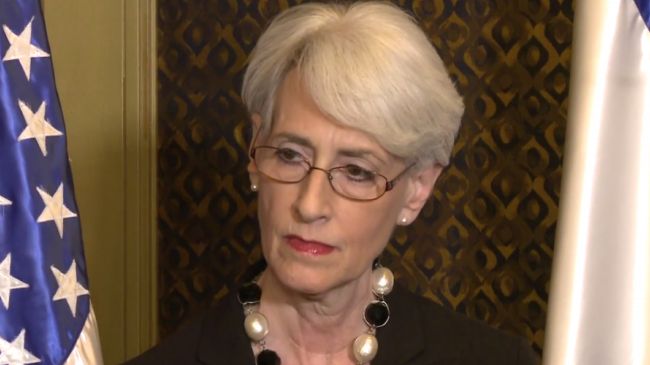
“I believe we are making progress,” Wendy Sherman said in a Thursday interview, adding, “That said, there are still some very crucial decisions that need to be made.”

Sherman described the current round of negotiations as “very, very complicated” and “very technically detailed,” saying, “I think we have made progress while we’ve been here during the UN General Assembly and many leaders and virtually every foreign minister of the P5+1 (Sextet of powers) has had a bilateral with Iran, and it has helped to improve our understanding.”

The US negotiator noted that the parties to the negotiations should make changes in their approaches.

Sherman pointed to the prospect of removing the sanctions against Iran if the nuclear talks achieve a final deal, saying, “I have to tell you as soon as we suspend our major sanctions – which will happen very early in the agreement – the world will flood into Iran. Many international delegations have already been to Iran and so they will begin to see what they can do.”

On Friday, senior Iranian negotiator Abbas Araqchi said nuclear talks between Iran and the Sextet have reached a breathtaking stage.

Iran and the six world powers – the United States, France, Britain, Russia, China and Germany – are currently in talks to work out a final accord that would end the dispute over Tehran’s civilian nuclear work.

The two sides clinched an interim deal in Geneva, Switzerland, last November. The agreement took effect on January 20 and expired six months later. In July, they agreed to extend the negotiations until November 24 amid differences over a number of key issues.


Tehran nuclear talks at breathtaking stage

Iran-US Talks-Araqchi

“The nuclear negotiations have reached a breathtaking point and both sides have entered into many details,” Araqchi said on Friday.

Araqchi, who is also the deputy foreign minister for legal and international affairs, said the Iranian negotiating team will continue to insist on Iran’s rights and will not overstep the country’s “redlines” in the talks.

Acknowledging that the two sides are still divided over “key issues”, Araqchi said, “We will by no means leave the negotiating table, but will not retreat an iota from Iran’s rights either.”

He said that Iran is ready to accept solutions that would allay concerns over the country’s nuclear energy program provided that they take into consideration the Islamic Republic’s rights and redlines.

According to Araqchi, no concrete progress has been made yet in the ongoing talks.

Iran and the six world powers – the United States, France, Britain, Russia, China and Germany – are currently in talks to work out a final accord that would end the dispute over Tehran’s civilian nuclear work.

On Thursday night, Iranian Foreign Minister Mohammad Javad Zarif, EU foreign policy chief Catherine Ashton and US Secretary of State John Kerry held a meeting in New York to discuss progress made during the ongoing nuclear talks and to confer on how to proceed with the negotiations.

Zarif leads the Iranian negotiating team while Ashton heads the opposite side.

The two sides clinched an interim deal in Geneva, Switzerland, last November. The agreement took effect on January 20 and expired six months later. In July, they agreed to extend the negotiations until November 24 amid differences over a number of key issues.

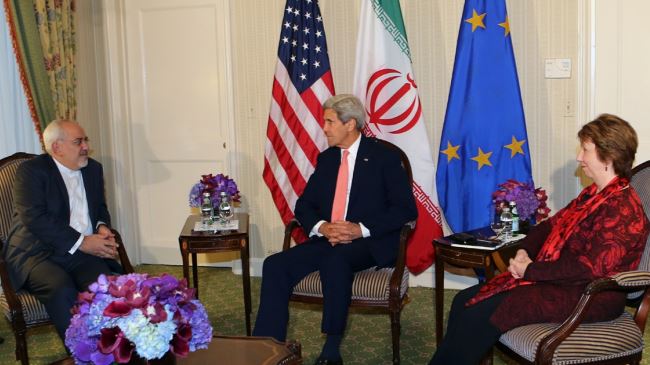
Iran, EU, US hold trilateral meeting in NY

Zarif-Kerry-Ashton
Zarif-Kerry-Ashton

The three top diplomats sat down in New York on Thursday night to discuss progress made during the ongoing nuclear talks and to confer on how to proceed with the negotiations.

Iran and six world powers – the United States, France, Britain, Russia, China and Germany – are currently in talks to work out a final accord that would end the dispute over Tehran’s civilian nuclear work.

Zarif leads the Iranian negotiating team while Ashton heads the opposite side.

During a meeting with his German counterpart Frank-Walter Steinmeier on Wednesday, Zarif said that Iran is determined to reach a final deal with six world powers and called on the West to seize the “rare” opportunity to settle the “fabricated” dispute over Tehran’s nuclear work.

The top Iranian diplomat expressed Tehran’s firm determination in considering any solution presented for the country’s nuclear issue.

Iran and the six world powers clinched an interim deal in Geneva, Switzerland, last November. The agreement took effect on January 20 and expired six months later. In July, they agreed to extend the negotiations until November 24 amid differences over a number of key issues.

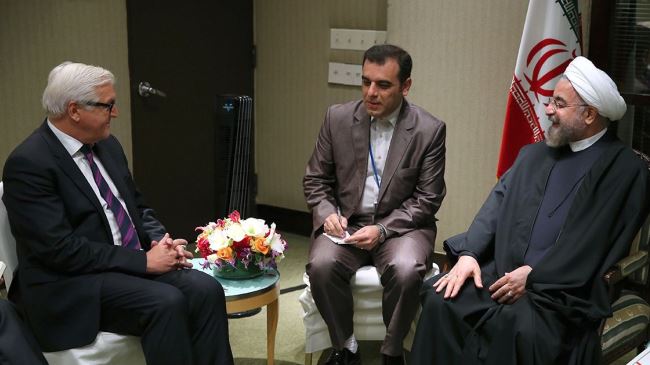
Iran, P5+1 never been closer to nuclear deal: German FM

Rouhani-Iran-Germany-UNGA

“We have never been so close to a deal as now,” Steinmeier told reporters following his meeting with Iran’s President Hassan Rouhani on the sidelines of the UN General Assembly meeting in New York on Thursday.

He, however, said that the final phase of the talks before the end of the November 24 deadline is “probably the most difficult.”

There are still “hurdles” to get over in the course of the talks, he said but stressed that a collapse of the current negotiations was “not permissible.”

During the meeting with the top German diplomat, Rouhani said a nuclear deal between Tehran and the P5+1 group of world powers was possible if the opposite side demonstrated political will toward the conclusion of an agreement.

“The Islamic Republic of Iran seeks a win-win agreement for all parties,” he added.

The Iranian president underlined the need for the immediate signing of a comprehensive deal but stressed that such a deal should protect Iran’s rights without bias and be based on international regulations.

Iran and the six world powers – the United States, France, Britain, Russia, China and Germany – are currently in talks to work out a final accord that would end the dispute over Tehran’s civilian nuclear work.

The two sides clinched an interim deal in Geneva, Switzerland, last November. The agreement took effect on January 20 and expired six months later. In July, they agreed to extend the negotiations until November 24 amid differences over a number of key issues.


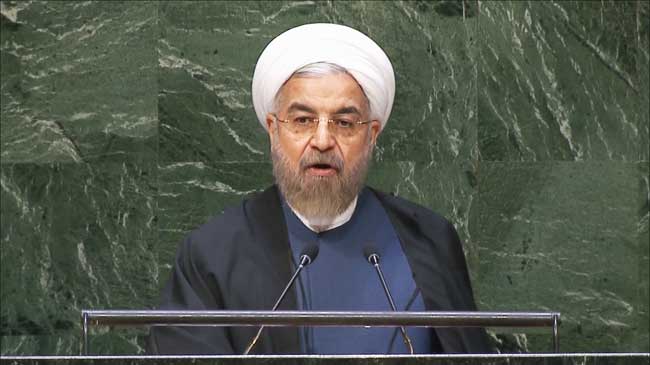
Terrorism, extremism threatening entire world: Rouhani

Rouhani-general assembly

Addressing the 69th annual session of the United Nations Assembly in New York on Thursday, Rouhani said extremism is a global phenomenon which has been fostered by certain countries which are now unable to fight it.

Noting that extremism and terrorism have turned into a global phenomena, Rouhani said, “All countries that have played a role in creating these terrorist organization, should own up to their mistake and apoplexies,” not only to the past, but also to future generation.

Rouhani stated that the most painful point about current terrorism is that terrorists are beheading people and killing innocent civilians under the name of religion while all divine religions are essentially against violence and extremism.

This is a strategic mistake if some counties are trying to consolidate their domination over the Middle East region under the pretext of fighting terrorism because regional countries can fight terrorism in the region on their own.

“If other countries really want to fight terrorism, they should help regional countries in their effort to do this,” Rouhani added.

He also advised regional countries to note that all of them are in the same boat and need coordination and cooperation to fight regional issues.

Referring to Iran’s nuclear issue, the Iranian president said Iran’s nuclear case has no other solution but negotiation and “if there are parties that imagine other solutions to this issue,” they are greatly mistaken.

He noted that negotiations between Iran and the P5+1 group of countries have fared successfully in past months and will hopefully reach a comprehensive agreement within the deadline set for this purpose.

The Iranian president stated that the Islamic Republic has abided by its commitments, though the other parties have sometimes taken steps in the opposite direction.

Rouhani said Iran is determined to continue its nuclear energy program according to international regulations and is committed to negotiation with other countries in this regard under conditions of mutual respect and in accordance with international regulations.

Iran refutes claims of supporting terrorism

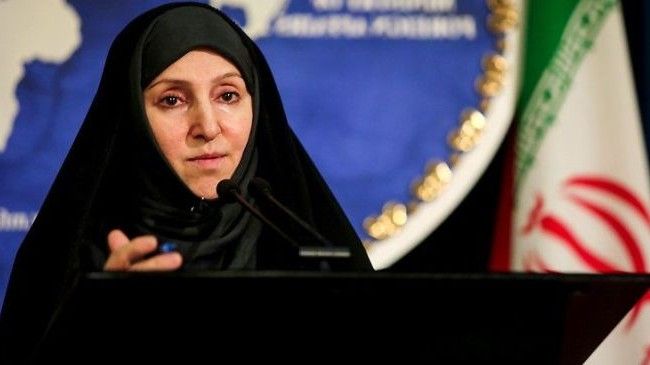
Iranian Foreign Ministry Spokeswoman Marziyeh Afkham

In his address to the UN General Assembly on Wednesday night, Cameron claimed that “Iran’s support for terrorist organizations” needs to change.

“The speech by the British prime minister at the UN General Assembly shows the perpetuation of the egocentric attitude of a government which has a history of [causing] trouble in our region and many of the problems facing the region are due to the wrong policies [adopted] by that government,” Iran’s Foreign Ministry spokeswoman, Marzieh Afkham, said Thursday.

The Iranian official expressed regret that the British government which has been supporting terrorist groups has passed an “inappropriate judgment” on Iran which has always been at the forefront of the campaign against the scourge of terrorism.

Afkham said that the British government has endangered regional and international peace and security by supporting the ISIL Takfiri terrorist group.

The ISIL terrorists control large areas of Syria’s east and north. The ISIL sent its Takfiri militants into Iraq in June, seizing large parts of land straddling the border between Syria and Iraq.

The terrorists have committed heinous crimes and threatened all communities, including Shias, Sunnis, Kurds, Christians and Izadi Kurds, during their advances.

According to a CIA source, more than 15,000 foreign fighters from more than 80 countries have gone to Syria to join militant groups. Two thousand of the fighters are believed to be Westerners, including at least 500 British nationals.


Iran Not to Cooperate with Fake US-Led Anti-ISIL Coalition

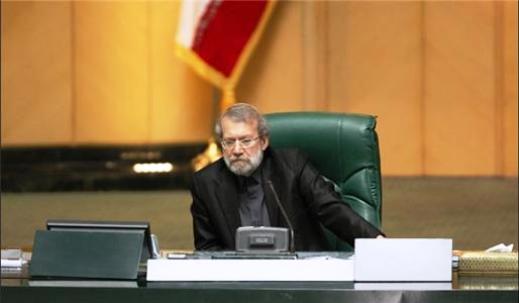
Iranian parliament speaker

“The US president has said that they along with their regional allies will uproot terrorism in the world which is a ridiculous political jokes,” Larijani said, addressing an open session of the parliament in Tehran on Wednesday.

He underscored that terrorism cannot be uprooted with airstrikes, adding that the air attacks will have two consequences; firstly, killing and displacing the people who live in the bombed regions; secondly, displaying the ineffectiveness of the US resort to power.

“These US attacks will spread terrorism, as the bombings in Afghanistan didn’t uproot terrorism and, rather, helped the terrorists’ coming in control and spread in other countries,” Larijani said.

He condemned the US and other western states’ moves in the region, and said, “We have opposed terrorism in the region since the beginning and will really fight against it but we don’t cooperate with the fake coalitions as we don’t see them legitimate.”

After the so-called US-led coalition against the ISIL declared its creation, Iran lashed out at the western states for pursuing a double-standard policy towards campaign against terrorism in various countries.

Last Monday, the Iranian Supreme Leader said the US had played no role in the ISIL’s recent defeat in Iraq, and stressed that Washington officials have repeatedly demanded Iran to join them in the fight against the ISIL, but Iran had rejected all their demands.

“During the days I was at the hospital, I had fun listening to the remarks of the US officials on fighting Daesh (ISIL),” Ayatollah Khamenei said in an interview with Iran’s state-run TV as he left the hospital after a successful prostate surgery.

Ayatollah Khamenei described the US officials’ allegations about fighting the ISIL as hollow and biased, and said the US disappointment at Iran’s partnership in its incorrect and illegal coalition was an “unrivaled honor” for Tehran.

Ayatollah Khamenei elaborated on some details of the US demands for Iran’s cooperation in forming the anti-ISIL coalition, and said, “During the hard days of Daesh’s attacks on Iraq, the US ambassador to Iraq demanded our envoy in the country (Iraq) that Iran and the US meet for negotiations and coordination on Daesh. Our ambassador reflected the issue to Iran and although some officials didn’t voice opposition, I opposed it and said we will not cooperate with the Americans in this regard since they have a corrupt intention and stained hands and how could we have cooperation with the Americans under such conditions.”

He referred to US Secretary of State John Kerry’s remarks that his country wouldn’t invite Iran to the anti-ISIL coalition, and said, “The same US secretary of state had personally demanded (Iranian Foreign Minister) Dr. (Mohammad Javad) Zarif, and called for cooperation with us on Daesh but Dr. Zarif had rejected his demand.”

Ayatollah Khamenei also revealed that “the US deputy secretary of state (Wendy Sherman) repeated the same demand for cooperation with Iran against the ISIL during the talks with her Iranian counterpart Seyed Abbas Araqchi, and the Iranian deputy foreign minister refused it”.

He underscored Iran’s firm and explicit opposition to cooperation with the US in fighting the ISIL, and said, “Now they are telling a lie that they won’t accept Iran in the coalition because Iran had announced its opposition to its presence in such a coalition since the very beginning.”

Ayatollah Khamenei said that the US and its allies had earlier formed “a coalition of several countries against Syria, but they couldn’t do a damn thing”, and ensured that the same failure will be repeated with regard to Iraq.

Reiterating that the Americans were not serious about fighting the ISIL, he said, “The Americans and even Daesh are well aware that the move which broke Daesh’s backbone in Iraq was not the US action but the acts of the popular forces and the Iraqi army who had well learned the ways to fight Daesh and inflicted heavy damages on the group.”

He underscored that the Iraqi popular forces and army’s blows to the ISIL would continue, and said, “The reality is that the Americans are seeking an excuse to do the same actions in Iraq and Syria that they are doing in Pakistan, where they trespass on the country’s territory without any permission, despite the existence of a sovereign government and a powerful army (in Pakistan), and bomb different parts.”

“The Americans should know that if they do this, the same problems that were created on their way in the past ten years in Iraq will be created for them again,” Ayatollah Khamenei stressed.