Saturday, April 11, 2026
Home Blog Page 3975

Iraq Needs to Import Iran’s Natural Gas: Minister

Iraq’s Electricity Minister Qasim al-Fahadawi says his country will need Iran’s natural gas over the next seven years to operate its power stations as the Arab country’s domestically produced natural gas will not suffice.

According to a Farsi report by Mehr News Agency, the Iraqi official said new power plants will soon be ready to give service, so the country will need to import natural gas.

He said Iraq’s natural gas produced in the country’s southern fields in Basra province will not be enough to run power stations.

Of course, he said, Iraq’s dependence on natural gas imports will decrease as production gets underway in several gas fields.

Last month, Iran began exporting natural gas to neighbouring Iraq. The project had been delayed for four years due to security challenges caused by the civil war in Iraq. Officials say Iran has started by pumping seven million cubic metres per day, and that the figure is to reach 35 million cubic metres per day in the future.

Iran will supply natural gas to Iraq under two contracts. According to one agreement, natural gas will be pumped to the Baghdad power station, and another deal provides for natural gas exports to Basra. The Islamic Republic is currently exporting electricity to its energy-hungry neighbour.

Earlier this month, Iran concluded its first petroleum contract with the French energy giant Total. It is Iran’s first important contract with major countries since sanctions on Iran were lifted. Under the deal, Total will take part in the development of phase 11 of Iran’s South Pars Gas Field. Phase 11 has a capacity of producing two billion cubic metres of natural gas per day, which is equal to 400,000 thousand barrels of crude oil per day together with gaseous condensates. Total announced on July 3 that the natural gas produced from that phase will start to be used to meet Iran’s domestic needs as of 2021.

Brazilian Footballer Sends Iranians Heartfelt Appreciation Message

In his post, Róbson Januário thanked all the Iranians for their warm hospitality during his stay in Iran.

“Thanks to all Iranians for the affection. I’m sure that I will find them in a next opportunity. Thank you all for the support, I’m grateful to you!!” he wrote.

Januário joined the Iranian professional football club, Esteghlal, in July 2017. He signed on loan until the end of the 2016-17 season. After joining Esteghlal, he quickly established himself and became a regular starter in the team. He finished the season with 23 appearances as Esteghlal finished the season as runners-up in the league.

In July 2017, Robson signed with Portuguese club Boavista F.C.

Brazilian Footballer Sends Iranians Heartfelt Appreciation Message

US Congress Approves Bill to Run Hotline in Persian Gulf

The bill proposed by two Democrat lawmakers is aimed at preventing accidental conflicts between the two sides in the Persian Gulf.

The issue of establishing a hotline or “red phone” was raised by the US military officials in 2012, but faced opposition from the military authorities in Iran, according to a Farsi report by Hamshahri Online.

The term “red phone” was first used during the Cold War. To lessen the threat of an accidental nuclear war, the United States and the Soviet Union agreed to establish a “hot line” communication system between the two nations.

The idea comes to the fore when there is a possibility of direct conflict between two parties.

In recent years, US military officials have claimed the Islamic Revolution Guards Corps’ boats are aiming to approach American warships. However, the Iranian military officials, including the IRGC Navy commanders, have denied it saying that the US troops are looking for excuses to stay in the Persian Gulf.

In a case that occurred last year, the US Navy spokesperson claimed that a US warship had fired a warning flare toward an Iranian vessel after a group of IRGC speedboats approached it.

The spokesperson said the IRGC boats did not maintain the required space from the US guided-missile destroyer and they came within about 1,000 metres of the USS Mahan.

At that time, Iran’s Foreign Minister Mohammad Javad Zarif wrote in a tweet that “Our Navy operates in – yes, correct – the Persian Gulf, not the Gulf of Mexico. [The] Question is what [the] US Navy [is] doing 7,500 miles from home.”

Back in September 2012, Chairman of the US Joint Chiefs of Staff Michael Mullen expressed concern over the lack of any communication link between the governments of Iran and the United States in the Persian Gulf.

During those days, US military officials stated that Washington is looking into the establishment of a hot telephone line with Iran.

They claimed US military forces in the Persian Gulf were deeply concerned about patrolling IRGC speeding boats.

A few days later, a US Defence Department official repeated that his country is studying to establish a red phone line with Tehran to avoid any unwanted collision in the Persian Gulf.

At that time, Rear Admiral Ali Fadavi, who was the commander of the IRGC navy, responded to the remarks by US officials repeating the same words FM Zarif said the year before.

“We will communicate with the United States whenever we go to the Gulf of Mexico. The Islamic Republic of Iran believes that the presence of US in the Persian Gulf is illegal and does not make sense,” Fadavi said.

This is the approach that the Iranian military and diplomatic officials have adopted on establishing a hot line with Washington. An approach that has not been changed since 2012.

Iran Sentences US Spy with Dual Nationality to 10 Years in Prison

Speaking at a press conference in Tehran, Ejei said the individual had snooped into Iran to gather documents, and “was directly guided from the US.”

That person was identified and arrested by the Intelligence Ministry forces, and has been sentenced to ten years in jail, the spokesman noted, adding that the verdict can be appealed.

Ejei said he will provide more details once the Judiciary delivers a final verdict.

2600-Year-Old Instrument on Display in Persepolis Museum

2600-Year-Old Instrument on Display in Persepolis Museum

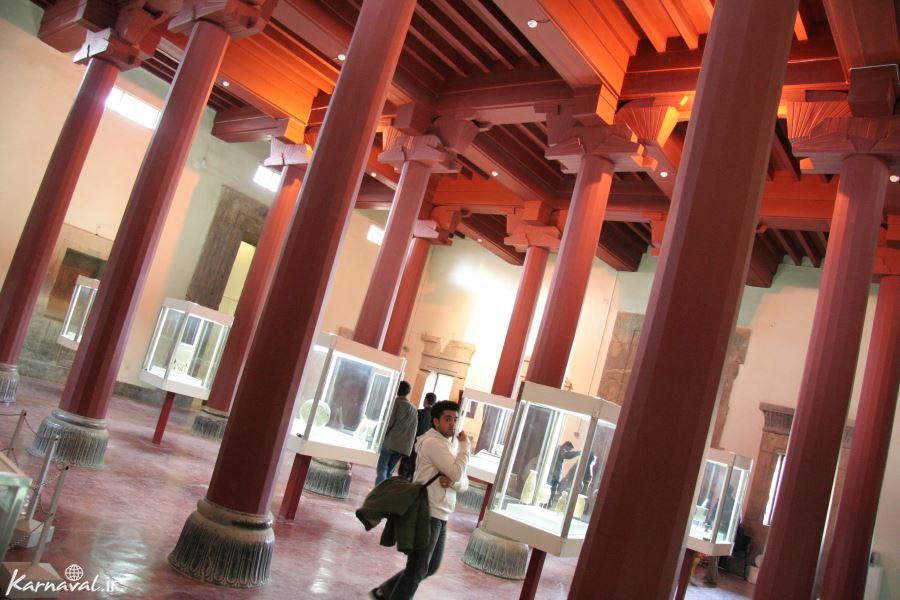
The pieces on display in the Persepolis Museum have been unearthed during various excavations over years. Some of the pieces displayed in the museum include eye-coloured beads, clay tablets, spearheads, arrows, parts of ancient statues, fire pots, and azure bricks.

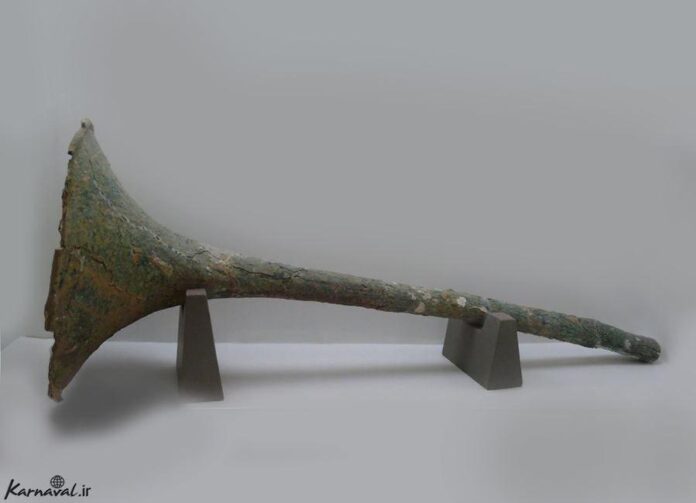
2600-Year-Old Instrument on Display in Persepolis MuseumAchaemenid or Bronze Karna is one of the most interesting antiques in the Museum. Karna is a wind instrument which dates back to about 2,500 years ago.

According to historical documents as well as books by great historians like Herodotus, Karna was used by the military men under Achaemenid Empire. The army used the wind instrument to declare war and festivities.

The Achaemenid Karna is made of bronze, an alloy of copper and tin. It was unearthed back in 1957 in the Persepolis compound, according to a Farsi report by Carnaval website.

The length of the ancient wind instrument is 120 centimetres. The diameters of its outside and inside bell are respectively 48cm and 5cm.

Having studied Bronze Karna for years, the archaeologists have come to this conclusion that the wind instrument dates back to 6th century BC. In another word, the instrument is now 2,600 years old. Achaemenid or Bronze Karna is now on display in the Persepolis Museum.

‘Iran, Tajikistan Can Resolve Differences through Talks’

Bahram Ghasemi

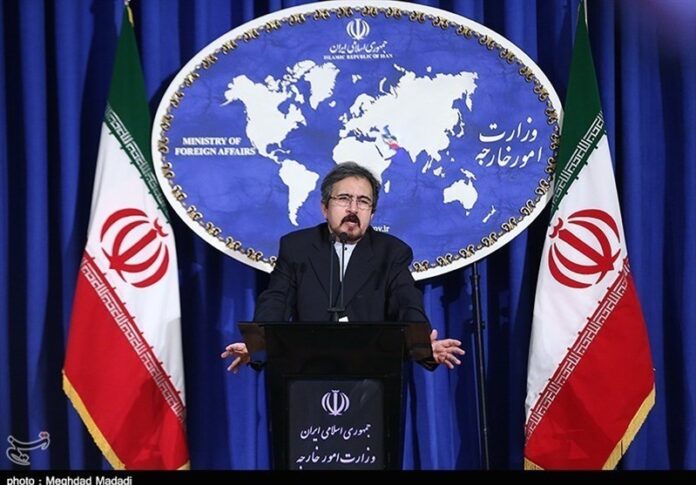
Regarding the misunderstandings between Tehran and Dushanbe, Foreign Ministry Spokesman Bahram Qassemi said that for any reasons, there is a misunderstanding for Tajikistan about Iran and others have tried to deepen this misunderstanding.

“There is no doubt that some countries in the region are struggling to strain the regional countries’ relations with Iran. These actions are being pursued in spite of Iran’s efforts to avoid it. We believe that Tajikistan is a very close country to us and we care about its fate. We want independence and development of Tajikistan,” Qassemi added in a Farsi interview with the Tasnim News Agency.

The Iranian diplomat also expressed hope that Tajikistan would overcome these struggles by thinking more about its relations with Iran and by looking closer at the facts of Dushanbe-Tehran ties in order to prepare the grounds for further talks with the Islamic Republic.

“If that happens, Dushanbe will face a change of mind-set and will return to very good normal relations with Iran because there would not be a better and more powerful friend than Iran for Mr. Rahmon’s administration in the region,” he underlined.

“We are interested in the continuation of his [Rahmon’s] government and they must analyse the facts correctly. There are also many attempts being made to put us in a better direction. If we sit at a table to negotiate, I am optimistic that we will reach understanding to clear up the misunderstandings caused by some other countries.”

Iran’s Presence in Syria at Damascus’ Request: Diplomat

Jaberi Ansari

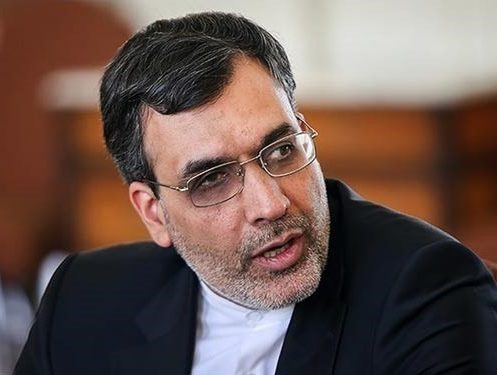
Iran’s Deputy Foreign Minister for Arab and African Affairs Hossein Jaberi Ansari has weighed in on the latest developments in Syria as well as Iran’s role in the Arab country.

Speaking to reporters after his meeting with Russian President Vladimir Putin’s Special Envoy for Syria Alexander Lavrentiev, Jaberi Ansari said the presence of Iranian forces in Syria comes at the request of the Syrian government and is based on an agreement by Tehran and Damascus.

“The presence of Iranian forces in Syria, in any form and at any level, is at the request of the Syrian government and agreement by Tehran and Damascus, and is not subject to any agreement by any regional or international party,” said the diplomat in response to a question about certain reports which suggest Russia has, at the request of Israel, accepted that Iranian troops must not be present in southern Syria.

According to a Farsi report by ISNA, he said even if others reach agreement on Iran, it will practically have no bearing on the presence of Iranian troops in Syria.

Jaberi Ansari then touched upon Iran’s strategy on the Syria crisis and the necessity of resolving it politically.

“Iran has not been, and is not interested to get involved in the crisis on a large scale,” he said.


Iran’s Presence in Syria Limited, Calculated

Jaberi Ansari said Iran’s presence in the Arab country is “limited, calculated” and at the request of Damascus as well as mutual agreement by both sides.

“We would like to see stability and tranquility return to Syria. We want to see the crisis in Syria end as soon as possible. We are not seeking to expand our sphere of intervention in Syria. As I said, what is important for Iran is an immediate end to the crisis, the human catastrophe in Syria and the incessant destruction of the country,” he noted.

When it comes to the settlement of the Syria crisis, he said, what is important is that Syrian people themselves should determine their own fate, highlighting that Iran’s intervention in Syria and contribution to efforts to settle the crisis are aimed at securing Syrians’ right to self-determination.


Iranian, French Delegations Hold Talks on Syria

He then turned to talks in the Kazakh capital, Astana, aimed at promoting peace in Syria.

Jaberi Ansari said the negotiations are brokered by Iran, Turkey and Russia, which are the guarantors of the agreements reached during the talks.

However, he added, delegations from other countries, such as France, are also present on the sidelines of the talks, but they do not take part in the main sessions.

He said these delegations hold diplomatic consultations with one another, but do not have any direct impact on the trend of the talks.

“The three countries of Iran, Russia and Turkey as well as the Syrian government and the opposition have the main and direct role in the talks,” he said.

“Some parties and countries such as the UN envoy attend the meetings as observers. They take part in official and open sessions,” he noted.

“The French delegation has been present on the sidelines of the Astana talks since the first meeting there. On the fringes of the Astana 5 negotiations, the Iranian and French delegations had a meeting and the two sides exchanged views on the Syria crisis,” he said.

He then touched upon his two-hour meeting with the Russian delegation in Tehran on Syria.

He said the rapid pace of developments in Syria makes it all the more necessary for Iran, Russia and other key players to hold consultations and talks at short intervals.

Therefore, he added, Iran and Russia are currently holding meetings at one-week or two-week intervals.


Turkey Not Ready for Final Deal on Syria

He further said agreement on the four de-escalation zones in Syria already discussed in Astana 5 talks has not been reached yet due to differences on the areas in the north of Syria as well as Turkey’s lack of readiness in the talks to strike a final deal.

He said new developments have happened in Syria since Astana 5 talks.

“In this regard, Iranian and Russian officials held talks on the Syria Crisis. Mr. Lavrentiev and his accompanying delegation held meetings with Mr. Shamkhani and me. We discussed the generalities and details of issues and remaining solutions to the Syria crisis.”

He said the key objective of the Astana talks is to return tranquility and stability to Syria while highlighting the importance of fighting terrorism in the Arab country.

Jaberi Ansari then referred to the importance of easing tension and military conflicts in Syria.

He noted the trend of de-escalation should be planned in such a way that the Syrian people suffer the least possible losses and human catastrophes are stopped.

He noted that no development must result in the disintegration of Syria and the violation of the country’s territorial integrity and sovereignty.

“This is our red line,” he stressed.


Astana Talks Draw Line between Opposition, Terrorists

The diplomat then said Astana talks have played a key role in drawing a line between the Syrian opposition and terrorist groups.

He underscored Astana talks have played a positive role in helping open up a new political horizon to resolve the Syria crisis.

“Of course, this does not mean there are no problems in front of us. The Syria crisis is a multi-layered and complex one. Different players with different interests […] are involved in the crisis.”


Expert Meeting on Syria to Be Held in Tehran

He said an expert meeting will be held in Tehran in two weeks’ time.

The diplomat then touched upon a recent meeting between the US and Russia on Syria on the sidelines of the G20 meeting in Hamburg.

“Any agreement on Syria should be within the basic red lines in settling the Syria crisis.”

He touched upon the significance of maintaining Syria’s territorial integrity and sovereignty, and said any arrangement regarding a ceasefire in the country would be temporary.

“The final decision-makers in settling the crisis are Syrian people, and any agreement should be in line with the Syrian nation’s opinions as well as the basic principles. This way, the agreement can play a positive role in developments in Syria.”

Jaberi Ansari then said any agreement out of the framework of Astana talks may have short-term results, but will not be effective in the medium and long terms, and may even be counterproductive.

He also noted that the US government has so far kept flip-flopping on the Syria crisis and now it is time to see to what extent the Americans conform the agreement reached on Syria during Astana talks.

Iran VP Pays Homage to Late Math Genius Mirzakhani

March 14 Named Int’l Math Day in Honour of Late Iranian Genius

Iranian Vice-President for Science and Technology Sorena Sattari has written a note commemorating Iranian mathematical genius Maryam Mirzakhani, who died of cancer on July 15, 2017. The following are excerpts from the statement.

* I remember, around this time back in 2014, we heard that Maryam Mirzakhani, our old classmate at college, had won the prestigious Fields Medal. This is a very important award and experts say it is equal, in value, to a Nobel Prize for Math.

* We became very happy and felt proud. Especially old and new students at Sharif University of Technology took pride in her achievement and congratulated their friends and classmates from the bottom of their hearts. And I, not as the vice president, but as a Sharif University alumnus, wrote a letter and thanked Maryam Mirzakhani for bringing honour upon Iran.

* All of us knew that she was a serious and wise girl and spent all her time studying and working on complicated equations. A few years later, we were so happy to find out she had survived that bus accident, but felt so sad for the other folks who lost their lives in that accident. And now we realized that she succumbed to cancer. Well, everybody will die one day. “From God we are, and to Him we shall return.”

* During her short life, Maryam Mirzakhani brought honour upon her country while she herself was among the top mathematicians in the world. The news of her death saddened us all. I saw that all Iranians were sorrowful.

* We pay tribute to this renowned Iranian scientist in recognition of her scientific services and pray for her. May her soul rest in peace. I express condolences to all Iranians, especially the country’s scientific community, on her demise and ask God Almighty to grant her family, spouse and child patience.

Iran Not Seeking to Form Regional Coalition: Spokesman

Foreign Ministry spokesman Bahram Qassemi on Sunday touched on the worrisome conflicts in the region, saying they originate from big mistakes made by world powers decades ago, among them an unconditional US support for Israel.

Asked whether Iran was open to the idea of forming a coalition with Iraq, Syria and Turkey to counter threats and solve crises in the region, Qassemi said what the Islamic Republic wants is to maintain peace and security.

“At the current juncture, the Islamic Republic, beside preserving its independence and creating necessary foundations for boosting and upgrading its position, has a positive outlook that would help security, peace and stability in the region,” he said.

“We have to want peace and stability for all; therefore, there is no need to build such a coalition against others,” Qassemi added.

For instance, “if our relations with Turkey or Azerbaijan are good, they won’t be against any other country,” the spokesman said.

“There is the difference of views and misunderstanding but in a coalition, we have to decide whom we are for or against because we can’t have dual behavior.”

Iran, Egypt likely to step up ties

Qassemi touched on Iran’s relations with other countries, including Egypt with which it has had no full diplomatic ties since the 1979 Islamic Revolution.

Bilateral cooperation between the two countries, he said, is at the level of interests sections, but they have exchanges of views and their foreign ministers have been in contact whenever necessary.

“It is possible to increase relations; we have special respect for the Egyptian people and its civilization,” Qassemi said.

Iran Not Seeking to Form Regional Coalition: Spokesman

The official said there are “complexities” in bilateral ties between Tehran and Cairo which they have not been able yet to solve in “a desirable fashion”, calling on Egypt to have “a more realistic look” at Iran.

“With prudence, Egypt can return to its past days and retake its superior place in the Islamic world,” Qassemi said, adding “Egypt is different from many newly-born countries in the region.”

The official was apparently referring to Saudi Arabia’s allies in the ongoing crisis with Qatar which is under a virtual blockade with the participation of Egypt, the UAE and Bahrain.

“Egypt is one of the most important countries in the region and the Islamic world which can play a more outstanding role in the Arab and Islamic world but unfortunately it has lost this standing to a great degree.”

No communication channel with Trump

Asked about contacts with the administration of US President Donald Trump, Qassemi said Iran had discussions with Washington within the framework of the 2015 nuclear agreement and the Joint Commission monitoring the implementation of the deal.

“There is no communication channel between us and Mr. Trump’s government at this time,” he said.

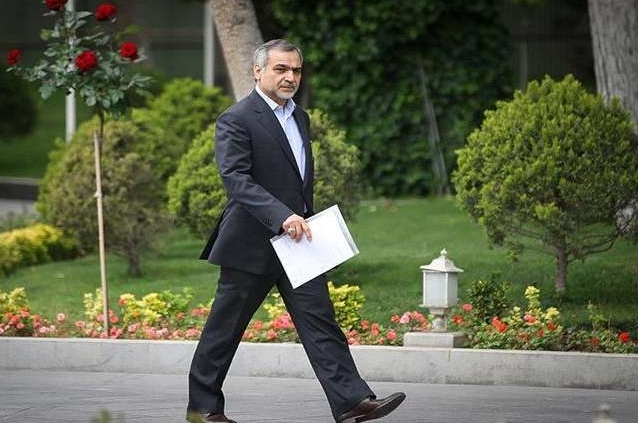
Iran President’s Brother Arrested on Financial Charges

Fereydoon-Rouhani

Gholam-Hossein Mohseni Eje’i, the Spokesman for the Iranian Judiciary, declared in his weekly press conference on Sunday that Fereydoun, the president’s brother and top aide, was sent to prison after he failed to put up the bail set by the Judiciary on Saturday.

Mohsen Eje’i said he is arrested on financial charges, and the Judiciary has conducted series of investigations about him.