Tuesday, December 30, 2025
Home Blog Page 396

Nearly 60% of Americans believe US losing global credibility under Trump: Poll

Donald Trump

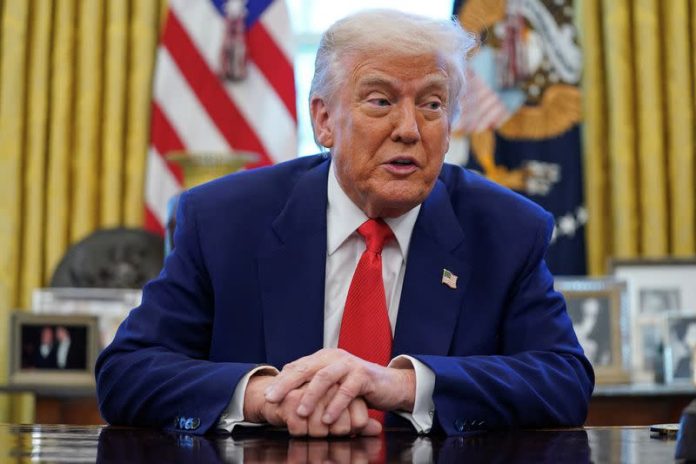
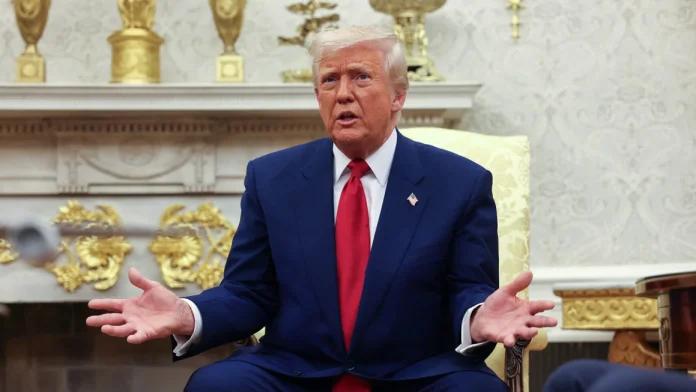
Concerns about the U.S. global credibility under Trump are shared by roughly one-third of Republicans.

The survey revealed growing dissatisfaction with Trump’s policies on multiple issues. His overall approval rating stands at 42%, the lowest since he returned to the White House in January.

Unlike his more restrained first term, the second Trump presidency sent shockwaves through international politics as the president lashed out against the U.S.’s friends and partners and moved to restore ties with Russia.

This was perhaps most visible in Ukraine, a country that relied on crucial U.S. military and economic support under Trump’s predecessor, former U.S. President Joe Biden.

Trump departed from the West’s unequivocally pro-Ukraine policy, presenting the U.S. as a mediator seeking to broker a ceasefire between Kyiv and Moscow. These efforts have included pressuring Ukraine by temporarily halting military support, while applying far less tangible pressure on Moscow, except for verbal threats of sanctions and tariffs.

Russia was even one of the few countries—unlike Ukraine, EU states, and others—that were excluded from Trump’s sweeping “reciprocal” tariffs, which sent stock markets tumbling around the world. Trump’s special envoy, Steve Witkoff, has met Russian President Vladimir Putin three times, often echoing Moscow’s narratives on the war and pushing for economic cooperation.

Trump has further shocked the international community by repeatedly voting against motions in support of Ukraine in the U.N., joining the ranks of countries like Russia and Belarus. He has also publicly discussed annexing territory from U.S. partners like Denmark and Canada and directly challenged NATO’s principle of collective defense.

The Reuters/Ipsos poll was conducted between April 16 and 21 and involved 4,306 U.S. adults.

Ukraine has enjoyed a strong, bipartisan support at the start of Russia’s full-scale invasion, but later years saw the Republican Party grow increasingly skeptical about aiding Kyiv.

A March poll showed that most Americans disapprove of Trump’s handling of the war and his embrace of Moscow. A more recent survey from April however confirmed a widening gap between Republicans and Democrats, with the former seeing Russia increasingly less as an adversary and being less concerned about the outcome of the war.
At least 65 Palestinians killed inside Israeli jails since onset of Gaza war: Report

Israel Prison

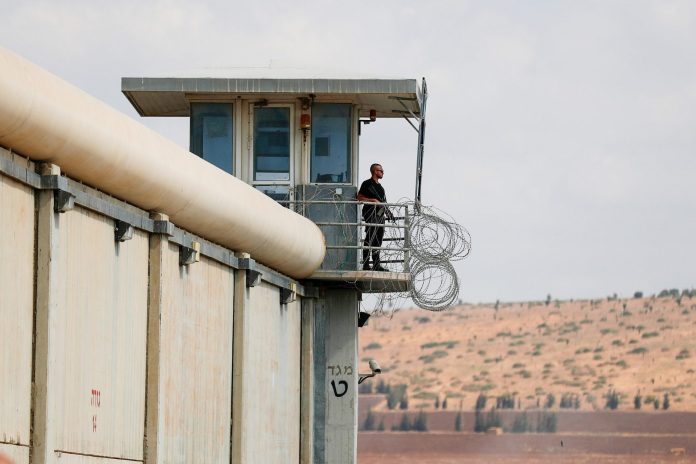
Palestinian officials have raised the alarm about the dire situation of abductees held in Israeli prisons.

The warning came after several abductees released from Israeli jails gave harrowing accounts of conditions in the regime’s prisons.

The Palestinian Prisoners’ Society (PPS) said in a statement on Monday that the number of Palestinian abductees killed in Israeli jails since the regime’s genocide in Gaza started has surged to 65, including a child.

It added that inmates abducted in Gaza account for at least 40 of those fatalities.

The society emphasized that among the slain detainees are 74 whose bodies are still being held by the Israeli regime, 63 of whom have been held since the beginning of the genocidal war.

Meanwhile, the Commission of Detainees and Ex-Detainees Affairs warned of inhumane conditions at Israel’s Damon Prison, where female abductees are enduring extreme hardship.

The Commission reported that food is scarce and of poor quality, leading to digestive issues and severe weight loss among inmates.

The Commission warned that Palestinian abductees are held in filthy, blood-stained cells, given only a small mattress and no food.

Most of the abductees also face insults and humiliation during their incarceration by the regime.

It added that prisoner Karam Musa, 53, from the town of Surra in the Nablus Governorate, who was detained on February 25, 2025, was kept in a blood-stained and filthy cell, with no room for prayer, no food, and only a small mattress.

According to Karam, the Israeli Prison Service provides one plate of legumes for eight prisoners. The break period has been reduced to one hour, during which the prisoners shower.

A 44-year-old prisoner named Hanin Jaber lost eight kilograms due to malnutrition during her five months of detention.

Jaber was arrested on December 3, 2024, while out on a walk with her children in the park, on charges of sheltering and feeding her son, whom the Israeli regime claims is “wanted.”

Prisoner Fidaa Suhail Assaf, 49, from the town of Kafr Laqif in the Qalqilya Governorate, has been suffering from leukemia for a year before her detention.

Sanctions relief Iran’s main focus in U.S. negotiations: Govt. Spokesperson

Speaking at her weekly press conference in Tehran on Tuesday, Mohajerani said sanctions relief and improving the livelihood of the Iranian people are two core goals of the negotiations.

Tehran and Washington held two rounds of indirect talks in Muscat, Oman, on April 12, and Rome, Italy, on April 19. The third round is slated to be held in Muscat on April 26.

According to Mohajerani, much of the recent currency rate hike stems from market expectations and psychological pressures, which, she said, could be alleviated through enhanced international cooperation.

Enriched uranium among Iran’s redlines

Responding to speculation about the transfer of enriched uranium out of the country, Mohajerani reaffirmed that such a move crosses Iran’s red lines.

She emphasized that while other issues may be negotiable, this one is not.

Open to all investors, including Americans

On foreign investment, Mohajerani stated Iran has never imposed restrictions on investors from any country, including the U.S.

She blamed Washington’s multilayered laws for hindering American investment, while reaffirming Iran’s commitment to a transparent and open investment environment, because “we believe that this is in the interest of the Iranian nation.”

Russia plays key role in mediation

She stressed Russia’s “significant role” in the talks, given its status as a permanent U.N. Security Council member.

Close nuclear cooperation between Tehran and Moscow is naturally influential in shaping the negotiation process, she added.

Deepening ties with neighbors, especially Saudi Arabia

The spokesperson reiterated the administration’s strategic priority of expanding relations with neighboring and culturally close countries, particularly Saudi Arabia.

Highlighting the recent release of an Iranian prisoner and the visit of Saudi Defense Minister Khalid bin Salman to Tehran, she said these developments reflect Riyadh’s goodwill and a shared interest in regional cooperation.

The visit, she went on, which included a message from the Saudi king, “was more than just a normal trip.”

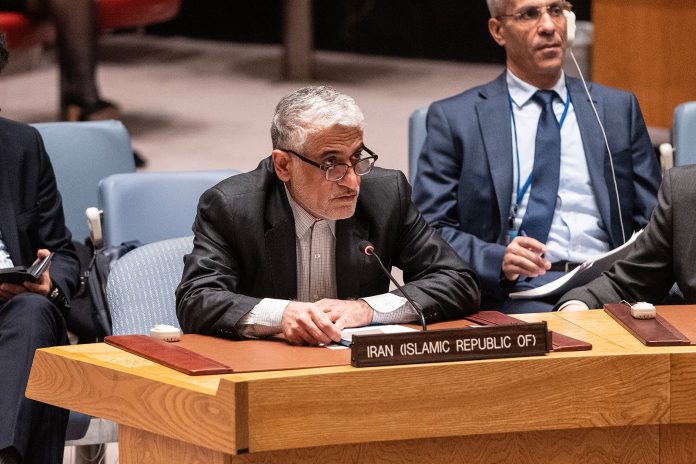
Iran dismisses baseless claims of PGCC countries on Persian Gulf islands

Iravani

The country’s UN ambassador said such allegations amount to a flagrant violation of international law and the Charter of the United Nations.

Iravani made the remarks on Monday in a letter to the UN chief and the president of the Security Council.

He reaffirmed Iran’s full and unquestionable sovereignty over the islands of Abu Musa, Greater Tunb, and Lesser Tunb in the Persian Gulf.

The ambassador added that any claim to the contrary is considered an unacceptable interference in Iran’s internal affairs.

In their final statement, the council’s foreign ministers questioned Iran’s sovereignty over the three islands, claiming that they belonged to the United Arab Emirates.

Iravani also denounced the use of a falsified name for the Persian Gulf in the meeting’s statement.

He emphasized that “Persian Gulf” is the only historically and legally recognized name for the body of water between Iran and the Arabian Peninsula.

Iravani said that the council’s foreign ministers ‘statement includes assertions on three Iranian islands in the Persian Gulf that constitute a clear and unacceptable interference in the internal affairs of the Islamic Republic of Iran, in flagrant violation of international law and the Charter of the United Nations.”

“These baseless claims are firmly rejected, and the Islamic Republic of Iran strongly condemns and denounces them in their entirety,” he stated.

“In this regard, the Government of the Islamic Republic of Iran reaffirms its full and unquestionable sovereignty over the Iranian islands of Abu Musa, Greater Tunb, and Lesser Tunb in the Persian Gulf,” the ambassador said.

“Any claim to the contrary is considered an unacceptable interference in Iran’s internal affairs and a violation of the universally recognized principle of non-interference, as enshrined in the United Nations Charter,” he noted.

The three Persian Gulf islands have historically been part of Iran, proof of which can be found and corroborated by countless historical, legal, and geographical documents in Iran and other parts of the world. However, the United Arab Emirates has repeatedly laid claim to the islands.

The islands fell under British control in 1921, but on November 30, 1971, a day after British forces left the region and just two days before the UAE was to become an official federation, Iran’s sovereignty over the islands was restored.

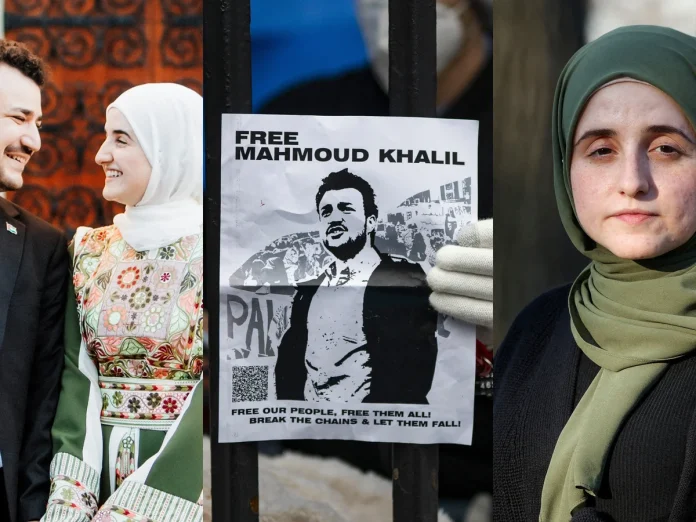
Palestinian activist denied release for son’s birth: Wife

Noor Abdalla announced on Monday that she gave birth to the couple’s first child in New York without Khalil present after US Immigration and Customs Enforcement made the “purposeful decision” to make her family suffer.

“My son and I should not be navigating his first days on earth without Mahmoud,” Abdalla, a US citizen, said in a statement.

“ICE and the Trump administration have stolen these precious moments from our family in an attempt to silence Mahmoud’s support for Palestinian freedom.”

“I will continue to fight every day for Mahmoud to come home to us,” Abdalla added.

“I know when Mahmoud is freed, he will show our son how to be brave, thoughtful, and compassionate, just like his dad.”

Khalil, a graduate student at Columbia University who played a prominent role in last year’s campus protests against Israel’s war in Gaza, was detained by immigration authorities on March 8 as part of US President Donald Trump’s crackdown on pro-Palestinian activism.

The Trump administration is seeking to deport Khalil, who is being detained at an ICE facility in Louisiana, claiming that his advocacy has undermined US efforts to “combat anti-Semitism” and “protect Jewish students from harassment and violence”.

Khalil, who is a permanent US resident, has denied engaging in anti-Semitism.

An immigration judge in Louisiana earlier this month ruled that the Trump administration could proceed with deportation proceedings against Khalil, finding that the government had “established by clear and convincing evidence that he is removable”.

Khalil’s lawyers have said they will appeal the decision.

Putin says he’s open to direct negotiations with Ukraine

Putin and Zelensky

US, European and Ukrainian officials are set to meet this week in London after Washington warned that it could abandon its efforts on ending the conflict if there were no signs of progress.

Speaking to reporters, Putin said it could be possible to discuss the halting of strikes against civilian infrastructure directly with Kyiv.

“We have a positive attitude towards a ceasefire,” Putin added, referencing Russia’s decision to implement a surprise 30-hour Easter truce – which both sides accused each other of violating.

“That is why we have always said that we take a positive attitude to any peace initiatives. We hope that the representatives of the Kyiv regime will feel the same way.”

Ukraine, which called for the extension of the truce before it expired Sunday, has repeatedly accused Russia of deliberately targeting civilians with air and drone strikes, and President Volodymyr Zelensky has called for Moscow to halt such attacks.

Putin acknowledged that recent Russian strikes had hit civilian facilities in Ukraine, but claimed that they were being used for military purposes.

“That’s what we need to look into,” he said, adding, “It’s all a subject to be thoroughly investigated. Maybe bilaterally, as a result of dialogue. We don’t rule that out.”

“So we will analyze all of this and make appropriate decisions for the future,” he stated.

Kremlin spokesman Dmitry Peskov confirmed Putin’s remarks to journalists, Reuters reported citing Russia’s Interfax news agency.

“When the president said that it was possible to discuss the issue of not striking civilian targets, including bilaterally, the president had in mind negotiations and discussions with the Ukrainian side,” the news agency quoted Peskov as saying.

Ukraine and Russia have not held direct talks since the early weeks of Moscow’s invasion in 2022.

Last Friday, US Secretary of State Marco Rubio warned that the US could walk away from its efforts to end the Ukrainian conflict within “days” if there were no signs of progress. President Donald Trump later confirmed the sentiment, but did not provide a timeline.

Asked what progress he would need to see to continue negotiations, Trump stressed he would “have to see an enthusiasm to want to end it” from both sides, predicting he would know “soon.”

The remarks came after a broad framework was presented by the US to both sides, Rubio and the State Department have said, to determine whether differences between Kyiv and Moscow can be narrowed.

The proposal would see Washington ready to recognize Russian control of Crimea, which Moscow annexed in 2014, an official familiar with the framework told CNN. The proposal would also put a ceasefire in place along the frontlines of the war, the official added.

There are still pieces of the framework to be filled out and the US plans to work with the Europeans and the Ukrainians during talks this week in London, the person said. The Trump administration is simultaneously planning another meeting between Middle East envoy Steve Witkoff and Russia to get Moscow on board with the framework, the source said.

Moscow has previously stalled on negotiations and rejected an earlier US proposal for a 30-day ceasefire agreed to by Kyiv.

Zelensky has not publicly commented on the latest US proposal. On Tuesday, he said Ukraine will send a delegation to the follow up talks in London.

“Ukraine, the United Kingdom, France, and the United States — we are ready to move forward as constructively as possible… to achieve an unconditional ceasefire, followed by the establishment of a real and lasting peace,” he wrote in a statement on X.

“An unconditional ceasefire must be the first step toward peace,” he added.

Zelensky has expressed willingness to agree to a peace deal with Moscow but said last month that his government would not recognize any occupied territories as Russian, calling that a “red line.”

Trump has declined to say whether he is prepared to walk away completely from the talks or whether the US would support Ukraine militarily if talks fall through.

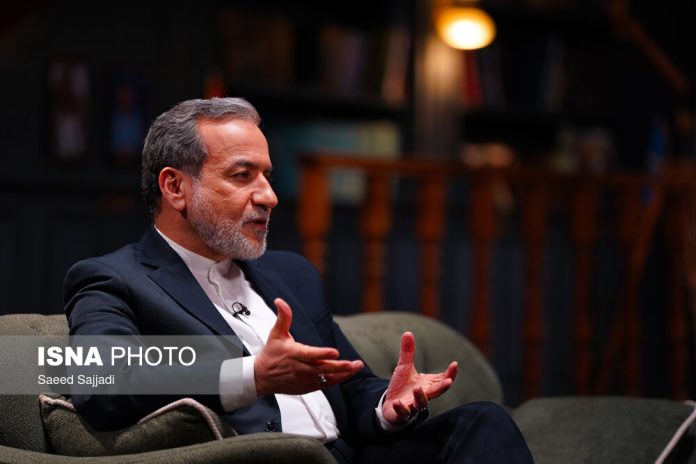
Certain groups manipulating Iran-US negotiations: FM

Abbas Araghchi

In a post published on his official X account on Tuesday, the top diplomat emphasized that these groups were laboring to manipulate the course of diplomacy and goad the US administration into making excessive demands.​

Araghchi’s remarks followed cancellation of his scheduled keynote address at the Carnegie International Nuclear Policy Conference.

The cancellation followed, what turned out to be, an “orchestrated pressure” campaign from “Israeli-affiliated hawkish elements” and officials from administrations of former US presidents Joe Biden and Barack Obama.

The official clarified that his intention was not to use the speech to address the nuances of ongoing indirect talks between the two sides in public, but to explain Iran’s mindset and aspirations.​

He expressed regret over the decision, attributing it to a lack of understanding of the sensitive dynamics involved in the diplomatic process.

Iran and the United States held their first round of indirect talks during US President Donald Trump’s second tenure, in the Omani capital Muscat on April 13, with the Persian Gulf state serving as the mediator.

The talks were followed by another round in Rome, which were likewise mediated by Muscat.

The process will continue at the expert level on Wednesday and at the principals’ level on Saturday.

So far, both sides have expressed optimism regarding the process, while Tehran has underscored that it has to remain still greatly cautious concerning Washington’s intentions.

The post also featured the complete text of the foreign minister’s speech, in which he reiterated Iran’s longstanding commitment to the principles of the Nuclear Non-Proliferation Treaty (NPT).

He emphasized the country’s opposition to nuclear weapons on moral and religious grounds.

“As one of the founding signatories of the NPT back in the 1960s, Iran has long been committed to the principles of universal access to peaceful nuclear technology and rejection of atomic weapons,” the official wrote in the speech.

“We are also the only country on the planet that officially opposes nuclear arms on moral and religious grounds,” through a religious decree (fatwa) by Leader of the Islamic Revolution Ayatollah Seyyed Ali Khamenei.

Araghchi further highlighted Iran’s advocacy for a nuclear weapon-free zone in the West Asia region and criticized Western countries for turning a blind eye to the Israeli regime’s expansive nuclear arsenal, calling for an end to this double standard.​

Looking ahead, the foreign minister stressed that any future agreement had to guarantee Iran’s economic benefits, besides addressing “concerns of all parties.”

Accordingly, he stressed that talks had to remain focused solely on the removal of the US’s illegal and unilateral sanctions against the Islamic Republic as well as the nuclear issue.

The Islamic Republic’s security would, therefore, never be subject to negotiation, he asserted.

“In a region as rough and volatile as ours, Iran will never put its security up for negotiation.”

The official pointed out that Iran’s pursuit of civilian nuclear energy aligned with its national developmental and economic goals.

He emphasized that the Islamic Republic had never opposed economic and scientific collaboration with the United States, noting that previous American administrations had been the obstacle, often influenced by Special Interest groups.

Araghchi, however, mentioned that Iran’s economy presented significant opportunities for US enterprises, particularly in generating clean electricity from non-hydrocarbon sources.

The top diplomat concluded by emphasizing the need to respect Iran’s civilizational past and cultural and political identity.

He argued that threats and pressure against the Iranian nation had been counterproductive throughout history, closing avenues for compromise.

The official called for constructive engagement rooted in mutual respect and equal standing, asserting that Iran should not be treated as an exception within the global nonproliferation framework, and that nuclear-armed states also had to accept elimination of their non-conventional arsenals.

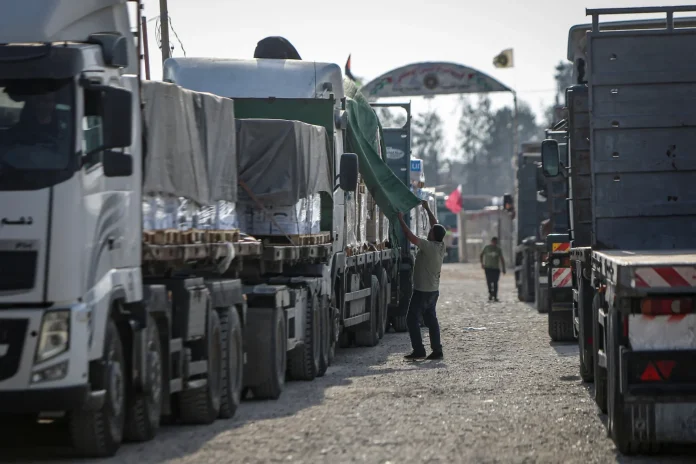
Israel ‘completely’ blocked all humanitarian aid into Gaza for 50 days: UN

“Today marks 50 days since the Israeli authorities have completely blocked incoming supplies of any kind into the Gaza Strip,” UN spokesperson Stephane Dujarric said at a news conference on Monday.

Citing the UN Office for the Coordination of Humanitarian Affairs (OCHA), Dujarric stated: “Since early March, not a single truck carrying food, fuel, medicine or any other essentials have been allowed in no matter how critical they are for people’s survival.”

Warning over the “dangerously low” food stocks in the enclave, Dujarric added: “Rations have been cut. Critical medicines, vaccines and medical supplies are all running low.”

“Ambulances have had to scale back life-saving services because there’s almost no fuel to power these ambulances. Cooking gas has disappeared from markets. Bakeries have been forced to shut down,” he continued.

He warned that “the impact of the full block of this continued blocking of humanitarian aid is devastating. Children and adults alike are going hungry. Access to health care is falling apart,” adding that “attacks on civilians, including emergency teams and aid workers have surged again.”

Following Israel’s internal probe into an airstrike that killed aid workers in Rafah, Dujarric said: “Based on those findings, it is clear that too many civilians, including aid workers, have been killed in Gaza.”

“There needs to be accountability, and serious accountability for all those who’ve committed them,” he stressed, noting that a UN investigation would require a specific mandate.

On the ceasefire talks, Dujarric stated: “All we can hope for is for an agreement to be reached to ensure that humanitarian aid once again flows freely and unhindered into Gaza.”

The Israeli army resumed its onslaught on Gaza on March 18, shattering a Jan. 19 ceasefire and prisoner exchange agreement.

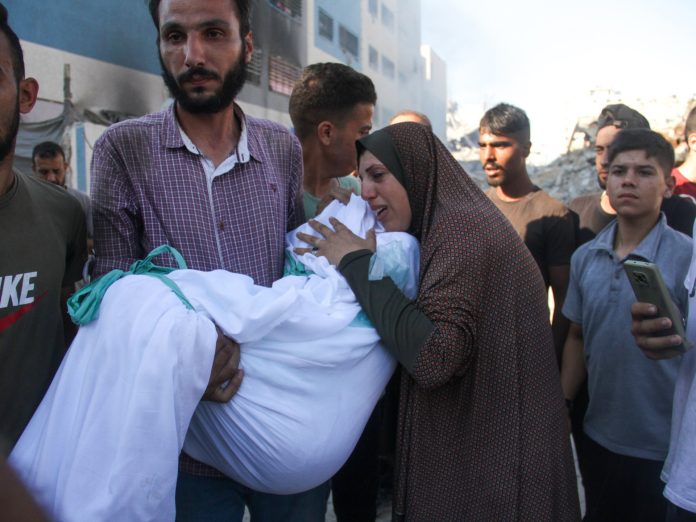
Overall, it has killed more than 51,200 Palestinians in Gaza since October 2023.

Israel halted the delivery of aid to the enclave on March 2, hours after the end of truce deal’s 42-day first phase.

Nearly 600 children killed, 1,600 injured in renewed Israeli onslaught on Gaza: UN

Gaza War

Citing figures released by the UN children’s agency (UNICEF), UNRWA said that over 1,600 other children have also been injured since Israel resumed its assaults on March 18.

“The humanitarian crisis in the Gaza Strip is now likely at its worst point since October 2023,” it added.

The Israeli army resumed its deadly aggression on the Gaza Strip on March 18 and has since killed 1,864 people and injured nearly 4,900 others despite a ceasefire and prisoner exchange agreement that took hold in January.

More than 51,200 Palestinians have been killed in Gaza in a brutal Israeli onslaught since October 2023, most of them women and children.

Last November, the International Criminal Court issued arrest warrants for Israeli Prime Minister Benjamin Netanyahu and his former Defense Minister Yoav Gallant for war crimes and crimes against humanity in Gaza.

Israel also faces a genocide case at the International Court of Justice for its war on the enclave.

Washington had ‘very good’ meetings with Tehran: Trump

Referencing the second round of discussions with Iran over the weekend, Trump told reports on Monday, “We had very good meetings actually on Iran.”

Asked what will happen next, Trump responds, “The next step is we need a little time.”

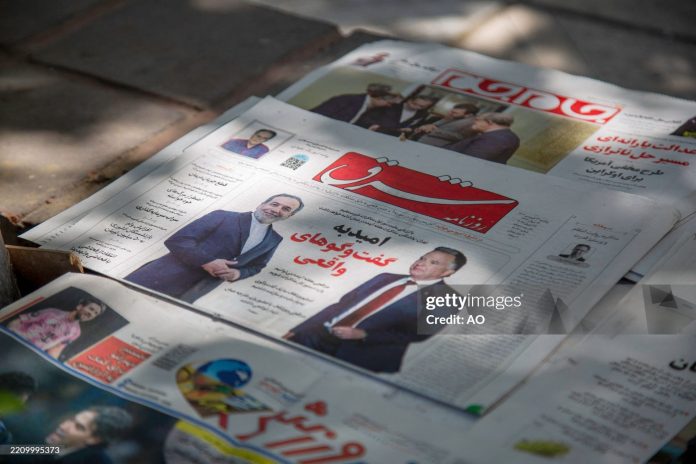
Iranian Foreign Minister Seyed Abbas Araqchi and Steve Witkoff, the US president’s special envoy for West Asia affairs, led two rounds of indirect talks about Iran’s nuclear program and the termination of US sanctions in the Omani capital of Muscat and the Italian capital, Rome, on April 12 and 19, respectively.

Iran and the US agreed to open expert-level technical discussions in Oman on April 23. A third round of high-level indirect negotiations between Araghchi and Witkoff would kick off in Oman on April 26 to evaluate the results of the expert meetings and see how close they will be to an agreement.