Friday, December 26, 2025
Home Blog Page 3859

Iran’s Gahar Lake: A Fishing Destination for Tourists

It is a permanent sweet-water lake in the upper and lower Gahar in Zagros mountain range. 2350 metres above sea level, the lake came into existence after a landslide and now is a tourist destination for trout fishing.

Here are IRNA’s photos of the lake:


‘Iranian Kurds Won’t Go for Secession If Their Rights, Demands Realized’

Sadegh Zibakalam

One week on since the contentious plebiscite on the secession of the Kurdistan region form Iraq, the move continues to draw local and international reaction. In the latest development, Saad al-Hadisi, the spokesman for Iraqi Prime Minister Haider al-Abadi, has announced that Kurdistan must first annul the outcome of the referendum, which runs counter to the Constitution, and enter into serious negotiations in order to boost Iraq’s territorial integrity. On the other hand, it is said that US Secretary of State Rex Tillerson, in a statement, described the result of the plebiscite as unacceptable and illegitimate.

Although authorities of the Kurdistan region have underlined their right to self-determination and described it as a prelude to the resumption of talks with Baghdad, many experts believe that an irreversible trend has begun in northern Iraq and that the process can get entangled with other crises in the Middle East to trigger new conflicts in the region.

Accordingly, our country’s officials have voiced concern over the possible secession of Kurdistan from Iraq and called for a settlement of the issue through political processes. Nevertheless, on the other hand, some academic and expert circles in the country have adopted different positions on the referendum so far and even believe the establishment of an independent country called Kurdistan will serve Iran’s strategic interests in the long run.

Accordingly, political commentator and academic Sadeq Zibakalam has, in a Farsi article published on Ebtekar newspaper, weighed in on the latest developments pertaining to the controversial referendum on the secession of the Kurdistan region from Iraq. Explaining the current and historical situation of the Middle East, he has expressed his view on what should be done to allay the concerns in Iran over the issue. He says adopting a heavy-handed approach on the issue will work for a short time only, and that Iraqi Kurds will continue to sept toward independence once the situation is right.


History Cannot Be Ignored

This professor of political sciences says his stances on the Kurdistan referendum has drawn strong opposition from the conservative camp in Iran.

“I think it would be difficult to insist on democratic and independence-seeking stances. Regrettably, conservatives’ opposition to the plebiscite in Kurdistan is understandable. I believe the right to self-determination should be recognized. Civil rights are not simply a charter with beautiful words, but forms the basis for the right to self-determination. If we do not recognize this right for Kurds in Iraq, then it is not clear what civil rights would mean.”


The question is whether Iran, Turkey, the US, the European Union and even Israel can express their views on the issue of Kurdistan’s independence. I believe “no.” It is only the Kurdish people in Iraq that can decide about their future. Another point is that what we know as Iraq, Syria or Jordan today are all countries which are the result of the Sykes–Picot Agreement at the end of World War I and the collapse of the Ottoman empire. None of the current borders existed before the first World War, so we cannot say the Kurdistan has always been part of historical Iraq.

Today’s Iraq was created in 1956, i.e. around 60 years ago. Before that, it was part of the Ottoman empire for 4 to 5 centuries. Earlier, it had been part of the territories of the Mamluk Sultanate, Abbasids and the Rome Empire for so long, and in fact there was no such territory as “Iraq.” So, we cannot insist on the idea that it is being disintegrated. Based on the borders created as a result of the Sykes–Picot Agreement (the names of two British and French diplomats), Syria and Lebanon would become the colonies of France, and areas including Iraq, Saudi Arabia and the Persian Gulf littoral states would become colonies of the UK. Therefore, the Sykes–Picot Agreement was a deal which was similar to forced marriage. Kurds did not start their struggle to exercise their right to self-determination recently; rather, they have been trying to secure their right for several decades. Before the 1979 Islamic Revolution of Iran, before the reign of former Iraqi strongman Saddam Hussein and during his rule, Kurds’ struggle did not stop. Some 180,000 Kurds were killed by Saddam Hussein’s regime during the eight-year Iraqi imposed war on Iran in the 1980s.

Still, we are unfortunately witnessing that conservatives easily regard the referendum as an Israeli-Zionist plot. This is while before the establishment of Israel, Kurds were struggling for their right to being autonomous. So, in my estimation, history should not be ignored. Although one can say that the current situation is not a suitable time for holding referendums due to the crises in the Middle East, it should be stressed that Kurds will have a country for themselves in the coming years.


Independence of Iraq’s Kurdistan: A Point of No Return

Zibakalam further touched upon recent remarks by Nazim Dabbagh, the representative of the Iraqi Kurdistan region in Iran. Dabbagh had said the referendum was not aimed at securing the region’s secession, but that it wanted to draw attention to the demands of the Kurdistan region. Zibakalam said Dabbagh wanted to play with words.

“Nothing can stop the independence of Iraq’s Kurdistan, and, in fact, we have passed that point. Even if the Iraqi central government wants to stop that independence by force like in the Saddam Hussein’s era, it will be temporary, and Kurds will move toward full independence the first chance they get.”


Iran’s Misgivings Understandable

Zibakalam also weighed in on remarks by Mr. Jalaeipour, who has drawn a comparison between the referendum in Scotland and that in Iraq’s Kurdistan, and who believes the Kurdistan plebiscite is not defensible. Zibakalam said it is understandable that there is no support for the Kurdistan referendum in Iran.

“The reason is that a considerable number of Kurds live in western Iran, and the Iranian government is concerned that the establishment of an independent country called Kurdistan could provide motivation for secession or autonomy by Iranian Kurds. In my idea, the way to ease Iran’s concerns is to give minorities the rights stipulated for them in the Constitution. In other words, in order to encourage Iranian Kurds to remain loyal and not go for secession, their civil rights should be realized and their demands met. If their demands are fulfilled, there will be no reason for secession in Iran’s Kurdistan.

Iran Moving towards Forming Military Alliance with Turkey, Iraq

In an editorial on Tuesday, the Persian-language Sobh-e Now daily has discussed the possibility of forming a regional military alliance between Iran and its neighbours. Here are excerpts from the piece:

The new round of efforts made by General Staff of the Armed Forces of the Islamic Republic of Iran to expand military and security cooperation with its neighbours is of great importance.

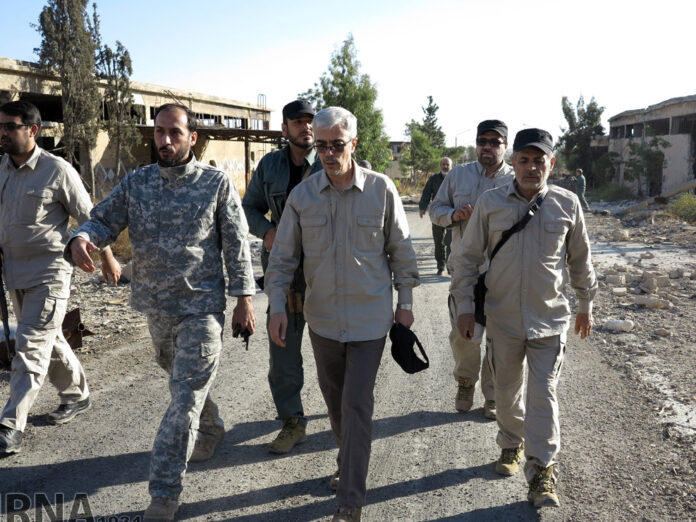
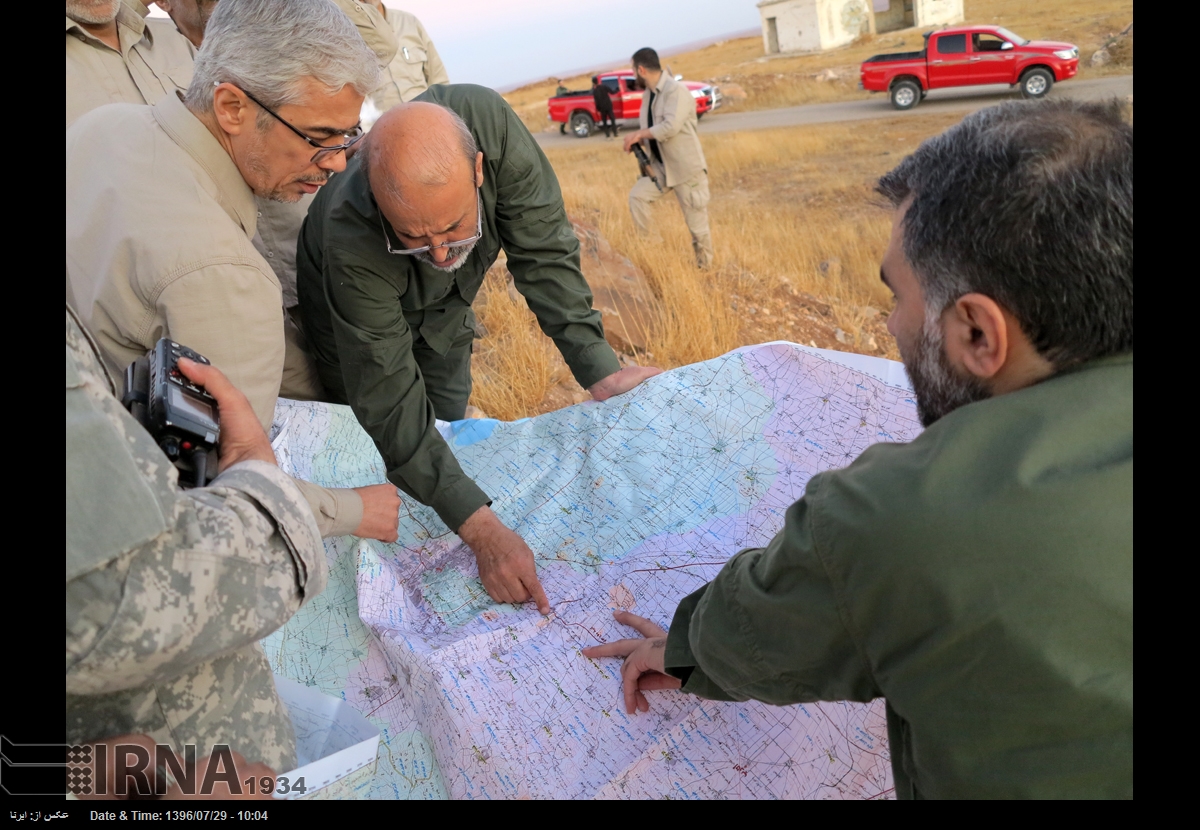
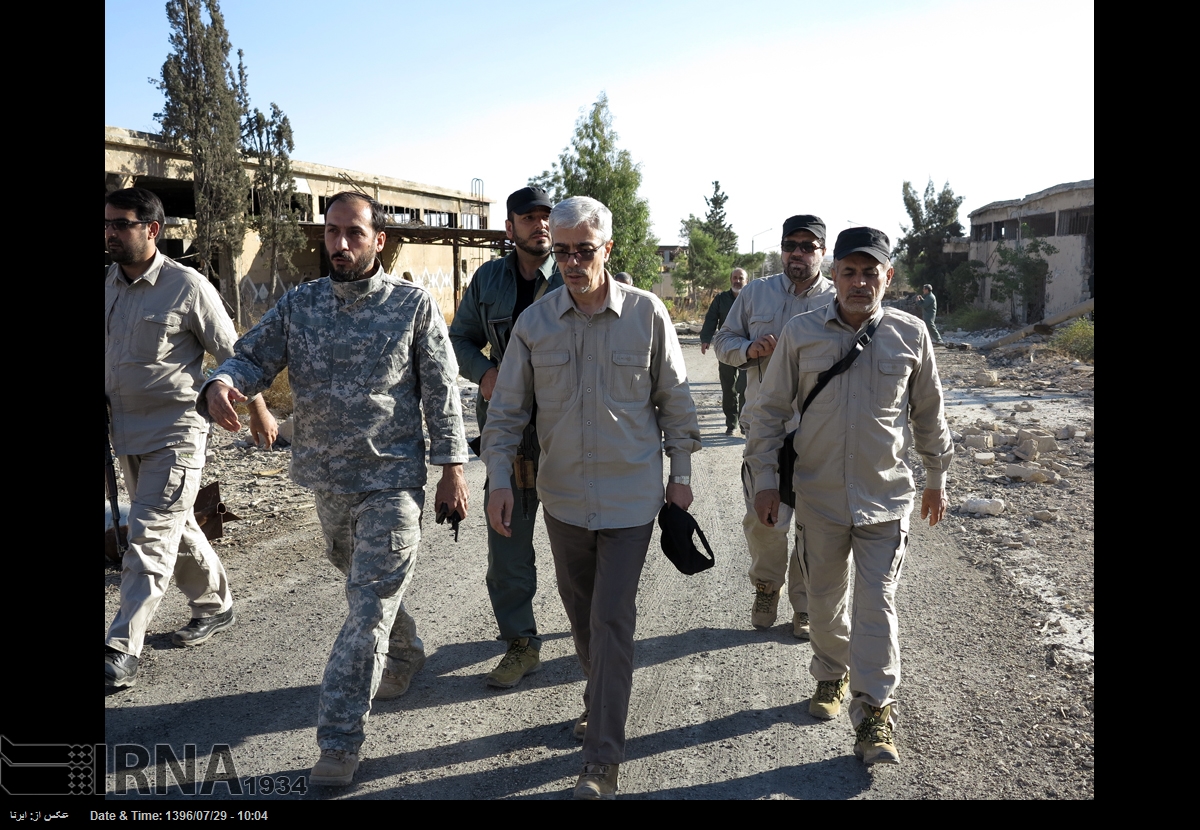
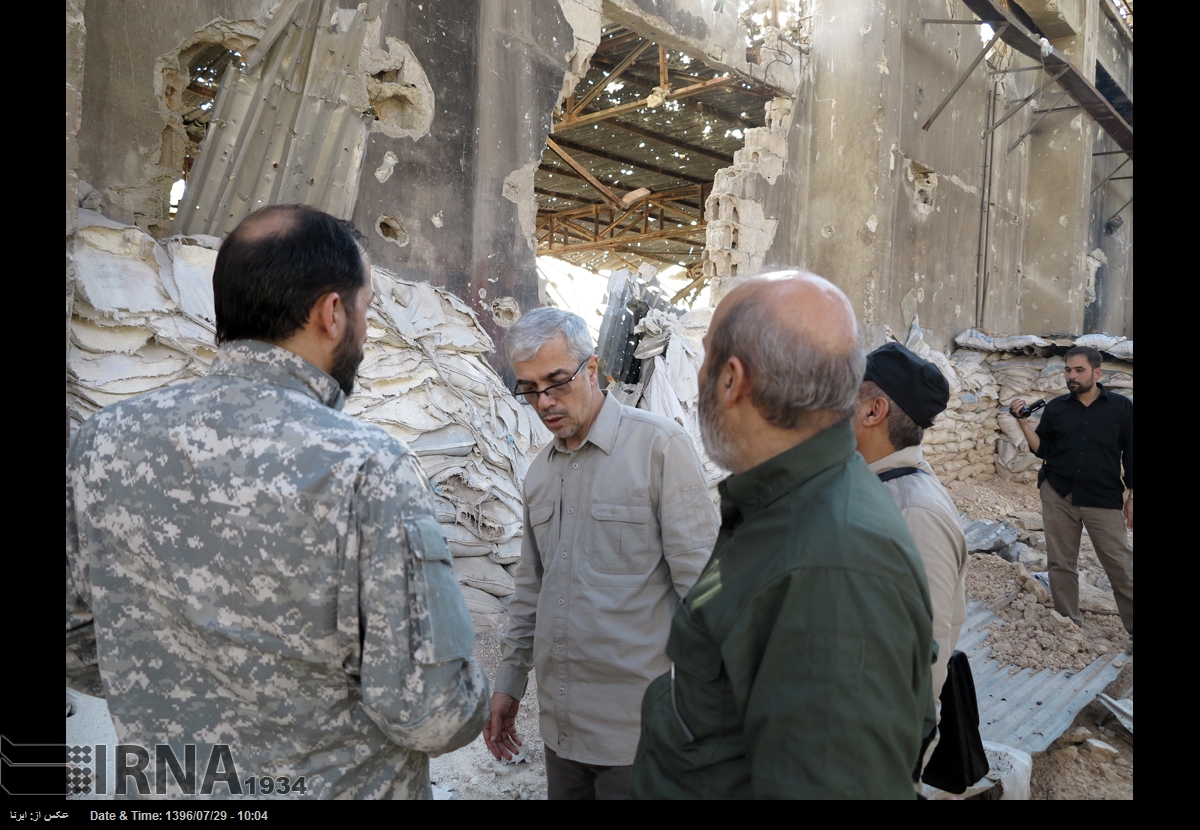
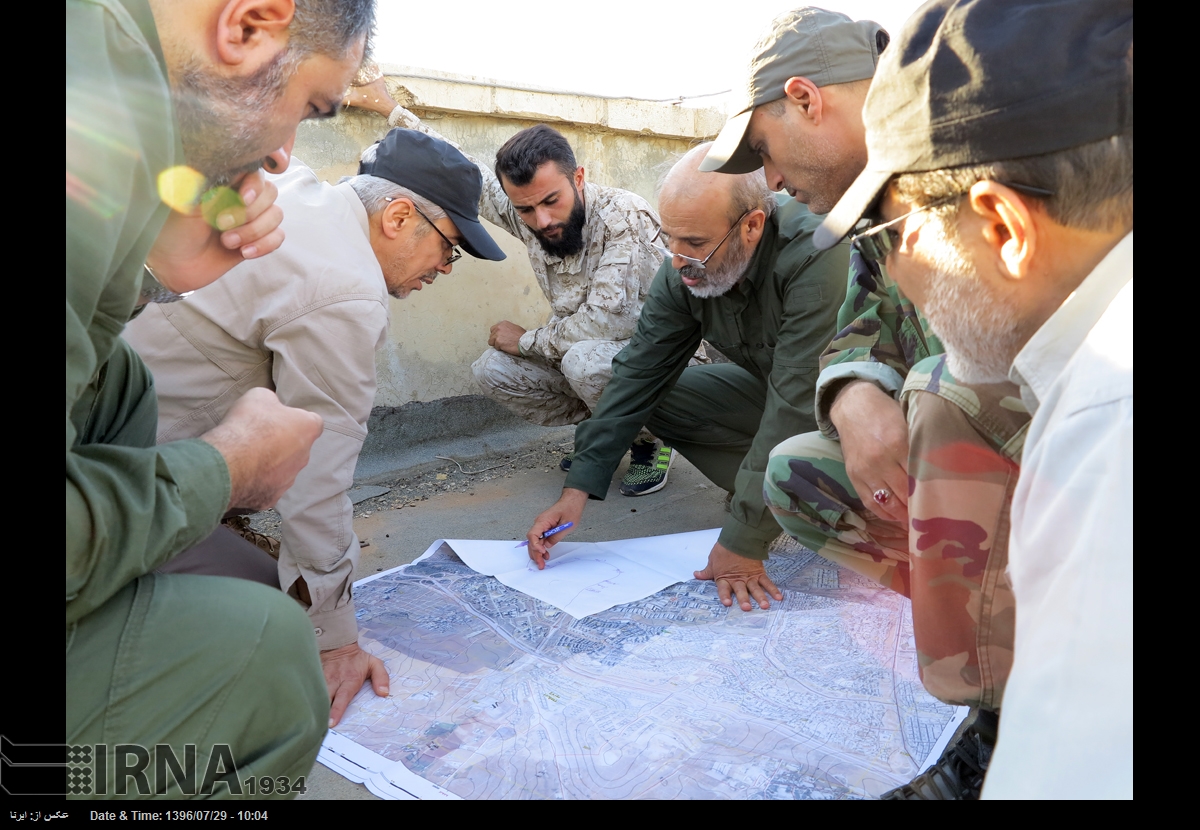
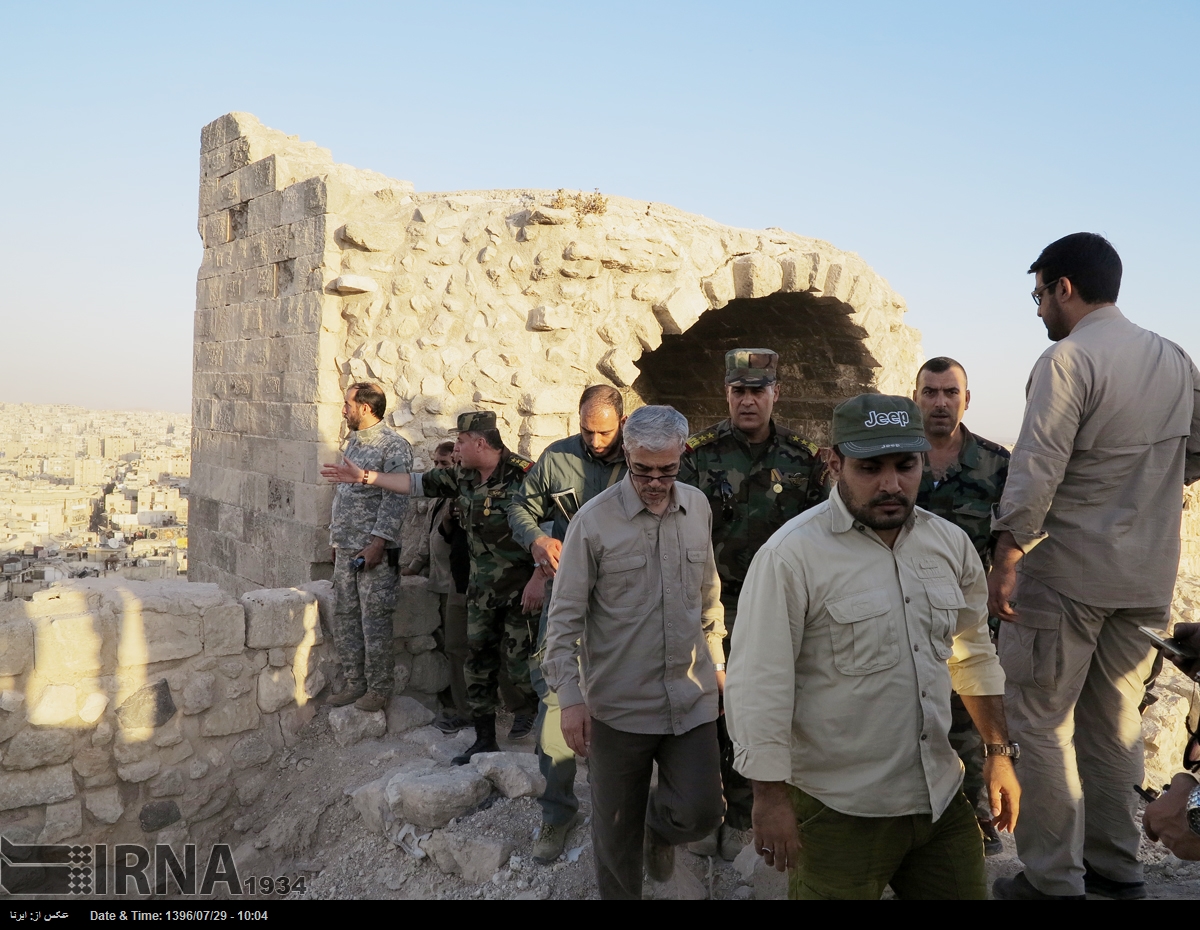
Major General Mohammad Baqeri’s visit to Turkey last month was an effective initiative that took place at this level for the first time since the Islamic Revolution of Iran, and paved the way for further military interactions between Tehran, Ankara and Baghdad.

As the situation is getting worse in Iraq’s Kurdistan region, this cooperation is becoming more serious, and over the past days we have witnessed more visits made by the senior military officials of the three countries.

In the history of military cooperation between Iran, Turkey and Iraq, we see the three countries have signed the Baghdad Treaty (CENTO) in 1955. The treaty was signed by the order of trans-national powers so as to compete with the former Soviet Union, but it quickly changed its way and broke down.

However, at present the new military cooperation is based on genuinely realistic dimensions, and the seriousness of the risk of disintegration on the one hand next to the threats of terrorist groups on the other hand have made all the three countries stand together.

In light of these military and security collaborations, one can expect the three countries stop transnational interventions. By such collaboration and sharing experiences, they can also confront the new emerging threats and foil the plots of enemies to disintegrate the region into smaller parts and altering the equations in favor of the Zionist regime.

The pre-emptive and rapid coordination between the three countries regarding the Kurdish region case is a model of successful regional military cooperation. It surprised international observers and also foiled the new sectarianism plot hatched by US, Israel and their Arab allies in the region.

Iran among World’s Largest Producers of Fruits, Vegetables

The world’s population is increasing while its resources are decreasing. In such situation the role of the world’s fruit and vegetable producers is of particular importance.

According to a Farsi report by IANA which has quoted figures from insidermonkey.com, Iran has ranked eight in a global list of fruit and vegetable producers.

Based on the 2014 information of the United Nations’ Food and Agriculture Organization (FAO), the Islamic Republic has produced 12.7 million tonnes of fruit and 21.4 million tonnes of vegetables. It mainly exports different types of nuts, grapes, dates, figs, fresh strawberries, raspberries, black mulberries and other fruits like melon, apples and pears.

Most of Iran’s vegetable exports include cucumbers, cabbage, cauliflower, tomatoes, onions, garlic, leeks and other similar vegetables which are exported fresh or frozen.

China, Hong Kong, India, the United States, Mexico, Turkey and Brazil rank first to seventh while Spain and Egypt stand at 9th and 10th place after Iran.

Nusra Front Commander Slips into Coma after Russian Airstrike

“Over the past 24 hours, the Russian Defense Ministry continued special operations to wipe out terrorists of the al-Nusra Front (Hayat Tahrir Al-Sham group outlawed in Russia) who attacked the Russian military police observation post on the border of the Idlib de-escalation zone on September 18.

The destruction of the al-Nusra Front command by Russia’s Aerospace Forces and, according to the available information, the fact that it’s leader, Abu Muhammad al-Julani, sank into a coma, caused confusion among terrorists throughout the Idlib province,” TASS quoted the ministry as saying.

The Sukhoi Su-34 bomber of the Russian Aerospace Forces has wiped out 49 militants of the al-Nusra Front, including seven leaders of militant units of the terrorist organization’s “eastern sector”, Russian Defense Ministry said.

“The Russian military intelligence has received information about the emergency meeting of the Al-Nusra’s ‘eastern sector’ field commanders in the Idlib province to draw a plan for further action. After the confirmation of this information through various channels, the command of the Russian force grouping in Syria decided to conduct an airstrike. A precision strike carried out by a Su-34 bomber has eliminated 49 gunmen, including seven leaders of militant units of al-Nusra’s eastern sector,” the ministry said.

Aviation of the Russian Aerospace Forces has liquidated al-Nusra Front’s largest underground arsenal in Syria where more than 1,000 tonnes of ammunition was stored, Russian Defense Ministry Spokesman Igor Konashenkov said.

He noted that Russian reconnaissance has been long studying how militants transport munitions to their strongholds and opposition areas. “Having analyzed much information received through various channels, [they] determined the area where the arsenal was most probably located and its exact coordinates after supplemental ground reconnaissance,” the spokesman explained.

According to the ministry, “the munitions depot was destroyed by special air-delivered massive ordnance designed to destroy underground facilities.”

“The fire sparked by detonated munitions lasted a few hours up to their complete burning,” Konashenkov added.

Madrid to Host 7th Int’l Congress of Spanish Society of Iranian Studies

Iran’s Cultural Attaché in Spain, in collaboration with Spanish Society of Iranian Studies and the University of Aotonoma, is going to host the event.

At this two-day congress, 20 articles will be presented in three panels: the Ancient Iran, Iran in the Islamic period and the contemporary Iran, Mehr reported in a Farsi article.

Scholars from different countries including Iran, Spain, Turkey, Georgia and Russia are expected to attend the cultural event.

EU Reiterates Its Strong Support for Doing Business with Iran

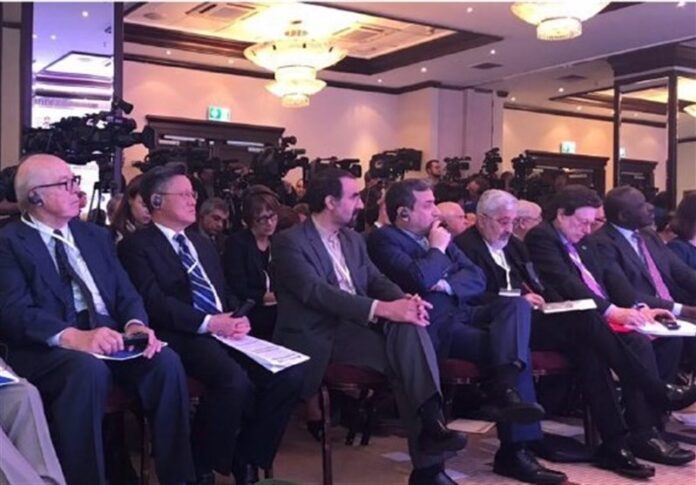
Helga Schmid, the secretary-general of the EU’s foreign policy service, says “the EU fully supports the JCPOA and expects continued implementation by all parties.”

“At the European Union, we support economic cooperation between Iran and Europe — at the political level and at the policy level,” she added in a Wednesday address to the Europe-Iran Forum gathering in the Swiss financial capital of Zurich.

After the international nuclear accord in 2015, European and Iranian businesses have worked to expand previously prohibited trade and investment, but tens of billions of euros in deals are being slowed down because of political uncertainty and financial issues.

US President Donald Trump is threatening to decertify the pact ahead of a congressionally mandated October 15 deadline to report on Iran’s compliance. That would give Congress 60 days to snap back sanctions that were lifted as part of the Joint Comprehensive Plan of Action (JCPOA), the accord signed in 2015 by Iran and six world powers.

If Trump decertifies the deal, there is no guarantee that lawmakers would impose new sanctions or even take action. Defense Secretary James Mattis, National Security Adviser H.R. McMaster, White House Chief of Staff John Kelly and Secretary of State Rex Tillerson are all reportedly in favor of the US’s maintaining its commitment.

The deal had created expectations that trade between Iran and the European Union would flourish again after international nuclear sanctions cut the country off from financial markets, DW reported.

Even after the pact came into effect, however, EU bankers and firms continue to face steep hurdles when investing in Iran. For one, US-imposed restrictions make it complicated for EU companies to finance and clear transactions with the country.

Russian Tourists to Visit Iran’s Kish Island by Direct Flights

Yaqub Qassemi, a tour organizer, said in a Farsi interview with the Mehr News Agency that from the second half of the current year, some tours will be organized for Russian tourists so that they can stay in Isfahan or Shiraz for two nights and then stay in Kish Island for a few more nights.

He also added this is the first time that direct flights to Moscow would be launched from Kish.

“The Russians can come to Iran during the cold season for skiing and recreational water sports, because the costs are lower and the island can replace Dubai for them,” he went on to say.

He stated that after launching direct flights, every week 155 passengers can travel to Iran. The flight will be launched in late November or early December.

Iranian Artists to Perform Islamic Passion Plays in Europe

With the efforts of the Iranian cultural attaché’s office in Berlin, a group of Iranian Ta’zieh performers have travelled to Germany and Poland to put the religious play on show for people there.

Speaking in a Farsi interview with IQNA, Iran’s cultural attaché in Germany, Seyyed Ali Moujani, said, “For the first time, Ta’zieh will be performed by a group of Iranian artists from the city of Qazvin.”

He added that the Iranian cultural attaché’s office in Germany, the Hafez Institute, Iran’s House in Berlin, the Iranian Embassy in Germany, and the Iranian Consulate in Hamburg will co-operate in this programme, and the Ta’zieh group would have performances in Berlin, Hamburg and Frankfurt.

“The Ta’zieh band will be in Germany for 10 days and next to having performances for the Iranians, they are going to have performances for the audience on the sidelines the Frankfurt International Book Fair where the book ‘Maqtal Al-Hussein’ would be released.”

Moujani went on to say that having some performances in Warsaw, the capital of Poland, is among the other programs of the Iranian band, and we are coordinating it with the Iranian embassy there.

He also noted that the performances in Germany will be conducted in Farsi, but in Poland it will simultaneously be translated into Polish.

Seifollah Shokri, a traditional and religious music expert and Ta’zieh researcher, who heads the group in Germany, said, “This is the fifth year that we will be performing abroad. Germany would be our first experience in Europe.”

He also emphasized that Ta’zieh is a Shiite-Iranian art, saying that Ta’zieh is the only play of the Muslim world which exclusively belongs to Shiites and Iranians, that is, if it is performed in other countries in a basic form, they are copying from Iran.

About the goals of these performances in Germany and Poland he said “one of our most important goals is to professionally introduce this art and its features to the scientific communities around the world, especially Europe, as one of the theatre cradles.”

“From a religious point of view, 130 of the greatest Shiite scholars in the past two hundred years have been issuing positive fatwas on this art because the ceremony makes the audience familiar with the Shiite school and Imam Hussein’s (AS) cause,” he concluded.

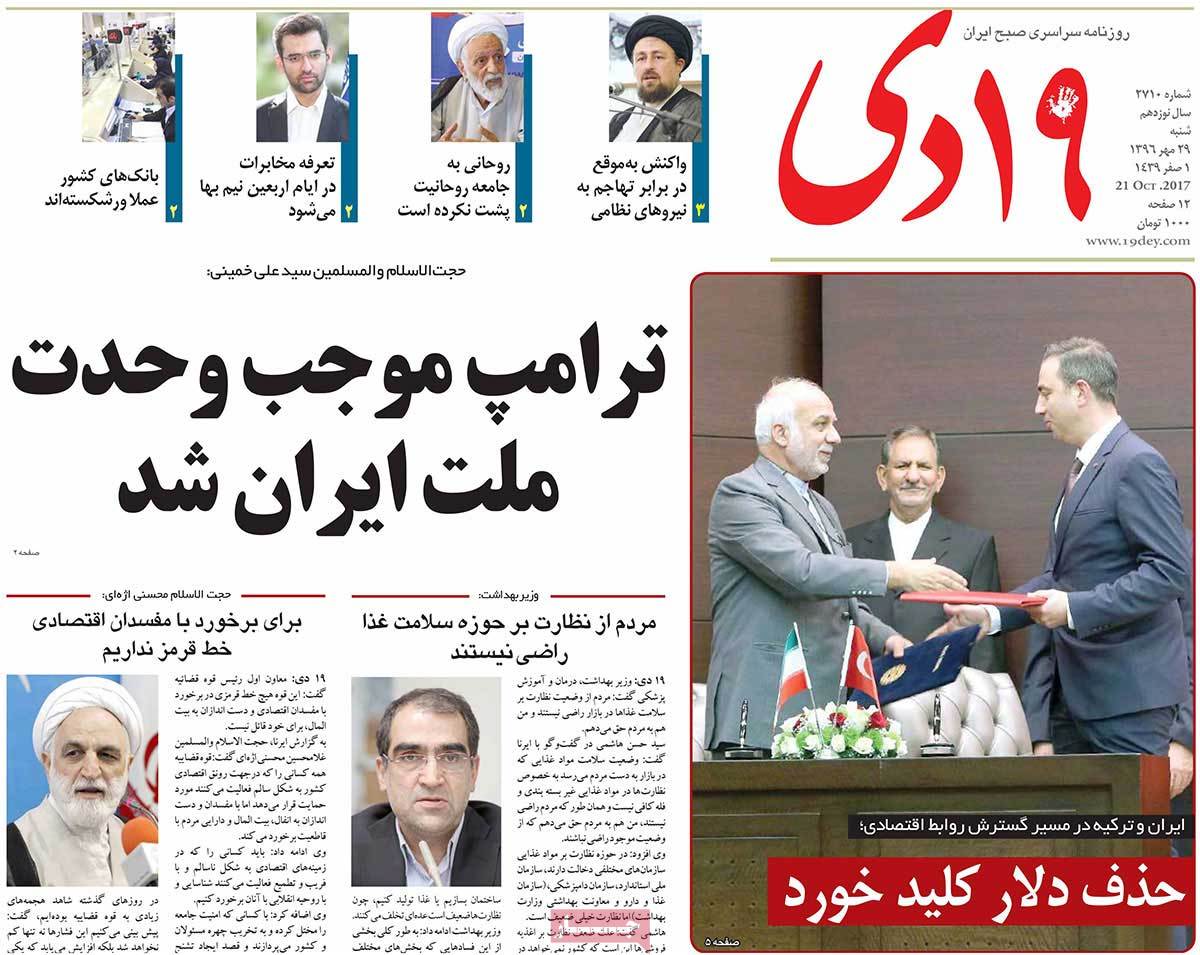
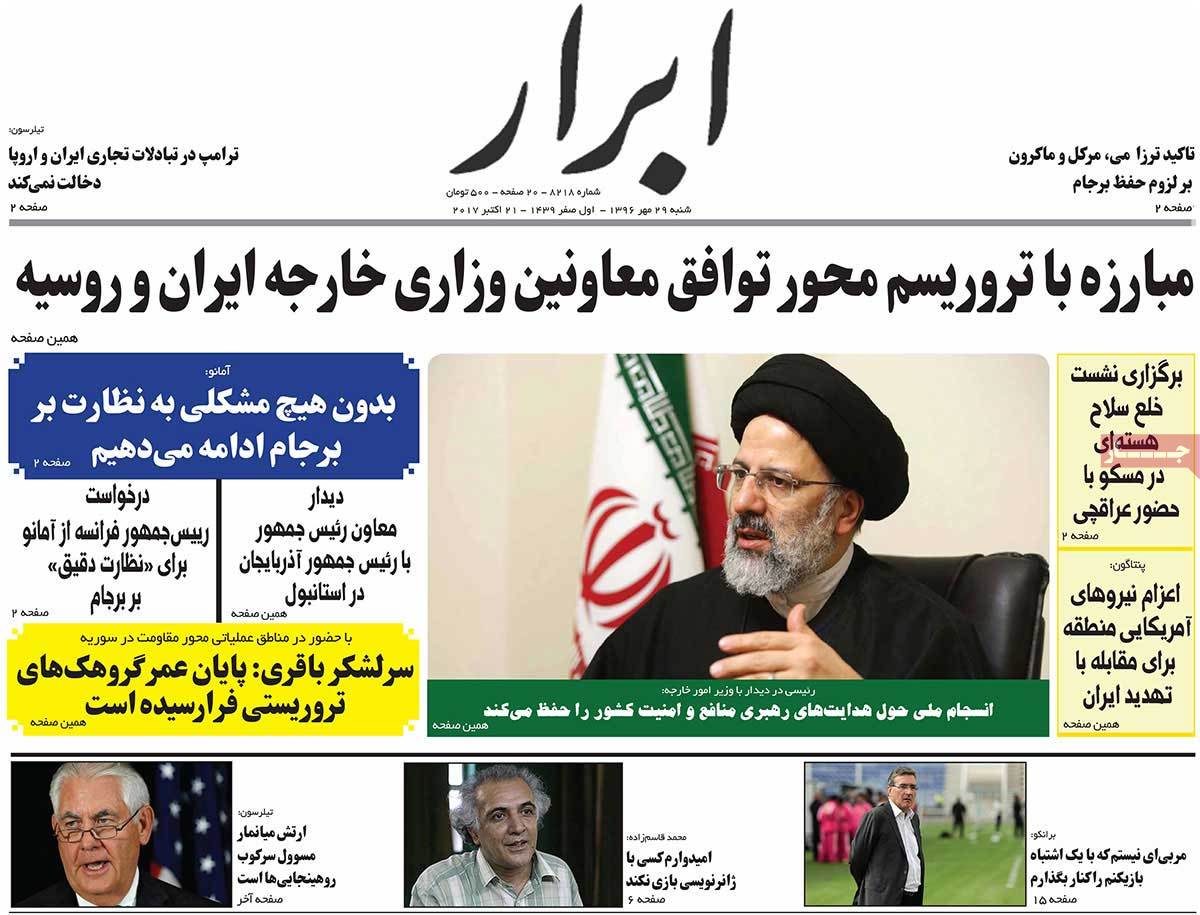
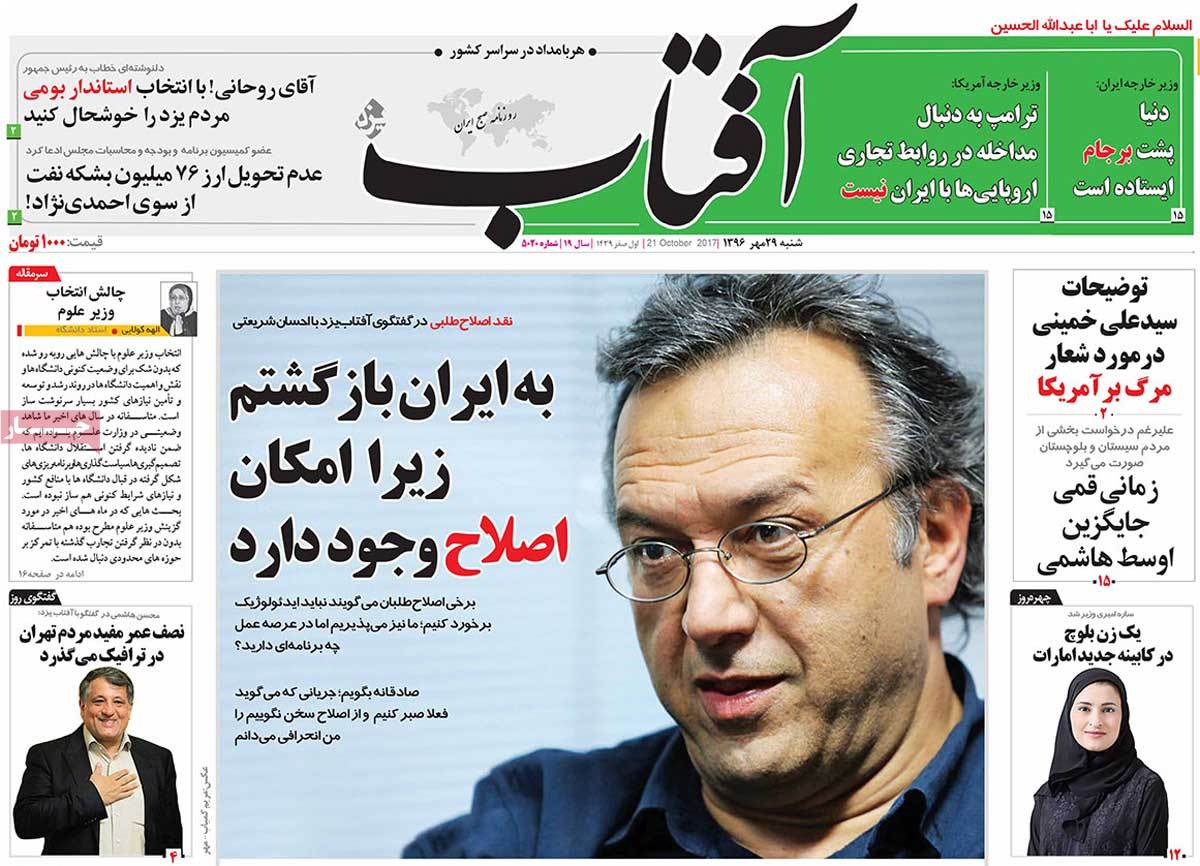
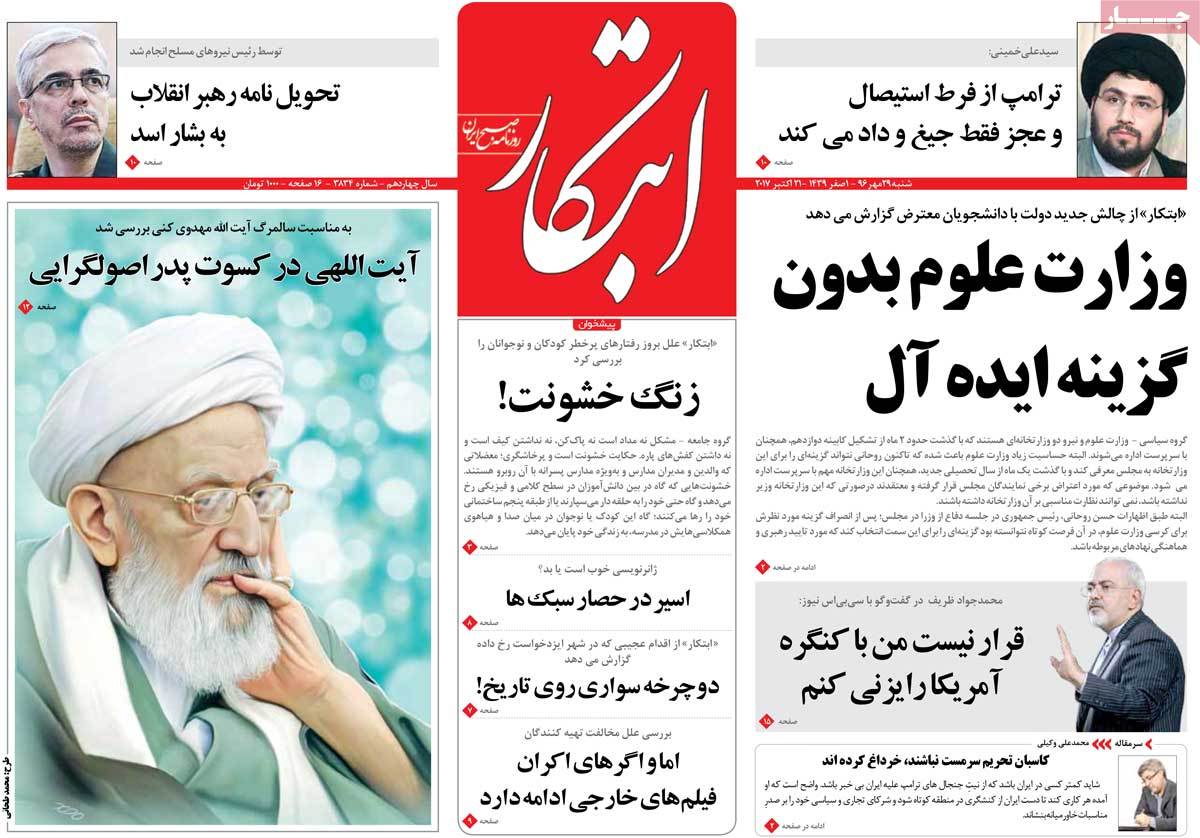
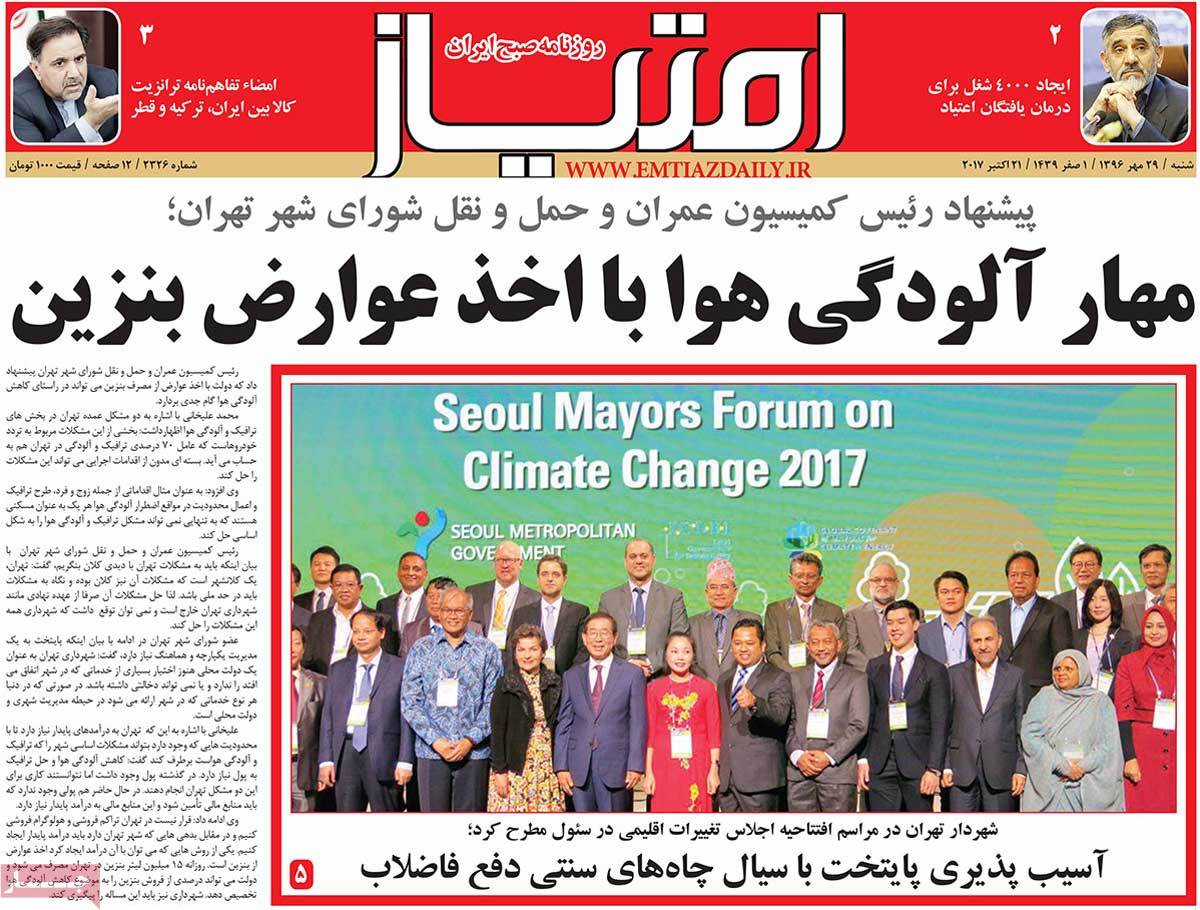
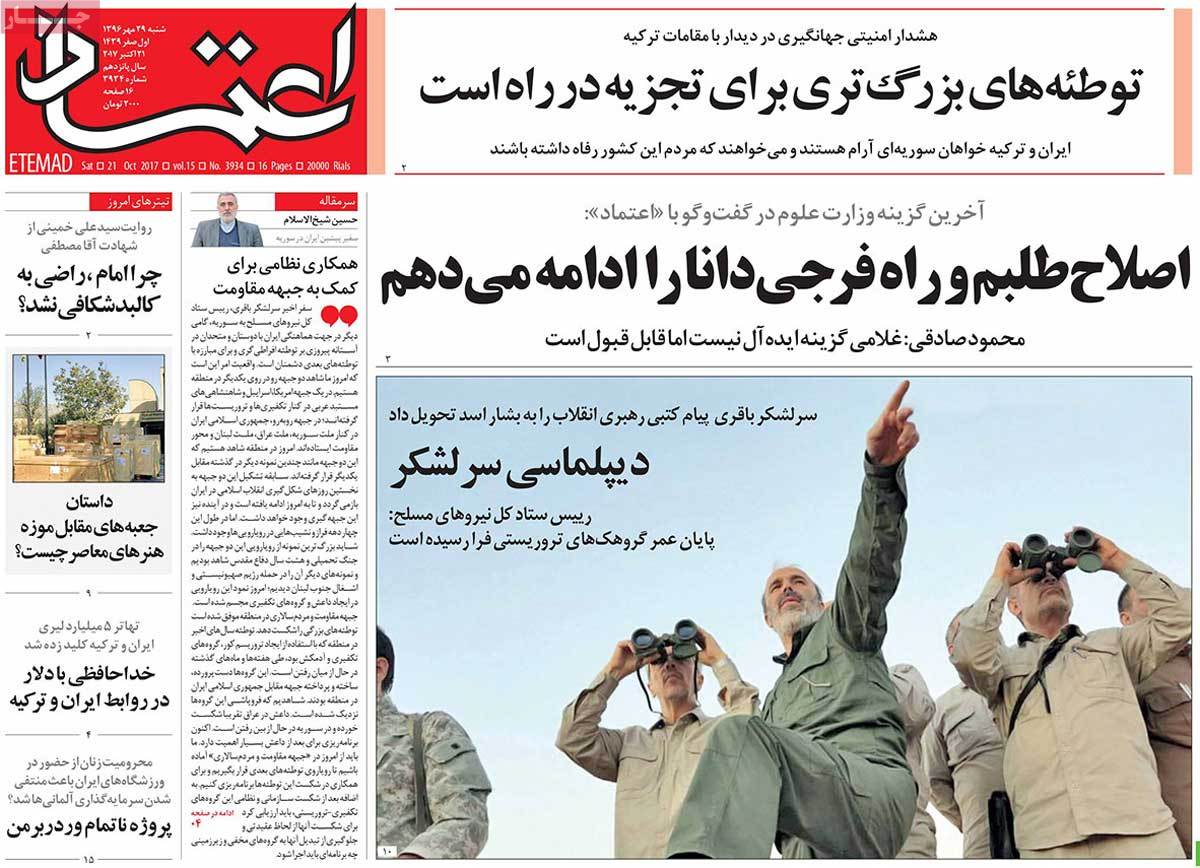
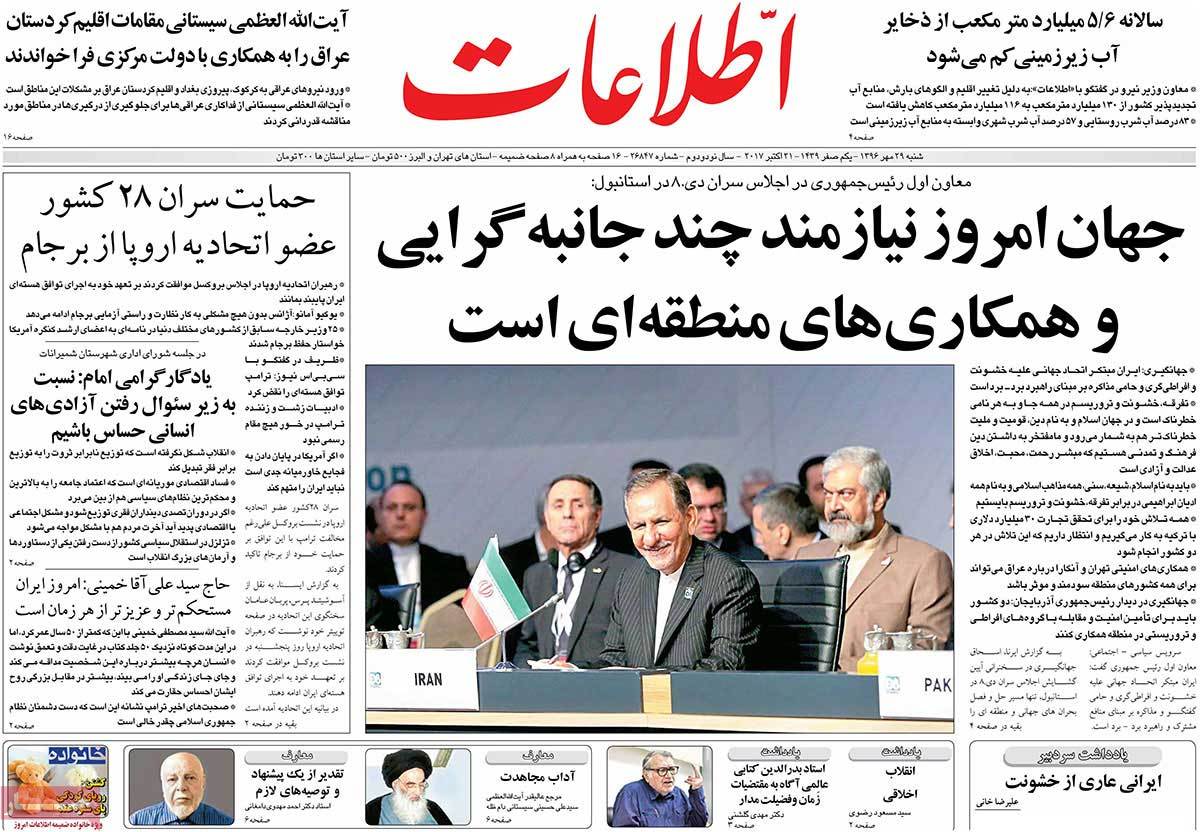
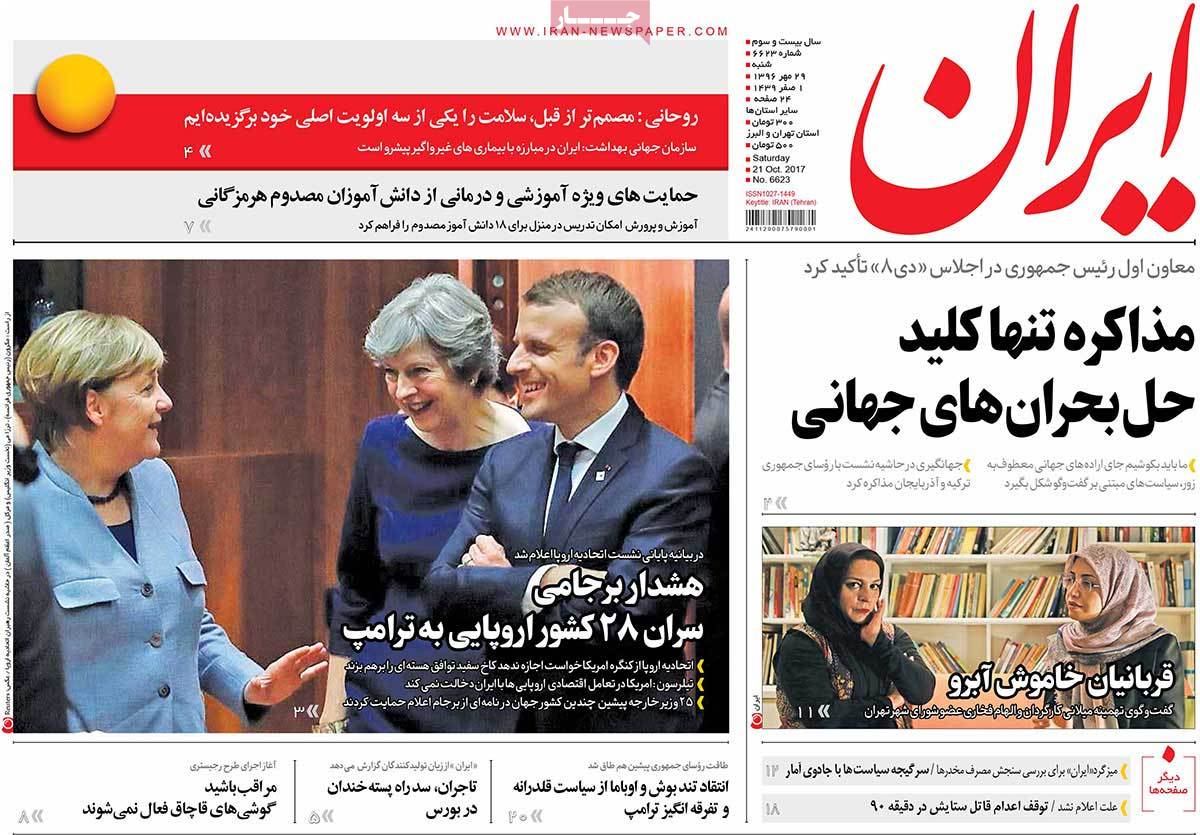
A Look at Iranian Newspaper Front Pages on October 5

The top story in today’s newspapers was a meeting between the Leader of Iran’s Islamic Revolution Ayatollah Seyyed Ali Khamenei and Turkish President Recep Tayyip Erdogan, during which the former called for urgent action against the Iraqi Kurdistan’s secession.

Erdogan’s meeting with his Iranian counterpart Hassan Rouhani and the MoUs signed between the two countries also received great coverage.

Another top story was the reactions to allegations raised about the arrest of Iranian Judiciary Chief’s daughter on charge of espionage for Britain. Judiciary Chief Ayatollah Sadeq Amoli Larijani said the rumours are not worth answering, and Intelligence Minister Mahmoud Alavi totally rejected the allegations.

The upholding of a five-year prison term for a former member of Iran’s nuclear negotiating team was also highlighted in today’s papers. He has been convicted of espionage.

The above issues, as well as many more, are highlighted in the following headlines and top stories:


Aftab-e Yazd:

1- Two Ministers Fall Victim to Parliament’s Dissatisfaction with Gov’t

  • Labour, Interior Ministers Receive Yellow Card from Parliament

2- Judiciary Chief’s Response to Rumours [about his daughter’s arrest]: Not Worth Answering

A Look at Iranian Newspaper Front Pages on October 5


Arman-e Emrooz:

1- Iran Leader: Zionist Regime Seeks to Create New Israel in Mideast

2- Ankara’s Strategic Turn: Iran-Turkey Unity in Saadabad

3- Rouhani: We Won’t Accept Change in Regional Borders

A Look at Iranian Newspaper Front Pages on October 5


Ebtekar:

1- First VP: “E-Government” to Be Fully Realized in 4 Years

2- Iran Leader: Kurdistan Referendum Treason against Middle East

3- Reforms in Saudi Style

4- Women MPs’ Efforts to Counter ‘Child Marriage’

A Look at Iranian Newspaper Front Pages on October 5


Ettela’at:

1- Putin Warns of Establishment of ISIS Bases in Regional States

2- 180 US Congressmen Urge Trump Not to Hesitate in Certifying Iran’s JCPOA Compliance

3- Iran, Turkey Sign 4 Documents of Cooperation

4- Reuters: UN Puts Saudi Arabia in List of Child-Killing Regimes

A Look at Iranian Newspaper Front Pages on October 5


Iran:

1- Europe’s Strong Support for Iran Nuclear Deal

2- Rouhani Condoles with Iraqi Nation, Gov’t over Talabani’s Death

  • I Hope Iraqis Would Follow Talabani’s Moderation

3- World’s Commitment to Iran Nuclear Deal Important: Putin

  • Russia to Continue Supporting JCPOA

A Look at Iranian Newspaper Front Pages on October 5


Jahan-e San’at:

1- Iranian, Turkish Presidents: Secessionism Is Rejected

2- US Defence Secretary, Trump Divided over Iran Nuclear Deal

A Look at Iranian Newspaper Front Pages on October 5


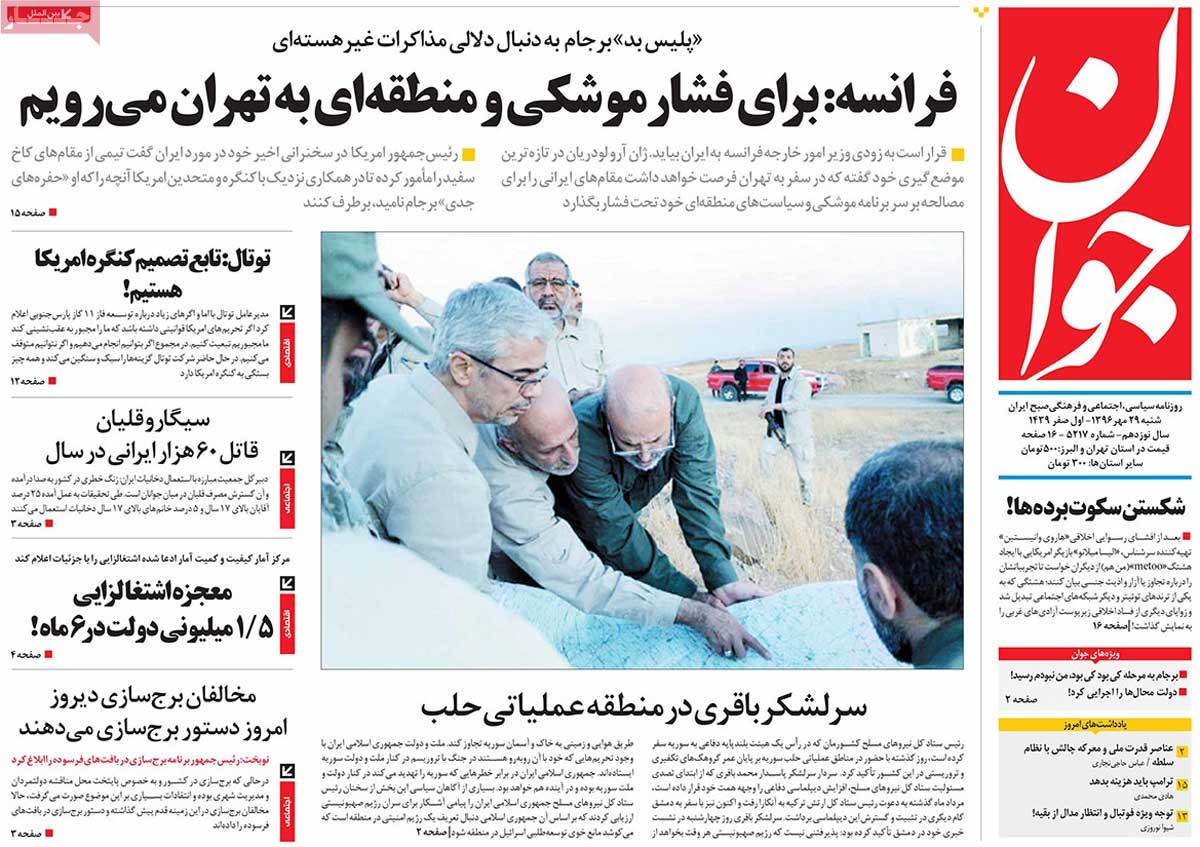
Javan:

1- Scenario of Nuclear Deal’s Permanent Vegetative State

  • US Administration to Increase Pressures on Iran

2- Intelligence Minister Responds to Lies Raised against Judiciary Chief

  • Ayatollah Amoli Larijani’s Family Not Suspected of Espionage

2- Private Bank Chief Claims Iran Needs $200bn to Organize Its Banks

A Look at Iranian Newspaper Front Pages on October 5


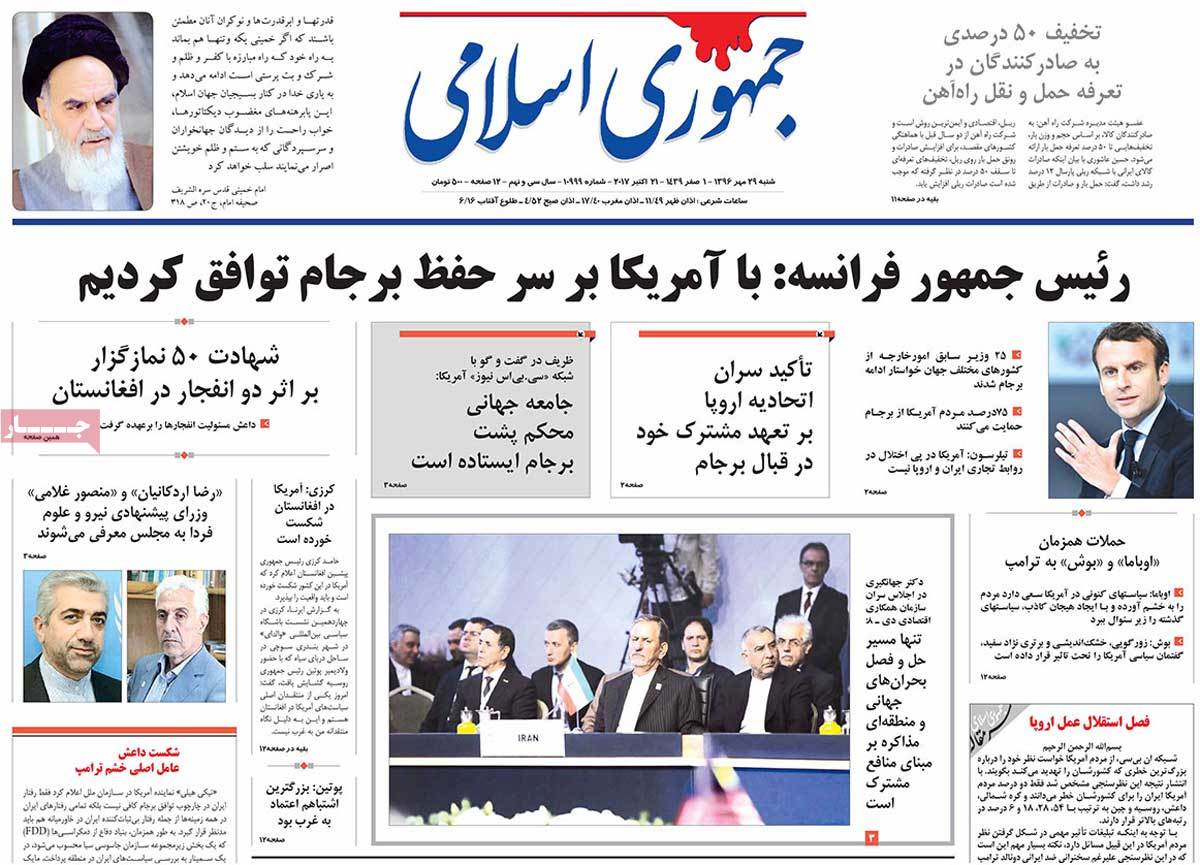
Jomhouri Eslami:

1- Iran Signs Deal in Moscow on Caspian Sea’s Oil

2- Chomsky: US, Israel Cannot Tolerate Independent Iran

3- Iran Leader: Kurdish Referendum Was a Treason against Region

A Look at Iranian Newspaper Front Pages on October 5


Kayhan:

1- Myanmar’s Displaced People: Suu Kyi Lying, Suppression of Muslims Going on Strongly

2- New York Times: Congress Would Have Made a Fuss If a Muslim Had Killed 59 Americans

3- Economic Downturn, Contraband Have Shut Down Many of Factories

4- Member of Iran’s Nuclear Negotiating Team Condemned to 5 Years in Prison

A Look at Iranian Newspaper Front Pages on October 5


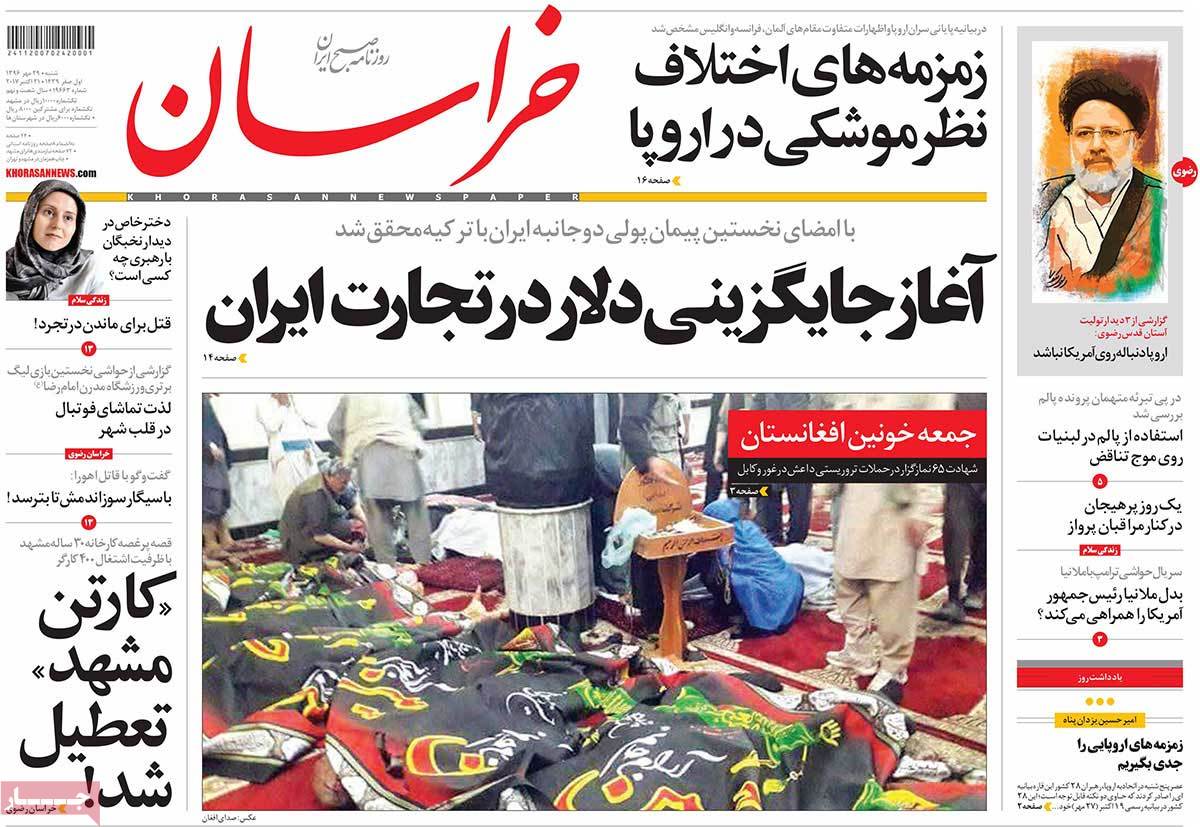
Khorasan:

1- Iran Leader Calls for Serious, Rapid Measure against Creation of New Israel

A Look at Iranian Newspaper Front Pages on October 5


Shargh:

1- Turkish President: More Serious Measures to Be Taken against Iraqi Kurdistan

2- Russia Once Again Takes Helm of GECF

3- Gov’t to Offer 20-Year Mortgages

A Look at Iranian Newspaper Front Pages on October 5


Tejarat:

1- Parliament Speaker: Securing Iran’s Interests Main Condition for JCPOA Survival

2- Saudi King Received by Putin: King Salman Trying to Correct His Foreign Policy

3- Strategic Alliance: Iran, Turkey to Increase Value of Bilateral Trade to $30bn

A Look at Iranian Newspaper Front Pages on October 5