Monday, January 19, 2026
Home Blog Page 3846

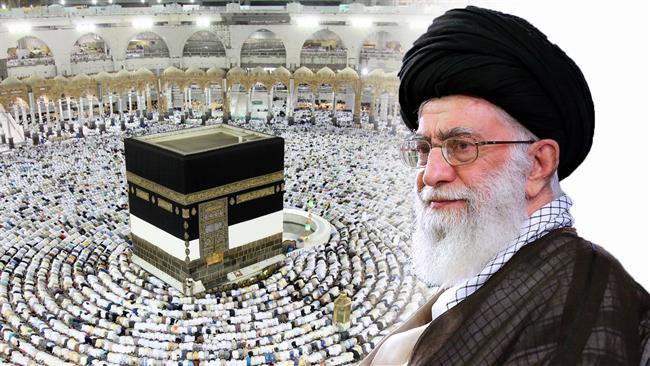
Iran Leader Urges Muslim States to Immediately End Domestic Conflicts

“We Muslims, by ignoring our definite duty of saving Palestine, are busy with domestic wars in Syria, Iraq, Yemen, Libya and Bahrain and with confronting terrorism in Afghanistan, Pakistan and the like,” Ayatollah Khamenei said in his Hajj message on Wednesday, August 29.

What follows is the full text of the Leader’s message, retrieved from Ayatollah Khamenei’s English website:


In the Name of Allah, the Beneficent, the Merciful

All praise belongs to Allah, the Lord of the Worlds, and peace and greetings be upon our Master, Muhammad, the last of the Prophets, upon his infallible Household, and upon his chosen companions.

I thank God Almighty for bestowing, this year as well as previous years, the blessing of performing the Hajj on an abundant number of believers from throughout the world, so that they can benefit from this refreshing and blessed spring, and so that they can be in the vicinity of God Almighty’s House engaging in worship, supplication, remembrance of God and seeking closeness to God on days and nights whose precious and auspicious hours can touch hearts and purify and ornament souls like a miraculous medicine.

The Hajj is a mystifying act of worship, a holy dwelling, a position full of divine blessings and an embodiment of God Almighty’s signs and symbols. The Hajj can help pious, humble and wise believers achieve spiritual accomplishments. It can make them become lofty and enlightened individuals. In can make them become insightful and courageous elements who are prepared to take action and make endeavours.

Both spiritual and political, as well as individual and social aspects are completely outstanding and visible in this unique religious obligation, and today the Muslim community is in dire need of both of these aspects.

On the one hand, the magic of materialism is busy beguiling [people] and causing annihilation by using advanced instruments, and on the other hand, the policies of hegemonic powers are instigating sedition and fuelling the fire of discord among Muslims and turning Islamic countries into a hell of insecurity and disagreement.

The Hajj can be a cure for both of these grave maladies that the Islamic community is suffering from. In can purge hearts of impurities and illuminate them with piety and understanding, it can open eyes to the bitter realities of the world of Islam, it can strengthen people’s determination to confront those realities, it can make steps firm and it can prepare hands and minds.

Today, the world of Islam is beset by insecurity: moral, spiritual and political insecurity. The key reason behind this is our negligence and the brutal onslaught by the enemies. We Muslims have not fulfilled our religious and rational duties in the face of the onslaught by the vicious enemy. We forgot to be both tough on disbelievers and compassionate with one another.

The result of this is that the Zionist enemy (that is, the Israeli regime) is provoking sedition in the heart of the world of Islam’s geography while we Muslims, by ignoring our definite duty of saving Palestine, are busy with domestic wars in Syria, Iraq, Yemen, Libya and Bahrain and with confronting terrorism in Afghanistan, Pakistan and the like.

The heads of Islamic states as well as political, religious and cultural elites in the world of Islam shoulder heavy responsibilities: the responsibility of creating unity and preventing everyone from getting engaged in ethnic and religious conflicts, the responsibility of informing nations of the enemy’s methods and the treachery of the global hegemony and Zionism, the responsibility of equipping everyone in order to counter the enemy in the various arenas of hard and soft wars, the responsibility of immediately stopping catastrophic incidents in Islamic countries, a bitter example of which, today, is the developments in Yemen which are a source of sorrow and protest across the world, the responsibility of offering unflinching support for oppressed Muslim minorities such as those in Myanmar and other places, and most importantly, the responsibility of defending Palestine and offering unconditional cooperation with, and assistance to a people that has been fighting for its usurped country for nearly 70 years.

These are important responsibilities which fall on our shoulders, and which nations should demand from their governments. The elite should also try to achieve them with firm determination and pure intentions. These tasks are the definitive manifestations of helping God’s religion, which will definitely be followed by divine assistance as promised by God.

These are parts of the lessons of the Hajj and I hope we can understand and act upon them.

I ask God to accept your Hajj. I would like to commemorate the martyrs of Mina and Masjid al-Haram and I ask God, the Beneficent, the Generous, to elevate their status.


Greetings and Allah’s mercy be upon you.

Seyyed Ali Khamenei

August 29, 2017
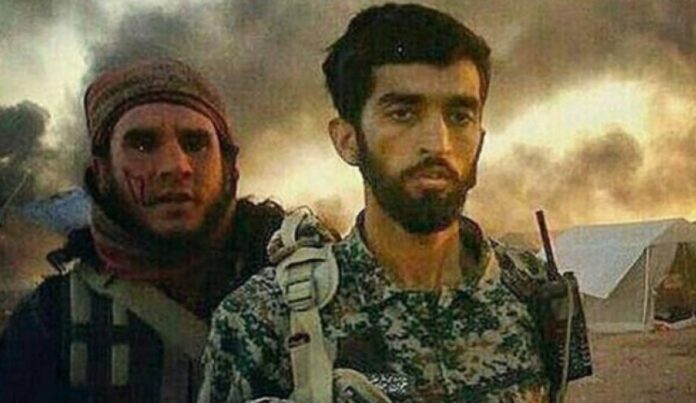
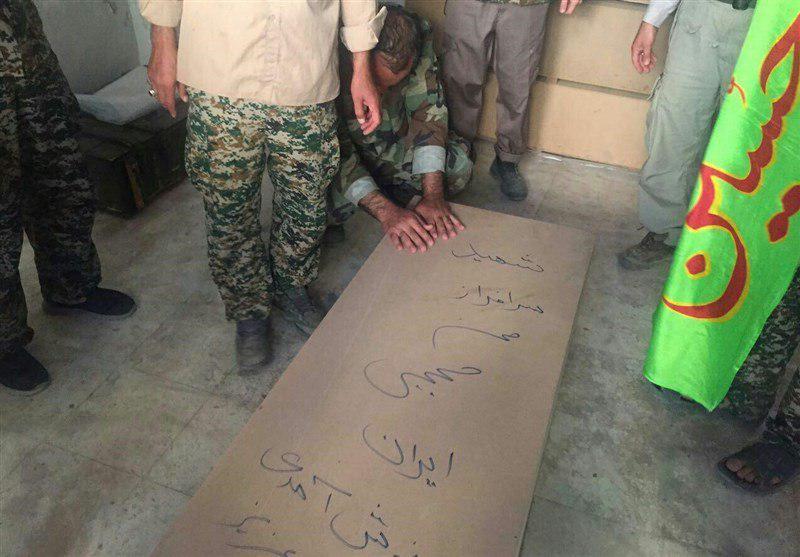
Iran Confirms Receiving Body of Martyr Hojaji from ISIS

Based on a ceasefire deal between the Lebanese Hezbollah Resistance Movement and ISIS, the body of Martyr Hojaji, who was recently decapitated by the Takfiri terrorists in Syria, was delivered to Hezbollah to be returned home.

Iran Confirms Receiving Body of Martyr Hojaji from ISISIRGC Ground Force Commander Brigadier General Mohammad Pakpour had earlier noted that DNA tests are underway to identify the body received from ISIS.

Later on Thursday, however, the IRGC Public Relations Department in a statement confirmed that the body belongs to the Iranian martyr.

The statement also declared that the funeral ceremony for Hojaji will be held on Saturday, September 2, in Tehran from 4 pm (local time).

The transfer of the body of Martyr Hojaji took place after the buses carrying ISIS militants and their families arrived in the ancient city of Palmyra in Homs Province, according to media reports.

Hojaji, a holy shrine defender, was taken hostage by the ISIS Takfiri group near the Iraqi border on August 7 and was beheaded two days later.

The shrine of Sayyida Zeinab, a sister of Imam Hossein (AS), the third Shiite Imam, is located in Damascus, Syria. Iranian military advisers have played a decisive role in the protection of the holy shrine against terrorist attacks.

Iranian Firms Showcase Nano-Products in Indonesia

Iranian and Indonesian companies involved in the field of nanotechnology held talks with each other in a seminar titled “Iran-Indonesia Nanotechnology Business Matchmaking” in Jakarta on Tuesday, August 30.

According to a Farsi report by IRNA, the seminar was held in line with the call by Iranian President Hassan Rouhani and his Indonesian counterpart, Joko Widodo, for the enhancement of mutual scientific and technological cooperation between the two states, particularly in the field of nanotechnology.

Iranian Firms Showcase Nano-Products in IndonesiaOn the sidelines of the seminar, 12 Iranian companies showcased their latest achievements and products in the field of nanotechnology in an exhibition, during which, the representatives of the Iranian and Indonesian firms seized the opportunity to hold face-to-face talks and explore areas of cooperation.
The conference was organized by the Iranian Embassy in Jakarta and the Indonesian Ministry of Industry.

The seminar was attended by Secretary-General of the Iran Nanotechnology Initiative Council (INIC) Saeid Sarkar, Iranian Ambassador to Jakarta Valiollah Mohammadi Nasr-Abadi, a number of Indonesian officials as well as the representatives of 12 Iranian companies involved in the field of manufacturing nano-products.Technology

IAEA New JCPOA Report to Show Whether Agency Swayed by US

IAEA to Send Two Rapid Coronavirus Testing Devices to Iran: Envoy

Iran’s official news agency IRNA has, in a Farsi article, weighed in on the latest developments related to JCPOA, the deal signed between Iran and the six world powers over Tehran’s nuclear program. The highlights of the analytical piece follow:

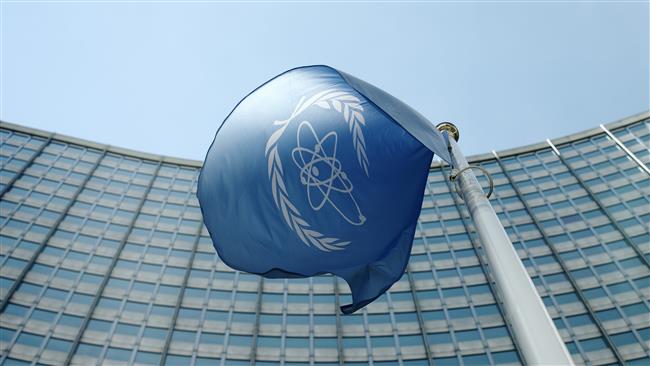
The eighth report on the JCPOA by the International Atomic Energy Agency (IAEA) likely to be published on August 31 will be a new touchstone of neutrality on the part of the UN nuclear agency.

This comes against the backdrop of a recent trip to Vienna by US Ambassador to the UN Nikki Haley and Iran’s warning about the adverse consequences of putting pressure on the IAEA.

Haley recently travelled to the Austrian capital and met with IAEA Director General Yukiya Amano. Following the meeting, Iranian Foreign Minister Mohammad Javad Zarif, in a letter to Amano and EU Foreign Policy Chief Federica Mogherini, said, “The announced objective of Haley’s trip to Vienna raises serious concerns over a greater-than-ever violation of the letter and spirit of the JCPOA and UNSC Resolution 2231.”

In reaction to a statement by the US mission to IAEA, Iran’s mission to the UN nuclear watchdog warned against the adverse consequences of any illegal pressure on the agency.

“The Islamic Republic of Iran is well familiar with its duties and responsibilities as stipulated by the Nuclear Non-Proliferation Treaty (NPT), the IAEA’s Safeguards Agreement, the JCPOA and the Additional Protocol, has remained committed to those responsibilities, and will continue to do so,” said Iran’s mission to the IAEA.

However, it added, Iran will not allow any country to hijack these regulations to serve its own political interests.”

The statement by the Iranian mission also voiced content with the IAEA’s reports on Iran’s compliance with its obligations under the JCPOA, all of which prove Tehran has fully lived up to its commitments under the deal. The statement also highlights that Iran expects the IAEA chief, inspectors and experts to continue to professionally fulfil their duties and missions vis-à-vis the JCPOA.

IAEA Safeguarding “Pure Benefit” of Nuclear Verification System

Although Iran has had considerations regarding the UN nuclear agency’s reports, the IAEA’s reports on the JCPOA have, overall, been confirmed in terms of neutrality and technical matters. This time, too, given Iran’s transparent stances, the IAEA is unlikely to be swayed by the US pressure and mention points which would jeopardize the essence of the JCPOA and the verification system in Iran. The IAEA director general has also praised the JCPOA as a pure benefit for nuclear verification.

Anyway, this time, given the new US administration’s overt and covert pressures on the IAEA to inspect Iran’s military sites, there will be more sensitivity regarding the report.

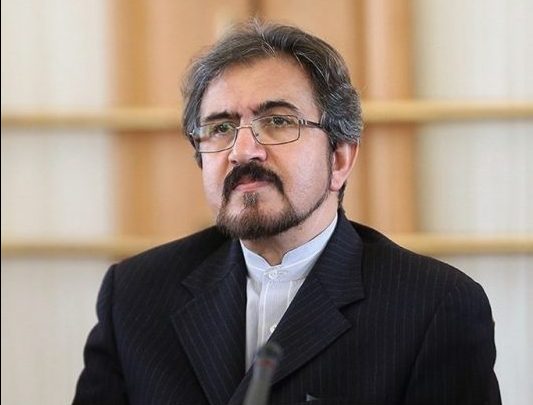
In the meantime, Iranian Foreign Ministry Spokesman Bahram Qassemi said in a press briefing that Iran will not allow others to enter sites which are off limits under the JCPOA, and that the IAEA’s inspections will definitely take place based on “our own domestic policies.”

Qassemi urged the IAEA to defend its independence and status against Washington’s illogical and unrealistic demands.

“We are confident that they cannot impose their demands. We have given the agency the necessary warnings and made the required recommendations, and we will continue the same approach in the future,” said Qassemi.

Therefore, we should wait for release of the IAEA’s new report to see to what extent the Agency has managed to maintain its independence in the face of Washington’s pressure.

As Iranian President Hassan Rouhani said in a televised interview on August 29, 2017, “Iran’s commitment to the world is clear; it is the regulations, not the US, that determine our relations with the IAEA; we won’t succumb to pressure and will engage with the Agency within the framework of regulations.”

Iranian Deputy FM, Syrian President Hold Talks in Damascus

Jaberi Ansari, who arrived in Damascus on August 30, discussed the latest developments in Syria and the region and the process of international talks on Syria peace with President Assad.

The Iranian diplomat, who is also the country’s top negotiator in Astana Process, briefed Assad on the process of diplomatic efforts made by Iran and its talks with various regional and international sides in relation to Syria.

Referring to the pace of incidents and developments, Jaberi Ansari also emphasized the need for continuous and close consultations between the two countries.

For his part, the Syrian president appreciated the support of the Islamic Republic of Iran’s Leader, nation, and government for Syria in the fight against terrorism.

Assad also touched upon the necessity of maintaining vigilance and providing coordination between Damascus and Tehran at the current stage.

During the meeting, the two sides also discussed the horizons ahead in addressing the Syrian crisis, especially in the context of Astana Process, by reviewing the latest political and filed developments.

Iranian Deputy FM, Syrian President Hold Talks in DamascusMeeting with Syrian FM Muallem

Later on Wednesday, Jaberi Ansari also held talks with Deputy Prime Minister and Foreign Minister of Syria, Walid Muallem.

During the meeting in Damascus, the Syrian Foreign Minister referred to the positive field developments in various parts of Syria, saying that these developments have made all the countries that were supporting the terrorists change their calculations.

In turn, Jaberi Ansari expressed satisfaction with the developments in Syria, the positive social atmosphere in the Arab country, the restoration of relative stability and the return of normal life to Damascus and other parts of the country.

He also said that it is necessary to take advantage of these developments in order to resolve the Syrian crisis.

Iran Calls for Int’l Action to Stop Ethnic Cleansing in Myanmar

“Global silence on continuing violence against Rohingya Muslims,” Foreign Minister Mohammad Javad Zarif said in a tweet on Wednesday.

“International action [is] crucial to prevent further ethnic cleansing,” Zarif went on to say, stressing that the United Nations “must rally” in this regard.

About 1,000 persecuted Rohingya Muslims from Myanmar’s Rakhine state have fled to neighboring Bangladesh after coming under fire from military soldiers.

Furthermore, the death toll from ongoing clashes between Myanmar’s troops and the so-called advocates of the persecuted Rohingya Muslims recently reached nearly 100.

Thousands of desperate Muslims recently entered Bangladesh, fleeing from intensified crackdown on the minority by Buddhist mobs and security forces over recent attacks on police outposts.

Yemen’s Army Attacks Abu Dhabi Using Ballistic Missile

The Yemeni TV channel Al Masirah quoted a Yemeni military official as saying that the Army has targeted Abu Dhabi using ballistic missiles.

The official declared that the missile has hit the target with a high precision.

Emirati officials have yet to comment on the attack.

The UAE is a member of a Saudi-led coalition which has been waging an air campaign against Yemen since March 2015.

The war was launched in an attempt to eliminate the Houthi Ansarullah movement and reinstall former Yemeni President Abd Rabbuh Mansur Hadi, who resigned in 2014 and fled to Riyadh before returning to Aden.

The Saudi-led war, which has been accompanied by a naval and aerial blockade on Yemen, has so far killed over 12,000 people in the impoverished state, left 70 percent of the country’s 27 million population in desperate need of humanitarian aid, and caused the worst cholera outbreak in the world there.


Serbia Agrees to Cancel Visa Regime for Iranian Citizens

A Farsi report by IRNA has quoted Serbian government’s website as announcing that the European country has approved the cancellation of visa requirements for Iranian and Indian citizens during a meeting on August 4.

As a result, tourists as well as investors from both countries of Iran and India can enter the territory of Serbia without any problems.

The government’s website has cited improvements in business ties and the promotion of bilateral relations with Tehran and Delhi as the main achievements of such a decision.

According to IRNA, the new Serbian ambassador to Iran, Dragan Todorovic, recently presented his credentials to Iranian President Hassan Rouhani and conveyed the congratulatory message of his country’s president on the re-election of Rouhani, saying that the Serbian government is ready to strengthen its all-inclusive cooperation with Iran and that it has taken early steps to establish a banking relation with the Islamic Republic.

The new Serbian ambassador to Tehran also submitted the official invitation of the president of his country to Rouhani in which he had asked the Iranian president to travel to Serbia. He also said that the Serbian parliament would look into the visa waiver for Iranian nationals in the near future.

Expressionist Artist Holds Exhibition in Memory of Late Wife

After losing his wife last August, Kiasat created 25 expressionist works focused on human suffering, with more than 20 of them on show in his ongoing exhibition.

Kiasat was born in 1948 in northwestern city of Tabriz. He is a member of the board of the Visual Arts Society of Tabriz.

He is teaching at several universities in Tabriz. He has held more than 50 exhibitions in Iran, Turkey, South Korea, Bulgaria, Austria, Yugoslavia, Japan, Germany, Italy and Belgium.

Kiasat’s gallery has been open to visitors at Sarban Gallery in Tehran as of Friday, August 18.

Here are ISNA’s photos of the exhibition:

Iran Urges UAE to End Destructive Regional Policies

“Unfortunately, Abu Dhabi in recent years has created many problems in the region by adopting adventurous policies beyond its capacities,” Qassemi said in a Wednesday statement.

The UAE’s participation in Yemen war and the cruel bloodshed there, its efforts to occupy parts of Yemen’s territories, its intervention in Libya, and its effort to provoke regional governments to blockade and boycott other countries are a few examples of such policies, the Iranian spokesman added.

“The UAE is required to end such destructive, inefficient, and provocative policies,” Qassemi added.

His statement came after UAE Foreign Minister Sheikh Abdullah bin Zayed Al Nahyan urged Iran and Turkey on Tuesday to end what it called their “colonial” actions in Syria.

“If Iran and Turkey continue the same historical, colonial and competitive behaviour and perspectives between them in Arab affairs, we will continue in this situation not just in Syria today but tomorrow in some other country,” Sheikh Abdullah said.