Tuesday, December 30, 2025
Home Blog Page 3806

Iran Says Israel’s Strategy Based on Creating Regional Tensions

Iran Says Israel’s Strategy Based on Creating Regional Tensions

In a meeting with the outgoing Lebanese ambassador to Iran, Amir-Abdollahian said the latest developments in Lebanon should be analyzed in light of the Zionists’ main regional strategy of creating tensions and crises.

According to a Farsi report by ICANA, he described relations between Iran and Lebanon as “strategic” and “unique” and added Beirut plays a praiseworthy role in the battle line of resistance against the Zionists and fight against terrorism.

“Iran will continue to offer its firm support for the Axis of Resistance in fight against the Zionist regime’s violence as well as terrorism,” he noted.

Elsewhere in his statements, he also referred to the non-constructive behaviour of Riyadh towards the region and the mysteries around the abrupt resignation of Lebanese Prime Minister Saad Hariri, saying “the latest developments in Lebanon have resulted in the strengthening of political unity and the foiling of enemy plots to create tensions in the country.”

He then highlighted the strategic capacities of the Islamic Republic of Iran and Lebanon, adding the all-out cooperation between the two sides in various political, economic, security, cultural and parliamentary fields is of great significance.

For his part, Fadi Haj Ali said Lebanon is interested in expansion of ties with all regional states except for the Zionist regime. “We welcome further development of relations with the Islamic Republic of Iran.”

The outgoing ambassador stressed Iran plays an important role in the region and its constructive approaches towards the regional issues is not deniable.

On the latest developments in Lebanon, Haj Ali noted the developments “have strengthened our unity and the Lebanese factions from all sides say they will not spare any effort to restore peace and stability to the country.”

He also expressed sympathy with the Iranian nation over the deadly earthquake which jolted western Iran killing hundreds of people.

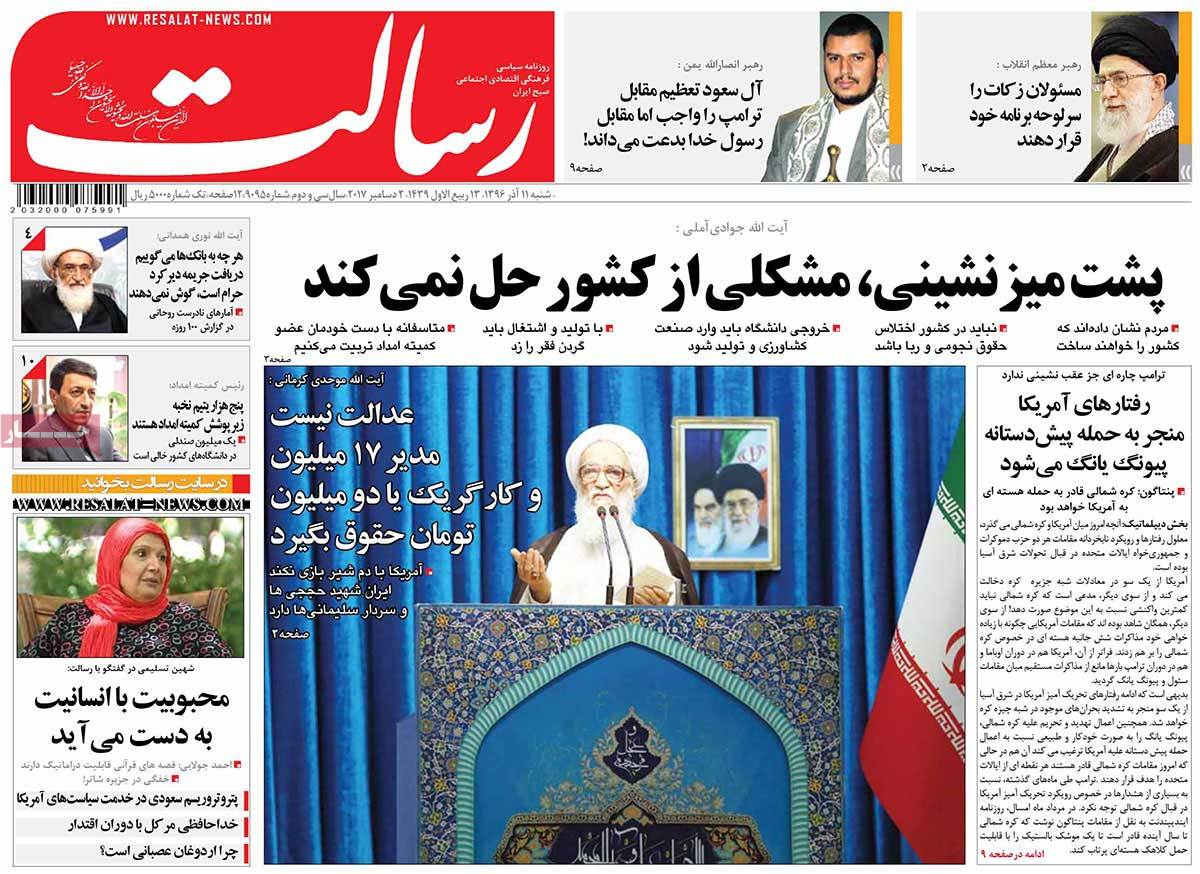
A Look at Iranian Newspaper Front Pages on November 16

The Sunday night’s deadly earthquake, which has so far killed over 435 and wounded nearly 10,000 people, remained a top story today, with several newspapers covering the relief and rescue efforts and the budget allocated by the government to the reconstruction of the quake-hit areas.

A security conference held in Tehran and the remarks made by Iranian Deputy Foreign Minister Seyyed Abbas Araqchi on the ‘worrying’ proliferation of arms in the Middle East also received great coverage.

Among other top stories were Iran’s reaction to a UN human rights resolution against the Islamic Republic and a coup against Zimbabwean President Mugabe.

The above issues, as well as many more, are highlighted in the following headlines and top stories:

19 Dey:

1- Latest Earthquake Death Toll: 474 Killed, 9388 Wounded, 40,000 Houses Damaged

2- Huffington Post: End of Saudi Ruling System Imminent

3- 1,900 Quake-Hit Villages Suffered Huge Damages: Rouhani’s Chief of Staff

A Look at Iranian Newspaper Front Pages on November 16


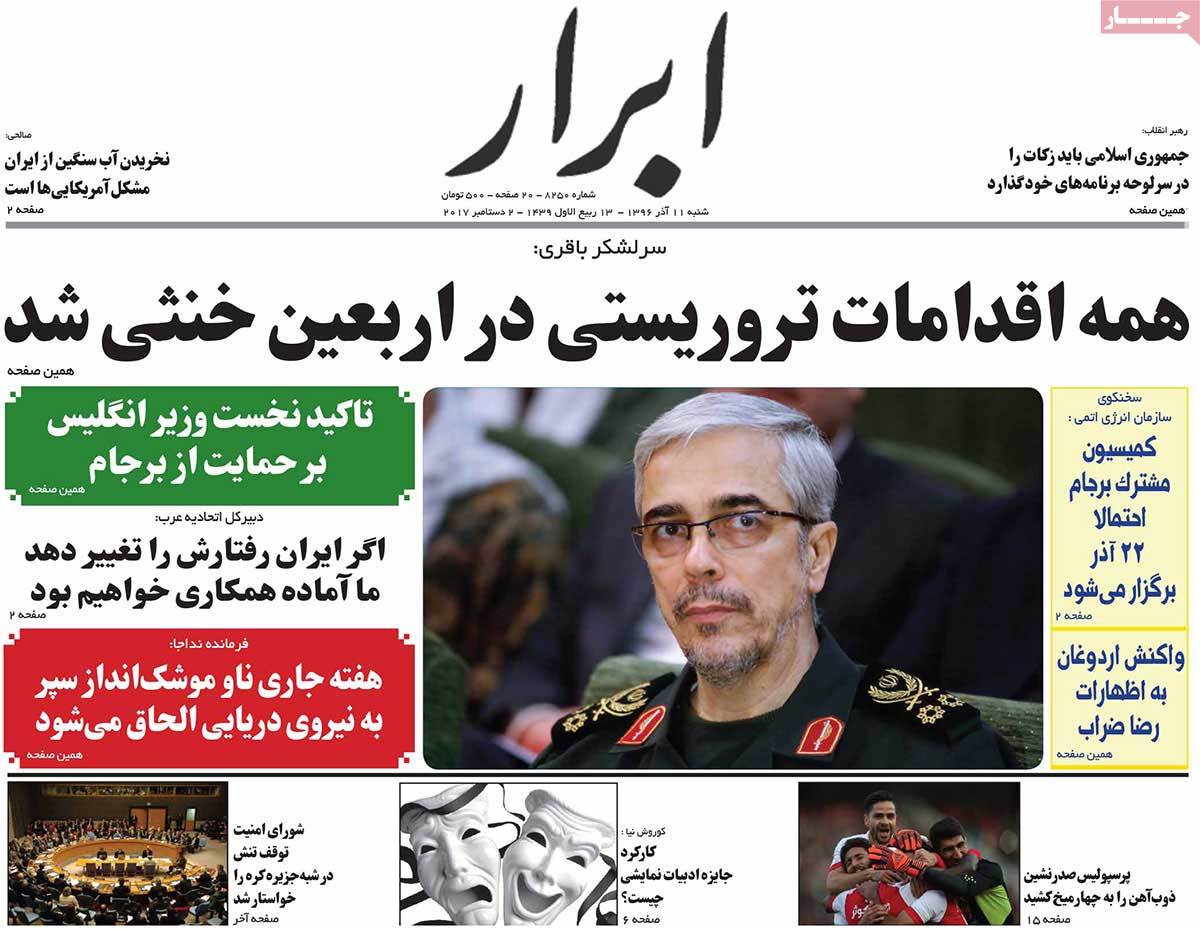
Abrar:

1- Zarif: Iran, US Issued $60 Billion Worth of Verdicts against Each Other

2- Netanyahu: We’ll Take Unilateral Action against Iran If There’s No Other Choice

3- Gov’t to Give Over $70 Million Grants to Quake-Struck People

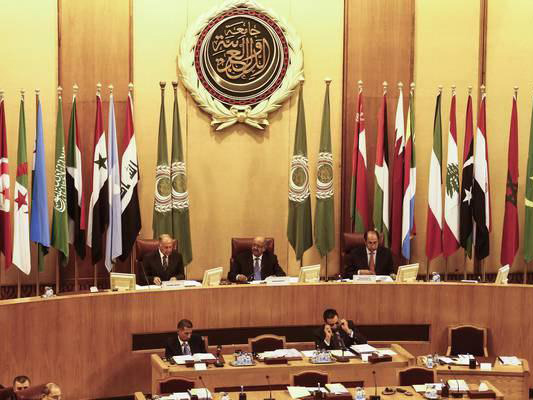
4- Saudi Arabia Invites Arab Foreign Ministers to Hold Anti-Iran Summit in Cairo

A Look at Iranian Newspaper Front Pages on November 16


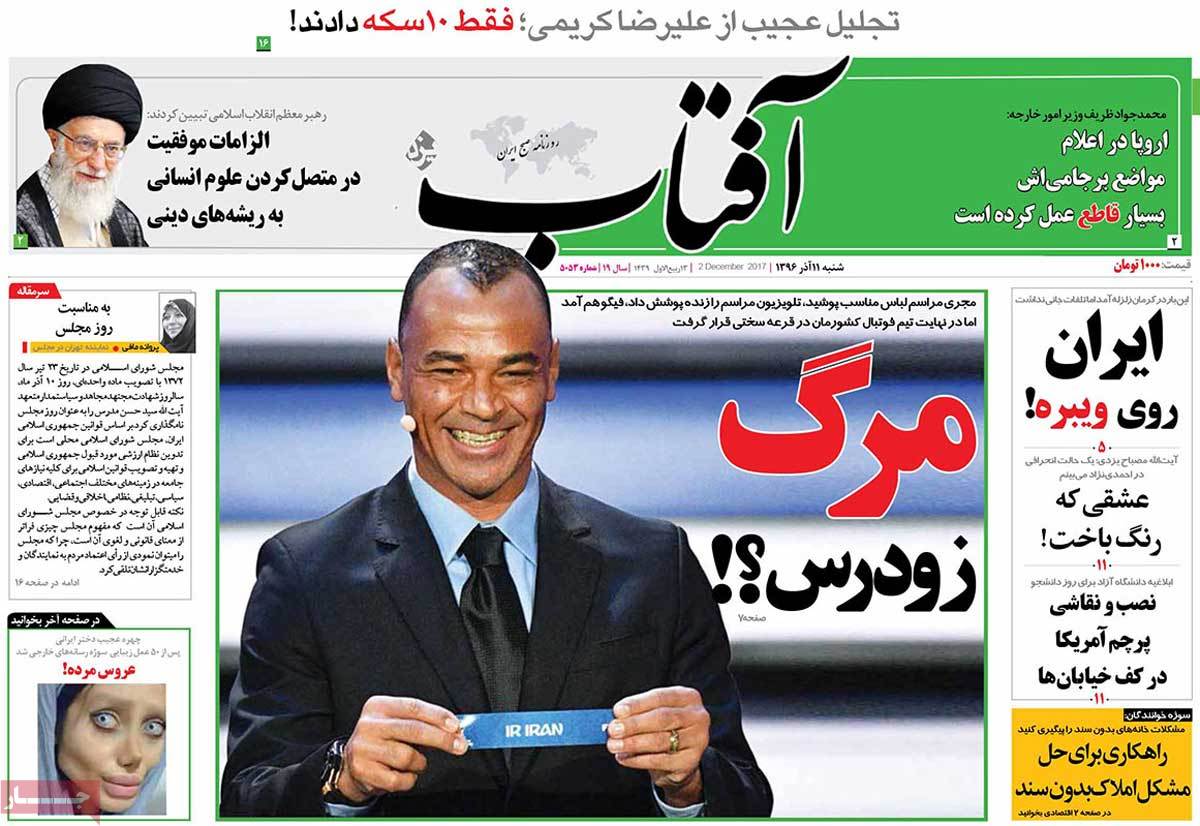
Aftab-e Yazd:

1- Rouhani: Collapse of Public Buildings Show There Has Been Corruption

2- Diplomat: Europe’s Support for Iran Nuclear Deal Not for Economic Reasons

3- North Korea Condemns Trump to Life in Prison

A Look at Iranian Newspaper Front Pages on November 16


Arman-e Emrooz:

1- Only One of His Three Children Taken Out of Rubble Alive; Wife Also Dead

  • I’ll Be Both Father and Mother for You Son

A Look at Iranian Newspaper Front Pages on November 16


Ebtekar:

1- Ruined Houses, Dead Hearts

2- Proliferation of Arms in Mideast, West Asia Worrying

3- Rouhani: We’ll Pursue Problems of Quake-Hit People Seriously

A Look at Iranian Newspaper Front Pages on November 16


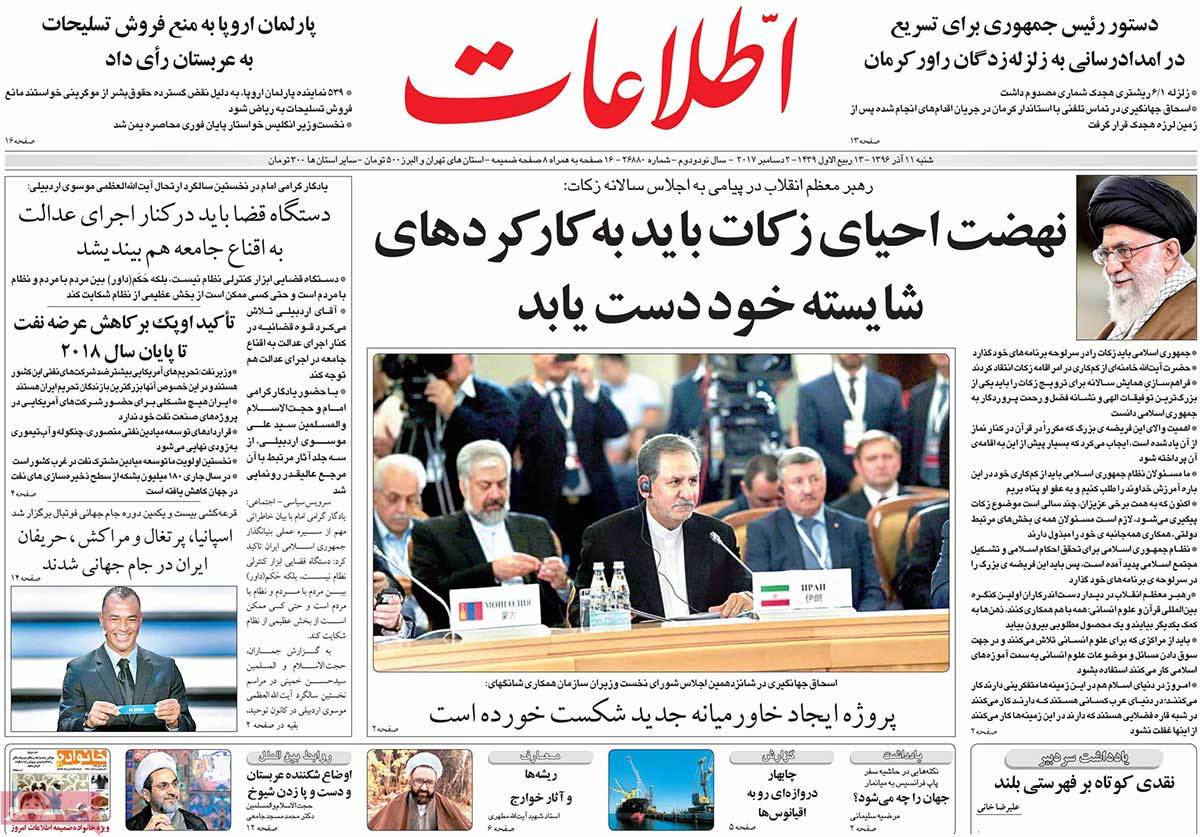
Ettela’at:

1- Zarif: Expansion of Iran-Russia Ties Important Factor in Regional Security

2- Zimbabwean Army Ends Mugabe’s 30-Year Rule

A Look at Iranian Newspaper Front Pages on November 16


Hemayat:

1- Sponsors of Terrorism Back Human Rights Resolution against Iran!

2- Iran’s Human Rights Criteria Based on Islamic Rationality: Official

A Look at Iranian Newspaper Front Pages on November 16


Iran:

1- People’s Great Support for Those Hit by Earthquake

2- Gov’t Allocates $735 Million in Credits to Earthquake-Hit People

A Look at Iranian Newspaper Front Pages on November 16


Jame Jam:

1- Rhythm of Life in Heart of Rubble

  • Trucks Carrying Water, Food to Quake-Hit Areas in Western Iran

2- Iranian Traditional Singer Seraj to Sign for Earthquake

3- Saudi Arabia Breaks ISIS’ Record of Killing People: Iranian Official

A Look at Iranian Newspaper Front Pages on November 16


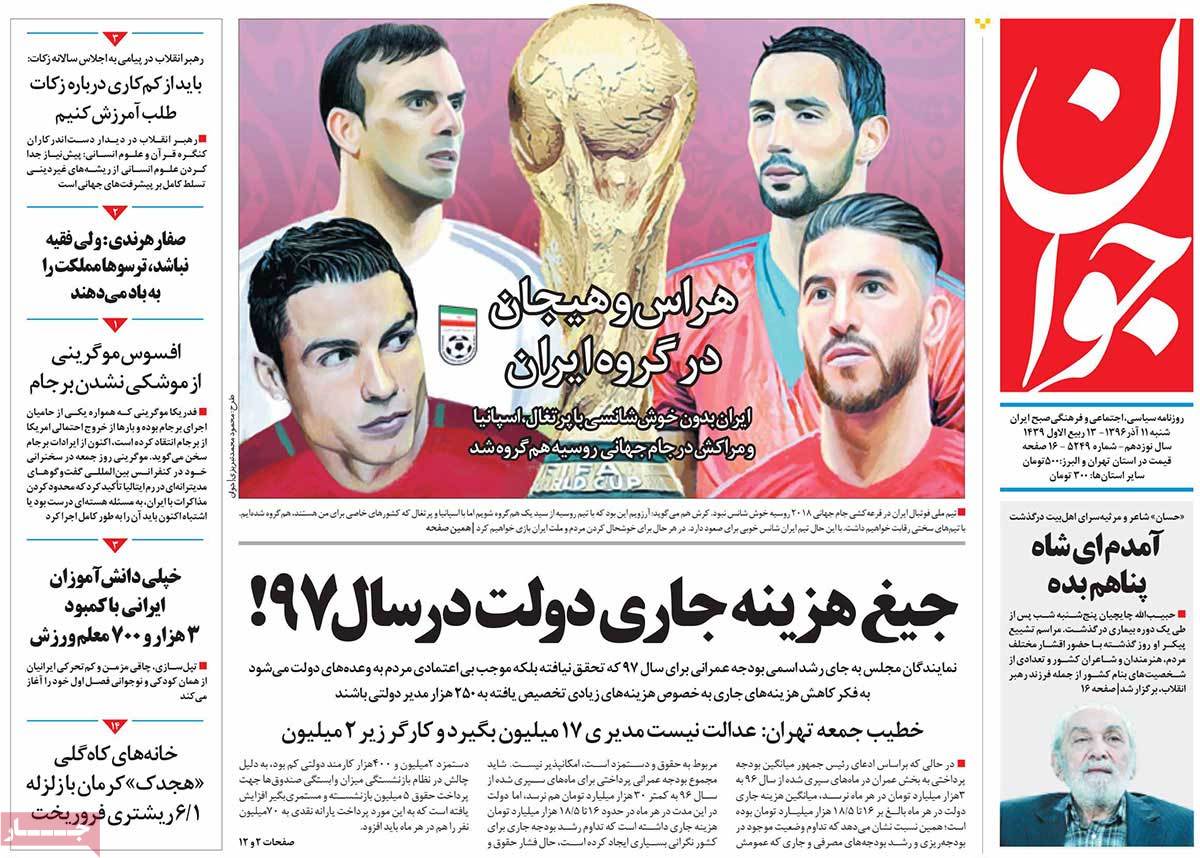
Javan:

1- IRGC to Rebuild Houses of Quake-Hit Villagers

2- All Facilities of IRGC, Army Deployed to Help Quake-Hit People

3- Total Playing with Iranian Oil Company on Implementation of Phase 11 Deal

4- British Coup in Zimbabwe

A Look at Iranian Newspaper Front Pages on November 16


Ka’enat:

1- 10,000 Active Groups Working to Rebuild Quake-Hit Areas

A Look at Iranian Newspaper Front Pages on November 16


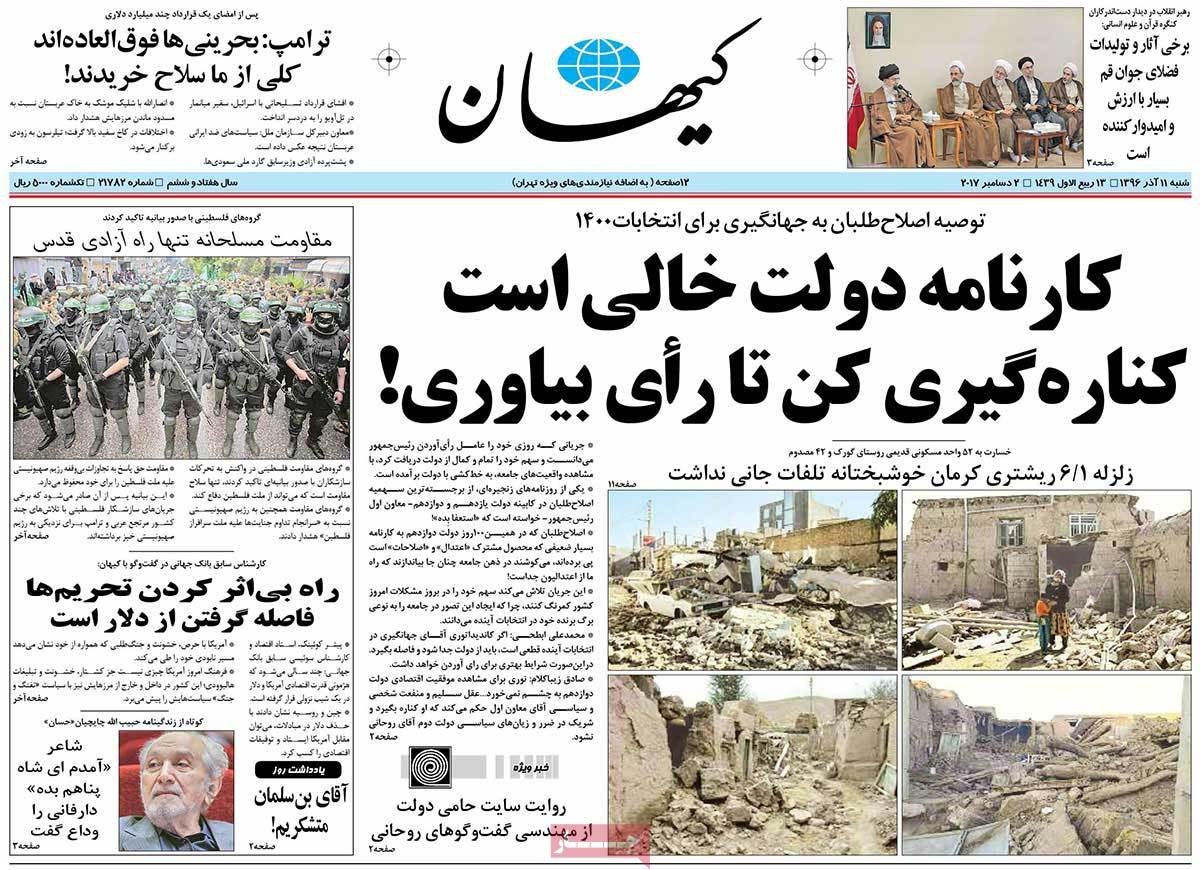
Kayhan:

1- Heat of Hope in Cold Nights of Kermanshah: Rescue Operations Organized

2- Ahmadinejad’s Urban Development Minister: Earthquake Could Be Disastrous without 88,840 Resistant Houses We Built in Kermanshah

3- A Report on Black Record of EU’s Office in Creating Security, Economic Crises

4- Top Saudi Mufti: Killing Zionists Forbidden, Hamas a Terrorist Group!

A Look at Iranian Newspaper Front Pages on November 16


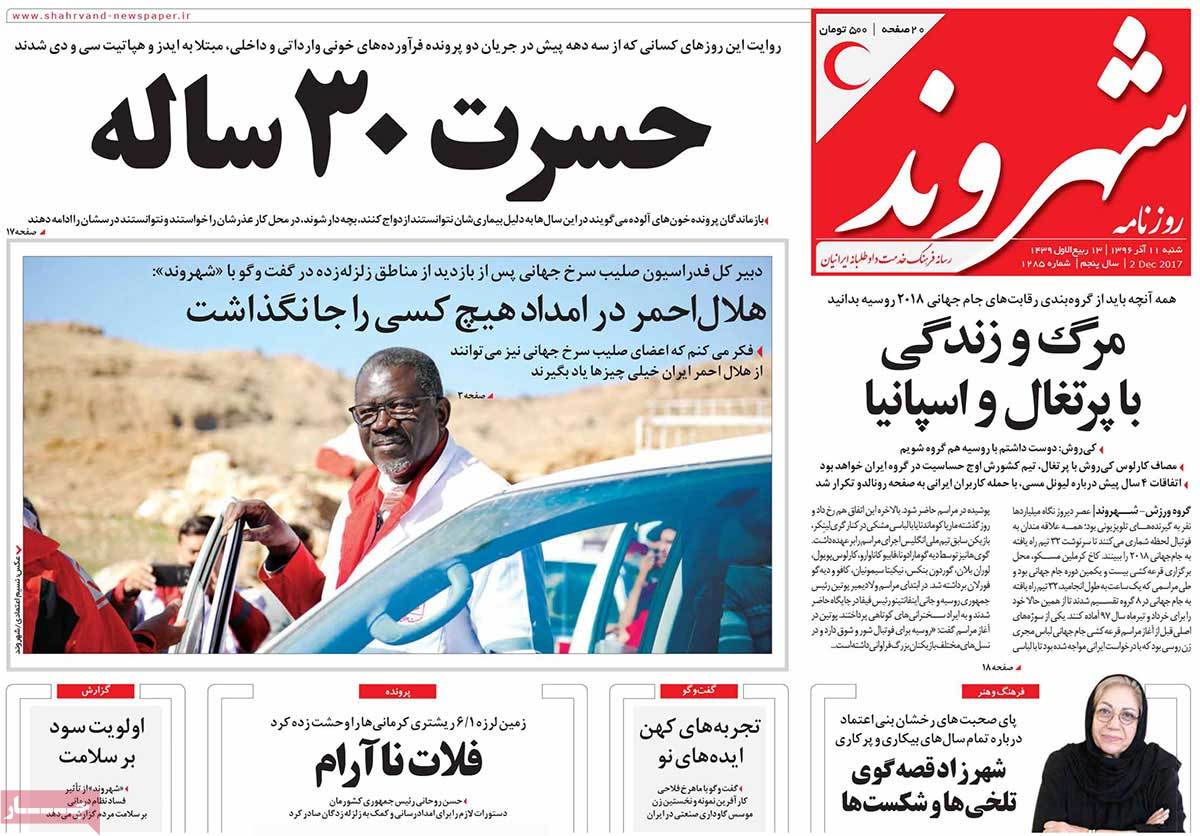
Shahrvand:

1- Red Crescent Society on Front Line of Rescue Efforts

A Look at Iranian Newspaper Front Pages on November 16


Singapore to Conduct Field Studies on Iranian Oilfield

Singapore to Conduct Field Studies on Iranian Oilfield

Gholam-Reza Manouchehri, a deputy head of NIOC, and Shyngys Kulzhamov, the head of Berlanga, signed the MoU on Wednesday (November 15) in Tehran.

The West Oil and Gas Production Company, one of the subsidiaries of the Iranian Central Oil Fields Company (ICOFC), operates the field and its oil is delivered to Cheshmeh Khosh operation zone through a pipeline, a Farsi report by ILNA said.

The NIOC also signed an agreement with Austria’s OMV and Thailand’s PTTEP for conducting studies on the oilfield.

The Dalpari field is located in Ilam province, southwest of Iran, 210 kilometres northwest of Ahwaz, near Dehloran to Abdanan road.

Iran Set to Remove Educational Problems of Sunni Students

Iran Set to Remove Educational Problems of Sunni Students

Iran’s Education Minister Mohammad Bat’haee says a working group set up a month ago is assessing the educational problems facing Sunni students in the country.

“Sunni academics have also been invited to join the working group to be present there as active members,” the minister added, according to a Farsi report by IRNA.

“Now, the working group is detecting problems in the four areas of human resources, the physical location, educational programs and intellectual development programs,” he added.

The committee seeks to spot and settle the issues in Sunnis’ school books and general school books which might deride Sunnis’ beliefs and teachings and could cause ethnic and local problems.

“The working group also does planning to train manpower to teach at schools where Sunni students study, so that we will be able to provide better conditions for Sunni students and remove the hurdles which cause tension or the feeling [among them] that they are being discriminated against,” the minister noted.

He expressed hope that with the working group making serious efforts and by drawing on previous findings, the ministry will be able to finish the job of detecting the problems and begin working out proper solutions to improve conditions for Sunni students’ education.

Iran Says Saudi Arabia Made Childish Mistake in Lebanon

abbas-araqchi

Speaking in an international conference on the proliferation of weapons and security in the region on Wednesday, Araqchi referred to the new tensions in the Middle East, and said among the issues facing the region are the mistakes that different players, especially Saudi Arabia, have made in such countries as Yemen and Syria as well as their support for terrorist groups.

“Saudi Arabia made a childish mistake on the issue of Lebanon, and by Western sources’ admission, Iran has been the wisest regional player,” said Araqchi.

He further pointed to the ‘worrying’ trend of the proliferation of arms in the Middle East, according to a Farsi report by Fars News Agency.

Araqchi elaborated on issues related to conventional nonconventional weapons.

“As far as conventional weapons are concerned, the reality is that West Asia has turned into the world’s largest arms market, so much so that weapons sales in the world have increased by 10 percent since 2012, which has been unprecedented since the Cold War,” he noted.

He said one third of the weapons were supplied by the US, one fourth by Russia and the rest by China and certain European countries.

“Saudi Arabia, Qatar, the United Arab Emirates and Turkey are the major buyers of conventional weapons,” said the deputy foreign minister.

He said the West’s willingness to sell arms and the huge economic profit it makes from that are among the reasons behind Western countries’ inclination to create crises and tension in the Middle East.

“All back-to-back crises and conflicts in the region can be traced back to the countries selling weapons,” he noted.

He underlined the existence of a security vacuum in the Middle East is another reason behind a rise in the sales of conventional weapons to regional countries, and added the new threats emanating from terrorism has set the stage for the sales of more military hardware.

“All these factors have resulted in a very tight arms race between countries and turned the Middle East into a market for foreign weapons,” he noted.

Elsewhere in his remarks, Araqchi referred to the idea of a nukes-free Middle East, saying the main impediment to the realization of the idea is the Zionist regime of Israel.

He also touched upon the issue of chemical weapons, expressing concern over terrorists’ gaining access to chemical arms in Syria.

Araqchi then touched upon the misgivings which exist over nonconventional weapons, saying, “The only positive development in this domain is the Iran nuclear deal, which concerns non-proliferation.”

He noted that uranium enrichment has not stopped in Iran for a single day, and added, “The Iran nuclear agreement (known as the JCPOA) respects enrichment, and the UN Security Council, too, urges countries to have peaceful [nuclear] cooperation with Iran.”

He noted that Washington believes Iran has become stronger after the conclusion of the JCPOA.

Araqchi said the reason why the US cannot tear up the JCPOA is that there is no alternative for the agreement.

“The JCPOA is part of the non-proliferation system and part of the UN Security Council resolution which has no replacement.”

Elsewhere, he said Iran’s policy in West Asia is based on peace, stability and tranquility.

He said Iran welcomes any policy which helps ease tensions and conflicts and will contribute to such policies.

He said the resistance front should be strengthened to counter the root cause of instability in the region, which is the Israeli regime and its cronies, i.e. terrorist groups.

“The region should move toward stability, and the root cause of insecurity should be tackled. The reason why Iran supports resistance is that there is no way to establish peace and stability in the region, but resistance,” Araqchi concluded by saying.

Iran’s Deputy FM Holds Talks with Syrian President

Iran’s Deputy FM Holds Talks with Syrian President

Jaberi Ansari, who is also the head of the Iranian delegation to Astana Talks on Syria, held talks with Assad in the Syrian capital, where he arrived on Wednesday (November 16) following a short visit to Russia.

During the talks, the two sides discussed the latest developments in Syria and the entire region. They also exchanged views on the political and diplomatic measures adopted so far to put an end to the Syrian crisis which has been underway since 2011.

Jaberi Ansari also met Syrian Foreign Minister Walid Muallem. During the meeting, the two sides conferred on the latest regional developments and the latest efforts made to end Syrian crisis.

Iran Denounces UN’s “Unacceptable” Human Rights Resolution

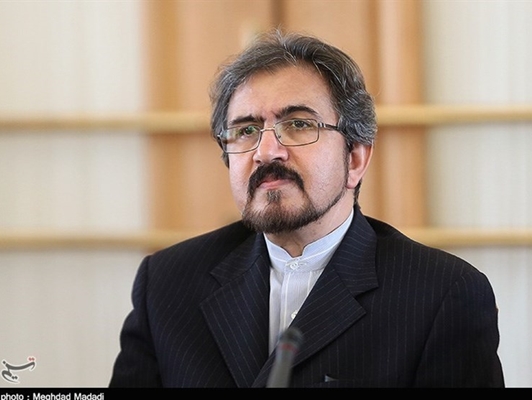
In a Wednesday statement, Qassemi said the Islamic Republic of Iran rejects the“unacceptable” resolution proposed in the 72ndmeeting of the UNGA by Canada and a number of other Western countries.

“The support of a number of the most notorious violators of human rights as well as war criminals and sponsors of terrorism, violence, and extremism for the UN’s latest resolution is only one of the main reasons showing why the resolution is invalid,” he said.

“The Western countries’ instrumental, selective, and political use of human rights against independent states of the world is a wrong and condemned approach and has no result other than undermining the supreme status of human rights,” he added.

Qassemi once again stressed that the Islamic Republic is a ruling system based on religious democracy which has always sought to promote human rights and fulfill seriously its international commitments.

“Iran is ready to seriously establish dialogue and constructive cooperation with any other side interested  in promoting human rights based on its supreme values and the principle of mutual respect, justice and fairness and far from political manipulations within all the legal international mechanisms,” he concluded.

The Third Committee of the United Nations General Assembly on Wednesday condemned Iran for what it called“continuous violations of human rights.

By a vote of 83 to 30 with 68 abstentions, the Third Committee of the General Assembly approved a five-page resolution expressing concern over “illegal practices ranging from torture, poor prison conditions, arbitrary detention, and curbs on freedom of religion or belief to state-endorsed discrimination against ethnic and religious minorities as well as women.”

Iran Earthquake: Baby Taken Out of Rubble Alive after 3 Days

Iran Earthquake: Baby Taken Out of Rubble Alive after 3 Days

The baby was saved by relief and rescue workers on Wednesday morning, three days after the deadly earthquake.

Since the Sunday incident, all Iranian bodies and organizations have been deployed in the western province of Kermanshah to help the quake-hit people.

At least 12,000 houses have been completely destroyed after the earthquake, for which the government has vowed to give grants and loans to help people reconstruct their homes.

Several makeshift hospitals have been built by the Iranian Armed Forces and the Red Crescent society. Two babies have been born in these hospitals during the past three days, and several surgeries, including a brain surgery, have been performed on the quake-hit people.

Lebanon President Says PM Hariri under Arrest in Saudi Arabia

Lebanese President Michel Aoun

“We consider Prime Minister Saad Hariri as being detained in Saudi Arabia and this is an act of aggression against Lebanon,” Aoun said in a meeting with the Lebanese Audio Visual Council on Wednesday.

Aoun said nothing justified Hariri’s continued stay in Saudi Arabia for 12 days.

“This contradicts the Vienna Treaty and human rights,” he was quoted as saying by the President’s Twitter account.

“Don’t be scared, economically, financially or security-wise. The country is safe and national unity supports safety,” Aoun added, according to Al-Ahed News.

“We cannot prolong waiting and losing time, because state affairs cannot be stopped.”

Reiterating his previous comments on Hariri’s resignation, Aoun said that it wasn’t possible to complete the resignation that was presented “from abroad.”

“He needs to return to Lebanon to submit his resignation or withdraw it, or to discuss reasons for it and solutions to it.”

Tehran-Moscow Ties to Benefit Mideast Security: Iran’s Zarif

Tehran-Moscow Ties to Benefit Mideast Security: Iran's Zarif

In a message to the opening of a conference marking five centuries of ties between Iran and Russia, held in Moscow on Wednesday, Zarif said a review of the long history of relations between Iran and Russia suggests that the two neighbors need to broaden and diversify their interaction.

Enhancement of Tehran-Moscow relations would not only serve the interests of the two nations, but also play a major role in ensuring security, stability and development in Central Asia and the Middle East, Zarif added.

He also expressed confidence that academic meetings as well as scientific and cultural cooperation between the two countries would contribute to cultural diplomacy and stronger relations.

The conference, “Iran, Russia, Five Centuries of Cooperation”, opened in the Russian State Archive of Socio-Political History (RGASPI) in Moscow on Wednesday.

Back in January, Iranian Foreign Ministry’s Center for International Research and Education held a conference in Tehran to mark 515 years of bilateral political relations.

Since coming into force in January 2016 of the Joint Comprehensive Plan of Action (JCPOA), a nuclear deal between Iran and the Group 5+1 (Russia, China, the US, Britain, France and Germany), Tehran and Moscow have ramped up efforts to boost their bilateral ties.

Iran and Russia have also formed a strong alliance in recent years, with both supporting the Syrian government against foreign-backed militancy.