Monday, January 12, 2026
Home Blog Page 3729

Israeli Regime Not to Last Long: Iran’s General Soleimani

“This regime (Israel) is not going to survive. The measures of this mercenary regime show that it is not permanent, as there are no factors or signs of permanence in the (Zionist) regime,” Commander of the Islamic Revolution Guards Corps Quds Force Major General Soleimani said in a ceremony in Tehran.

The cultural event was held in commemoration of Imad Mughniyeh, a senior member of Lebanon’s Islamic Jihad Organization and Hezbollah who was assassinated in February 2008 in a car bomb blast near Syria’s Damascus.

Elsewhere in his remarks, the Iranian commander pointed to the obvious clues to impermanence of the Israeli regime, saying the “horror, the lunatic struggles and the futile (military) operations” explain the Tel Aviv regime’s “vain last-ditch attempts.”

He further said that the price for the blood of Mughniyeh and all those martyred in Israeli plots in Palestine, Lebanon, Iran and elsewhere would be “eradication of the child-murdering Zionist regime.”

His comments came a few days after IRGC Lieutenant Commander Brigadier General Hossein Salami warned the Israeli regime of a hell that Iran could create for Zionists, recommending Israel to abandon the dream of conquering lands from “the river to the sea”, a term Zionists use to refer to territories from the River Jordan to the Mediterranean Sea.

Maani-Pilaf; A Local Gourmet Iranian Food

Maani-Pilaf is one of the local foods of the city of Damghan in the north-central Iranian province of Semnan. It is a very delicious, colourful and mouth-watering food. Noodles, barberries and sultanas are used in cooking Maani-Pilaf. The ingredients usually include beef, or sometimes sautéed chicken with onions.


Ingredients:

Rice: 3 cupfuls

Split peas: 1 cupful

Barberries: 100gr

Sultanas: 200gr

Noodles: 200gr

Onions: 1 big onion

Chopped beef or lamb: 300gr

Brewed saffron: a quarter of a cupful

Salt, pepper, turmeric: as much as needed

Oil: as much as needed


For the Scorched Rice:

Cooked rice: 1 cupful

Greek yogurt: 2 spoonfuls

Eggs: 1 egg

Brewed saffron: 2 spoonfuls

Butter to grease the bottom of the dish


Recipe:


Phase One:

Shred the onion and fry it. When the onion shreds begin to turn gold, add some turmeric and continue frying until it gets crispy and dark gold. Then add chopped meat and put the mixture on mild flame until its colour changes and is no longer pink. Then add some salt, pepper and turmeric. After one or two minutes, add a cupful of water and put the lid on the pan, and wait for the meat to be cooked through.


Phase Two

With two cupfuls of water and some salt, cook the split peas which you have already kept in water for at least two hours and changed the water several times.


Phase Three;

Fill a casserole dish two-thirds full of water and let it boil. Then add washed riced in the boiling water. Add the noodle as well as the cooked and sieved split peas 3-4 minutes before the rice is cooked through. Sieve the ingredients after they remain on the flame for another 2-3 minutes.


Phase Four

Put some oil on the bottom of the dish (oil keeps butter from burning). The ingredients for scorched rice, namely a cupful of rice, two spoonfuls of Greek yogurt, one egg and two spoonfuls of brewed saffron, should be mixed with some salt and pepper and pressed on the bottom of the dish (The mixture should not be too hard or too soft). Afterwards, put the mixed rice on the ingredients and leave the mixture to cook.


Phase Five

Sauté the sultanas and barberries separately in a little oil. Mix the cooked rice with saffron and put barberries and sultanas in the middle as you dish it out. At the end, garnish the pilaf with a mixture of meat, fried onion, sultanas and barberries.


Notes:

  1. If you add the split peas to the rice too early, the rice will become sticky.
  2. Maani-Pilaf can be made without meat.
  3. You had better lie the split peas in water the night before and leave them in water till the following day.
  4. You may add one teaspoonful of cumin when cooking the rice.

Saudi FM in No Position to Speak for Iraqi Gov’t, Nation: Iran

In a Thursday interview with the Fars News Agency, Qassemi said the Saudi minister “has forgotten that he is not in a position to speak for Iraq’s government and nation.”

He also said Jubeir’s “claims are too absurd” to be replied once again and added “the government and nation of Iraq and other realistic and astute states acknowledge the leading, stabilizing and critical role of Iran in fight against Takfiri terrorism in the region and restoration of security to Iraq.”

The spokesman then expressed regret that “the Saudi minister has grown accustomed to babbling and making unconsidered and irresponsible remarks.”

Earlier on Wednesday, Saudi foreign minister said Iran’s presence in Iraq “bears destructive effects and endangers the unity and stability of the country.”

Jubeir then expressed the hope that the Baghdad government would further cooperate with neighbouring countries to rebuild Iraq.

A Look at Iranian Newspaper Front Pages on February 15

A Look at Iranian Newspaper Front Pages on November 18

Many newspapers today covered the efforts made by the Central Bank of Iran to control the forex market, in which the dollar rate has particularly increased to an unprecedented level.

President Hassan Rouhani’s idea of holding a plebiscite on the country’s controversial issues also remained a top story as several reformist papers discussed the issue through interviews with theorists and analysts.

The recent arrest of several environmentalists on charge of espionage, and the death of one of them, a university professor named Kavous Seyyed-Emami, also continued to make headlines today.

The above issues, as well as many more, are highlighted in the following headlines and top stories:


Aftab-e Yazd:

1- Reformist Theorists Discuss Rouhani’s Referendum BidA Look at Iranian Newspaper Front Pages on February 15


Arman-e Emrooz:

1- Based on Rouhani’s Order, Committee Formed to Pursue Deaths of Prisoners

2- Reformist Figures to Rouhani: Use Your Legal Options Instead of Referendum

3- Forex Traders Arrested: 755 Banks Accounts Blocked

4- Women’s Demands to Be Met through Non-Political View: MP

A Look at Iranian Newspaper Front Pages on February 15


Donya-ye Eqtesad:

1- LCs Being Given to Public Sector: Why Private Sector Deprived of Foreign Funds?

A Look at Iranian Newspaper Front Pages on February 15


Ebtekar:

1- Ahmadinejad Once Again Lashes Out at Judiciary

2- Tehran, New Delhi from Window of Chabahar

  • Rouhani to Visit India Today at Head of High-Ranking Delegation

3- Influenza Once Again Affecting Birds

  • Three Dead Birds Diagnosed with Severe Flu Found in Tehran

A Look at Iranian Newspaper Front Pages on February 15


Ettela’at:

1- Zarif: We’ve Secured Our Country’s Interests

  • Iran Turned into Constructive Player in Region

2- Tehran Prosecutor Urges Officials Not to Interfere in Judicial Procedures

3- Damascus: Zionist Regime Must Expect More Surprises

4- Bodies of Sanchi Oil Tanker Victims Welcomed in Tehran

A Look at Iranian Newspaper Front Pages on February 15


Ghanoon:

1- Best Futsal Player of Asia, Hassanzadeh: Asia Too Small for Iran

A Look at Iranian Newspaper Front Pages on February 15


Hamshahri:

1- Budget for Happiness in City

  • 22 Cinematic, Athletic, Welfare Complexes to Be Constructed in Tehran Next Year

2- Dangerous Birds Threatening Public Health

3- Iran’s Regional Opponents SidelinedA Look at Iranian Newspaper Front Pages on February 15


Iran:

1- Central Bank Unveils Plan to Control Forex Rates

2- Tehran’s Clean Air: Rain, Wind Saves Capital

3- Experts Discuss If Referendum Means Respect for People’s Vote or Creates Dichotomy in SocietyA Look at Iranian Newspaper Front Pages on February 15


Jahan-e San’at:

1- Parliament’s Reaction to Iran’s Forex Developments

  • Is There a Conspiracy?

A Look at Iranian Newspaper Front Pages on February 15


Javan:

1- Joint Operation by Central Bank, Police Decreases Dollar Rate

2- Netanyahu Accused of Bribery

  • Opposition Parties Call for His Dismissal

3- Prosecutor: Those Who Doubt Seyyed-Emami’s Suicide Are Not Aware of Facts

4- New Forms of Espionage, Field of World Powers’ Hostility towards Iran

5- Macron’s American Illusion for Attacking Syria

6- US Gives Nothing in Aid to Iraq ReconstructionA Look at Iranian Newspaper Front Pages on February 15


Jomhouri Eslami:

1- Zarif in Meeting with Iraqi PM: Iran Not to Spare Any Effort to Help Reconstruction Iraq

2- Araqchi: $12 Billion in LCs Operationalized Since JCPOA Implementation

3- Bahraini Nation Not to Stop Fight against Al Khalifa Regime

A Look at Iranian Newspaper Front Pages on February 15


Kayhan:

1- Car Importers, Traders Benefit from IRR 30,000 Billion [$625m] Concession

2- Tunisian MP Tears Apart Israeli Flag in Parliament Session

3- Dollar Rate Increases to IRR 50,000! Economic Terrorists Getting Revenge from People

4- Espionage under Cover of Environmental Activities

  • A Review of Warnings Kayhan Gave 3 Years Ago

A Look at Iranian Newspaper Front Pages on February 15


Kelid:

1- 90 MPs Warn President about Fluctuations in Forex Market

2- Main Challenge of Recent Days: Decreasing, Increasing Taxes on Car ImportsA Look at Iranian Newspaper Front Pages on February 15


Khorasan:

1- Agriculture Minister: Take Bird Flu Seriously

2- Arabs, Turkey, US to Provide Billions of Dollars for Iraq’s Reconstruction

3- Villagers’ Damaged Houses to Be Reconstructed by June

A Look at Iranian Newspaper Front Pages on February 15


Roozan:

1- Iran’s Continued Wins after JCPOA in New Delhi

2- Number of Homeless Women Increased, Social Service Association WarnsA Look at Iranian Newspaper Front Pages on February 15


Seda-ye Eslahat:

1- Good News Coming for Tehran Metro: Chairman of City Council

2- What Happened to Plan on Transfer of Capital from TehranA Look at Iranian Newspaper Front Pages on February 15


Shahrvand:

1- Omani Officials Causing Troubles for Iranian Clubs in AFC Champions LeagueA Look at Iranian Newspaper Front Pages on February 15


Shargh:

1- Imam Khomeini’s Grandson: Imam Didn’t Have Personal Stuff but His Clothes, Slippers

A Look at Iranian Newspaper Front Pages on February 15


Tejarat:

1- Gov’t to Decide about Hike in Water, Power, Gas Prices

2- Parliament May Back Off from Summoning Rouhani

3- Zarif Focus of Attention in Kuwait Conference

4- House Price to Rise Next YearA Look at Iranian Newspaper Front Pages on February 15


Vatan-e Emrooz:

1- No War to Begin as Enough Number of Missiles Deployed: Iranian Analyst

2- Saudi Arabia: We Won’t Give Blood Money for Mina Victims

3- Bahraini Revolutionaries: We’ve Become StrongerA Look at Iranian Newspaper Front Pages on February 15

Iran Rejects Macron’s Comments about Its Missile Program

Macron on Wednesday said Iran’s ballistic missile program must be placed under international surveillance, adding that the use of Iranian-linked missiles in Yemen and Syria needed to be addressed because they were a security problem for French allies.

In a statement on Thursday, Qassemi rejected Macron’s remarks, saying the Islamic Republic of Iran favours the realization and consolidation of peace and security of [its] neighbours and in the sensitive and volatile Middle East region.

“To that end, and by observing its unchangeable principles of boosting stability and security for itself and its neighbours, Iran has been making every effort to fight security and destabilizing threats posed by terrorist groups,” said Qassemi.

He said the actions taken by Iran in fighting the ISIS terrorist group and Takfiri terrorism has been at the request of some governments with the cooperation of other regional states.

“These measures are not only not in violation of international regulations, but also contributed to the establishment of peace in the region and the maintenance of the national sovereignty and integrity of the governments facing ISIS threats.”

“Those actions also helped promote global peace and security and protect innocent people in other countries, including France. Undoubtedly, these countries should appreciate the efforts by the Islamic Republic of Iran,” the spokesman added.

Qassemi underlined that recent remarks by the French president are based on a sort of prejudgment and unrealistic view of the regional developments.

“Having such a biased approach will not help ameliorate the situation,” he said.

“With a logical and realistic view, and by understanding the situation in today’s Europe, and especially given the situation in France after Mr. Trump became president in the US, Iran expects Europe to be able to take more precise steps to promote peace and security in line with the path of convergence and independence while having a realistic understanding of developments in the world and in this sensitive region,” said Qassemi.

He further noted that Iran’s missile capabilities are within the framework of the country’s military doctrine, which is based on a policy of defence and deterrence, adding the real danger is posed by the race involving the US and some European countries to sell modern and sophisticated weapons to certain countries in the region.

“This (sales of arms) is a provocative move, and the stockpiling of these weapons and the reinforcement and expansion of numerous arsenals, insecurity and instability will increase in the region,” the spokesman noted.

“By drawing on historical experiences, especially the bitter experiences of the past several decades, including the aggression and military action by a dictatorial regime fully armed with weapons supplied by many world countries, especially certain European countries, which French officials are well aware of, the Islamic Republic of Iran will never allow others to make comments or efforts with double standards in order to undermine the peace-seeking defence and deterrence capability of Iran, and to rehash concerns about Tehran’s defence power while arming other regional countries with different types of ultra-modern weapons,” said the spokesman.

“For years, Iran has been the initiator of efforts to make security arrangements in cooperation with the Persian Gulf countries in a bid to establish stability and security within the framework of cooperation among all countries in the region, and rejects as unacceptable the fake and imaginary worries of transregional countries about Tehran’s defence capabilities,” said Qassemi.

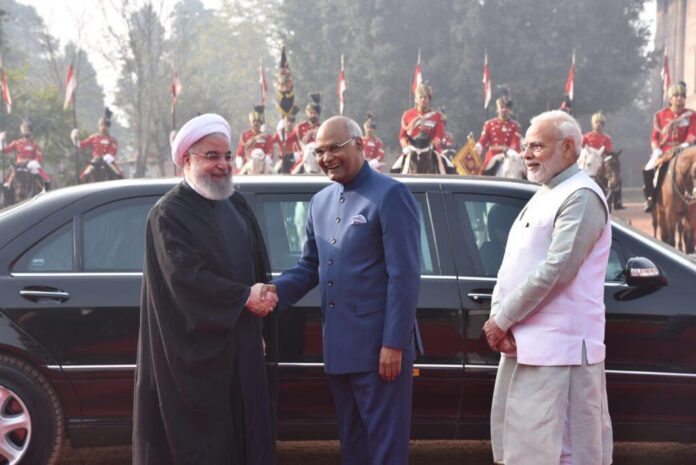
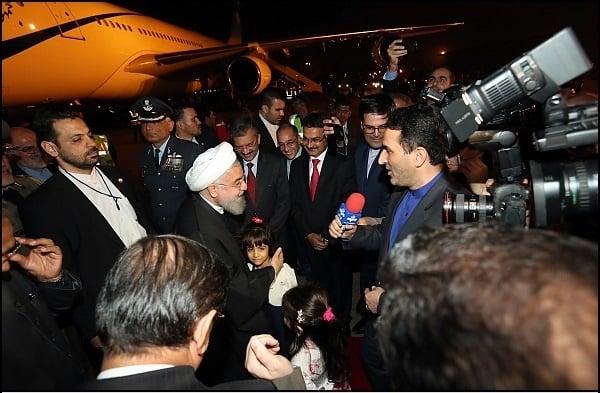
Iran President Starts Three-Day Visit to India for Key Talks

Speaking to reporters before embarking on his first official visit to India since taking office in 2013, President Rouhani said Iran and India have strong historical relations in various fields.

“Till the recent centuries, Persian language was spoken by most people in the Indian Subcontinent,” President Rouhani was quoted as saying on Thursday in a Farsi report by IRNA.

He went on to say one of the main bilateral issues between Iran and India is transit system which will be discussed during his visit to India.

Rouhani added Iran’s Chabahar Port as well as connection to Afghanistan and Central Asia is highly significant for India. “To this end, we have already signed a trilateral agreement with Afghanistan and India.”

Based on the agreement India has pledged to invest $85 million in equipment of Chabahar port which opens up the transit route for the country to Iran and Afghanistan, bypassing Pakistan.

The Iranian president also said Iran and India have similar concerns about the latest regional developments including terrorism. “As two main members of Non-Aligned Movement, Iran and India will hold talks on terrorism during my visit to India.”

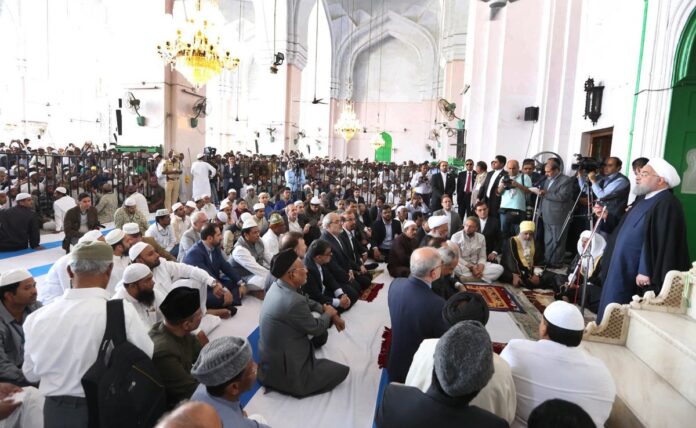
He said the visit has two aspects including cultural, and political and economic. “The first part of our visit begins with Hyderabad in which we will meet Indian Muslims including Shiite and Sunni scholars. We will also pay a visit to historic sites.”

Rouhani said the second part of the visit will take the Iranian delegation to New Delhi for economic and political talks with Indian high-ranking officials.

He noted the visit is made at the official invitation of the Indian Prime Minster Narendra Modi. “During the visit, in addition to holding talks with a number of high-ranking officials including India’s president in and prime minister, we will also sign several MoUs in different fields.”

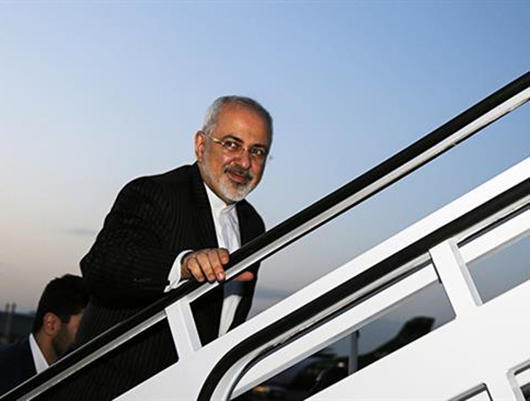
In this visit, President Rouhani is accompanied by a number of Iranian officials including Vice-President for Economic Affairs, Mohammad Nahavandian, Foreign Minister Mohammad Javad Zarif, Oil Minister Bijan Zanganeh and many others.

Iran FM Says His Phone Tapped during Nuclear Talks

In a Farsi interview with the Persian-language Jame Jam newspaper, the top diplomat said his mobile phone grew hot during the talks, indicating his device was being tapped. The highlights of the interview follow:


  • I don’t use VPN apps. Due to its duties and responsibilities, the Foreign Ministry has special Internet facilities. Naturally, using VPN applications is coupled with security threats. Sometimes we ask how many spy agencies are seeking to encroach upon our system. In fact, we take spying for granted and focus on the number of times that spying attempts are made. When nuclear talks were underway, my mobile phone was as hot as an iron on some days during the negotiations, and other negotiators share the same problem. Such events show a lot of efforts are being made to spy on our domestic issues.
  • I do all my Twitter and Instagram postings myself. It’s been a long time I haven’t used the Facebook. I spend a long time, not continuously of course, on posting tweets. Between two to three hours for each tweet, on average.
  • If you read the JCPOA carefully, you will find out that it is drawn up based on mutual pessimism because an agreement written based on optimism wouldn’t be so voluminous.
  • We believe what has kept the US from pulling out of the JCPOA is not the country’s interest in the agreement, but fear of international isolation.
  • Iran’s regional and defence policy are completely defensible, and we bravely announce this policy in all international arenas. Today, we (Iran) have the least amount of arms costs in the region. This is while member states of the Persian Gulf Cooperation Council (GCC) ran a total $116 billion worth of weapons spending, but the figure was less than $16billion for Iran.
Iran Rejects US National Intelligence Director’s Baseless Claims

Director of US National Intelligence Dan Coats

In a Thursday statement, Qassemi slammed as “worn-out” and “baseless” the claims raised by Coats about the US concerns over Iran’s influence in the region, adding that no country has tried as much as Iran did to ensure stability and peace in the Middle East.

“Such remarks [by American officials] are rooted in the US policy and approach of creating and promoting false and self-fabricated threats and terror in different parts of the world, particularly in the Middle East,” he added.

“This is a profitable policy for Washington and a destabilizing one for the world and West Asia,” Qassemi noted, stressing that understanding and confronting such a policy requires the farsightedness and vigilance of all regional leaders and nations.

The Iranian spokesman’s statement came after Coats framed global cyber-security threats in stark terms on Tuesday, saying, “Russia, China, Iran and North Korea pose the greatest global cyber-threats.”


World Must Stop Israel’s Destabilizing Moves: Iran

In a statement early on Thursday, Qassemi described Iran as an ancient, rational, and stable country that gives stability to others as well, and stressed that the Islamic Republic basically sees no need for increased tension and conflict in the region.
“It is indeed the occupying and aggressive Zionist regime that has seriously jeopardized the region’s security, stability, and peace and must be blamed for doing so,” he added.
“In Iran’s view, it is the legal right of the legitimate government of Syrian to defend its territorial integrity and national sovereignty against any aggression,” he noted, once again dismissing the ‘baseless’ claims about Tehran’s role in the recent shoot-down of an Israeli jet fighter over the Syrian territory.

Qassemi said the Islamic Republic does not follow the policy of escalation in the region, but it deeply believes that the international community and all countries in the world must take a major and big step against the occupation, repeated aggressions and destabilizing moves of the Zionist regime.

“The international community needs to give a decisive and proper response to the false propaganda and warmongering of a regime that believes the continuation of its illegitimate and fake existence hinges on tension and conflict in the region,” he added.

The Iranian spokesman made the remarks in reaction to German government spokesperson Steffen Seibert, who claimed “Iran’s military engagement in Syria and Lebanon, in particular the militias it controls, is leading to a dangerous escalation in the Syrian civil war.”

The German spokesman also defended the Zionist regime’s airstrikes on Syria, describing them as a move to protect itself against attack.

On Saturday, the Israeli air force flew a series of airstrikes against Syrian positions, according to the Israeli military. However, on their way back, at least one of the Israeli fighter jets came under anti-aircraft fire over Syrian territory, and crashed on Israeli territory.

Russia Blasts US’ Unilateral Demands on Iran Nuclear Deal

In a Wednesday meeting with Iranian Deputy Foreign Minister for Political Affairs Abbas Araqchi in Tehran, Ryabkov described Tehran-Moscow consultations as significant, and hailed Iran’s responsible approach in living up to its commitments under the Joint Comprehensive Plan of Action.

He underscored that no country should undermine the recognized principles of international law and diplomacy through unilateral interpretations and demands.

Araqchi, for his part, elaborated on Iran’s stances on regional and international developments and stressed the importance of continued consultations between the two sides. He also expounded on Tehran’s stand on the JCPOA, and rejected US rulers’ destructive and irresponsible move to disregard Washington’s multilateral and international obligations.

He also emphasized the Islamic Republic of Iran’s determination to safeguard its legitimate rights.

The meeting was held as part of regular consultations between Tehran and Moscow on the JCPOA and other issues of mutual interest.