Friday, December 26, 2025
Home Blog Page 3648

Iran FM Wraps Up Senegal Visit, Arrives in Brazil

Iranian Foreign Minister Mohammad Javad Zarif arrived in the Brazilian capital on April 10, 2018 / Photo by Students News Network

In his Monday meeting with President Macky Sall, which was also attended by Senegal’s ministers of finance and foreign affairs, Zarif touched upon the importance of mutual cooperation in various areas.

He also called for closer banking relations between the two countries, further facilitating the issuance of visas for Iranians, especially businessmen and entrepreneurs, the approval of an agreement on avoidance of double taxation at Senegal’s parliament and the renewal of tax exemption for Iranian companies operating in Senegal.

The top Iranian diplomat also underlined the importance of enhancing cooperation between the two countries in the oil and gas sector as well as new technologies, including nanotechnology and biotechnology.

The Senegalese president, in turn, stressed the importance of addressing the issues highlighted by Zarif, and said his country would like to draw on Iran’s experience in the oil and gas sector.

Also on the agenda of the talks were regional issues, including the developments in Syria and Yemen.

Iran FM Wraps Up Senegal Visit, Arrives in Brazil
Iranian Foreign Minister Mohammad Javad Zarif meeting with Senegalese President Macky Sall in Dakar on April 9, 2018 / Photo by the Iranian Foreign Ministry

No Military Solution to Syria, Yemen Crises

Zarif on Monday also held a meeting with the Senegalese Parliament Speaker Moustapha Nias. During the talks, the top Iranian diplomat said the Islamic Republic of Iran has, from the outset, believed that the crises in Syria and Yemen have no military solution.

He also underlined that the problems facing the world of Islam should be settled through dialogue.

Zarif further touched upon the numerous commonalities between Iran and Senegal. He called on both sides to work together closely to fight extremism and restore the rights of Palestinian people, especially under the current circumstance in which the Israeli regime has stepped up its atrocities against Palestinians.

The top Senegalese parliamentarian, in turn, referred to his trip to Tehran last year where he saw for himself Iran’s progress in different areas. He said his country needs to draw on Iran’s potential and capabilities for training in different areas.

Zarif, who is on a four-nation tour, left Dakar on Monday night and arrived in the Brazilian capital, where he is going to hold talks with top officials from the Latin American state.

Speaking to reporters after arriving in Brazil, Zarif described the Latin American country as one the world’s major economies, the main economy in South America, and also a BRICS member.

Hailing Iran’s economic interaction with Brazil, Zarif said the trade ties are mostly limited to the import of agricultural products from the Latin American nation, while there are ample opportunities available in the oil and gas industries.

Iran was a supplier of energy to Brazil in the past, and there are still possibilities for cooperation in that field, he added, according to Tasnim.

Praising Brazil’s technological advances, Zarif said the two countries could play complementary roles in that sector.

He also expressed the hope that his meetings in Brazil would enhance cooperation between the private sectors of the two countries.

The four-nation tour will later take Zarif to Uruguay and Namibia.

In this trip, the Iranian top diplomat is being accompanied by a high-ranking politico-economic delegation including several representatives of the Iranian Vice-Presidency for Science and Technology.

Iran FM Wraps Up Senegal Visit, Arrives in Brazil
Iranian Foreign Minister Mohammad Javad Zarif meeting with Senegal’s Parliament Speaker Moustapha Niasse in Dakar on April 9, 2018 / Photo by the Iranian Foreign Ministry

Tehran’s Beauties in Photos: Museum of Glass Paintings

Reverse painting on glass is an art form consisting of applying paint to a piece of glass and then viewing the image by turning the glass over and looking through the glass at the image.

The art form was introduced to Iran in the Safavid era from Eastern Europe, India, and China.

The glass painting museum is part of an old building in central Tehran (Hedayat Street) dating back to about 100 years ago. Specifically focused on this particular type of art, the museum is home to a large collection of Iranian glass paintings.

What follows are photos of the museum retrieved from ISNA and Tehran Picture Agency:

Bodies of 7 Iranians Killed in Israeli Attack on Syrian Base Repatriated

Two Israeli F-15 warplanes carried out strikes from Lebanese air space on the T-4 air base on Sunday. Syrian air defence systems shot down five of eight missiles fired. However, the missiles that hit the airbase killed several people including the Iranian military advisers.

The Iranian martyrs include Akbar Zavvar Jannat from Tabriz, Mehdi Lotfi Niasar from Qom, Seyyed Ammar Mousavi rom Ahvaz, Morteza Basiripour from Birjand, Mehdi Dehqan from Kashan, and Hamed Rezaei from Tehran.

According to Tasnim, funeral ceremonies for two of the bodies (Rezaei and Lotfi Niasar) will be held in Tehran, but the others will be transferred to their own cities.

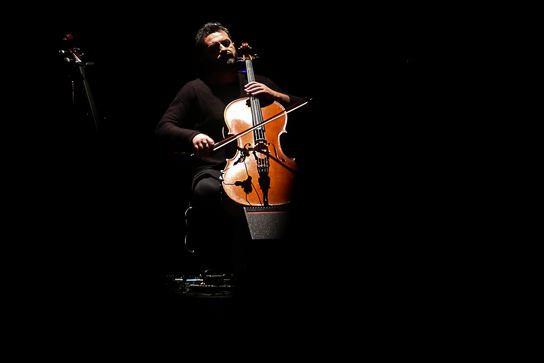
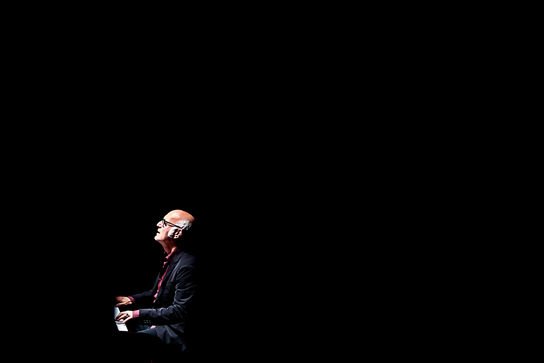
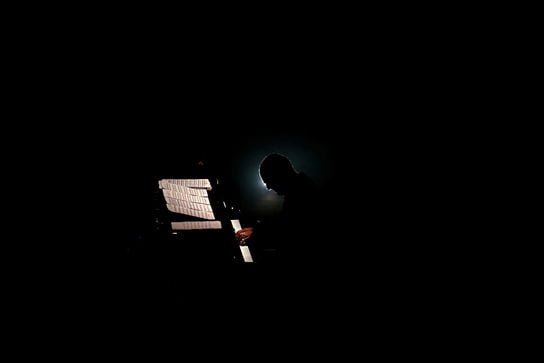
Kitaro Talks of His Interest in Iranian Folk Music

Kitaro says while composing the music of Silk Road documentary, he developed an interest in the Iranian folk music.

“By listening to the music, I became interested in the music and culture of Iran. I’ve also learned a lot from the country’s folk music,” he was quoted as saying in a Farsi report by ISNA.

Kitaro made the statements ahead of his second concert in Iran slated for May 6 to 8 at Interior Ministry’s Great Hall in Tehran.

He went on to say “about 28 years ago, I composed a piece of music named Kojiki with the main theme of the whole existence. While making the piece, I took advantage of the guidance of Professor Kazunari Shibata who is a leading expert in the solar system. The piece contains some concepts which can be realized only through indulging oneself in it. I will perform the piece during my Tehran concert.”

Kitaro referred to the warm welcome that his Silk Road Album has received in Iran and said, “I’m very proud to see that Iranian people love the music. Hereby, I express my deep gratitude to the Iranian culture because to compose the music, I drew on the rich culture of the region.”

He also said the Silk Road music builds on the Iranian art and added “I will also perform the music during my May concert in Tehran.”

The Japanese musician underlined that he has listened to the music of many Iranian musicians and added Iran is home to a rich collection of music.

“There are many nations which have their own music. I’ve always paid respect to each nation living in a special geography. I try to communicate with each nation and culture through music,” he noted.

Kitaro held his first set of concerts in Tehran in 2014 for four nights at the same venue, where he performed new age music and was warmly received.

According to the music producer and manager Ali Cheragh-Ali, in the upcoming concerts Kitaro will perform a different repertoire compared to his last performance in Iran.

Iran Gov’t Steps in to Control Forex Market

Jahangiri made the announcement on Monday night following an emergency meeting of the government’s economic taskforce headed by Iranian President Hassan Rouhani.

The first vice president said that as of Tuesday the price of the dollar would be 42,000 Rials in both markets, and for all manner of activities.

He added that dollar sales at any other price would be considered fraud.

On Sunday, Iran’s national currency the Rial plunged above 6 percent against the US dollar in free market.

Commercial bankers previously linked the Rial’s slide partly to seasonal demand for US dollars, which rises around the end of the Persian year (March 21) when many Iranians travel abroad.

However, some now believe that US President Donald Trump’s hostile rhetoric, including his recent threat to scrap a landmark nuclear deal with Iran, has been effective in the deterioration of the Rial’s depreciation.

“Saudi Arabia Influenced by US’ Anti-Iran Delusions”

Hashim Kandi, head of Al-Hadaf Centre of Strategic Studies, said in an interview with the Persian-language Islamic Republic News Agency (IRNA) that if the Saudis rid themselves of the Iranophobia trap, they will find out that Iran will be the first country to come to their aid if they are put in danger.

If it weren’t for Iran’s resistance against terrorism, said the commentator, now the wave of terror would be spilling over from a few regional countries not only to other Middle East countries, but to the whole world.

He said Iran has always played a key role in countering terrorism whether in Iraq or in the entire region, and if it weren’t for Iran’s contribution, the whole region would be filled with blood and darkness today.


Terror in Iraq Handiwork of US; Riyadh an Accomplice

After US-backed terrorists were forced out of Iraq, he said, the White House took advantage of Takfiri groups and the remnants of the former Baath regime to create a new form of terrorism to target defenseless civilians in the streets, schools, hospitals, prayer sites and mosques.

Unfortunately, he said, when Iraq was in dire need of support by its Arab brothers, especially the Persian Gulf Arab states, to counter terrorism, those countries acted otherwise and refused to lend support to Iraq.

In those hard conditions, he said, some Arab countries, especially Saudi Arabia, got bogged down in the US quagmire of deception and fell for Washington’s lies. Hence, they backed terrorist groups to kill as many innocent Iraqi people as they could.

According to the analyst, many of those countries fell into the US trap and turned into Washington’s stooges to execute its plans. Of course, the US plans were not limited to Iraq and Syria, but applied to all regional countries, namely Persian Gulf Arab countries themselves, which contributed to the implementation of the US plans.

Under those circumstances, he said, everybody saw that Iran stood by Iraq with all its resources, both in terms of weaponry and expert advice, in order to counter terrorism.

As he added, this right move by Iran came at a time when the Americans breached their promises regarding the supply of weapons and munitions, allowing Iraq to fall into the hands of terrorist groups. The US want to bring Iraq to its knees in the face of terrorism, but Iran’s presence turned the tables and made Iraq emerge victorious against terror groups.

The analyst said Iran not only offered arms and advisory assistance to Iraq, but shared with Baghdad its experience in the fight against the ISIS terrorist group and raised Iraqi forces’ morale, which played a key role in determining the outcome of the war against terrorists.

He said the Iranian advisors had drawn their ideological and combatant spirit from the school of thought of the late Imam Khomeini, which was based on struggle against enemies. And they managed to transfer this spirit to Iraqi troops.


He also touched upon the important role of the fatwa by senior Iraqi religious figures who said combating terrorists was a duty of all, and, accordingly, Iraqi people answered the clerics’ call to arms.

The analyst noted that unity and coordination among security troops, volunteer forces and Islamic resistance groups along with assistance from seasoned Iranian experts created a deep sense of belief in them and led to back-to-back victories.

He said fast triumphs over ISIS surprised everyone and scuttled all of Washington’s plans to safeguard terrorist groups in the region.

The top Iraqi analyst underlined everybody knows today that Iran’s position on fighting terrorism is in the interest of Iraq and the whole region, and plays a major role in defeating terrorism in the region and across the world.

He said the alliance between Iran and other countries which are members of the axis of resistance is the key contributor to the maintenance of security in the region.

He said the US plunged Saudi Arabia and some other Persian Gulf Arab countries into the “Iranophobia” quagmire to hold them to ransom. If these countries can extricate themselves from the quagmire, then all regional countries will taste tranquility, and nations along with their governments will regain full independence.

The analyst underlined that Muslims, by remaining united and adopting common stances, can counter acts of blackmail and greed by the US and Zionists.

He stressed that if Saudi Arabia thinks well, it will find out that if it comes under terrorist attacks one day, the first country to come to its aid will be Iran.

He said although Iranian officials are stressing that Saudi Arabia, as a Muslim country, should not be attacked, and that Iran will go to defend Saudi Arabia if it is put in danger, Saudi rulers are unfortunately still deceived by the lies of Washington, which has no objective other than securing its domination over other countries’ natural resources and is using Riyadh officials as pawns to achieve its goals.“Saudi Arabia Influenced by US’ Anti-Iran Delusions”

Iran, Senegal to Boost Scientific Cooperation

Members of an Iranian delegation accompanying Foreign Minister Mohammad Javad Zarif during his trip to Senegal met with the Senegalese science minister.

In the meeting, Mr Birang, the head of Iran’s International Science and Technology Cooperation Centre, elaborated on Iran’s technological achievements, especially in the domain of science-based economy and development of sci-tech parks and knowledge-based companies. He invited the Senegalese science minister to visit Iran, especially the country’s sci-tech parks and an exhibition of equipment made by Iran.

Mr Asadi Fard, the deputy head of the Nanotechnology Development Commission, also expounded on Iran’s accomplishments in the development of nanotechnology and elaborated on the opportunities for cooperation between Iran and Senegal in that domain. He said Iran stands ready to share with Senegal its experience in the field of nanotechnology development, including the holding of joint expert courses on nanotechnology, the establishment of nano-labs by Iran and implementation of projects on how to utilize nanotechnology, namely in the fields of agriculture and water purification.

The Senegalese science minister, in turn, welcomed Iran’s proposals and said Senegal, given its young population and need for job creation for educated people, is making an overhaul in its universities and is also developing technology.

Accordingly, said the minister, a “City of Knowledge” comprising a complex for different technologies is under construction.

He said Senegal plays a key role in Africa’s technological development. Senegal’s president heads the Science and Technology Development Department of the African Union.

The minister added his country is developing virtual universities across the nation to provide more opportunity for the education of the youth. Senegal is also establishing some 100 laboratories throughout the country.

The minister said his country welcomes Iran’s assistance to develop laboratories and embraces Iranian professors to teach nanotechnology courses at the postgraduate level both in class and via videoconference.

It was also decided that the two sides prepare a memorandum of understanding on mutual cooperation and exchange its drafts, making it ready to be signed when the Senegalese minister visits Iran.Iran, Senegal to Boost Scientific Cooperation

Dakar, Tehran Discuss Mutual Cooperation in Gas, Oil

During the Monday talks in Dakar, the Iranian foreign minister referred to the Joint Economic Meeting of Iran and Senegal to be held next month and said the meeting will provide the two sides with an appropriate framework to continue their cooperation.

He pointed to the important status of Senegal in the West Africa and also its leading role in the Muslim World and the Non-Aligned Movement and called for further strengthening of relations between the two sides.

Dakar, Tehran Discuss Mutual Cooperation in Gas, OilZarif also referred to the high-ranking Iranian delegations in Senegal including political, economic and technology figures accompanying him in the visit and expressed the Islamic Republic’s preparedness to share its experiences with Senegal particularly in the field of new technologies.

He hailed the cooperation between Iran and Senegal in automotive sector, and said the two sides’ collaboration in other fields like oil, gas, medicine, health, and education can further expand.

He also described the issue of Palestine and the crimes of the Zionist regime against the Palestinians as the most critical issue of the Muslim World and said resolving the problems of the Islamic world hinges on creating unity and establishing dialogue among the Muslim states.

For his part, the Senegalese foreign minister hailed several decades of relations between Iran and Senegal and said the visit of Zarif to Senegal will strengthen bilateral relations between the two sides.

He also referred to the Joint Economic Meeting of Iran and Senegal and said the meeting will provide the two sides with an opportunity to establish cooperation in various joint areas like oil and gas.

The Senegalese foreign minister also appreciated several scholarships offered by the Iranian government to Senegalese scientists in oil and gas field.

Zarif arrived in Senegal Monday as the first stop of his four-nation tour. While in Dakar, he also held talks with other high-ranking Senegalese officials.Dakar, Tehran Discuss Mutual Cooperation in Gas, Oil

“Iran, Russia to Maintain Strategic Ties until Restoration of Peace to Syria”

In a Monday meeting with Russia’s State Duma Speaker Vyacheslav Volodin in Tehran, Rouhani underlined that the two sides’ parliaments can play a leading role in strengthening bilateral, regional and international relations between Iran and Russia.

“Our bilateral, regional and international relations have been unique over the past decades and today we are witnessing friendly and enhanced ties between Iran and Russia,” he was quoted as saying in a Farsi report by the President’s official website.

He said during his last 12 meetings with his Russian counterpart Vladimir Putin over the past years, “we have taken a step further during each meeting towards strengthening our relations in all fields.”

He called for taking advantages of all the available capacities for expansion of ties between Tehran and Moscow and said there are a number of untapped areas in which the two sides can promote their ties.

“Areas like peaceful energies, oil and gas and other economic fields including banking and trade relations are filled with good capacities which Iran and Russia can take advantage of to meet further their national interests,” he noted.

He called the multilateral relations between Iran and Russia and other regional states ‘highly valuable’ and said the two sides’ relations have been very constructive when it comes to Syria and regional peace and security.

President Rouhani underlined that Iran and Russia have similar stances towards international issues and added, doubtlessly certain Western countries are seeking to put Russia in trouble under ‘false pretexts.’

“Iran is facing similar troubles in the region,” he added, saying to tackle the troubles, the two sides need to establish closer cooperation in international issues.

Rouhani said Iran-Russia bilateral, regional and international cooperation will end up finally in the interests of the two nations and expressed the strong will of his government to establish all-out relations with Russia.

He said Iran’s parliament supports the strengthening of relations and added the two sides’ parliaments can play a leading role in expansion of ties.

For his part, Volodin said the growing ties between Iran and Russia are due to the good decisions made by the two sides’ presidents and added Russia’s parliament throws its weight behind any legal efforts and measures that pave the way for further expansion of ties.

He pointed out that Iran and Russia face common regional and international challenges, saying the two sides are determined more than ever to tackle the challenges through establishing closer cooperation and developing a common roadmap.

Iran Condemns Israeli Warplanes’ Violation of Syria’s Sovereignty

In a Monday statement, Qassemi referred to the airstrikes as ‘Israel’s violation of Syria’s sovereignty and territorial integrity’.

“The airstrikes on T-4 airbase near Syria’s Homs stand in stark violation of all international law and regulations,” he said, adding that the attacks were aimed at supporting the terrorists.

The spokesman went on to say that the airstrikes would only complicate further the ongoing crisis in Syria as well as the regional developments.

“In a situation where all field developments are unfolding in the interests of the legitimate government of Syria, such airstrikes by the Zionist regime are undoubtedly aimed at supporting the terrorist groups and diverting the world’s public opinion from the ongoing disaster in Gaza which has left tens of Palestinians dead and thousands of others injured so far,” he noted.

The spokesman once again expressed Iran’s full support for Syria’s sovereignty and territorial integrity, and called on all freedom-seeking countries and international bodies not to remain indifferent towards the “blatant aggression” of the Zionist regime against a member of the United Nations.

Such aggressions are definitely endangering the international peace and security, he added.

Russian Defence Ministry said earlier two Israeli F-15 fighters targeted Syria’s T-4 airbase on Monday. According to the ministry, the jets fired eight guided missiles but five of them were shot down by the Syrian Air Defence before they hit the airfield.

Meanwhile, Lebanese armed forces confirmed that Israeli fighter jets and a reconnaissance plane violated the country’s borders and remained in Lebanon’s airspace for about ten minutes.

The airstrikes left several people dead and wounded.

Israel, which has repeatedly struck Syrian army locations over the past seven years, has confirmed mounting the raid. The strike took place after a deadly chemical weapons attack on Douma, near Damasus.