Wednesday, December 24, 2025
Home Blog Page 3634

Iran Leader Urges Intelligence Forces’ Vigilance against Hostile Plots

Ayatollah Seyyed Ali Khamenei

“We are in a major battlefield … against a wide and powerful front of enemies,” the Leader said in a meeting with a group of Iranian Intelligence Ministry officials on Wednesday.
“Despite having great facilities, hostile intelligence services have failed to commit any important mistake. However, if we show negligence we will be defeated,” he said, according to a transcript of his speech posted on Leader.ir.

Ayatollah Khamenei said hostile powers employ sophisticated tactics to damage Iran, including relentless efforts to manipulate the calculations of Iranian officials, weaken religious beliefs of the Iranian people, create economic problems and foment security chaos inside the country.

The Intelligence Ministry should work harder to analyse information correctly to be able to forecast future problems and take pre-emptive measures to disrupt ploys, the Leader said.

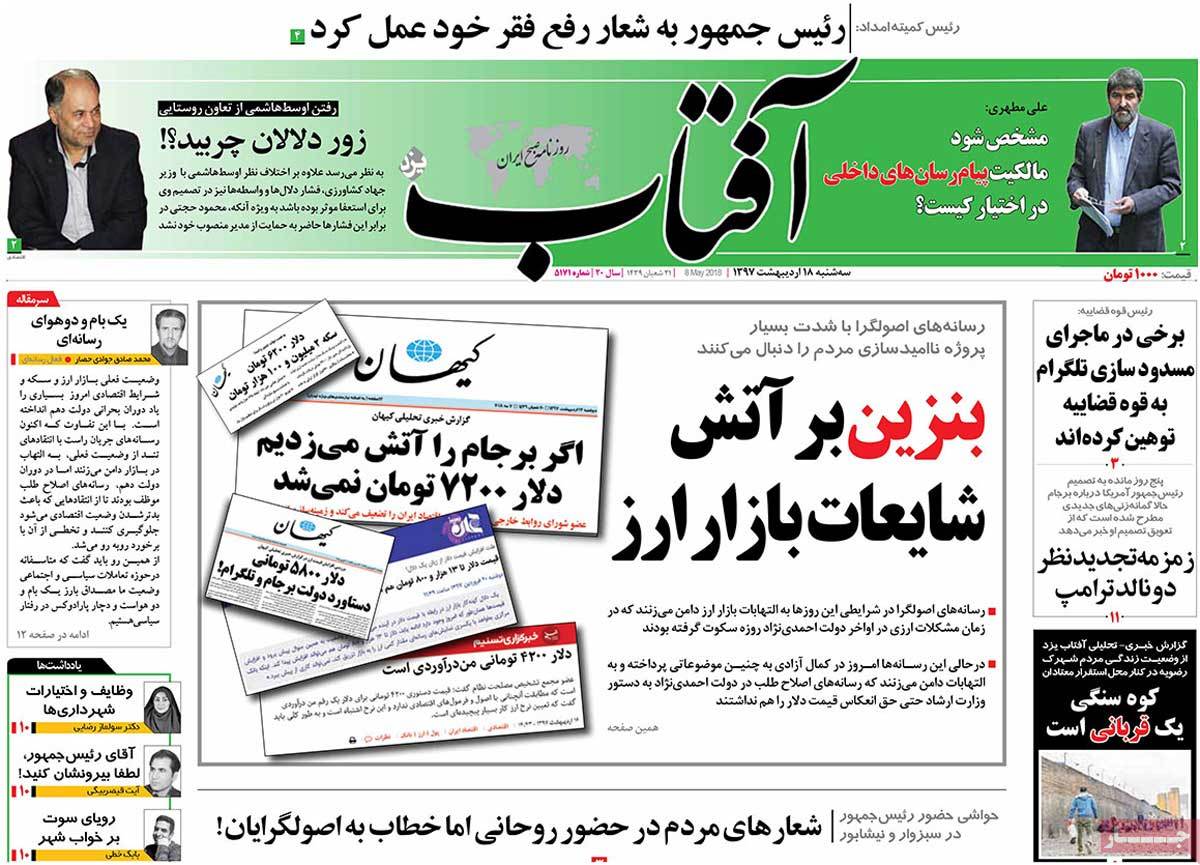
Pointing to recent plunge in the value of rial that put great strain on Iran’s currency market, Ayatollah Khamenei said the hand of foreign intelligence services was evident in the instability.

Last week, Iranians saw a record decline in the rial’s value on the free market, with the Iranian currency losing close to half of its value since September.

The Iranian officials described the sudden plunge in the value of rial as unnatural, suggesting it could be caused by an economic plot hatched by the US and its allies.

Iran Officially Replaces US Dollar with Euro in Int’l Transactions

“All ministries, governmental organizations and firms are obliged to choose euro as the main currency used in reporting and publishing statistics, information and financial data,” read a Farsi statement published on the Iranian government’s website on Wednesday.
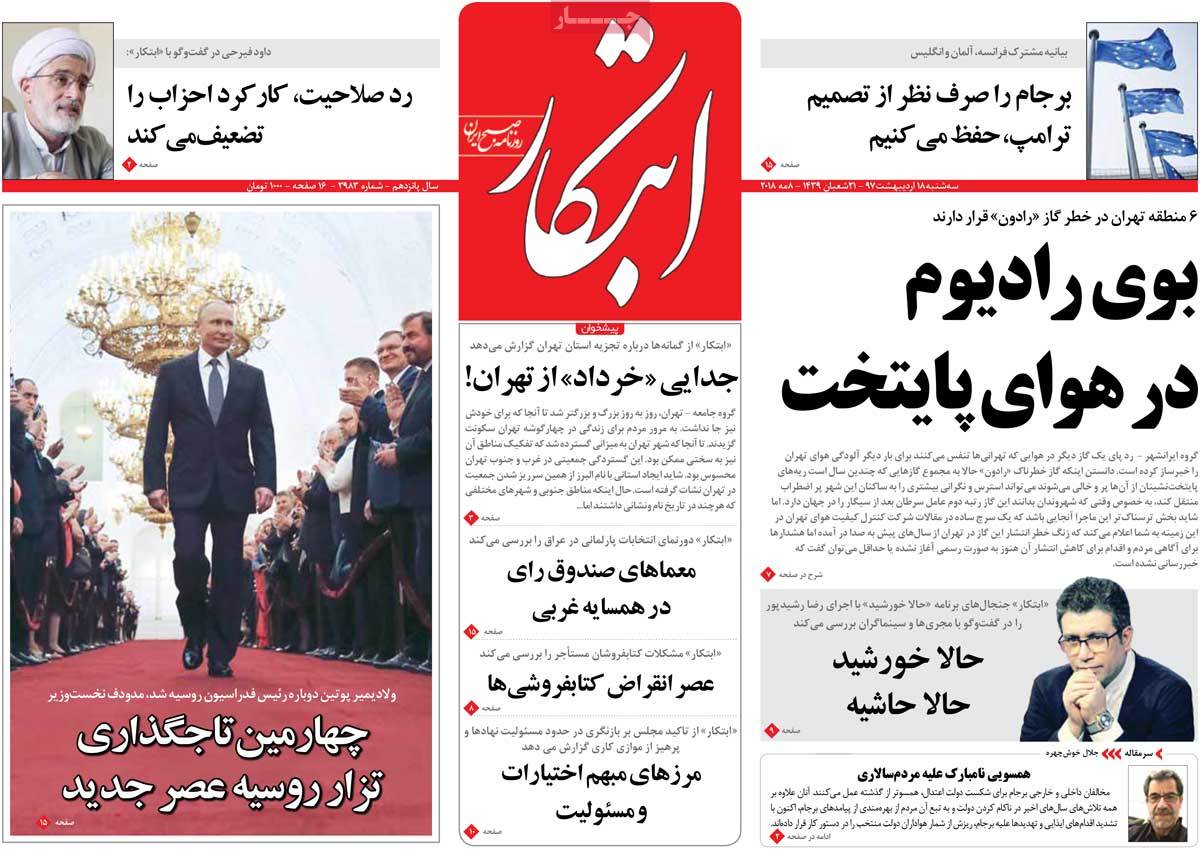
The decision was made at a meeting of the Cabinet on Wednesday, apparently in response to what Iranian officials describe as an economic plot hatched by the US and its allies to decrease the value of the Iranian currency rial.

The currency had lost close to half of its value on the free market since September before authorities implemented a plan to unify official and free-market exchange rates for the rial in favour of a single rate set at 42,000 against the US dollar last week.

Moreover, the Central Bank of Iran clamped a 10,000-euro ($12,400) ceiling on the amount of foreign currency that citizens can hold outside banks.

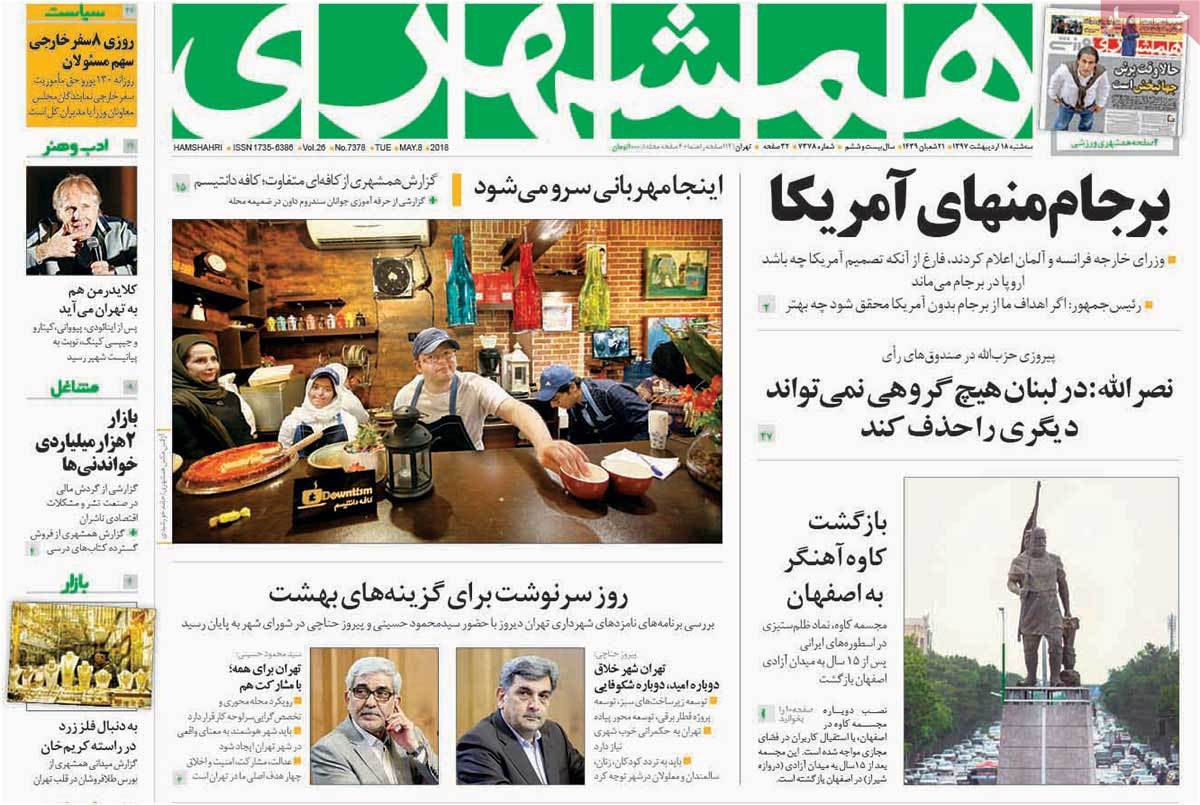
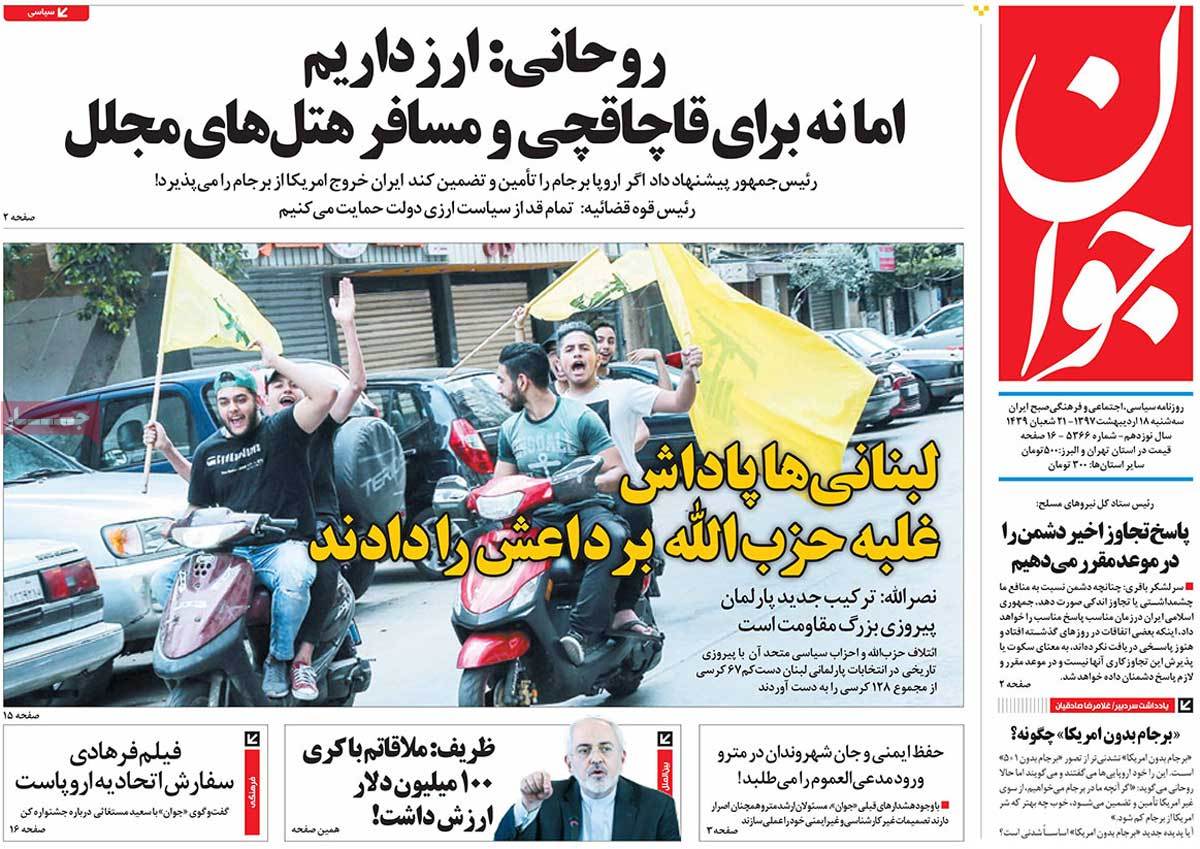
Some analysts blame threats by US President Donald Trump that he will return US sanctions on Iran unless the so-called flaws of the 2015 nuclear deal are fixed.

The deadline for Trump administration to extend Iran sanctions waivers is May 12. The US refusal to keep sanctions frozen will mean the US is longer bound by the pact.

However, Iranian officials blame plots of foreign adversaries for the problem.

The bill must be approved by the Iranian parliament and the Guardian Council before going into effect.

Iran to Resume Direct Flights to Erbil as of April 27

For the time being, Mahan Air will offer direct service twice a week on Tuesday and Wednesday and will try to increase it in the future, ISNA news agency quoted Iran’s consul in Erbil Morteza Ebadi as saying.

The resumption, he said, is important in increasing bilateral cooperation which could also enhance interaction among businesspersons and help tourism boom.

Iran re-opened two crossings with the Iraqi Kurdistan region in January, which it had closed at Baghdad’s request in response to the secession referendum.

The decision came on the same day as the Kurdish Regional Government offered to put their secession drive on hold and step up efforts to resolve a crisis in relations with Baghdad via dialogue rather than military means.

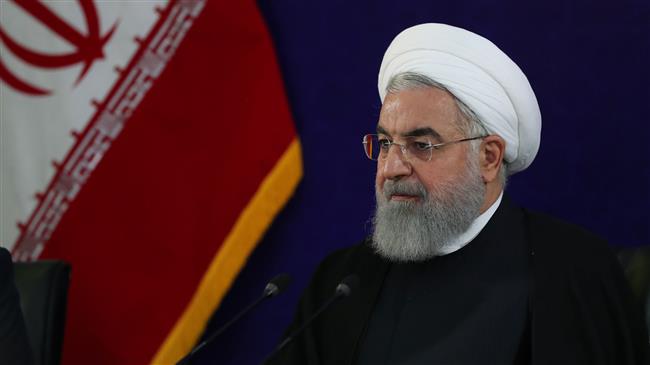
President Hassan Rouhani said then Iran sought to boost relations with the Iraqi Kurdish region as part of a united Iraq.

The semi-autonomous Kurdistan region’s Prime Minister Nechirvan Barzani visited Tehran after suspending the secession drive which Iran strongly opposed, during which he paid tribute to the Islamic Republic’s crucial support for Kurds at the height of Daesh’s terrorist campaign.

The Iraqi Kurdistan is one of Iran’s major trade partners, with annual transactions running to $4 billion a year.

Iran DM in Iraq for High-Level Talks

Heading a high-ranking delegation, Brigadier General Hatami arrived in Baghdad on Wednesday to attend a meeting with his Iraqi counterpart about the prospect of developing the defense ties between the two countries.

Speaking to reporters upon his arrival, the defense minister said numerous topics, including the latest developments in the region, would be raised in his talks with Iraqi officials.

Hatami added that one of the trip’s main objectives is to enhance military cooperation between the two countries.

In December 2014, Iraq’s then defense minister Khalid al-Obeidi paid a visit to Iran and signed a defense cooperation agreement with the Islamic Republic.

Iraq has been facing the threat of terrorism in recent years, mainly posed by the Daesh (ISIL) terrorist group.

Amid tensions in Iraq, Iran has been known as the first country to help the Arab nation and has always voiced support for Iraq’s territorial integrity and prosperity.

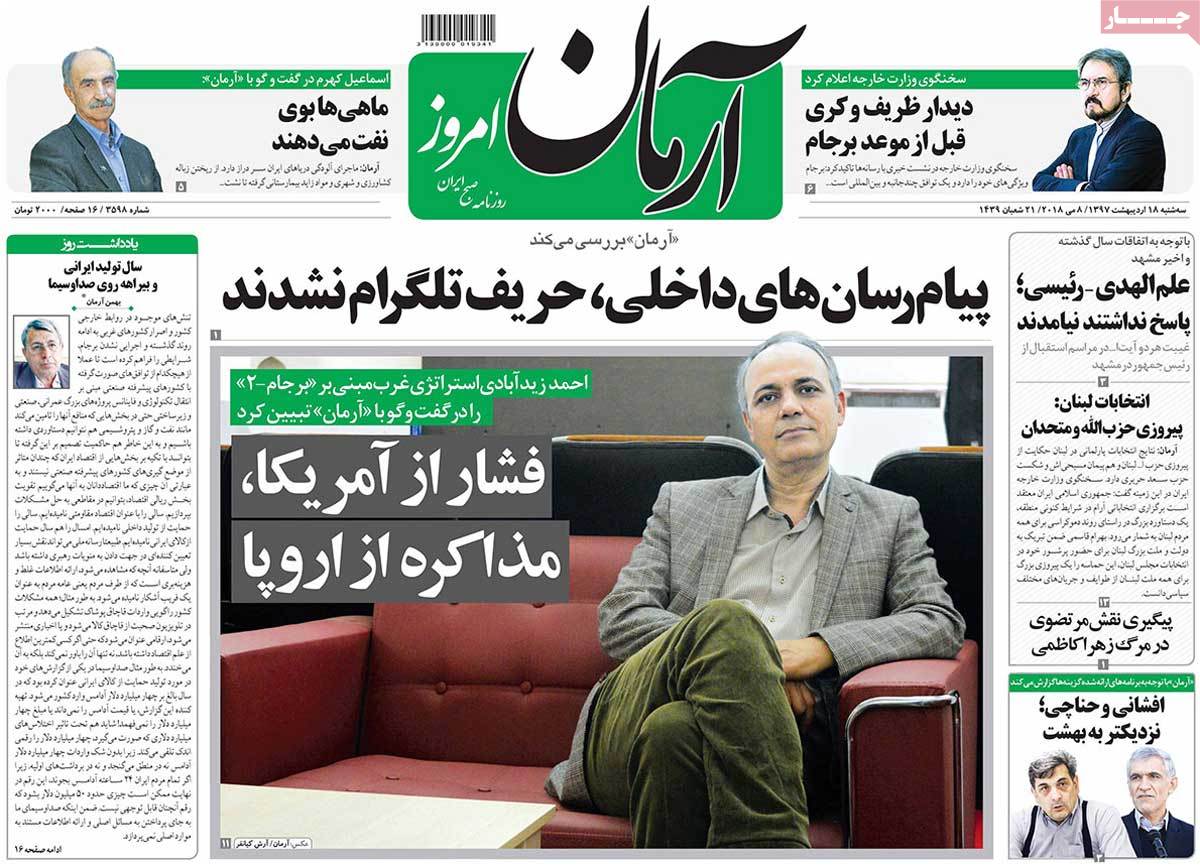
Top Iranian Officials Leave Telegram Messaging App

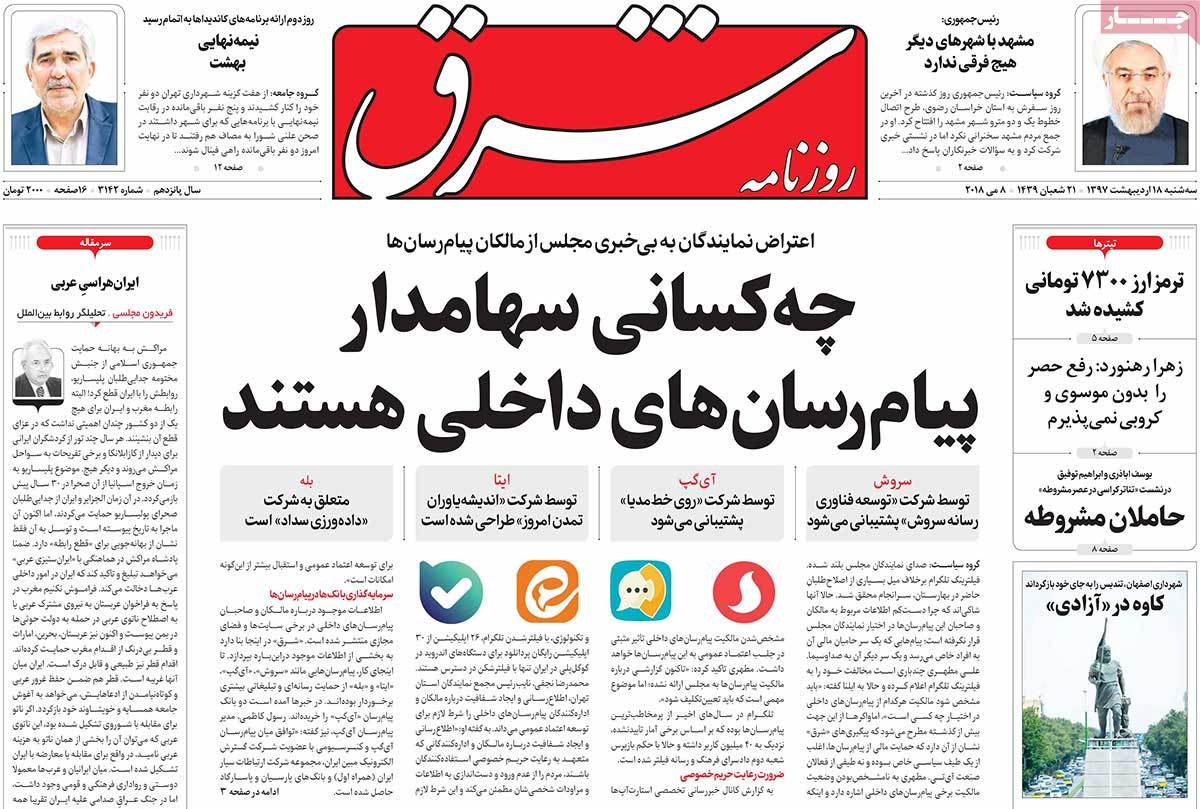
In its last post on Telegram, the Khamenei.ir channel said it will stop using the service to help break the “monopoly of non-Iranian messengers over Iran’s cyberspace.”

The channel, one of the biggest ones in Iran with over 1.3 million followers, said it will use Iranian messengers, including Soroush.

The post also said Iran’s state institutions are to stop using Telegram.

Mahmoud Vaezi, the chief of staff of President Hassan Rouhani, announced on Wednesday that members of the Cabinet have decided to leave Telegram and switch to domestic messaging services.

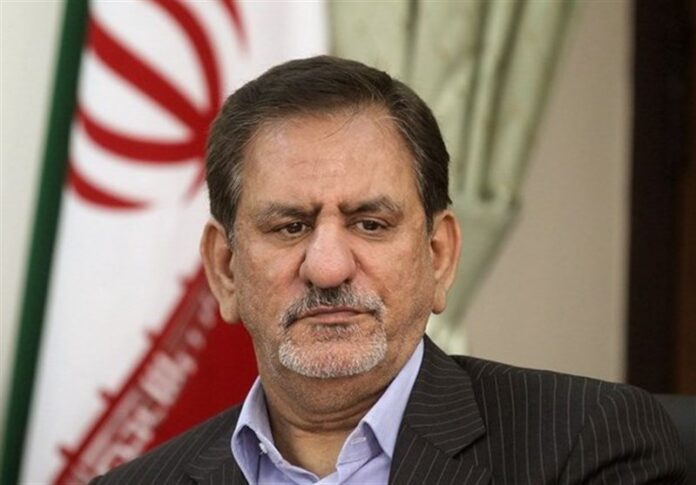
Some Iranian officials were quick to follow suit, including First Vice-President Es’haq Jahangiri, who shut down his channel on Wednesday morning.

The Iranian Foreign Ministry, however, announced that it will keep updating its Telegram followers while posting the latest updates in the Iranian messaging apps.

The fate of Telegram in Iran became a hot subject in political circles late last month, when the chairman of the Parliament’s National Security Commission Alaeddin Boroujerdi said a decision has been made “at the highest levels” to permanently ban Telegram by April 20.

Boroujerdi cited “national security” concerns as the reason the messaging service will no longer be accessible.

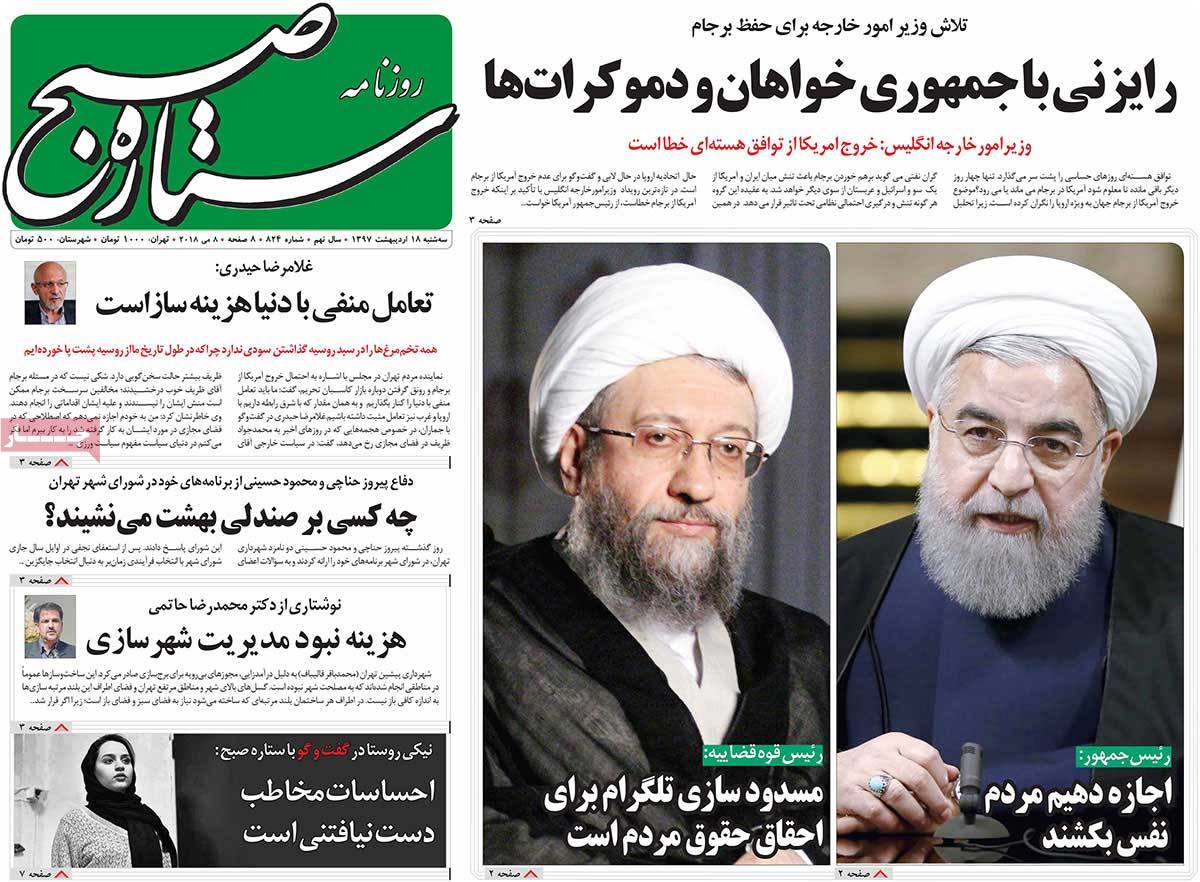
However, shortly afterwards, President Rouhani said he opposes the filtering of Telegram and believes the government should instead work to end the monopoly of foreign services on the country’s cyberspace.

Boroujerdi later said his remarks were not correctly published, and he did not mean Telegram will be banned in Iran.

Soroush, one of the messaging apps promoted by state officials, is estimated to be used by over five million Iranians, a figure which lacks lustre when compared to Telegram’s 40 million users.

Iran Offering Incentives to Promote Domestic Production of Biopharmaceuticals

Mostafa Qanei, the Secretary of Biotechnology Development Headquarter at the Iranian Vice-Presidency for Science and Technology, says the government plans to provide knowledge-based companies with all-out support to produce biopharmaceuticals.

“We have already drafted a list of 61 biopharmaceuticals as part of a national bio-development plan. Efforts are underway to produce all the biomedicine included in the plan,” he was quoted as saying in a Farsi report by ISNA.

He went on to say that the production of at least 29 pharmaceuticals in the list has already begun.

According to him, the production of 20 drugs has been already completed but there is no project yet for producing the remaining 12 pharmaceuticals.

He went on to say that so far no knowledge-based company has expressed its readiness to produce the remaining biopharmaceuticals.

For a brief review of Iran’s achievements in various fields of science and technology, check the book “Science and Technology in Iran: A Brief Review

“So, we have decided to provide knowledge-based services with all-out support to enable them to launch projects to produce the remaining medicine,” he concluded.

Biotechnology is known as one of the state-of-the-art technologies in 21st century and is among the seven key industries which will determine the socioeconomic destiny of communities in the coming decades.

According to the data released by the Iranian Vice-Presidency for Science and Technology, Iran ranked 14th in the world in 2015 in terms of the number of articles published in the field of biotechnology in indexed journals.

Also, Iran’s share of biotechnology articles in 2015 as compared to regional countries and the world is 27.22% and 1.27%, respectively.

The Iranian government plans to use biotechnology to meet the country’s strategic demands for food, public health, environment, and energy, while exploiting the technology’s capabilities as a green industry for environmental protection and restoration.

Iran Leader Hails Afghan Forces Killed in Iraq, Syria

In a recent meeting with families of Afghan martyrs in the northeastern Iranian city of Mashhad, Ayatollah Khamenei said he has always lauded Afghan nationals, particularly the Hazaras.

“I had personally seen that their seminary students felt an affinity with us, and I have known them since old times,” the Leader said.

Ayatollah Khamenei praised the Afghan troops in Syria and Iraq who fought against terrorists and were martyred while defending holy shrines there against ISIS terrorists.

“We do respect your (Afghan) martyrs, and this is among the incidents what have rarely happened in the history of Islam,” the Leader said.

He noted that Afghan forces, having a feeling of religious duty, got engaged in a tough fight against terrorists, did well, and were finally martyred.

Iran Unveils New Missile System on National Army Day

The new system, called Kamin-2 (Ambush-II), is an upgraded version of Mersad missile system.

The system is designed to confront with a variety of aerial targets flying at low altitudes, particularly drones, according to a Farsi report by Mehr News Agency.

The Tehran ceremony was held at the mausoleum of the late founder of the Islamic Republic, Ayatollah Ruhollah Khomeini, south of the capital.

Among other equipment showcased in Tehran were various types of command and control systems, radars, missiles and launchers, tanks, armoured vehicles, rifles, unmanned aircraft, artillery gear and ground combat weapons.

The Tehran ceremony was participated by President Hassan Rouhani, Chief of Staff of the Iranian Armed Forces Major General Mohammad Hossein Baqeri and other senior military and government officials as well as foreign diplomats, military attaches and reporters.

The annual parades were also held by the Iranian army in other Iranians cities on Wednesday.
Iran to Keep Boosting Defence Power to Promote Regional Peace: Rouhani

Speaking in an annual parade held on the occasion of the National Army Day in Imam Khomeini mausoleum south of Tehran, the Iranian president said Iran is located in a sensitive region, which has in the past decades been the scene of numerous plots hatched by outside powers seeking to exploit the wealth of the West Asia.

“We are surrounded by aggressive powers who […] intervene in the region’s affairs against international law and invade countries without the consent of the UN and against its charter,” Rouhani said on Wednesday.
In a region where big powers are using terrorist groups as a tool to foster instability, Iran needs mighty military forces to foil their plots and do not allow terrorists to threaten this land, he added.
“Iran’s military forces have also managed to play a key role in [promoting] peace and security in the region,” he said, referring to Iran’s role in the fight against ISIS in Iraq and Syria.

“We tell the world that we will produce or obtain any weapons we need and will not wait for their permission,” he said.

The president was apparently responding to calls by Western powers, including Europeans, on Iran to stop developing ballistic missiles, as part of efforts to convince US President Donald Trump to stay in the 2015 nuclear deal.

Various units of the Iranian army started annual parades started in Tehran and other cities on Wednesday morning.

The Tehran ceremony was participated by Rouhani, Chief of Staff of the Iranian Armed Forces Major General Mohammad Hossein Baqeri and other senior military and government officials as well as foreign diplomats, military attaches and reporters.

The latest defence achievements produced by Iranian experts were also showcased during the parade, including Aftabaz passive radar system, a rapid-reaction command and control combat system and Kamin 2 and Seraj 1 missile systems.

Iran FM Due in New York for Six-Day Visit

During his six-day trip, Zarif will participate in a High-Level Meeting on Peace-building and Sustaining Peace on 24 and 25 April, organised by the United Nations.

He will also take part and deliver a speech at the Council on Foreign Relations (CFR) in New York.

The Council on Foreign Relations (CFR), founded in 1921, is a United States non-profit think-tank specialising in US foreign policy and international affairs.

According to a report by IRIB, Zarif will also hold bilateral talks with his counterparts as well as a meeting with UN Secretary-General Antonio Guterres.

Zarif’s meetings and speeches will focus on regional issues – including Syria and Yemen – and the Iran nuclear deal.

During the visit, the Iranian top diplomat is accompanied by a high-ranking delegation including Deputy Foreign Minister for Political Affairs Seyyed Abbas Araqchi.