Friday, December 26, 2025
Home Blog Page 3552

Iran Pays Tribute to Victims of MKO Terrorist Attack

Tehran and many other provincial capitals in Iran hosted cultural programs on Thursday, held in commemoration of the top officials martyred in the 1981 terrorist attack.

On June 28, 1981, a powerful bomb went off at the headquarters of Iran’s Islamic Republic Party in Tehran, while the members were holding a meeting. It was revealed later that the MKO was behind the terrorist blast.

72 Iranian officials were killed in the explosion, including Chief Justice Ayatollah Mohammad Beheshti, four cabinet ministers, 27 members of the parliament and several other government officials.

On Tuesday, the Habilian Association had organized an event in Tehran in commemoration of victims of the brutal attack.

In an address to the gathering, Ehsan Qazizade, member of the Human Rights committee of the Iranian Parliament, called for the trial of members and leaders of the notorious MKO in the international courts.

The MKO – listed as a terrorist organization by much of the international community – fled Iran in 1986 for Iraq and was given a camp by former Iraqi dictator Saddam Hussein.

They fought on the side of Saddam during the Iraqi imposed war on Iran (1980-88). They were also involved in the bloody repression of Shiite Muslims in southern Iraq in 1991 and the massacre of Iraqi Kurds.

The notorious group is also responsible for killing thousands of Iranian civilians and officials after the victory of the Islamic revolution in 1979.

More than 17,000 Iranians, many of them civilians, have been killed at the hands of the MKO in different acts of terrorism including bombings in public places, and targeted killings.

Iran DM Says Israel Threatening World Peace, Security

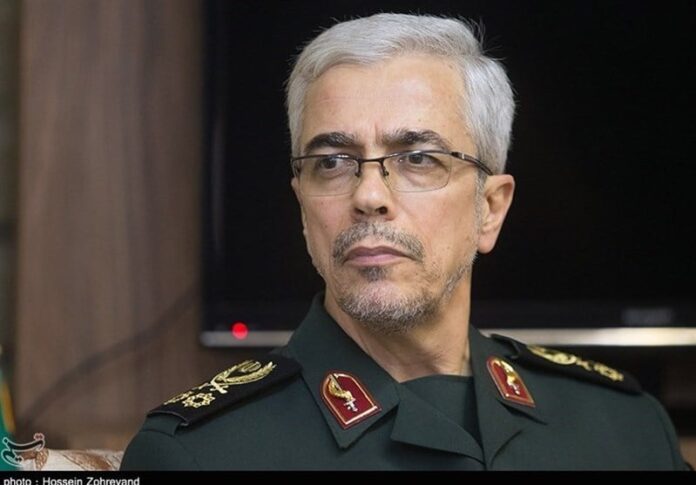
Hatami made the remarks in a message on the occasion of the 31st anniversary of a deadly chemical attack by executed Iraqi dictator Saddam Hussein on the Iranian city of Sardasht in West Azarbaijan Province during the Iraqi-imposed war.

“The occupying Zionist regime is a threat to international peace and security with regard to its possession of a huge stockpile of banned chemical, biological and nuclear weapons,” he said.

He added that the deadly chemical attack on Sardasht was carried out at a time when the United States, which has been claiming to advocate human rights, had vetoed efforts by a majority of the United Nations Security Council to issue a statement in condemnation of the use of chemical weapons by the Iraqi government.

Sardasht was the third most populated city in the world, after Japan’s Hiroshima and Nagasaki, to be deliberately targeted with weapons of mass destruction. It was also the first city in the world to be attacked with poisonous gas.

The actual death toll is far greater than announced. Nearly 5,000 residents of the city, which had a population of 20,000 at the time of the attack, are still suffering from serious respiratory and skin ailments and disorders.

Iraq once possessed a huge arsenal of chemical weapons, the production of which was partly facilitated by exports of chemicals from the United States and Western countries.

The Iranian defense minister further said two decades after the establishment of the Organization for the Prohibition of Chemical Weapons (OPCW), the region is still facing threats to security and peace.

Hatami added that the US has violated international law and regulations of the Security Council and the OPCW and conducted a military attack on Syria under the pretext of the Arab country’s use of chemical weapons that led to the creation of more insecurity in the West Asia region.

“This incident will definitely cause new serious threats and challenges to the future of the Organization for the Prohibition of Chemical Weapons,” the Iranian defense chief pointed out.

He pointed to the support by certain Western and Arab countries and the Israeli regime for terrorist groups and their collusion with the extremists and warned against the formation of organized chemical terrorism in West Asia.

Hatami criticized the change of approaches and main priorities of the OPCW, particularly its politicization, and said transforming a disarmament organization into a security and political body would lead to its lack of independence in dealing with Western states.

Israel, which has a long history of waging wars and occupying sovereign states, has been trying to portray Iran, which has not attacked any nation for hundreds of years, as a threat to world peace.

In a meeting with OPCW Director General Ahmet Üzümcü in Tehran in July 2017, Iranian Foreign Minister Mohammad Javad Zarif said the Islamic Republic, as per its core principles, opposes the use of chemical weapons in any form and by any group.

“The Islamic Republic of Iran has always emphasized that no group has the right to use chemical weapons in armed conflicts,” Iran’s top diplomat said, adding, “However, the Daesh terrorist group has used chemical weapons in its war against the Syrian government.”

In a message on July 1, 2017, Zarif lashed out at major world powers for refusing to adopt a firm stance on Saddam’s chemical attack on Sardasht, urging the international community to react to any use or proliferation of weapons of mass destruction.

He urged the international community to fully tap into their potential to counter the production, proliferation and use of weapons of mass destruction and react to the use of or threats to use such weapons by terrorist groups such as Daesh and their regional and extra-regional supporters.

FATF Extends Suspension of Counter-Measures against Iran until October

Foreign Ministry Condemns FATF’s Blacklisting of Iran

The FATF said in a statement on Friday that it “is disappointed with Iran’s failure to implement its action plan to address its significant AML/CFT deficiencies.”

However, it added, “given the Iranian government’s continued efforts to finalize and pass amendments to its AML and CFT laws, the FATF decided at its meeting this week to continue the suspension of counter-measures.”

“The FATF urgently expects Iran to proceed swiftly in the reform path to ensure that it addresses all of the remaining items in its Action Plan by completing and implementing the necessary AML/CFT reforms, in particular enacting the necessary legislation,” it added.

“We expect Iran to enact amendments to its AML and CFT laws and ratify the Palermo and TF Conventions in full compliance with the FATF Standards by October 2018, otherwise, the FATF will decide upon appropriate and necessary actions at that time,” it concluded.

The statement comes as Ayatollah Seyyed Ali Khamenei, the Leader of Iran’s Islamic Revolution, recently implied he is opposed to the country’s implementation of the FATF standards, declaring there is no need to join international treaties and conventions that do not serve the country’s national interests.

“Some treaties have useful articles and there’s no problem with joining them. But when we know a treaty or convention has problems and we are not sure where it will take us to, we shouldn’t ratify it just for its positive aspects,” the Leader added.

“The Iranian Parliament itself can pass laws against money laundering and terrorism,” he added.

Iranian lawmakers, earlier this month, agreed that debates on the country’s implementation of the Financial Action Task Force (FATF) standards be put on hold for two months.

They decided that dealing with the FATF issue would be shelved until results of negotiations with Europe on saving the Joint Comprehensive Plan of Action (JCPOA) become clear.

Established in 1989, the Financial Action Task Force is an inter-governmental body with the purpose of setting standards and promoting effective implementation of legal, regulatory and operational measures for combating money laundering, terrorist financing and other related threats to the integrity of the international financial system.

“Pompeo’s Lies about Iran Not to Cover Up US’ Destabilising Role in Region”

In a Friday statement, Qassemi denounced Mike Pompeo’s “baseless, false, boring and worn-out” allegations about Iran’s role in the region, saying that such lies are part of a blatant blame game which cannot cover up the US’ destabilizing and destructive role in the Middle East.

He noted that the US is interfering in the regional countries’ internal affairs while it is thousands of kilometres away from the Middle East.

The US must be held accountable for its destructive and wrong policies before the world and the people of the region, he added.

The spokesman underlined that the US is creating new crises on the one hand and exploiting the resources of the Muslim states of the region in various forms on the other hand through aggression, wrong and illegitimate meddling being carried out under different pretexts including the worn-out tactic of Iranophobia.

He added it is no secret any more that the oppressed nation of Yemen, especially the innocent and defenceless women, children and the elderly are suffering under the relentless airstrikes by Saudi Arabia carried out with the greenlight and consent of the US administration and its financial and arms support for the greedy aggressive countries.

One day, the perpetrators of the war crimes in Yemen and those who gave the orders and sponsored them must be held accountable in competent courts, he added.

US Secretary of State Mike Pompeo on Wednesday called Iran as the “greatest threat” in Syria.

Testifying before the appropriations committee in the US Senate, Pompeo delivered a hard-line view on Iran and its “client Hezbollah”, accusing the Lebanese resistance group of plotting against the United States.

“Hezbollah is a wholly funded client terrorist organisation of the Iranian regime,” Pompeo told the committee.

Iranian Artist’s Paintings of Shahnameh on Show in Tehran  

The Seven Labors of Rostam or Haft-Khan-e-Rostam are a series of acts carried out by the greatest Persian hero Rostam. The story of Haftkhan was retold by Ferdowsi in his epic poem, the Shahnameh or Book of Kings.

The Seven Labours of Rostam are the names of the seven battles in Ferdowsi’s Shahnameh, which Rostam son of Zal and Esfandiar son of Goshtasb fought.

These were the battles that Rostam led to save Keykavous, the Shah of Iran, who was captured by a white demon.

According to the traditional narrative, the story starts when Keykavous’ expedition to Mazandaran fails, and the army are captured by the Deevs led by the white demon.

Khazaei has put on display seven paintings of the story with different techniques. Each painting represents one of the Labours of Rostam.

“I worked on Shahnameh for this exhibition because this book has a great visual potentisl and a lot of work can be done on it. I had read the Shahnameh many times and was influenced by it. Of course, I tried to involve my personal narrative in the stories, and I did not simply focus on the exact story of Shahnameh,” said Khazaei in an interview with Honar Online.

“Iranian painting is like a visual treasure. It is so rich that can be compared with modern works. Characterization, spatialisation, composition, and colour combination of the Iranian paintings are the same as the abstract or modern art works,” added Khazaei.

Exhibition of the paintings by Khazaee titled “The Seven Labours of Rostam” was underway until June 20th in Tehran’s Seyhoun Art Gallery.

Iranian President Sends Brazilian Counterpart Message on JCPOA

The message was conveyed by President Rouhani’s special envoy Gholam-Reza Ansari in a meeting with Brazilian Foreign Minister Aloysio Nunes Ferreira.

Ansari also serves as Iran’s deputy foreign minister for economic affairs.

Iranian President Sends Brazilian Counterpart Message on JCPOAIn recent weeks, President Rouhani’s special envoys have travelled to different countries and conveyed the president’s message about the Iran nuclear deal to his opposite numbers and other heads of state.

Just this week, Iran’s Deputy Foreign Minister Morteza Sarmadi travelled to Latin America and conveyed Rouhani’s message to Bolivian President Evo Morales.

US, Israel Impeding Efforts to Create WMD-Free Mideast: Iran

Zarif

Zarif made the comment in a statement marking the anniversary of the 1987 chemical attack by the former Iraqi regime on the town of Sardasht in the northwestern Iranian province of West Azerbaijan.

“The Islamic Republic of Iran, as the biggest victim of chemical weapons, once again underlines the need to condemn the use of weapons of mass destruction (WMDs), including chemical arms, in any place, by any person and under any circumstances, and categorically condemns the double-standard policies, the distinctions typically made by certain Western governments between their own citizens and others, the politicisation of the Organisation for the Prohibition of Chemical Weapons (OPCW), and certain countries’ cashing in on technical issues at the OPCW,” said Zarif in his statement.

The foreign minister also said the Israeli regime and the United States should be held accountable for hindering efforts to create a Middle East free from WMDs.

“The two aggressor and notorious regimes of the US and Israel, which oppose and impede the creation of a WMD-free zone in the Middle East, shoulder the global responsibility for the spectre of these anti-human weapons looming large over this sensitive region, and must be taken to task and be condemned by the international community,” said Zarif.

The top diplomat also called for the perpetrators of the gas attack on Sardasht to be brought to justice.

“Failure to punish those behind the brutal act of using chemical arms on a large scale and the blind global support for it has redoubled the sorrow and sufferings of the survivors of the Sardasht tragedy on the one hand, and paved the way, on the other hand, for a repeat of similar heinous crimes,” Zarif noted.

On June 28, 1987, warplanes of the former Iraqi regime dropped mustard gas bombs on Sardasht, West Azerbaijan, in two separate bombing runs on four residential areas. Several people lost their lives and hundreds were injured. Many of the victims are still suffering severe illnesses from the attacks.

The gas attacks occurred during the Iran–Iraq War, when Iraq frequently used chemical weapons against Iranian civilians and soldiers.

In April 2004, the US government was found by the Tehran Public Court to be liable for the attacks through its support for Saddam Hussein’s regime. The US government was ordered to pay $600 million in damages to the victims.

In a related development, Iraqi jet fighters launched a chemical attack on Halabja in Iraq’s Kurdistan region on March 16, 1988.

The attack was part of the Iraqi attempt to repel the Iranian Operation Zafar 7. The strike took place 48 hours after the fall of the town to the Iranian military A United Nations medical investigation concluded that mustard gas was used in the attack, along with unidentified nerve agents.

Thousands of people, most of them civilians, were killed or injured in the attack. Preliminary results from surveys of the affected region showed an increased rate of cancer incidence and birth defects in the years after the attack.

The incident, which has been officially defined by the Supreme Iraqi Criminal Tribunal as a genocidal massacre against the Kurdish people in Iraq, was the largest chemical weapons attack directed against a civilian-populated area in history.
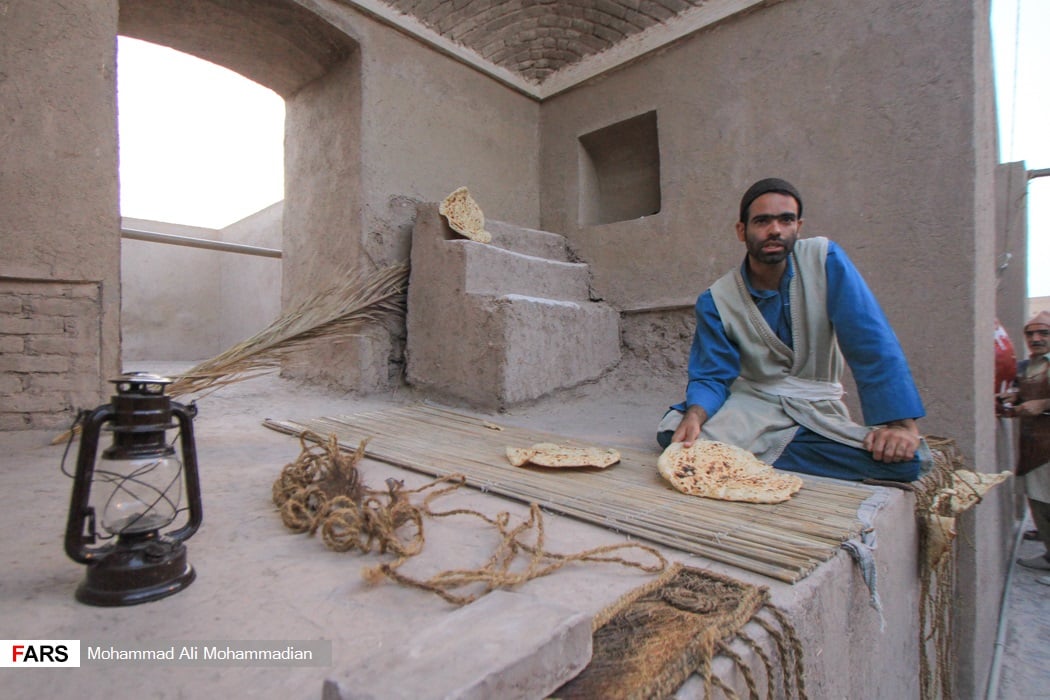
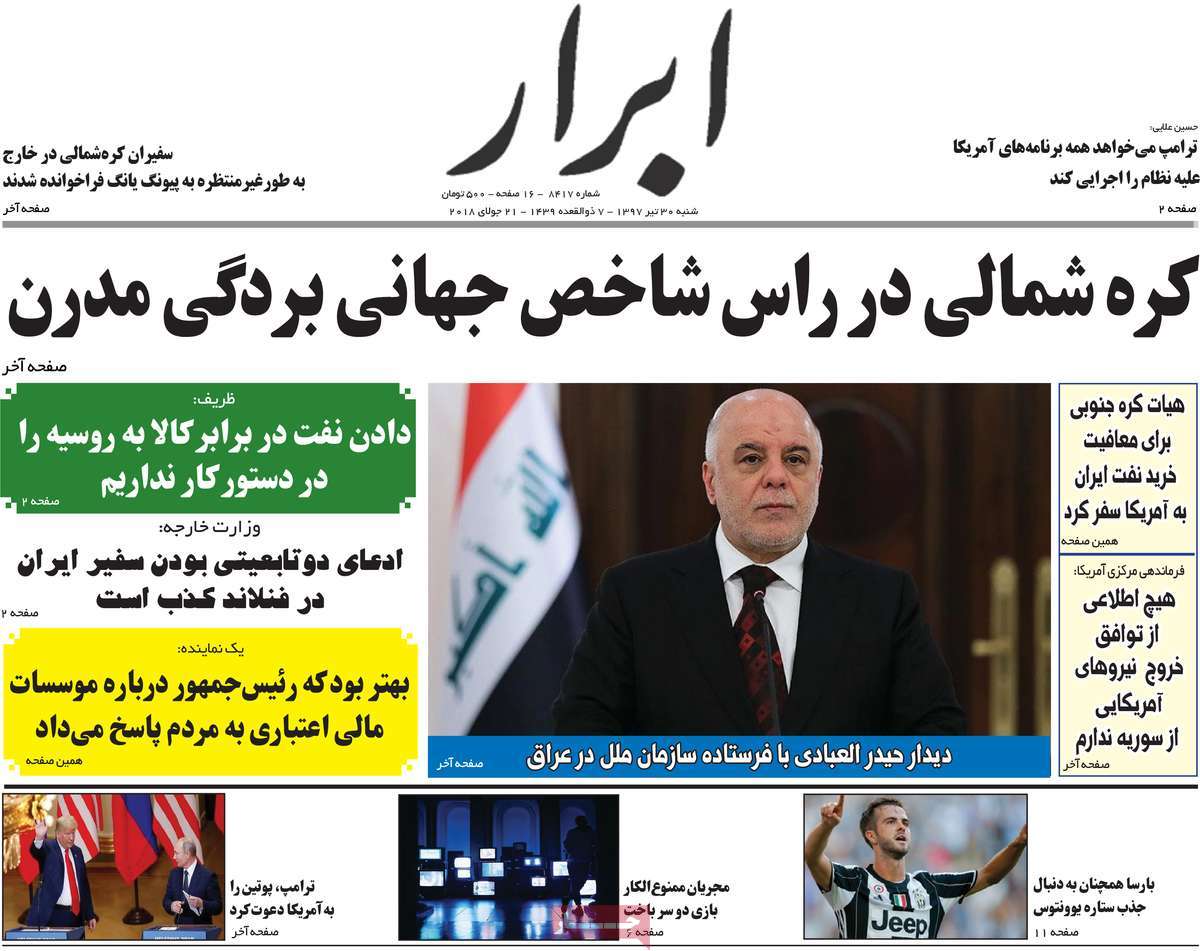
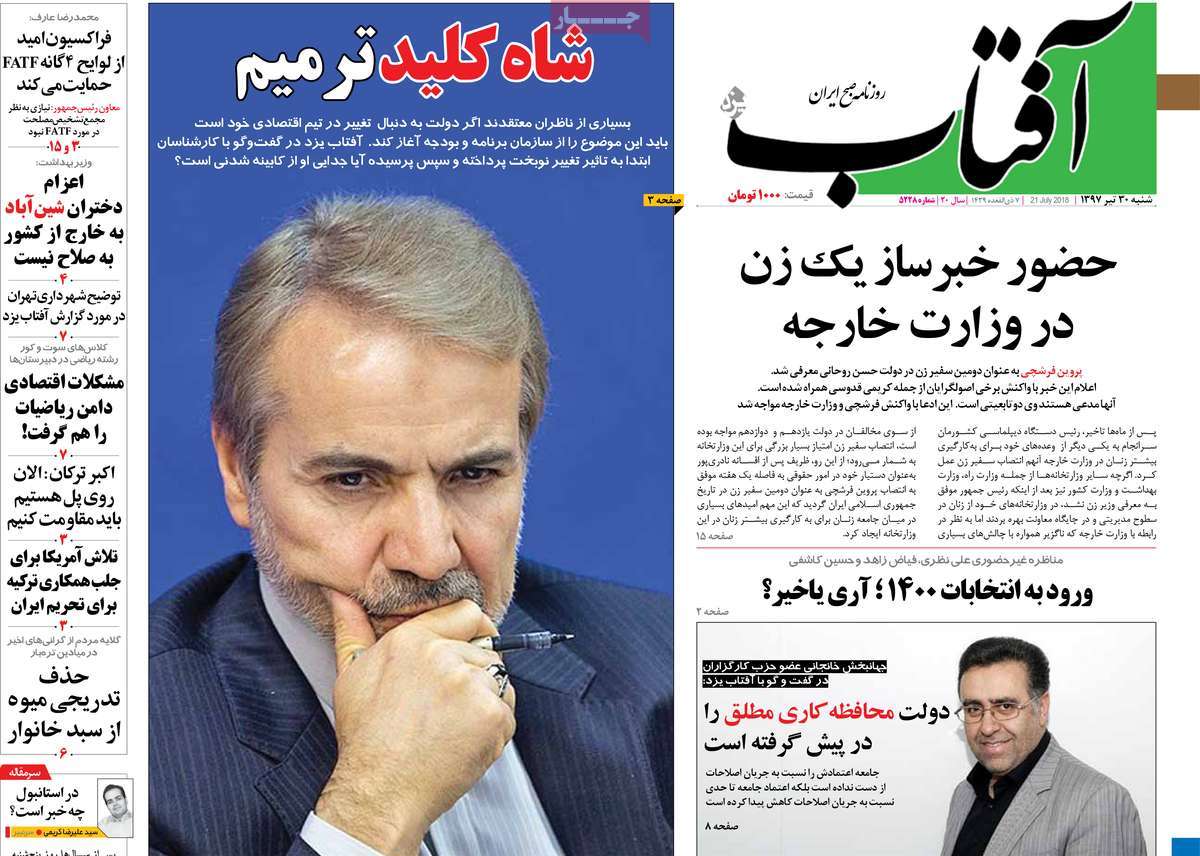
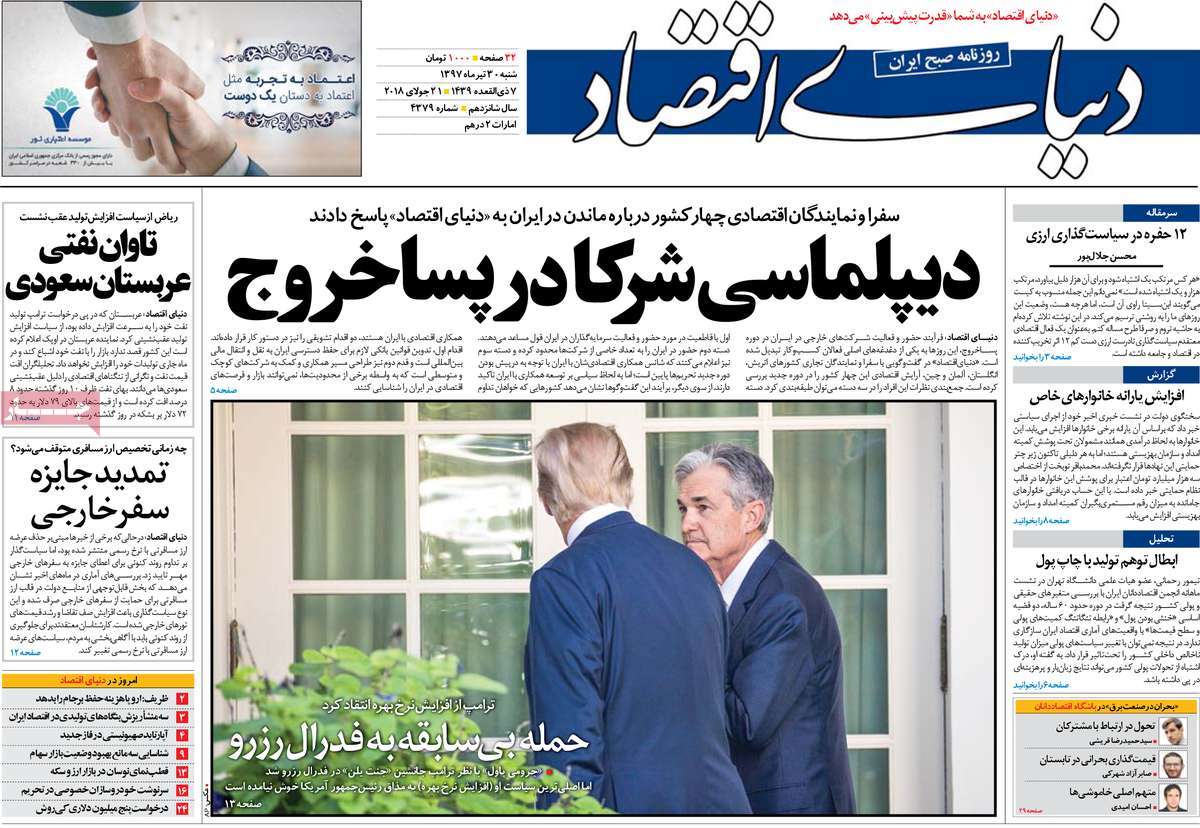
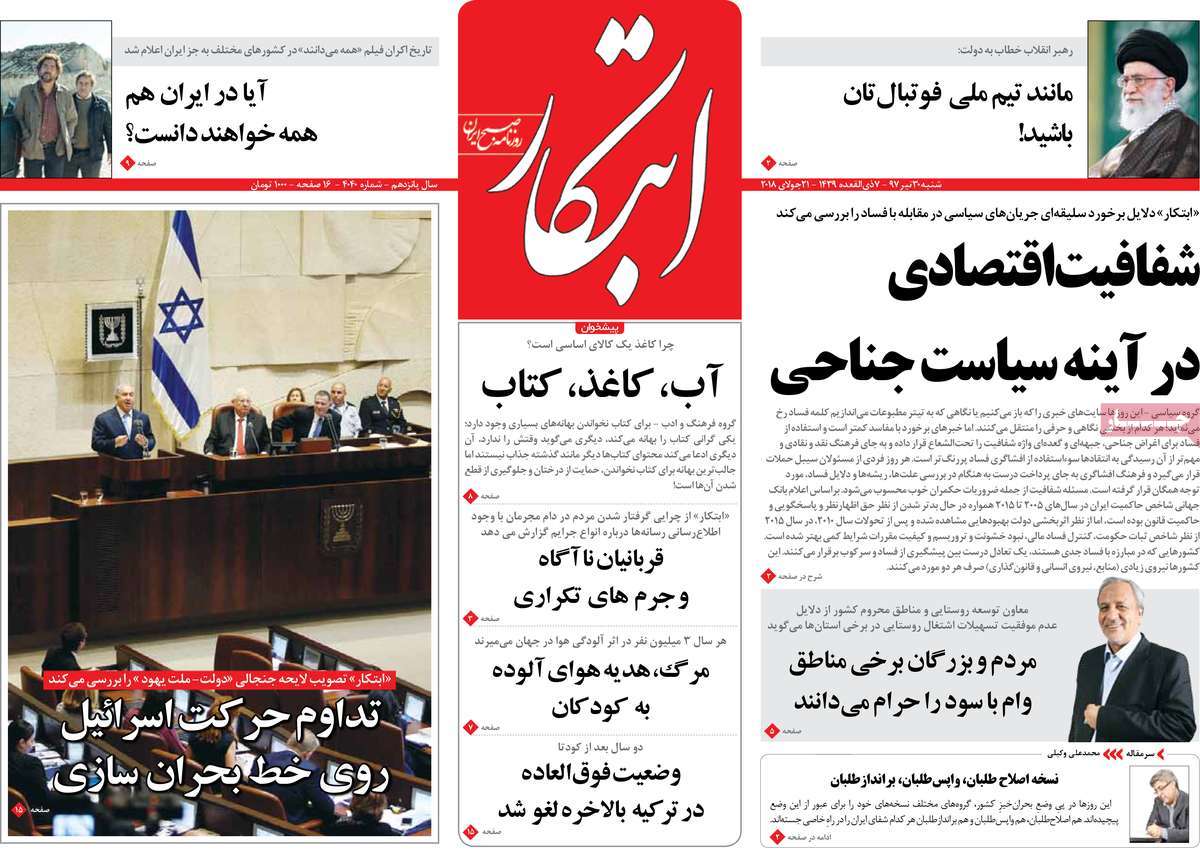
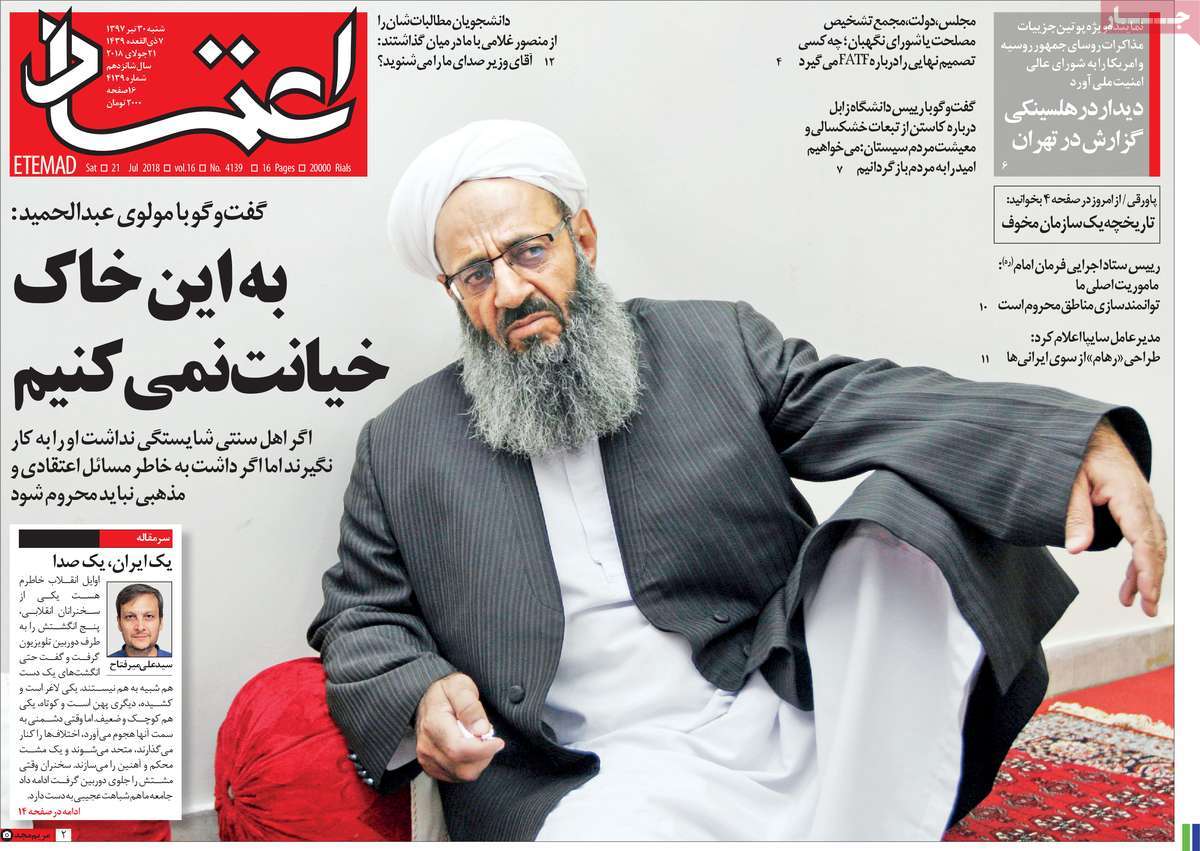
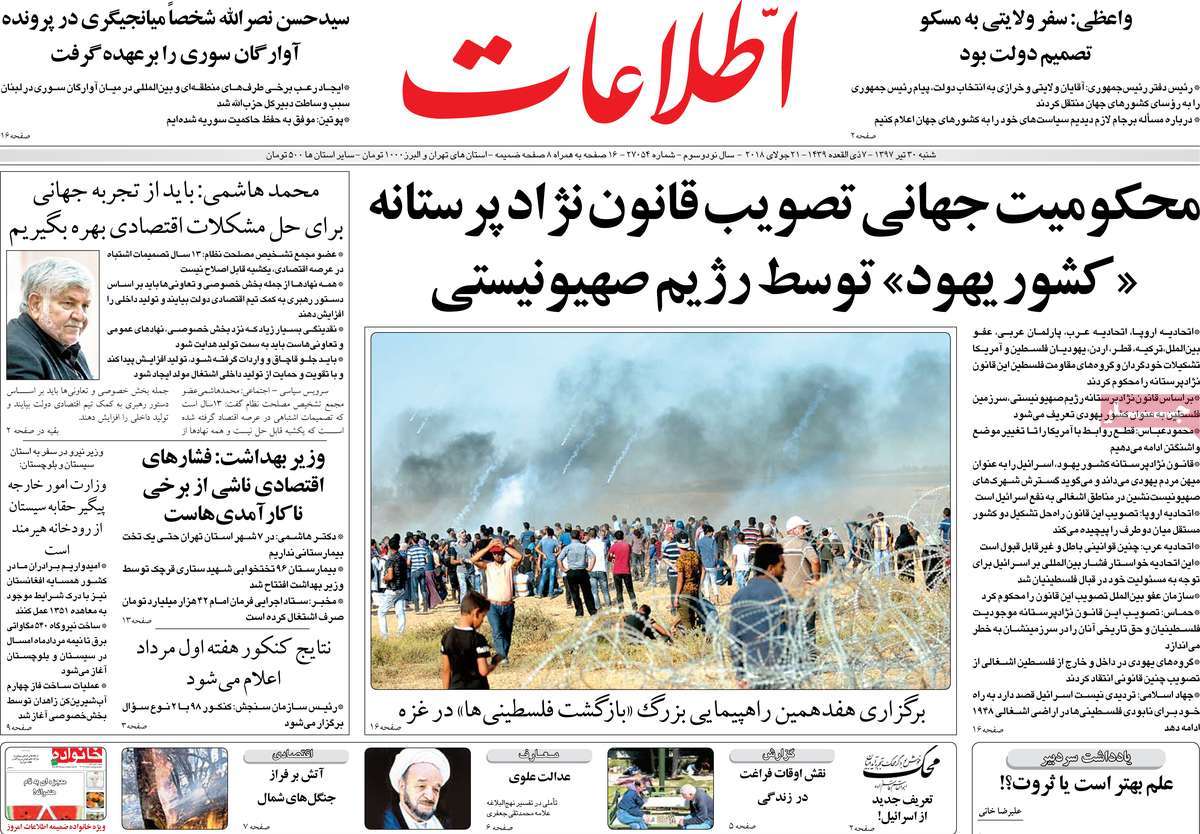
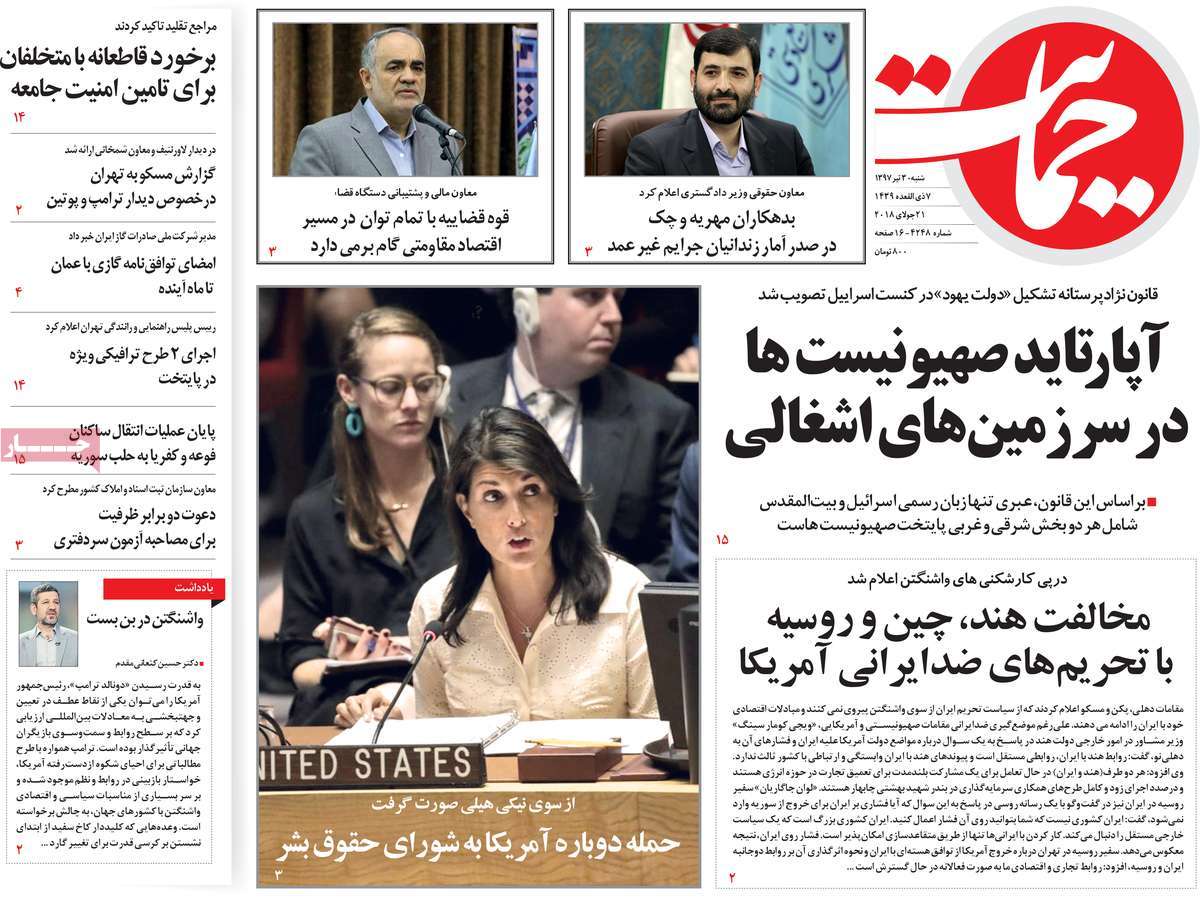
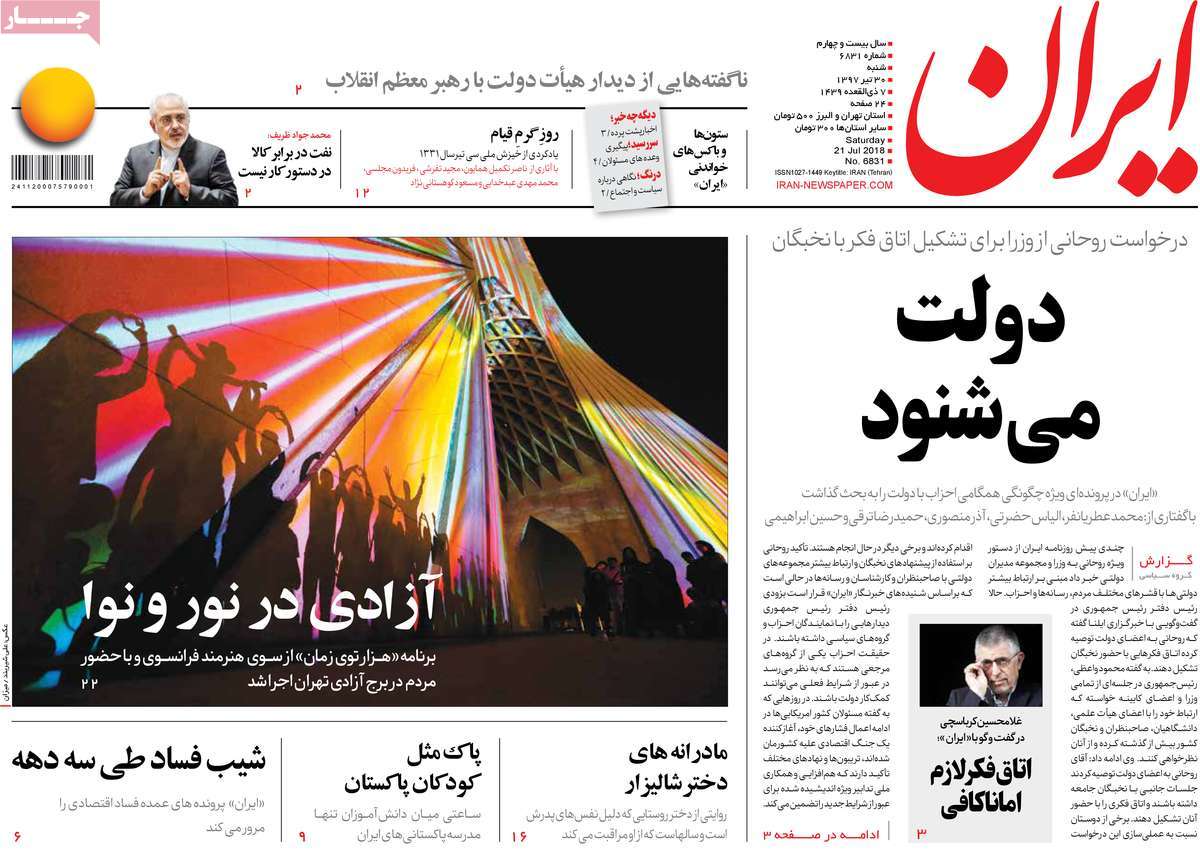
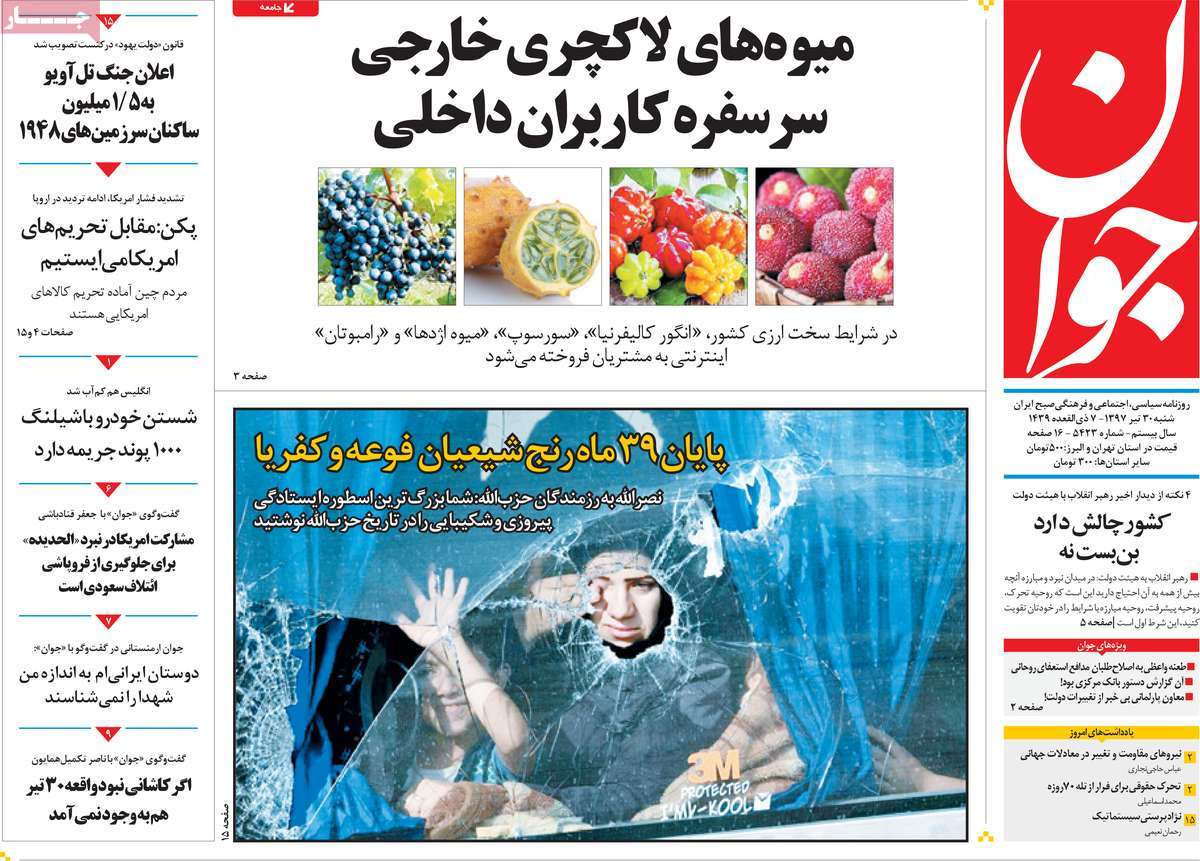
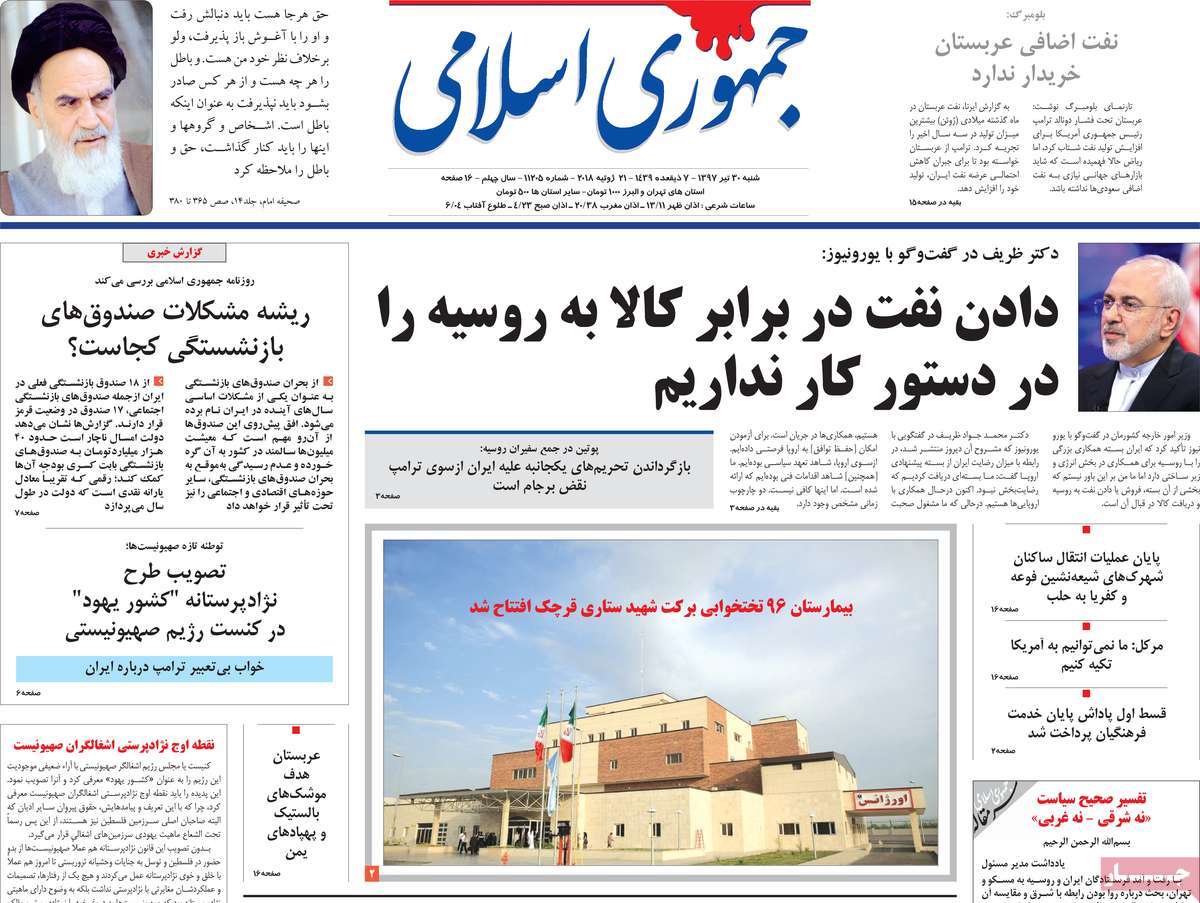
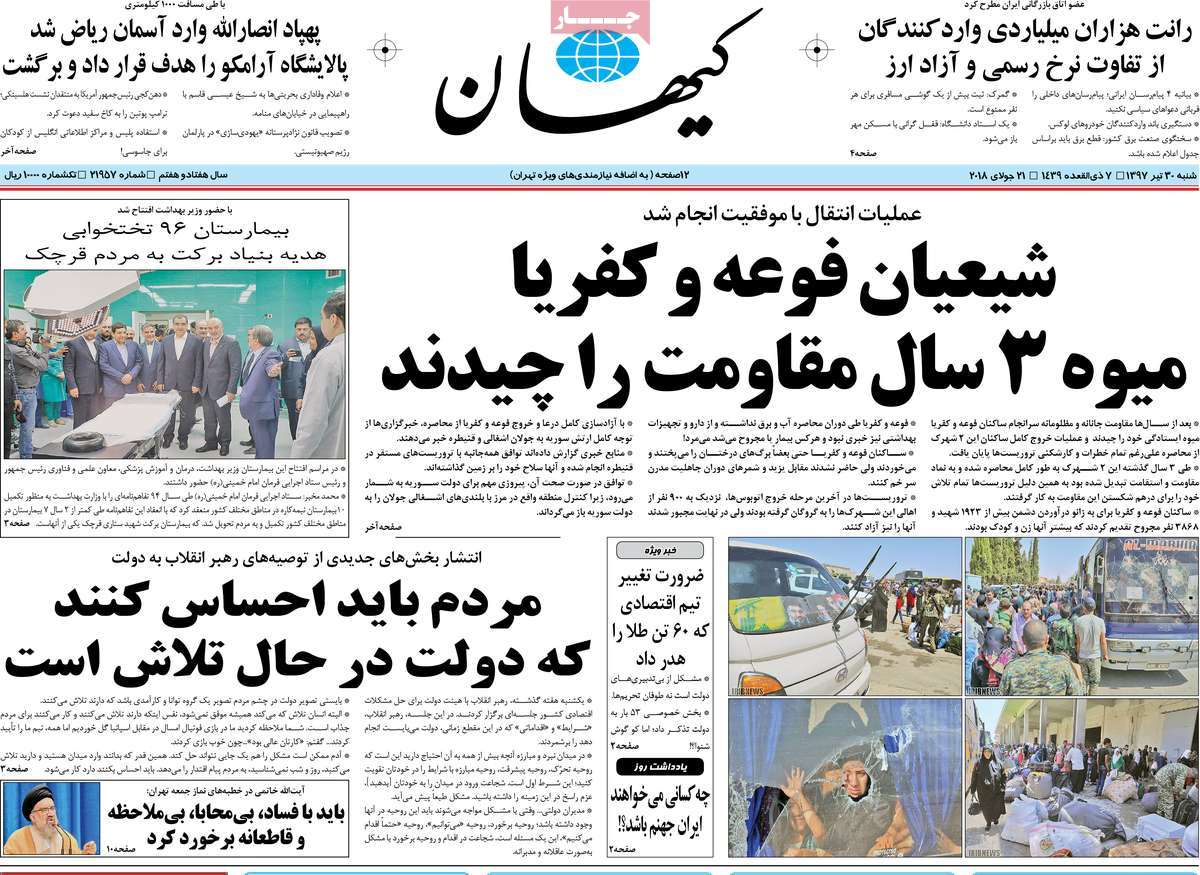
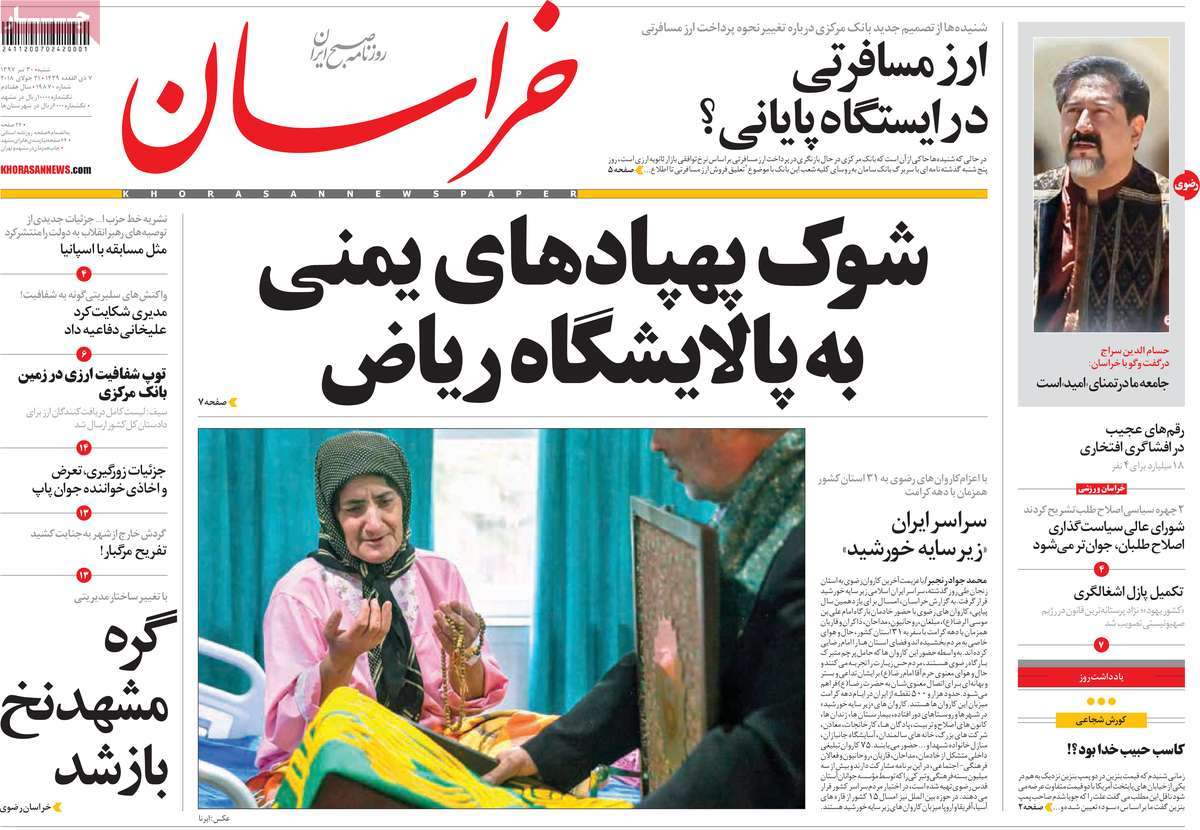
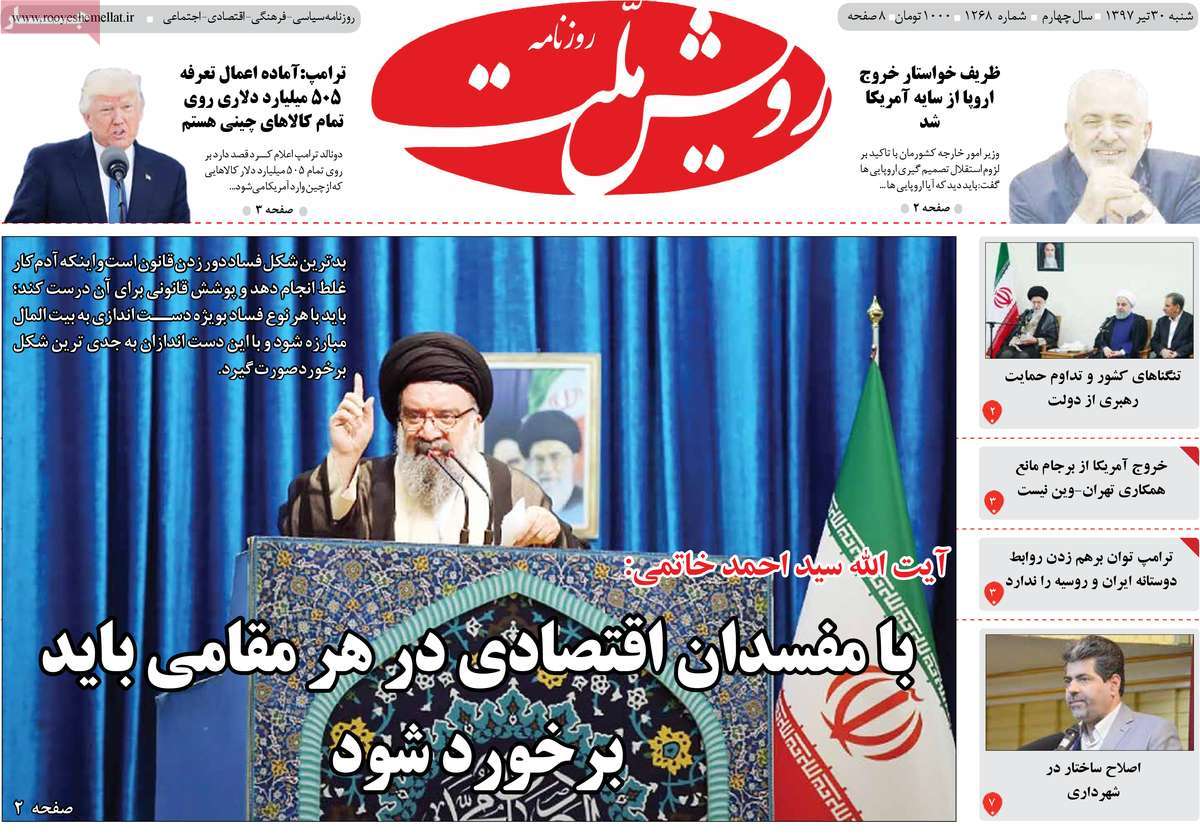
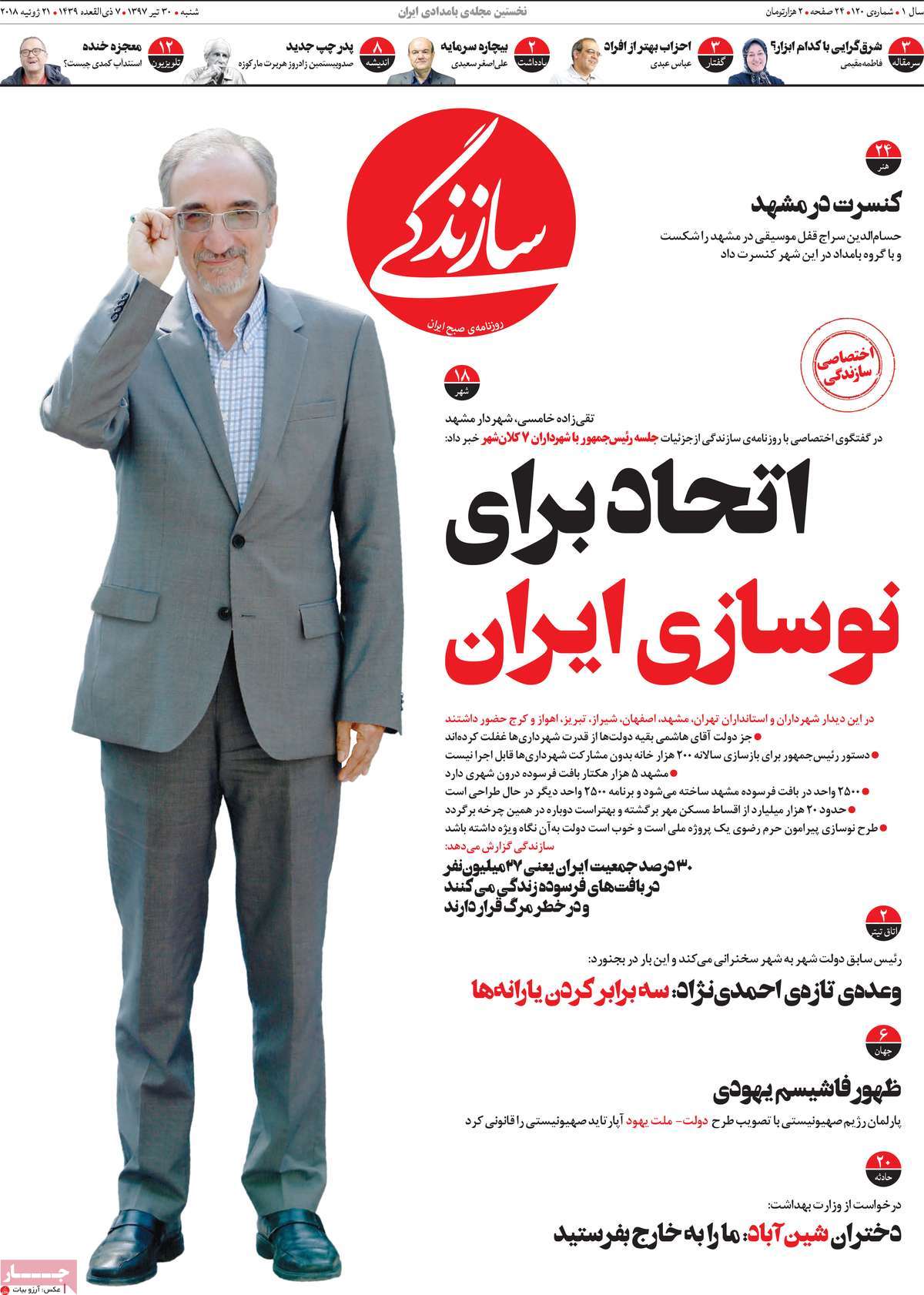
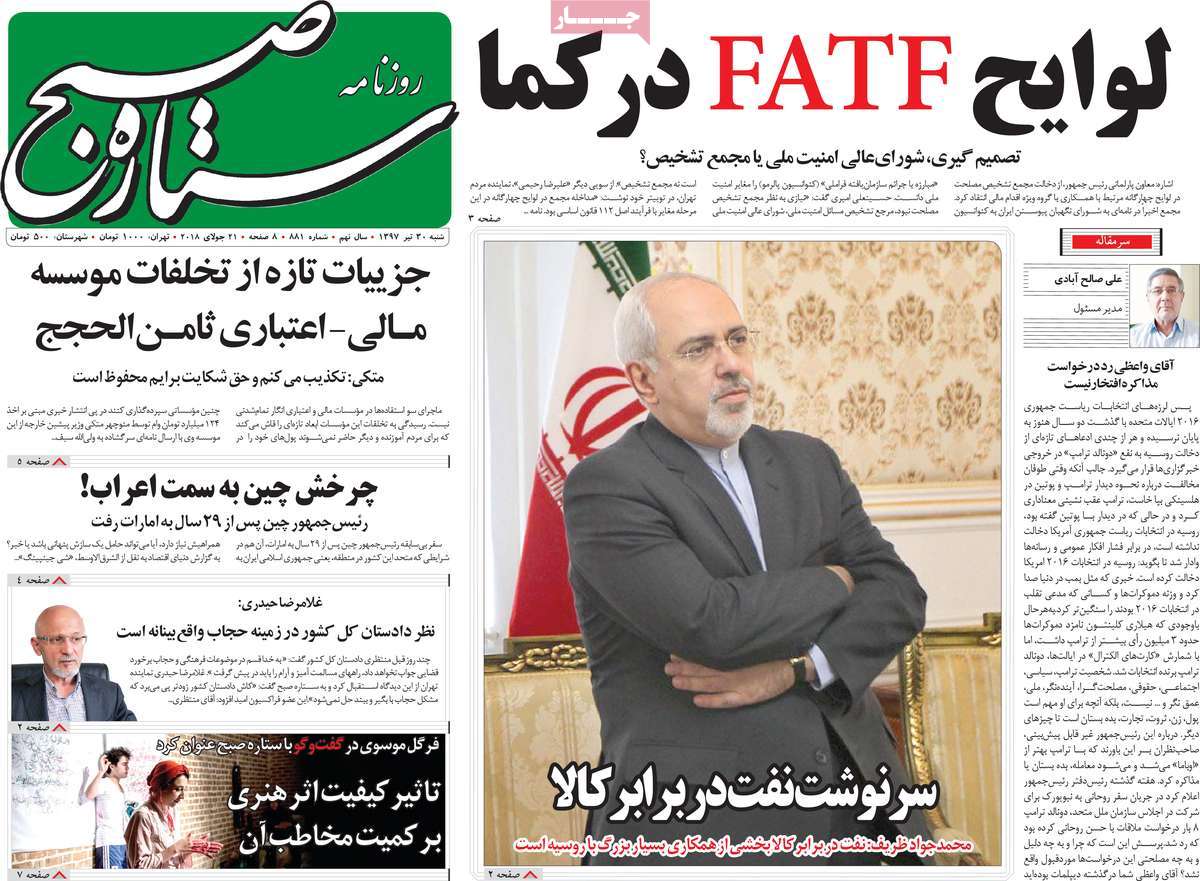
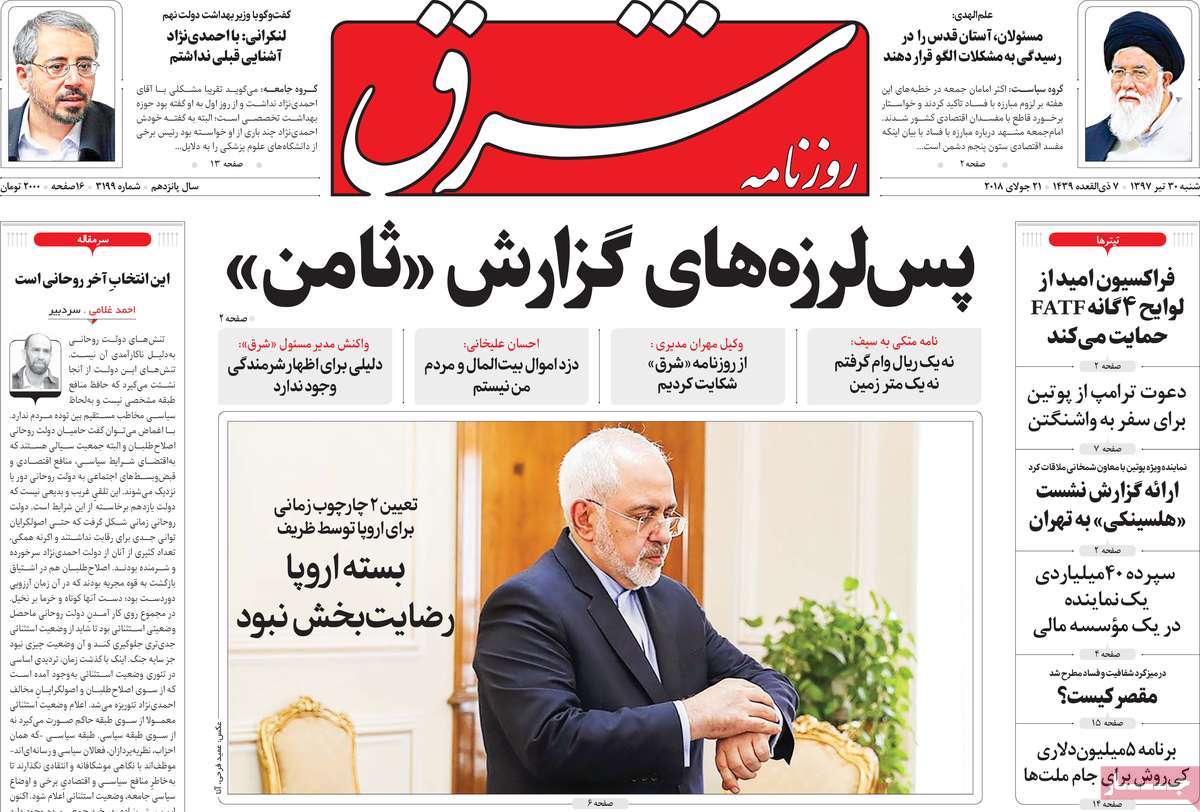
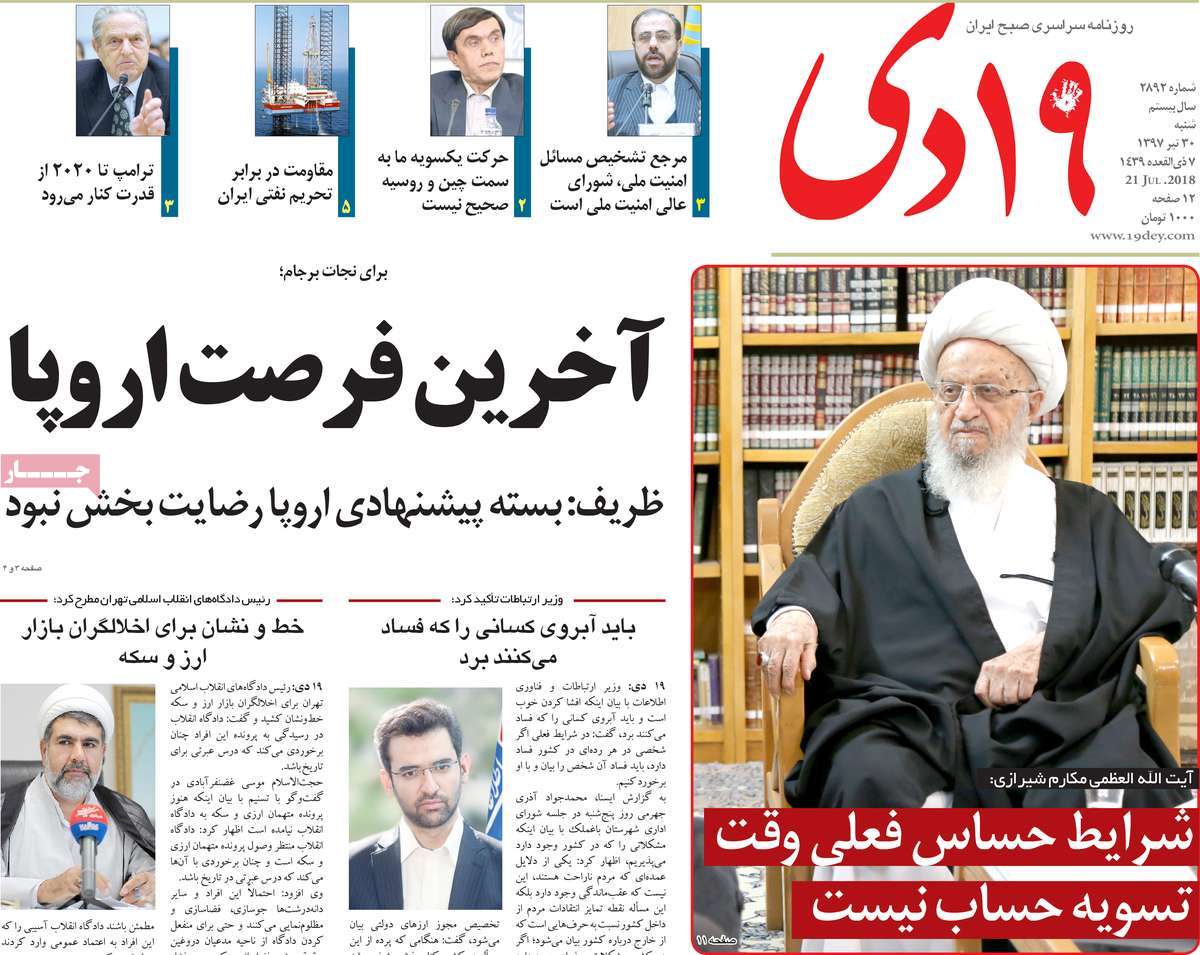
A Look at Iranian Newspaper Front Pages on June 28

A Look at Iranian Newspaper Front Pages on November 19

All newspapers today covered the remarks by the Leader of Iran’s Islamic Revolution Ayatollah Seyyed Ali Khamenei in a meeting with the country’s top judges and Judiciary officials. During the meeting, Ayatollah Khamenei urged the Judiciary to help the government tackle the ongoing economic problems in Iran.

Also a top story was comments by President Hassan Rouhani who said he won’t resign and give up, and will stay to resist the US pressures and sanctions.

The above issues, as well as many more, are highlighted in the following headlines and top stories:


Afarinesh:

1- Leader Urges Decisive, Serious Fight against Corruption

2- Ukraine’s Medical Universities Not Recognized by Iran’s Health Ministry Anymore

A Look at Iranian Newspaper Front Pages on June 28


Aftab-e Yazd:

1- Rouhani: Government Is Standing Firmly

  • We Won’t Resign, We Won’t Give Up

2- Glorious Return of Iranian Cheetahs to Homeland

A Look at Iranian Newspaper Front Pages on June 28


Arman-e Emrooz:

1- Rouhani Gives Ultimatum to Government Executives

  • Only Courageous Managers Can Continue Working for Gov’t

A Look at Iranian Newspaper Front Pages on June 28


Ebtekar:

1- Leader Urges Judiciary to Cooperate with Gov’t in Resolving Economic Woes

2- Iran and Policy of Being Surprised by Trump Every Day

  • How Will US Surprise Iran?

A Look at Iranian Newspaper Front Pages on June 28


Etemad:

1- In Attempt to Make Economic Reforms, Parliament Calls for Cabinet Reshuffle

2- Efforts to Change Governor of Iran’s Central Bank

A Look at Iranian Newspaper Front Pages on June 28


Ettela’at:

1- Judiciary Must Be People’s Shelter: Leader

2- 17 US States Sue Trump over His Anti-Immigration Policies

3- 31-Year-Old Man Pre-Purchases 38,000 Gold Coins

4- People of Abadan to Regain Access to Fresh Drinking Water Soon

A Look at Iranian Newspaper Front Pages on June 28


Iran:

1- Rouhani’s Order: Stand Firmly, Work Hard, Be Accountable

2- Shops in Tehran Bazaar Reopened

A Look at Iranian Newspaper Front Pages on June 28


Jame Jam:

1- Make People’s Business Environment Safe: Iran Leader

2- Netanyahu in Offside!

  • Why Israeli PM Likes to Talk to Iranians on Any Pretext These Days

A Look at Iranian Newspaper Front Pages on June 28


Javan:

1- We’ll Bring US to Its Knees in War of Wills: Rouhani

A Look at Iranian Newspaper Front Pages on June 28


Jomhouri Eslami:

1- Rouhani: We Maintain Our Historical Dignity and Defeat US

A Look at Iranian Newspaper Front Pages on June 28


Kayhan:

1- Tehran Bazaar Gives Crushing Response to Netanyahu

A Look at Iranian Newspaper Front Pages on June 28


Khorasan:

1- Rouhani’s Prescription for Overcoming Problems

  • Unity, Saving, Selling State-Owned Profitable Shares, Transparency, Efficiency

2- Iran’s Winning Cards against Oil Sanctions; Iran-Trump Oil Chess

A Look at Iranian Newspaper Front Pages on June 28


Shargh:

1- Government under Parliament’s Pressure: 187 MPs Write to Rouhani

  • Change Your Economic Team

2- Government Won’t Resign, Won’t Give Up: Rouhani

A Look at Iranian Newspaper Front Pages on June 28

Iran, Sweden Share Experiences in Gender Mainstreaming

During the Tuesday workshop held at Iran’s National Library, the Iranian and Swedish officials talked about ways to eliminate gender imbalance and inequality and promote women’s participation in the labour market.

Addressing the gathering, Swedish Ambassador to Tehran Helena Sångeland referred to a Memorandum of Understanding (MoU) earlied signed between Iran and Sweden on women’s empowerment, and said her country is fully prepared to share its experiences with the Islamic Republic in this field.

Sångeland said Stockholm is committed to promoting women’s participation in the labour market and decision-making, and strongly believe that women must play a bigger role in the government and society at large.

She also expressed Sweden’s interest in share its experiences with Iran in the field of gender mainstreaming.

Promote women’s rights and facilitating their access to resources is the right and smart thing to do, the Swedish diplomat added.

Director-General of the Swedish Institute Annika Rembe also told the gathering that the event is considered as one step further to implement the MoU earlier signed by the Swedish prime minister during his visit to Tehran.

She said Sweden’s main priority is to strengthen women throughout the world, but big challenges require further collaboration.

“This is an issue which poses challenge to all societies, including Iran, Sweden and others,” Rembe said, while highlighting the incredible potential existing in the Islamic Republic for empowerment of women.

In Sweden, women’s participation in the labour market was made possible thanks to its parental leave system, she noted.

Iran, Sweden Share Experiences in Gender MainstreamingRembe expressed the hope that her institute would be able to share its experiences in this regard with others. “Today I try to outline a broader perspective of Sweden’s gender equality.”

She also elaborated on the important reforms made by the Swedish government during the past decades to promote gender parity in the European state.

Rembe described reforms as a prerequisite to Sweden’s economic development, stressing that the Swedish society is based on inclusion and equality.
She said hopefully 43% of mayors and 40% of managers of public sector in Sweden are women.
However, she added, there are still areas in which Sweden needs to improve itself.

She expressed regret that only 16% of CEOs in private companies of Sweden are women, and emphasized that the figure needs to be improved.

26% of professors are women, and men enjoy more opportunities for funds and resources, she said, adding that these resources must be allocated gender-neutrally.

Iran, Sweden Share Experiences in Gender MainstreamingDuring the workshop, Katarina Fehir also took the podium to elaborate on the way the Swedish city of Malmo managed to implement gender mainstreaming policies and promote gender equality throughout the city.

Following the speeches delivered by the Swedish side, Zahra Shojaei, a former advisor to the Iranian president on women affairs, and Fatemeh Tondguyan, an advisor to the Iranian oil minister on women affairs, elaborated on Iran’s experiences in the field of promoting women’s rights after the 1979 Islamic Revolution.

The day-long International Workshop on Gender Mainstreaming was attended by several Iranian and Swedish officials, including Iranian Vice-President for Women and Family Affairs Massoumeh Ebtekar and President Hassan Rouhani’s Special Assistant for Citizens’ Rights Shahindokht Mowlaverdi.

Washtub; Ancient Musical Instrument Popular among Women in Northern Iran

The ancient folk music of the indigenous people was made up of tools and accessories that people historically used to meet their needs. Using such stuff, they tried to express themselves and share their joy and grief.

Washtub; Ancient Musical Instrument Popular among Women in Northern IranWashtub is among the most popular folklore musical instruments in Iran, particularly in northern provinces. When hitting on the washtub to make a sound, people used to give effects by placing a small bowl like a saucer on it.

Ali Hassannejad, a researcher of folklore culture in Mazandaran, says washtub is one of the main means of native life in Mazandaran, which was also used as a musical instrument.

“The washtub is used as a device at various occasions as a percussion instrument, because the musicians must hit it with two hands.”

Washtub; Ancient Musical Instrument Popular among Women in Northern IranAccording to a report by Jamaran, the Third Festival of Folk Music of People Living Around Alborz Mountains will be held next month to provide an opportunity for the women of Mazandaran to play their washtubs.

The festival will be held from July 23 to 27 in Mazandaran province.