Wednesday, December 24, 2025
Home Blog Page 3062

US Preventing Iran, Saudi from Settling Their Disputes: Larijani

He said the Americans are benefiting from these tensions, and the United States is a major cause of the Iran-Saudi tension.

He made the statements in a Tuesday meeting with his Austrian counterpart Ingo Ape on the sidelines of 141st session of the Inter-Parliamentary Union (IPU) Assembly which is underway in the Serbian capital Belgrade.

The top lawmaker said the situation in the region is in disarray and we need to know who created this situation.

“In fact, there are some concerns in the region and the problem exists in Libya too. Of course, regarding the Yemen and Syria issue, I said there should be political negotiations, but some countries did not accept. They wanted to use the ISIS as tool for themselves, but they did not know they pay the price as well,” he said, quoting Hillary Clinton as saying that the US created ISIS.

Elsewhere in his remarks, Larijani touched upon the importance of bilateral relations and cultural relations and tourism. He said these partnerships can be expanded and there should be political will only.

Larijani stressed that Austria had always had a balanced role on issues, especially after the nuclear deal, and the trade relations between the two countries should be improved.

In addition to the amicable political and cultural relations between the two countries, Tehran and Vienna should focus on scientific issues as well.

“Fewer politicians get deeper into cultural issues, so I thank you for getting deep into cultural issues,” he told the President of the Federal Parliament of Austria.

For his part, Ape stated that the Austria-Iran Friendship Grouphas recently visited the country and fortunately the parliamentary relations between the two countries are expanding.

He stressed the importance of expanding economic and tourism relations with Iran, adding that Iran plays a pivotal role in the region and the Middle East, and that the role of dialogue is preferable to any other solution.

The Austrian official expressed concern over the situation in the region and said “Turkey’s military action in northern Syria, as well as the situation in Yemen and Libya is worrying, so I welcome any opportunity to build trust between Iran and Saudi Arabia.”

“In our view, the only solution to global security is the nuclear deal,” he said, expressing regret over Washington’s withdrawal from the JCPOA. He finally expressed hope that the United States would pursue more logical policies.”

Larijani on Tuesday had also praised establishment of serious trust between the Islamic Republic of Iran and Russia. Speaking in a meeting with Valentina Matviyenko, Chairwoman of the Russian Federation Council he called on world leaders to trust one another in order to properly deal with Trump’s misbehaviour.

Matviyenko, for her part, said Russia has stable and principled stance toward Iran, and it is against violating the JCPOA since it will lead to serious damages.

The 141st Assembly of the IPU is underway in Belgrade, Serbia, until October 17. All IPU statutory bodies, including the Governing Council, Standing Committees, Committees on the Human Rights of Parliamentarians and on Middle East Questions, as well as the Forum of Women Parliamentarians and the Forum of Young MPs, have attended the event.

Turkey Fighting Terror with Help of Terrorist Groups

The war against Syria, which began in 2011, caused widespread devastation and left all Syrian minorities, including the Kurds living there, in an unwanted battle. Provoked by the US and Israel, the Kurds created their own autonomous regional area called Rojava in northern Syria after successfully fighting the ISIS.  However, they ignored the fact that Washington has never been a reliable strategic ally for the Kurds, not just for them, but neither for figures like Shah of Iran, Saddam Hussein, Hosni Mubarak, Gaddafi, etc. Their policies of accompanying Kurds and turning their back on them have been in line with tactical policies, and have been a function of America’s vital national interests in the region.

Meanwhile, more than 11,000 Kurdish men and women from Syrian Democratic Forces were killed in the fight against ISIS. Nevertheless, the United States seized all the gains in its own name, and oppressed the Kurdish people and sent them to the war under imprudent leaders and sacrificed them as the cost of its compromise.

At least for two times Turkey has carried out relatively large-scale military operations (Operation Olive Branch and Operation Euphrates shield) against the Kurdish armed parties in Syria. In recent years, Syrian Kurds have been looking at the US as a key ally. The recent experience showed that this reliance has faded away and, ultimately, US President Donald Trump with a phone call refrained from fulfiling all of Washington’s obligations and stabbed the Kurds in the back. The US’s decision has brought the region into a new cycle of instability that has increased the potential for the resurgence of terrorist movements.

Turkey’s Goals of Invading Syria

The Turkish army’s operation known as “Peace Spring” is being carried out by some 40,000 Turkish troops and approximately 15,000 Syrian National Army forces in the eastern Euphrates region including Ayn Isa, Tal Abiad, Ras al-Ayn, and Qamishli. Turkey’s goals can be categorised into proclaimed and covert ones.

Turkish political and security officials have stated that the operation is not only aimed at the PKK and the YPG which threaten the security of the nation and the integrity of the Turkish government. They claim one of the most important objectives of the operation is to fight ISIS! Turkey plans to establish a safe zone for 500,000 Syrian refugees and resettle them there. However, there are many speculations about Turkey’s long-term and hidden goals.

One of the most possible reasons for this is the problems President Erdogan is facing inside Turkey. In addition to inflation and economic recession, Turkey’s ruling party lost control of four major cities, including Istanbul, Turkey’s economic hub, and Ankara, in major local elections this year. Therefore, much of the effort to attack Rojava is to arouse Turk’s sense of nationalism and to seek the support of the people and to force them to adopt a nationalistic ideal.

Changing Demographic Context of Region

The issue of peace for Turks is just an excuse, as Erdogan’s government wants to deploy several million Syrian refugees to the northern Syria’s safe zone, generally Arabs and opponents of Bashar al-Assad’s government in the Kurdish parts of northern Syria. Turkey hopes to resettle Syrian refugees, mainly Arabs, by deporting Kurdish forces from some areas of the eastern Euphrates. This policy is to change the demographic structure of the region from Kurdish to Arabic, and also is aimed at establishing a formal Syrian opposition in the border region. This strategy is to revive Syrian opposition groups, especially the escaped Syrian army commanders, to destabilise the central government, and to expand Turkey’s influence and political and security presence inside Syria with the greater purpose of creating a safe zone and legalising this dangerous idea with the help of opposition figures.

By doing so, the Turkish government will remain the strategic supporter of Syrian anti-government groups, and on the other hand, anti-government Syrian groups in addition to controlling Kurdish movements, will be a reliable factor in maintaining and consolidating Turkey’s strategic depth.

Unfortunately, Erdogan and his government do not have a good understanding of the changes of the time and do not realise that a government can no longer simply ignore the territorial integrity of an independent state. What Ankara is concerned about is the disintegration of Turkey’s territory while it seeks the same for neighbours and helps break up a neighbouring country. The second point is that it is not possible to go to war with terrorism by use of force and terrorist forces because it is not possible to change the history, culture and demographics of a region.

Another point to note is that the number of Kurds in Syria is not high enough to worry Turkey; unless we come to the conclusion that Turkey sees itself weak in confrontation with the Kurds and their abilities, so it is trying to suppress the Kurds militarily. Instead of spending their capital on these wars, it is better for the countries of the region to spend it on welfare, democracy, peace and reconstruction of their own. They would better leave the issue of the Syrian Kurds to the Syrian government and army.

Turkey, if sincere, should help the Syrian government maintain its territorial integrity by cutting off support for the Syrian government’s opposition and pave the way for the deployment of Syrian army to its border. Ankara must not help reorganise terrorist groups under the pretext of repressing the Kurds and bring the region back into a period of long-term instability. Erdogan and the Turkish military must understand that their attack is an opportunity for the ISIS. Obviously, chaos can provide an opportunity for the ISIS to revive. Currently, more than 5,000 ISIS militants of different nationalities are being held by Kurdish forces.

Turkey’s presence in Syria could have consequences for the Arab country. As Ankara can upkeep unrest in Syria and continue civil war there with support of the opposition. While Turkey’s targeted territory is currently beyond the control of the Syrian central government, Ankara’s invasion could mean changing the region’s situation to the benefit of insurgents who wanted to topple Bashar al-Assad’s government.

However, the experience of the last century and the recent history of Syrian developments have shown that powers such as the US and European countries and their allies are not a reliable friend for the Syrians. They should watch out for the leaders and agents of the US and Israel, who always take the innocent Kurdish people to the political slaughterhouse of Western actors to maintain their own position among the Kurdish currents.

Zarif Says Representing Iran Led to His Omission from Nobel Prize List

US Known It Can’t Trigger Snapback Mechanism: Zarif

In a meeting with a group of Iranian social media and virtual space activists, held in Tehran on Tuesday, Foreign Minister Zarif said he had offered his resignation in February because he felt he was not being considered as a “brand of Iran”.

“If I had intended to make the brand of Zarif, I would have easily gotten the Nobel Peace Prize,” the minister explained, saying he had the highest points on the shortlist for the prize for two consecutive years.

Zarif said he could have won the Nobel Prize by pursuing his own brand and representing himself as an individual with a viewpoint that could be eliminated.

“We in the Foreign Ministry are duty bound to preserve the brand of Iran, not an individual, and ideology or an organization,” he explained.

Zarif further highlighted the great efforts put into hammering out the 2015 nuclear deal, saying, “I’m not an advocate of the JCPOA. I am an advocate of the Islamic Republic of Iran. If I defend the interests of the JCPOA, I’ll have to give concessions, but when I defend the interests of the Islamic Republic, we can obtain concessions from the foreign powers.”

Zarif said more than $80 billion in foreign investment had been attracted after achievement of the JCPOA, but less than only $5 billion came into Iran, noting that it was not the Foreign Ministry’s fault.

He also noted that the Foreign Ministry has done its best to enhance Iran’s trade with the foreign countries.

“I take 70 merchants to (foreign) trips with me and arrange meetings for them in there. The friends accompanying me in the trips have seen that we take the merchants and business people, and they make contracts and sign memoranda of understanding. But I cannot change the fact that in order for a memorandum of understanding to become operational in Iran, they (businessmen) will have to try for three years,” he added.

Iran Ready to Share Drug War Experiences with Austria

Iranian Police general, Eskandar Mo’meni, had a meeting with officials from Austria’s Federal Ministry of Labour, Social Affairs and Consumer Protection in Vienna.

In the gathering, the Iranian official said the Islamic Republic’s plans for combatting narcotics is based upon a balanced policy, stressing that the Police’s war on drug trafficking is coupled with strategies to prevent drug abuse, promote rehabilitation programs, and reduce the social harms.

Iran’s biggest difference with Austria is that the Islamic Republic is a neighbor of the world’s largest producer of opiates, he added.

“That is why the measures of the two countries (Iran and Austria) in the fight against drugs are different, but on the issue of prevention and treatment, they have much in common,” Mo’meni added.

He also noted that Iran has confiscated 800 tonnes of drugs last year, which were mainly destined for Europe.

“Iran makes no difference between the Iranian and European youth, and our country is combatting narcotics as a human rights duty,” Mo’meni underlined.

Highlighting Iran and Austria’s considerable experience in reducing the drug-related harms, the Iranian official said Tehran was ready to prepare the ground for sharing the experiences and information with Vienna.

The Austrian side, in turn, provided a description of the European country’s plans to rehabilitate drug addicts, saying around 45,000 addicts have been identified and undergone treatment in Austria.

The Austrian officials also noted that drug addiction would be brought under control when the governments succeed in helping a person undergoing treatment to return to and enjoy a normal life.

Yemeni Envoy Meets Latin American Counterparts in Tehran

At the meeting, Iranian Foreign Minister’s Senior Assistant for Special Political Affairs Ali-Asghar Khaji touched upon the Islamic Republic of Iran’s stance in support of a political solution to preserve Yemen’s territorial integrity, independence and unity, and a four-point plan for the political resolution of the crisis.

Khaji also described Stockholm agreements as an important step in Yemen’s political process and regretted the other party’s disruptions in its implementation.

The Iranian official said the Saudi-Emirati coalition’s air, maritime and land siege of Yemen has blocked the fair access of all Yemenis to humanitarian aid and emphasised the need to halt military operations against the country.

The Yemeni ambassador also outlined the latest political and military developments in Yemen. Referring to the Government of National Salvation’s initiative to halt drone and missile strikes on Saudi Arabia on the condition that the other party would do the same, he expressed readiness to stop the war as soon as possible.

He called the humanitarian situation in his country very regrettable and called on Latin American countries to step up their pressure to lift the blockade and send humanitarian aid to Yemen.

Latin American ambassadors, in turn, praised the Iranian Foreign Ministry for providing such an opportunity, admiring the Yemeni people’s resistance against the invaders and insisted on political solution to end the Yemen war and send humanitarian aid to the country.

At the end of the meeting the participants put stress on the following issues:

– Respecting Yemen’s sovereignty, and territorial integrity

– Stopping military operations and establishing a ceasefire

– Resolving the Yemen crisis politically

– Holding Yemeni-Yemeni talks with the participation of all Yemeni groups without outsiders’ interference

– The need for serious consideration of the humanitarian situation in Yemen and the speeding up of sending humanitarian aid to Yemen
Saudi Arabia and a number of its regional allies launched a devastating war against Yemen in 2015, with the goal of bringing the government of Hadi back to power and crushing the Ansarullah movement.

Estimates show that the war has claimed over 90,000 lives so far.
The war has also taken a heavy toll on the country’s infrastructure, destroying hospitals, schools, and factories. The United Nations says more than 24 million Yemenis are in dire need of humanitarian aid.

A Look at Iranian Newspaper Front Pages on October 15

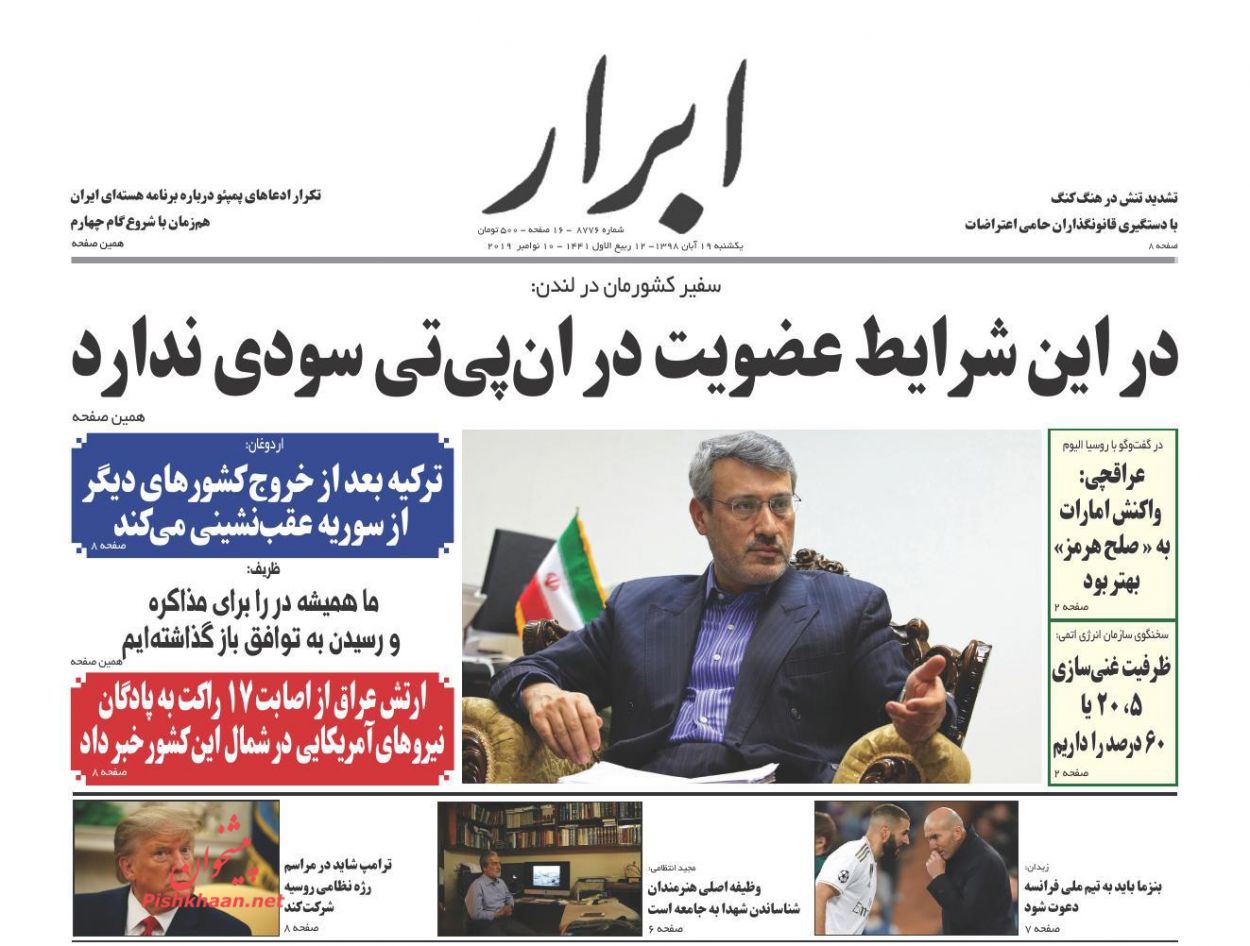
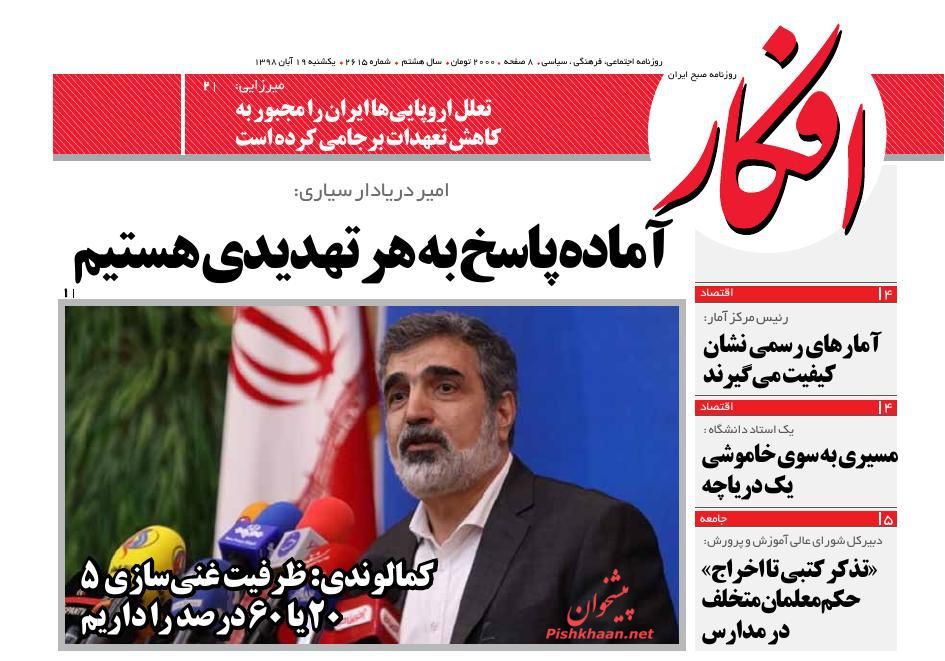
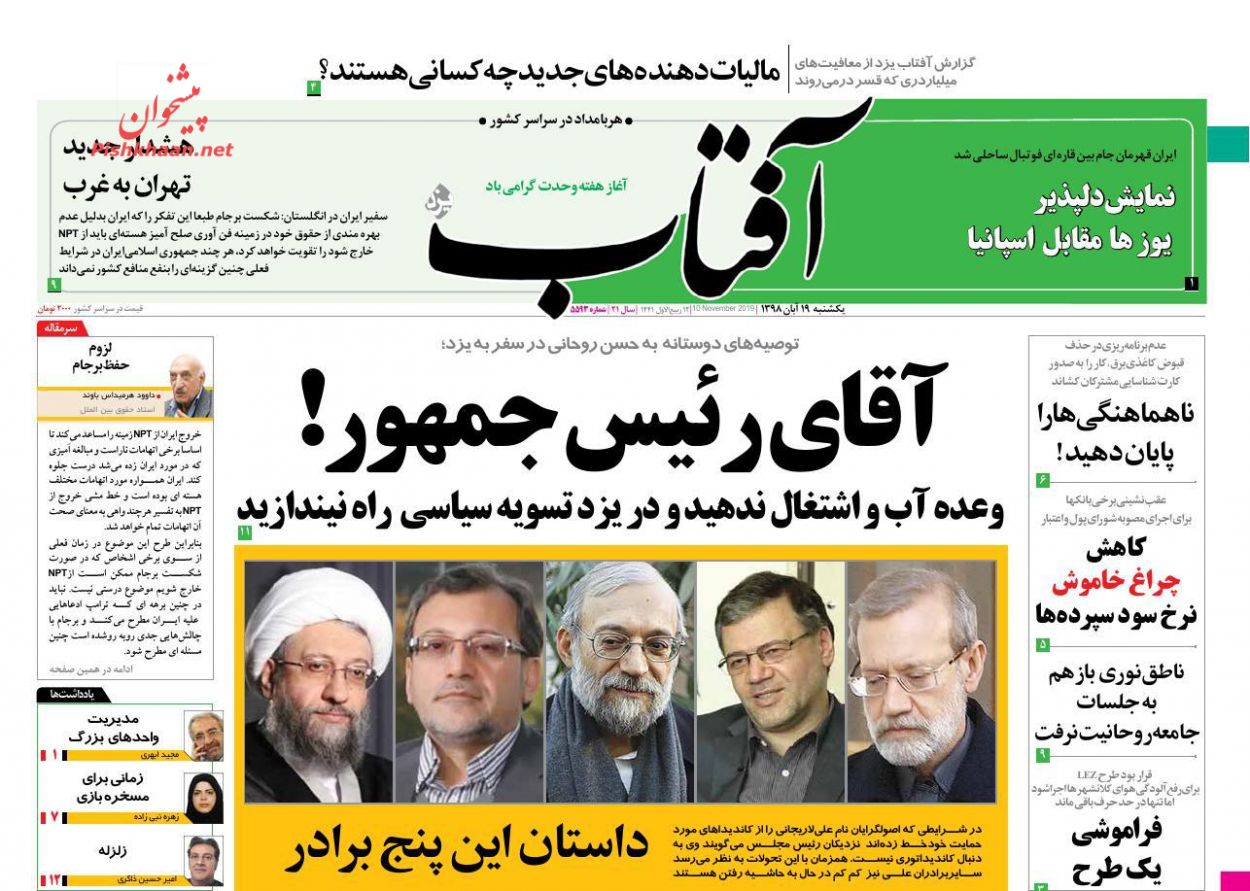
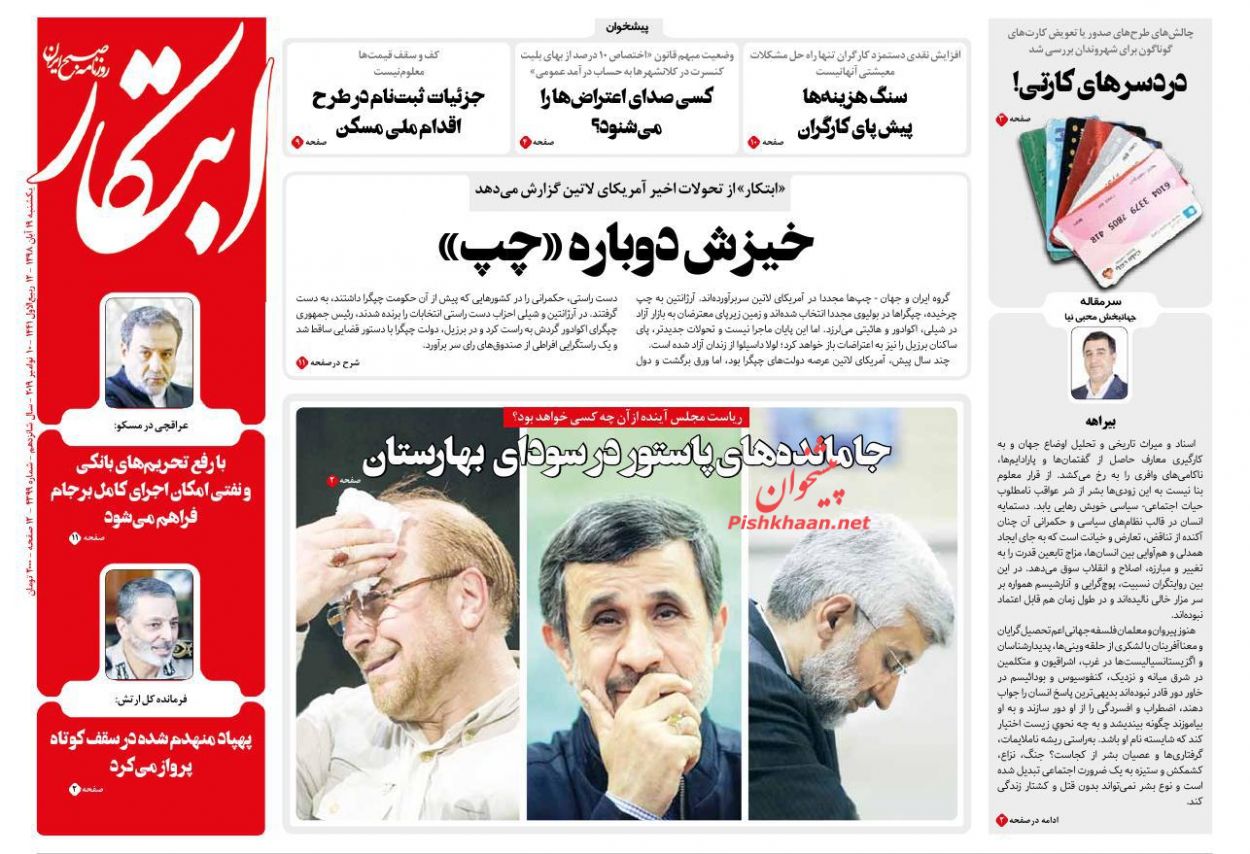
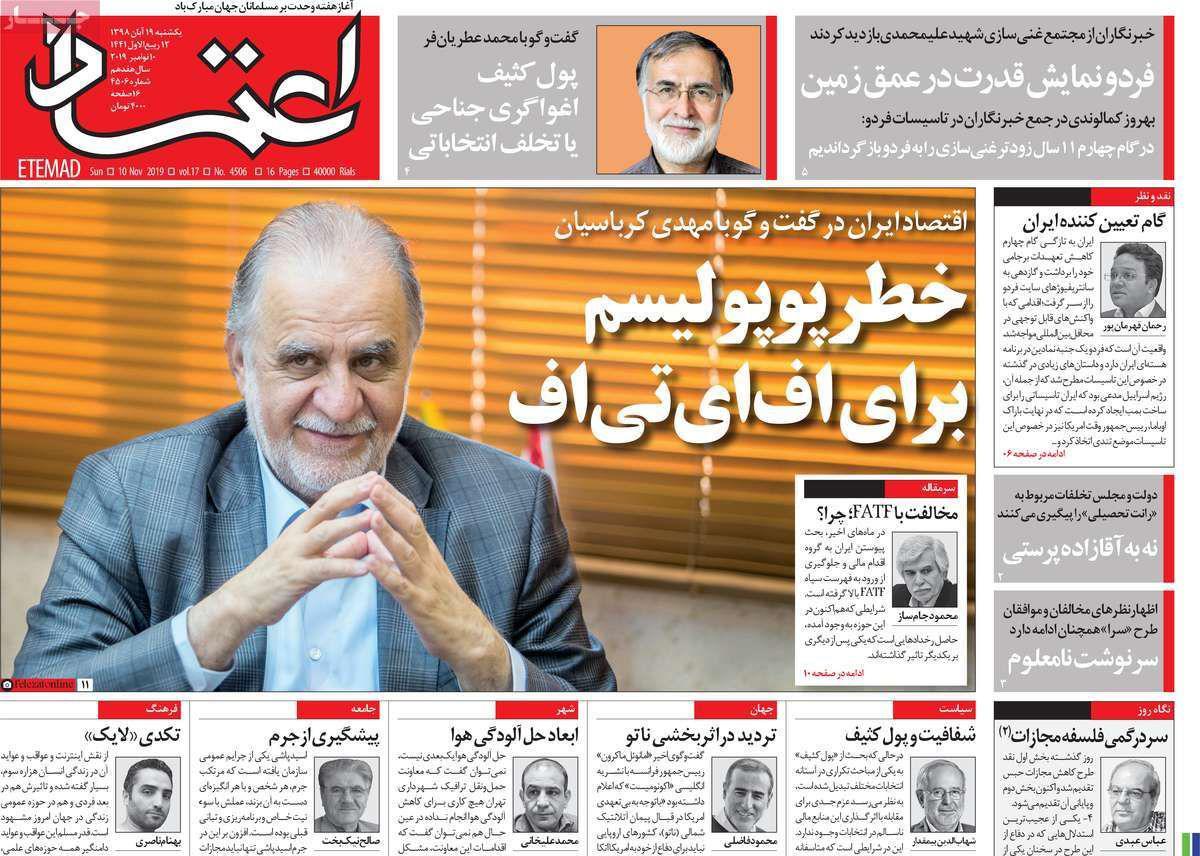
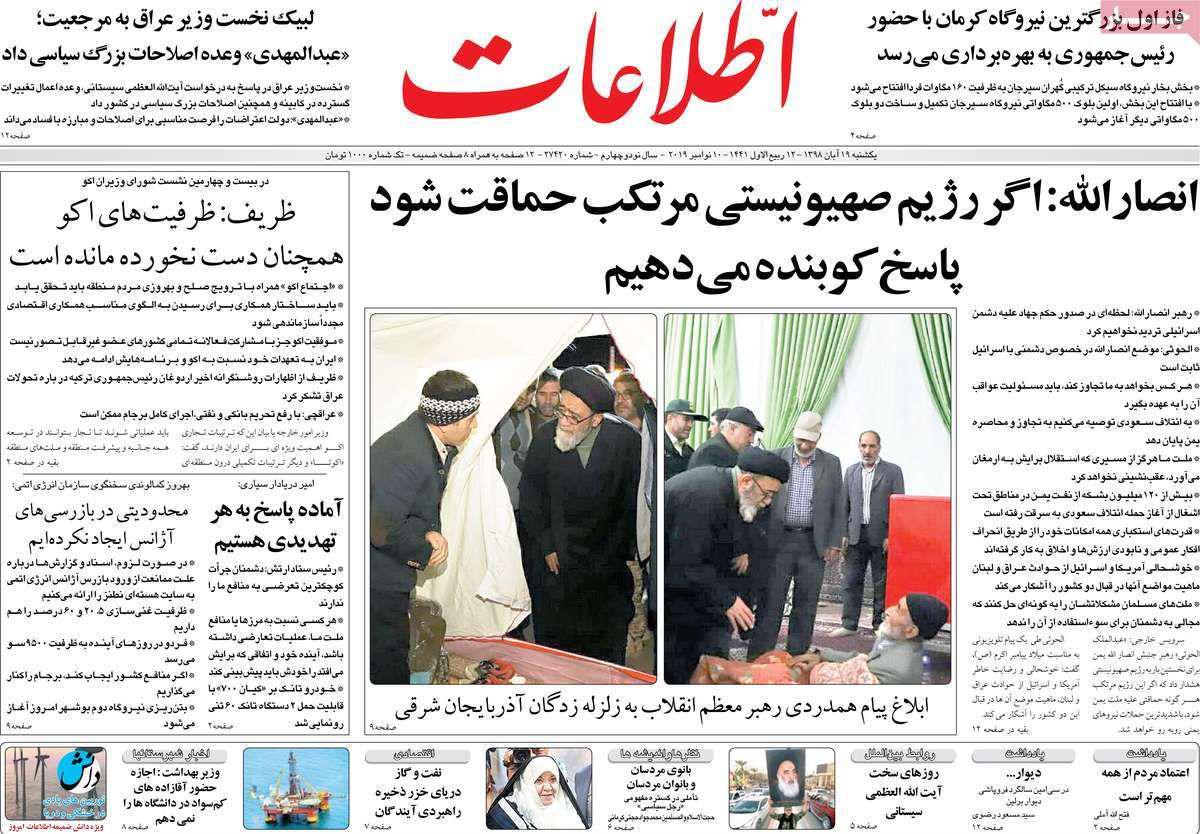
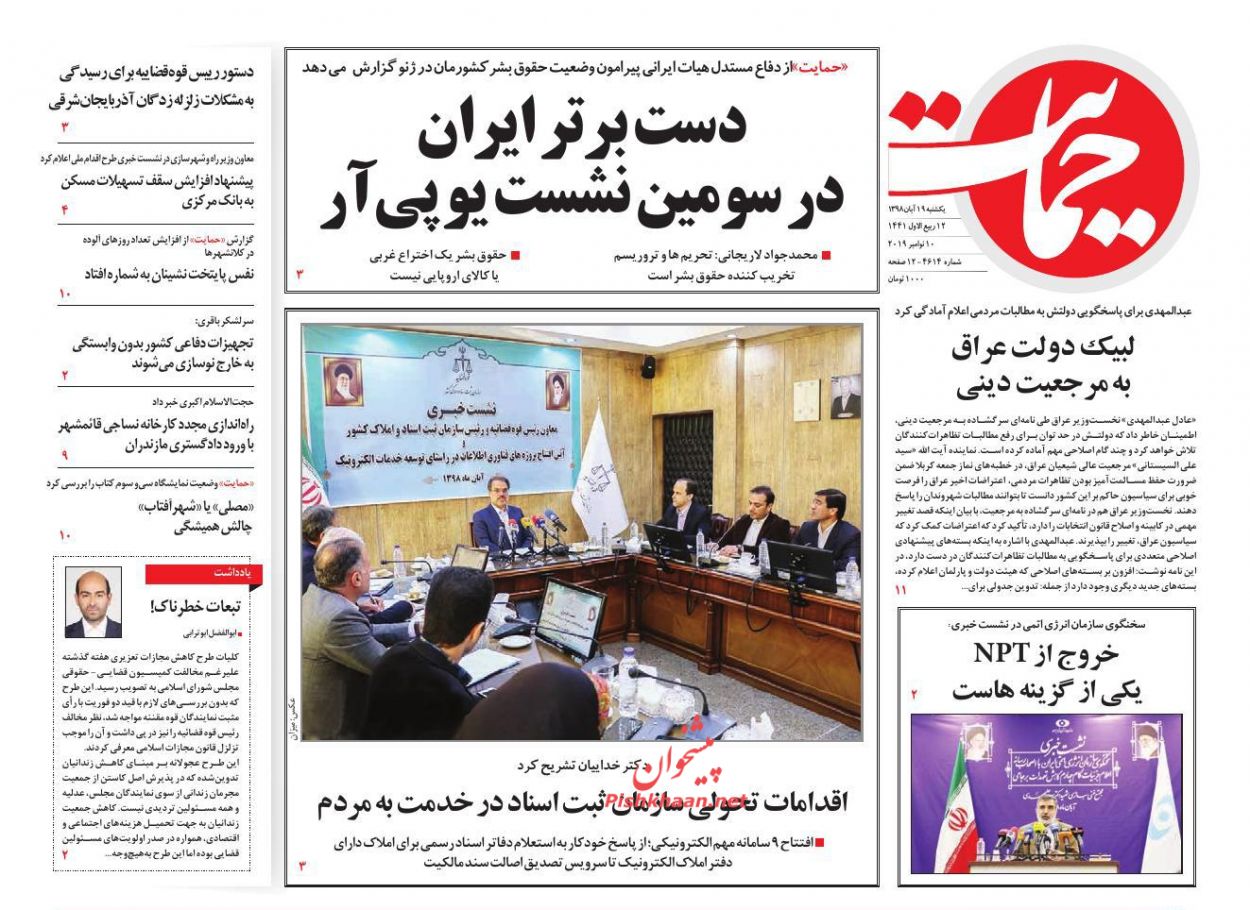
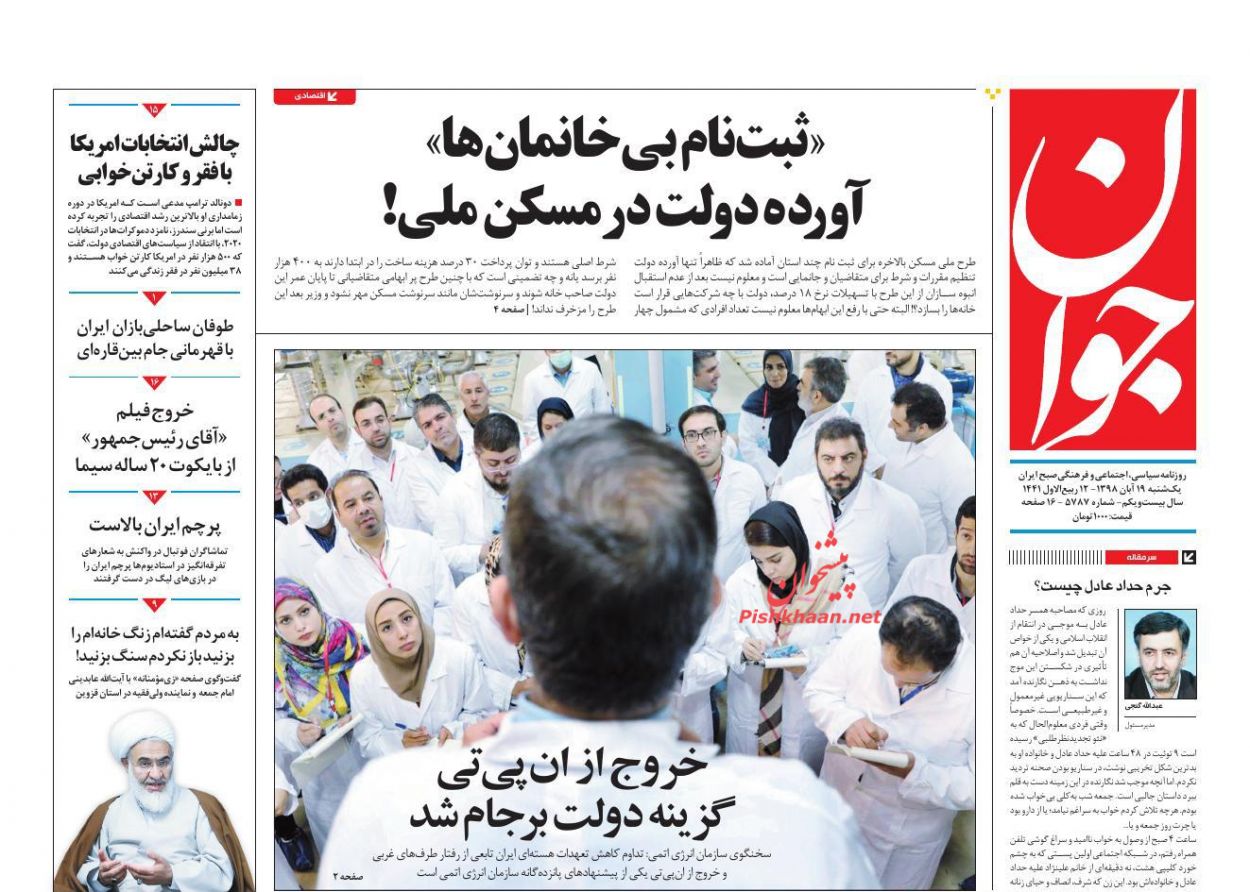
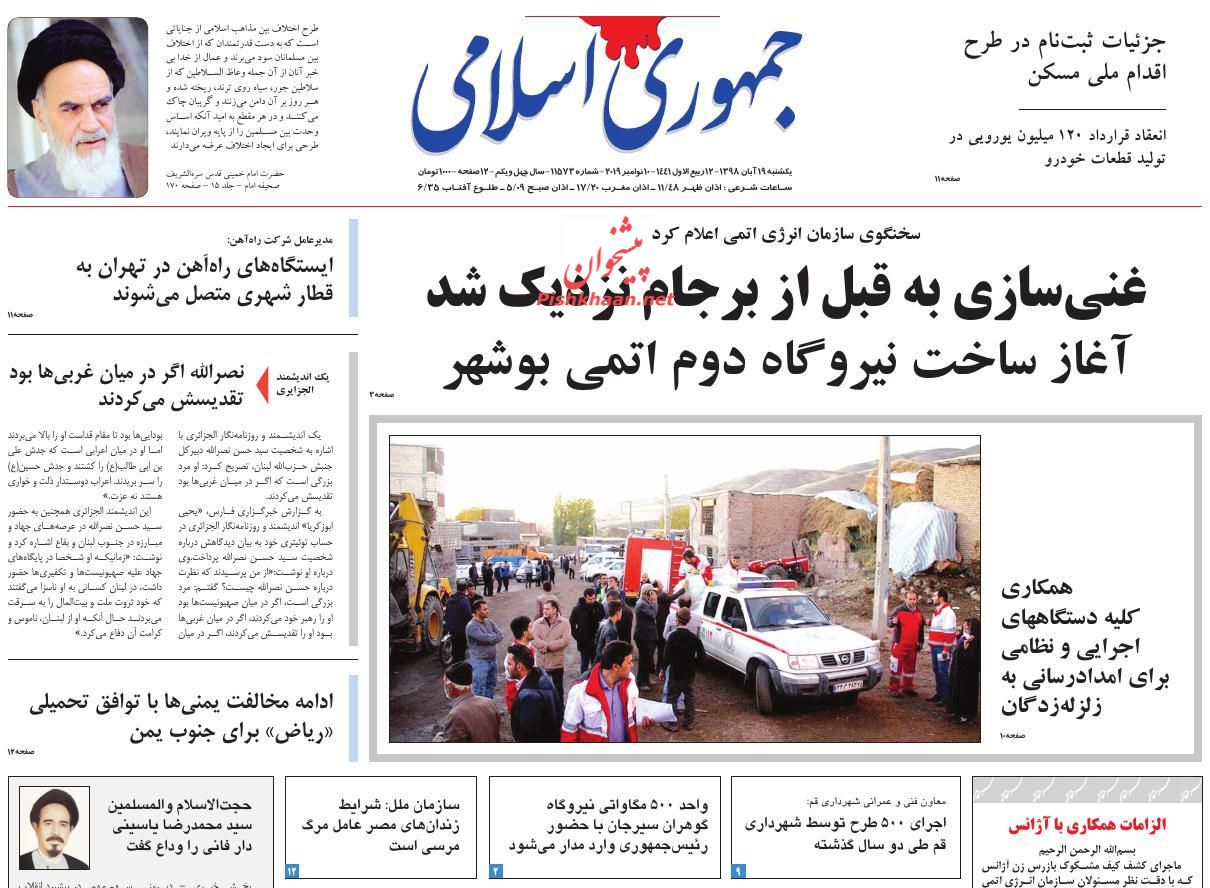
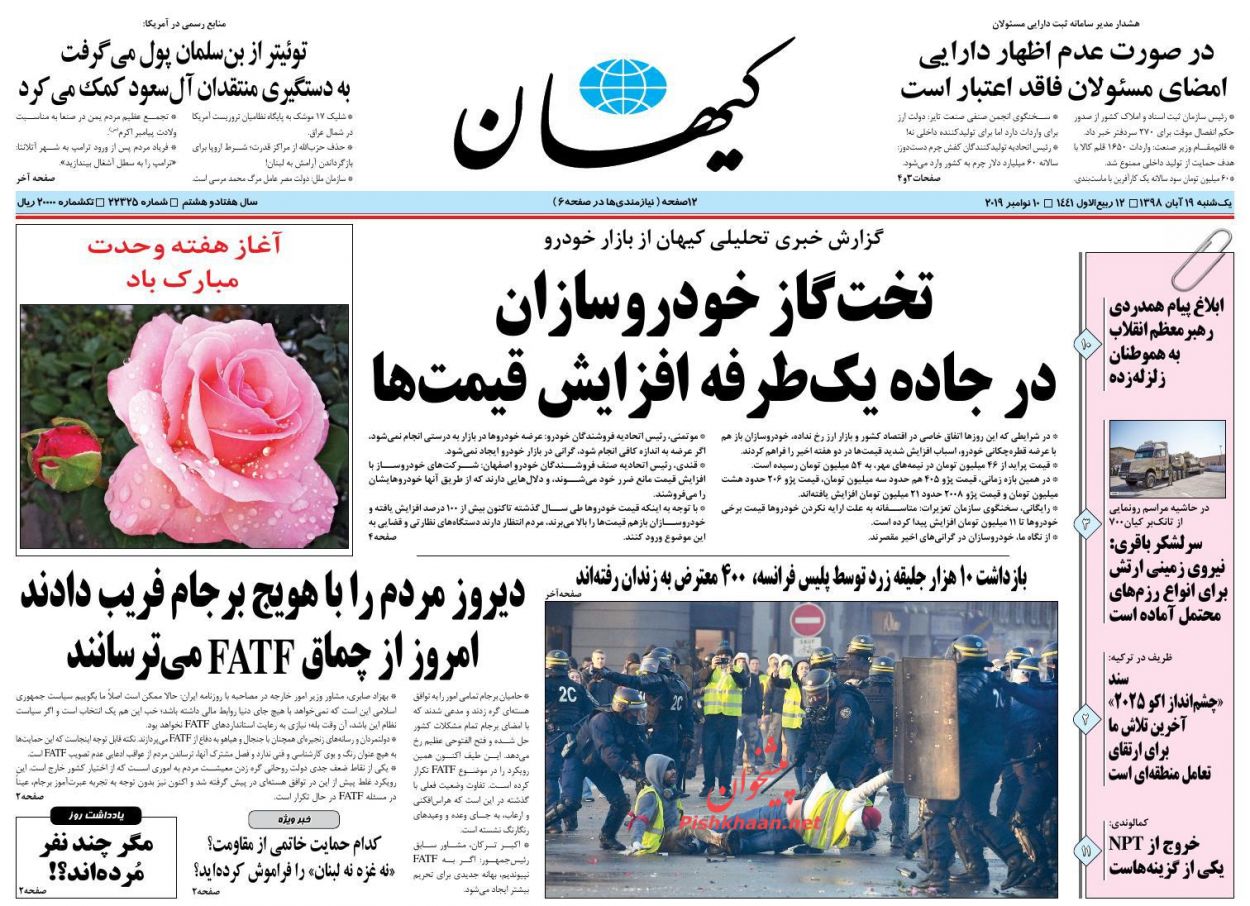
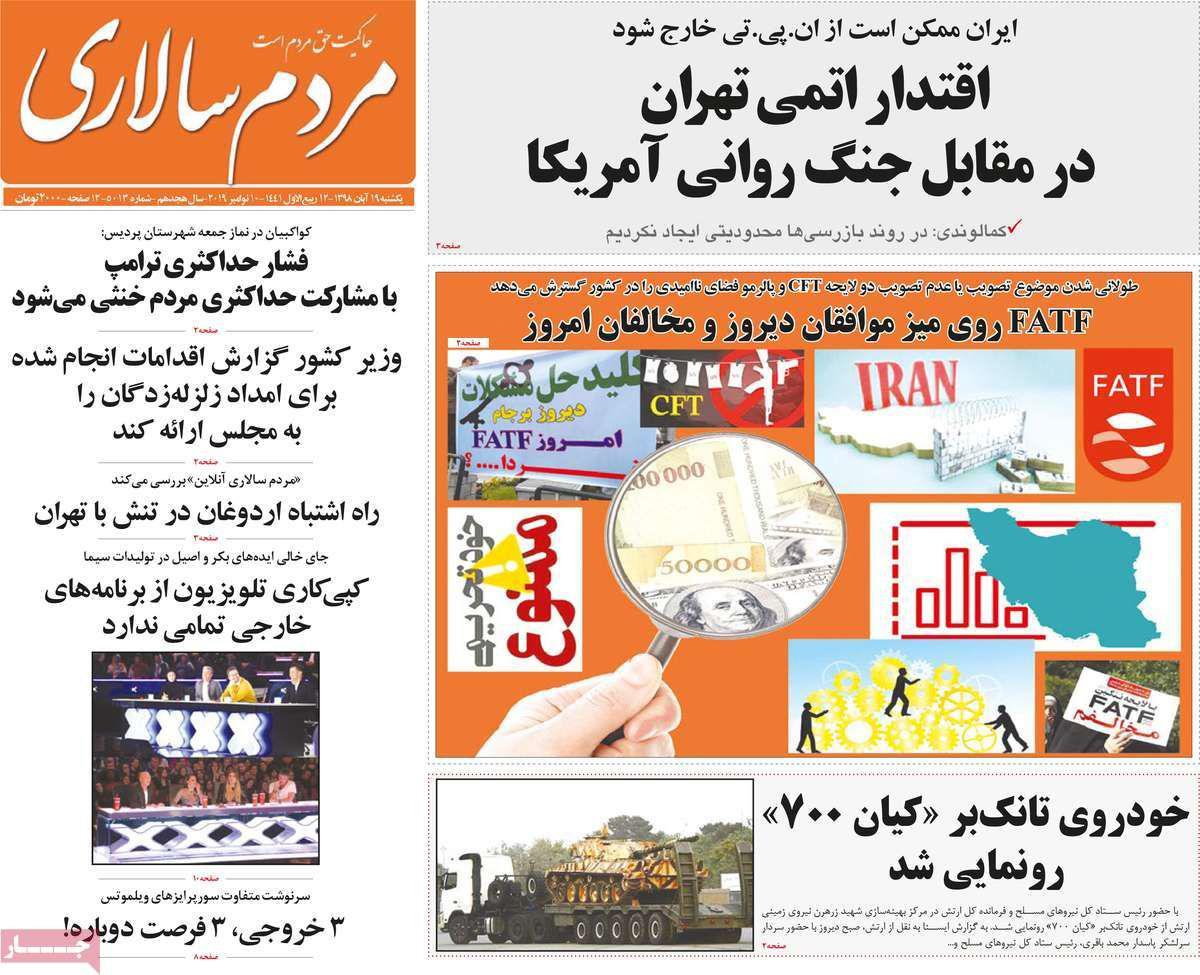
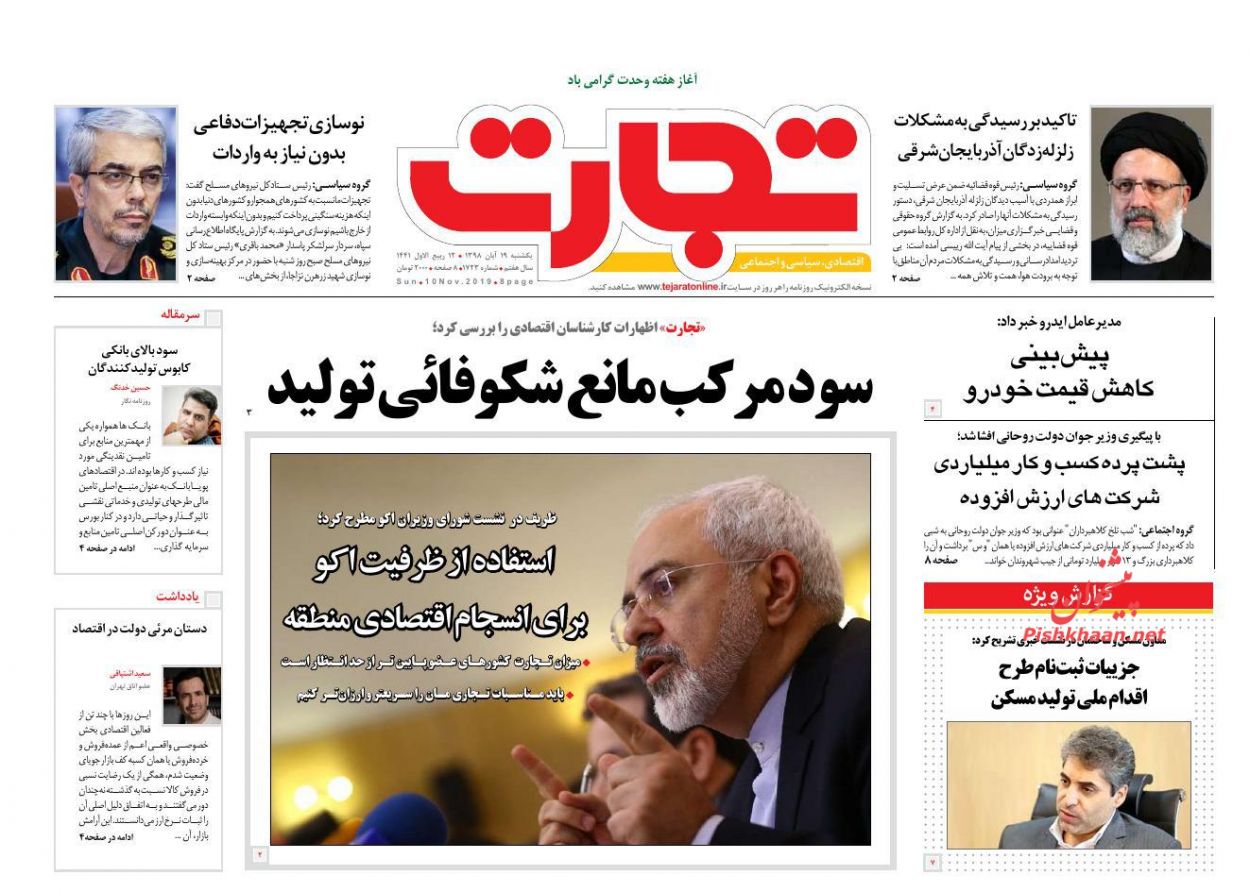
A Look at Iranian Newspaper Front Pages on November 19

Abrar:
1- US Defence Secretary: Turkey Seems to Be Committing War Crime in Syria
2- Iran among Topics of Discussion between Putin, Saudi Officials
3- Rouhani: We Crossed Storm of Sanctions
4- UK Envoy to Tehran Welcomes Technical Talks on Arak Reactor

A Look at Iranian Newspaper Front Pages on October 15


Ebtekar:
1- Rouhani Says Ready to Sacrifice Himself for Iran’s Interests
2- Saudis’ Red Carpet under Putin’s Feet
3- Trump: Big Sanctions Coming against Turkey

A Look at Iranian Newspaper Front Pages on October 15


Etemad:
1- Saudis’ Tactic of Approaching Russia
2- Kurds Turning to Assad Government: Syrian Army Stationed in North after Years

A Look at Iranian Newspaper Front Pages on October 15


Ettela’at:
1- Thousands of Iraqi Military Deployed in Syria Borders to Counter Possible ISIS Infiltration
2- Rouhani: We’ve Overcome Very Difficult Situation
3- Assad Army Comes to Defence of Kurdish-Majority Areas
4- Intelligence Minister: Members of Two Terrorist Cells Arrested in Arba’een March

A Look at Iranian Newspaper Front Pages on October 15


Jomhouri Eslami:
1- Turkey Border Under Syria’s Control after Major Deal between Kurds, Assad
2- End of Yemen War to Untie Knot of Iran-Saudi Ties: Rouhani
3- Relative Stability in Iran’s Economy

A Look at Iranian Newspaper Front Pages on October 15


Kayhan:
1- IRGC Intelligence Deals Heavy Blow to French, Israeli Spy Services
2- Kurds Ally with Damascus: Syrian Army Advancing to Turkey Border
3- Kurds Welcome Syrian Army

A Look at Iranian Newspaper Front Pages on October 15


Mardom Salari:
1- Turkey Must End Process It Has Begun: Rouhani
2- Damascus, Ankara May Clash with Each other: Syrian Army Deployed in Kurdish Areas
3- Message of Modernizing Khondab Research Reactor

A Look at Iranian Newspaper Front Pages on October 15

How Hard is the CISA Exam?

This question could have multiple subjective answers. However, in this article, we shall try to understand the composition of the CISA examination and try to measure its difficulty based on various elements.

CISA (Certified Information Systems Auditor) Exam Content Difficulty:

The majority of the former exam takers agree on the fact that the syllabus of the CISA course is not that tough. The preparation doe not requires a detailed study of any specified niches but requires basic knowledge of a variety of topics.

Moreover, to get oneself certified through the CISA examination, one needs to have at least a working experience of 5 years. Therefore a person who has been working in IT auditing for 5 years must have acquired at least the basic knowledge of every aspect of his/her job. Therefore, one does not needs to put in endless hours of study hours to prepare for the examination. Some of the more doubts that might appear in one’s mid also include:

How hard is the question paper?

No one could give a straight-up answer for one of these most asked questions. What may appear to be the most difficult thing to one might be another person’s daily chore. However, as compared to one of the toughest examinations, the BAR exam, CISA certification is considered to be much easier. However, to maintain the standards and the quality of applicants going through the examination, CISA has been increasing the difficulty level of the examination each year. So better be prepared to face anything that comes up your way.

How many questions are there to be attempted?

There are a total of 150 questions that one has to attempt during the examination. The time provided to attempt these 150 questions is 4 hours, which seems quite enough to go through and give time to each of them properly.

What are the topics that one needs to cover to appear for the examination?

To get yourself all prepared to face the CISA examination, below mentioned are the topics that you should know about:

  1. Governance and Management of IT:

This part is devoted to the processes as well as the structuring of the objectives. Most of the people eligible for taking the CISA exam might not find it difficult due to their indulgence with the same matters for at least the past 5 years.

  1. Information System & Auditing Process:

This part involves the knowledge of the importance of auditing for the firms to secure their information systems. This part would also not seem to be tough for IT auditing personnel.

  1. Information Systems Acquisition, Development, and Implementation:

This domain of the CISA exam might be a bit complex for some. However, people working in the same sector need not worry about it.

  1. Information Systems Operations and Business Resilience:

Here is when the CISA exam starts showering its difficulty level over its applicants. You may be asked a lot of questions about database structuring, management of processes, and many others under this domain.

  1. Protection of Information Assets:

IT is considered to be the toughest part of the CISA exam. As we know that the cases of cybercrime are becoming more and more common each day, you might face some complex as well as interesting questions in your examination under this topic.

Weight Distribution for each of the topics:

When it comes to start preparing for any of the examinations, this must be the very first thing to know. If you are facing a shortage of time to prepare for the exam, try to focus on the topics that would attract the most number of questions in the examination. The marks percentage distribution for the above mentioned 5 topics is as below:

  1. Governance and Management of IT: 21 %
  2. Information System & Auditing Process: 17 %
  3. Information Systems Acquisition, Development, and Implementation: 12 %
  4. Information Systems Operations and Business Resilience: 23 %
  5. Protection of Information Assets: 27 %

What is the difficulty level of the exam format?

Sometimes, the topics to be covered for the examination might not seem to be difficult enough. However, the style in which the question might be asked might get you confused to solve them, even if you know. The same is the case with the CISA course. The question format and the terminologies used in the questions might get even the most experienced of the people fighting to understand the question, leave apart, answering.

One needs to be particularly familiar with all the terminologies and standards of ISACA to be able to understand the questions and pass the exam easily. Moreover, the options offered in the question paper might get you confused between the exact right answer. It lets CISA determine the details of your knowledge about the topics. Moreover, while preparing, you need to think a bit differently from the condition of your workspace, and more familiarly with the concepts and the working method of ISACA.


Self Assess Yourself for the Examination:

Before you decide to take the examination, it is very important to know your self-worth and your preparation level to take up the exam properly. For the same, you can take up the assessment tests provided by ISACA and take up CISA course mock-up tests to be able to know the format of the examination, being able to maintain the time more efficiently and moreover, to assess your capabilities for appearing in the exam and clearing it in your very first attempt.

If you are prepared enough and passionate enough about your work to put in the required effort, nothing can be difficult enough to act as a barer in your success to become a certified information systems auditor. All you need to do is make up your mind and start working towards achieving it from this very moment.

Iran’s Roads Minister in Turkmenistan for High-Level Talks

Holding talks with Turkmen President and several bilateral meetings with the Ministers of Industry and Transport, and a speech at a joint trade conference are high on the agenda of the minister.

The delegation includes representatives of Oil, Energy and Foreign ministries as well as the Governor of North Khorasan Province and two members of the parliament.

Representatives from the Iranian Chamber of Commerce and the private sector are also accompanying Eslami during this visit.

The two sides had earlier agreed to expand the volume of their economic ties alongside bilateral political ties at a joint session of the Joint Economic Commission in Turkmenistan’s capital.

Pakistani Minister Calls for Expansion of Ties with Iran Health Sector

Pakistani Minister of Health Zafar Mirza and his Iranian counterpart Saeid Namaki signing joint declaration on health cooperation in Tehran

Zafar Mirza, Pakistan’s Minister of National Health Services, Regulation and Coordination, said expansion of Iran-Pakistan health and medicinal partnerships can help reduce infectious and non-contagious diseases in the region.

He made the comments at a meeting with his Iranian counterpart Saeed Namaki at Tehran’s Azadi Hotel on Monday evening. Zafar Mirza welcomed Iran’s hospitality at the 66th meeting of the World Health Organisation’s Regional Committee for the Eastern Mediterranean (EMRO).

“With the expansion of cooperation between the two countries, we can use Iran’s apt capacities in various fields of education and health care,” he noted, stressing it is very important that Iran has taken very positive steps in the areas of health and public health services, but the current problem in Iran and many other countries is non-contagious diseases, and we are seeking a disease-free region in collaboration with Iran.

In the end, he raised hope that Iranian health officials would travel to Pakistan in the near future to see improvements in the country’s health sector, and called for continuation of good relations between the two countries.

Health ministers and high-level representatives of the 22 countries and territories of the WHO Eastern Mediterranean Region, partner organisations and civil society, have taken part in the Sixty-sixth Session of the WHO Regional Committee for the Eastern Mediterranean, in Tehran that runs through 17 October.

The 4-day programme will also include progress reports on: eradication of poliomyelitis; health, environment and climate change; civil registration and vital statistics systems; implementation of the Eastern Mediterranean vaccine action plan and regional malaria action plan; mental health care; implementation of the regional framework on cancer prevention and control; and implementation of the global action plan on antimicrobial resistance.

‘One or More Governments’ behind Attack on Iran Oil Tanker: Zarif

“According to the information received, the attack on the Iranian tanker has been carried out by one or more governments. Of course, investigations are underway, and as long as we have not reached definitive conclusions, we will not accuse any government,” Zarif said on Tuesday.

The attack on the Iranian oil tanker was a complex, government-sponsored action, the foreign minister added.

An Iranian lawmaker also said that security measures to investigate the attack on the Iranian tanker have been carried out by experts at the Supreme National Security Council and the details are submitted to the foreign ministry to be delivered to the United Nations.

Abolfazl Hassanbeigi, a member of the Iranian parliament’s national security and foreign policy commission, added the footage that the cameras mounted on the oil tanker have taken show the attack has been carried out by the US, the Zionist regime and Al Saud.

“Saudi Arabia and the US are trying to blame it on ISIS or Taliban, but evidence from the Iranian tanker indicates that it was not possible for the ISIS and terrorist groups to organise the attack because they are not present in the Red Sea.”

“There are abundant documents and evidence of interference of certain governments in the attack against the Iranian oil tanker and they will be presented to the UN and UN Security Council and the countries which played a role in the terrorist attack should pay the price for their deeds,” he said.

“If possibly the ISIS and Taliban terrorist groups would be involved in the operation, everybody knows they were created by Saudi Arabia, the United States and the Zionist regime, and they are the slaves of these countries,” he underlined.

“The whole world knows that Saudi Arabia’s money and planning of Mossad and the CIA created terrorist groups in the West Asian region.”

On Wednesday, Ali Shamkhani, the secretary of Iran’s National Security Council, also warned there would be a “harsh response” to whoever was behind the attacks.

The tanker Sabiti owned by the National Iranian Oil Company (NIOC) was hit in Red Sea waters off Saudi Arabia by two missiles on Friday, leading to a leak which was quickly contained.

Mohammad Rastad, head of Iran’s Ports and Maritime Organization, says the vessel is carrying 140,000 tonnes of crude oil which is undamaged, thanks to timely measures to contain the leak.

According to the official, the tanker is currently sailing in Bab al-Mandeb strait and will soon reach the Gulf of Aden. It is bound for Bandar Abbas and estimated to reach the Iranian port in the next nine days, where necessary repair on the ship will begin, he said.