Friday, January 2, 2026
Home Blog Page 3015

Smog and Its Effects in Iran

Air Pollution

While you are busy with the agent Sobet, the environment of Iran is getting worse day by day! Have you ever looked in your surroundings and see what are we people up to? We are unconsciously destroying our own home every passing minute! Well sadly, this is the truth and if you don’t trust this statement then maybe you are living in a fool’s paradise and you are not looking around you and how the environment has changed as compared to what it used to be two decades ago! If you are still in your teenage then you can always ask about the previous environment from your parents, we are sure you must have heard about it from them many times before.

Why Has the Weather Changed, Abnormally?

We will talk about the smog that has started hitting Iran, Afghanistan and other neighboring countries, but we will surely talk about the reason that has made the weather so abnormally unpredictable. In the past countries especially Iran, Pakistan and India were famous for having all the four seasons throughout the year. This was a big plus for all of these countries and they had a very peaceful year with mild weather which were enjoyed were all the people of these countries.

But today global warming and pollution have changed the weather in such a way that it has increased summer times to 7 months and the winters to 5. This is a tremendous and very serious weather change that can be felt by the citizens of these countries.

What Causes Pollution and Global Warming?

Now coming to the reason why smog has pollution iOS being caused all around Iran, the main reason is overuse industries that produce smoke waste along with the deforestation campaigns of the country to increase more industries and other commercial projects.

You see the citizens of these countries and not only these, but all of us around the world are doing deforestation of land for commercial purposes which are ruining the environment with devastating changes.

Smog is one of the biggest examples of pollution and weather changes. The fig and the smoke from the pollution we produce get back in our way by mixing up. If inhaled, it can sometimes be deadly too. This is the very reason that if you see in Iran, you will notice that the schools and other educational institutes have stopped functioning and have announced early vacations!

Effects of Smog!

Well, easy isn’t it to call out vaccinations and to make the kids even more happy about what we have done with the environment. We should be ashamed of ourselves. Instead of working on the solution of this menace we are not starting a campaign in schools to teach students about the negative effects of the pollution we are telling them to stay back at their home and relax while smog ruins their health and their academic future both. We need to stop taking things casually and treat this quickly!

Iranian Scientists Build Electric Knife for Surgery

Iranian Scientists Build Electric Knife for Surgery

Amir Qahremanpour, the CEO of the knowledge-based producer of this knife, says the products are designed and manufactured in four electro-surgery and RF groups.

“Electro-surgery, or electric knife,” is a widely used tool in hospitals for cutting and preventing bleeding during surgery, he said.

“The second group is RF, which is a non-invasive treatment. In this method the skin is not cut and unilateral radiofrequency energy is used to harden the skin.”

RF works by heating the underneath layer of the skin called the derma. This heat causes collagen formation.

Qahremanpour said Iran is the most important producer of these products and Turkey is the other major producer in the region.

The main manufacturers of this equipment are European and American countries that have control over the world market. “However, we were able to break the monopoly with native technology and the use of in-house experts to produce these products in Iran,” he continued.

Special Attractions You Must See in Iran

Special Attractions You Must See in Iran

Thanks to the amazing nature of Iran, and diverse weather conditions of the country, there are a number of special attractions in Iran.

Here, we are going to briefly introduce some of the most beautiful and breathtaking attractions in Iran to choose your best Iran tours.

Badab-e Surt

One of the must-see places in Iran, especially for those who have an interest in geology is the Badab-e Surt. It is located in Mazandaran Province in northern Iran, about 100 kilometres south of the city of Sari.

The area consists of golden, orange, and red stepped terraces of sedimentary rock, formed by deposits of minerals carried from nearby hot springs.

The two springs of the travertine landscape have medicinal properties; and the glistening flats are amongst the most photogenic sites in Iran.

To take a wonderful picture of this amazing natural wonder, we highly suggest having a visit to the place early in the morning or at sunset.

Mount Damavand

Mount Damavand may not be the most beautiful landscape in Iran, but for sure it is the most popular one among all local people. People living in Tehran, who have the chance to see the snow-covered peak of Mount Damavand on a clear day, love the mount in particular.

The fame and popularity of this peak among locals can be compared with the love of Japanese people for the Fujiyama Mountain.

Mount Damavand is actually Iran’s tallest summit and the highest point in the Middle East with 5,671 metres’ height.

To go on trekking and skiing on Mount Damavand, please read more about Skiing in Damavand or check our ski tours.

Dasht-e Lut

In Farsi ‘Lut’ literally means bare land without water and devoid of vegetation. The desert is situated in the south-east of the country. Its eastern part displays a low plateau covered with salt flats, while the center displays a series of parallel ridges and furrows.

From June to October, strong winds sweep across this arid area. In 2016, this famous attraction of Iran was inscribed on UNESCO’s World Heritage List. The desert is a large salt desert, and actually the world’s 27th-largest desert with an area of 51,800 square kilometers (20,000 square miles).

The main attraction areas of Lut desert, include Gandom Berian, Shahdad Kalut, and Rig Yelan. In addition, the desert is home to diverse animal life, including insects, reptiles, and desert foxes.

According to data from NASA’s satellite, the Lut Desert is home to the hottest recorded spot on the earth’s surface.

Lake Urmia

Lake Urmia, previously known as Lake Rezaiyeh, is located in the northwest of Azerbaijan District. According to the latest country subdivisions, Lake Urmia lies between East Azerbaijan and West Azerbaijan Provinces.

After Anzali Lagoon, The National Park of Lake Urmia is one of the most interesting natural habitats in Iran.

The UNESCO has registered this ecosystem as an internationally protected area. Iranian Department of Environment has also identified most parts of this lake as a national park.

Lake Urmia is the biggest inland lake in Iran and the second Salt Lake in the world. It is the largest water of Western Asia which is located in the northwest of Iranian Plateau.

The lake is mostly fed by Zarrinehrud, Siminehrud, Aji Chay, Gadar, Shahar Chay, Nazlou, and Zola rivers; and has a salty water.

Shushtar Historical Hydraulic System

The UNESCO registered the Shushtar Historical Hydraulic System with all its items as a World Heritage Site in 2009; referring to the system as a “masterpiece of creative genius”.

An interconnected set of bridges, weirs, dams, mills, water cascades, canals and tunnels has shaped the hydraulic system. The main material used in the complex is granite, plaster of lime and mortar.

The famous French archeologist; Jane Dieulafoy referred this ancient attraction of Iran to the largest industrial complex before the Industrial Revolution.

If you would like to visit this amazing construction, and at the same time interested in photography, our Iran West’s Photography Tour is the best choice for you.

Special Attractions You Must See in IranTurkmen Sahra

Turkmen Sahra (meaning Plain of Turkmen) is for sure one of the most beautiful landscapes in Iran. The region is located in the northeast of the country, near the Caspian Sea, bordering Turkmenistan country. The majority of the inhabitants of the Turkmen.

There are breathtaking rolling green hills remain virtually untouched and tricky to access without your own car. One focal point to head to is the Khaled Nabi cemetery, notable for its tombstones.

Qeshm Island

Qeshm Island is a beautiful island with a unique GeoPark in the southern part of Iran, located in the Persian Gulf. This amazing island is home to some of the unique and amazing wildlife and monuments.

The culture of its residents is a mixture of Iranian and Arabian cultures; due to the fact they are living in the middle of two regions.

If you are interested in visiting some less-seen and remote places, Qeshm Island would be an ideal place for you.

The island has beautiful landscapes with a great sandy beach, in addition to a number of attractions; to name Chah Kooh canyon, Harra Forest, Kharbas caves, Salt caves, and Portuguese Castle.

Mangrove Forest

One of the most amazing ecotourism sites in Qeshm Island and Iran is the Mangrove Forest. The vegetation covers about 2,000 meters2 in southern parts of the country.

The tree trunks become visible and invisible along with the sea level’s rise and fall during the day; which is caused by the combination of the effects of the gravitational forces exerted by the Moon and the Sun and the rotation of Earth.

These trunks have amazing usage and filter the salty water of the sea.

Special Attractions You Must See in IranMargoon Waterfall

The amazing Margoon Waterfall is secretly hidden inside the mountains of Sepidan region. This area is heaven for nature lovers due to its spectacular fountains and rivers.

There are numerous flowers on both sides of the way through the waterfall. It is worth to mention that the best time to travel to Margoon Waterfall is during spring and summer; as in wintertime the road might be snowy and it is dangerous for you to reach the place.

You can drive to the waterfall, but you have to park your car about 800 meters before the waterfall entrance; because no vehicle can pass through further. Also, you have to do a little hiking to get to this lovely place.

If you are interested in visiting this amazing waterfall, you can join us in our Iran Nomadic Escapade Tour.

Tchogha Zanbil

The ziggurat of Tchogha Zanbil is the largest and the best-preserved one with this architecture. The complex listed as the first Iranian site in the UNESCO World Heritage list in 1979.

The complex consists of an enormous ziggurat, which is believed to be the home to priests and servants. There are 3 walls around the ziggurat to protect the main building and help you identified the main town.

The ziggurat has a 105-meter length on each side and about 25-meter height in 5 levels. It had been crowned with a temple.

To visit some of the most special attractions in Iran, including the Tchogha Zanbil Ziggurat, join our Iranian World Treasures Tour.

Special Attractions You Must See in IranArg-e Bam

The UNESCO listed the city of Bam and its cultural landscape as a World Heritage Site in 2004. The most interesting site of the city is the Arg-e Bam (Bam Citadel) with a history of 2,000 years at the Parthian Empire (248 BC – 224 AD).

Arg-e Bam can be divided into two main sections. The rulers’ quarters are located in the heart of the citadel, on an elevated floor that makes overseeing the city more convenient.

However, most of the buildings were constructed during the Safavid dynasty. It was the crossroad at the most important trade routes. The Citadel is the best example of a fortified medieval town built in mud layers. Unfortunately, most of the citadel was destroyed after the earthquake of 2003.

To visit this wonderful citadel, amazing gardens of date and citrus in Bam, and enjoy the marvelous weather of Bam in fall and spring, join us at our Iran Epic Cities Tours.

Ali Sadr Cave

The Ali Sadr cave with 11 kilometers length is the world’s largest water cave. It is situated 75 kilometers to the northeast of Hamedan; in the heart of mountains called Subashi in the Kaboudar-Ahang town.

The main chamber of the cave is 100 meters by 50 meters and 40 meters high. With a network of channels, lakes, and watery passageways spreading out over several kilometers, Ali Sadr Cave is one of the largest subterranean water complexes in the world.

To go inside this breathtaking cave and watch one of the most beautiful caves in the world, take a look at our Encrypted Iran Tour.

Now that you are more familiar with special attractions in Iran, why not plan a trip to the country and watch these amazing places?

Don’t forget to benefit from our 20% discount on all our Iran tour packages from the first of December, till the end of February.

We, at Eavar Travel Agency, as a leading Iran Tour Operator, always try to deliver our services with the best quality and price.

It is important for us to not only deliver great services but also provide an unforgettable experience for all of our clients.

One Liver Transplanted into Two Recipients in Iran

One Liver Transplanted into Two Recipients in Iran

A team of liver transplantation surgeons at the Imam Khomeini hospital, administered by Tehran University of Medical Sciences, have divided a whole liver graft from a 24-year-old female donor with brain death and transplanted the organ into two recipients, an 11-month-old infant and a 25-year-old woman.

Both recipients are recovering from the surgery.

The split-liver transplantation requires great skill in dividing the organ without damaging its vital tissues, and also needs highly skilled teamwork involving detailed planning and perfect timing, from the operating room to the postoperative care units at the hospital.

The liver transplant unit of Tehran’s Imam Khomeini hospital was founded in 2001. Since 2015, the unit has been doing more than 100 liver transplant surgeries every year.

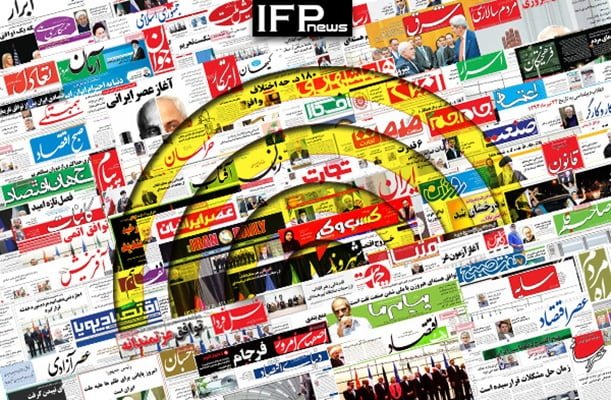
A Look at Iranian Newspaper Front Pages on December 17

Newspaper Headlines

Abrar:

1- Araqchi: No Talk of Iran-US Negotiations in Rouhani’s Japan Visit

2- US Threatens to Sanction Customers of Iran’s Heavy-water

3- Government Spokesman Rejects Speculations on Rouhani’s Resignation

A Look at Iranian Newspaper Front Pages on December 17


Aftab-e Yazd:

1- Serial Impeachments Failed

2- Two Different Unpleasant Smells Felt in One Day in Tehran!

A Look at Iranian Newspaper Front Pages on December 17


Ebtekar:

1- Araqchi: Japan Good Example of Iran’s Developing Ties with East

2- US Says Ready for Talks with Iran

A Look at Iranian Newspaper Front Pages on December 17


Etemad:

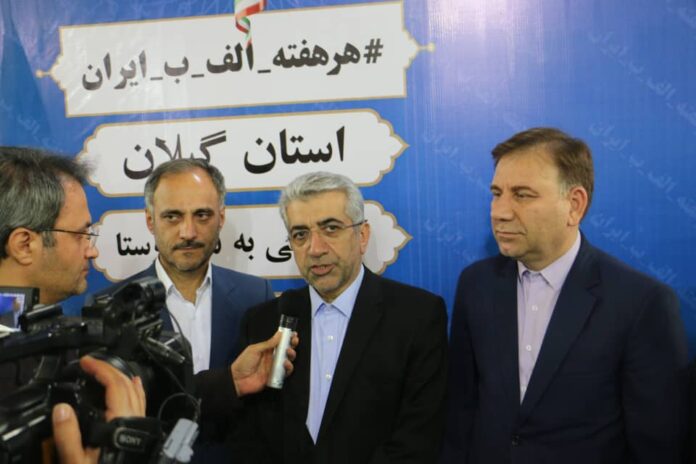
1- Oil Minister: We’ll Regain Our Share from Oil Market Once Again

2- One-Sided Tribunes: Time for Reviewing Palermo Convention Accession Over

* Expediency Council Has One Month to Make Decision on CFT Accession

A Look at Iranian Newspaper Front Pages on December 17


Ettela’at:
1- Judiciary Chief: Officials Must Respond to People for Air Pollution
2- JCPOA Has Many Benefits for Us: EU Foreign Policy Chief

A Look at Iranian Newspaper Front Pages on December 17


Hemayat:

1- Judiciary Chief: US Sanctions on Medicine Clear Instance of Economic Terrorism

2- Iran’s Reaction to US’ Better Deal Trick: Sanction Is War

A Look at Iranian Newspaper Front Pages on December 17


Iran:

1- FATF to Be Reviewed at Expediency Council Once Again

A Look at Iranian Newspaper Front Pages on December 17


Javan:

1- IRGC Chief: We’re Committed to Making Iran Needless of Aliens

A Look at Iranian Newspaper Front Pages on December 17


Jomhouri Eslami:

1- EU Foreign Policy Chief: I’ll Try to Keep JCPOA Alive

A Look at Iranian Newspaper Front Pages on December 17


Kayhan:

1- People Hardly Breathing as Air Pollution Continues: All Hopes on Wind, Rain

2- Trump: Had We Attacked Iran for Our Drone, Ayatollah Khamenei Would React

A Look at Iranian Newspaper Front Pages on December 17


Mardom Salari:

1- 30% Decrease in Number of Visitors at Medical Centres after Price Hikes

2- Trump to Be Tried Soon

A Look at Iranian Newspaper Front Pages on December 17


Sazandegi:

1- City Engulfed by Smoke

2- Iran’s Message to Peace to Saudi Arabia

A Look at Iranian Newspaper Front Pages on December 17


Setareh Sobh:

1- Rouhani Won’t Resign; Oil Minister’s Impeachment Called Off

2- Consequences of Johnson’s Victory in UK Elections

A Look at Iranian Newspaper Front Pages on December 17


Shargh:

1- Will Rouhani Remain President Until End of His Term?

2- Araqchi’s Account of 90 Years of Iran-Japan Ties

A Look at Iranian Newspaper Front Pages on December 17

Esteghlal Coach Stramaccioni Finally Gets Paid at Iran’s Rome Embassy

Esteghlal Coach Stramaccioni Finally Gets Paid at Iran’s Rome Embassy

Stramaccioni, who previously managed Inter Milan, Udinese, Panathinaikos, and Sparta Prague, had stepped down as the head coach of Esteghlal FC over the club’s failure to transfer his salary over the US sanctions.

Finally, on Monday, the Italian coach went to the Iranian Embassy in Rome and received a check from the representative of Bank Sepah of Iran.

Stramaccioni managed to receive a check of €159,500 under the auspices of Iran’s Embassy in Rome, and has vowed to return to the country by Tuesday night.

The sum of money will be added to Stramaccioni’s bank account in Italy within the next couple of days.

Esteghlal Coach Stramaccioni Finally Gets Paid at Iran’s Rome EmbassyWhile Esteghlal FC rose to the top of Iran’s premier league under Stramaccioni’s stewardship, the US sanctions against the Islamic Republic obstructed the process of his salary payment, as Iranian banks have been prevented from carrying out international transfers.

Due to such problems, the Iranian football giant had been forced to transfer the salary of its head coach money through multiple bank accounts, belonging to several individuals in Europe. This reportedly led to the partial closure of Stramaccioni’s bank account in Italy over money laundering charges.

Although all international sports organizations, including the governing body of football (FIFA), insist on the separation of sports and politics, the US sanctions against Iran –imposed under the policy of maximum pressure on Tehran- have adversely affected the lives of ordinary people and have even had a damaging impact on the popular sport, football.

Apart from the head coach of the popular Iranian football club Esteghlal, a number of other foreign coaches have already had troubles with their payments in Iran because of the US sanctions, including the Belgian manager of the Iran national football team “Marc Robert Wilmots” and his Portuguese predecessor “Carlos Queiroz”.

Esteghlal Coach Stramaccioni Finally Gets Paid at Iran’s Rome EmbassyThe far-reaching impacts of the US sanctions that have even affected the athletic activities come against a backdrop of expression of support for the Iranian people from the American officials.

While the White House claims to be advocating the people of Iran, the US sanctions have practically deprived millions of young Iranians of the joy of football, known as one of the basic citizenship rights.

The US’ anti-human policy of “maximum pressure” on Iran and the cruel sanctions have targeted not only the medical and health sector in Iran, but have caused damages to the mental health of the Iranian citizens.

Autumn Festival at National Garden of Tehran

Autumn Festival at National Garden of Tehran (9)

The “Autumn-Leave” Festival is being held in collaboration with Tehran University of Arts’ Association of Graduates, Municipality of District 12 and the Tehran Beautification Organization.

The artists designed their works from December 14 to 16 in Tehran National Garden, a square in the historical district of Iranian capital.

Constructed under the reign of Fath Ali Shah Qajar, the National Garden is located between Imam Khomeini and Si-e-Tir streets. The square -“Meydan-e-Mashq”- has indeed been a military area used for battlefield training during Qajar era.

In his report, a foreign traveller named “Jackson” has described the rectangular area as one of the largest military squares in Tehran with about 400 metres in length and width.

A plan was later formulated and carried out to build Tehran’s first public garden on the old military square’s ground; so “Meydan-e-Mashq” became the “National Garden”.

However, the National Garden lasted just a few years before the buildings of the Foreign Ministry, National Library and Museum of Ancient Iran erected there. Nevertheless, the name of National Garden still stands at the gate of Meydan-e-Mashq.

What follows are photos of Autumn-Leave Festival held in the historical area, retrieved from various sources:

Iran Marks 70th Anniversary of Adoption of 1949 Geneva Conventions

Iran Marks 70th Anniversary of Adoption of 1949 Geneva Conventions

In an address to the meeting, Iranian Deputy Foreign Minister Seyyed Mohammad Kazem Sajjadpoor, who is also president of the Institute for Political and International Studies of the Ministry of Foreign Affairs, highlighted the significance of implementation of the humanitarian law, particularly under the current circumstances in the world and the Middle East.

He also noted that the illegal sanctions imposed by the United States have obstructed the delivery of humanitarian and emergency aids, particularly the pharmaceutical items and medical equipment.

In separate comments, Head of the International Committee of the Red Cross Mission in Tehran, Reto Adrian Stocker, stressed the need for peace-building and multilateral mechanisms in the wars and the need for implementing the humanitarian law in the conflicts, such as the eight-year war between Iran and Iraq.

Moreover, Mahmoud Reza Peyvandi, secretary-general of the Iranian Red Crescent Society and president of Iranian National Committee of Humanitarian Law said the Islamic Republic of Iran was among the first governments that adopted the four Geneva Conventions and established the National Committee of Humanitarian Law in 1999 in order to implement and train the humanitarian law.

Elsewhere in the meeting, an expert panel discussion was held with five speakers.

One of the speakers was Iranian MP Owladqobad, who emphasized the necessity of implementing and enforcing the four Geneva Conventions of 1949, and refraining from the imposition of restricting measures and sanctions on the delivery and supply of humanitarian assistance.

Mohammad Reza Ziyaee Bigdeli, university professor and researcher of the international law, highlighted the role of the United Nations in making, promoting and implementing the humanitarian law, and the role of the UN Security Council and the International Criminal Court in guaranteeing the implementation of the humanitarian law.

Iranian cleric Hadi, deputy chairman of the Iranian Judiciary’s Department on Passing Bills and Regulations, stressed the need for the criminalization of violation of humanitarian law in the national law and filling the legal vacuum.

In another speech, Fiona Barnaby, regional legal adviser of the ICRC, expounded on the conditions of the armed conflicts, and highlighted the importance of humanitarian conduct, even during the wars, and the proper treatment of the prisoners of war.

Finally, Ayatollah Seyyed Mostafa Muhaqqiq-Damad clarified Islam’s view about the humanitarian law, explicated the law of war from the viewpoint of Islam, and underlined that the conducts and measures of a certain group of so-called Muslims should not be linked to Islam and Muslims.

Islam has been always the religion of peace and friendship, and believes that the human being’s benefit relies on the existence of peace, the cleric added, stressing that the human society’s priority must be to prevent the wars and violation of peace.

The event marking the 70th anniversary of adoption of the four Geneva Conventions of 1949 concluded with questions from the audience and answers from the speakers.

Iran’s Beauties in Photos: Autumn in Golestan Forest

Iran’s Beauties in Photos Autumn in Golestan Forest (26)

The forest is a protected area in the east of Golestan province and the west of North Khorasan province.

It accommodates 1,350 plant species and 302 animal species, including half of Iran’s mammals, in an area of 900 square kilometres.

The UNESCO has registered Golestan national park in its list of World Heritage Sites as a biosphere reserve.

Golestan Forest is one of the best habitats for large mammals such as leopard, brown bear, wolf, lynx, red deer, roe deer, wild sheep, wild goat, Persian deer and boar.

The national park is especially known for its large population of Urial. The population of these animals was estimated to be about 150,000 in 1970s; in other words, about a quarter of their total population in the world.

What follows are YJC’s photos of Golestan Forest: