Saturday, December 27, 2025
Home Blog Page 287

EU calls for ceasefire in Gaza, stops short of taking action against Israel

Thursday’s summit noted a report issued last week by the bloc’s diplomatic service, which found that Israel was likely flouting human rights obligations under the EU-Israel Association agreement. Yet, the bloc stopped short of acting on the assessment or ditching the 25-year-old accord.

“The European Council calls for an immediate ceasefire in Gaza and the unconditional release of all hostages, leading to a permanent end to hostilities,” the EU announced in a statement.

Amid growing accusations – backed by rights groups and United Nations experts – that Israel is starving people in Gaza, the EU ordered a review of its association agreement with Israel in May. The assessment, sent to member states last week, was restricted.

But several media outlets quoted informed diplomats as saying that the findings highlighted Israel’s blockade on Gaza, the killing of civilians, attacks on hospitals and mass displacement of Palestinians in the territory, as well as the expansion of illegal settlements in the occupied West Bank.

With a growing chasm between countries critical of Israeli abuses, such as Ireland and Spain, and Israel-backers Germany and Hungary, the summit’s conclusions on Thursday featured an attenuated statement that deplored “the unacceptable number of civilian casualties and the levels of starvation” in Gaza.

It postponed “discussions on a follow-up” to the report until next month.

The timid statement came despite a push by Spain and Ireland to suspend the EU-Israel agreement, which was signed in 2000 and underpins trade ties between the two entities.

Gaza’s Government Media Office announced on Thursday that at least 549 Palestinians had been killed near GHF sites since it began operations one month ago. The war has killed 56,156 people in total, according to the enclave’s Health Ministry.

EU leaders called on Israel to lift its blockade on Gaza “to allow immediate, unimpeded access and sustained distribution of humanitarian assistance” to Gaza.

They also condemned the escalation in the West Bank, noting “increased settler violence” and “the expansion of illegal settlements”.

The EU remains Israel’s largest trade partner.

FM: No agreement made for resumption of Iran-US negotiations

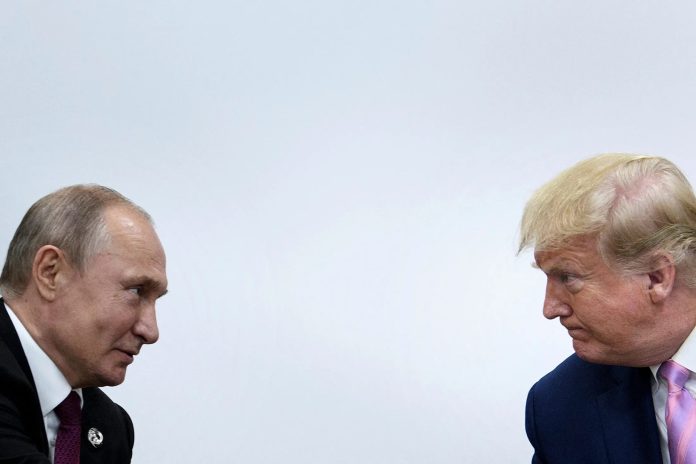
In response to US President Donald Trump’s remarks claiming that negotiations will take place next week and that an agreement will be reached, Seyed Abbas Araqchi, told  Iranian state television: “I say, don’t take such comments seriously.”

Araqchi stressed: “No agreement has been reached to resume negotiations. I clearly say that no promise or arrangement has been made, and no talks have taken place to start over.”

He added: “Whether we return to direct negotiations with the United States or not is a specific matter that is currently under review. It depends on how our interests dictate.”

Araqchi continued: “From the early days of the twelve-day war, European countries called for restraint and a return to diplomacy. We told them our position was clear: we were in the middle of diplomatic efforts when the war started.”

He stated: “The Zionist regime, out of desperation, was forced to halt its aggression. And based on the notifications we had, once they stopped, we also refrained from continuing our actions.”

Regarding the ceasefire violations by Israel, Araqchi said: “I told one of the European foreign ministers very clearly: Tell the Zionist regime that Iran is not Lebanon. If they take any action, Iran will immediately respond in kind.”

In another part of his remarks, he addressed the US and Israeli attacks on Iran’s nuclear facilities, stating: “Our friends in the Atomic Energy Organization are currently assessing the damage, and I must say it has not been minor. Serious harm has been inflicted on our facilities, and we are now reviewing our policies.”

He added: “The three European countries (France, Germany and the UK) are still members of the JCPOA. These countries cannot talk about ‘zero enrichment’ in Iran, since enrichment is recognized in the JCPOA. They insist on maintaining their membership status in order to potentially use the snapback mechanism and reimpose sanctions on Iran.”

Araqchi stressed: “I told the three European countries that the greatest historical mistake they could make would be to trigger the snapback mechanism — if they do so, they will effectively end their own role.”

The Iranian Foreign Minister also stated:
“The Parliament’s plan to suspend cooperation with the International Atomic Energy Agency (IAEA) is binding for Iran. The reason is clear: the report prepared by Rafael Grossi, the IAEA Director General, laid the groundwork for a resolution pushed by the Europeans at the Board of Governors, which we believe paved the way for Israel’s aggression.”

He concluded: “At present, we have no decision to accept Mr. Grossi personally, and regarding inspectors, if they comply with the law passed by Parliament, then their case must be reviewed.”

Iran: US leaders “pleaded through regional states” amid escalation with Israel

Major General Seyed Abdolrahim Mousavi, Chief of Staff of Iran’s Armed Forces, made the remarks in a statement issued after a “war imposed” by Israel on Iran with direct support from the United States.

He noted Iran’s decisive military response, including strikes on strategic Israeli sites and the US Al-Udeid base, compelled Washington to back down.

“American leaders, through certain regional states, resorted to pleading and effectively surrendered to the resolve of the Islamic Republic of Iran,” Mousavi asserted.

He emphasized that Iran did not initiate the conflict but responded forcefully to protect its sovereignty.

Mousavi also highlighted hat Israeli missile defense systems failed against Iranian ballistic missiles and drones, exposing the vulnerability of civilians across Israeli-occupied areas.

The commander warned that any future “strategic miscalculation” by Israel or its allies would be met with a powerful and historic response, reiterating Iran’s readiness and determination to defend itself against further aggression.

Tehran Symphony Orchestra performs solidarity concert at Azadi Tower

The concert aimed to promote solidarity and compassion amid the nation’s current challenges and hardships.

Presented as a gesture of unity with the Iranian people during difficult times, the event drew a diverse audience to one of Tehran’s most iconic landmarks, Azadi Square.

More in pictures:

Poll finds most Israelis believe Hamas rule in Gaza will persist after war

Hamas

The poll, conducted by the Jewish People Policy Institute, found that 57% of Israelis think Hamas rule in Gaza will continue, even if it rebrands itself. Only 30% believe the group will be fully dismantled.

Among Israeli Arabs, 41% believe Hamas will remain as it is, while 27% think it will persist under a new name. Just 15% said they expect Hamas to be ousted entirely, Israel’s Channel 7 reported.

Among Jewish Israelis, 53% said Hamas will stay in power in some form, compared to 34% who believe it will be fully removed.

The survey also found that 47% of Israelis expect Israel will maintain control over parts of Gaza for several months, while 33% think Israel will control the entire enclave for at least a few years.

When asked whether Gaza residents are likely to leave the territory voluntarily, 59% of respondents said most will remain, while only 14% expected large-scale departures.

However, over one-quarter of right-wing voters predicted that most Gazans would leave within two to three years. Additionally, 42% of right-wing voters estimated that more than a quarter of the population would eventually depart. By contrast, 96% of left-wing voters believed most residents would stay, with only minor departures.

On the controversial issue of Israeli resettlement in Gaza, 63% of respondents said they do not believe Israel will re-establish Jewish settlements there. Still, 28% said they expect Israel to resume settlement activity, either near the border or deeper inside the territory.

Commenting on the results, Professor Yedidia Stern, head of the Jewish People Policy Institute, stated that the findings reflect a shift in public perception.

“The results reveal an Israeli public that still supports military operations but is increasingly skeptical about achieving its stated objectives,” Stern added.

“There are growing doubts over the possibility of toppling Hamas and an assumption that Israel will remain entangled in Gaza for the foreseeable future. These results highlight the need to reassess not just military strategy but also the broader political and psychological consequences unfolding on the ground.”

Channel 7 did not provide the number who participated in the poll.

Rejecting international calls for a ceasefire, the Israeli army has pursued a brutal offensive against Gaza since October 2023, killing nearly 56,300 Palestinians, most of them women and children.

Last November, the International Criminal Court issued arrest warrants for Israeli Prime Minister Benjamin Netanyahu and his former Defense Minister Yoav Gallant for war crimes and crimes against humanity in Gaza.

Israel also faces a genocide case at the International Court of Justice for its war on the enclave.

Iranian education minister confirms death of 20 students in Israeli attacks

Minister of Education Alireza Kazemi expressed deep sorrow over the loss and emphasized the government’s commitment to education, noting President Massoud Pezeshkian’s direct involvement in education reform efforts.

“On the morning the ceasefire was declared, the president personally contacted me to follow up on educational affairs,” Kazemi stated. He added that the president believes “transformation in the country begins with transformation in education.”

Kazemi said the president’s education agenda includes two major pillars, namely improving educational quality and promoting justice in educational infrastructure.

In a related report, Iran’s academic sector suffered significant losses during the 12-day conflict. According to official figures, 16 university professors and 11 students were killed in Israeli airstrikes. Nine of the deceased were recognized specialists and graduates contributing to Iran’s intellectual community.

Authorities described these individuals as key parts of the nation’s academic and scientific backbone. “Their absence is not just the loss of names—it is the loss of human and intellectual capital,” a university statement read.

The Iranian Health Ministry announced on Wednesday that a total of 627 people were martyred and 4,870 injured in the Israeli regime’s attacks with Tehran and Kermanshah provinces reporting the highest numbers of casualties.

EU warns Europe must be ready to build ‘millions of drones’ to defend itself against possible Russian attacks

Military intelligence has suggested Russian forces could be ready to strike a NATO country within the next five years.

In order to defend themselves, Andrius Kubilius says Europeans will require millions of drones and need to start preparing now.

“Russia can have around five million drones, so we need to have capacities bigger than those in order to prevail,” he told Sky News, warning that if President Putin ordered an attack, the target would face a “battle-tested” Russian army with the ability to use “millions of drones”.

The 2022 invasion of Ukraine sparked a revolution in drone warfare.

Facing one of the world’s strongest militaries, the Ukrainians used the cheap, adaptable technology to their advantage.

It estimates its drone units are now responsible for 80% of Russian frontline losses.

Kubilius has visited Ukraine to learn the lessons from the battlefield.

Along the 1,200km (745 mile) front line is an area nicknamed “Death Valley”.

“Nothing can move. Everything is controlled by drones. A traditional tank in that zone survives six minutes,” he explained.

This year, Ukraine’s expected to produce more than four million drones.

Contemplating how many units other countries would need, the commissioner used the example of his home country of Lithuania.

The former Soviet republic shares a border of around 900km (559 miles) with Russia and Belarus.

“If Ukrainians need four million for 1,200km, we need something like three million drones for one year if the war is starting, if ‘Day X’ is coming,” he stated.

To try to stay ahead in the fight, both Russia and Ukraine are constantly updating their drone technology.

For this reason, the commissioner believes that rather than stockpiling drones now, which will go out of date, Europe should instead build up teams of pilots, engineers, and producers ready to scale up production should the time come.

“On the European continent, at the moment, there are only two armies battle-tested with the ability to use millions of drones: one is Russian, which is planning new aggressions; another one is Ukrainian,” Kubilius continued.

“We need to learn a lot from Ukraine… how to organise defences against millions of drones, and also how to make your defence industry innovative,” he added.

It’s a point many in the business agree with.

German start-up STARK has been testing loitering munitions or “attack drones” ready to supply to Kyiv.

“It’s all made for easy handling for soldiers, so you don’t have to use any tools on the front line, and you just plug in the rudders,” said STARK’s senior vice president, Josef Kranawetvogl, as he quickly clicked the unit’s tail together.

He spent 18 years in the German military before making the jump to weapons production.

He stated staying ahead of the enemy requires tactics and technology to be frequently updated.

“Every day you have to adapt. You have such fast development cycles in Ukraine – two or three weeks, then there’s something new upcoming and you have to be prepared for this.”

Since the start of June, Russia has repeatedly used drone swarms to attack Ukraine.

It involves hundreds of drones hammering cities in one night.

I asked Josef whether he believes NATO’s European members are ready to defend against such an attack.

“I see quite a lot of European armies starting right now to develop or to purchase unmanned systems, and it’s a good development, but it’s all about time. How can we speed up?” he replied.

Close to the border with France, another German start-up, Alpine Eagle, is testing defence drone units for Ukraine.

“This is our interceptor drone,” explained the company’s CEO, Jan-Hendrik Boelens, holding up a prototype which looks a bit like a small black plane. The interceptor is carried underneath a large grey drone.

On-board radar means it can be fired at enemy drones up to 5km (3 miles) away.

Jan thinks that could be a game changer in an aerial battle as it means hostile units could be picked off before they get close.

And he believes NATO is unprepared if one of its countries was to be hit by a wave of drones like those in Ukraine.

“We are absolutely not ready in my view,” he noted.

He explained that Ukraine produced around 1.3 million drones a year last year.

“I would be surprised if NATO even bought a thousand drones last year. I think Germany procured, I don’t know, 100, maybe 200. So now you do the math on what that means and how quickly you run out of drones.”

“If Ukraine consumed 1.3 million drones per year, that’s 3,000 a day. So, if you have 100 in your inventory, that would not last an hour,” he added.

A spokesperson from the German Defence Ministry said the numbers stated “do not closely reflect reality”, adding, “Drones are now part of everyday life for soldiers, they are omnipresent and are used extensively in service operations and training.”

Drones are a key part of NATO’s defence plan.

The alliance’s leadership has repeatedly said producing, procuring, and protecting against drones is a priority.

At the NATO summit, members agreed to boost defence spending to 5% of gross domestic product (GDP) by 2035.

In addition to increasing training and development, NATO Chief Mark Rutte has said he wants more investment in drone technology as well as boosting air defences fivefold.

“We see Russia’s deadly terror from the skies over Ukraine every day, and we must be able to defend ourselves from such attacks,” he told an audience at the summit.

Lessons from Ukraine have prompted members to embrace unmanned technology in various ways.

Britain is one of the countries pledging to put drones front and centre of its new defence plan.

Earlier this month, the UK government’s Strategic Defence Review outlined a new way forward for British Army warfighting based around a drone-centric 20-40-40 strategy in which uncrewed systems are deployed for first wave attacks, before tanks, attack helicopters and other manned platforms arrive on the battlefield.

In essence, the new weapons mix would be 20% traditional heavy platforms (like tanks), 40% single-use expendable drones and munitions, and the remaining 40% reusable, high-end drones.

It’s been confirmed that an extra £2bn will be spent on army drones this parliament.

Defence Secretary John Healey said Britain’s adversaries were working more in alliance and technology was changing how war was fought.

“Drones now kill more people than traditional artillery in the war in Ukraine and whoever gets new technology into the hands of their armed forces the quickest will win,” he added.

This week, the prime minister announced a deal with Ukraine to co-produce drones.

Germany and Denmark have made similar agreements with the German Ministry of Defence, telling Sky News that drones are a top priority.

In a drone showroom in central Berlin, we meet Sven Weizenegger, head of the German military’s cyber innovation hub.

He said they have noticed a boom in pitches from potential suppliers.

Every day, his department receives up to 20 enquiries from companies asking how their products could be used by the military.

He believes things need to move more quickly so soldiers get weapons faster.

“We are very advanced in the innovation process. That means we have a lot of ideas and many companies that are ready to deliver,” he explained, adding, “Unfortunately, what we are not good at right now, due to our current processes, is getting these things into real operations, into frontline use. We need to fix that.”

Germany has promised to turbo-charge defence spending, with the Chancellor pledging to create the “strongest conventional army in Europe”.

Plans announced this week include boosting unmanned systems and air defences.

Iranian security forces arrest Israel spy in Tehran metro

Metro Train Iran

The arrest was made swiftly after police officers noticed unusual behavior.

Police spokesperson Brigadier General Saeed Montazer-al-Mahdi stated that upon the arrest, a technical inspection of the suspect’s mobile phone and electronic devices revealed alarming findings. The individual was reportedly using an electronic chip to record the locations of military and sensitive sites. These coordinates were then transmitted to unidentified foreign contacts.

The investigation further revealed that the suspect had been receiving instructions in Hebrew, raising concerns about potential espionage.

“The suspect, along with the discovered equipment, has been handed over to specialized police units and the judiciary for further investigation,” General Montazer-al-Mahdi confirmed.

Authorities have not released the identity or nationality of the suspect. The case remains under investigation, and further details are expected to emerge as the inquiry progresses.

Atatollah Khamenei: Iran will never surrender, Israel crushed under blows of the Islamic Republic

Ayatollah Seyyed Ali Khamenei

Ayatollah Khamenei commemorated the fallen commanders and scientists, calling their sacrifice a source of pride.

The Leader declared Iran’s military response a clear victory, stating that the Zionist regime, caught off guard, was severely weakened under Iran’s missile and drone strikes.

He emphasized that Tel Aviv had never imagined the Islamic Republic capable of such a blow, adding that this attack proved any aggression against Iran comes at a heavy cost.

The Leader also described the United States’ involvement in the conflict as a strategic failure. Ayatollah Khamenei noted that Washington intervened to save Israel but failed to achieve its objectives, and instead suffered a significant strike on its Al-Udeid base.

He further hailed the “extraordinary unity” of the Iranian people, noting that the nation stood shoulder to shoulder in defending national honor.

Criticizing recent remarks by the U.S. President demanding Iran’s “surrender,” he stated that such language reveals Washington’s true aim: the complete submission of Iran.

Ayatollah Khamenei stressed, “This will never happen. Iran is great, proud, and undefeatable.”

50 percent say US attacks on Iran make Americans less safe: Poll

The poll, released Wednesday, phrases the question as a hypothetical, asking respondents whether “U.S. military strikes targeting Iran’s nuclear program would make Americans safer or less safe.”

Fifty percent say less safe, 42 percent say safer, and 8 percent say they don’t know or skipped the question.

There is a clear party split, with 76 percent of Democrats and 14 percent of Republicans saying the strikes would make them feel less safe.

Those who say military strikes would make them feel safer include 80 percent of Republicans and 13 percent of Democrats.

Among independents, 58 percent say they feel less safe, while 35 percent say they feel safer.

The survey sees a similar party divide when asking respondents specifically about “the United States joining Israel in military strikes on Iran’s nuclear sites.”

Fifty-one percent oppose the decision, while 42 percent support it. Seven percent don’t know or skipped the question.

Among Republicans, 81 percent support the decision, while 15 percent oppose it. Among Democrats, 75 percent oppose the decision, while 15 percent support it. And among independents, 60 percent oppose the decision, while 35 percent support it.

When asked specifically about Israel’s strikes against nuclear and military sites inside Iran, overall support increases: 50 percent support, and 40 percent oppose.

The survey was conducted amid a rapidly evolving news cycle. As pollsters were in the field, Iran launched a limited retaliatory attack on a U.S. airbase in Qatar, and then Trump later announced a ceasefire agreement had been brokered. The ceasefire appeared at first to be on shaky ground, as claims that both sides violated terms of the agreement emerged, but, by the end of Tuesday, the deal appeared to be holding.

The Quinnipiac University poll was conducted on June 22-24, 2025, and included 979 self-identified registered voters. The margin of error is 3.1 percentage points.