Wednesday, April 22, 2026
Home Blog Page 2563

Foreign Intervention in Iraq’s Affairs Detrimental to Entire Region: Rouhani

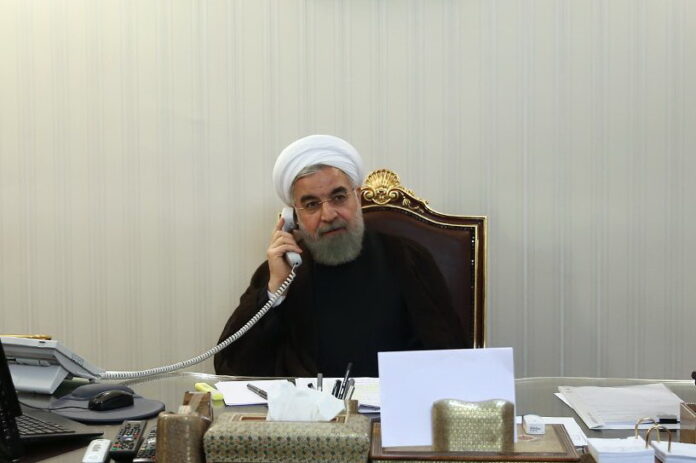
Speaking in a phone conversation with Iraqi Prime Minister Mustafa al-Kadhimi on Saturday, the Iranian president said the security, integrity, and peace in Iraq is a priority for Iran.

“We are against any kind of foreign intervention in Iraq’s internal affairs and we consider it detrimental to the country and the entire region,” he noted.

President Rouhani described Iraq as a Muslim country and a friend of Iran which has a very important position in the political and security interactions of the region.

He also stressed the development of relations and cooperation between the two countries in all fields of mutual interest.

Rouhani referred to the potentialities in Iran and Iraq for cooperation as two neighbouring countries, and said, “The promotion of economic cooperation alongside political relations is very important.”

The president also referred to the billions of dollars of Iran’s money illegally blocked in Iraq, which has not been yet released despite the promises of Iraqi officials, stressing that Iran’s assets in Iraq should immediately be released.

The president further noted that the presence of American troops in regional countries, including Iraq, causes instability.

“The Americans have always had a destructive role in the region, and the acceleration of implementing the Iraqi parliament’s resolution regarding expelling American troops from the country can help establish peace and stability in the country and the region,” he added.

Stating that regional issues and problems need to be resolved by regional countries themselves, President Rouhani emphasised Iran’s readiness for cooperation with regional countries in this regard with the aim of preserving security and peace.

The president also referred to the good agreements between Tehran and Baghdad for development of cooperation and relations, including the Shalamcheh-Basra railway project, stressing the importance of accelerating the implementation of the agreements.

“Fortunately, important steps have been taken in this regard, and we need to attempt to consolidate and develop this relation further,” he added.

In turn, the Prime Minister of Iraq described Iran as a friendly country and a good neighbour of Iraq, and stressed the development of relations between the two countries in all fields.

He further described the Shalamcheh-Basra railway as an important step in the development of economic and trade relations between Tehran and Baghdad.

Mustafa al-Kadhimi Appreciated Iran for helping establish stability and security in Iraq, describing America’s sanctions against Iran as illegal and unfair.

“Fortunately, with the changes in the American administration, new conditions have been provided for countries for cooperation, and Iraq will do whatever it can for the complete lifting of the sanctions against Iran.”

The Iraqi Prime Minister also said that a special committee has been formed in the country to facilitate the process of the transit of goods between the two countries.
Iranian, Armenian Foreign Ministers Discuss Bilateral Relations

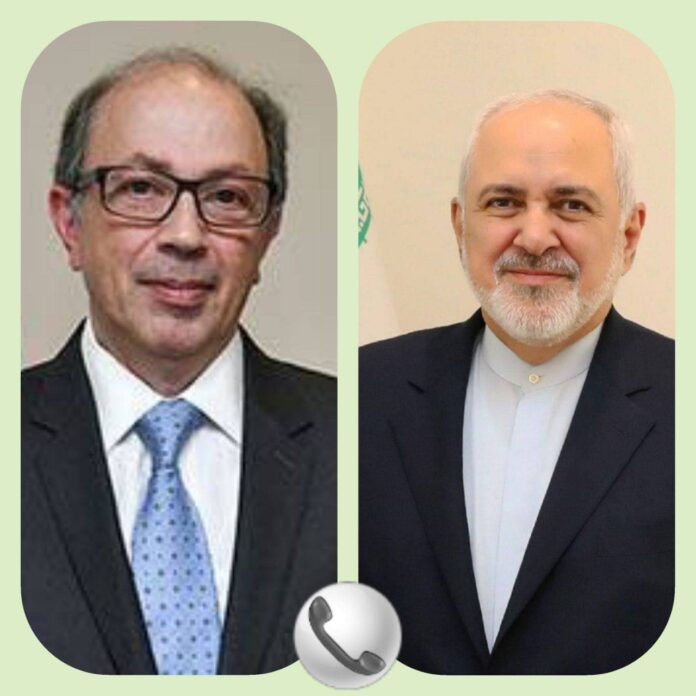
During the talks, the two sides conferred on the latest status of bilateral relations and the regional developments.

They also expressed pleasure with the growing trend of reciprocal ties in various fields, and underlined the two countries’ resolve to further develop collaborations in all areas.

The phone call came a few days after Armenian Prime Minister Nikol Pashinyan warned of an attempted military coup.

On February 25, Iranian Foreign Ministry Spokesman Saeed Khatibzadeh called on all parties in Armenia to show self-restraint and avoid violence.

Pashinyan has faced protests after losing last year’s bloody conflict with Azerbaijan over a disputed region.

Iran Congratulates Ghana on National Day

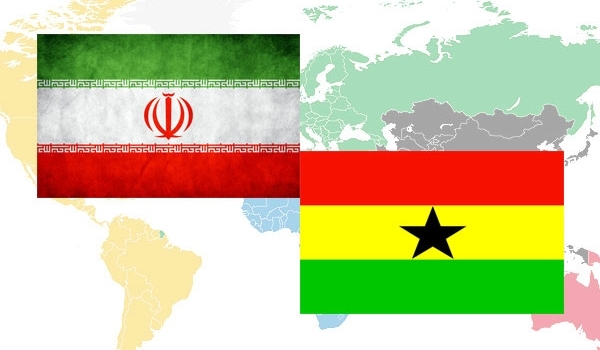
In his Saturday message to President Nana Addo Dankwa Akufo-Addo, Rouhani expressed hope that the relations between the two countries would deepen further in all fields of mutual interest in bilateral and international fields.

“I wish Your Excellency health and success, and the people of the Republic of Ghana prosperity and felicity,” he added.

The Independence Day of Ghana is a national holiday celebrated annually on March 6. The day is an official state holiday for the citizens of Ghana both within and in the diaspora to honour and celebrate the Heroes of Ghana who led the country to attain its independence.
Independence Day is also remembrance of the day that marks the declaration of Ghanaian independence from the British colonial rule.

Iran to Build‌ Its Largest Oceanic Port in Sea of Oman: Minister

Iranian Minister of Roads and Urban Development Mohammad Eslami said the project is aimed boosting the country’s crude exports.

“We have always wanted to take [Iran’s] oil exports beyond the Strait of Hormuz and the Persian Gulf, and this end will be achieved with the construction of this port,” he noted on Saturday.

He said the port known as the port of Jask is the country’s second oceanic port after Chabahar.

The minister added construction work for the Jask port will get underway soon.
He underlined the Jask port will house a major industrial town as well as energy industries.
“The Jask port is similar to Chabahar port and our largest oil terminal will be constructed there,” he said.

The minister said the Jask port will have a capacity of more than 100 million tonnes and will play a key role in boosting national economy.

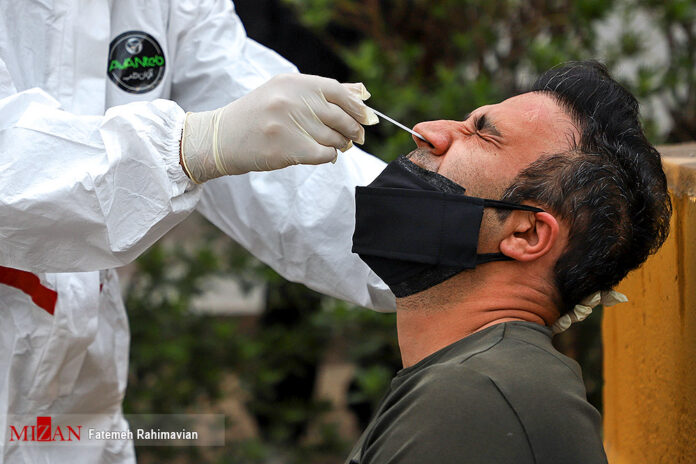
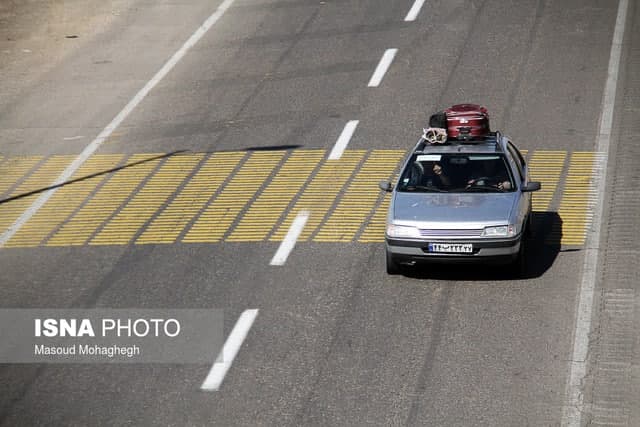
Iranian People Urged to Avoid Travelling during Nowruz Holidays amid Pandemic

President Hassan Rouhani said it would be forbidden to make trips to cities marked as “red” and “orange” in terms of the prevalence of COVID-19.

“We request people to avoid travelling during Nowruz holidays to protect their own health,” he said.

“It will be forbidden to travel to red and orange towns and cities,” he said.

“No one should make any plans to travel to these cities,” he stressed.

The president said the tolerance of the country’s health system “has a limit,” urging the public to cooperate when it comes to observing health protocols.

“The start of the vaccination drive in the country should not lead to people considering the situation as normal,” he said.

President Rouhani also complained that foreign vaccines are not distributed among countries fairly.

He also called for a change of lifestyle given that there have been numerous mutations in coronavirus.

“The coronavirus-style of living should continue for at least one year from now due to the many mutations of the virus,” said the president.

IAEA BOG’s Prudence Rescinded Anti-Iran Resolution: Envoy

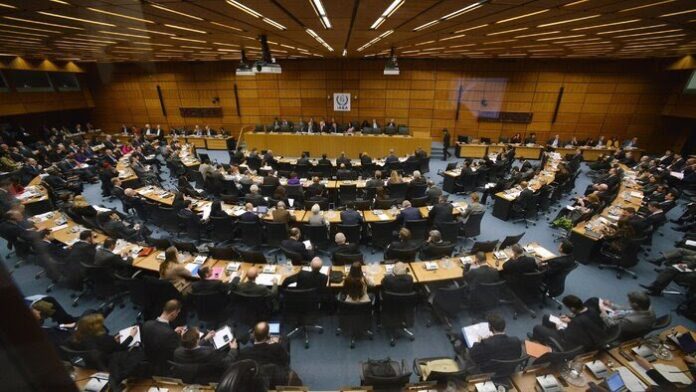
Iran’s permanent representative to international organizations in Vienna Kazem Gharibabadi made the comment while elaborating on the actions taken to stop the adoption of the anti-Iran resolution by the three European countries.

“With the three European countries beginning to present a US-backed resolution against Iran at the Board of Governors, different measures were put on the agenda [to stop the move],” he said.

“The moves included extensive consultations with members of the Board of Governors in Vienna and the capitals of member states, the [Iranian] foreign minister’s sending a letter to his opposite numbers in different member states of the Board of Governors, Iran explaining its stances to the IAEA and Board of Governors’ members in a briefing text, tapping into the potential of the Secretariat of the IAEA and the agency’s director general to strive to maintain cooperation and interaction [between Iran and the IAEA], making special coordination with Russia and China, which expressed their opposition to the resolution, and sending messages by the Iranian president, foreign minister, the head of the Atomic Energy Organization of Iran (AEOI) and the deputy foreign minister for political affairs,” he explained.

“In all these consultations, messages and correspondence, it is clearly announced that the adoption of the resolution would be seen [by Tehran] as a destructive move on the way of Iran-IAEA cooperation which, among other things, would inhibit the recent agreement between Iran and the IAEA,” he noted.

“Anyway, the Islamic Republic of Iran welcomes the prudence and vigilance of members of the Board of Governors and the IAEA director general to prevent unnecessary tension,” said Gharibabadi.
He also appreciated the stances adopted by Moscow and Beijing in that regard, urging the three European countries and the United States to take advantage of the existing diplomatic potential to fully and effectively return to their obligations under the JCPOA and UN Security Council Resolution 2231 as Iran will respond to such a move with a goodwill gesture.

He also touched upon the IAEA chief’s announcement that a technical team from the agency would travel to Iran in early April.

“Such interactions between Iran and the agency is nothing new, and no new agreements or arrangements have been planned,” he said.

“The two sides have been working and interacting for quite some time to settle some issues pertaining to the Safeguards Agreement, and they have held several technical meetings over the past two years,” he said.

“The forthcoming meeting is in line with the same ongoing trend and is not at the level of the IAEA director general,” he said.

“Any engagement with the agency on Safeguards Agreement issues is aimed at resolving them as soon as possible, and we, too, have emphasized the necessity of goodwill and of the IAEA avoiding any politically-tainted move in this process,” he said.

Iran Rejects Arab Quartet’s ‘Provocative’ Statement, ‘Baseless’ Claims

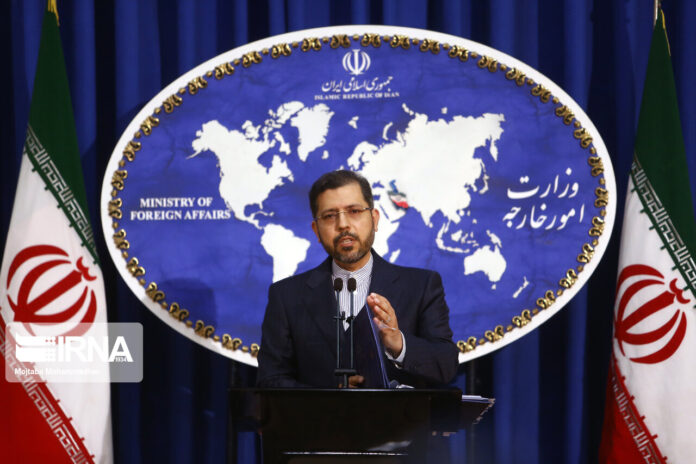
“It is regrettable that some Arab countries are seeking to divert people’s attention from their wicked and destructive moves by arousing fictitious animosity instead of taking care of the key issues that the Arab world is facing, including attempts [by some Arab states] to pave the way for the Israeli regime’s presence in the region, disregard for the cause of Palestine, the perpetuation of the cruel war against Yemen’s Arab people and the creation of the worst humanitarian disaster in the contemporary era, and years-long support for terrorism and terror groups,” said Saeed Khatibzadeh on Friday evening.

“Countries whose destructive aggression over the past six years has not only destroyed basic infrastructure in Yemen, but also caused hunger, disease, displacement and poverty among millions of people, and who have the blood of innocent people on their hands, are trying to evade responsibility for these crimes by pressing baseless charges,” he said.

“The rehashing of futile claims about the three Iranian islands has had, and will have no bearing on the existing historical, geographical and historical realities, and these islands are an integral part of the Iranian territory,” said the spokesman.
He then highlighted Iran’s policy of good neighbourliness and mutual respect vis-à-vis neighbouring countries as well as non-interference in one another’s internal affairs.

He expressed hope the Arab League and some regional countries change their approach to one of dialogue and regional cooperation instead of issuing hollow and provocative statements which have no other result than the perpetuation of the current destructive trend.

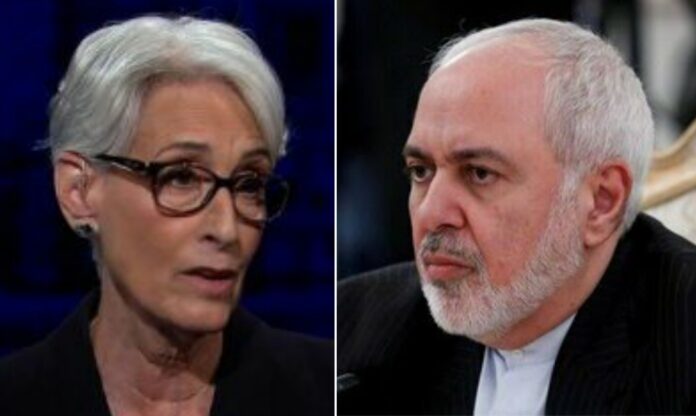
Let’s Stop Posturing and Return to JCPOA, Zarif Tells Sherman

“JCPOA cannot be renegotiated—period,” wrote Mohammad Javad Zarif in a tweet reacting to remarks made by Undersecretary of State Wendy Sherman at the US Senate.

“If 2021 is not 2015, it’s not 1945 either. So let’s change UN Charter & remove the veto—so often abused by US,” he added.

The top diplomat urged signatories to the JCPOA to fully comply with their obligations under the deal.

“Let’s stop posturing—which we both did 2003-2012 to no avail—& get down to implementing JCPOA—which we both actually signed on to,” he added.

Zarif Says to Present Iran’s Constructive Plan of Action on JCPOA

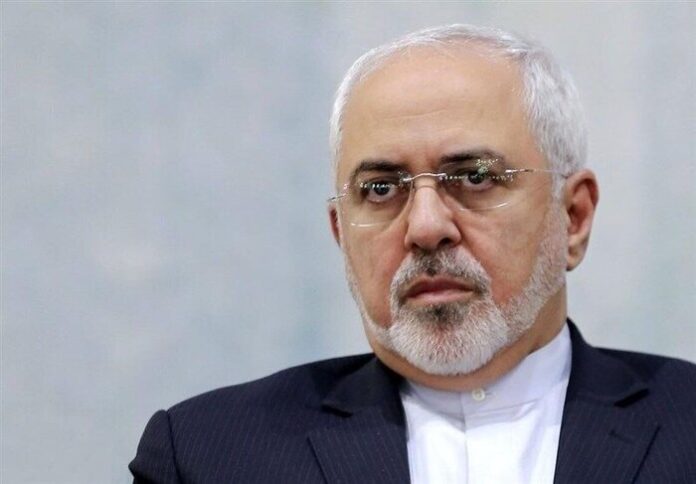
“As Iran’s foreign minister and chief nuclear negotiator, I will shortly present our constructive concrete plan of action—through proper diplomatic channels,” Zarif tweeted on Friday.

He made the remarks after Mohsen Rezaei, the Secretary of Iran’s Expediency Council, told the Financial Times that Tehran is prepared to negotiate with the US on the JCPOA if they send a clear signal that the anti-Iran sanctions will be lifted in a year.

In his Friday tweet, Zarif downplayed Rezaei’s comments and said, “Iranian polity is vibrant and officials express diverse opinions, but those opinions should NOT be confused with state policy.”