Sunday, December 21, 2025
Home Blog Page 2392

Iran favors nuclear talks that would see lifting of all sanctions

President Ebrahim Raisi told the 76th session of the UN General Assembly in New York on Tuesday; all parties must stay true to the nuclear deal and the UN resolution in practice. He added the US has not yet discharged its obligation, which is lifting sanctions.

Raisi also reiterated nuclear weapons have no place in Iran’s defense doctrine and deterrence policy.

The full text of President Raisi’s speech is as follows:

In the Name of God, the Compassionate, the Merciful
Praise is due to Allah, the Lord of the Worlds, and His Peace and Blessings be upon Muhammad and His Pure Household and His Select Companions

Mr. President,
At the outset allow me to extend my congratulations to Your Excellency for your election as the chair of the 76th Session of the UN General Assembly.

Ladies and Gentlemen,

Iran is the land of culture and civilisation. The land of knowledge and spirituality. The land of perseverance and independence. The Iranian people are monotheist and patriotic. They have their unique identity and love to explore the world.

For hundreds of years, our nation have safeguarded their right to self-determination and freedom against the hegemonists and have made their country the most progressive in the election-based political system in the west of Asia. The Islamic Revolution was indeed a great leap for the fulfilment of national and Islamic ideals of Iranians including freedom, independence and religious democracy.

I, as the elected President of the great people of Iran, am honoured to be their representative to convey to the world at large the message of rationality, justice and freedom which are the three most fundamental principles of the life of the contemporary man. However, those three principles that all the Abrahamic religions have in common will not be able to attain their purpose without spirituality.

Freedom and justice as two sacred and innocent words that are too broad to define, are indeed very tough and intricate when it comes to practicing. Freedom means the right to think, decide and act for all the human beings. Peace and lasting security are tied to the administration of justice and, basically, the divine prophets emerged so that people would demand justice and exercise their rights. Justice and freedom may be achieved only when the rights of all nations are fulfilled. As a matter of fact, any violation of the rights of nations will, more than anything, endanger global peace and security.

Ladies and Gentlemen,
This year, two scenes made history: one was on January the 6th when the US congress was attacked by the people and, two, when the people of Afghanistan were dropped down from the US planes in August. From the Capitol to Kabul, one clear message was sent to the world: the US’ hegemonic system has no credibility, whether inside or outside the country.

What is seen in our region today proves that not only the hegemonist and the idea of hegemony, but also the project of imposing Westernised identity have failed miserably. The result of seeking hegemony has been blood-spilling and instability and, ultimately, defeat and escape. Today, the US does not get to exit Iraq and Afghanistan but is expelled. And, at the same time, it is the oppressed people, from Palestine and Syria to Yemen and Afghanistan, as well as the US taxpayers, who have to pay for this lack of rationality.

Today, the world doesn’t care about “America First” or “America is Back”. If rationality prevails in the minds of the decision-makers, they have to realise that nations’ perseverance is stronger than the power of the superpowers. Over the past decade, the US has been making the mistake of modifying its “way of war” with the world instead of changing its “way of life”. An erroneous path cannot be brought to fruition by merely adopting a different method.

Sanctions are the US’ new way of war with the nations of the world. Sanctions against the Iranian nation started not with my country’s nuclear program; they even predate the Islamic Revolution and go back to the year 1951 when oil nationalisation went underway in Iran, which in turn led to a military coup backed by the Americans and the Britons against the then government of Iran that was elected by the people. Sanctions, especially sanctions on medicine at the time of the COVID-19 pandemic, are crimes against humanity.

The Holy Quran introduces the destruction of nature and mankind as a major characteristic of the tyrants. The Islamic Republic of Iran proposes that any kind of sanction-induced restriction or disruption in the supply of good health and environment as two humanitarian issues, be declared forbidden. Moreover, I, on behalf of the Iranian nation and millions of refugees hosted by my country, would like to condemn the continued illegal US sanctions especially in the area of humanitarian items, and demand that this organised crime against humanity be recorded as a symbol and reality of the so-called American human rights.

Despite the fact that the Islamic Republic of Iran was keen from the outset to purchase and import COVID-19 vaccines from reliable international sources, it faced inhumane medical sanctions. Therefore, from the very beginning, we started to sustainably produce vaccines domestically.

In addition to peaceful nuclear and satellite technologies, Iran is the medical hub of the region and numerous Iranian physicians and scientists, such as Avicenna, shine in the history of humankind. Knowledge that is beneficial to humanity cannot be sanctioned. We ourselves have been able to produce fuel for the Tehran research reactor which makes radiopharmaceuticals for more than one million cancer patients in Iran. We have also made astonishing progress in the area of biotechnology and stem cells in spite of all sanctions.

And today despite all sanctions targeting human rights, we have become one of the manufacturers of COVID-19 vaccines.

Cooperation amongst the countries of the world in the realm of health and especially on vaccines is tantamount to helping the spirit of humanity and the policy based of divinity-humanity in international relations. The Coronavirus is a wake-up call for the whole world, reminding us once again that the security of all human beings are interdependent. Crises in human societies, such as violence, poverty, unemployment, moral and economic corruption, collapse of family foundations, regional wars, organised terrorism and environmental crises are all the result of inattention to the principles of rationality, justice and freedom.

Ladies and Gentlemen,
The strategic thoughts of the Islamic Republic of Iran are rooted in the ideas of the founder of the Islamic Revolution, the late Imam Khomeini (May His Soul Rest in Peace) as well as in the genuine concepts of true Islam, i.e. rationality, prudence and pondering and have resulted in the resistance in line with the national interests of countries. Speaking about the rights of nations without speaking of the obligations of their governments cannot bring about the fulfilment of their rights, as the independence of a nation is its freedom. The Islamic Revolution supports this kind of freedom and, hence, obstructs extremism. And this is the nature of the true strength of the Islamic Republic of Iran which does good to all.

The Islamic Republic of Iran is inspiring and, as such, the power emanating from it creates security. The security-making model of the Islamic Republic of Iran is based on forming intra-regional mechanisms through diplomacy that is pivoted on and free from outside interferences.

It has been our policy to strive for the preservation of stability and territorial integrity of all the countries of the region. If not for the power and role of Iran alongside the governments and peoples of Syria and Iraq as well as all the selfless efforts of Martyrs Abu Mahdi al-Muhandis and General Qassem Soleymani, today ISIS would be the Mediterranean neighbours of Europe. And, of course, ISIS will not be the last wave of extremism.

The new drive to come up with Cold War-esque divisions will not help foster the security of humans by isolating independent countries. An arbitrary attitude is not the way to solve terrorism because terrorism has its roots in various crises such as identity and economy.

The fact that modern lives have become devoid of meaning and spirituality as well as the spread of poverty, discrimination and oppression have helped the rise of terrorism. The increasing growth of indigenous terrorism in the West bears witness to this bitter truth.

Even more bitter is the use of terrorism as an instrument for foreign policy because you cannot fight terrorism with double standards. You cannot make a terrorist group, such as ISIS, in a certain place and claim to fight it somewhere else.

After seeking the grace of the Almighty God, the solution to skirmishes and conflicts in our region lies in the following:

Making the will of nations rule over their own destiny by referring to the results of public vote. But in order for this to materialise, two basic preconditions need to be met: 1- halting the aggressions of the outsiders and occupation, and 2-sincere cooperation of governments to counter terrorism.

The military presence of the US in Syria and Iraq is the biggest hindrance to the establishment of democracy and will of nations. Freedom does not fit in the backpacks of soldiers coming from outside the region.

If an inclusive government having an effective participation of all ethnicities shouldn’t emerge to run Afghanistan, security will not be restored to the country. And like occupation, paternalism is also doomed to failure.

The humanitarian crisis in Yemen is very worrying and the world needs to break its silence towards crimes against humanity. The solution? The speedy and unconditional stop to the Yemeni aggression, opening of channels for providing humanitarian aid, and facilitation of constructive talks between Yemeni groups.

The occupier Zionist regime is the organiser of the biggest state terrorism whose agenda is to slaughter women and children in Gaza and the West Bank. Today, an all-out blockade has turned Gaza to the biggest prison in the world. The so-called “deal of the century” failed just like any other deal forced on Palestinians. There is only one solution: holding a referendum with the participation of all Palestinians of all religions and ethnicities including Muslims, Christians and Jews. This solution was set forth by the Supreme Leader of the Islamic Republic of Iran many years ago which is now registered as one of the official documents of the United Nations.

Mr. President,

Today, the whole world including the Americans themselves have admitted that the project of countering the Iranian people, which manifested itself in the form of violating the JCPOA and was followed by the “maximum pressure” and arbitrary withdrawal from an internationally recognised agreement, has totally failed. However, the policy of “maximum oppression” is still on. We want nothing more than what is rightfully ours. We demand the implementation of international rules. All parties must stay true to the nuclear deal and the UN Resolution in practice. Fifteen reports released by the IAEA have attested to the adherence of Iran to its commitments. However, the US has not yet discharged its obligation, which is lifting sanctions. It has encroached upon the agreement, withdrawn from it and levied even more sanctions on my people.

The United States mistakenly believed it would render us desperate and devastated, but our perseverance has yielded results and will always do, for the smart and dynamic resistance of the Islamic Republic of Iran comes from our strategic rationality. And we don’t trust the promises made by the US government.

It is the strategic policy of the Islamic Republic of Iran to consider the production and stockpiling of atomic weapons as forbidden based on the religious decree by His Eminence, the Supreme Leader, and Nukes have no place in our defense doctrine and deterrence policy. The Islamic Republic considers the useful talks whose ultimate outcome is the lifting of all oppressive sanctions.

While decisively defending all is rights and the interests of its people, Iran is keen to have large-scale political and economic cooperation and convergence with the rest of the world. I seek effective interaction with all the countries of the world especially with our neighbours and shake their hands warmly.

A new era has begun,
The Islamic Republic of Iran is ready to play its part for a better world. A world brim-full of rationality, justice, freedom, morality and spirituality.

Thank you all for your attention.

Peace and Mercy of Allah be upon you

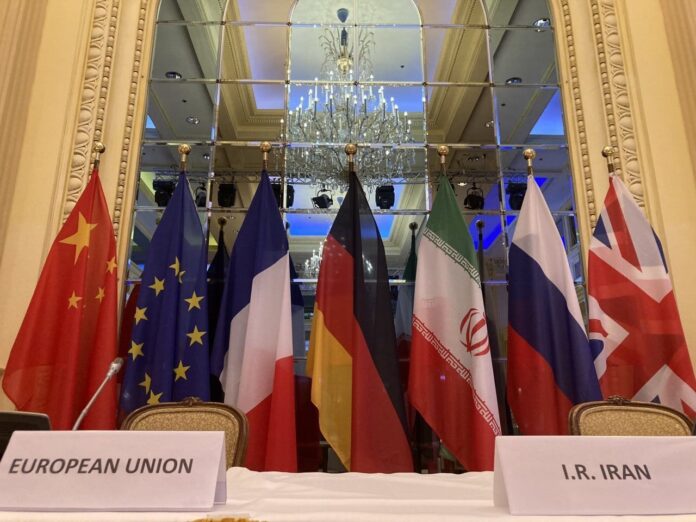
Iran: JCPOA revival talks to resume in Vienna in weeks

Foreign Ministry Spokesman Saeed Khatibzadeh said on Tuesday that the 4+1 group of countries that remain party to the Joint Comprehensive Plan of Action has been informed about the upcoming talks.

Khatibzadeh explained that the JCPOA and the upcoming Vienna talks will be high on the agenda of bilateral meetings between European Union Foreign Policy Chief Josep Borrell and foreign ministers of the 4+1 group who have come to New York to attend the UN General Assembly.

On Monday, the U.S. State Department’s Bureau of International Organization Affairs Senior Official Erica Barks-Ruggle said America remains committed to pursuing meaningful diplomacy to achieve a mutual return to compliance with the Joint Comprehensive Plan of Action.

She also said, “I know that we have said that we are ready to return, and we are hopeful to hear from the Iranians soon.”

Former U.S President Donald Trump withdrew America from the deal in May 2018 and re-imposed unilateral sanctions on Iran in a bid to force Tehran to renegotiate the nuclear deal, but the Islamic Republic refused to do so and in response rolled back some of it commitments under the JCPOA

Iran and the remaining parties to the 2015 nuclear deal namely Russia, China, Britain, France and Germany have held six rounds of talks in Vienna in recent months on a possible return of the United States to the agreement.

The exact date of the seventh round of talks is yet to be announced.

Iran nuclear chief: No deviation in Tehran’s atomic program

After a Tuesday meeting with Director General of the International Atomic Energy Agency Rafael Grossi in Vienna, Eslami also said that relations between Iran and the IAEA should be facilitated and sped up “based on laws and regulations and away from political influences”.

During the meeting the two sides reviewed cooperation between the agency and Iran and exchanged views on issues of mutual interest.

Iran’s Permanent Representative to the IAEA Kazem Gharibabadi said Eslami and Grossi acknowledged that Iran is an important partner of the agency and agreed that their relations should be based on respect and good will.

Earlier in September, during Grossi’s visit to Tehran, the IAEA reached an agreement with Iran on servicing of the agency’s monitoring equipment.

Meanwhile, after his meeting with the IAEA secretary general, the Iranian nuclear chief sat down for talks with the director general of Russian state nuclear energy company Rosatom.
Eslami described the talks with Alexey Likhachev as constructive, adding that he will focus on accelerating the progress of the new units of Bushehr power plant during his future visit to Moscow.

Taliban confirms final list of government appointees

The rulers appointed 2 acting ministers, 11 deputy ministers.

Nooruddin Azizi, a businessman from Panjshir, was appointed as the acting minister of commerce, while a businessman from Baghlan Mohammad Bashir was appointed as his deputy.

Dr Qalandar Ebad who takes over the ministry of health faces the mammoth task of bringing down Covid-19 cases in Afghanistan.

Abdul Qayoum Zakir was appointed as deputy minister of defense, Engineer Najibullah was appointed as the atomic energy chief and Nazar Mohammad Mutmaeb was appointed the acting head of the National Olympic Committee.

The government’s spokesperson Zabihullah Mujahid presented the list of deputies at a news conference in Kabul. Defending the all-male cabinet, Mujahid said that it included members of ethnic minorities, such as the Hazaras.

He added that women might be added later although there was no announcement of the formation of a women’s ministry. Answering a question, he stated the caretaker government needs time to address women’s demands on education and work to ensure their safety.

“We are working to complete the procedures so that girls can resume their education,” he continued, as boys in grades 6 to 12 went back to school over the weekend.

The Taliban has been lambasted by Western governments for not including women in ministerial and government roles. On Saturday, the Taliban set up a ministry for the “propagation of virtue and the prevention of vice” in the building that once housed the ministry of women’s affairs.

The militants, during their earlier rule in Afghanistan between 1996 to 2001 had banned women from schools, work and public life.

Activists and female staff organised a protest on Sunday over the Taliban’s decision to disband the women’s ministry. The demonstrators had reportedly been trying to return to work at the ministry for several weeks but were turned away each time.

Mujahid stressed that the current government is an interim one without hinting at any possible election in the future.

Source: 1TVNewsAF

Karzai: Afghanistan can model itself on Iran

Karzai made the comment in an exclusive interview with Iran’s Tasnim news agency.

He added, “Iran is also an Islamic Republic, but when you go to Iran, you see that the whole society participating in the government and in the efforts toward the development of the country, especially women in Iran, who are very, very educated”.

Karzai said that Afghanistan is also a Muslim country and a neighbor of Iran, and it has the potential to improve its life through education.

He stressed, “We have very clearly advised the Taliban brothers in this regard”.

Karzai also urged the Taliban to form an inclusive government with the participation of all ethnic groups and political factions. Only after the formation of a broad-based government Afghanistan will achieve prosperity.

Karzai said, “As I said, the Taliban hail from Afghanistan; they are from this land and they are patriotic, though they have their own way of thinking and there is no doubt about that, but they love Afghanistan and they know themselves Afghans want peace”.

He also spoke of the reason why he called the Taliban “brothers”. Karzai said the reason was the Taliban are part of the people of Afghanistan and that foreign forces in Afghanistan were bombing people’s houses in the name of fighting the Taliban and this was cruel.

On the US military presence in Afghanistan and its implications, the former Afghan president said, “The military operations of the United States and its allies, as they called the fight against terrorism or the Taliban, caused severe damage to the people of Afghanistan and led to many casualties”.

He also explained why he did not enter into a security pact with the US, “There were clear reasons for this action; First, peace was not on the horizon; there was no sign of improving relations with Pakistan, and my fear was that the signing of the security agreement would not bring peace, but rather escalates the war in the country.” Karzai added that the former Afghan government was toppled by the Taliban despite a security pact it had signed with the US.

Karzai further said he’s happy that no major bloodshed happened after the former government’s overthrow by the Taliban.

He added that he and the head of the Peace Process Committee of Afghanistan Abdullah Abdullah have held extensive talks over the future of Afghanistan, noting he and Abdullah do not want any post because they previously held key positions for many years.

He said, “Although the meetings with the Taliban were informal, we talked in detail about how to govern Afghanistan and how to establish peace and prosperity in the country”.

Asked about why he did not leave Afghanistan like other officials did, Karzai said Afghanistan is his land and he won’t seek asylum in a foreign country and wants to see his country achieve prosperity.

France’s FM to discuss Iran, Ukraine with Lavrov

Speaking at a news conference in New York late on Monday, Le Drian said he intended to discuss the Iranian nuclear deal with China and Russia, particularly, with Lavrov at their meeting this week.

Developments in Afghanistan and Ukraine are also planned to be discussed with Lavrov, according to the French foreign minister.

The talks involving Iran and five world powers (Russia, the United Kingdom, Germany, China, and France) on restoring the nuclear deal in its original form have been underway in Vienna since April.

The agenda includes issues related to the lifting of US sanctions on Iran, Tehran’s implementation of its nuclear obligations and Washington’s return to the Joint Comprehensive Plan of Action (JCPOA). The nuclear deal’s participants are also holding separate consultations with the US, which don’t involve Iran. The delegations initially had intended to wrap up the endeavor by late May.

Source: TASS

Canada’s Trudeau wins third term, no majority

Canada’s Liberal Party leader Trudeau is to continue his third mandate as prime minister in his second minority government.

Trudeau’s party has won 156 seats of the House of Commons in the 44th general election, followed by the Conservative Party with 121 seats, Bloc Quebecois 32, the New Democratic Party 27 and the Green Party two, according to local media.

The final seat tally may not look very different from the composition of the House of Commons when it was dissolved last month.

There are 338 seats in the House, where a party needs to win at least 170 seats to form a majority government. The Liberals held 155 seats at the end of the last House, followed by the Conservative Party with 119 seats, the Bloc Quebecois 32 seats, the New Democratic Party 24 seats and the Green Party two seats.

Facing criticism from opposition parties for calling the election in the midst of the fourth wave of COVID-19, Trudeau called the election on Aug. 15, putting an end to his nearly two-year minority government.

Trudeau billed the snap election bid as a chance for Canadians to have their voices heard about who they want to lead the country out of the COVID-19 crisis, and into a new era of considerable change.

Political opponents argued his decision was motivated by a desire for a majority government and that his sole focus should be on governing, not campaigning, while the pandemic continues to spread throughout the country.

Source: Xinhua news agency

IRGC commander: Iran will prevail in struggle against enemies

Brigadier General Hossein Salami was speaking on the occasion of Commemorating One Million Iranian War Veterans on Tuesday in Tehran.

Salami noted that small powers like the Israeli regime have no place in the Islamic Republic’s equation.

The IRGC’s commander said the Iranian people have blunted the anti-Iran sanctions through their resistance against the oppressive US and Western embargoes and the psychological and economic warfare of the enemies. Salami said Iran’s enemies are on the wane and are in retreat.

The IRGC’s commander added that the enemies are being humiliated before Iran’s eyes and that “thanks to our dear leader, our great nation, the Islamic Revolution and Islam, we will prevail”.

Sudan Officials: Coup attempt failed, plotters arrested

Sudan’s state-run television called on the public “to counter” the attempt but did not provide further details.

“All is under control. The revolution is victorious,” Mohamed Al Faki Suleiman, a member of the ruling military-civilian council, wrote on Facebook, calling on the Sudanese to protect the transition.

The state run Sudan News Agency later tweeted that “an authorised source in the presidency of the council of ministers said that security and military authorities have thwarted a coup attempt at dawn today”.

“The situation is under control, and those involved in it [the coup attempt] have been arrested and investigations are underway,” added the statement.

A military official added an unspecified number of troops from the armored corps were behind the attempt and that they tried to take over several government institutions but were quickly stopped

A government spokesman said on state TV that “remnants” of the regime of ousted Sudanese President Omar al-Bashir participated in the attempt, although no further details were given.

A government told Al Jazeera that information about the coup attempt was made available to the government on Monday evening, which helped thwart it quickly.

All the individuals complicit in a foiled coup plot in Sudan have been taken into custody and are being interrogated, the Sudan News Agency reported on Tuesday, citing a statement by the government’s council.

Traffic appeared to be flowing smoothly in central Khartoum on Tuesday, including around the army headquarters, where months of mass protests prompted the ouster of al-Bashir in a palace coup two years ago.

Sudan has been on a fragile path to democratic rule since the military ousted the country’s longtime autocratic ruler al-Bashir in April 2019, following four months of mass protests.

Sudan is currently ruled by a transitional government composed of both civilian and military representatives that was installed in the aftermath of al-Bashir’s overthrow and is tasked with overseeing a return to full civilian rule.

Deep political divisions and chronic economic problems inherited from the Bashir regime have overshadowed the transition.

Tensions between civilian and military have persisted. As have tensions between the military and the Rapid Support paramilitary forces, which at time operate under the auspices of the military.

Meanwhile, in recent months, the government has undertaken a series of tough economic reforms to qualify for debt relief from the International Monetary Fund.

The steps, which included slashing subsidies and a managed float of the Sudanese pound, were seen by many Sudanese as too harsh.

Sporadic protests have broken out against the IMF-backed reforms and the rising cost of living.

Sources: Al-Jazeera, Sudan News Agency

US Border Patrol whips at migrants from horseback

The videos and images of Border Patrol agents on horseback charging at Haitian migrants drew an emotional response online since the Border Patrol has a troubled and violent history against communities of color.

Reuters witnesses saw mounted officers wearing cowboy hats blocking the paths of migrants, and one officer unfurling a cord resembling a lariat, which he swung near a migrant’s face. A video showing a border guard apparently threatening migrants with the cords was shared on social media.

US government officials have called the situation in Del Rio “unprecedented” and the Joe Biden administration began deportation flights for scores of migrants held there. Removal flights are going to Haiti, Mexico, Ecuador and Northern Triangle countries.

The Department of Homeland Security has also sent 400 agents to Del Rio to assist with the process.

A DHS spokesperson announced the agency “does not tolerate the abuse of migrants in our custody and we take these allegations very seriously”.

Customs and Border Protection’s Office of Professional Responsibility is investigating the incident and has alerted the DHS Office of Inspector General.

The White House on Monday criticized the use of horse reins to threaten Haitian migrants, saying it is seeking more information on the “horrific” viral images and videos.

“I don’t think anyone seeing that footage would think it was acceptable or appropriate,” White House spokeswoman Jen Psaki told reporters.

“I don’t have the full context. I can’t imagine what context would make that appropriate,” she added.

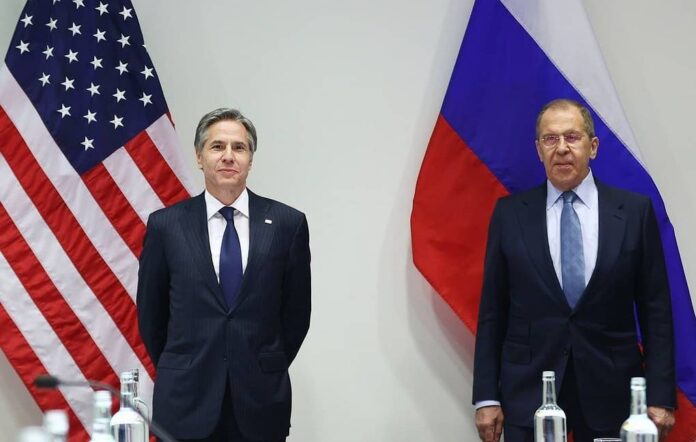
The State Department issued a statement on Monday night saying that Secretary of State Antony Blinken spoke with Haitian Prime Minister Ariel Henry “about the migrant crisis and efforts to repatriate migrants who arrived at the southern border”.

Homeland Security officials have acknowledged internally that deported Haitian immigrants “may face harm” upon their return to the country due to its political instability and state of violence, according to BuzzFeed.

Rights groups in the United States have blasted the Biden administration for its planned expulsion of thousands of migrants and asylum seekers who have been camped under a bridge in Del Rio, after wading across the Rio Grande River from Mexico.

Sources: Axios, Reuters, CNN