Wednesday, December 24, 2025
Home Blog Page 2348

Iran’s land border with Turkmenistan reopens after 20 months

Seyed Rouhollah Latifi added, with the announcement of Turkmenistan and the agreements made, trucks carrying Iranian commercial cargo to Turkmenistan would be accepted from Thursday morning.

He added, since March 2020, with the beginning of the Covid pandemic, Turkmenistan’s land border with Iran was closed in Incheh Bouroun, Golestan province, and after 20 months, it resumes its activities by accepting Iranian trucks.

Latifi stressed that according to the decisions made by the two countries, exported goods will enter Turkmenistan by truck and the cargos will be transported to the final destinations by Turkmen trucks at their customs.

The customs spokesman said, in the last 20 months, the traffic with Turkmenistan in other border crossings was completely stopped and after a while, the railway routes became active only in Sarakhs, Lotfabad and Incheh Bouroun borders and land routes only in Sarakhs and Lotfabad borders of Khorasan province.

He added that the Bajgiran border of Khorasan Razavi with Turkmenistan has been completely closed since March 2020 and has not been reopened yet.

Figures show that Iran’s foreign trade in the first half of this year reached 79 million and 100 thousand tons of goods worth 45 billion dollars.

The share of exports was 60 million tons of goods worth 21 billion and 800 million dollars and the share of imports was 19 million and 100 thousand tons worth 23 billion and 100 million dollars.

Iranian-Saudi Talks Following Positive Trend: Analyst

In an interview with ILNA, Qassem Mohebali weighed in on the prospects of Tehran-Riyadh relations as well as obstacles to the easing of tensions between the two sides and the resumption of bilateral diplomatic ties.

“These talks will hopefully follow a positive trend. Comments by both sides have changed and propaganda campaigns against one another has decreased,” said Mohebali, the former head of the Middle East Department of the foreign ministry.

“The negotiations held at the level of security officials has resulted in positive assessments for both sides, and the trend has been positive and forward-moving till now,” he added.

“But the reality is that Iran and Saudi Arabia have numerous and complex differences whose settlement does not seem easy,” the commentator noted.

“These differences are a collection of bilateral and regional issues and pertain to the two countries’ viewpoints on religion, denomination and sect where there are serious differences and both countries have concerns regarding one another,” he added.

“All these differences depend on another indicator, i.e., Iran’s relations with the world within the framework of the JCPOA (the Joint Comprehensive Plan of Action), and these issues should be dealt with in tandem because they affect one another,” added Mohebali.

“Given the changes in the United States’ foreign policy on the Middle East and the US withdrawal from Iraq and Afghanistan, which has led to the replacement of the US by its rivals such as Qatar and Turkey, Saudi Arabia seems to have come to realize that it is losing its role; so, having a relationship with Iran, as a different player, may be able to restore part of Riyadh’s role,” he said.

He added, Iran, too, needs to reduce its problems with Saudi Arabia.

He also noted the Israeli regime has misgivings over Tehran-Riyadh making headway with their talks and seeks to sabotage this trend.

Nour News: Baqeri Pakistan Visit Push for Regional Coop. for Regional Security

According to Nour News, a news outlet close to Iran’s Supreme Council of National Security, the visit highlights the will of Iran and Pakistan for the expansion of their political, economic, security and defense ties.

The report also sees the visit as Iran’s push for regional security through cooperation with its neighbors.

“Existence of over 900 kilometers of common borders between the two countries and activities of some terrorist groups and smugglers to undermine the security of joint borders are key elements for expansion and strengthening of defense diplomacy between the two sides,” Nour News says.

This is also seen as a basis for closer economic cooperation including on the Peace Pipeline and border terminals.

The report says the irresponsible withdrawal of the US and its allies from Afghanistan also calls for security and military work among Afghanistan’s neighbors.

Accordingly, such cooperation is necessary amid attacks by Daesh and other terrorist groups, including the recent one on a mosque in the northern Afghan city of Kunduz, and Washington’s exploitation of the political vacuum in Afghanistan to drag the country into a civil war.

Nour News says seeking help from the US is not an alternative, citing comments by Pakistani Prime Minister Imran Khan who said cooperation with Washington only intensified his country’s security and political crises.

The outlet also points to the opportunity created by the withdrawal of the US and NATO from Afghanistan. Their pullout, it says, helps regional countries enhance cooperation toward lasting security to prevent the return of foreigners to the region. The report calls for greater defense and security cooperation on Afghanistan among Iran, Russia, China, countries of Central Asia and Caucasus along with India.

Baqeri’s visit is seen as part of Iran’s strategy of regional cooperation for regional security, even as the Islamic Republic showed its determination to fight security threats by the recent military drill in its northwest, its air defense drills and its strikes against anti-Iran groups in Iraq’s Kurdistan region.

Iran Deputy FM, EU Deputy Foreign Policy Chief Begin Talks in Tehran

According to a tweet by Ali Baqeri on Wednesday, high on the agenda of the talks is bilateral ties between Tehran and Brussels as well as the developments in Afghanistan and talks for removal of anti-Iran sanctions under the nuclear deal.

Earlier, Foreign Ministry Spokesman Saeed Khatibzadeh also said the visit by Mora is part of the “bilateral consultations on topics of interest including Iran-EU relations, Afghanistan and the Nuclear deal”.

“Discussions and contacts between the two sides were never cut off and continues regularly on different issues and this visit is part of the same framework,” Khatibzadeh added.

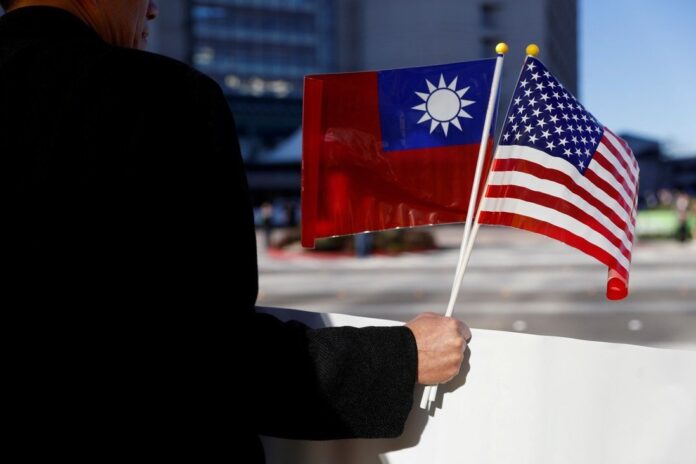
China says drills near Taiwan for peace, stability

The Chinese Taiwan Affairs Office has defended Beijing’s military exercises near Taiwan, claiming it is a “just” move to protect peace and stability, and blamed Taipei’s “collusion” with foreign forces.

Speaking on Wednesday, Ma Xiaoguang, spokesman for China’s Taiwan Affairs Office, put the blame for rising tensions firmly on Taipei, accusing it of inventing “bogus accusations” against Beijing and colluding with foreign powers.

“The [Democratic Progressive Party] DPP authorities’ hyping of the so-called ‘military threat’ of the mainland is to completely invert right and wrong, and a bogus accusation,” Ma told gathered reporters.

Ma added recent Chinese drills were a response to Taiwanese “collusion” with foreign powers, a reference to the US and its allies, and the ruling DPP’s “provocations” concerning the island’s independence.

“They are absolutely just actions,” Ma claimed, referencing Chinese wargames in the province directly across the sea from Taiwan.
“If the DPP authorities obstinately persist in going about things the wrong way, and do not know how to draw back from the edge, it will only push Taiwan into a more dangerous situation,” the spokesman noted.

On Monday, Chinese forces carried out beach landing and assault drills in the southern part of Fujian province, just across the sea from Taiwan. The action involved “shock” troops, sappers and boat specialists, according to the official People’s Liberation Army Daily newspaper.

Tensions surrounding Taiwan are on the rise. On Monday, Beijing registered “solemn representations” with Canberra after former Australian prime minister Tony Abbott visited Taiwan, pledging support for the island and highlighting Taipei’s achievements.

Tangerine Harvest Season Begins in Mazandaran

Harvesting tangerines usually begins in October and continues until late November.

Some 10 thousand hectares of orchards in Mazandaran are under the cultivation of different types of tangerines.

As much as 115 thousand hectares of orchards in the province are under the cultivation of citrus fruits, producing over 2.7 million tonnes of produce.

That meets over 50% of the domestic need for citrus fruits.

Mazandarn ranks first in the country when it comes to the amount of citrus fruit harvests.

WH sends grim holiday warning to Americans over supply chain

The supply crisis, driven in part by the global COVID-19 pandemic, not only threatens to dampen US spending at a critical time, it also poses a political risk for President Joe Biden.

The latest Reuters/Ipsos poll shows the economy continues to be the most important issue for Democrats and Republicans alike.

The White House has been trying to tackle inflation-inducing supply bottlenecks of everything from meat to semiconductors, and formed a task force in June that meets weekly and named a “bottleneck” czar to push private-sector companies to ease snarls.

Biden himself plans to meet with top executives from retail giants Wal-Mart Inc (WMT.N) and Home Depot Inc (HD.N) and with unions and other stakeholders on Wednesday to discuss efforts to relieve transportation bottlenecks before delivering a speech on the topic.

Supply chain woes are weighing on retail and transportation companies, which recently issued a series of downbeat earnings outlooks. Meanwhile, the Federal Reserve last month predicted a 2021 inflation rate of 4.2%, well above its 2% target.

American consumers, unused to empty store shelves, may need to be flexible and patient, White House officials stated.

“There will be things that people can’t get,” a senior White House official told Reuters, when asked about holiday shopping.

“At the same time, a lot of these goods are hopefully substitutable by other things. … I don’t think there’s any real reason to be panicked, but we all feel the frustration and there’s a certain need for patience to help get through a relatively short period of time,” the official added.

Inflation is eating into wages. Labor Department data shows that Americans made 0.9% less per hour on average in August than they did one year prior.

The White House argues inflation is a sign that their decision to provide historic support to small businesses and households, through $1.9 trillion in COVID-19 relief funding, worked.

US consumer demand stayed strong, outpacing global rivals, and the Biden administration expects the overall economy to grow at 7.1%, as inflation reaches its highest levels since the 1980s.

“We recognize that it has pinched families who are trying to get back to some semblance of normalcy as we move into the later stages of the pandemic,” said a second senior White House official.

In August, the White House tapped John Porcari, a veteran transportation official who served in the Obama administration as a new “envoy” to the nation’s ports, but he’s known as the bottleneck czar.

Porcari told Reuters the administration has worked to make sure various parts of the supply chain, such as ports and intermodal facilities, where freight is transferred from one form of transport to another, are in steady communication.

Now it is focused on getting ports and other transportation hubs to operate on a 24-hour schedule, taking advantage of off-peak hours to move more goods in the pipeline. California ports in Long Beach and Los Angeles have agreed to extended hours, and there are more to follow, he said in an interview Monday.

“We need to make better use of that off-peak capacity and that really is the current focus,” Porcari added.

The administration is also seeking to restore inactive rail yards for extra container capacity and create “pop-up” rail yards to increase capacity.

“It’s important to remember that the goods movement system is a private sector-driven system,” he said, adding, “There’s problems in every single part of that system. And, they tend to compound each other.

Putin: Arms race underway since US pullout from ABM Treaty

The weapon race between Russia and the US is on the move after Washington’s withdrawal from the ABM Treaty, Putin stated on Wednesday at a plenary session of the Russian Energy Week.

“The arms race is on the march, unfortunately. And it has started after the US withdrawal from the ABM Treaty,” the Russian president added.

Putin recalled that back in 2003 he urged the US not to withdraw from the ABM Treaty. 

He noted that “this is a fundamental thing, the cornerstone of global security. What is the ABM Treaty? This is not just protection, it is an attempt to gain strategic advantages by de-energizing the nuclear potential of a probable opponent, that is, ours”.

“What should we do in response? Either create the same system, which costs a lot of money and may be not so efficient, or establish another system that will certainly outperform the ABM Treaty,” the head of the state went on to say. 

“And I said that we would do it. The American partners replied that their missile defense system was not against [Russia], so we could do what we want, and [the US] would proceed from the assumption that this was not against it. And we did it, so what is the problem? And now [the US] does not like it,” the president added.

“We are ready to consider the existing circumstances and hold a constructive dialogue in this direction,” Putin concluded.

The Anti-Ballistic Missile Treaty between the USSR and the US was signed in Moscow on May 26, 1972. However, it was terminated on June 13, 2002, following the unilateral US withdrawal.

On NATO, Putin said Russia is always ready for direct talks with NATO, but has no plans of delivering reports to any side about military drills on its own territory.

“We are ready to hold direct talks with NATO,” Putin stated, adding, “However, if speaking about our soldiers, I must say that they are deployed on the territory of Russia.”

“It is true that we recently held military drills, the Zapad-2021 [strategic military exercise], and it was a large-scale military exercise,” he continued, stressing, “I reiterate that we are holding our [military] exercises on the territory of our own country.”

“There is nothing strange about it and we are not obliged of filing reports in this regard to any other party,” Putin added.

The Russian president also said that the US and NATO military forces regularly hold combat drills not on their territories, including near the state borders of Russia.

“In fact, it is our partners, who breach all earlier reached agreements, including on the measures of trust in Europe,” Putin stated, adding, “It also goes for NATO’s expansion to the East and I have repeatedly pointed out to this fact.”

“This also relates to certain imbalances in the Baltic states that are excluded from any troop counts,” the Russian president said.

Putin also recalled that the United States exited earlier from the Anti-Ballistic Missile Treaty (ABM), Open Skies and Intermediate-Range Nuclear Forces (INF) Treaties.

“We did not do it. It was what our American partners did,” Putin stated.

On energy crisis, Russia insists on the need for an honest and open dialogue with European countries and is ready to work to prevent problems in the energy markets of Europe, Putin said.

“What is happening today in the energy markets of Europe is, to a certain extent, a man-made result of short-sighted policy. But these are their problems. We are ready to participate in preventing such problems. We just need, I repeat, an honest and open dialogue,” he added.

Putin noted that Russia does not stop working with European partners. 

“And it seems to me that there is an understanding that this frank, transparent dialogue needs to be established, but we will see how this will happen in reality,” Putin concluded.

On Afghanistan, Putin said the United States ignored the history and culture of the Afghan people, which entailed a tragic result.

“Freedom and democracy cannot but be linked with the culture and traditions of a certain people. The United States intruded into Afghanistan in defiance of the traditions, culture and history of the Afghan people. The result was tragic,” he added.

Putin stressed that US interference in Afghanistan had brought about a colossal upsurge of terrorism in the region and around the world.

The Taliban movement launched a massive operation for establishing control of Afghanistan after the United States last spring declared the intention to pull out its troops. On August 15, President Ashraf Ghani stepped down and left the country, while the Taliban entered Kabul without encountering resistance. The Western countries by August 31 had completed the evacuation of their citizens and Afghans who had worked for them.

Iran says Tehran-Beijing Cooperation Deal Moving forward

“What is known as the 25-year Iran-China Road Map is an agreement on comprehensive cooperation between the two countries,” said the spokesman.

“This pact has different dimensions, including parliamentary ties, the private sector and even judicial relations; so, different institutions are following up on this document,” he added.

“Some more detailed documents, namely on private sector interactions in the fields of energy, new technologies and IT have been prepared, interactions between Iranian ministries and their Chinese counterparts started long ago and have been taking place on a regular basis, namely in the domains of energy and expansion of ports,” he explained.

He said visit to both countries have been limited due to coronavirus restrictions, but added the two sides have been in contact online.

He said one of the outcomes of the Tehran-Beijing cooperation agreement has been the import of tens of millions of vaccines from China.

US rules out normalisation with Syria

Damascus has on several occasions said Washington has been supporting terrorist groups inside Syria, while demanding immediate withdrawal of the US forces.

The United States does not intend to support any efforts to normalise ties with Assad or rehabilitate him until there is irreversible progress towards a political solution in Syria, Blinken said.

Blinken’s comments at a news conference on Wednesday came at a time when a shift was under way in the Middle East among the Arab allies of the US, who are bringing Assad in from the cold by reviving economic and diplomatic ties.

Jordan, a staunch US ally, fully reopened its main border crossing with Syria in late September, to boost the countries’ struggling economies and reinforce a push by Arab states to reintegrate Syria after shunning it during the Syrian war.

Jordan’s King Abdullah also spoke to Assad for the first time in a decade this month while the Egyptian and Syrian foreign ministers met last month on the sidelines of the United Nations General Assembly in New York, in what Egyptian media reported was the first meeting at that level for about a decade.

Similarly, the United Arab Emirates’ economy ministry stated on Sunday that the Gulf state and Syria had agreed on future plans to enhance economic cooperation and explore new sectors.

The UAE also reopened its embassy in Damascus in 2018 – and earlier this year, said sweeping US sanctions imposed on Syria made it more challenging for the war-torn country to return to the Arab League.

“What we have not done and what we do not intend to do is to express any support for efforts to normalise relations or rehabilitate Mr Assad or lifted a single sanction on Syria or changed our position to oppose the reconstruction of Syria, until there is irreversible progress towards a political solution, which we believe is necessary and vital,” Blinken stated.

The US has suspended its diplomatic presence in Syria since 2012.

Blinken added in the nine months since President Joe Biden took office on January 20, Washington has focused on expanding humanitarian access to Syria, sustaining the campaign against the Daesh group and making clear the US commitment to demand accountability from al-Assad’s government.

Under Washington’s Ceasar Act passed last year, the US has attempted to prevent any reconstruction efforts or trade deals from being made without first enacting human rights reforms.

But Syria has not been a foreign policy priority for the Biden administration, analysts noted, as Washington has largely concentrated on countering China. The administration has yet to apply sanctions under the Caesar Act.

“As we’re moving forward in the time ahead, keeping violence down, increasing humanitarian assistance, and focusing our military efforts on any terrorist groups that pose a threat to us or to our partners … These are going to be critical areas of focus for us,” Blinken continued.