Sunday, December 21, 2025
Home Blog Page 2318

Pakistan: No deal on US use of airspace for Afghanistan missions

The rebuttal came after a CNN report claimed that the two countries are “nearing a formalized agreement” to give Washington access to Pakistan’s airspace for operations in Afghanistan.

“No such understanding is in place,” Foreign Ministry spokesperson Asim Iftikhar said in a statement.

“Pakistan and the US have longstanding cooperation on regional security and counterterrorism and the two sides remain engaged in regular consultations,” he added.

According to the CNN report, the US is currently using Pakistan’s airspace for “ongoing intelligence-gathering efforts” in Afghanistan, “but there is no formal agreement in place to ensure continued access to a critical piece of airspace necessary for the US to reach Afghanistan.”

Pakistan’s airspace will become even more critical for the US if and when it decides to fly out Americans and other people from Afghanistan in the future, the report added.

Islamabad, for its part, has time and again reiterated that it will not allow Washington to carry out counterterrorism operations in Afghanistan from Pakistani territory, following the US pullout and Taliban’s rise to power.

“Absolutely not. There is no way we are going to allow any bases, any sort of action from Pakistani territory into Afghanistan. Absolutely not,” Prime Minister Imran Khan stated in an interview in June this year, ahead of the withdrawal of US and NATO troops.

The government of Afghanistan rapidly collapsed on August 15 and President Ashraf Ghani fled the country in the face of the lightning advances of the Taliban that followed President Joe Biden’s decision to withdraw American troops in a disastrous pullout. The Taliban announced the formation of a caretaker government on September 7.

US agencies review Biden’s handling of Afghanistan exit

“A number of US agencies have begun internal reviews of the Biden administration’s handling of the withdrawal from Afghanistan, particularly the final departure of military and diplomatic personnel, closure of the US Embassy, and the emergency evacuation of diplomats and eligible Afghan refugees from the country.

According to the report, “the reviews, which have been started separately by the offices of inspectors general at the departments of Defense, Homeland Security, Health and Human Services and State, as well as at the US Agency for International Development, aim to determine whether the administration adequately planned for and executed the withdrawal and subsequent evacuation and relocation of Afghan nationals, according to internal disclosures and US officials familiar with the internal discussions.”

The reviews, which have been started separately by the offices of inspectors general at the departments of Defense, Homeland Security, Health and Human Services and State, as well as at the US Agency for International Development, aim to determine whether the administration adequately planned for and executed the withdrawal and subsequent evacuation and relocation of Afghan nationals, according to internal disclosures and US officials familiar with the internal discussions.

The probe has focused on the final departure of military and diplomatic personnel, closure of the US Embassy, and the emergency evacuation of diplomats and eligible Afghan refugees from the country.

After the United States announced the pullout of its troops from Afghanistan this past spring, the Taliban radical militant group launched a large-scale operation to establish control over that country.

On August 15, President of Afghanistan, Ashraf Ghani, fled the country, and the radicals swept into Kabul without encountering any resistance. On September 6, the Taliban declared its establishment of control over all of Afghanistan, and on September 7 announced the line-up of the interim cabinet, whose legitimacy has not yet been recognized by any country.

The POTUS has been facing criticism over the hasty troops’ pullout from the war-torn country which led to a humanitarian crisis and deaths of a dozen American forces in a Daesh-claimed bombing.

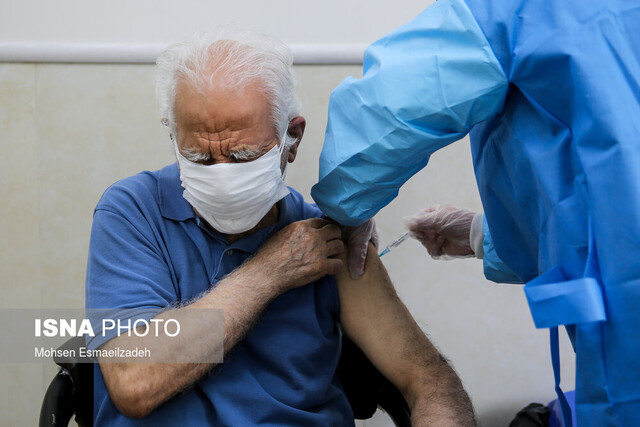
Iran Gets Another Shipment of Sinopharm Vaccine Containing 6mn Doses

The shipment containing some 6 million doses of the Sinopharm vaccine was handed over to the health ministry after arriving in Tehran on Sunday, October 24, 2021.

Seven cargoes containing 6 million doses of coronavirus vaccines each have arrived in Iran since September 26, 2021, said IRCS Director Karim Hemmati.

“As the first vice president has stressed that the IRCS should keep importing vaccines, this institution has been continuing to import vaccines in cooperation with the ministries of health and foreign affairs and has brought in as many as 30 shipments so far, and will keep importing the Sinopharm vaccine,” he said.

“Since May, the IRCS has imported a total of 94 million 390 thousand doses of the Sinopharm vaccine,” said Hemmati.

“In order to reach a tranquil society and put an end to the coronavirus pandemic, we need the cooperation of our dear people,” he said.

“As we considerably pushed down infection and fatality rates by inoculating large parts of society such as medical personnel, civil servants, senior citizens and other individuals, now, too, we can reach ideal conditions if those who haven’t been vaccinated yet come forward [to get vaccinated],” he noted.

The Leader: Normalizing ties with Israel, great sin and mistake

https://www.leader.ir/fa/pictures/album/2428/grid?img=69638_274.jpg

“These governments should reverse the move, which goes against Islamic unity and should make up for their great mistake,” Ayatollah Khamenei said on Sunday during a meeting with participants in the 35th International Islamic Unity Conference in Tehran, which is held every year on the birth anniversary of Islam’s holy Prophet Mohammad.

The Leader called for unity among Muslims saying it is a matter of principle and a clear religious duty, commanded by the Holy Quran.

Ayatollah Khamenei added “Unity and solidarity among Muslims is not a tactical issue, which some may imagine, we should, due to certain circumstances, be united. No, [Muslims’ unity] is a fundamental issue. Muslims’ synergy is necessary; if Muslims unite and work toward synergy, this strengthens all of them. Muslims’ unity is a clear religious duty [mentioned] in the Quran,” the leader said.

The leader said the reason for the emphasis on unity is the “wide distance among different denominations [of Islam]” and enemies’ serious efforts to increase those gaps.

“Today the words Shia and Sunni have entered the political jargon of the Americans while they basically oppose Islam and are hostile toward it,” the leader said.

Ayatollah Khamenei added that the US and its puppets are trying to create sedition everywhere in the Muslim world, saying the recent tragic explosions against worshippers in Afghan mosques, which were claimed by Daesh terrorists, are cases in point, as “Americans clearly said they created Daesh”.

The leader further stressed that creation of a new Islamic civilization is not possible unless Shias and Sunnis unite.

“The main criterion for the unity of Muslims is the issue of Palestine and the more serious efforts are put into protection of Palestinians’ right, the stronger the Islamic unity will be,” he said.

The leader also touched on the issue of Islam and its potential for the Muslim world. Ayatollah Khamenei rejected the “insistence by political and material powers” to pose Islam as something other than a “comprehensive religion with planning for every aspect of the life of humanity”.

“The arena of activity of Islam is the full spectrum and aspects of the life of humans from deep within their hearts and religious issues to political, economic, social, security and international affairs,” the leader said.

Analyst: Negotiations a Must to End Sanctions

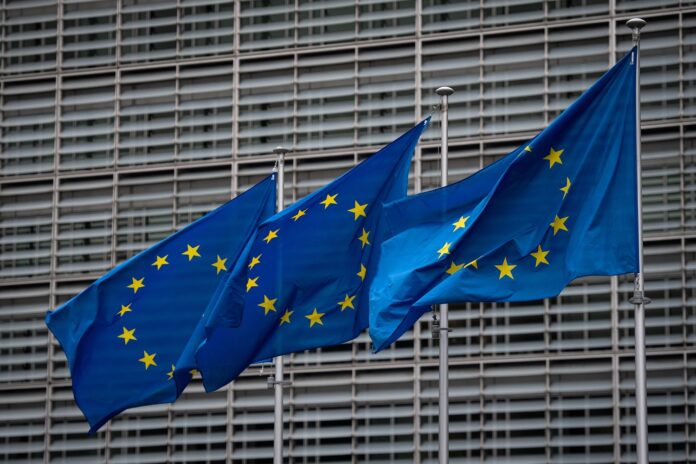
Hassan Beheshtipour told the Iranian Students News Agency (ISNA) that Iran’s decision to meet with EU officials in Brussels sent the message that Iran wants to differentiate between Europeans and Americans.

But he said Europeans have shown that they cannot act independently from the US.

“The second [such] experience was after the US withdrawal from the nuclear deal when despite Europe’s call on Iran not to exit the agreement and their pledge to compensate for the US pullout, they were only effective in political terms and could do nothing practically in economic terms,” he said.

“In economic terms, European companies do not act on their government’s say-so and are not ready for interaction with Iran for the fear of [antagonizing] the US, and even China and Russia had the same issue.”

“Iran’s argument is that it only enters negotiations if they lead to the removal of sanctions … but the other party says it will not remove all sanctions simultaneously. During the six rounds of talks in Vienna, they had agreed to remove certain sanctions … if Iran returns to its obligations and Iran says … there is no guarantee the US would not violate its [other] obligations. All these need negotiations [to settle].”

He added that Iran will need to end the sanctions as a major obstacle to its economic growth, even if it can advance economic reforms that minimize the impact of the bans.

Iranians Mark Anniv. of Prophet Mohammad’s Birth

On the eve of the joyous occasion, celebratory fireworks lit the skies of the holy city of Mashhad in northwestern Iranian province of Khorassan Razavi. The Holy Shrine of Imam Reza, the eight Shia Imam, is located in the city.

Other ceremonies were also held to mark the auspicious occasion.

Iran’s President Congratulates Muslims on Prophet Mohammad Birth Anniv.

In his messages, Ebrahim Raeisi expressed hope the joyous occasion will provide an opportunity for Muslim nations to band together.

“I hope we (Muslim nations), on this auspicious occasion, will look up to the Prophet Mohammad’s proper demeanour as an example and rely on our Islamic commonalities and draw on our willpower to take more serious steps in order to establish stronger and more stable relations to further promote Islam and the Prophet’s demeanour,” read the messages.

Iranian envoy: Tehran ready to invest in Afghanistan

In the meeting, Aminian described economic problems as the common enemy of Iran and Afghanistan. He said Tehran is ready to invest in the energy, transportation, mining, trade and health sectors of Afghanistan.

Mottaqi also said the Taliban are prepared to cooperate with Iran in different fields.

He called for efforts to resolve the problems of Afghan refugees in Iran.

Meanwhile, the Iranian president’s special envoy for Afghanistan Hossein Kazemi Qomi has told Russia’s Sputnik news agency that the stability and security of the region and Afghanistan’s neighbors is tied to the country’s situation.

Kazemi Qomi was speaking after attending a meeting in Russia on Afghanistan. He said a stable Afghanistan will be conducive to stability in its neighbors and any instability in the country spills over into regional countries.

The Iranian envoy also said all countries should help Afghanistan get out of the current situation.

According to Kazemi Qomi, only the Afghan people can choose their government. He expressed hope that the will of the Afghan people will prevail in determining the country’s government.

Iran’s Leader pardons thousands of prisoners

The request was made by Iran’s Judiciary Chief Gholamhossein Mohseni-Ejei. The pardon or commutation will apply to sentences of as many as 3,458 inmates.

Ayatollah Khamenei agreed to the pardon and commutation on the occasion of the birthday anniversary of the Prophet Muhammad (PBUH) and Imam Ja’afar Sadiq (AS), the 6th Shia Imam.

The official amnesty request was approved in line with enforcing the 11th paragraph of the Constitution’s Article 110. Ayatollah Khamenei pardons convicts several times on the occasion of religious festivities each year.

Iran FM calls on Baku to facilitate movement of trucks

Hossein Amir Abdollahian described the recent release of the two Iranian truck drivers as a positive step by the Republiuc of Azerbaijan.

Iran’s Foreign Minister Hossein Amir Abdollahian and his Azerbaijani counterpart Jeyhun Bayramov also discussed bilateral relations between Tehran and Baku in the telephone conversation.

In this conversation, Amir Abdollahian referred to the recent constructive contacts between the two ministers, praising the Republic of Azerbaijan for the release of two Iranian drivers detained in the country.

The Iranian foreign minister described the move as a constructive step that can provide the necessary room to resolve misunderstandings.

He also called for more positive steps and urged Baku to facilitate the movement of Iranian trucks in border areas with the Republic of Azerbaijan.

Amir Abdollahian emphasized the need to adopt a positive approach and look to the future by the two countries and said the joint economic commission of Iran and the Republic of Azerbaijan should be activated as soon as possible.

Iran’s foreign minister noted that Tehran is determined to further expand and deepen bilateral relations with Baku. Azerbaijani Foreign Minister Jeyhun Bayramov also welcomed the positive steps taken by the two countries to resolve the misunderstandings. He described the release of the two Iranian drivers and Iran’s move to order relevant organizations in the Islamic Republic regarding border traffic laws as a message from both sides to resolve misunderstandings.

The top Azerbaijani diplomat also noted that the definition of joint economic projects between the two countries has positive effects for the activation of their joint economic commission.

At the end of the conversation, the two sides agreed to continue consultations.