Tuesday, December 23, 2025
Home Blog Page 2288

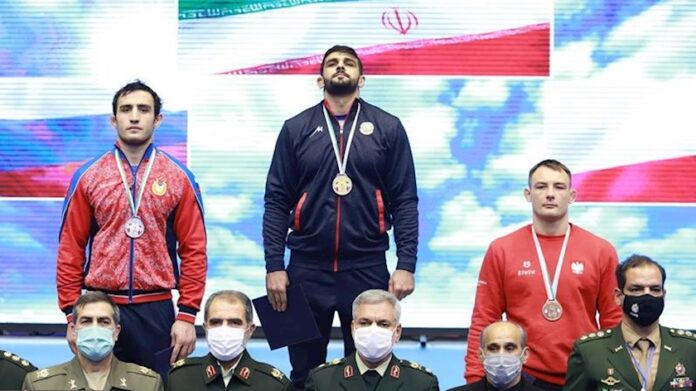
Iran U-23 freestyle team ranks 2nd at World Wrestling Championship

Iran’s freestyle wrestling team won one gold, two silver, and five bronze medals to finish runner-up in Serbia’s 2021 U23 World Wrestling Championships.

At the end of the competitions, Amir-Ali Azarpira won a gold medal in the competition in the 97kg weight class, and Mohammadsadegh Firouzpour and Sajjad Gholami won 2 silver medals in 74kg and 86kg categories.

Five Iranian wrestlers, including Ahmad Mohammadnejad-Javan (57kg), Ali-Akbar Fazli (70kg), Ali Savadkoohi (79kg), Amirhossein Firouzpour (92kg), and Mehdi Hashemi (125kg) also won bronze medals, and the Iranian team finished the runner-up with 140 points.

The Russian team and the Armenian team also won the first and third places, respectively.

Russia captured the title with 145 points while Iran finished second with 140. The surprise came at the third position which went to Armenia who had 114 points.

The 2021 U23 World Wrestling Championships were held from November 5th to 7th in Belgrade, Serbia.

Precision-strike suicide drone used in Iran large-scale army drills

Rear Admiral Mahmoud Mousavi says the Arash drone accurately hit its target after flying a long distance.

It comes on the second day of the drills in southern Iranian Mokran coastal area.

Mousavi said forces also seized the positions of the supposed enemy using smart and precision-strike artillery and missile fire as well as attack choppers and drones. 

The admiral also noted that the army’s ground force deployed indigenous reconnaissance drones across the area of the drills before using a combat drone to hit an enemy’s vessel.

He added that different tactics were also used by the ground force of the army to block the infiltration of land by the forces posing as the enemy and forced them to retreat. 

He said the ground forces were provided air cover by choppers and drones as well as fighter jets, which dropped 250-pound indigenous bombs to hit their targets.

The admiral further noted that the drills are network-based and integrated and all deployed systems use self-protecting equipment to counter electronic warfare. 

“Today, our enemies know better than anyone else that defensive capabilities, piled up in the Islamic Republic of Iran, are ready for use to counter them and that they will face surprises if they commit any miscalculation,” the admiral warned. 

Meanwhile, Deputy Commander of the Army’s Air Defense Force Brigadier General Alireza Elhami said the indigenous Mersad and Khordad-15 air defense systems were used to hit pre-determined air targets in a show of the available power, capabilities and knowledge in the Islamic Republic of Iran.

He said the army also extensively deployed military drones during the drills including short and long-range unmanned aircraft, which successfully completed reconnaissance, information gathering and assessment operations.

The major phase of the large-scale war game by the Iranian Army got underway on Sunday, involving four units of the Army, namely the Ground Force, the Naval Force, the Air Force and the Air Defense Force.

The maneuvers cover an area more than 1 square kilometers extending from the east of the Hormuz Strait all the way to the north of the Indian Ocean.

Navy Chief: Iran enjoys upper hand against enemies

Speaking on the sidelines of holding Iran’s Army Military Exercise dubbed “Zolfaghar 1400” in the southeast of the country, Rear Admiral Shahram Irani noted that coordinating among armed forces of the country and transferring technical know-how and knowledge to young individuals is the main aim of the military exercise.

Showing capabilities of the Armed Forces and in particular, the army’s strategic forces in ensuring the security of the country’s interests as well as familiarizing young personnel with the real scenes of battle are among the other objectives of holding this large-scale military exercise, he added.

Referring to the mission of various naval fleets of Iran’s Army Navy in the fight against terrorism, piracy and escorting merchant ships and oil tankers, Irani said, “Iran’s Army Navy forces have secured the country’s economic lifeline by escorting vessels and tankers as well as merchant ships.”

Today, the Islamic Republic of Iran has the upper hand to face an enemy on the battlefield, he reiterated.

The joint military exercise of Iran’s Army entitled “Zolfaghar 1400” kicked off on Sunday under the command of the Army’s Zolfaghar base.

Monitoring of the country’s airspace and general training area in the southern part of the country by the Air Defense Forces of the Islamic Republic of Iran, as well as combating hostile targets are among the targets of the ‘Zolfaghar 1400’ joint exercise

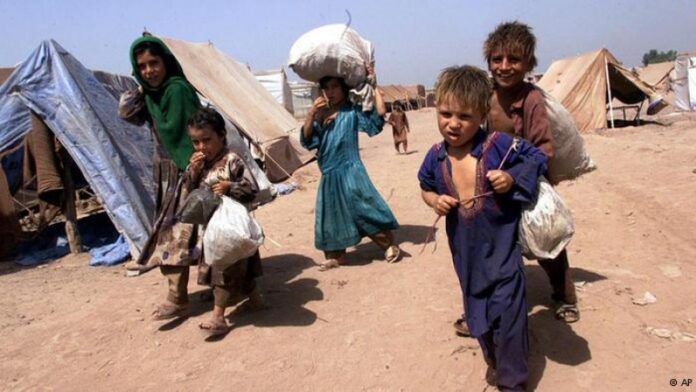
UN warns three million Afghans on brink of famine

The UN’s food agency said on Monday the number of people on the edge of famine in 43 countries had risen to 45 million, as acute hunger spikes around the world.

The jump from 42 million people earlier in the year was largely down to a food security assessment that found another 3 million people facing famine in Afghanistan, the World Food Program (WFP) reported.

“Tens of millions of people are staring into an abyss. We’ve got conflict, climate change and COVID-19 driving up the numbers of the acutely hungry,” said WFP Executive Director David Beasley.

“And the latest data show there are now more than 45 million people marching towards the brink of starvation,” he added after a trip to Afghanistan, where WFP is upping support for almost 23 million people.

“Fuel costs are up, food prices are soaring, fertilizer is more expensive, and all of this feeds into new crises like the one unfolding now in Afghanistan, as well as long-standing emergencies like Yemen and Syria,” he continued.

WFP announced the cost of averting famine globally now stands at $7 billion, up from $6.6 billion earlier in the year, but warned that traditional funding streams were overstretched.

Families facing acute food insecurity are being “forced to make devastating choices”, marrying off children early, pulling them out of school or feeding them locusts, wild leaves or cactus.

Multiple droughts in Afghanistan were combining with an economic meltdown to push families to the edge, while about 12.4 million people in Syria do not know where their next meal will come from – more than any time during the decade-long conflict, it added.

Increases in acute hunger are also being seen in Ethiopia, Haiti, Somalia, Angola, Kenya and Burundi, the Rome-based agency said.

Making Mashhadi sweets, time-consuming but enjoyable

To make it is time-consuming but the final result is enjoyable.


Ingredients needed for making Mashhadi sweets

Butter or solid oil: 100 grams

Powdered sugar: Half a cup

Vanilla: 1/2 teaspoon

Egg yolk: 1

Nectar or honey: 1 tablespoon of jam

Milk or warm water: A tablespoon

Cocoa powder: 1 tablespoon

Flour: 1 and a half cup


Ingredients for decoration

Melted milk and cocoa chocolate: As much as needed

Marmalade and jelly: As much as needed

Pistachio powder: As desired

Coconut powder: As desired


Recipe for making Mashhadi sweets  

1-First, we melt the butter or solid oil, but not hot. Then we mix it with powdered sugar and vanilla for 2 minutes with a mixer until it’s cream in color.

2-We add an egg yolk and beat for another two minutes with a mixer. Then we add a spoonful of honey or nectar with warm water or milk to the rest of material and stir it some more. Now we add cocoa powder and mix them with a mixer. Finally, we add the flour little by little and stir it with a spoon to collect the dough in the bowl.

3-We don’t need to knead the dough. If we stir it too much, oil will form in the dough, which is not good. Now we put the prepared dough in nylon and leave it in the refrigerator for half an hour. After 30 minutes, we spread the dough inside the nylon to a thickness of half a centimeter and spread it until all its parts are completely smooth.

4-Then we mold the dough in different or round shapes. We then put an oily paper on the tray with sweets arranged a little apart. We now empty the middle of the molded sweets with the back of a cylinder-shaped tool called masole.

5-We bake the sweets in an oven in a temperature of 180 degrees Celsius for 10 minutes, and after it cools, we melt the milk and cocoa chocolate separately using the Bain- marie method, and then we decorate the sweets that have been emptied in the middle using a masole. We can decorate them with chocolate, almonds, pistachio powder and coconut powder as much as we like.

6-Finally, we pour some marmalade or jelly in the middle of plain and unopened sweets. We need to place the plain sweets at the bottom and the decorated porridge on the first row of sweets to make them pair.

Iran to resume gas and oil exports to Afghanistan

Soleiman Amirkheyl said Iranian gas and oil exports have halted for a while due to some reasons. He added, “In talks with officials of the Islamic Republic of Iran, they told us the exports will restart from next week”. 

This is while the Afghanistan Chamber of Commerce and Investment recently announced that the country’s export process through Iran’s Chabahar port has been suspended for the past three months. 

Afghan officials cited technical problems in India’s Nhava Sheva Port as the cause of the halt in exports of goods from Iran’s Chabahar Port.

Turkish military base in Iraq hit by rockets

Two rockets struck the Turkish Zlikan military base in Iraq’s Nineveh province Sunday evening, a security source told Kurdistan 24.

There were no immediate details regarding the extent of the damage or casualties caused by the attack.

The source also stated on condition of anonymity that the rocket launch-equipped vehicle used in the assault had been seized in the Zaytoun area east of the Nineveh city of Mosul.

Turkish forces are stationed in the Zlikan base, located in Bashiqa district in northeastern Nineveh province.

Turkey on several occasions has stated that its military presence in Iraq and the Kurdistan Region aims to combat the Kurdistan Workers’ Party (PKK).

Museum of Iranian ethnic groups in Garmsar

For this reason, the content plan of Garmsar’s museum builds on anthropology and ethnology. 

The Museum of Ethnic Groups (Bagheri building) was founded by late Mirza Ali Bagheri, a benefactor of the city, in 1921 in the early Pahlavi I era. The main part of the museum was in the past in the form of a garden (kooshk) and a house for tropical areas during the Qajar era. 

The historical Bagheri House was put in the list of national monuments in 1999. 

On February 10, 2011, it was inaugurated as a museum of ethnicities (anthropology) with the aim of displaying the ethnic diversity. 

The most important and populous ethnic groups of Garmsar are Turkic-speaking, Lor, Kurdish, Arab and Elikai tribes. 

The majority of the population of the villages in Aradan and Garmsar are different clans of the Elikai nomadic tribes.

Iranian Intel. Ministry dismantles company for ripping off citizens

The Intelligence Ministry said the arrests were made in coordination with the Iranian Judiciary. 

According to a report by the IRIB, the founders and managers of the company are Iranians living in neighboring countries. 

The report also says they falsely introduced the group as an international company that buys and sells shares of reputable firms in foreign stock exchanges. It adds that the pyramid company used deceptive methods such as claiming to pay huge amounts of profit, presented a digital token called UNQT and ripped off a large number of citizens across the country. 

The Judiciary has put the detainees on trial for causing economic disruption in Iran.

Iraqi official asks for explanation about US defense system failure

A drone has targeted the Prime Minister Mustafa al-Kadhimi’s home in Baghdad on Sunday. The premier has announced he was not hurt in the incident.

“We are currently discussing the matter with the American side and officials from the US embassy. This is an issue that experts should throw light on and explain,” Major General Tahsin al-Khafaji said on Sunday.

A statement released by the Security Media Cell, affiliated with the Iraqi prime minister’s office, said al-Kadhimi was subjected to a failed assassination attempt with a booby-trapped drone early Sunday.

The statement added the drone attack targeted his residence, but the Iraqi prime minister was “unharmed” and is “in good health”.

The assassination attempt against al-Kadhimi involved three drones, the Interior Ministry said. It added Iraqi forces shot down two of the drones.

The purported assassination attempt against Iraqi Premier involved three drones, the Interior Ministry reported, branding the act a “terrorist attack.”

Two of the drones that targeted al-Kadhimi’s home in Baghdad’s Green Zone were downed and one reached the house, according to the ministry. Some members of his security detail were injured, but the senior official was unharmed.