Sunday, April 19, 2026
Home Blog Page 2288

US says not to take unilateral steps on Iran nuclear deal

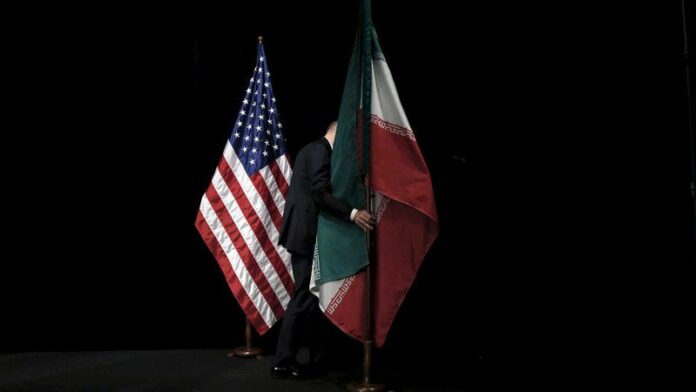
“We’ve been clear – we will not take unilateral steps. Mutual return to compliance is in the interests of the United States, it is in the interests of the P5+1, it is also … in the interests of Iran,” Price stated on Monday.

Tehran has stated Washington should stop demands and remove the illegal sanctions against the country. Iran has stressed the United States should first remove the sanctions before it could return to the landmark agreement.

Iranian Foreign Minister Hossein Amir Abdollahian has recently stressed Tehran will pursue a policy in the upcoming nuclear negotiations that will be aimed at removing the illegal and cruel US sanctions.

In 2015, Iran signed a nuclear deal, known officially as the Joint Comprehensive Plan of Actions (JCPOA), with the P5+1 group, which includes the United States, China, France, Russia, the United Kingdom, Germany and the European Union. It required Tehran to scale back its nuclear program and drastically reduce its uranium reserves in exchange for sanctions relief, including the lifting of an arms embargo five years after the deal was made.

In May 2018, the US abandoned its conciliatory stance, withdrawing from the JCPOA and implementing hardline policies against Iran, prompting the latter to largely discontinue its own obligations under the accord.

Since April, Vienna has been hosting talks aimed at preventing the Iran nuclear deal from failing altogether. The sixth round of the talks finished on June 20 but the negotiations have since hit a deadlock. The negotiations are set to resume on November 29.
Armenian soldier killed in border shoot-out

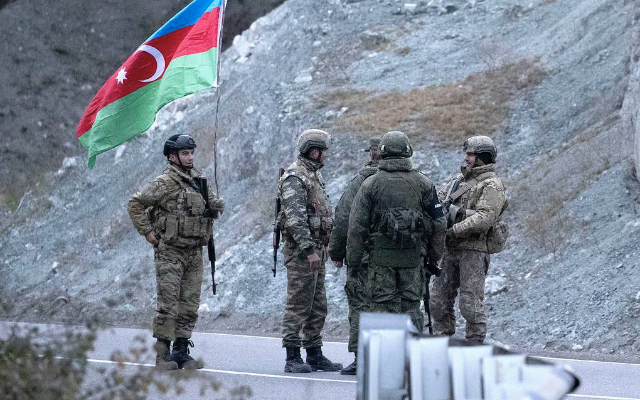
An Armenian soldier was killed in a shootout at the Armenian-Azerbaijani border in Armenia’s Gegharkunik Province, the press service of the Armenian Defense Ministry said on Monday.

“At about 18:10 local time on November 22, Azerbaijani troops opened fire with firearms of various calibers at the Armenian positions at the Armenian-Azerbaijani border near the village of Norabak in Gegharkunik Province. As a result of the Azerbaijani provocation, an Armenian soldier was killed,” the ministry announced, adding that the shooting was over by 19:30 local time.

Following the ceasefire in the Nagorno-Karabakh conflict zone last autumn, control over seven provinces adjunct to Nagorno-Karabakh came over to Azerbaijan and Armenia’s Syunik and Gegharkunik Provinces became adjacent to the border. The situation there deteriorated on May 12, when Armenia’s defense ministry said that Azerbaijani armed forces had tried to carry out “certain works” in a border area in Syunik Province in a bid to “adjust the border. Since then, the sides have been reporting border incidents from time to time.

On November 16, skirmishes between Armenian and Azerbaijani armies broke out in border areas in Syunik Province. Yerevan accused Azerbaijan of staging an offensive into Armenia’s territory, while Baku stated that Armenian troops had attacked Azerbaijani posts. Russian Defense Minister Sergey Shoigu had telephone conversations with his Armenian and Azerbaijani counterparts later on that day, Yerevan and Baku took measures to stabilize the situation. However, the sides continue to report random skirmishes at the border.

Iran hostage taking ends with death of gunman

Police were dispatched to the venue and intervened after reports that a gunman had killed five members of the family of his wife before fleeing, while holding two others captive.

“From the very beginning, police officers began their operation to identify and arrest [the gunman] and … found the hiding place of the murderer in the same vicinity [the murders took place],” Police Commander of the Fars Province Brigadier General Roham Bakhsh Habibi said.

“Officers were dispatched to the site after coordination with the judicial authority. The murderer started shooting at the police with a Kalashnikov rifle the moment he saw them.”

The general said it took officers one hour to release the captives while engaging the gunman and he was shot dead, after he refused to end the shootout. 

The victims included two of the gunman’s brothers in law as well as the wife and two children of one of them.

Shiraz Prosecutor’s office also said the motive for the murders was family and financial issues.

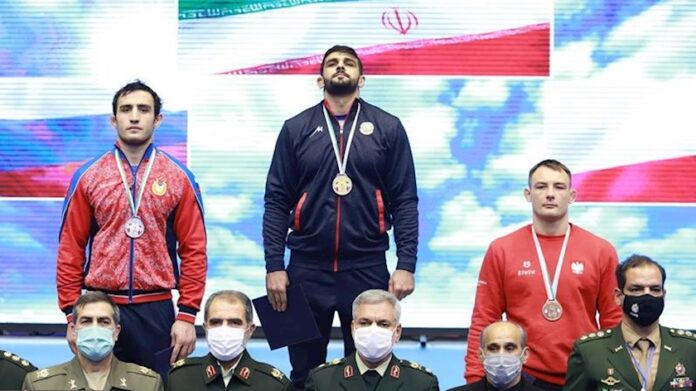
Iran wrestlers runners-up at world military championship

Iran won 4 gold, 4 silver, and two bronze medals and gained 210 points to finish runner-up in the 35th World Military Wrestling Championship.

The 35th World Military Wrestling Championship wrapped up Monday in the 12,000-seat hall of Tehran’s Azadi Stadium.

Iran team by Morteza Ghiyasi (65 kg), Bahman Teymouri (79 kg), Mohammad Hossein Mohammadian (97 kg), and Yadollah Mohebbi (125 kg) won gold medals.

Ahmad Mohammadnejad Javad (57 kg), Mohammad Baqer Yakhkashi (61 kg), Fariborz Babaei (74 kg), and Mohammad Hossein Mirbaghban (92 kg) won silver medals.

Mohammad Mehdi Yeganeh Jafari in the weight of 70 kg and Hadi Vafaeipour in the weight of 86 kg won bronze medals.

At the end of these competitions, the Russian team won first place with 215 points, the Iranian team became the runner-up with 210 points, and Armenia came in third with 140 points.

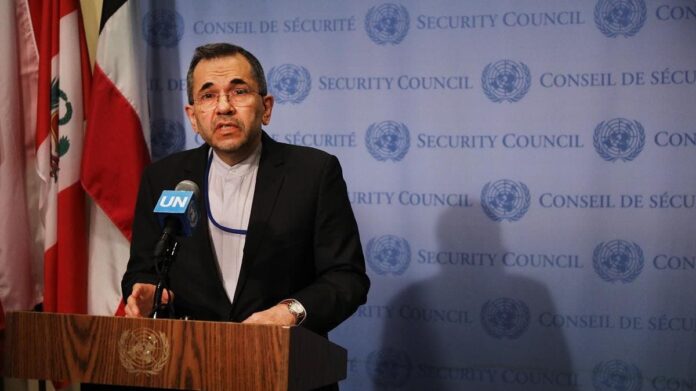
Iran: Illicit trade in small arms fuels terrorism

“We share the concerns about humanitarian, socio-economic and security consequences of the illicit trade in small arms and light weapons and their diversion to unauthorized recipients,” Majid Takht Ravanchi said in a Monday address to the High-Level Meeting of the General Assembly for the Appraisal of the United Nations Global Plan of Action against Trafficking in Persons.

He added that the “Program of Action to Prevent, Combat and Eradicate the Illicit Trade in Small Arms and Light Weapons in All Its Aspects” (PoA) is the only universal framework to address these multifaceted challenges.

“As a victim of foreign-backed terrorists, and faced with the threat of organized crime and trafficking in drugs linked to the illicit trade in small arms and light weapons, the Islamic Republic of Iran highly values the Program of Action and calls for ensuring its balanced, effective and full implementation including through identifying and addressing its implementation challenges,” Takht Ravanchi continued.

Iran’s ambassador to the UN stated that according to the Program of Action, “the illicit trade in small arms and light weapons in all its aspects sustains conflicts, exacerbates violence, contributes to the displacement of civilians, undermines respect for international humanitarian law, impedes the provision of humanitarian assistance to victims of armed conflict and fuels crime and terrorism”.

Takht Ravanchi, however, warned that in all efforts to combat the illicit trade in small arms and light weapons, the right of each country to manufacture, export, import and retain such weapons must be fully respected.

“Additionally, the scope of such efforts by the [Security] Council must be limited to those aspects that are related to serious adverse impacts of diversion of, and illicit trade in, small arms and light weapons on the conflict concerned,” he noted.

The US, Britain and some other Western governments have for years been involved in the provision of arms and weaponry to conflict zones across the world, and in particular, West Asia.

Earlier in the month, the US State Department approved the sale of $650 million worth of air-to-air missiles to Saudi Arabia to help Riyadh press ahead with its protracted military aggression against Yemen.

The package would include 280 AIM-120C-7/C-8 Advanced Medium Range Air-to-Air Missiles (AMRAAM), 596 LAU-128 Missile Rail Launchers (MRL) as well as support equipment and spare parts.

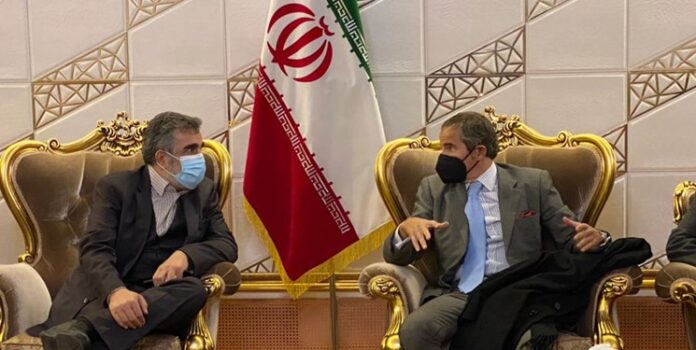
IAEA chief arrives in Tehran for talks

Rafael Grossi will hold negotiations with Foreign Minister Hossein Amir Abdollahian and Iran’s nuclear chief Mohammad Eslami.

Ahead of his trip, Grossi said he will discuss outstanding questions with Iranian officials and expressed hope for the establishment of “a cooperative channel of direct dialog so the IAEA can resume essential verification activities”.

Grossi’s visit is taking place just before a meeting of the IAEA’s 35-nation Board of Governors in the coming days.

On Monday, Iranian officials stepped up their calls on the international agency to resist political pressure.

Grossi’s trip comes as negotiators from Iran and the remaining parties to the Joint Comprehensive Plan of Action prepare to convene in Vienna for their seventh round of talks this year, with Tehran insisting that the process must lead to the removal of unilateral U.S. sanctions.

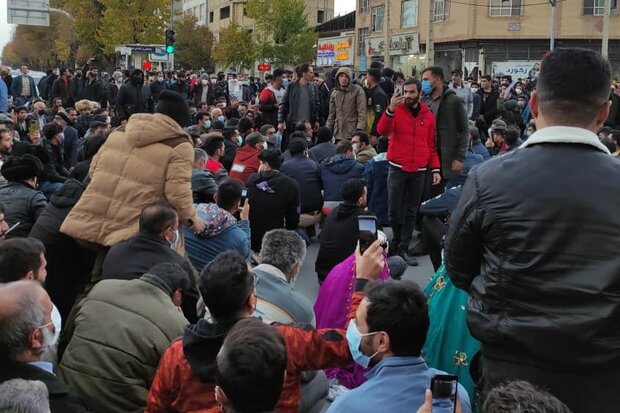
People in Iran’s Shahrekord hold protest over water problems

The protesters marched to the office of the governor general on Monday urging officials to fulfill their promises regarding provincial water issues including an uncompleted water transfer project.

They also chanted slogans expressing opposition to the transfer of the province’s water to other parts of the country.

Chaharmahal and Bakhtiari Province is among many of Iran’s provinces that have experienced lower rainfall in recent years.

Authorities have been using tankers to deliver water to two hundred cities and villages in this western province.

Monday’s protest comes days after thousands of people in the central city of Isfahan staged a demonstration against projects resulting in a major river drying up there.

The people in Isfahan are critical of the development of water-intensive industries in central Iran and want the re-distribution of the Zayandeh Rud River’s water to other cities to stop.

Iran is ranked among the world’s arid countries with its annual precipitation levels at about one-third of the global average. Hundreds of Iranian cities and villages, mostly in the central and southern parts of the country, are water-stressed with significantly lower rainfall in recent years.

Iran embassy urges Intl. community help with refugee influx

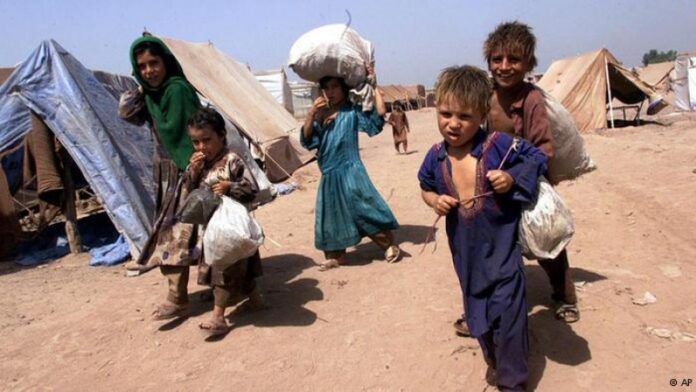
The embassy posted a video on its Twitter account with a message that says some 300 thousand Afghan refugees have entered Iran since the Taliban takeover of Afghanistan in August.

The tweet also said hundreds of thousands of other Afghans could enter Iran in the coming months and the global community should provide the Afghans with tangible support.

Earlier, Iran’s ambassador to Brussels underlined the necessity of Western governments assuming their responsibility in this regard, saying the Islamic Republic has done all it could for the displaced Afghans.

The Iranian diplomat was speaking at a conference on the ramifications of the Afghanistan situation for the Silk Road area. He noted that what is necessary for the time being is to set up makeshift hospitals along the border because hospitals inside Iran are already facing serious shortages and an outbreak of infectious diseases is a possibility given the huge crowds in the border areas.

The Iranian ambassador to Brussels said only 35 thousand out of the 4 million Afghans in Iran have been settled in camps and the rest of them are in urban areas. He added that no one in Iran forces a migrant to leave the country against their will.

The Iranian envoy however urged other countries to follow suit and avoid deporting refugees. He said those who expect regional countries to take in migrants and refugees should treat them well.

Top Iran negotiator calls on IAEA to resist political pressure

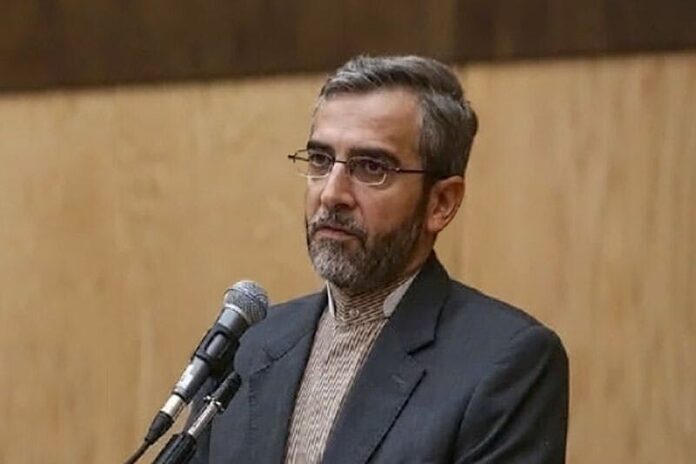
Bagheri Kani made the remarks in an interview with Al Jazeera TV Channel on Monday ahead of a visit by IAEA Chief Rafael Grossi to Tehran as Iran and world powers prepare for talks later this month in Vienna.

The deputy foreign minister said there is no reason for Iran to back down from its nuclear policy if the other side fails to adhere to its commitments, adding that “the United States has no choice but to accept the new reality regarding the nuclear deal”.

He stressed that the focus should now be on the seriousness of the Vienna talks and that Tehran wants the lifting of oppressive sanctions.

“We want guarantees that sanctions will be lifted, and Washington must provide them in the Vienna talks,” the top Iranian negotiator added.

He also warned that the window of opportunity provided by the nuclear deal will not remain open forever.

IAEA chief expresses hope for constructive Iran visit

afael Grossi
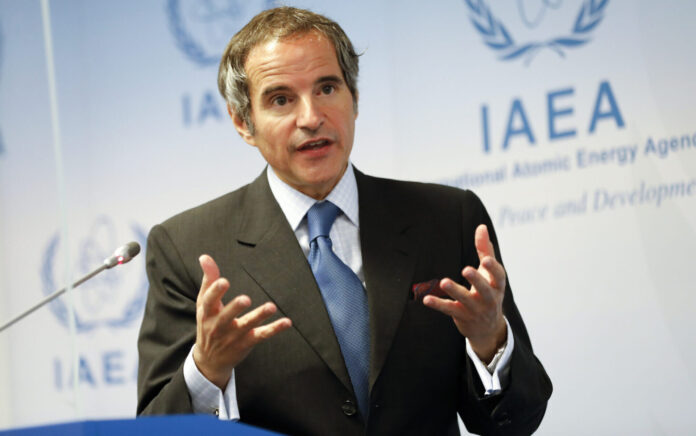
Director General of the International Atomic Energy Agency, IAEA, Rafael Mariano Grossi from Argentina, addresses the media during a news conference behind plexiglass shields regarding the agency's monitoring of Iran's nuclear energy program at the International Center in Vienna, Austria, Monday, June 7, 2021. (AP Photo/Lisa Leutner)

“I’m travelling to Tehran today for meetings with Iranian officials to address outstanding questions in Iran,” Grossi wrote on Twitter on Monday.

“I hope to establish a fruitful and cooperative channel of direct dialogue so the IAEA can resume essential verification activities in the country,” the head of the UN’s atomic agency added.

Tehran has expressed hope Grossi’s visit would be “constructive”.

Grossi was expected to meet Foreign Minister Hossein Amir Abdollahian and Mohammad Eslami, the chief of Iran’s Atomic Energy Organization (AEOI).

Iran has stopped observing some conditions of the Joint Comprehensive Plan Of Action (JCPOA) in 2019, after the United States withdrew from the plan in 2018 under then President Donald Trump and began imposing sanctions on Tehran.

Representatives of Tehran and the other signatories of its 2015 nuclear deal will be in Austria starting November 29 to try to restore the Iran nuclear deal.