
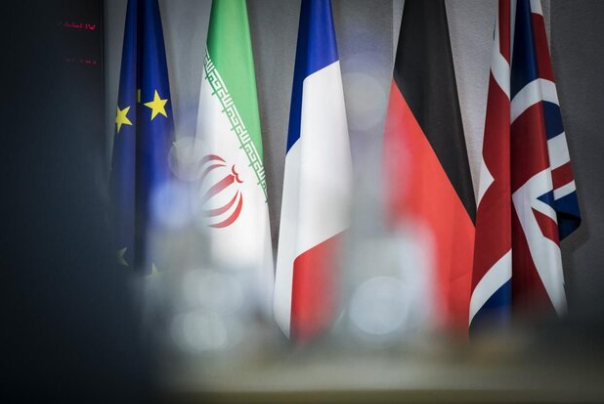
According to Tehran-based Meher News Agency, sources also say after two meetings between the working groups assessing Iran’s proposals, upon a request by the European parties to the Vienna talks, the Joint Commission of the JCPOA – the Iran nuclear deal- will probably take place later on Friday.
Previously, the parties to the negotiations said they would convene a session on the two Iranian drafts on the removal of sanctions and Iran’s nuclear activities on Thursday so that the Western sides would announce their stance on the documents.
This comes as reports coming out of Vienna say the European sides are widely divided and China and Russia objected to the matter.
The latest rounds of the Vienna negotiations between Tehran and the P4+1 group of countries- Russia, China, Britain, France and Germany- on the removal of the sanctions on Iran started several days ago.
Vienna talks: European negotiators plan returning to capitals for consultations
Man wanted for $400mn fraud extradited to Iran
Head of International Affairs of Police and Director General of Interpol in Iran Brigadier General Hadi Shirzad said on Thursday that the accused is the leader of a group with 15 members.
Shirzad explained that the group swindled traders, money changers, importers and exporters by setting up fake domestic and international companies, adding that the case involves many plaintiffs.
He said an extradition order was issued by a Russian court thanks to the special cooperation by Iran’s Ministry of Foreign Affairs, Iran’s Judiciary, the Embassy of the Islamic Republic of Iran in Moscow, and especially Interpol in the Russian capital.
Upon arrival in Tehran, the defendant claimed that he was unaware of the case against him, saying he had fulfilled all the tasks he was paid for.
Iran FM: We do not trust US and E3
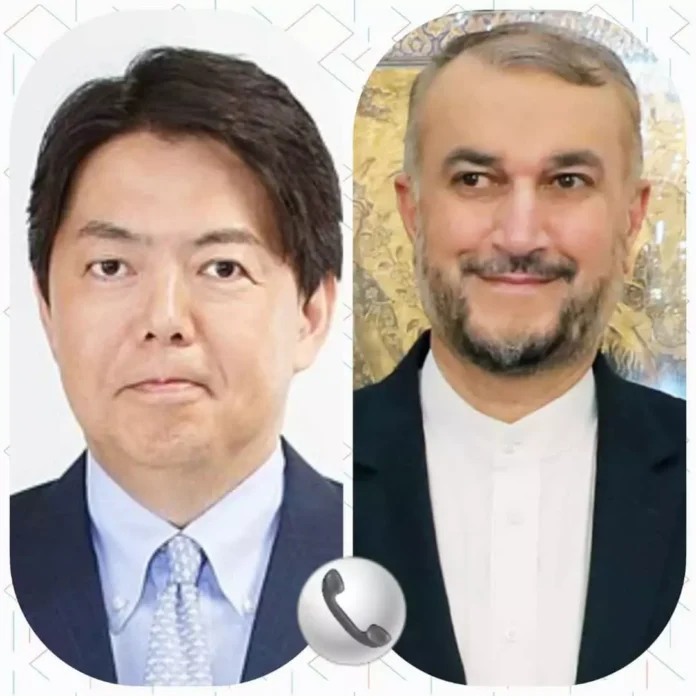
Hoeesein Amir Abdollahian made the remarks in a phone call with his Japanese counterpart Yoshimasa Hayashi.
He added that on the one hand the US officials call for talks and say they want to return to the nuclear deal, JCPOA, and on the other hand, they place new sanctions on Iranian individuals and companies. Amir Abdollahian said what matters is that these negotiations produce results and the Western parties show their seriousness and good faith at the negotiating table and in practice.
He underscored that Iran welcomes serious talks and a good agreement.
The two sides also talked about bilateral ties and regional as well as international developments.
Amir Abdollahian congratulated Hayashi on his appointment as Japan’s foreign minister and conveyed the greetings of Iran’s president to the high-ranking Japanese officials. The Iranian foreign minister also thanked Japan for its humanitarian assistance in the fight against Covid-19. Amir Abdollahian referred to the presence of four million Afghan refugees in Iran, saying “Fortunately, two and a half million Afghan refugees have been vaccinated so far, and Iran is ready to send Japanese humanitarian aid to the Afghan people”.
Amir Abdollahian also said the humanitarian situation in Afghanistan is worrying on the eve of winter and stressed the need to send humanitarian aid to the country.
He said, “Under these circumstances, all countries should rush to help the Afghan people and we are also ready to facilitate the delivery of humanitarian aid to Afghanistan by air or land”.
Amir Abdollahian also reviewed the various aspects of bilateral relations between Tehran and Tokyo and announced the readiness of the Islamic Republic to expand relations in economic, trade, humanitarian, environmental and health fields. He emphasized, “We can increase our cooperation in all areas”.
The Japanese foreign minister also said in the telephone conversation that his country is ready for expanding bilateral ties with Iran in the fields of health, environment and tourism and other areas.
Hayashi also welcomed the idea of sending Japan’s urgent relief aid to Afghanistan.
Yoshimasa Hayashi underlined the importance of the formation of an inclusive government in Afghanistan and respecting the rights of women and ethnic minorities and also the importance of eradicating terrorism in the country.
The Japanese foreign minister welcomed the beginning of the Vienna talks and called for both sides to show flexibility to reach a mutual agreement.
He also extended the high-ranking Japanese officials’ greetings to Iran’s president and invited Amir Abdollahian to visit Japan.
Source: Iran, China stances in Vienna force European side to back down
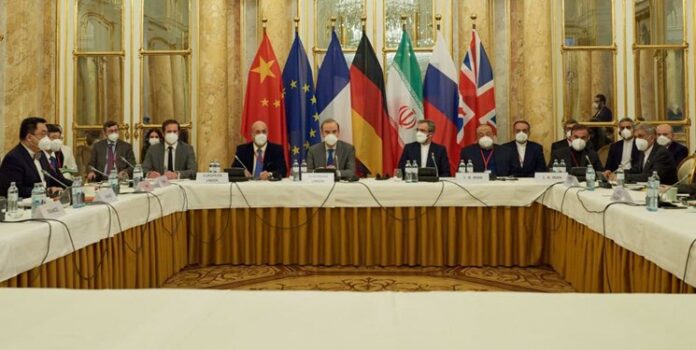
According to the source, one of the heads of the European delegations criticized Iran for adopting a strict approach in the negotiations.
According to Fars News Agency, the source adds that in response to this baseless criticism, the Iranian delegation warned against any threats during the talks.
The unnamed source also says the head of China’s negotiating team referred to the West’s dual approach to nuclear proliferation and criticized the recently signed AUKUS security pact under which the United States and Britain will help Australia acquire nuclear-powered submarines.
The reactions of the Iranian and Chinese delegations forced the representative of the European countries to back down, the source stated.
Talks between Iran and the P4+1 group – Russia, China, France, Britain and Germany- are still ongoing in Vienna with Tehran insisting that the dialog must lead to the removal of all sanctions against Iran if the other parties want the Islamic Republic to return to its commitments.
Iran: Israel showing true colors as Vienna talks advance
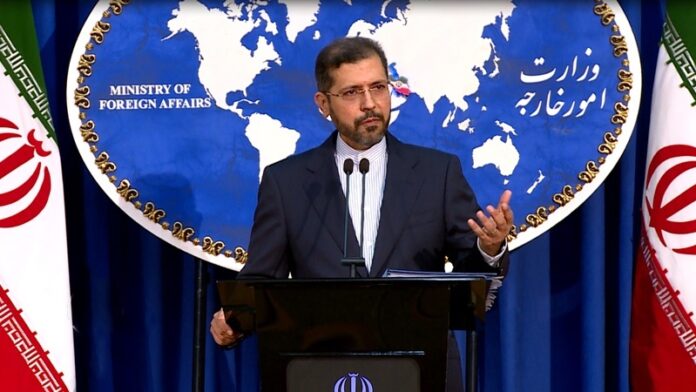
Iranian Foreign Ministry Spokesman Saeed Khatibzadeh said on Thursday that as the Vienna talks advance, Israel is once again showing its true colors by calling for the negotiations to be halted immediately.
Khatibzadeh said the regime’s reaction is not surprising because “dialog is always despised by the regime whose genesis is based on war, tension, and terror.”
He added that diplomatic delegations present in Vienna will not take instruction from Beit Aghion.
In a phone call on Thursday, Israeli Prime Minister Naftali Bennett urged U.S. Secretary of State Antony Blinken to immediately terminate negotiations in the Austrian capital.
Israel has been a fierce opponent of the Joint Comprehensive Plan of Action and heavily lobbied former United States President Donald Trump to scrap the deal.
Israel hailed Trump’s withdrawal from the JCPOA in 2018 and his re-imposition of sanctions against Tehran.
The regime now seems to have once again intensified its efforts and lobbying campaign to derail the dialog in Vienna where top negotiators from Iran, Russia, China, Britain, France and Germany are trying to find a way to remove sanctions against Iran and allow the United States to return to the 2015 nuclear deal.
The Israeli regime has tried to derail Iran’s atomic program through assassination of a number of Iranian nuclear scientists and several sabotage operations against atomic facilities of the Islamic Republic, but to no avail.
Iran’s chief negotiator: Ball in US court over JCPOA
Iran has tabled two draft documents in the highly fraught nuclear negotiations in Vienna demanding all sanctions imposed by former US President Donald Trump be removed.
The move will likely lead to a blame game, as Iran and the United States seek to revive the 2015 nuclear agreement.
The European states attending the talks are expected to request an adjournment, informed sources told MEE, the second time in three days that they have done so.
But the Iranian delegation wants to stay, saying the differences between parties should be hammered out around the table in Vienna.
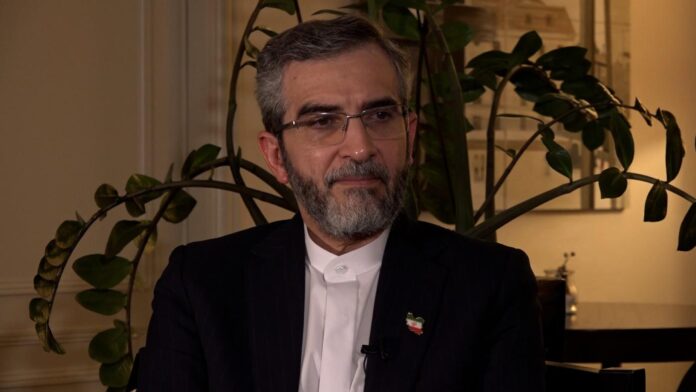
In his first interview since the talks began on Monday, Bagheri told Middle East Eye that the onus was on the US, not Iran, to come to the table.
Iran feels under no pressure to strike a deal over its nuclear enrichment programme, Bagheri stated, adding that the ball was squarely “in America’s court”.
Bagheri insisted that it was now up to US President Joe Biden to return to full compliance and lift sanctions, as Washington was the one to unilaterally walk away from the treaty in 2018.
Iran has stressed the US was in breach not only of the Joint Comprehensive Plan of Action (JCPOA), but also a UN resolution and international law.
However, Bagheri insisted that Iran was deadly serious about the negotiations and highlighted the fact that he has 40 top officials with him in the Austrian capital.
The deputy foreign minister dismissed recent suggestions that Iran was considering an interim deal, the so-called “less for less” plan, or that his country would contemplate a “JCPOA plus”, which would include the start of negotiations about Iran’s ballistic missile force or its regional involvement.
Biden made returning to the JCPOA the centrepiece of his administration’s Middle East policy, but has so far maintained the range of sanctions imposed by Trump to exert “maximum pressure” on Iran.
Talks between Iran and the G4+1 nations of Britain, France, China, Russia and Germany resumed in Vienna this week after a delay of five months, following the election of hardline President Ebrahim Raisi in Iran.
Since Trump’s unilateral withdrawal from the pact designed to curb Iran’s nuclear capabilities and ambitions, Iranian negotiators have refused to meet their US counterparts face to face.
The Iranian and the G4+1 delegations are in the Palais Coburg hotel, with messages sent along Vienna’s empty and draughty streets by EU officials to Americans waiting in the Marriott.
The US is insisting on Iran’s full compliance with the JCPOA, which would involve a reduction in the number of centrifuges and the total stockpile of enriched uranium, in return for the lifting of sanctions that they claim are related to Iran’s nuclear activities.
However, many of the sanctions imposed on Iran by Trump’s “maximum pressure” campaign would remain. Washington states these sanctions are related to missile technology, terrorism, attacks on oil installations in the Persian Gulf, Iranian support for the Houthis in Yemen, and human rights violations.
Iran sees all of these sanctions as directly linked to the nuclear deal and Trump’s attempts to force Tehran to change the agreement.
An Iranian source close to the government said that these non-nuclear related sanctions are a direct violation of the JCPOA because they impede normalisation of Iranian trade and business.
The Iranians want all post-JCPOA sanctions removed, along with those agreed within the original pact.
The talks in Vienna have got off to a rocky start.
MEE understands that splits have emerged in the international team involved in face-to-face talks with the Iranian delegation.
When representatives of a European country lambasted Iran, accusing it of intransigence, the head of the Chinese delegation highlighted western hypocrisy over nuclear proliferation, pointing to the AUKUS defence deal signed between the US, the UK and Australia in September.
The representative of the EU country then backed down when the Iranians told them not to threaten them. He then noted his opening remarks had been misinterpreted, a source familiar with the US position told MEE.
A spokesman for the EU at the talks did not respond to a request for comment.
The European side then requested an adjournment and the Iranian delegation dissented, claiming they would all have to return to Tehran. The talks then continued.
Since June, US officials have repeatedly warned that the window of opportunity for an agreement was closing. Bagheri dismissed this, making it clear that Iran felt no pressure.
“The issue of the negotiations now is not related to Iran. It is related to the United States,” he said, arguing that US violation of the JCPOA, UN Security Council Resolution 2231 and international law put the onus on Washington.
“Therefore, now the ball is in the court of the Americans. The Americans must remove the sanctions,” he added.
Rejecting claims that Iran had agreed to use a framework deal hammered out by the outgoing reformist-led Iranian administration in June as the basis for resumed talks, Bagheri said he was not aware of any interim deal that had been tabled by the Americans.
The chief negotiator added the draft drawn up after the previous six sessions, which is said to have contained such elements, was “full of brackets” and not an agreement.
He made clear Iran was not prepared to talk to the US about Iran’s regional involvement. He stated he was in “constant touch” with Iran’s neighbours and had himself gone to the UAE and Kuwait before arriving in Vienna. MEE learned the talks in the UAE were very successful.
Bagheri told MEE it was “crystal clear” Iran would not negotiate on its missile force.
“And as for our defensive capabilities, our benchmark is to secure and guarantee our national security, and it is crystal clear that no one is going to negotiate over their national security,” he said.
Bagheri, a noted former critic of the JCPOA who once called it “a sick child”, did say that he was prepared to negotiate the reinstatement of the agreement in good faith.
“I truly believe that this is a good opportunity for someone who is very familiar with various angles of the deal to defend the right and restore the right of the Iranian nation,” he added.
He stated there were two issues with the JCPOA: the letter of the law and the behaviour of those parties who had signed up to it. Neither the US, before it left the deal, nor the Europeans who remained, have properly lifted sanctions or traded with Iran.
“We also believe that the implementation of the JCPOA has not been precisely followed during the past several years,” the Iranian negotiator continued.
“The Americans, when they were in the JCPOA and had not yet withdrawn even at that time, they were not implementing the JCPOA comprehensively. So is the case with the Europeans that did not withdraw from the JCPOA, but in practice they failed to fully comply with the deal,” he added.
Iranian officials in Vienna say a major problem with the deal their previous administration signed was the lack of financial verification.
An Iranian source said that while former US President Barack Obama had agreed to the deal, the US Treasury threatened financial institutions and other business entities not to cooperate with Iran.
Bagheri’s 40-person-strong delegation includes two other deputy foreign ministers and a former governor of the Iranian central bank. This team is designed to “verify” whether any commitment to lift sanctions could be independently guaranteed by Iran.
In the run up to the talks in Vienna, Iran’s nuclear facilities have been repeatedly hit by attacks or acts of sabotage, which Tehran has accused Israel and the US of launching.
Iran’s main nuclear facilities at Natanz were hit in April for the second time in a year, and in June an explosion occurred at a site where uranium enrichment centrifuges were being manufactured.
Former government spokesman Ali Rabiei noted at the time the attack on Karaj was largely unsuccessful and claimed the damage to equipment was “insignificant”, but satellite images showed a section of the roof had been blown off, with signs of a fire.
Since then, Iran has refused to allow the International Atomic Energy Agency (IAEA) inspectors back into Karaj to reinstall cameras damaged in the explosion, claiming that footage obtained was used to prepare the attack, a claim vigorously denied by the IAEA.
These attacks have allowed Iran to “build back better”, in the words of US officials who complained to Israel that while tactically satisfying, the operations had only allowed Iran’s capacity to enrich uranium to grow.
The IAEA said in its latest report that Iran had installed 170 IR-6 centrifuges at its Fordow uranium enrichment facility, and The Wall Street Journal noted that the production line at Faraj was back in operation.
According to the most recent IAEA report, Iran’s stockpiles of uranium enriched to 20 percent have fluctuated, but stockpiles of uranium enriched to 60 percent have grown.
IRGC commander advises US to get out of areas adjacent to Iran
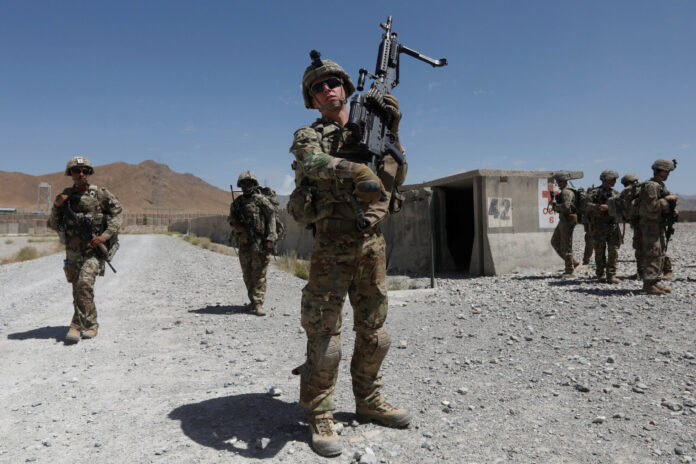
“We tell Americans that you still have time to leave the geography around us in humiliation, otherwise you will be expelled from all this geography worse than what you experienced in Afghanistan,” Gha’ani said that during a ceremony held to commemorate the martyrdom of one of IRGC commanders in Fars Province in southwest Iran on Thursday.
The Iranian commander also told the Americans “You cannot do what you used to do in the past any longer.”
“The hit and run tactic no longer works,” he added.
General Gha’ani also noted that the Americans fought in Afghanistan for twenty years while they achieved nothing.
He further described the US failure in Afghanistan as its worst experience.
“The Americans used to start a war in the world and made a profit by selling weapons, but they came to Afghanistan and Iraq uninvited, however after 20 years, they negotiated while they did not get anything in return, although they also committed treason in the negotiations and created the current issues for the people of Afghanistan today,” he further pointed out.
The IRGC Quds Force commander further stated that the US sanctions and threats do not work against the Iranian nations at all.
IRGC cmdr.: Iran defeated many plots during past 43 years
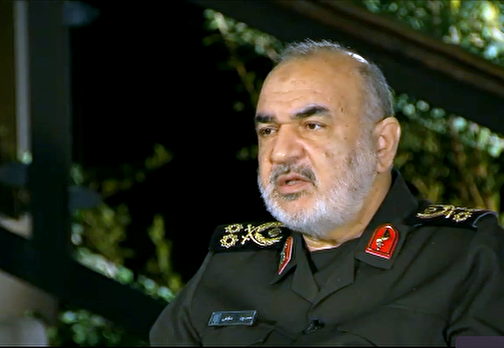
Salami made the comment in a speech to the people of Ilam province in western Iran on Thursday. He added evils have always tried to turn nations into slaves, to impoverish them and to destroy their spiritual life and cultural identity, and this arrogant tradition will continue.
Salami also praised the role of the people of Ilam during the war, saying they shone in the war and gave a dignified life to the history of Iran.
Salami noted that the arrogant powers hatched very dangerous plots against the Iranian nation during the 43 years after the victory of the Islamic Revolution to defeat Iranians.
He added that the United States and its allies have not given up trying to rob the Iranian people of their dignity.
Salami however said Iran maintained and promoted its independence and territorial integrity despite all the conspiracies.
He said Iran is now so powerful that the enemies have removed their military option against the country off the table.
Iran president orders authorities to immediately provide medicine for SMA patients
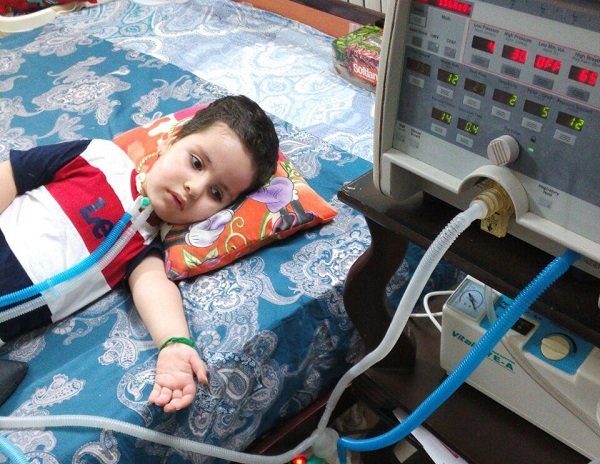
In a meeting with a group of SMA patients’ families on Thursday, the president listened to the concerns of the patients’ families and the report of the minister of health and relevant officials on the methods of providing necessary medicine for people with special diseases.
The president said drugs needed by SMA patients must be prepared as soon as possible for a medium and long term period.
SMA patients and their families had been gathering outside the parliament for several days this week, demanding authorities import medicine as soon as possible to address a serious shortage in the country.
Spinal muscular atrophy is a genetic disease. It affects the central nervous system, peripheral nervous system, and muscle movement making the patients unable to walk, eat, or breathe.
President Raisi made an unannounced visit to a few SMA families outside the parliament on Wednesday, who were protesting lack of SMA medicine.
The unilateral sanctions imposed by the United States against Iran over the past years have seriously hampered the country’s efforts to import much-needed medical supplies.
Russia denies Vienna talks at impasse
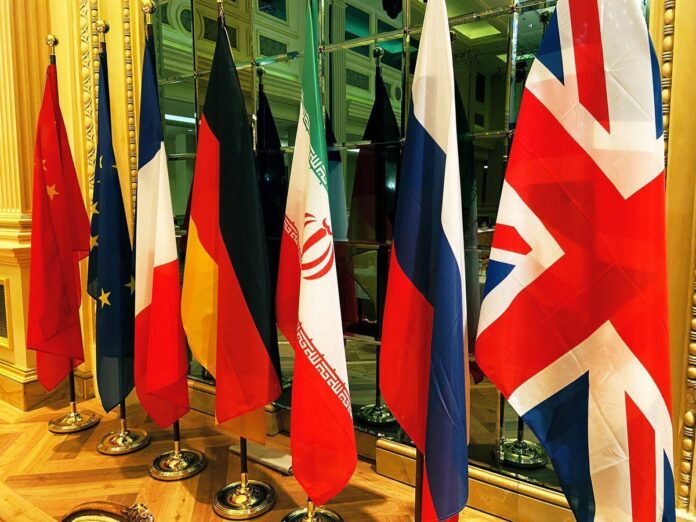
The Russian Foreign Ministry issued a statement, saying the common goal of the Vienna negotiators is reviving the UN Security Council. It said those who claim the talks have stalled are wrong.
The Russian Foreign Ministry added that all the negotiating parties pursue one goal, and that is the swift return of the nuclear agreement to the agreed framework without any annexation or exemption.
Moscow noted that the negotiators aim to ensure the continued implementation of the Iran nuclear deal, known as the JCPOA.
“What is important is that the ongoing negotiations build on the results of the previous six rounds, which happened from April to June 2021, and Russia has made great efforts to achieve this,” the Russian Foreign Ministry said. The statement from the Russian Foreign Ministry comes as on Wednesday the US news outlet Politico quoted negotiators as estimating that roughly 70 to 80 percent of the agreement was complete, with the remaining 20 to 30 percent containing the most difficult questions, such as what to do about Iran’s many advanced centrifuges.
On the other hand, in recent days and weeks, the Zionist regime has made every effort to bring the nuclear talks to a standstill, even claiming during the Vienna talks that Iran is enriching uranium to 90%, while Rafael Grossi, Director General of the International Atomic Energy Agency, has said there is currently no 90% enrichment in Iran.
