Thursday, April 23, 2026
Home Blog Page 2241

Iranians mark martyrdom anniversary of Hazrat Fatemeh

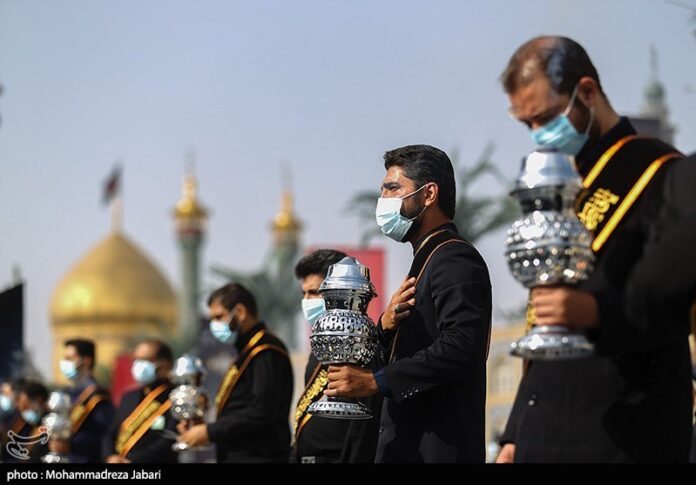
Black flags of mourning have been hoisted on the dome of the shrine of Hazrat Masoumeh (AS) in Qom and they are also flying in the streets and squares across the city. Hazrat Masoumeh is the sister of Imam Reza, the eighth Shia Imam.

Mourning ceremonies marking the occasion started on Saturday morning. At the ceremonies lecturers and eulogizers addressed crowds of people commemorating Hazrat Fatemeh’s death.

People across Iran, especially in the holy cities of Qom and Mashhad, mark the martyrdom anniversary of Hazrat Fatemeh each year at this time.

Covid deaths hit lowest level in a year

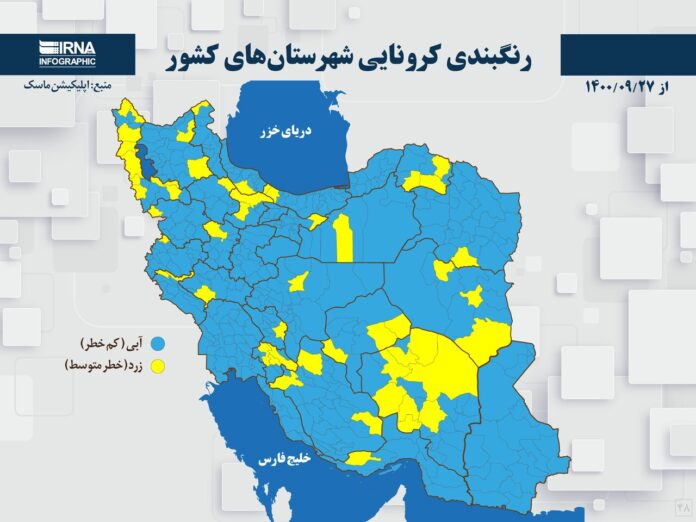
The total fatalities now stand at 131,033. Most Covid deaths of the past 24 hours happened in Tehran where 6 people succumbed to the disease. Currently, no cities are marked red or orange in Iran in terms of risk from the Coronavirus while 395 cities and towns are blue, which shows the lowest level of danger.

Following the fifth wave of Covid, Iran has seen a downward trend in deaths and infections. This has been attributed to the government’s measures to import huge quantities of Covid vaccine and also domestic production of jabs.

A total of 112,819,927 doses of vaccine have been administered in Iran since a countrywide vaccination campaign started last year.

Despite the decline in the number of deaths and new cases, authorities are warning about the Omicran variant of Covid, saying failure to observe health protocols could reverse the downward trend.

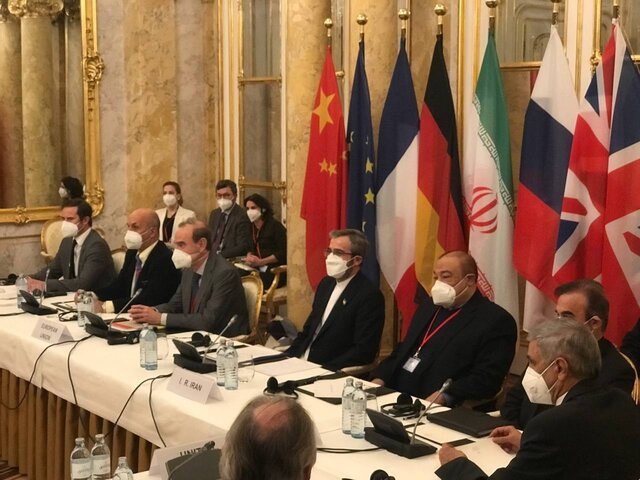
Negotiators in Vienna know next right steps: Russia

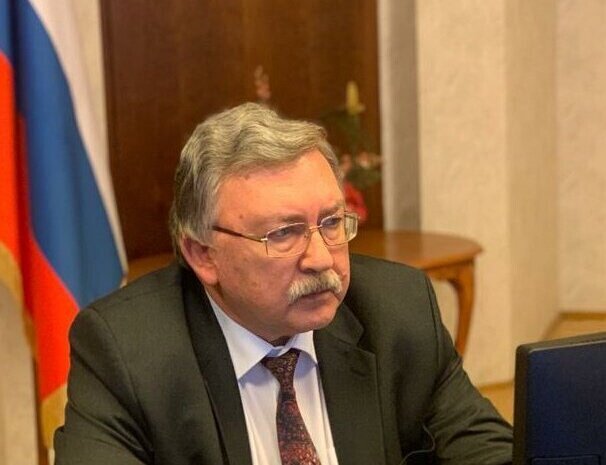
Mikhail Ulyanov said the key result of the seventh round of talks in Vienna was that ground has been prepared to revise the documents available on the negotiating table.

The negotiators have got used to each other, said Ulyanov, who is also Russia’s representative to international organizations in Vienna.

He said “we and the Western sides” have come to better realize what the next right steps will be.

The top diplomat added none of the negotiators was trying to undermine the first six round of negotiations.

Ulyanov said negotiators showed a respectful approach toward the new elements in Iran’s position.

“This was very important and we achieved it,” he said.

He added the next round of negotiations will be held in late December or early January next year, though no exact date has been set, yet.

He underlined cooperation between the Russian and American delegations at the talks is pragmatic and based on the two countries’ interests.

He said Moscow and Washington are interested in the revival of the 2015 Iran nuclear deal and the lifting of the sanctions imposed on Iran during the tenure of Donald Trump, the former US president.

Daily: Opponents of JCPOA revival benefit from anti-Iran sanctions

“Some see their interests at stake as the negotiations make progress, and others may want to disregard the principles, ideals, or interests of the country and the nation in order to expedite reaching an outcome in the negotiations. Both are wrong ideas and negotiators should not give in to either,” the daily wrote in an opinion piece.

The newspaper says given the comments and actions of officials in charge of the country’s foreign policy and the Atomic Energy Organization of Iran in recent days, it appears that they are preparing the ground for reaching an agreement in Vienna in coordination with the decision-makers and officials responsible for the talks in Vienna.

Iran’s voluntary move to allow the International Atomic Energy Agency to install cameras in the Karaj facility and the comments of Iranian Foreign Minister Hossein Amir Abdollahian about the lifting of sanctions are two examples of such actions and comments, the daily noted.

Now that the negotiating team is determined to resolve the disputes, revive the Joint Comprehensive Plan of Action and lift the sanctions with the full support of the establishment, everyone should support the negotiators, the Jomhouri-e Eslami wrote.

The establishment has decided to resolve the existing differences, to revive the JCPOA and to lift the sanctions while protecting Iran’s principles, ideals, and national interests, the daily added.

The Jomhouri-e Eslami described the opponents of  JCPOA revival inside Iran as businessmen who benefit from anti-Iran sanctions, and foreign opponents of the JCPOA as those opposed to the Islamic Republic of Iran.

Vienna talks: Iran govt. daily says no full trust in E3

According the “Iran” daily, the Islamic Republic is the main player in the Vienna talks aimed at getting US sanctions against Iran lifted.   

“In the new round of talks, the main player is the Islamic Republic of Iran, and the respondent is the Western side, which can give us the upper hand,” wrote the daily, that normally reflects the government stances.

The paper noted talks are moving at a snail’s pace, adding “However, we are at the beginning of the talks, and from now on, we should discuss every single item and areas on which divisions remain.”

“Obviously, the Western side will not sit idly by and will be strict with giving concessions, the same way that it has been trying all along to use all levers and propaganda campaigns as well as the “good cop, bad cop” game in order to keep Iran from securing its demands,” it explained.

“It is clear that the talks are moving forward slowly and one can never have complete trust, especially in the three European countries, as there is uncertainty over whether they will fully go for real talks or will just display a show and only sometimes get engaged in real negotiations,” the daily added.

“It is up to our negotiating team to keep talks with the Western side on a positive and forward-moving track,” it said, adding, “This is a difficult job which our diplomats seem to have been able to do, so far.”

Al-Jazeera corrects report of ‘Tehran-Washington deal’ on sanctions removal

Iran’s chief nuclear negotiator to Vienna talks Ali Bagheri Kani had been quoted as telling Al-Jazeera that Iran and the US were close to reaching agreement on the removal of sanctions.

However, as quoted by IRNA, Bagheri Kani had made no mention of “the US” in his remarks.

According to IRNA, In a false report due to translation error, Al-Jazeera had quoted the chief negotiator as saying that Tehran and Washington were close to reaching a deal on the lifting of sanctions.

In the corrected version of the report, Al-Jazeera revised its original account by quoting Bagheri Kani as saying that the Western sides have accepted some points with regards to the lifting of sanctions “which I consider as minor progress.”

Al-Jazeera further quoted Bagheri Kani as saying that the future round of talks could be the last one if the other parties to the negotiations accept Iran’s logical point of view.

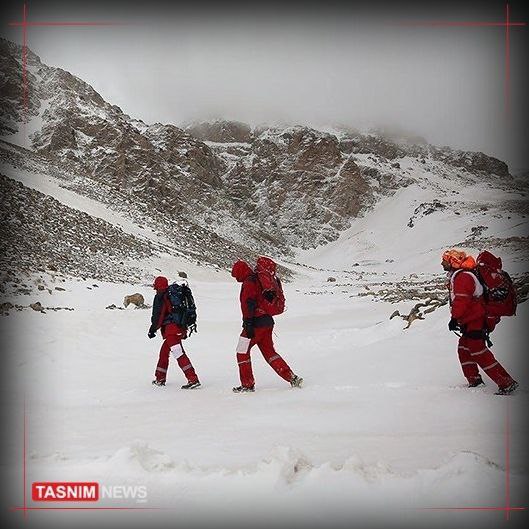
Rescuers find body of climber who went missing in Dizin heights

Authorities say the body of the climber, who fell to his death, was transferred out of the mountainous area by a helicopter.  

Search teams found the nine others alive in the early hours of Friday after a hunt that lasted several hours.

The group of climbers, who went to the Dizin heights for a hike, went missing on Thursday triggering a search and rescue operation.

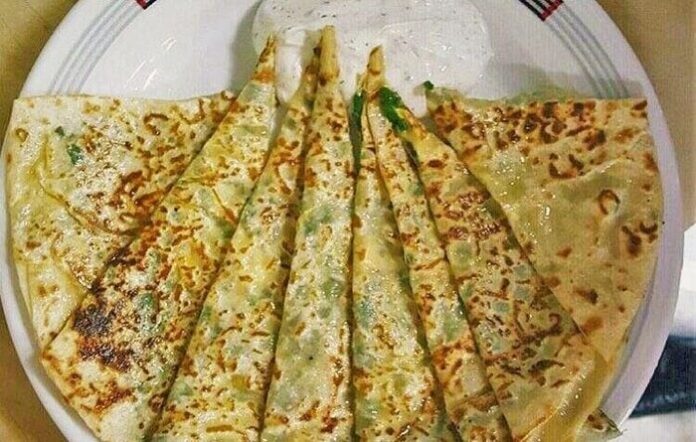
“Kalaneh”, a reason for getting together in Iran’s Sardasht

This traditional food is made by women, especially the older ones in villages, and when it is ready, the rest of the people of the village show up and eat it together.

Recipe for Kalaneh:

Traditional tools can be used for spreading the dough and baking it. You will also need some local green onions, flour, dough and a clean place for the tools and the ingredients needed to prepare the traditional dish.

One of the women mixes the flour and water to prepare the dough.

Ingredients: Two cups of flour, 100 grams of spring onion, 1/2 cup of butter oil, one cup of milk, salt and sugar.

First, finely chop the spring onions.

Sift the flour 2-3 times and pour it into a relatively large bowl and dig a hole in its center. 

Then add some milk to it and if you want, you can add some sugar at this point.

Add some salt to the flour mixture and stir until more milk needs to be added. Add the milk to the dough and stir until you finally get soft dough. Knead the dough thoroughly with your hands until it is ready. 


Then leave the prepared dough for 25 to 30 minutes to rest and rise.

When the dough puffs up and doubles in volume, divide it into several equal portions.

Place the rounded parts of dough (approximately 100 grams each) one after the other on a clean mat to which some flour has already been added.

Another one of the women spreads the dough pieces so that it is neither thick nor so thin that it burns, and delivers them to another woman who pours the finely chopped onions over the flattened dough.

In the final stage, the dough and the chopped onions are put on a heated traditional tool called “Saaj” to bake.

The lady in charge of cooking the Kalanehs turns them on the Saaj at regular times to bake them on both sides, and finally puts the cooked and prepared Kalanehs on a table to cool.

You can eat them any way you want, some like it hot, some like it cold!

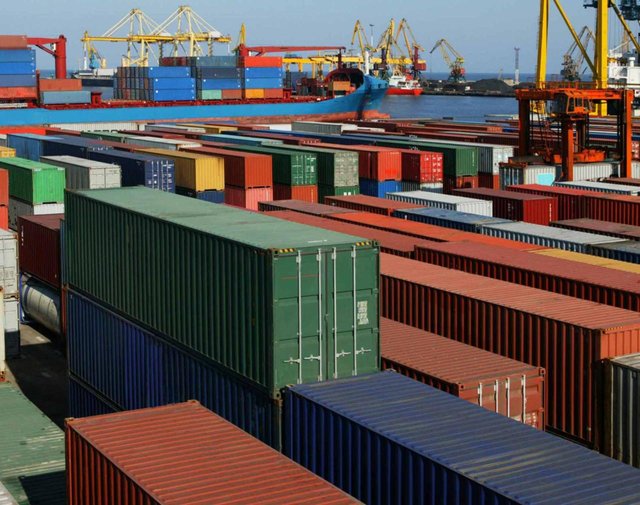
Iran’s trade with neighbors reach $33bn in eight months: official

Iranian Customs Spokesman Rouhollah Latifi said Iraq, Turkey, the United Arab Emirates (UAE), Afghanistan and Pakistan are the top five countries purchasing Iranian goods.

Except for Afghanistan, he added, Iran’s exports to the other four countries rose in recent months.

He added these five countries are followed by Russia, Oman, the Azerbaijan Republic, Turkmenistan, Kazakhstan, Qatar, Kuwait, Bahrain and Saudi Arabia as countries purchasing commodities from Iran.

In terms of value, said the official, some 40% of Iran’s exports to neighboring countries included petrochemical products, LNG and oil derivatives.

“The rest included foodstuff, agricultural produce and industrial products as well as construction and mineral materials,” he explained.

He said Iran has also imported over $32 billion worth of goods from neighboring countries over the past eight months.

Iran has been under crushing US sanctions that severely limit it trade with other countries.