Friday, April 24, 2026
Home Blog Page 2232

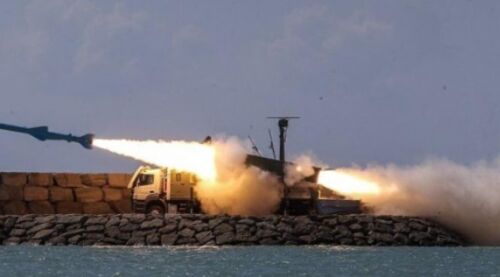
IRGC fires cruise missiles with pinpoint capabilities during drills

The medium range cruise missiles, which were fired from floating and offshore platforms, hit their targets at sea.

Commander of the Islamic Revolution Guards Corps Navy Rear Admiral Alireza Tangsiri said the important capabilities of these missiles are radar evasion, resistance to electronic warfare, precise targeting in tough conditions, high speed, powerful warhead and special radars.

The IRGC forces also exercised drone operations, with one unmanned aerial vehicle simultaneously destroying two targets.

Chief Commander of the Islamic Revolution Guards Corps Major General Hossein Salami said the IRGC forces launched advanced suicide and offensive drones on the fourth day of the drills.

The maneuvers kicked off on Monday and will continue until Friday in the southern provinces of Hormozgan, Bushehr, and Khuzestan.

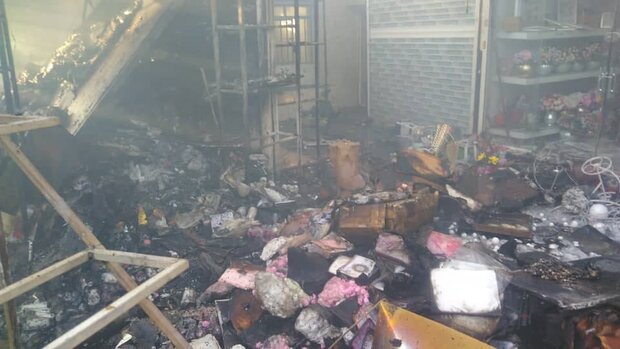
Gas blast kills two at Tehran flower market

The blast and ensuing fire in Tehran’s southeast destroyed several stores.

Shops at Shahid Mahallati flower market have caught fire several times in the past.

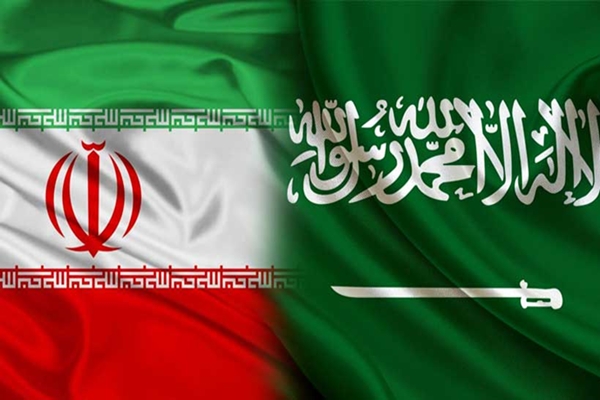
Iran FM: We are ready for next round of talks with Saudis

Tehran Still Ready to Mend Ties with Riyadh Despite ‘Foolish’ Moves

Amir Abdollahian however said Tehran has yet to receive a persuasive response from Riyadh.

The foreign minister also thanked the Iraqi government for its efforts to normalize relations between Tehran and Riyadh. He was speaking at a joint press conference with his Iraqi counterpart in Tehran on Thursday.

Amir Abdollahian added that the Saudis have agreed to issue visas for three Iranian diplomats who will be stationed at the headquarters of the Islamic Cooperation Organization in Jeddah.

Iran and Saudi Arabia have held several rounds of negotiations in Baghdad to normalize their relations.

The Saudis moved first in cutting ties with Iran in early 2016 after Iranians protested the execution of Shia Saudi cleric Sheikh Nimr al-Nimr by holding rallies outside the Saudi embassy in Tehran.

Iranian footballer Azmun selected best player of 2021 in Russia

Azmoun, member of Iranian national team who is the forward of Russia’s giants Zenit St. Petersburg team, won the title of the best football player of the country in 2021 in a poll conducted by the Russian newspaper Sport Express.

Sixteen professional coaches, 16 senior football managers, 16 reporters from the Sport Express newspaper, as well as football fans, took part in the poll on the newspaper’s website.

The Zenit St Petersburg centre-forward also plays for the national team of Iran as a striker.

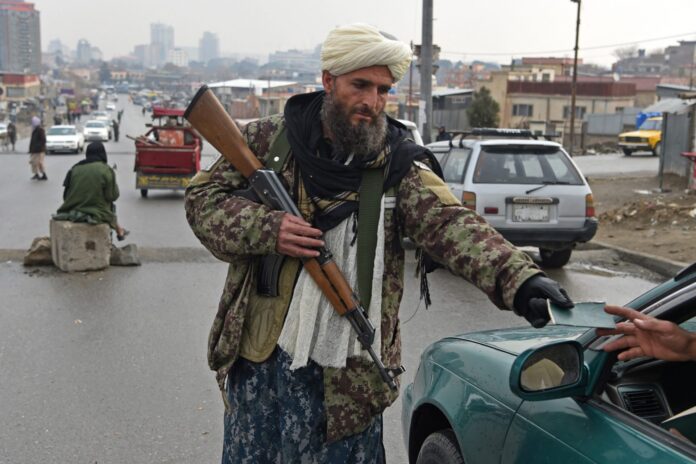
Blast in Kabul kills one, wounding several people

A spokesman for the Afghanistan’s Interior Ministry said the attacker was shot and killed while trying to enter the passport office premises.

One member of the Taliban who was a witness told Reuters multiple people were injured, and the building and streets around the area were locked down by Taliban security forces.

Large crowds of Afghans have been thronging outside the passport office in a bid to get travel documents in recent days after the service was restarted after weeks of suspension.

Officials stated that Thursdays are reserved as a special day for Taliban officials to visit the passport office to make travel documents.

No group has claimed responsibility for the explosion yet. It is worth mentioning that Daesh has been targeting the Taliban fighters since they recapture power on August 15.

US: Saudi Arabia building ballistic missiles with China’s help

Saudi Arabia is known to have purchased ballistic missiles from China in the past but has never been able to build its own — until now, according to three sources familiar with the latest intelligence.

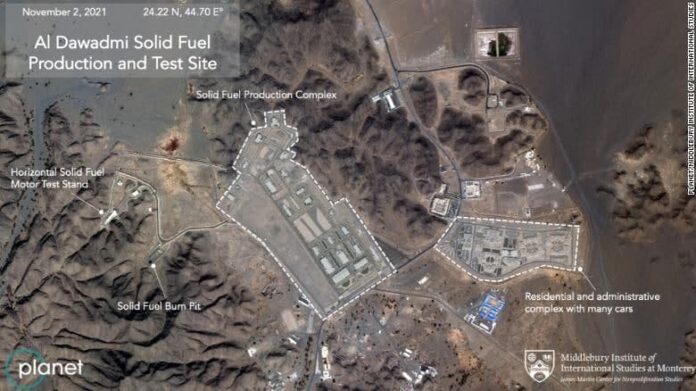
Satellite images obtained by CNN also suggest the Kingdom is currently manufacturing the weapons in at least one location.

US officials at numerous agencies, including the National Security Council at the White House, have been briefed in recent months on classified intelligence revealing multiple large-scale transfers of sensitive ballistic missile technology between China and Saudi Arabia, according to two sources familiar with the latest assessments.

The Joe Biden administration is now confronted with increasingly urgent questions about whether Saudi’s ballistic missile advancements could dramatically change regional power dynamics and complicate efforts to expand the terms of a nuclear deal with Iran to include restraints on its own missile technology — a goal shared by the US, Europe, Israel and Persian Gulf countries.

Iran and Saudi Arabia are bitter enemies and it is unlikely Tehran will agree to stop making ballistic missiles if Saudi Arabia has begun manufacturing its own.

“While significant attention has been focused on Iran’s large ballistic missile program, Saudi Arabia’s development and now production of ballistic missiles has not received the same level of scrutiny,” Jeffrey Lewis, a weapons expert and professor at the Middlebury Institute of International Studies, told CNN.

“The domestic production of ballistic missiles by Saudi Arabia suggests that any diplomatic effort to control missile proliferation would need to involve other regional actors, like Saudi Arabia and Israel, that produce their own ballistic missiles,” Lewis added.

Any US response could also be complicated by diplomatic considerations with China, as the Biden administration seeks to reengage Beijing on several other high-priority policy issues, including climate, trade and the pandemic.

“It’s all a matter of calibration,” a senior administration official told CNN.

The National Security Council and CIA declined to comment.

Asked if there have been any recent transfers of sensitive ballistic missile technology between China and Saudi Arabia, a spokesperson for China’s Ministry of Foreign Affairs told CNN in a statement that the two countries are “comprehensive strategic partners” and “have maintained friendly cooperation in all fields, including in the field of military trade.”

“Such cooperation does not violate any international law and does not involve the proliferation of weapons of mass destruction,” the statement noted.

The Saudi Government and embassy in Washington did not respond to CNN’s request for comment.

CNN first reported in 2019 that US intelligence agencies were aware that Saudi Arabia was collaborating with China to advance its ballistic missile program.

The Donald Trump administration did not initially disclose its knowledge of that classified intelligence to key members of Congress, infuriating Democrats who discovered it outside of regular US government channels and concluded it had been deliberately left out of a series of briefings where they say it should have been presented.

That fueled Democratic criticism that the Trump administration was too soft on Saudi. Nuclear proliferation experts also say Trump’s lack of response emboldened the Saudis to continue expanding their ballistic missile program.

“Normally, the US would have pressured Saudi Arabia not to pursue these capabilities, but the first indicators that the Saudis were pursuing these capabilities indigenously emerged during the Trump era. The Trump administration, to put it lightly, was not interested in bearing down on Riyadh over these issues,” according to Ankit Panda, a nuclear policy and weapons expert at the Carnegie Endowment for International Peace.

Some lawmakers have been briefed over the past few months on new intelligence about transfers of ballistic missile tech between Saudi Arabia and China, multiple sources told CNN.

The Biden administration is preparing to sanction some organizations involved in the transfers, sources told CNN, though some on Capitol Hill are concerned the White House is not willing to impose significant consequences on the Saudi government for its actions.

Given the current state of negotiations with Iran, the Saudi missile program could make an already thorny problem even more difficult.

“A robust Saudi missile program would introduce new challenges to constraining other missile programs in the region. To take just one example, Iran’s missiles, which are a major concern to the US, would be more difficult to constrain in the future without parallel constraints on a growing Saudi program,” Panda told CNN.

New satellite images obtained by CNN indicate the Saudis are already manufacturing ballistic missiles at a site previously constructed with Chinese assistance, according to experts who analyzed the photos and sources who confirmed they reflect advancements that are consistent with the latest US intelligence assessments.

Satellite photos taken by Planet, a commercial imaging company, between October 26 and November 9 show a burn operation occurred at a facility near Dawadmi, Saudi Arabia, according to researchers at the Middlebury Institute of International Studies, who told CNN this is “the first unambiguous evidence that the facility is operating to produce missiles.”

“The key piece of evidence is that the facility is operating a ‘burn pit’ to dispose of solid-propellant leftover from the production of ballistic missiles,” said Lewis, a weapons expert and professor at the Middlebury Institute of International Studies who reviewed the images.

“Casting rocket motors results in leftover propellant, which is an explosive hazard. Solid-propellant missile production facilities often have burn pits where leftover propellant can be disposed of by burning. Burn operations are, therefore, a strong signature that the facility is actively casting solid rocket motors,” he added.

Still, little is known about the ballistic missiles that Saudi Arabia is building at this site, including important details like range and payload.

Considering the facility in question was built with Chinese assistance and new intelligence assessments showing Saudi Arabia has recently purchased sensitive ballistic missile technology from China, it is possible that the missiles being produced there are of Chinese design, according to Lewis.

But there is also evidence Saudi Arabia has looked to other countries for help with developing a ballistic missile program in recent years, making it difficult to identify exactly which weapons system the Kingdom is now building at this facility, Lewis stated.

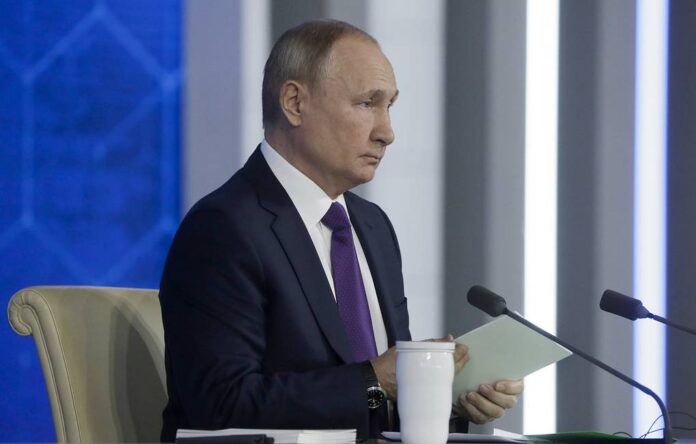
Putin: Russia and China developing high-tech weapons

MOSCOW, RUSSIA – DECEMBER 23, 2021: Russia's President Vladimir Putin gives an annual end-of-year news conference at the Manezh Central Exhibition Hall. Mikhail Metzel/POOL/TASS Ðîññèÿ. Ìîñêâà. Ïðåçèäåíò ÐÔ Âëàäèìèð Ïóòèí âî âðåìÿ åæåãîäíîé áîëüøîé ïðåññ-êîíôåðåíöèè â Öåíòðàëüíîì âûñòàâî÷íîì çàëå "Ìàíåæ". Ìèõàèë Ìåòöåëü/POOL/ÒÀÑÑ

“We cooperate [with China] in the security area,” he stated during his annual news conference, adding, “China’s armed forces are equipped with the most advanced weapons systems to a large extent.”

“We are even developing together certain high-tech types of weapons,” the president went on to say.

“We are working in space, aircraft areas. On planes and helicopters,” he continued.

The armed forces of the two countries also cooperate, Putin noted.

“It’s joint exercises, participation in joint international war games, joint patrols at sea and in air,” Putin said.

Russia and China have “an absolutely comprehensive partnership of strategic nature,” he added.

Russia and China stabilize global affairs by maintaining strategic bilateral relations, Putin noted.

“It’s an absolutely comprehensive partnership of strategic nature that hasn’t had precedents in history, at least between Russia and China,” he said, adding that “this hard day-to-day work benefits both Chinese and Russian people and is a serious stabilizing factor on the international stage”.

Putin said he’s on good terms with the Chinese leader.

“The President of the People’s Republic of China Xi Jinping and I call each other ‘friend,’” Putin continued, adding, “We have personal relations of trust and they help to build relations in work.”

Trade between the two countries surpassed the pre-pandemic level to top $100 billion, Putin said. The countries also work together in nuclear energy, high-tech, space, culture and humanitarian area, he added.

“Asia is developing at a fast, efficient pace,” the president said, adding, “China is an undoubted leader of the global and Asian economy. Naturally, we are developing ties with China in this area.”

China is Russia’s biggest trading partner, Putin continued.

Russia and China engage with each other in reaching carbon neutrality by 2060.

“That’s the time until which we’ll supply all types of energy resources to China,” Putin stated, adding, “We are ready to continue afterward because our life and our country don’t end in 2060.”

That shouldn’t hurt carbon neutrality plans because it stipulates for the use of fossil fuels if emissions are properly absorbed, he said.

Putin also said it is the NATO countries that must provide security guarantees to Russia, and not the other way round.

Asked by a Sky News correspondent what guarantees Russia might provide it would not attack Ukraine or any other sovereign state, the Russian leader stressed that it was not Russia that created threats to other countries.

“Have we approached the borders of the United States or Britain? They have approached ours. And now they say ‘Ukraine will be a NATO member.’ Consequently, there will emerge [their weapon] systems,” he explained.

“You are demanding some guarantees from me. But it is you that must provide guarantees. You must do that at once, now, and not keep talking about this for decades,” Putin added.

He stressed that Russia was “outrageously deceived” when it was told in the 1990s that NATO would not expand eastwards.

“’Not an inch towards the east’, we were told in the 1990s. And what? They cheated us. They outrageously deceived us: five waves of NATO’s expansion. Now the corresponding systems are emerging in Romania and Poland,” Putin stated.

On December 17, the Russian Foreign Ministry made public two draft agreements on steps to be taken by the United States and NATO to provide legal security guarantees. Earlier, Putin urged NATO to enter into meaningful negotiations on reliable and long-term security guarantees for Russia. He stressed that Moscow needed legal guarantees on paper because previously the Western counterparts had defaulted on the corresponding verbal promises.

Russian presidential spokesman Dmitry Peskov told the media presidential aide Yury Ushakov had notified the US presidential national security advisor Jake Sullivan Moscow was prepared to enter into negotiations on draft security treaties at once. Deputy Foreign Minister Sergey Ryabkov will represent Russia at the consultations.

Putin also stated Western countries have given no evidence to prove allegations about Russian blogger Alexey Navalny’s possible poisoning.

“You speak about a man who was allegedly poisoned. We have issued numerous official inquiries from the Russian prosecutor’s office asking for any documents proving the poisoning. Not a single paper, not a single evidence of this Novichok, or whatever you call it,” he said during his traditional end-of-the-year news conference answering a question from a BBC correspondent.

According to the Russian leader, Moscow suggested sending Russian specialists “there to work together.”

“I personally told the French president and the German chancellor: Let our specialists work, let us take sample, check grounds to open a criminal case. Nothing in response. Nothing,” he noted, describing the contacts on this matter.

“Stop talking about it. Let us turn over this page, if you have nothing to tell us,” he added.

Navalny was rushed to a local hospital in the Siberian city of Omsk on August 20, 2020, after collapsing on a Moscow-bound flight from Tomsk. He fell into a coma and was put on a ventilator in an intensive care unit. On August 22, he was airlifted to Berlin and admitted to the Charite hospital. On September 2, the German government claimed that the blogger had been affected by a toxic agent belonging to the Novichok family. Russia’s authorities pointed out that no poisonous substances had been detected in Navalny’s system prior to his transfer to Berlin and repeatedly expressed readiness for all-round cooperation to investigate this case.

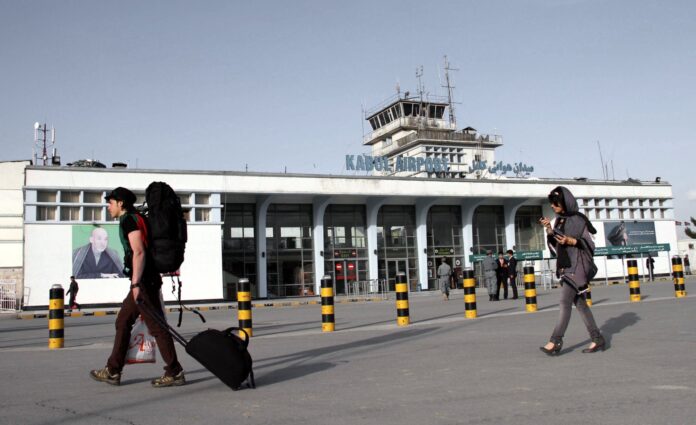
‘Turkey, Qatar agree to jointly operate Kabul Airport’

After talks between committees from both countries, a memorandum of understanding was signed between the Turkish and Qatari companies to operate the airport in collaboration on the basis of equal partnership, the sources told Anadolu Agency.

According to the sources, the MoU was signed during Turkish Foreign Minister Mevlut Cavusoglu’s visit to Doha for the seventh Turkey-Qatar High Strategic Committee Meeting on Dec. 7.

A joint committee consisting of Turkish and Qatari officials would visit the Afghan capital Kabul to discuss the deal with the interim government of the country, as well as the demands and expectations of the Afghan side.

Flights were suspended at Afghanistan’s main international airport in Kabul after the Taliban took over power in August and the US troops destroyed equipment and a radar system at the facility before leaving the country.

ICRC donates funds for 250k Covid-19 shots for Afghan refugees in Iran

The program is part of cooperation between the ICRC and the Iranian Red Crescent Society.
“Fair access to the vaccine is essential to ending the Covid-19 epidemic. A successful vaccination campaign requires access to the vaccine for all members of the community.

Health officials and the Iranian Red Crescent Society are working hard for a national vaccination program, and we are happy to be able to support these efforts,” the ICRC’s representative in Iran said on Thursday.

The IRCS’s Under-Secretary General for International Affairs Mansoureh Bagheri said “we welcome the donation by our long-time partner, the International Committee of the Red Cross, for such an important humanitarian issue.”

Iran, which hosts millions of Afghan refugees, has in recent months faced an influx of asylum seekers from the neighboring country.

The Islamic Republic says its borders are open to refugees but has complained about lack of international assistance.

It has in recent weeks stepped up calls on international organizations and European countries to fulfill their obligations regarding Afghan asylum seekers.

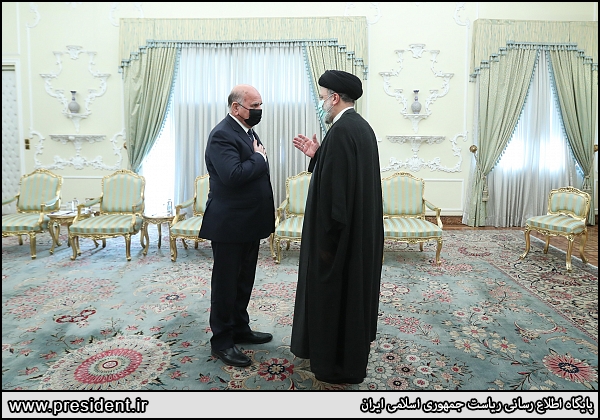
Raisi: US leaving Iraq due to resistance of Iraqi people

President Raisi made the comment in a Thursday meeting with the visiting Iraqi Foreign Minister Fuad Hussein.

Raisi also said the Islamic Republic has always supported a strong parliament and government in neighboring Iraq.

The president expressed pleasure at the safe parliamentary vote in Iraq, saying protest against elections may happen in any democracy and what matters is that authorities investigate objections to polls in a legal manner.

Raisi said, “We consider any insecurity in Iraq as insecurity in Iran”. He added that threatening Iraq’s stability is not acceptable and Iran’s policy is to support stability in Iraq.

The Iraqi foreign minister also thanked Iran for its decisive support of stability in Iraq. He said Iraqis have always been appreciative of Iran’s support for their government and stability in their country.

Earlier, Fuad Hussein and his Iranian counterpart Hossein Amir Abdollahian took questions at a news briefing.

Amir Abdollahian said Iraq has proved historically that it is not a country that can be occupied.

He added that on the second anniversary of the assassination of General Qassem Soleimani and his Iraqi companion Abu Mahid al-Muhandis, he received the good news of the US’s definite withdrawal from Iraq.

Amir Abdollahian also said a joint judicial committee formed by Iran and Iraq will pursue the terrorist act.

The Iranian foreign minister said Tehran is ready to allow Iraqis visa-free visits to Iran and that the top Iraqi diplomat will also pursue the issue in Baghdad.