Tuesday, April 7, 2026
Home Blog Page 17

Trump, top aides asked Netanyahu to change Israel’s policies in West Bank: Axios

West Bank

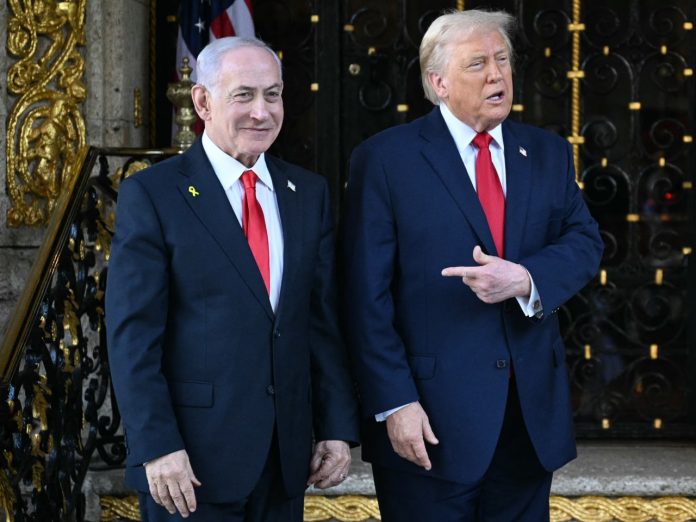
Citing a US official and another source, Axios said it came during Monday’s meeting between Trump and Netanyahu along with Secretary of State Marco Rubio, Special Envoy Steve Witkoff and Trump’s son-in-law Jared Kushner in the US state of Florida.

According to the report, the US official said the White House thinks a violent escalation in the West Bank would undermine efforts to implement the Gaza peace agreement and prevent the expansion of the Abraham Accords before the end of Trump’s term.

Trump and his team expressed concern about the situation in the West Bank and asked Netanyahu to avoid provocative steps and “calm things down,” the sources said, according to Axios.

They also raised the issues of settler violence against Palestinian civilians, the financial instability of the Palestinian Authority and Israeli settlements expansion, said the sources.

“Netanyahu spoke very strongly against settler violence and said he is going to take more action,” the source with knowledge was quoted as saying by Axios.

After meeting with Netanyahu, Trump told reporters Monday that the US and Israel do not agree “100%” on the West Bank but will ultimately reach a conclusion.

“We have had a discussion, big discussion, for a long time on the West Bank, and I wouldn’t say we agree on the West Bank 100%, but we’ll come to a conclusion,” he said when asked if he is concerned about Israeli settler violence in the West Bank and whether he had conveyed a message to Netanyahu regarding the occupied territory.

“It’ll be announced at an appropriate time, but he will do the right thing,” he said, referring to Netanyahu.

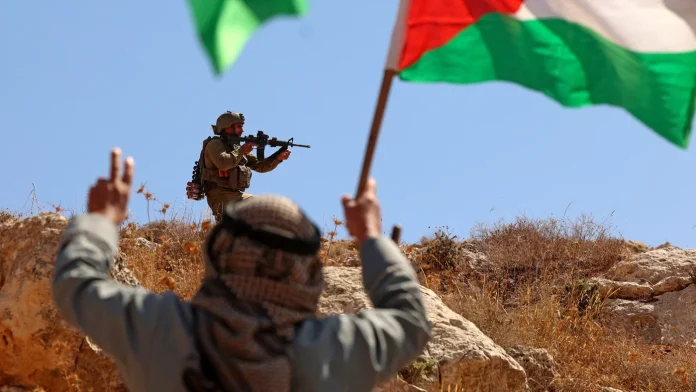
Israeli forces and illegal settlers have killed at least 1,103 Palestinians in the West Bank, including East Jerusalem, injured nearly 11,000 and detained around 21,000 since October 2023, Palestinian figures showed.

In a landmark opinion last July, the International Court of Justice declared Israel’s occupation of Palestinian territory illegal and called for the evacuation of all settlements in the West Bank and East Jerusalem.


Iran labels Canadian Navy a terror group after Ottawa’s IRGC move

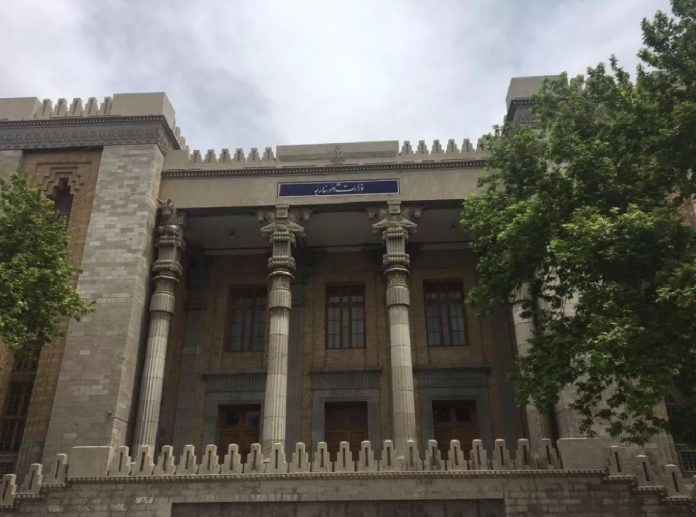
The Iranian Foreign Ministry

In an official statement, Iran’s Ministry of Foreign Affairs rejected Canada’s action as unlawful, arguing that branding a component of Iran’s official armed forces violates legal norms. The ministry said the decision taken by the Canadian government on June 19, 2024, prompted Tehran to formally designate the Royal Canadian Navy as a terrorist entity.

The statement emphasized that Canada’s classification of the IRGC—an integral and official branch of Iran’s military—runs counter to fundamental principles of international law.

As a result, Iran said it has taken retaliatory measures under the principle of reciprocity by identifying Canada’s naval force as a terrorist organization.

The foreign ministry also referred to Article 7 of a 2019 Iranian law concerning reciprocal responses to the United States’ designation of the IRGC as a terrorist group. Under this legislation, the statement noted, any country that supports or follows Washington’s move to blacklist the IRGC is subject to countermeasures by the Islamic Republic of Iran.

Iran’s President Pezeshkian signals readiness to revise new year budget after parliamentary pushback

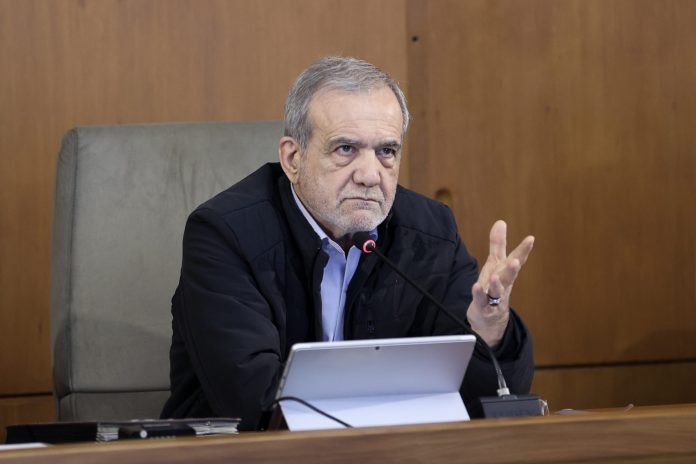
Masoud Pezeshkian

In an official letter addressed to Parliament Speaker Mohammad Baqer Qalibaf, the president acknowledged lawmakers’ concerns, particularly regarding people’s livelihoods, salaries and benefits for employees, workers and retirees, taxation, and welfare support.

President Pezeshkian said the government agrees with many of the proposals raised during deliberations and is prepared to implement reforms while observing inflationary considerations and the overall budget ceiling.

According to the letter, the government is open to five main areas of reform, including increasing salaries and benefits for government employees and retirees; applying an effective tax rate aimed at improving the business environment; revising tax exemption thresholds for individuals and legal entities with an emphasis on protecting low-income wage earners; adjusting the value-added tax rate so that additional revenues are directed toward funding subsidized goods (electronic vouchers) for vulnerable groups; and expanding subsidies to strengthen household livelihoods.

President Pezeshkian also noted that, in response to parliamentary requests, the Planning and Budget Organization and the Ministry of Oil will submit detailed reports on oil revenues and expenditures, as well as the budget’s compliance with the country’s development plan.

Ayatollah Khamenei’s aide vows ‘harsh response’ to any aggression

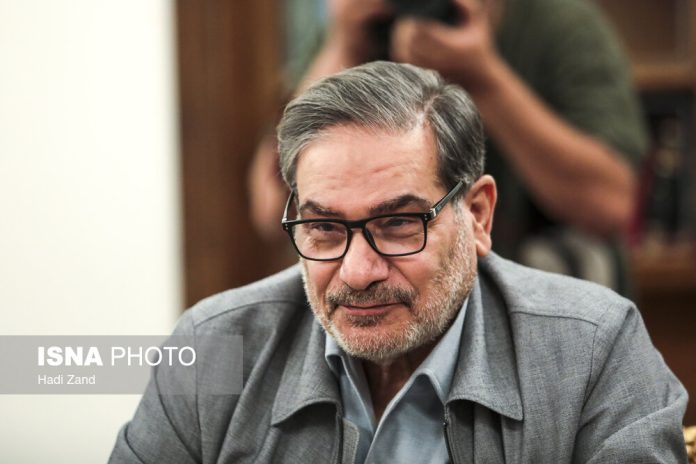
Ali Shamkhani

Admiral Ali Shamkhani stated in a social media post on Monday that, under Iran’s defense doctrine, responses to threats are planned before those threats materialize.

He stressed that the country’s missile and defense capabilities are not containable or permission-based.

Shamkhani then warned that any aggression against Iran will face an immediate harsh response beyond its planners’ imagination.

His remarks came after US President Donald Trump said that he would support an attack by Israel on Iran if Tehran continued its ballistic missile and nuclear programs.

Trump was speaking to reporters ahead of his meeting with Israel’s prime minister, Benjamin Netanyahu.


North Korea’s Leader touts new rocket launchers capable of targeting South

The country is still technically at war with the South and “saturation” strikes by its vast artillery arsenal have long been believed to be central to its strategy should conflict break out.

A 2020 study by the RAND think tank assessed that North Korean artillery systems could inflict 10,000 casualties in just an hour if targeting major population centres like the South Korean capital Seoul.

Kim’s visit to the factory was reported a day after Pyongyang announced it had carried out a test-fire of two strategic long-range cruise missiles in a show of “combat readiness” against external threats.

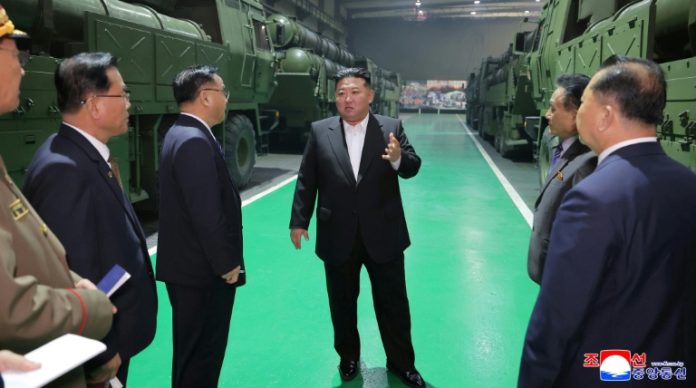
Accompanied by top officials from North Korea’s missile programme, Kim said the new weapons system would serve as his military’s “main strike means”, according to the state-run Korean Central News Agency (KCNA).

He also added they could have uses in a “strategic attack” — typically a euphemism for nuclear use.

Kim described the new multiple rocket system as a “super-powerful weapon system as it can annihilate the enemy through sudden precise strike with high accuracy and devastating power”, KCNA reported.

The system would be “used in large quantities for concentrated attack in military operations”, state media added.

State media images showed Kim standing next to the massive new missile systems in a vast factory with propaganda on the walls.

“North Korea may now be in a position to seriously enhance its ability to carry out strategic missions,” Hong Sung-pyo, a senior researcher at the Korea Institute for Military Affairs, told AFP.

“From South Korea’s perspective, this means the military threat from the North is increasing,” he added.

Pyongyang has also significantly stepped up missile testing in recent years.

Analysts say this drive is aimed at improving precision strike capabilities, challenging the United States as well as South Korea, and testing weapons before potentially exporting them to Russia.

Pyongyang is set to hold a landmark congress of its ruling party in early 2026 — its first in five years.

Economic policy, as well as defence and military planning, are likely to be high on the agenda.

Ahead of that meeting, Kim ordered the “expansion” and modernisation of the country’s missile production and the construction of more factories to meet growing demand.

“Kim Jong Un seems to judge that the country is in the best position to accelerate the upgrading of its nuclear forces and the modernization of its conventional weapons,” Lim Eul-chul, a professor at the Institute for Far Eastern Studies at Kyungnam University, told AFP.

“Systems to mount various types of small nuclear warheads on multiple rocket launchers are already in place,” he added.


China must ‘forcefully counter’ US weapons sales To Taiwan: FM

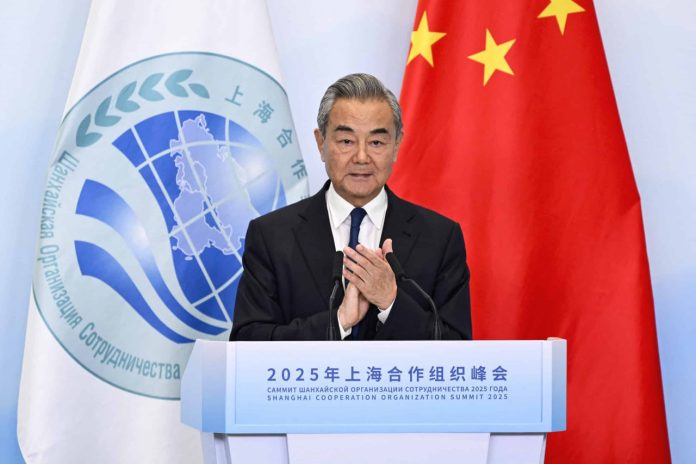
“In response to the continuous provocations by pro-independence forces in Taiwan and the large-scale US arms sales to Taiwan, we must of course, resolutely oppose and forcefully counter them,” foreign minister Wang Yi said in a speech in Beijing.

Wang’s comments came just over an hour after China’s military said it conducted “long-range live fire drills in the waters to the north of the Taiwan Island”.

China claims Taiwan as part of its sovereign territory and has refused to rule out using military action to seize the island democracy.

Speaking at an annual international relations symposium in Beijing, Wang added that any attempt to obstruct China’s unification with Taiwan “will inevitably end in failure”.


Saudi-led coalition says it attacked arms shipments from UAE in Yemen

Yemen has been fighting a crippling war, as armed factions loosely grouped under the government and backed by the United Arab Emirates and Saudi Arabia turn on each other.

The UAE-backed Southern Transitional Council (STC), which seeks to revive the formerly independent state of South Yemen, has in recent weeks swept through swathes of the country, expelling other government forces and their allies.

The Saudi-led coalition warned on Saturday that it would back Yemen’s government in any military confrontation with separatist forces and has urged them to withdraw “peacefully” from recently-seized provinces.

“At 4:00 am, we received a call to evacuate the port of al-Mukalla a quarter of an hour before the strike,” an official at the Yemeni port told AFP, speaking on condition of anonymity as he was not authorised to speak to the media.

“The evacuation completed, and the strike occurred a quarter of an hour later in a dirt area within the port. The fire is still burning,” he added.

The coalition targeted two ships carrying “a large quantity of weapons and combat vehicles to support the Southern Transitional Council forces”, the Saudi state news agency SPA reported.

“Given the danger and escalation posed by these weapons… the Coalition air forces carried out a limited military operation this morning targeting weapons and combat vehicles that had been unloaded from the two ships at the port of al-Mukalla,” it said.

The ships had arrived from the port of Fujairah, on the east coast of the United Arab Emirates, the SPA said, adding that the operation was conducted in accordance with international humanitarian law and that no collateral damage occurred.

Aerial footage showing docked boats and a large number of vehicles driving through the port was shared by the SPA.

The attack came days after reported Saudi air strikes on separatist positions in Yemen’s Hadramawt province — and after Washington called for restraint in the rapidly escalating conflict.

US Secretary of State Marco Rubio said: “We urge restraint and continued diplomacy, with a view to reaching a lasting solution.”

Saudi Defence Minister Khalid bin Salman posted Saturday on X that troops from the separatist STC should “peacefully hand over” two regional governorates to the government.

“It’s time,” he posted, “at this sensitive moment, to let reason prevail by withdrawing from the two provinces and doing so peacefully.”

But the STC had warned on Friday they were undeterred after strikes blamed on Saudi Arabia hit their positions, following their seizure of large swathes of territory in the Hadramawt and Mahrah provinces.

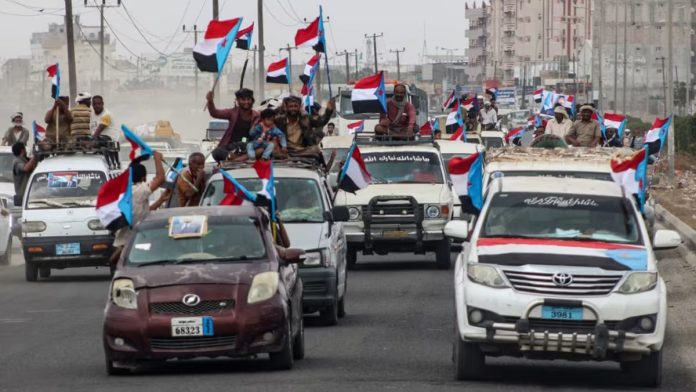
Since the takeover, supporters of the separatists have been gathering regularly in cities including Aden to demand they declare independence, with the largest rallies taking place every Friday.

On Saturday, hundreds of Yemeni tribesmen gathered in Aden to ask the STC’s leaders to announce the independence of South Yemen, according to the separatist-affiliated Aden Independent Channel.

The channel aired footage of a large crowd marching and waving the South Yemen independence flag alongside the UAE’s flag.

A Yemeni military official said on Friday that around 15,000 Saudi-backed fighters were massed near the Saudi border but had not been given orders to advance on separatist-held territory.

The areas where they were deployed are at the edges of territory seized in recent weeks by the UAE-backed STC.

The government is a patchwork of groups that includes the separatists, and is held together by shared opposition to the Houthis.

The Houthis pushed the government out of Yemen’s capital Sanaa in 2014 and secured control over most of the north.


Trump threatens Hamas, warns Iran of more attacks after talks with Netanyahu

Trump issued the threats on Monday, after holding talks with Israeli Prime Minister Benjamin Netanyahu at his Mar-a-Lago resort in Florida.

Their discussions focused on advancing the ceasefire deal Trump brokered in Gaza, as well as addressing Israeli concerns over Iran, and over Hezbollah in Lebanon.

Trump stated that Israel has been doing its part in the Gaza ceasefire, despite launching near-daily strikes that have killed at least 400 people, and warned Hamas to live up to its side of the agreement.

“We talked about Hamas and we talked about disarmament, and they’re going to be given a very short period of time to disarm, and we’ll see how that works out,” he added.

“If they don’t disarm, as they agreed to do – they agreed to it – and then there’ll be hell to pay for them. And we don’t want that.”

There was no immediate comment from Hamas.

The first phase of the ceasefire, which went into effect on October 10, calls for the exchange of Israeli captives held by Hamas for Palestinian detainees and prisoners held by Israel, as well as an increase in aid and a partial Israeli withdrawal in Gaza.

Hamas is yet to return the body of one Israeli captive, while Israel, in addition to continued deadly attacks, has restricted the entry of aid and delayed the opening of the Rafah crossing between Gaza and Egypt.

But Trump heaped the blame solely on Hamas for the delay in moving towards the second phase of the truce. The armed group has previously announced it will not give up its weapons as long as Israeli occupation of Palestinian territory continues, but was willing to set them aside and offered a long truce of seven to 10 years.

Trump went on to suggest that Iran may be working to restore its nuclear programme after the US air strikes in June damaged three Iranian nuclear facilities.

“Now I hear that Iran is trying to build up again, and if they are, we’re going to have to knock them down,” Trump told reporters.

“We’ll knock them down. We’ll knock the hell out of them. But, hopefully, that’s not happening.”

If Iran was trying to build up its nuclear programme again, “we’re going to have no choice but very quickly to eradicate that buildup”, he stated. The consequences of such a move could be “more powerful than the last time”.

“We know exactly where they’re going, what they’re doing, and I hope they’re not doing it, because we don’t want to waste fuel on a B-2,” Trump added, referring to the bomber used in the earlier strike.

“It’s a 37-hour trip both ​ways. I don’t want to waste a lot of fuel.”

The US president declined to offer evidence to support his allegations against Iran. But he added that the US and Israel have been “extremely victorious” against their enemies, and that if the US “didn’t beat Iran, you wouldn’t have had peace in the Middle East”.

When asked whether the US would back an Israeli attack on Iran’s missile programme, Trump stressed, “If they will continue with the missiles, yes. The nuclear? Fast. OK? One will be: Yes, absolutely. The other is: We’ll do it immediately.”

There was no immediate comment from Iran.

Tehran has denied seeking to build a nuclear weapon and ruled out negotiating over its missile programme, which is at the core of its defence strategy.

During the conflict in June, sometimes referred to as the 12-day war, Iran fired hundreds of missiles in response to Israeli attacks that killed the country’s top generals, several nuclear scientists and hundreds of civilians.

On Monday, Trump said Iran should “make a deal” with the US.

“If they want to make a deal, that’s much smarter,” Trump continued, adding, “You know, they could have made a deal the last time, before we went through a big attack on them, and they decided not to make the deal. They wish they made that deal.”

While the US has brokered three ceasefires involving its longtime ally – between Israel and Hamas, Israel and Iran, and Israel and Lebanon – Netanyahu is wary of Israel’s ​foes rebuilding their forces after they were considerably weakened in multiple wars.

Overall, Trump’s comments suggest he remains firmly in Netanyahu’s camp, even as some aides have privately questioned the Israeli leader’s commitment to ‌the Gaza ceasefire. Trump’s comments also suggest that he is willing to risk additional hostilities related to Gaza and Iran, even as the US president has taken credit for resolving Israel’s wars in both places.

The sabre-rattling on Monday also came weeks after the Trump administration released a National Security Strategy that called for the US to shift its foreign policy resources away from the Middle East and instead focus on the Western Hemisphere.

But advocates of the strategy warn that another episode of attacking Iran may escalate into a longer, broader war.

In June, Iran responded to the US strikes with a missile attack against a US airbase in Qatar, which did not result in any US casualties. Trump announced a ceasefire to end the war shortly after the Iranian response.

Zelensky says Putin “doesn’t want Ukraine to succeed”, contradicting Trump

“I don’t trust Putin. And he doesn’t want success for Ukraine, really, he doesn’t want — he can say it. I believe that he can say such words to President Trump. I believe in it, that he can say it, but it’s not true,” Zelensky told Fox News’s Bret Baier on “Special Report,” in an interview that aired Monday.

“Really, he doesn’t want to have — from President Trump — more pressure with sanctions and etcetera.”

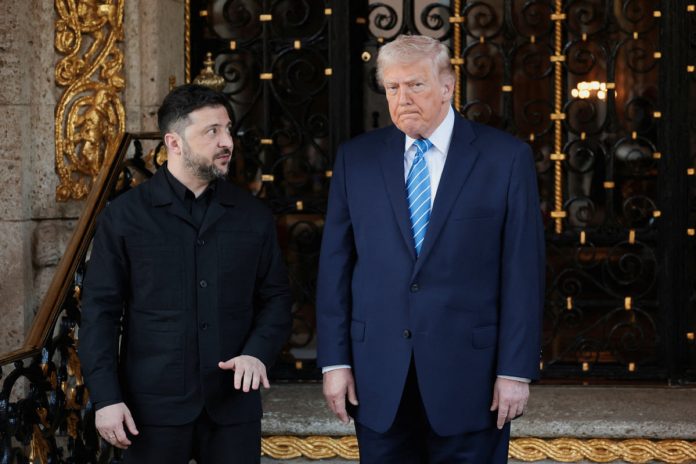
During a press conference with Zelensky on Sunday after a meeting between the two leaders, the president was asked by a Reuters reporter about discussion with Putin on the subject of “what responsibility Russia will have for any kind of reconstruction of Ukraine.””

“They’re going to be helping, Russia is going to be helping. Russia wants to see Ukraine succeed,” Trump replied.

After Trump made the comments in the press conference, Zelensky appeared briefly puzzled.

Throughout his first year back in office, Trump’s administration has pushed for an end to the war in Ukraine to little success. Trump has met with Zelensky multiple times, including one notable February meeting that was rife with public tension.

Also on Sunday, Zelensky stated that Ukrainian and American negotiators had made notable progress on a 20-point peace proposal.

“We discussed all the aspects of the peace framework … [the] 20-point peace plan [is] 90 percent agreed,” Zelensky added alongside the president at the press conference.


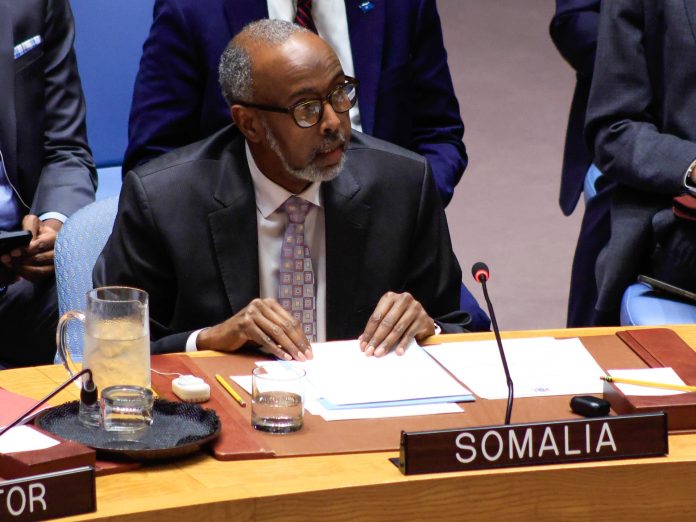
UN Security Council member states condemn Israel’s recognition of Somaliland

The United States was the only member of the 15-member body not to condemn Israel’s formal recognition of the breakaway region of Somalia at the emergency meeting in New York City on Monday, although it said its own position on Somaliland had not changed.

Addressing the UNSC, Somalia’s UN ambassador, Abu Bakr Dahir Osman, implored members to firmly reject Israel’s “act of aggression”, which he said not only threatened to fragment Somalia but also to destabilise the wider Horn of Africa and the Red Sea regions.

In particular, Osman stated that Somalia was concerned the move could be aimed at advancing Israel’s plans to forcibly “relocate the Palestinian population from Gaza to the northwestern region of Somalia”.

“This utter disdain for law and morality must be stopped now,” he added.

The emergency meeting was called after Israel last week recognised the self-declared Republic of Somaliland as an independent and sovereign state.

Tammy Bruce, the US deputy representative to the UN, told the council that “Israel has the same right to establish diplomatic relations as any other sovereign state”.

However, Bruce added, the US had “no announcement to make regarding US recognition of Somaliland, and there has been no change in American policy”.

Israel’s deputy ambassador to the UN, Jonathan Miller, told the council that Israel’s decision was “not a hostile step toward Somalia, nor does it preclude future dialogue between the parties”.

“Recognition is not an act of defiance. It is an opportunity,” Miller claimed.

Many other countries expressed concerns about Israel’s recognition of Somaliland, including the implications for Palestinians, in statements presented to the UNSC.

Speaking on behalf of the 22-member Arab League, its UN envoy, Maged Abdelfattah Abdelaziz, said the group rejected “any measures arising from this illegitimate recognition aimed at facilitating forced displacement of the Palestinian people, or exploiting northern Somali ports to establish military bases”.

Pakistan’s deputy UN ambassador, Muhammad Usman Iqbal Jadoon, said at the meeting that Israel’s “unlawful recognition of [the] Somaliland region of Somalia is deeply troubling”, considering it was made “against the backdrop of Israel’s previous references to Somaliland of the Federal Republic of Somalia as a destination for the deportation of Palestinian people, especially from Gaza”.

China and the United Kingdom were among the permanent UNSC members to reject the move, with China’s UN envoy, Sun Lei, saying his country “opposes any act to split” Somalia’s territory.

“No country should aid and abet separatist forces in other countries to further their own geopolitical interests,” Sun Lei stated.

Some non-members of the UNSC also requested to speak, including South Africa, whose UN envoy, Mathu Joyini, said that her country “reaffirmed” Somalia’s “sovereignty and territorial integrity” in line with international law, the UN Charter and the constitutive act of the African Union.

In addition to defending Israel’s decision, US envoy Bruce compared the move to recognise Somaliland with Palestine, which has been recognised by more than 150 of the UN’s member states.

“Several countries, including members of this council, have unilaterally recognised a non-existent Palestinian state, yet no emergency meeting has been convened,” Bruce said, criticising what she described as the UNSC’s “double standards”.

However, Slovenia’s UN ambassador, Samuel Zbogar, rejected the comparison, saying, “Palestine is not part of any state. It is illegally occupied territory… Palestine is also an observer state in this organisation [the UN].”

“Somaliland, on the other hand, is a part of a UN member state, and recognising it goes against… the UN Charter,” Zbogar added.

The self-declared Republic of Somaliland broke away from Somalia in 1991, after a civil war under military leader Siad Barre.