Thursday, December 25, 2025
Home Blog Page 1443

Russia quartet meeting: Senior diplomats call for respect for Syria’s sovereignty, territorial integrity

FMs Iran Russia Turkey Syria

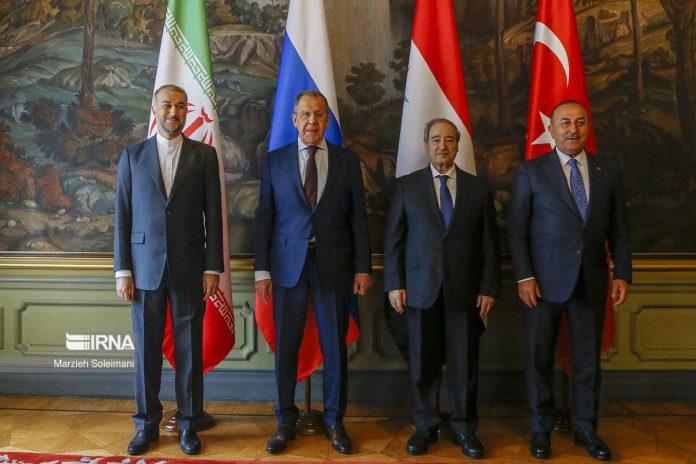
Top diplomats from Iran, Turkey, Russia and Syria have wrapped up their landmark summit on the Syrian conflict in Moscow, underscoring the Arab country’s sovereignty and territorial integrity, and setting up a roadmap to improve strained ties between Damascus and Ankara.

The foreign ministers made the remarks in a final communiqué at the end of the four-party meeting aimed at reconciliation and resumption of ties between Damascus and Ankara in various dimensions on Wednesday.

“Pursuant to UN Security Council Resolution 2254 and official statements in the Astana process, the participants emphasized their commitment to the territorial integrity of Syria, non-interference in its internal affairs and fighting all forms of terrorism, separatism and extremism in the country,” the final communiqué said.

Endorsed in 2015, Resolution 2254 supports a Syrian-led political process facilitated by the United Nations.

“They also emphasized the importance of increasing international humanitarian aid to Syria with the aim of facilitating the voluntary, safe and dignified return of Syrians to their homeland and post-war reconstruction,” it added.

According to the final communiqué, the participants agreed that deputy foreign ministers of the four countries should undertake the task of preparing a roadmap for advancing relations between Turkey and Syria in coordination with their defense ministries and intelligence chiefs.

There had been a “positive and constructive atmosphere” in the exchange of views, the communiqué said, and the ministers agreed that high-level technical contacts and discussions will continue in the same four-party format in the future.

The agreement comes a week after Syria and Arab governments meeting in Jordan agreed to set up a roadmap of their own to resolve the Syrian conflict and improve ties.

Syria has been returning to the Arab fold and restoring relations with its neighbors in a slow but steady process that culminated with a decision Sunday by the Arab League to reinstate Syria’s membership after 12 years.

Turkey severed its relations with Syria in March 2012, a year after the Arab country found itself in the grip of rampant and deadly violence waged by foreign-backed militants, including those supported by Ankara.

Since 2016, Turkey has launched several military incursions in northwest Syria and captured an important enclave previously held by US-backed Kurdish forces fighting the Assad government.

Russia and Iran, on the other hand, entered Syria at the request of Damascus, and played a key role in defeating the terrorists and reclaiming much of the country back.

Syria and Turkey are currently taking steps toward reconciliation after 11 years.

In the last bid to mend ties between Ankara and Damascus, the defense ministers and intelligence chiefs of Russia, Syria, Turkey, and Iran met in Moscow late last month and discussed the withdrawal of Turkish troops from Syria.

The process of normalizing ties between Ankara and Damascus kicked off on December 28, 2022, when the Russian, Syrian and Turkish defense ministers met in Moscow, in what was the highest-level meeting between the two sides since the outbreak of the Syrian conflict.

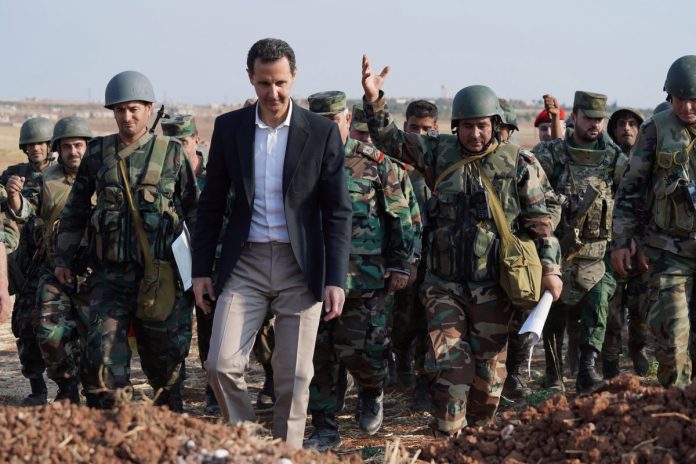
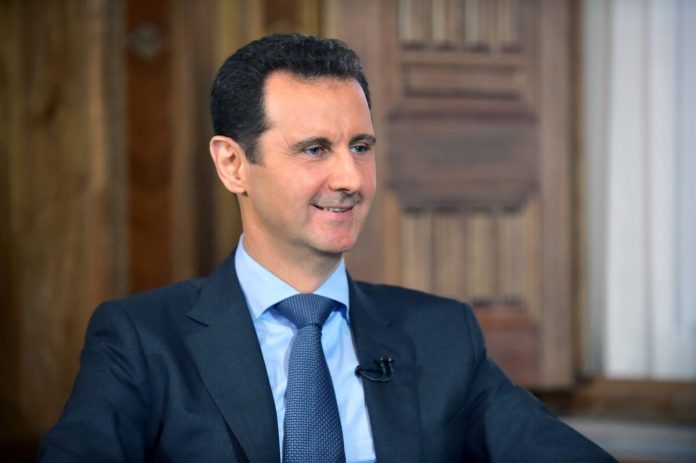
Syrian President Bashar al-Assad stated in January that a rapprochement with Turkey would depend on Turkey ending its occupation of northern Syria and its support for militant groups fighting against the Damascus government.

Iran’s rights chief: All terror grouplets enjoy safe haven in Sweden

Kazem Gharibabadi

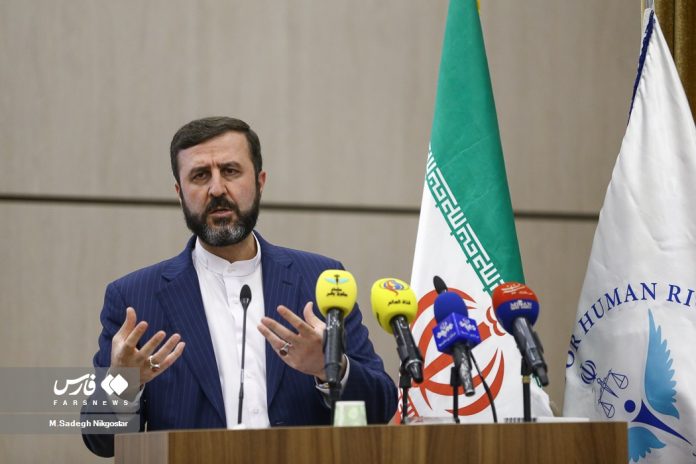
Kazem Gharibabadi, secretary of Iran’s High Council for Human Rights and the Judiciary chief’s deputy for international affairs, dismissed the condemnation of Tehran by Sweden and other Western countries over the execution of the ringleader of the notorious Harakat al-Nidal terrorist group, Habib Farajollah Cha’ab.

Cha’ab, an Iranian-Swedish national, had been found guilty of spreading “corruption on earth,” a capital offense under Iranian law, through forming and leading a criminal group for the purpose of carrying out terrorist attacks in Iran’s Khuzestan Province, which the outfit seeks to separate from Iran.

In one case, he was the mastermind of a terror attack on a military parade in the city of Ahvaz in 2018, which killed dozens of people, including civilians.

Sweden summoned Iran’s envoy over the execution.

Gharibabadi denounced Sweden for providing “all types of intelligence and security support” to Cha’ab.

Although Iran had received an Interpol red notice for Cha’ab and he was identified and arrested in one of the Eastern European countries, Sweden immediately intervened and took him back to the country on a special plane, he explained.

“We did not see even a single statement from the Western countries and Sweden condemning the terrorist acts of this person,” he said.

“The fact that they condemn the Islamic Republic of Iran after the execution of the verdict is of no value to us.”

Iranian pop singer Hossein Zaman dies of cancer at 63

Hossein Zaman

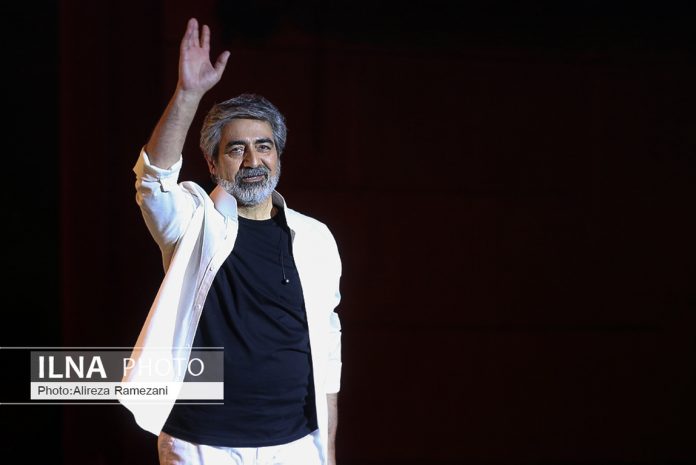
His son, Abouzar, announced the sad news on his Instagram page on Thursday, months after Zaman was hospitalized due to cancer-related complications.

“My dad is gone. My dad is gone forever,” he wrote.

He was a popular singer in the 1990s. Zaman stood away from his profession for some 18 years and released only a handful of tracks over those years.

He returned to stage for a last concert in 2018.

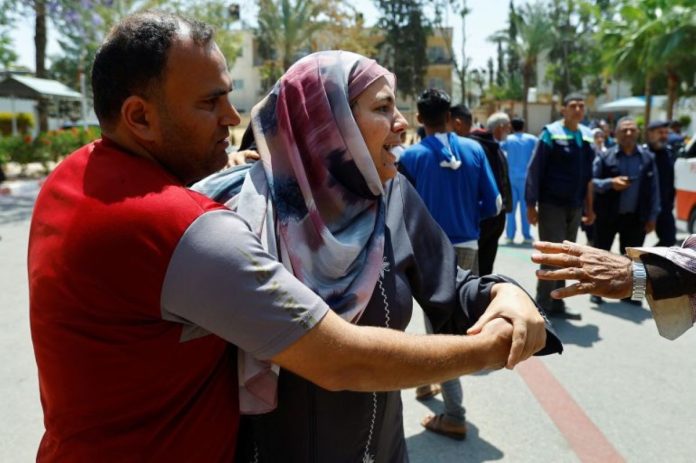
Fourth Palestinian military commander killed in Israeli raid on Gaza as ceasefire falters

Israel Gaza

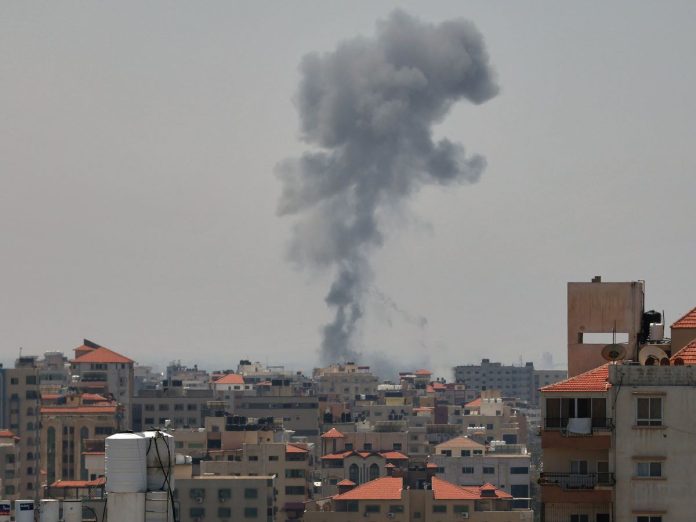
The strikes targeted a building in Hamad Residential City, near Khan Younis in southern Gaza strip early on Thursday.

“Ali Ghali… commander of the rocket launch unit… was assassinated in the south of the Gaza Strip along with other martyrs,” said a statement from the al-Quds Brigades, the resistance group’s armed wing.

Israel has been staging back-to-back aerial assaults against the blockaded Palestinian enclave since Tuesday.

At least 24 Palestinians have been killed and dozens of others injured as a result of the incessant aggression. The fatalities include three other senior commanders of the Islamic Jihad as well as their wives and children.

On Wednesday, Palestinian resistance groups in Gaza fired a new batch of retaliatory rockets towards Israeli cities, including Tel Aviv, in response to the regime’s deadly air raids.

Gaza’s joint command of Palestinian resistance groups said in a statement that it had fired “hundreds” of rockets towards the occupied Palestinian territories in an operation codenamed “revenge of the free.”

“The resistance will remain in all fronts of the homeland as one unit, a sword and a shield for our people, our land and our holy sites,” the statement read.

“The resistance is ready for all options, and if the occupation persists in its aggression and arrogance, black days await it,” it added.

Tel Aviv has admitted that the at least 400 rockets were fired towards the territories from the besieged Gaza Strip.

A state-run Egyptian TV station announced that Egypt, a frequent mediator between the sides, had brokered a ceasefire on Wednesday. Israeli officials confirmed that Egypt was trying to facilitate a ceasefire.

But truce efforts appeared to falter as fighting intensified late in the day, with neither side showing any sign of backing down.

In a prime-time TV address, Israeli Prime Minister Benjamin Netanyahu claimed that Israel dealt a harsh blow to the fighters.

“This round is not over,” he said, adding, “We say to the terrorists and those who send them: ‘We see you everywhere. You can’t hide, and we choose the place and time to strike you.’”

On Wednesday, the United Nations Secretary-General Antonio Guterres condemned the Israeli regime’s massacre of civilians in the besieged Gaza Strip as “unacceptable”.

The UN chief urged the occupying regime to “immediately” stop the bloodshed, said Farhan Haq, deputy UN spokesperson.

“Israel must abide by its obligations under international humanitarian law, including the proportional use of force and taking all feasible precautions to spare civilians and civilian objects in the conduct of military operations,” Haq added.

Tor Wennesland, the UN’s Middle East Special Coordinator for the Middle East Peace Process, has said the deaths of “civilians” from Israeli air attack was “unacceptable”.

“I condemn the deaths of civilians in the Israeli airstrikes. This is unacceptable,” he wrote in a statement.

“I urge all concerned to exercise maximum restraint and avoid an escalation,” he added.

Also on Wednesday, the Arab League regional grouping’s Council condemned the “barbaric Israeli raids on the Gaza Strip, which targeted civilians, children, and women in residential neighborhoods while they were sleeping safely in their homes.”

Top Iranian General vows to strengthen Syrian army against Israel

Syrian Army

Major General Baqeri made the remarks in Tehran on Wednesday, in a meeting with the visiting Chief of the General Staff of the Syrian Army and Armed Forces, General Abdul Karim Mahmoud Ibrahim.

The Iranian general described the Syrian army as “the important anti-Zionist resistance axis” in the region, saying that,”We will reinforce this axis in cooperation with each other, and will stand up together to the Zionist regime’s bullying.”

He added his meeting with his Syrian counterpart had featured discussion over provision of training for the Syrian forces across various levels.

The military officials also addressed transference of the Islamic Republic’s experience in the military field to the Syrian armed forces as well as “rebuilding of the Syrian army in the post-war period.”

Baqeri hailed that the Syrian military’s counter-terrorism efforts had helped establish proper security across the Arab country. “I hope for Syria’s reconstruction period to start soon,” he added.

Syria found itself in the grip of rampant foreign-backed militancy and terrorism in 2011.

The terrorist groups soon overran huge swaths of the Syrian territory amid crucial support provided for them by the Israeli regime. The regime would routinely target Syria’s defenses and also provide safe haven for the terrorists in the Arab country’s Golan Heights, which has been under Tel Aviv’s occupation since 1967.

The overall situation prompted Damascus to seek out the assistance of its allies, including Iran, in its bid to reverse the terror outfits’ gains.

The Islamic Republic then began providing vital military advisory assistance for Syria’s anti-terror efforts.

The joint efforts helped Syria push successfully back against the terror groups to the point that the country has now managed to restore its sovereignty over the biggest part of its soil.

For his part, the Syrian official said Tehran and Damascus could “cooperate with each other towards expediting cessation of the domination of imperialist countries.”

“We have enjoyed cooperation with the Islamic Republic since a long time ago and will continue to do so in line with the countries’ interests,” Ibrahim stated.

The meeting between the top Generals came a week after Iranian President Ebrahim Reisi’s historic visit to Syria.

During his meeting with President Bashar al-Assad, Reisi stressed that the Islamic Republic will stand by its Syrian brothers in the post-war era of reconstruction and development as it was the case during the fight against terrorism.

The Syrian president also hailed Iran’s support for Syria throughout the Arab country’s conflict, and said the Syrian nation won’t forget Iran’s assistance to them in their hard times.

President Assad called for Iran to play a bigger role in the establishment of sustainable peace in the country and reconstruction of war-torn parts of Syria.

Pakistan army called in to quell unrest following ex-PM’s arrest, death toll rises to 8

Pakistan

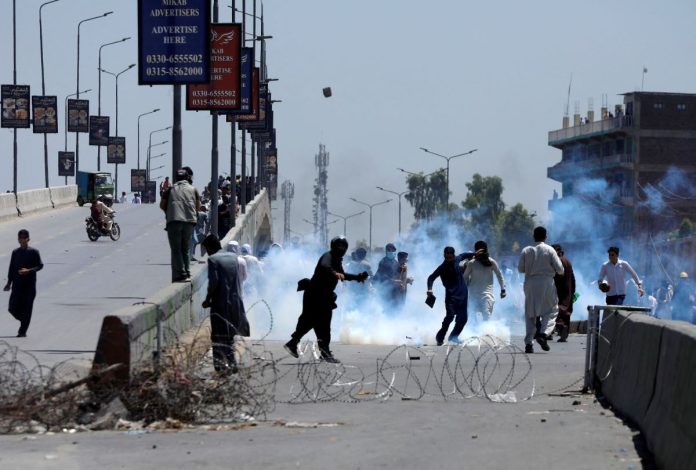
At least eight people were killed and more than 290 were injured in violence after Khan – Pakistan’s most popular political leader according to polls – was arrested in a land fraud case on Tuesday, prompting supporters to storm military buildings and ransack the residence of a top army general in the eastern city of Lahore.

Other state buildings and assets have been attacked and set ablaze by protesters, and the government said on Wednesday that it had approved requests from two of Pakistan’s four provinces – Punjab and Khyber-Pakhtunkhwa, both Khan strongholds – and the federal capital Islamabad to deploy troops to restore order.

Earlier, the army issued a statement saying it had shown restraint during earlier violence but any further assaults on the military or law enforcement agencies, state installations and properties “will be met with severe retaliation”.

It promised stern action against those seeking to push Pakistan towards a “civil war.” It called the organised attacks on its installations a “black chapter” in the country’s political history.

As protests raged on the streets, a Pakistani court turned Khan, 70, over to the custody of Pakistan’s anti-corruption body, the National Accountability Bureau (NAB), for eight days for further questioning. The former international cricket star is now being held in a police guesthouse in Islamabad.

Another court indicted Khan earlier on Wednesday on charges of selling state gifts during his four years in power, a day after his arrest in the unrelated fraud case.

The indictment followed a decision by the Election Commission of Pakistan in October last year that found Khan guilty of illegally selling state gifts between 2018 and 2022, and as a result barred him from holding public office until the next election due in November. He has denied any wrongdoing.

Mohsin Shahnawaz Ranjha, a lawmaker from the governing coalition who was a plaintiff in the case against Khan on state gifts, accused him of putting the “country’s peace at stake”.

Mobile data services were shut for a second day on Wednesday as street protests continued, with federal ministers accusing Khan’s supporters of torching several buildings and vehicles.

Police announced they had arrested more than 1,400 protesters for violence in Khan’s home province of Punjab.

Murad Saeed, a senior leader of Khan’s party, says the manner in which the former prime minister was arrested was “abduction and entirely illegal”.

Speaking to Al Jazeera, Saeed stated the response from the public to Khan’s arrest showed the former prime minister’s popularity.

Saeed denied that party workers were behind violent protests and rioting which damaged multiple public and private properties, including military installations, across the country.

“You must have seen that PTI has been conducting public rallies and demonstrations since last one year after our government was removed. Our supporters know exactly which area we gather to conduct our protests, but this time in our midst were some elements who did not belong to the party,” Saeed claimed.

Asad Umar, Khan’s party’s secretary general, and Fawad Chaudhry, one of Khan’s aides have also been arrested on Wednesday.

PTI announced Fawad’s arrest was carried out despite him having been granted protective bail by the Islamabad High Court until May 12.

“He was arrested despite possessing a bail, granted to him by Islamabad High Court which specifically barred his arrest till May 12,” Faisal Fareed Chaudhry, Fawad’s brother and a PTI lawyer, told Al Jazeera.

Also on Thursday, The PTI party alleged Shah Mahmood Qureshi, who served as foreign minister in Khan’s cabinet during his four-year premiership, was arrested overnight.

More than 145 policemen have been injured in clashes with protesters, said the police in a statement.

Khan, a cricket hero-turned-politician, was removed as prime minister in April 2022 in a parliamentary no-confidence vote. He has not slowed his campaign against his removal even though he was wounded in a November attack on his convoy as he led a protest march to Islamabad calling for snap general elections.

The corruption cases are two of more than 100 registered against Khan after he left office.

“Such scenes were never seen by the people of Pakistan,” Prime Minister Shehbaz Sharif stated following a cabinet meeting on Wednesday.

“Even patients were taken out of ambulances and ambulances were set on fire,” he added.

Calling such attacks “unforgivable,” he warned that those involved in violence would be given exemplary punishment.

Sharif said Khan was arrested because of his involvement in corruption, and that there was evidence available to back up these charges.

Saudi Arabia invites Syria’s president to attend Arab League summit

Bashar Assad

Syrian media reported on Wednesday that the May 19 summit “will enhance joint Arab action to achieve the aspirations of the Arab peoples.”

Saudi Ambassador to Jordan Nayef bin Bandar al-Sudairi delivered the invitation.

This comes more than a decade after Syria’s membership was suspended by the 22-member regional organization. The last Arab League summit Assad attended was in 2010 in Libya.

Arab government representatives in Cairo voted on Sunday to return Syria to the Arab League after a 12-year suspension. All 13 of the 22 member states that attended the session endorsed the decision.

The Arab League had suspended the membership of Syria, one of the founding members, in November 2011, citing an alleged crackdown by Damascus on opposition protests. Syria denounced the move as “illegal and a violation of the organization’s charter.”

Riyadh and Damascus agreed in March to resume diplomatic relations and re-open embassies after more than a decade.

In April, Saudi Foreign Minister Prince Faisal bin Farhan met with Assad in Damascus on the first such visit since foreign-backed militancy rocked Syria in 2011

In recent years, Syrian government forces, backed by Russia and Iran, have managed to win back control of virtually all regions from terrorist groups.

Assad has already visited the United Arab Emirates (UAE) and Oman this year and is expected to visit other Arab states as well in the near future.

Israel and certain Western states have gone to great lengths to isolate Syria. Yet, a growing number of regional countries, including the UAE, Egypt, Jordan, and Oman, have expressed readiness to resume diplomatic relations with Damascus.

Live Update: Russia’s “Special Operation” in Ukraine; Day 442

Russia Ukraine War

Moscow warns of “adequate response” to London supply of long-range missiles to Kyiv

The Kremlin has warned its armed forces will provide an “adequate response’ to the United Kingdom’s decision to supply long-range missiles to Kyiv.

Kremlin spokesperson Dmitry Peskov condemned the move during a conference call with journalists on Thursday, promising a Russian reply.

“This will require an adequate response from our military who will naturally make relevant decisions with this in view,” Peskov added.

The missiles have a maximum range of 250 km (155 miles) and give Ukrainian forces a new long-range strike capability in advance of a highly anticipated counteroffensive.


UK to send cruise missiles to Ukraine

Britain confirms donating Storm Shadow cruise missiles to Ukraine, defence minister Ben Wallace said.

“I can confirm that the UK is donating Storm Shadow missiles to Ukraine,” Wallace told parliament.

“The use of Storm Shadow will allow Ukraine to push back Russian forces based within Ukrainian sovereign territory,” he added.

Wallace’s comments come after CNN reported earlier on Thursday that Britain would send the weapons to Kyiv ahead of its anticipated counteroffensive.


Russia will put on its wanted list ICC judges who issued arrest warrant for Putin: Official

Russia’s Investigative Committee will soon put on the country’s wanted list the judges of the International Criminal Court (ICC) who issued an arrest warrant for Russian President Vladimir Putin and another official, the chairman of the Investigative Committee Alexander Bastrykin said Thursday, according to state news agency RIA Novosti.

“The Investigative Committee then very quickly opened a criminal case against the chairman and three judges, who actively influenced the adoption of this decision. They will soon be put on the wanted list,” Bastrykin stated, speaking at the St. Petersburg International Legal Forum.

The International Criminal Court issued on March 17 an arrest warrant for Russian President Vladimir Putin and Russia’s children’s rights commissioner Maria Lvova-Belova for an alleged scheme to deport Ukrainian children to Russia.

The court said there “are reasonable grounds to believe that Mr Putin bears individual criminal responsibility” for the alleged crimes, for having committed them directly alongside others, and for “his failure to exercise control properly over civilian and military subordinates who committed the acts.”

The ICC charges were the first to be formally lodged against officials in Moscow since it began its unprovoked attack on Ukraine last year.

Russia is not a member of the ICC. As the court does not conduct trials in absentia, any Russian officials charged would either have to be handed over by Moscow or arrested outside of Russia.

The Kremlin has labeled the ICC’s actions as “outrageous and unacceptable.”


12,000 people moved inland in Zaporizhzhia: Russian official

In Zaporizhzhia, about 12,000 residents have moved reportedly been moved inland after Ukrainian shelling, the Tass news agency cited the Russian-installed governor as saying.

“About 4 thousand people arrived in the city of Berdyansk. These are citizens who arrived in an organized manner by bus. First of all, children with parents or accompanying persons, the elderly, patients of medical institutions. In total, about 12 thousand people: 4 thousand arrived in Berdyansk, 8,000 who left on their own,” Sergey Tolmachev, the first deputy governor of the region, told reporters.

Tolmachev added that in the event of any escalation on the frontline, they are ready to move people to Crimea and the Rostov region.


Kremlin condemns US decision to send Russian assets to Kyiv

The Kremlin criticised a decision by the United States to send confiscated Russian assets to Ukraine, saying it was illegal and would backfire on Washington.

On Wednesday, US Attorney General Merrick Garland authorized millions of dollars worth of Russian businessman Konstantin Malofeyev’s assets to be sent for use in Ukraine.

Asked about the case, Kremlin spokesman Dmitry Peskov said the United States had “stolen” the money, and such decisions would “hit it like a boomerang”.

“This undermines the confidence of investors and owners of assets that are somehow connected with America, and this certainly cannot remain without consequences for the United States,” he added.

Last year, the US Justice Department charged Malofeyev with violating sanctions imposed on Russia, saying he had provided financing for Russians promoting separatism in Crimea.


Ukraine has already begun its offensive: Wagner Group chief

The founder of Russia’s Wagner Group mercenary force Yevgeny Prigozhin says Ukrainian units have begun their counterattack and are approaching Bakhmut from the flanks.

Ukrainian operations were “unfortunately partially successful”, Prigozhin said in a comment his press service published on Telegram in response to a Russian media request about Ukraine’s anticipated counteroffensive.

Prigozhin’s assessment was released after President Volodymyr Zelensky’s interview with the BBC earlier in the day in which he said more time was needed to begin the counteroffensive.


UK supplies Ukraine with long-range missiles

Britain has supplied Ukraine with “Storm Shadow” long-range cruise missiles, CNN reported, citing multiple senior Western officials.

It said Britain had received assurances from Ukraine that these missiles would be used only within Ukrainian sovereign territory and not inside Russia.

Last week, a British-led group of European countries asked companies for expressions of interest to supply Ukraine with missiles with a range of up to 300km (190 miles).

But Britain said on Tuesday that no final decision had been taken on supplying the weapons.


Russians pushed back by 2km in Bakhmut: Ukraine

A Ukrainian army official says a Russian brigade near Bakhmut has been pushed back.

Colonel General Oleksandr Syrskyi, who is in charge of Ukraine’s ground forces, said Russian units in some parts of Bakhmut had retreated by up to 2km (1.2 miles) due to counterattacks.

He gave no further details.

The claim appeared to support comments by the head of the Wagner Group, who stated on Tuesday the Russian brigade had abandoned its positions in Bakhmut.

In a statement, Ukraine’s Third Separate Assault Brigade said: “It’s official. Prigozhin’s report about the flight of Russia’s 72nd Independent Motorized Rifle Brigade from near Bakhmut and the ‘500 corpses’ of Russians left behind is true.”


G7 nations discuss ways to support Ukraine

Financial leaders from the International Group of Seven (G7) nations are discussing ways to support Ukraine and pressure Russia to end the war as they meet in Japan for a three-day summit.

US Treasury Secretary Janet Yellen said the G7 nations “will stand with Ukraine for as long as it takes” to end the conflict.

The G7 leaders will also be looking into ways to prevent Russia and other countries from circumventing sanctions, Japanese Finance Minister Shunichi Suzuki told reporters.

“We have taken a wave of actions in the past few months to crack down on evasion. And my team has travelled around the world to intensify this work,” Yellen added.


Zelensky says Ukraine needs “a bit more time” before launching counteroffensive

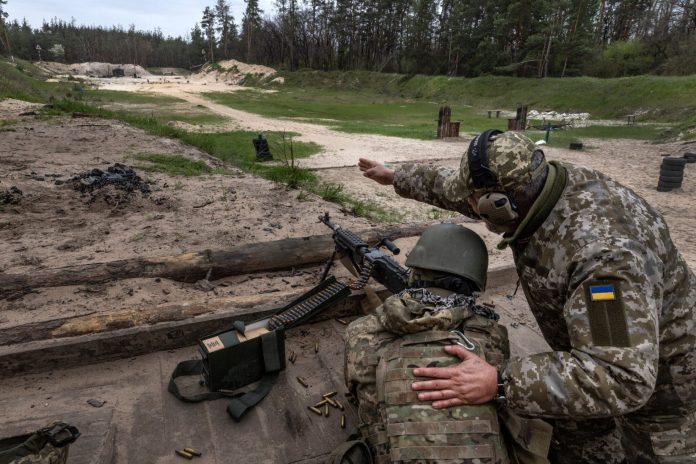
Ukraine still needs “a bit more time” before it launches its long-awaited counteroffensive, as Kyiv’s forces await the arrival of more weapons from their Western allies, President Volodymyr Zelensky said.

“With [what we have] we can go forward and be successful,” Zelensky told European public service broadcasters in an interview published Thursday.

“But we’d lose a lot of people. I think that’s unacceptable. So we need to wait. We still need a bit more time,” he added.

Among the supplies Ukraine is waiting for are armored vehicles, including tanks, which Zelensky stated were “arriving in batches.”

They include German Leopard 2s and British Challenger 2s, along with other armored vehicles like American Bradleys and Strykers.

Zelensky’s comments came a day after the US announced a new $1.2 billion aid package to Ukraine intended to bolster air defenses and sustain ammunition supplies.


Trump won’t say whether he wants Russia or Ukraine to win war

Former US President Donald Trump would not say Wednesday night who he thinks should prevail in Russia’s war against Ukraine, instead telling New Hampshire GOP primary voters that he wants “everybody to stop dying.”

“I want everybody to stop dying. They’re dying. Russians and Ukrainians. I want them to stop dying,” Trump said at CNN’s town hall moderated by “CNN This Morning” anchor Kaitlan Collins.

“And I’ll have that done in 24 hours,” he added.

Trump, who would not say whether he wants Ukraine to successfully deter Russia when pressed by Collins, told the audience gathered at Saint Anselm College that he doesn’t “think in terms of winning and losing.”

“I think in terms of getting it settled so we stop killing all these people,” he continued.


Ukraine says Russian looting has increased in occupied regions

The number of lootings and robberies allegedly committed by Russian troops has increased during Russia’s evacuation of occupied territories, according to Ukraine’s deputy defense minister.

In a statement released Thursday morning, Hanna Maliar said Russian troops have been using “the alleged need to ensure the evacuation of the population” in the southern Zaporizhzhia region as a “pretext” to seize vehicles and other private belongings.

“In particular, in the settlements of Tokmak, Polohy, Kamianka, Rozivka, Mykhailivka, Molochansk, Enerhodar, Chernihivka in the temporarily occupied territory of Zaporizhzhia region, Russian occupiers, under the guise of so-called evacuation measures, stole property of local enterprises and citizens,” Maliar continued, adding, “In Enerhodar, at night, about 20 vehicles were stolen from the territory of the private enterprise Elektropivdenmontazh-10 and a warehouse was looted.”

Maliar stated that Russian troops “will use another cargo ship that arrived at the port of Berdiansk on May 7 to move the stolen property to the territory of the temporarily occupied Crimea.”

Russian authorities began evacuating towns and cities in the occupied region of Zaporizhzhia last week, amid rumors that Ukraine is set to launch a long-anticipated counteroffensive to reclaim territory seized by Moscow’s invasion. More than 1,600 people, including 660 children, have been evacuated from towns on the frontlines, according to the Russia-appointed acting head of the region.

Zaporizhzhia is home to Europe’s largest nuclear power plant, which has witnessed intense fighting since the start of the war and sparked concern among the United Nations’ nuclear watchdog. Rafael Grossi, director general of the International Atomic Energy Agency warned Monday of the “increasingly unpredictable” situation at the Zaporizhzhia plant.

Ukraine’s military announced Wednesday that Russian soldiers prevented Ukrainian employees of the occupied plant from evacuating Enerhodar – a nearby frontline town – with their families.


Drone strikes hit Russia’s Belgorod and Bryansk regions: Governors

Additional drone attacks were conducted over Russia’s Belgorod region on the border with Ukraine, Belgorod Oblast Gov. Vyacheslav Gladkov said in a Telegram post Wednesday.

Two drones detonated and fell over a private residential area in the region, Gladkov said. No casualties were reported, but two residential buildings and a car were damaged, he added.

Another drone was shot down by Russian air defense systems over the region, Gladkov said. The governor added there were no casualties and that response teams are assessing the aftermath on the ground.

A drone strike hit Bryansk, another Russian region on the Ukraine border, said Bryansk Gov. Alexander Bogomaz.

Bogomaz said there were no casualties, and that an administrative building was struck in Stardoub. Response teams are working on site, he added.


Operation in Ukraine has been “very difficult”: Kremlin

The “special military operation” in Ukraine has been what Kremlin spokesperson Dmitry Peskov described as “very difficult,” but said certain goals have been achieved over the past year.

Speaking to Bosnian Serb channel ATV in remarks carried by Russian state news agency TASS on Wednesday, Peskov stated Russia is acting “slowly” In Ukraine because it is conducting a “special military operation, not a war.”

He acknowledged Ukraine’s stronghold in the eastern city of Bakhmut and said “a large amount of AFU troops are concentrated there, which is constantly receiving reinforcements.”

Peskov added the West has made “many mistakes” and “deceived Russia,” which prompted Russia to launch the operation in Ukraine — something he said the West became a participant in.

He maintained that the recent drone attacks on the Kremlin were an “attempted terrorist attack” against Russian President Vladimir Putin. By doing so, Peskov insisted, Ukraine has “equated itself with the state sponsors of terrorism.”

He added Russia will implement all necessary security measures following the incident.

Ukrainian officials and the US have repeatedly denied being behind a drone attack on the Kremlin.

Referring to the International Criminal Court (ICC) warrant issued against Putin earlier this year, Peskov said, “It’s difficult to imagine that anyone in the world would seriously consider issuing an ICC warrant against Putin, the leader of a nuclear power.”

Peskov told the channel that his country is “too strong a state” to give up its positions under pressure from the West, and said the Kremlin would not communicate with Western media “until they begin to show some interest in the truth.”


“Effective counterattacks” are underway in Bakhmut: Ukrainian military commander

Ukrainian forces are conducting “effective counterattacks” in the Bakhmut area, according to the commander of the Ukrainian Land Forces.

“Thanks to our well-thought-out defense in the Bakhmut sector, we are getting results from the effective actions of our units,” Colonel-General Oleksandr Syrskyi said on Telegram.

“In particular, we are conducting effective counterattacks. In some areas of the front, the enemy was unable to withstand the onslaught of Ukrainian defenders and retreated to a distance of up to 2 kilometers.”

Yevgeny Prigozhin, the head of the Wagner private military company, also indicated that Ukrainian forces have been able to advance south of Bakhmut.

“It was the competent conduct of the defensive operation that exhausted the trained forces of the Wagner PMC and forced them to be replaced in certain areas by less trained units of the Russian regular army, which were defeated and retreated,” Syrskyi stated.

Prigozhin said earlier that units of Russia’s 72nd brigade had retreated from their positions. Other Russian accounts have said Wagner forces have moved to the city itself.

“Despite a significant concentration of troops and loud statements by Russian war criminals about their intentions to take Bakhmut by May 9, the enemy failed to capture the Ukrainian city,” Syrskyi continued, adding, “Our defense forces are holding the frontline securely and preventing the enemy from advancing. The battle for Bakhmut continues.”

He singled out the 3rd Separate Assault Brigade, which was involved in an assault on the positions of the 72nd Brigade, and “inflicted a powerful strike on the enemy in the battle,” Syrskyi said.


Russia conducted unsuccessful offensives in multiple areas: Ukraine military

The Russian offensive is concentrated in four different parts of the Donetsk region, with the “fiercest battles” in the cities of Bakhmut and Mariinka, according to the Ukrainian military’s General Staff.

Russia conducted unsuccessful offensive actions in Bakhmut and the Avdiivka and Mariinka areas, it said. Russian forces claimed earlier Wednesday that they had taken the village of Kamianka, north of Avdiivka, where Ukrainian forces have been surrounded on three sides for several months.

Further south — where observers expect a Ukrainian counteroffensive to be focused — Russian forces are conducting “defensive operations in the Zaporizhzhia and Kherson directions,” and had carried out a number of airstrikes, the General Staff announced.

Settlements close to the front lines had also been shelled, including 35 airstrikes and four attacks from MLRS [rocket systems] on the positions of Ukrainian troops and settlements of the Kherson region, it added.

The General Staff also claimed that Russians were evacuating civilians in the town of Tokmak in the Zaporizhzhia region to ”terrible living conditions” further south.

“Russian occupiers, under the pretext of evacuating civilians, continue to take away looted property from the front-line settlements of the Zaporizhzhia region,” it said, adding that medical institutions in the city of Enerhodar had been looted.

The Ukrainian air force had carried out several strikes, it noted, including against a Russian electronic warfare unit. The Ukrainians appear to be trying to disrupt both Russian military communications and electronic warfare capabilities ahead of a counter-offensive.


Wagner units have pulled back to Bakhmut due to alleged lack of coordination with Russian army: Ukraine

Fighters from the Wagner private military group have been pulled back to the eastern city of Bakhmut from other areas where they had combat missions, according to Ukraine’s Deputy Defense Minister Hanna Maliar.

They have been replaced by regular Russian army troops in those areas, she stated.

As the situation around Bakhmut appears to become more fluid, Ukraine’s military has not lost any positions in the area over the last day, Maliar said on Telegram.

Russian military bloggers have made similar reports, but they have complained that there is little coordination between Wagner fighters and Russian forces. Those same complaints have also been aired by the head of the mercenary group, Yevgeny Prigozhin.

Earlier Wednesday, Prigozhin said a Russian brigade had abandoned its positions south of Bakhmut, leading to many casualties among his fighters.


Russian planning evacuations near Zaporizhzhia nuclear power plant: Ukraine

Ukraine’s state-owned energy company Energoatom says Russia plans to evacuate more than 3,000 staff members from Enerhodar, a town near the Zaporizhzhia plant, but warned that this could result in a “catastrophic staff shortage.”

“The Russian occupiers are proving their inability to ensure the operation of the Zaporizhzhia Nuclear Power Plant, as there is now a catastrophic lack of qualified personnel,” the energy company said on Telegram.

Earlier, Ukraine’s military announced that Russian troops were stopping staff from evacuating Enerhodar.

“In Enerhodar, the Russian occupiers organised a so-called ‘evacuation’ for family members of Zaporizhzhia Nuclear Plant employees,” Ukraine’s armed forces said in a statement.

“Yet the employees of the power plant are not allowed to leave the city,” it added.


Russia’s war in Ukraine is informing China’s view on Taiwan: NATO chief

Russia’s invasion of Ukraine is informing China’s calculations on a possible invasion of Taiwan, NATO Secretary General Jens Stoltenberg told CNN Wednesday.

“What happens in Europe matters for Asia, and what happens in Asia matters for Europe,” Stoltenberg stated.

“Security is global,” he continued.

“Beijing is watching closely what happens in Ukraine, the price President Putin is paying but also the potential rewards. So what happens in Ukraine actually matters for the calculations Beijing, China’s making regarding, for instance, Taiwan,” he added.

Covid in Iran: daily deaths drop to 5

COVID in Iran

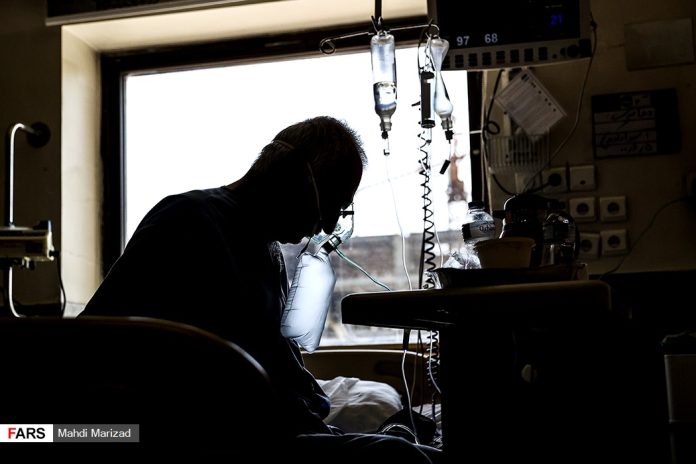
“A sum of 135 new patients infected with COVID-19 have been identified in the country based on confirmed diagnosis criteria during the past 24 hours,” the Iranian Health Ministry’s Public Relations Center said on Wednesday, and added, “74 patients have been hospitalized during the same time span.”

It further announced that the total number of COVID-19 patients has increased to 7,610,468.

“Unfortunately, five patients have lost their lives in the past 24 hours, increasing the number of the dead to 146,193,” the ministry noted.

It expressed satisfaction that 7,362,850 coronavirus patients have recovered or been discharged from hospitals so far.

The center went on to say that 452 cases infected with COVID-19 are in critical conditions.

It added that 56,497,125 coronavirus diagnosis tests have so far been carried out across the country.

The health ministry public relations warned that 11 cities are orange, 146 cities are yellow, and 291 cities are blue.

Three killed in fresh Israeli attacks on Gaza, Palestinians respond with dozens of rockets

Israel Gaza

The renewed bombardment on Wednesday prompted a barrage of retaliatory rocket fire from the besieged enclave towards southern Israel.

The Israeli air raids struck multiple locations across the besieged enclave, including in the south and the north, and a number of sites belonging to the Palestinian Islamic Jihad movement (PIJ).

Local media reported that several Palestinians were wounded east of Khan Yunis in the southern Gaza Strip.

Arabic media reported that Hamas, the group running the Strip, said the rockets launched from Gaza were an answer to the “massacre committed by the Israeli occupation”, as Palestinian media reported that the retaliatory rockets came “under the name of the [Gaza] factions’ joint room” which includes Hamas and other Gaza-based armed groups.

Hamas spokesperson Abdulatif al-Qanoo’ was quoted by the Palestinian Maan news agency as saying rockets fired from Gaza are part of a ‘unified resistance’.

The rockets are in response to the “massacre committed by the Zionist occupation and within the framework of self-defence,” he said in a brief statement.

“The response of the resistance is a duty … and [the response] is unified,” he added.

Daoud Shehab, a leader in Palestinian Islamic Jihad, told Al Jazeera that “the response to the assassination enjoys a national and field consensus, and the Palestinian line is one and unified.”

Palestinian factions in Gaza have also issued a joint statement.

The “resistance factions announced the implementation of ‘Operation Revenge of the Free’ in response to the assassination of the leaders of the al-Quds Brigades,” the joint statement said.

“Targeting civilian homes and assassinating our men and heroes is a red line that will be confronted with full force,” it added.

“The resistance is ready for all options and if the occupation persists with its aggression … dark days await it,” the statement read.

On the Israeli side, authorities told citizens living in towns along the Gaza fence to evacuate or remain inside shelters. Israeli hospitals announced that several settlers were hospitalized following the rocket fire, media reports say.

Israel’s Channel 13 said over 300 rockets have so far been launched from the Gaza Strip.

According to Israeli media, explosions were heard in several areas in Tel Aviv.

Israel has also closed its two commercial and people crossings with Gaza, a move that would stop the entry of goods, fuel and humanitarian aid.

The bombardment comes a day after Israeli forces attacked Gaza City and its environs, killing 15 people, including four children, in what they said was an operation targeting three PIJ commanders.

In an overnight attack, Israeli forces also killed two people in the occupied West Bank town of Qabatiya, during which a 17-year-old Palestinian was shot in the chest and transferred to hospital.

The health ministry identified the slain men as Ahmad Jamal Assaf, 19, and Warani Walid Qatanat, 24, who were shot by Israeli soldiers in Qabatiya town, south of Jenin, the Palestinian news agency WAFA reported.

The latest victims bring the death toll in two days of Israeli bombardment to 20, including children. At least 42 others have been wounded.

The latest violence comes on the second anniversary of Israel’s 11-day aggression against Gaza.