Wednesday, January 14, 2026
Home Blog Page 1428

Saudi Crown Prince meets Venezuelan president, discusses bilateral ties

Bin Salman and Maduro

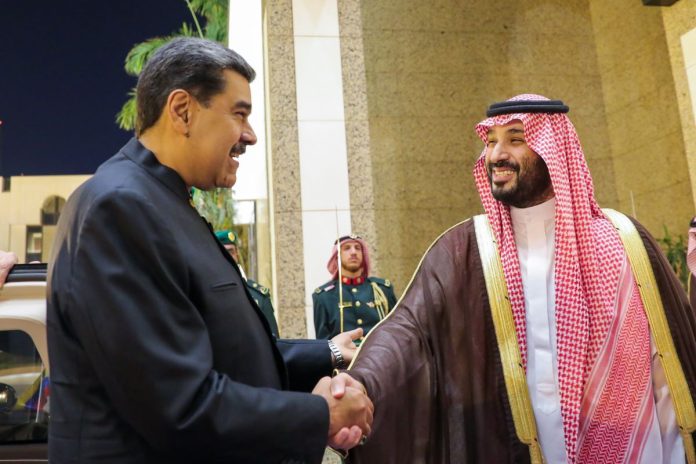
Bin Salman met with Maduro at Al-Salam Palace in Jeddah, the Kingdom’s foreign ministry said on Tuesday.

The Crown Prince welcomed Maduro and his accompanying delegation on his visit to the Kingdom with the Venezuelan leader expressing his happiness to be in Saudi Arabia, the Saudi Press Agency (SPA) reported.

“During the meeting, both sides reviewed the bilateral relations, prospects for cooperation and opportunities to enhance them in various fields,” SPA said. The report added that both leaders exchanged views on various issues of common interest.

Minister of Energy Prince Abdulaziz bin Salman bin Abdulaziz; Minister of Sports Prince Abdulaziz bin Turki bin Faisal bin Abdulaziz; Minister of the National Guard Prince Abdullah bin Bandar bin Abdulaziz; Minister of Foreign Affairs Prince Faisal bin Farhan and Minister of Economy and Planning Faisal bin Fadel Al-Ibrahim, were among the Saudi delegation welcoming Maduro.

Maduro arrived in Jeddah on Sunday, and his trip precedes a visit by US Secretary of State Antony Blinken, who is expected to travel to Saudi Arabia on Tuesday until June 8, State Department Spokesman Matt Miller said last week.

During his trip, Blinken is expected to meet with Saudi officials and discuss the relations and strategic cooperation between both countries in addition to a range of global, economic and security matters, Miller added.
Iran bars prominent actress Motamed-Arya from leaving country to join Vienna Festival

Fatemeh Motamed Aria

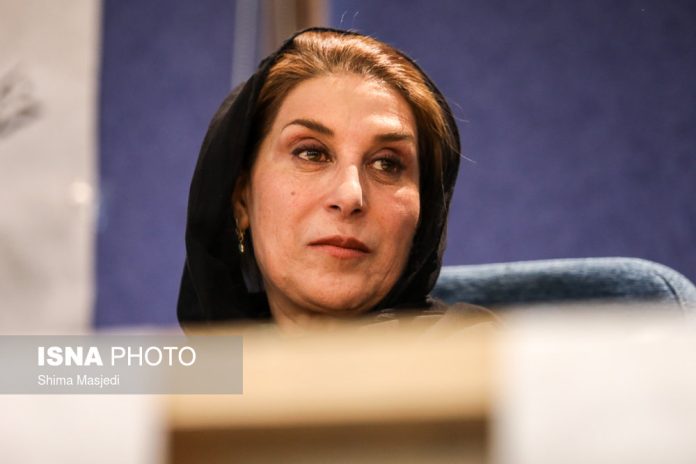
“Unfortunately, the scheduled performances of The Child have had to be cancelled as the leading actress, Fatemeh Motamed-Arya, has been denied permission to leave Iran,” the organizers of the Vienna Festival (Wiener Festwochen) said.

“The Child” was scheduled to be performed at the annual festival on June 6. The performance will be replaced by a free film screening of a recording of the play.

In early May, Tehran police said a legal case had been filed against Motamed-Arya for “unveiling the hijab in public and publishing images on social media.”

The actress had previously appeared without a mandatory hijab at a public funeral ceremony on April 18 to protest the relevant regulations.

Pakistan PM hopeful of IMF loan agreement amid escalating crisis

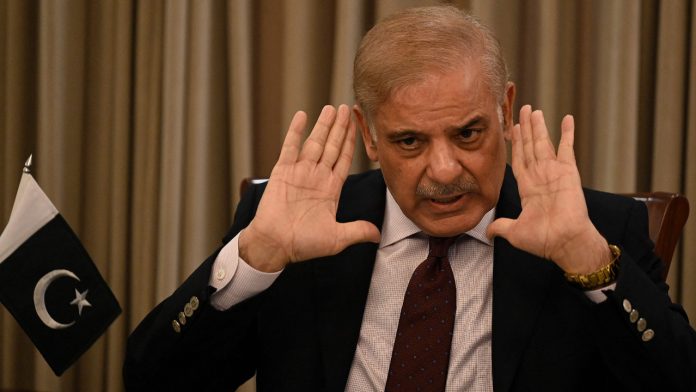
Shahbaz Sharif

“We are still very hopeful that the IMF programme will materialise. Our ninth review by the IMF will match all terms and conditions and, hopefully, we’ll have some good news this month,” the 71-year-old leader told the Anadolu news agency in an interview.

The prime minister’s statement came as Pakistan seeks the immediate release of $1.1bn, part of a $6.5bn bailout package the country signed up for in 2019.

Pakistan last received an IMF tranche as part of the programme in August last year. Despite a 10-day visit by the lender’s delegation earlier this year, the programme, which is set to expire by the end of June, remains stalled.

The country is facing an acute balance of payment crisis as it prepares to announce its annual federal budget on June 9.

Sharif, who also spoke to IMF chief Kristalina Georgieva last month to revive the programme, told Anadolu that Pakistan has met the requirements the global lender asked for.

“We have met all conditionalities. I repeat, each and every requirement of the IMF as prior actions has been met,” he stated, adding, “Some of those actions are usually met after the board’s approval, but this time the IMF required that those actions be met before the board’s approval, so we have met them.”

The premier, who came to power last year after his predecessor Imran Khan lost a confidence vote in parliament, said Pakistan was beset with multiple problems, including continuing political unrest and the aftermath of catastrophic floods that hit the country last year.

“Combined with that, we are facing galloping inflation because of the international situation,” he added, mainly referring to the war in Ukraine.

Inflation in Pakistan hit an all-time high of 38 percent last month, while the Pakistani rupee has depreciated by 53 percent since April. According to a recent report by the United States Institute of Peace, Pakistan needs to repay $77.5bn in external debt by June 2026.

Safiya Aftab, an Islamabad-based economist, told Al Jazeera two issues could be hindering the renewal of the IMF programme.

“It seems the IMF has sought to see the upcoming budget documents and the government has said no to that demand,” she stated, adding,. “The other issue is that IMF has asked for proof of pledges made by bilateral donors for our external financing, which we have not done as yet.”

With a payment of more than $20bn due in the upcoming fiscal year, Pakistan’s options look far and few, said Aftab, adding that Pakistan may have to go back to the IMF for a new bailout package.

“Unless we get an injection of funds in the next few months, either from the IMF or bilateral donors, Pakistan won’t be able to meet its debt obligations and dangers of default are very real,” she continued.

President Raisi says threats unable to marginalize Iran’s defense industry

Ebrahim Raisi

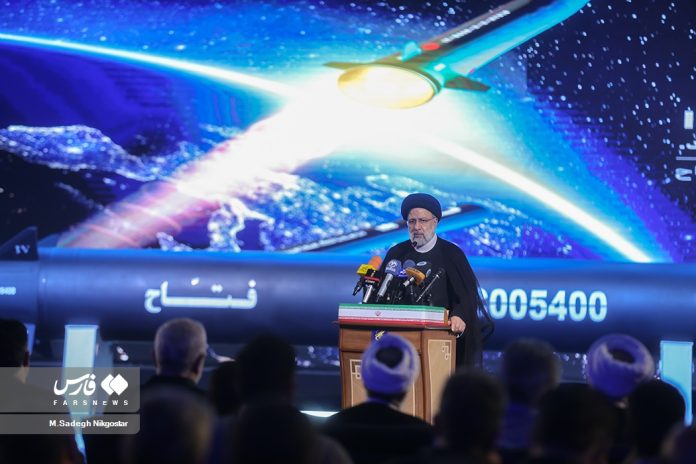
After unveiling a homegrown hypersonic missile on Tuesday, Raisi assured regional and neighboring states that Iran’s military power brings peace to the region.

“Today, we feel that (Iran’s) deterrence power has been developed, which is the source of security and sustainable peace for the regional countries,” he stated.

Highlighting Iran’s great progress and independence in the defense industries, the president stressed that Iran’s military know-how, science and industries, including the missile power, are indigenous, not imported, so the enemies are unable to marginalize these capabilities with threats.

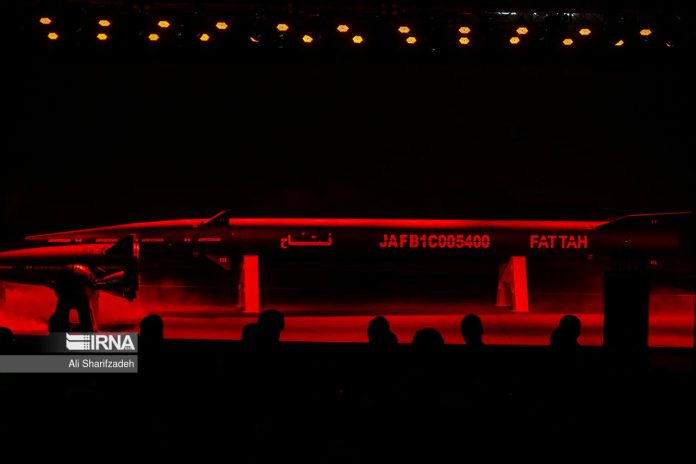
The new hypersonic missile ‘Fattah’ has a range of 1,400 kilometers. Its warhead has a spherical engine running on solid fuel with a movable nozzle that allows the missile to move in all directions.

IRGC officials say the new missile can penetrate all air defense missile systems and detonate the enemy’s anti-missile systems by maneuvering below and above the Earth’s atmosphere at a speed of Mach 13 to 15.

Persian leopard family spotted in Iran’s northern mountainous regions

Iran Leopard

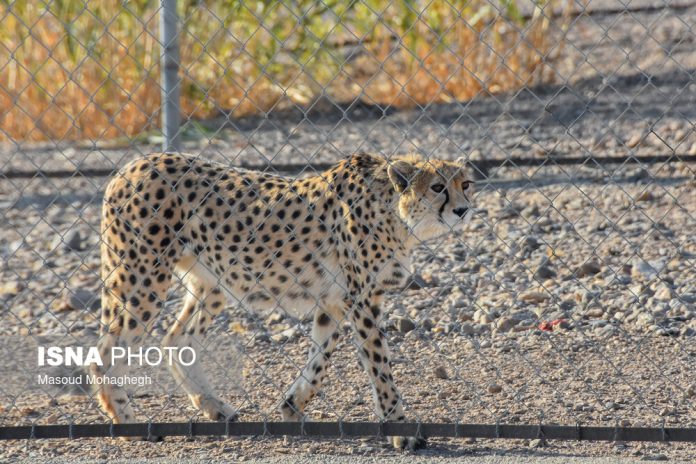
The Persian leopard, the largest of leopard subspecies, faces a threat of extinction.

Persian leopards face a variety of dangers, even inside protected reserves. Housing developments, livestock farming, hunting and trapping all threaten their existence.

Car bomb kills Afghan provincial official

Taliban Afghanistan

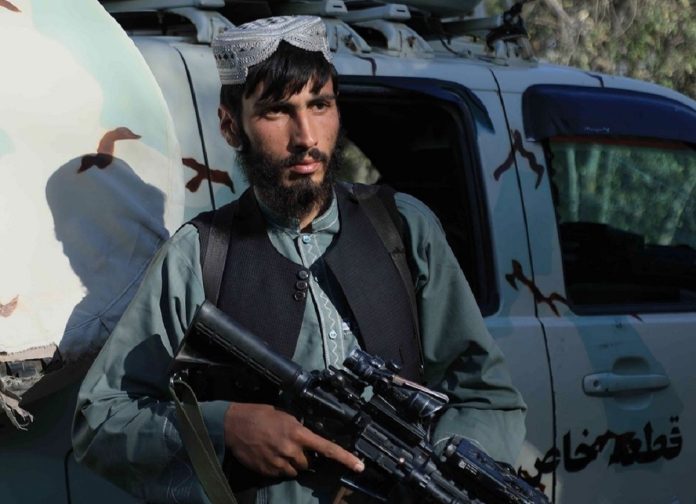
The bomber rammed a car filled with explosives into the vehicle carrying Nisar Ahmad Ahmadi, acting governor of northern Badakhshan, in provincial capital Faizabad.

The driver was also killed and six others wounded in the attack.

It was not clear who was behind the bombing, which was the first known attack on a Taliban official in Afghanistan in several weeks.

Muazuddin Ahmadi, the head of culture and information in the province, said the governor was the target of the attack.

Security has improved since the Taliban stormed back to power in August 2021, removing the US-backed government and ending their two-decade fighting, but Daesh remains a threat. Hundreds of thousands of people were killed during the Taliban’s armed rebellion against US-led foreign forces.

The head of the province’s police force was killed in a suicide blast claimed by Daesh in December last year.

A bomb attack also killed the head of the mining department in April last year.

Daesh, which has a more sectarian agenda, poses the biggest threat to the Taliban’s authority in the country. It has killed and wounded hundreds of people, including foreigners and members of the minority Hazara, in a bid to undermine the Taliban government.

The terror group has also targeted Taliban administration officials, including claiming the killing of the governor of northern Balkh province in an attack on his office in March.

The Taliban administration has been carrying out raids against members of Daesh.

Advisor: Iran won’t ink any deal on JCPOA revival unless IAEA abandons all claims

Mohammad Marandi

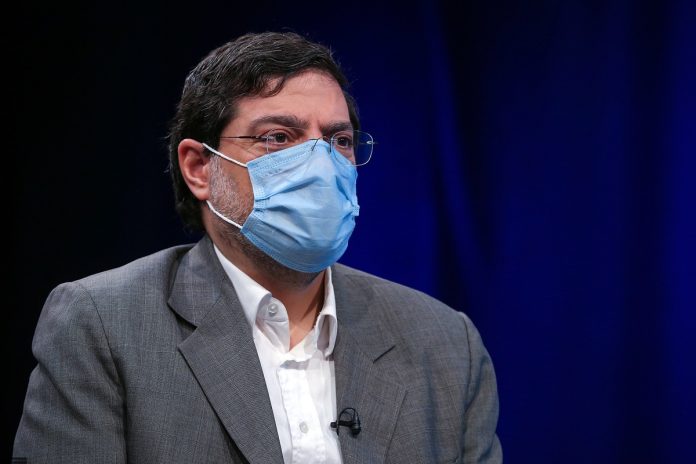
In an interview with Al Mayadeen TV Channel, Seyyed Mohammad Marandi said the Western governments constantly lie about the Iranian nuclear activities, and this “has been proven.”

He said Washington’s policy in West Asia region is based on prolonged conflicts and sedition in favor of the Israeli regime.

The analyst, however, said the world today is undergoing change, while Washington’s power is declining, something that will automatically blunt the impact of the anti-Iran sanctions.

Iran has been locked in a dispute with the International Atomic Energy Agency (IAEA) over what the latter claims to be activities at “undeclared” nuclear sites in Iran.

Tehran rejects the claims and says such allegations stem from Israeli lies about Iran’s nuclear case.

The row with the IAEA has been one of the major stumbling blocks to the revitalization the 2015 nuclear deal, in addition to Washington’s failure to return to the agreement and remove its sanctions on Iran.

Meanwhile, the International Atomic Energy Agency (IAEA) has recently closed one of the three cases of dispute over what the UN nuclear watchdog calls “undeclared” nuclear activities as a result of “better interactions” between the two sides.

Reports say that in the course of continued negotiations between the two sides, following a visit by IAEA Director-General Rafael Grossi to Iran in March, the case related to one of the so-called “undeclared sites,” namely Abadeh, had been settled.

Kuwaitis go to polls in hopes of ending political deadlock

Kuwait Election

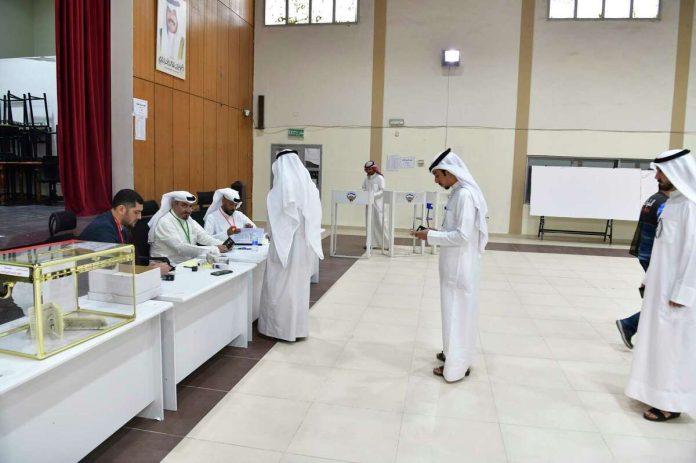
Polling began at 8am (05:00 GMT) on Tuesday and will continue till 8pm (17:00 GMT). Results will be announced on Wednesday, the official Kuwait News Agency reported.

More than 793,000 eligible voters will have the chance to determine the makeup of the 50-seat legislature in the only Persian Gulf Arab state to have an elected parliament with powers to hold the government to account.

A total of 207 candidates are running for a four-year term as lawmakers, the lowest number in a general election since 1996. They include opposition figures and 13 women.

Kuwait’s emir, Nawaf al-Ahmad Al-Sabah, called the vote last month after he had again dissolved parliament amid a persistent political deadlock.

Constant stand-offs between the branches of government have prevented lawmakers from passing economic reforms, while repeated budget deficits and low foreign investment have added to an air of gloom.

Bickering recently focused around a controversial bill that proposes the government take over consumer and personal loans of Kuwaiti citizens. The government says the move would be too expensive, costing almost $46bn in public funds, while MPs argued it would cost significantly less, under $6.5bn.

The ongoing rift between elected lawmakers and an appointed cabinet has resulted in a decay of social services like healthcare and education.

Lack of stability has also scared off investors in Kuwait’s petroleum industry, which accounts for seven percent of the world’s crude reserves.

Despite widespread frustration with the political elite, human rights activist Hadeel Buqrais said it was still important to cast a ballot.

“This is the only place where I have a voice, and boycotting means giving up my right as a citizen,” she told AFP ahead of election day, adding, “I have to participate, even if I do not expect the new parliament to tackle issues” concerning the country’s rights record.

While lawmakers are elected, Kuwait’s cabinet members are installed by the ruling Al-Sabah family, which maintains a strong grip over political life.

In March, the constitutional court nullified the results of last year’s elections – in which the opposition had made significant gains – and ruled that the previous parliament elected in 2020 be reinstated instead.

Since Kuwait adopted a parliamentary system in 1962, the legislature has been dissolved around a dozen times.

Recently-freed Danish inmate says treated well in Iran

Thomas Kjems

Speaking at a press conference after arriving at Copenhagen Airport, Thomas Kjems hailed the hospitality extended to him in Iran.

“In Iran, I was treated like a guest… There was no physical torture or any other thing,” he said.

Kjems was released on humanitarian grounds along with Kamran Ghaderi and Massud Mossaheb, who had been convicted of spying and security charges, respectively.

The three men were freed in return for Iranian diplomat Asadollah Assadi as part of a prisoner exchange which also saw Iran releasing Belgian national Olivier Vandecasteele.

After a stop in Oman and medical examinations, they were flown to the Melsbroek military airport just outside Brussels.

Both Oman and Belgium had helped broker the release.

Danish Foreign Minister Lars Løkke Rasmussen thanked Belgium, saying Oman had “played an important role.”

Kjems had been arrested in November 2022 over violent riots that broke out across Iran following the death of young Iranian woman Mahsa Amini.

Amini fainted at a police station in the capital Tehran and was pronounced dead three days later at the hospital. An official report by Iran’s Legal Medicine Organization concluded that Amini’s death was caused by illness rather than alleged blows to the head or other vital body organs.

Several countries, including the United States and the United Kingdom, have used their spy and propaganda apparatuses to provoke the deadly riots, according to Iran’s intelligence community.

Iran’s IRGC unveils much-awaited hypersonic missile

During a ceremony, the missile, named by Leader of the Islamic Revolution Ayatollah Seyyed Ali Khamenei as ‘Fattah,’ was put on display in the presence of Iranian President Ebrahim Raeisi, the Chief Commander of the IRGC Major General Hossein Salami and the Commander of the IRGC Aerospace Force Brigadier General Amir Ali Hajizadeh.

‘Fattah,’ a product of the IRGC Aerospace Force, has a range of 1,400 kilometers and is able to breach all anti-missile shields and destroy them.

The speed of the missile can reach 13-15 Mach before hitting the target.

Enjoying a solid-fuel propulsion system and a second-stage mobile nozzle, the missile is capable of maneuvering in and out of the Earth’s atmosphere.

Addressing the ceremony, Brigadier General Hajizadeh said Iran now became one of the four countries in the world that possess the technology to develop hypersonic missiles.

Highlighting the speed of the Fattah missile, the IRGC commander said that a missile with such speed will be impossible to be confronted.