Thursday, January 1, 2026
Home Blog Page 1087

Biden to officially relist Yemen’s Houthis as terrorist group

Yemen Houthi

The source stated on Wednesday the Biden administration is expected to announce plans in which it will redesignate the Houthi movement in Yemen as specially designated global terrorists.

The administration removed the Houthis’ Specially Designated Global Terrorist (SDTG) designation and de-listed it as a Foreign Terrorist Organization (FTO) in February 2021, after it was designated by the Donald Trump administration in its final weeks.

At the time, Secretary of State Antony Blinken said the decision to remove the group’s designations was driven by concerns that it could imperil the ability to deliver crucial assistance to the people of Yemen.

He added it was “a recognition of the dire humanitarian situation in Yemen”.

Both the designations trigger an asset freeze, but only an FTO designation imposes immigration restrictions on members, according to the State Department.

The SDGT designation also does not impose sanctions on those who provide “material support” to the group.

Pressure has grown on the administration to reimpose the designations as the group carries out attacks on vessels in the Red Sea.

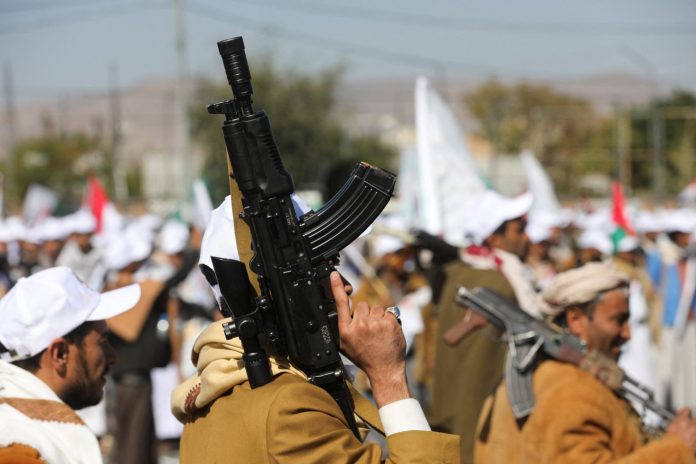
In solidarity with the Palestinians in besieged territory, the Yemeni armed forces have targeted ships in the Red Sea with owners linked to Israel or those going to and from ports in the occupied territories.

In response, the US has formed a military coalition against Yemeni forces in the Red Sea and endangered maritime navigation in the strategic waterway.

The US and the UK, backed by Bahrain, Australia, Canada and the Netherlands, struck more than 60 targets at almost 30 locations in Yemen on Friday, killing five people and injuring six others.

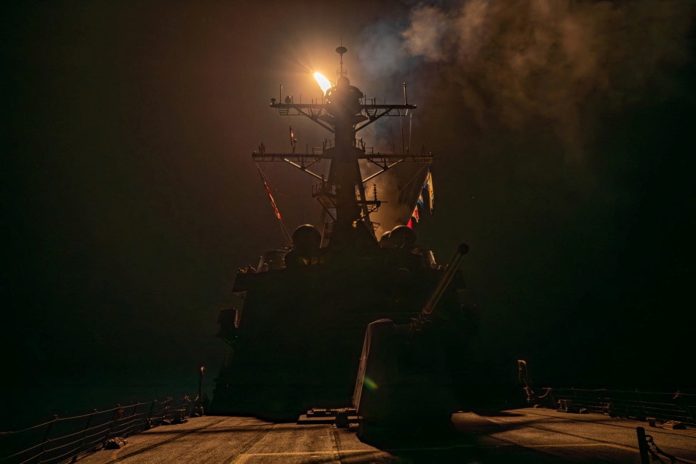
On Saturday, the US Central Command (CENTCOM) announced that a “follow-on action” was conducted against a Yemeni radar facility in Sana’a by the Navy destroyer USS Carney using Tomahawk land attack missiles.

The assaults prompted Yemen’s Supreme Political Council to issue a statement, saying “all American-British interests have become legitimate targets”.

Pakistan threatens Iran with ‘serious consequences’ following missile, drone attacks

Iran Missile

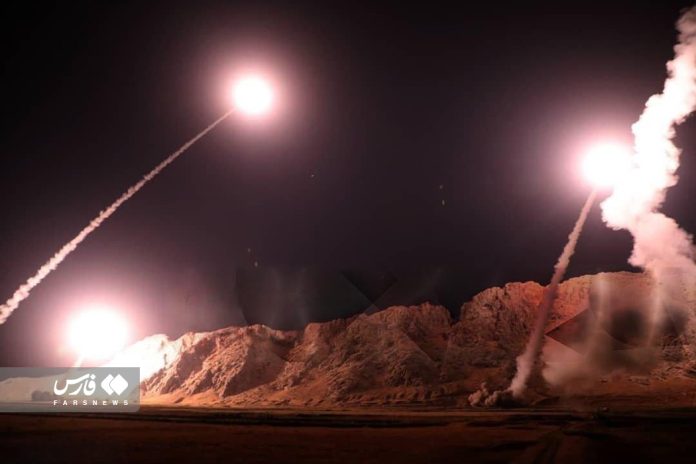
Several Iranian news outlets reported on Tuesday evening that missiles and drones were launched at the headquarters of Jaish al-Adl, a group that Tehran has accused of the attack that killed a dozen Iranian police in December.

“Pakistan strongly condemns the unprovoked violation of its airspace by Iran and the strike inside Pakistani territory which resulted in the death of two innocent children while injuring three girls,” the Foreign Ministry in Islamabad said in a statement, adding that the violation of Pakistan’s sovereignty was “completely unacceptable and can have serious consequences”.

Terrorism is a threat to all countries in the region and requires “coordinated” action rather than unilateral moves that are “not in conformity with good neighborly relations and can seriously undermine bilateral trust”, the ministry noted.

The Iranian charge d’affaires has been summoned to receive a protest note about the “blatant violation” of Pakistani sovereignty, while an appropriate demarche was sent to Tehran as well, the Pakistani Foreign Ministry announced.

A series of explosions were reported on Tuesday night in Panjgur, a city in the Pakistani province of Baluchistan, near the Iranian border. According to Iranian media, “two key strongholds” of Jaish al-Adl were “obliterated by precision strikes” by the Islamic Revolutionary Guard Corps (IRGC).

Qatar announces humanitarian deal between Hamas and Israel

Israel Hostages

“Medicine along with other humanitarian aid is to be delivered to civilians in the Gaza Strip, in the most affected and vulnerable areas, in exchange for delivering medication needed for Israeli captives in Gaza,” the Qatari Ministry of Foreign Affairs posted to its X account on Tuesday.

The agreement was reached in cooperation with France, according to the statement, adding that the medications and aid will depart from “Doha tomorrow for the city of Al-Arish in the sisterly Arab Republic of Egypt, on board two Qatari Armed Forces aircraft, in preparation for their transport into the Gaza Strip,” the ministry added.

The agreement is a joint effort between Qatar and France, Qatari Foreign Ministry spokesperson Majid bin Mohammed Al Ansari told Qatar News Agency (QNA).

Al Ansari added the humanitarian aid is scheduled to be dispatched Wednesday to the Egyptian city of El Arish utilizing two Qatari Armed Forces planes before reaching the Gaza Strip.

The office of Israel’s prime minister has confirmed that the delivery of medicines to Israeli hostages in the Gaza Strip will start Wednesday, following a deal brokered by Qatar and France to allow medicine and aid into the enclave.

”On instruction from Prime Minister Benjamin Netanyahu and pursuant to the Director of the Mossad’s agreement with Qatar on providing medicines to the Israeli hostages, two Qatari Air Force planes are expected to fly tomorrow to Egypt with medicines that have been purchased in France, according to a list that was compiled in Israel, according to the medical needs of the hostages,” Benjamin Netanyahu’s office said Tuesday in a statement on X.

”Upon the planes’ arrival in Egypt, the medicines will be transferred by Qatari representatives to their final destination inside the Gaza Strip,” it added.

The statement also noted that “Prime Minister Netanyahu conveys his appreciation to all those who have assisted in the endeavor”, adding that ”Israel insists that all the medicines reach their destination.”

On Oct. 7, Hamas carried out an attack on Israeli settlements near Gaza, resulting in the death of 1,200 Israelis, injury to 5,500 and the capture of at least 240 hostages.

Hamas released around a half of its hostages during the week-long truce in November. According to the Israeli authorities, it currently holds 132 people, while 25 captives have been killed in the fighting. Israel estimates the presence of “137 hostages still held in the Gaza Strip”, according to media reports and statements from Israeli officials.

Israel has launched relentless air and ground attacks on the Gaza Strip since the cross-border attack by Hamas. At least 24,285 Palestinians have since been killed, mostly women and children, and 61,154 injured, according to Palestinian health authorities.

According to the UN, 85% of the population of Gaza is already internally displaced amid acute shortages of food, clean water and medicine, while 60% of the enclave’s infrastructure is damaged or destroyed.

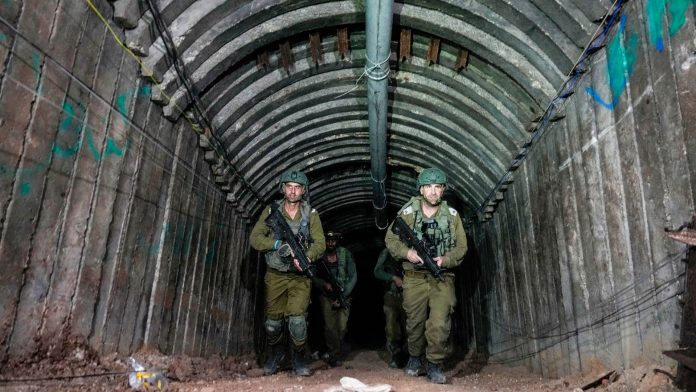
Israel needs ‘years’ to break up Gaza tunnels: Report

Gaza War Hamas Tunnel

The tunnel network was originally estimated to include 250 miles (400 km) of underground passages and bunkers. Israel Defense Forces (IDF) has since revised these estimates to 350-450 miles (560-725 km) or more.

Two officials, who spoke on condition of anonymity, said there were close to 5,700 separate shafts leading into the tunnels under Gaza. None of the numbers could be independently verified, however.

It could take “years” to disable the tunnels, one Israeli official told the New York Times. They need to be mapped, checked for Israeli captives, and “made irreparable”, he stated, acknowledging that the recent attempts to destroy the tunnels by flooding them with seawater “have failed”.

According to another official, Israel is using a “triangle” model to locate the tunnels, which assumes they will be found under any hospital, school or mosque in Gaza.

The Israeli military has underestimated the “extent and importance” of the tunnels to Hamas, which the Times described as an “intelligence failure”.

The IDF has not disclosed the number of soldiers killed and wounded in tunnel warfare. Officially, almost 190 soldiers have been killed and 240 or so seriously wounded in the fighting since the start of the ground campaign in Gaza.

One soldier, who spoke with the Times on condition of anonymity, said that he took had taken part in destroying about 50 tunnels in Beit Hanoun, in the northeast of Gaza. All of them were rigged with bombs and other explosives, wired to be activated remotely.

The Palestinian group Hamas, which maintains de facto control over Gaza, struck at nearby Israeli settlements on October 7, claiming the lives of approximately 1,200 Israelis. Another 240 were taken into the Palestinian enclave as captives. Israel responded by declaring war on Hamas and launching air and artillery strikes on Gaza, followed by ground troops in November.

Almost 24,000 Palestinians have been killed and another 60,000 wounded in the first 100 days of fighting, according to the Gaza health ministry.

French president explains decision not to join US-led strikes on Houthis

US UK Yemen Attack

But French forces would continue work to ensure freedom of navigation in the Red Sea, he stated at a news conference in Paris on Tuesday.

“We interrupted missiles and drones which were going to strike Norwegian ships. And so we act to protect our own equipment and the equipment of our allies,” Macron added.

France joined a multinational naval task force in December to protect ships from Houthi attacks in the Red Sea.

In solidarity with the Palestinians in besieged territory, the Yemeni armed forces have targeted ships in the Red Sea with owners linked to Israel or those going to and from ports in the occupied territories.

In response, the US has formed a military coalition against Yemeni forces in the Red Sea and endangered maritime navigation in the strategic waterway.

The US and the UK, backed by Bahrain, Australia, Canada and the Netherlands, struck more than 60 targets at almost 30 locations in Yemen on Friday, killing five people and injuring six others.

On Saturday, the US Central Command (CENTCOM) announced that a “follow-on action” was conducted against a Yemeni radar facility in Sana’a by the Navy destroyer USS Carney using Tomahawk land attack missiles.

The assaults prompted Yemen’s Supreme Political Council to issue a statement, saying “all American-British interests have become legitimate targets”.
Putin says Ukrainian statehood could soon suffer serious blow

Vladimir Putin

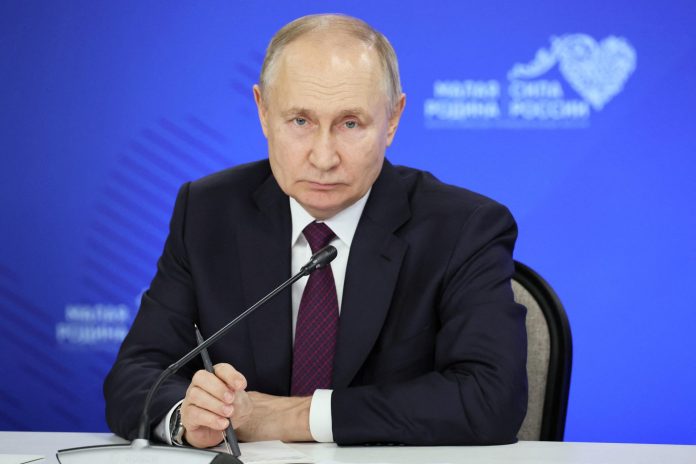
During the ‘Small Motherland – the Strength of Russia’ forum in Moscow on Tuesday, Putin noted that the head of Ukraine’s negotiation team, which participated in peace talks with Russia in the early months of the conflict, had recently admitted that Kiev was at one point ready to reach an agreement with Moscow. However, after a visit by then-British Prime Minister Boris Johnson, the Ukrainian authorities were convinced to stop pursuing a deal with Russia and continue fighting.

“Are they not idiots?” the Russian leader asked, adding that if Ukraine had simply ignored Johnson, then the fighting could be long over by now.

“This just proves yet again that they are not independent people.”

Putin proceeded to suggest that Kiev’s latest strikes on Russian civilians were an attempt to distract their own people and their Western sponsors from the “complete and absolute failure of their so-called counteroffensive”, which had been intended to push Russian forces back to Ukraine’s 1991 borders.

The president said Kiev’s offensive had not only catastrophically failed, but all the initiative on the battlefield had also ended up with the Russian forces.

“If things carry on this way, Ukrainian statehood could be dealt an irreparable and very serious blow,” warned Putin, arguing that Kiev was fully responsible for this situation, which was a direct consequence of its policies and decisions.

Putin’s statement comes as Kiev’s Western backers are reportedly growing increasingly concerned that Ukraine cannot inflict a military defeat on Russia, and have been nudging Ukraine to seek a diplomatic solution.

According to Russian estimates, around 400,000 Ukrainian troops have been killed or wounded during the conflict, including 125,000 in the course of Kiev’s counteroffensive between early June and late November.

The West provoked the ongoing conflict between Russia and Ukraine by luring Kiev with the prospect of NATO membership. This move drastically changed the security situation on the continent, Putin said on Tuesday. The current standoff began not in 2022 but in 2008, he added, speaking to local community leaders from across Russia.

Putin then cited a former Czech president, who, according to Putin, has “recently” admitted that the “war” between Kiev and Moscow started in summer 2008 when the US-led bloc decided to “open its doors to Ukraine and Georgia”. It is unclear whether Putin was speaking about Milos Zeman, who had enjoyed close relations with Moscow for many years but sharply condemned Russia in February 2022 following the start of its military campaign against Kiev. It is also unclear which exact statement the Russian president was referring to.

Speaking to local community heads, the president stated that the 2008 NATO decision “drastically changed the situation in Eastern Europe”. Putin also noted that when Ukraine became an independent state in the early 1990s, it proclaimed its neutrality.

The Declaration of State Sovereignty of Ukraine, adopted in July 1990, announced that the then-Soviet Socialist Republic declared “its intention to become … a permanently neutral state that does not take part in any military blocs and sticks to the non-nuclear principles: not to accept, produce or acquire nuclear weapons”.

The situation started to change rapidly after the Western-backed 2014 Maidan coup in Kiev. Later the same year, the Ukrainian parliament – the Verkhovnaya Rada – adopted amendments to its laws, in which its neutral status was abandoned. The amendments were introduced by then-president Petr Poroshenko.

In 2017, accession to NATO was declared Ukraine’s foreign policy priority under new legislation. Two years later, Ukrainian lawmakers amended the nation’s constitution to declare “the strategic course on acquiring full membership in the EU and NATO” the “basis of internal and foreign policy”.

Russia has repeatedly expressed its concerns over NATO encroachment towards its borders and called it a national security threat. Prior to the outbreak of the current conflict, Moscow came forward with a comprehensive plan for security guarantees in Europe.

Submitted in December 2021, the proposal included demands that NATO officially bar Ukraine from ever becoming a member of the military bloc and for NATO to withdraw its forces to where they were before the alliance expanded eastward in 1997. The plan, aimed at defusing tensions in Europe, also called on the US-led bloc to pledge not to expand further East.

Moscow also demanded that the US withdraw nuclear weapons it had deployed to the territory of its non-nuclear allies in Europe, as well as all the relevant rapid deployment infrastructure. The overture was largely rejected by the US and its allies.

Majority of Germans think Israel’s war on Gaza ‘unjustified’

Rally Germany Gaza

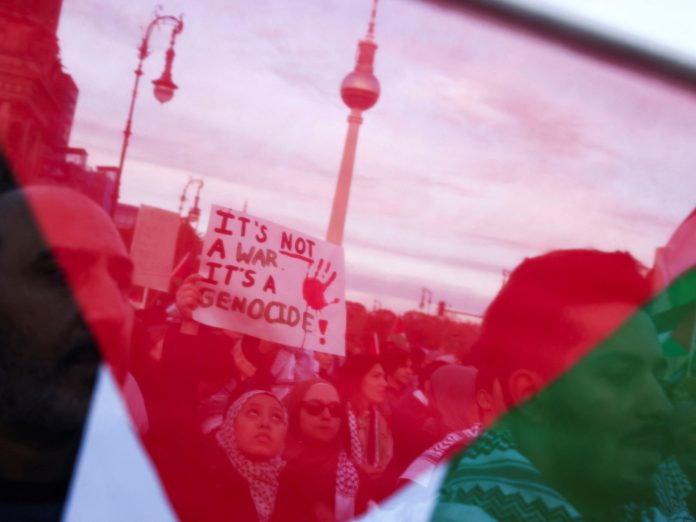
Some 61% of Germans said they believe that Israel’s military actions in Gaza are unjustified as they have claimed too many civilian victims. Only 25% voiced support for Israel’s ongoing military offensive.

The representative poll was commissioned by the German public broadcaster ZDF, and it was conducted by the foundation Forschungsgruppe Wahlen last week.

Despite growing public pressure, the German government remains one of the strongest supporters of Israel’s military offensive in Gaza. Chancellor Olaf Scholz has repeatedly said that his country bears special responsibility for Israel due to its Nazi past.

Israel has launched a relentless military assault on Gaza after a cross-border attack by Hamas on Oct. 7, which Tel Aviv says killed around 1,200 people.

During Israel’s military campaign, at least 24,285 Palestinians have been killed and 61,154 others injured. The majority of the victims were children and women.

According to the UN, 85% of the population of Gaza is already internally displaced amid acute shortages of food, clean water and medicine.

Israel preparing for ground offensive into southern Lebanon: Report

Israeli Army

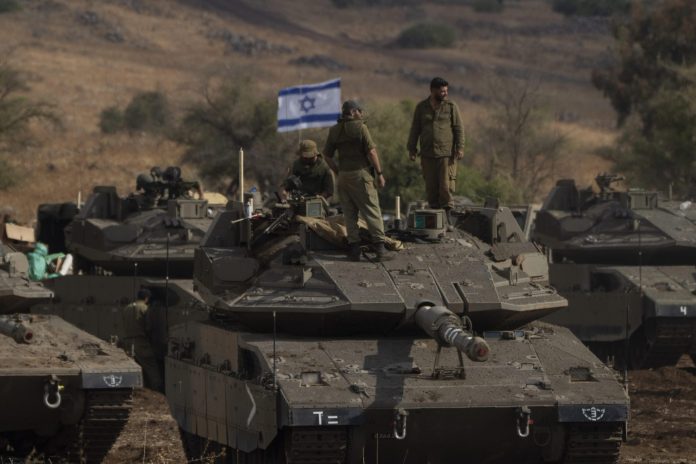
A report by Al Jazeera said that Israeli troops had been holding exercises near the border between the occupied Palestinian territories and Lebanon with the stated aim of preparing for a ground incursion in areas in southern Lebanon where Hezbollah holds a sway.

That came hours after a report by Reuters news agency said that Israeli military’s special forces had carried out a cross-border operation into Lebanon, a rare acknowledgment of such operations by the regime.

However, sources told Al-Mayadeen TV that reports about infiltration of the Israeli regime’s ground troops into Lebanon were untrue.

Al Jazeera’s Tuesday report quoted Ori Gordin, the chief of the Israeli army’s northern command, as saying that tens of thousands of Israeli soldiers have been deployed toward the border with Lebanon.

Gordin was also seen in a video published by the Israeli military while he was speaking to soldiers and overseeing the training in areas near the Lebanese border.

The developments come as clashes that began in early October between Hezbollah and Israel over the regime’s aggression on Palestine’s Gaza have intensified in recent weeks, especially after senior Hezbollah and Gaza-based Hamas commanders were killed in declared or suspected Israeli operations in Lebanon.

Attacks by Hezbollah on Israeli military targets have forced the regime to evacuate settlers living in areas near the Lebanese border, with no immediate plan existing for their return.

Hezbollah has warned that it would massively scale up its attacks on Israel if the regime decides to expand the war.

Hamas ‘far from being defeated’: Israeli war cabinet minister

Hamas

“Hamas is far from being defeated, and if anyone thinks that there will be an alternative to its rule in the Gaza Strip, it simply won’t happen,” Gideon Sa’ar told Israel’s Army Radio on Tuesday.

Sa’ar’s comments come as Hamas resistance to the Israeli assault continues in all parts of the blockaded enclave, despite a three-month military campaign that has left more than 24,000 Palestinians dead, most of them women and children.

More than 100 days into the Israeli aggression against Gaza, the regime keeps pounding the besieged Palestinian territory with airstrikes and shelling.

The Palestinian movement has claimed its fighters have destroyed or disabled hundreds of Israeli military vehicles over the 100 days of war.

Abu Obaida, the spokesman for al-Qassam Brigades has also scoffed at Israel’s claims about alleged gains during its military onslaught on Gaza.

“The alleged achievements that the enemy announces about controlling or destroying what it calls weapons depots, ready-to-launch missile platforms, and kilometers of tunnels are ridiculous…and the day will come when we prove that these claims are false.”

Israeli Defense Minister Yoav Gallant stated on Monday that the “intensive manoeuvring stage” of Israel’s military offensive in northern and southern Gaza will “end soon”.

The Israeli military is working to “eliminate pockets of resistance” in northern Gaza, Gallant said, adding: “We will achieve this via raids, airstrikes, special operations and additional activities.”

The Israel Defense Forces (IDF) has announced one of its army divisions had exited the Gaza Strip on Monday night, in the most significant sign yet of a shift to a new phase of fighting that some Israeli officials have been promising.

The IDF said its 36th division, which comprises armored, engineering, and infantry companies, withdrew from the Gaza Strip after 80 days.

The brigade operated in the areas of Zeitun, Shati, Shejaiya, Rimal, and the Central Camps, the Israeli military added.

Growing number of Gazans haven’t eaten in days: UN

Gaza War

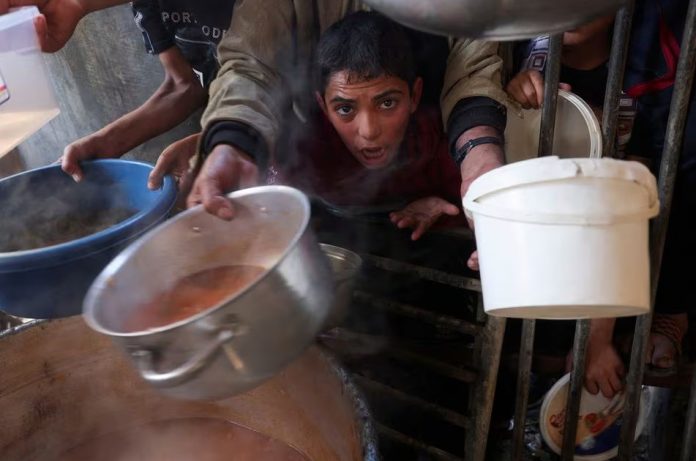
“Some people have not eaten in days, the children have no winter clothes, there’s no medical care. Most products are not available on the market and when they are available, they are very expensive,” said Olga Cherevko from the OCHA team.

“Shelter is a huge need and of course food, and most of all peace,” Cherevko added.

Of the 2.3 million people in the Gaza Strip, the OCHA says 378,000 are at what it classifies as phase 5, or catastrophic levels of hunger.

Phase 5 refers to extreme lack of food, starvation and exhaustion of coping capacities.

It added that 939,000 people face phase 4 “emergency” levels of hunger.

According to OCHA, nutrition-focused NGOs and other UN agencies can only meet 25 percent of the nutritional needs for malnourished children and vulnerable mothers in the next two months.

The UN rapporteur on Palestine has also said on Tuesday the world is witnessing “mass starvation” in Gaza, where more than half of the 2.3 million population is food insecure due to Israeli blockade and bombardment since last October.

“I never thought we would witness mass starvation of these proportions used in the 21st century. Yet here it is in Gaza, after 100 days of bombing, with insufficient food, fuel and water allowed in,” Francesca Albanese wrote on X.

“Children are dying first. Adults will follow. Before our eyes.”

“My plea to Israelis: We cannot stop this without you. I fully acknowledge your enduring pain, including for the hostages still in Gaza,” she said, adding: “Please do not overlook the devastation inflicted on Gaza, especially its children, half of the population trapped in this horror. This makes no one safer.”

Her remarks came a day after a joint statement shared by the World Food Program, UNICEF, and the World Health Organization.

“Children at high risk of dying from malnutrition and disease desperately need medical treatment, clean water and sanitation services, but the conditions on the ground do not allow us to safely reach children and families in need,” UNICEF Executive Director Catherine Russell announced in the joint statement.

WFP Executive Director Cindy McCain, for her part, warned: “People in Gaza risk dying of hunger just miles from trucks filled with food. Every hour lost puts countless lives at risk.”

Israel has pounded the Gaza Strip since a cross-border attack Hamas on Oct. 7, killing nearly 24,500 Palestinians, mostly women and children, and injuring more than 61,000 others, according to local health authorities.

Israel says around 1,200 people have been killed in the Hamas attack.

The Israeli onslaught has left 85% of Gaza’s population internally displaced amid acute shortages of food, clean water and medicine, while 60% of the enclave’s infrastructure has been damaged or destroyed, according to the UN.