Wednesday, December 31, 2025
Home Blog Page 1065

Iran says not responsible for any group’s actions in West Asia

Amir Saeed Iravani

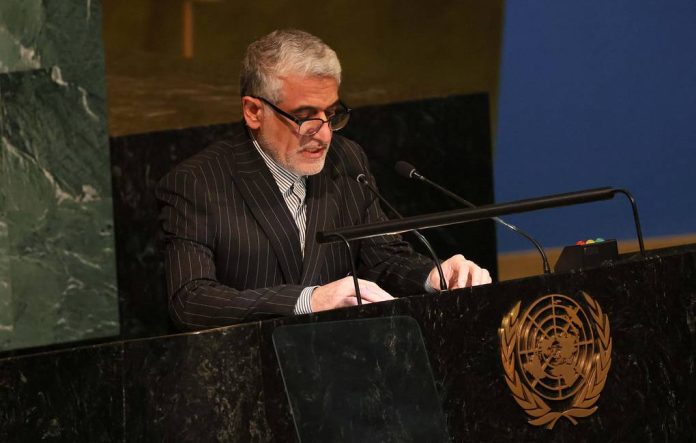
Iravani made the comments in a letter addressed to the UN Security Council’s president on Monday.

The letter came three days after his American counterpart, Linda Thomas-Greenfield, wrote a letter to the Council, alleging that “militia groups affiliated with the Islamic Republic of Iran’s Armed Forces” were involved in “actions against US personnel and facilities in Iraq and Syria”.

Iravani asserted unequivocally that “there is no group affiliated with the Islamic Republic of Iran’s Armed Forces, whether in Iraq, Syria, or elsewhere that operates directly or indirectly under the control of the Islamic Republic of Iran or acts on its behalf.”

“Therefore, the Islamic Republic of Iran is not responsible for the actions of any individual or group within the region,” Iran’s UN ambassador added.

Over the past years, Iraq’s resistance groups have been staging numerous strikes against military bases housing American occupation forces in Iraq and neighboring Syria.

The strikes have increased in intensity since October 7, 2023, when the Israeli regime, Washington’s main regional ally, launched a US-backed genocidal war against the Gaza Strip. So far, the regime’s onslaught has claimed the lives of more than 26,600 civilians, mostly women and children, leaving more than 65,300 others injured.

Meanwhile, the US has been deploying its forces and military equipment to Syria and Iraqi without a UN mandate and under the pretext of fighting terrorist groups, including Daesh. The Takfiri terrorist group had emerged as Washington was running out of excuses to extend its regional meddling or enlarge it in scale.

American forces have maintained their illegal presence in both countries, despite vociferous protests from their people and top officials, who have been persistently calling on Washington to withdraw its troops

Referring to US presence in those countries, Iran’s ambassador said, “…the actions undertaken by the United States in Syria and Iraq are illegal and violate both international law and the UN Charter…. Consequently, the US notification submitted to the Security Council in the aforementioned letter … lacks a legal foundation and fails to legitimize such actions.”

Iravani’s letter came after Iran’s permanent mission to the UN reaffirmed in a late Sunday statement that the country has no links to attacks on US forces in the region.

The mission’s statement was published after a drone attack on a US base located on Jordan’s border with Syria killed three American servicemen.

The statement said Iran had no link to the attack, adding that the incident was part of the “conflict between the army of the United States of America and resistance groups in the region, which reciprocate retaliatory attacks”.
Good progress’ in Gaza truce, captives negotiations: Qatar

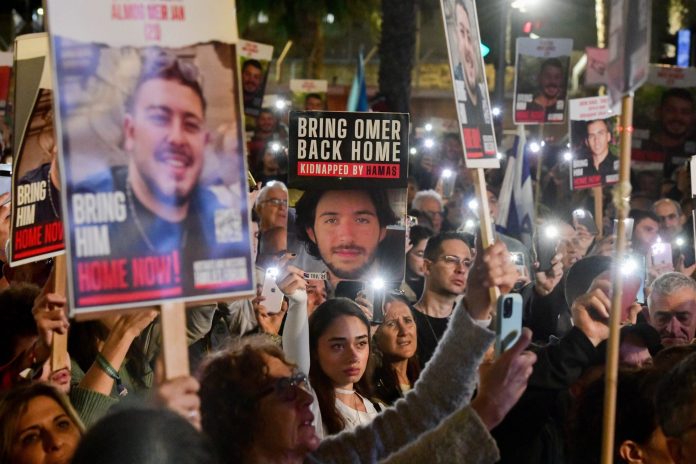
Israel Hostages

“We are in a better place than we were a few weeks ago,” al-Thani said at a forum hosted by the Atlantic Council in Washington DC, on Monday.

Thani’s comments come after CIA director Bill Burns travelled to Paris, France, over the weekend for high-level talks with Israeli, Egyptian and Qatari officials.

Thani suggested that the officials had made progress in the talks and reached a framework for a deal which he stated “might lead to a ceasefire permanently in the future”.

The Hamas-led attacks on southern Israel which sparked the war saw 1,139 people killed and over two hundred taken back to Gaza as hostages.

He appeared to confirm reports that the truce would see women and children hostages held in Gaza released, with more humanitarian aid also entering besieged Gaza in exchange for a pause in fighting. Over 26,600 Palestinians have been killed in Gaza.

The truce could last for 60 days, according to US and Israeli media reports, substantially longer than a deal struck in November that freed more than 100 hostages in exchange for Palestinian prisoners.

“The framework that yesterday has been agreed upon with all the parties was a framework based on what’s been proposed by the Israelis and a counterproposal by Hamas, and we tried to blend things together,” Thani continued.

A key sticking point in the agreement has been Israel’s refusal to agree to a permanent ceasefire in Gaza, which Hamas has set as a precondition for any pause in fighting and the release of hostages.

Prime Minister Benjamin Netanyahu’s office was quick to squash rumours that the two sides were nearing a deal, saying “the reports…are not correct and include conditions that are not acceptable to Israel”.

Hamas also appeared to reject the Qatari official’s statements.

Senior Hamas official Taher al-Nunu told AFP that the group wanted a “complete and comprehensive ceasefire, not a temporary truce”, adding that once the fighting stopped, Hamas would be willing to discuss “the rest of the details”, including hostage releases.

Meanwhile, at a press conference in Beirut on Monday, senior Hamas official Osama Hamdan said Israel was not serious about striking a ceasefire and that rumours of a deal were aimed at “satisfying the families of those detained by the resistance”.

Netanyahu has come under growing pressure from hostages’ families to strike a deal.

Qatar, which hosts Hamas’s political leaders at the request of the US, is also under pressure to demonstrate that it can leverage its ties to the group and sway in Gaza to free the hostages.

US says not seeking war with Iran after death of 3 servicemen in West Asia

US troops Middle East

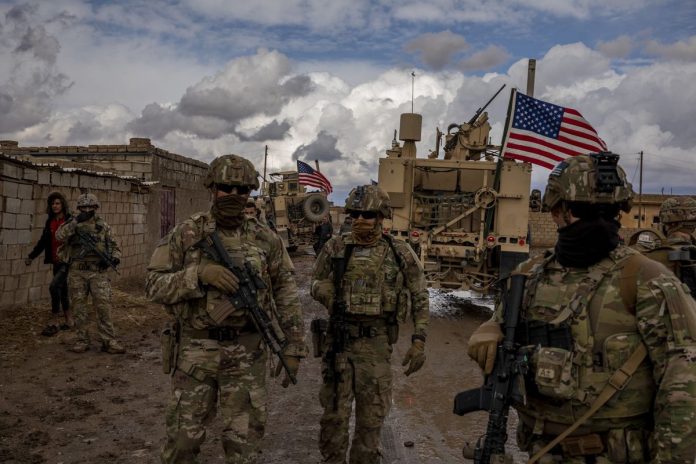
Kirby said on Monday that the US would deliver a “very consequential response” to the attack a day earlier on the Tower 22 barracks near Jordan’s border with Syria, which Washington blamed on militants linked to Iran. Tehran has rejected the claim.

However, Kirby insisted that such a response would not mean a war with Iran, whom Washington accuses of supporting groups opposed to the US presence in the region.

“… we don’t seek a war with Iran. We’re not looking for a wider conflict in the Middle East,” he told the CNN.

Kirby added that the US wants the recurrent attacks on its military personnel in the region to stop while claiming that Washington is after a stable, secure and prosperous Middle East.

The comments come as resistance groups in several Arab countries continue to launch attacks on US and Israeli interests in the region as part of a campaign to secure an end to the brutal Israeli aggression against Palestinians in Gaza.

Regional resistance groups have stressed that attacks on the US and allies could stop if Israel agrees to a permanent ceasefire in the besieged strip.

A spokesperson for the US Defence Department has also stated the Joe Biden administration doesn’t believe Iran is seeking a war with the United States.

Washington also is not looking for a war, said spokesperson Sabrina Singh.

“We don’t seek war, but we will take action, and respond to attacks on our forces.”

Singh added that the latest attack on the US, which killed three troops in Jordan, had the “footprints” of Iran-backed Kataib Hezbollah, a paramilitary group in Iraq.

Meanwhile, US Secretary of State Antony Blinken said the environment in the Middle East is as dangerous as it’s been in the region “since at least 1973, and arguably even before that”.

Blinken, who was speaking at a news conference with NATO Secretary General Jens Stoltenberg, said that the US response to Iran-backed militias allegedly killing three US Army reservists in Jordan “could be multileveled, come in stages and be sustained over time”.

“We want to prevent this conflict from spreading, so we are intent on doing both, that is standing up for our people when they’re attacked, while at the same time working every single day to prevent the conflict from growing and spreading,” added Blinken.

Meantime, two officials told Politico Biden is ordering his advisers to present a range of US response options that would forcefully deter other attacks while also not further inflaming a smoldering region.

Among the options on the table for the Pentagon: striking Iranian personnel in Syria or Iraq or Iranian naval assets in the Persian Gulf, according to the officials.

The officials suggested that, once the president gave the go-ahead, the retaliation would likely begin in the next couple of days and come in waves against a range of targets.

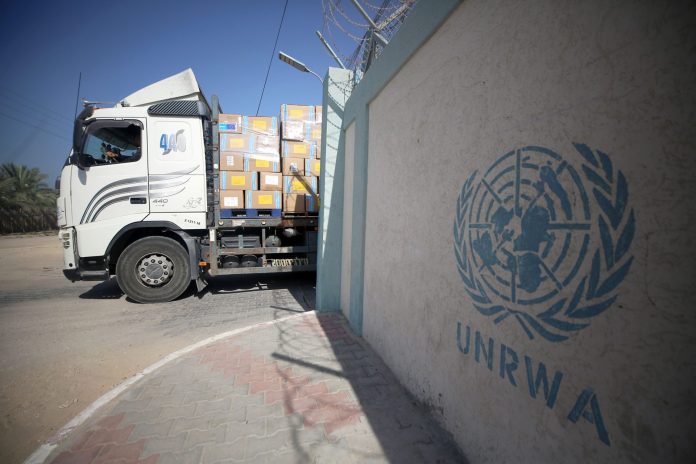
Israeli intelligence accuses UNRWA staff of kidnap, seizing body during October 7 attack

UNRWA

The Israeli dossier alleges that some 190 UNRWA employees, including teachers, have doubled as Hamas or Islamic Jihad fighters, the Reuters news agency reported.

Palestinian officials have accused Israel of falsifying information to tarnish UNRWA. The UN has fired nine of the accused workers, condemned “the abhorrent alleged acts” and launched an investigation into the allegations.

UN Secretary-General Antonio Guterres met the head of internal investigations at the world body to ensure an inquiry into the allegations “will be done swiftly and as efficiently as possible”, a UN spokesperson said on Monday.

Hamas launched a surprise attack on southern Israel on October 7, killing at least 1,100 people and taking 250 others captive, according to Israeli figures.

Israel responded to the attack with a devastating bombardment, siege and ground invasion of Gaza. More than 26,600 people have been killed in the Israeli assault on Gaza, according to Palestinian authorities, and vast areas of the territory have been reduced to rubble.

The Israeli document listed 12 people, their alleged roles in the October 7 attack, job descriptions and photos. The findings detailed in the document could not be independently confirmed.

The dossier added of the 12 workers, nine were teachers and one a social worker. Seven of the employees were accused of crossing into Israel on October 7. Of those, one was accused of taking part in a kidnapping, another of helping to abduct the body of a dead soldier and three others of participating in the attacks.

One was accused of arming himself with an anti-tank missile the night before the attack, while the document claimed another took photos of a female hostage. Ten were listed as having ties to Hamas and one to the Islamic Jihad militant group.

Two of the 12 have been killed, according to the document. The UN previously said one person was still being identified.

The allegations against UNRWA staffers led several donor countries to freeze funds for the agency.

UNRWA provides crucial day-to-day assistance for 2.3 million Palestinians in Gaza who are living through a dire humanitarian catastrophe amid the Israeli assault. The agency said on Monday that it would not be able to continue operations in Gaza and across the region beyond the end of February if funding were not resumed.

More than 10 countries, including major donors the United States, United Kingdom and Germany, have halted their funding to the agency.

Some donor countries have said they would continue to fund UNRWA, while others have urged donors to resume their cooperation.

The European Union will continue funding the UNRWA, despite what it called very “serious” allegations against several of the agency’s staff members.

In a news release Monday, the bloc announced its foreign policy chief, Josep Borrell, held a call with UN Secretary-General Antonio Guterres “to discuss the situation in the Middle East, including very serious allegations against a number of UNRWA staff members”.

Since the war began, most Palestinians in Gaza have come to depend on the agency’s programmes for “sheer survival”, including food and shelter, UNRWA chief Philippe Lazzarini has stated.

The allegations have stoked long-standing tensions between Israel and UNRWA. Israel says Hamas uses the agency’s facilities to store weapons and launch attacks. UNRWA says it does not knowingly tolerate such behaviour and has internal safeguards to prevent abuses and discipline any wrongdoing.

Even before the latest allegations, Lazzarini had announced that he was ordering an external review of the agency’s operations and its safeguards.

Israeli Foreign Minister Israel Katz on Monday called for the chief of UNRWA to resign.

“I have just canceled the meetings of UNRWA head, [Philippe Lazzarini], with officials from the Ministry of Foreign Affairs in Israel on Wednesday,” Katz wrote on X.

“Lazzarini should draw conclusions and resign. Supporters of terrorism are not welcome here,” he added.

Katz already called on the United Nations “to take immediate personal actions” against UNRWA’s leadership on Saturday.

No light at end of Ukrainian tunnel: EU’s top diplomat

Russia Ukraine War

The Ukrainian conflict has been “a stark reminder of the critical importance of jointly defending the core principles of the United Nations”, Borrell told the Global Gateway Investors Forum for the European Union-Central Asia Transport Connectivity in Brussels on Monday.

“You know that in order to defend these principles, the European Union has imposed substantial sanctions against Russia, which have significantly weakened its war machine. But still, they are there, and the war continues. And if I can say it, the intensity of the fighting increases and we do not see the light at the end of the tunnel,” the EU’s top diplomat admitted.

“In order for these sanctions to be effective, we need full cooperation from our partners. We are following closely the trade between us, between Central Asia countries, with them and Russia. We try to analyze which are the mechanisms that make sanctions being circumvented,” he added.

According to President Vladimir Putin, the Russian economy is in good shape, rapidly expanding, and even benefitted from Western sanctions, which forced it to focus more on manufacturing than energy exports.

The sanctions on Russian oil introduced by the G7 and EU late last year were conceived as a means to curtail Moscow’s energy revenues. In reality, however, they have had a boomerang effect, according to a recent study.

Kiev also repeatedly expressed concerns that Moscow was not being isolated as promised by the West, as China and multiple Global South nations refused to toe the line set by the West and instead maintained a neutral position.

Amid such “disappointments”, and following the country’s failed summer counteroffensive, Ukrainian authorities will step up efforts to explain to their citizens why they should go to the front line, according to President Volodymyr Zelensky’s senior adviser, Mikhail Podoliak. While Kiev doesn’t publish its casualty figures, Russia’s Defense Ministry has estimated that Ukraine’s forces have lost as many as 400,000 troops over the course of the conflict.

Ukraine is also “working hard” to secure Western funding for the country in 2024, according to PM Denis Shmygal. The US has provided Kiev with around $111 billion in economic and military support to date, but the flow of funds has subsided dramatically as the White House struggles to push through another $60 billion in assistance. The EU has also so far failed to reach an agreement to funnel €50 billion ($54 billion) from the bloc’s collective budget to Ukraine.

EU envoys agree on plan to use frozen Russian assets

Kremlin

Earlier this month, Belgian Deputy Prime Minister and Finance Minister Vincent Van Peteghem said that the European Union has began technical work on the implementation of the proposal put forward by the European Commission at the end of last year to use the proceeds from Russia’s frozen sovereign assets in the interests of Ukraine.

“EU Ambassadors just agreed in principle on a proposal on the use of windfall profits related to immobilised assets to support Ukraine’s reconstruction,” the Belgian Presidency wrote on X (formerly Twitter).

Following the start of Russia’s special military operation, the US-led West slapped widespread sanctions on Moscow, including freezing Russian assets worth approximately 300 billion euros ($329 billion). The bulk of this sum, approximately 200 billion euros ($221 billion), is being held in the European Union, predominantly in accounts at Euroclear, a European central securities depository.

Russia has repeatedly warned that any attempt by the EU to confiscate Moscow’s frozen assets would violate international law.

In December, 2023, Kremlin spokesman Dmitry Peskov warned that the Western countries would face repercussions if they used Russia’s frozen assets to assist Ukraine.

Ukrainian army now numbers nearly 900k soldiers: Zelensky

Russia Ukraine War

Just last month, Zelensky claimed that Kiev’s ground forces numbered over 600,000 service personnel, while in February 2022, when Russia launched its offensive, the Ukrainian army officially had only about 260,000 servicemen.

On Monday, the Ukrainian leader stated that Kiev now has “a million-strong army,” adding that there are also over 30 million people who are working in the country right now, one million of whom are employed in the defense and security sectors.

At the same time, Zelensky noted that between 6.5 million and 7.5 million people had left Ukraine since the start of the conflict and stated that Kiev wants to repatriate citizens who are eligible for military service.

His comments come as the country’s armed forces continue to experience dire personnel shortages on the battlefield, as has been admitted by a number of top Ukrainian military officers and commanders, including the head of the country’s armed forces, General Valery Zaluzhny.

While Kiev doesn’t publish its casualty figures, Russia’s Defense Ministry has estimated that Ukraine’s forces have lost as many as 160,000 service personnel since the launch of their failed summer counteroffensive, and that, over the course of the conflict, nearly 400,000 Ukrainian troops have been killed or wounded.

Meanwhile, multiple media reports have also suggested that the quality of Kiev’s soldiers has also diminished. Earlier this month, the commander of Kiev’s 5th Assault Brigade, Aleksey Tarasenko, told Espresso TV that the average age of soldiers in the Ukrainian army is now over 40 years and that “young men” were desperately needed.

The US outlet Daily Beast also reported last week, citing interviews with Ukrainian men who have been avoiding mobilization, that Kiev was now sending untrained conscripts to the frontline shortly after drafting them from the streets, with many of them failing to last even a few days on the battlefield.

In light of these personnel shortages, late last year Kiev intensified its mobilization efforts, with Zelensky stating at the time that the military was looking to call up an additional 500,000 new recruits. One Ukrainian official even proposed mobilizing the country’s entire population.

Ukrainian lawmakers, in turn, have been debating proposals to amend the country’s mobilization laws to lower the draft age, to recruit more women and to penalize draft-dodgers by cutting off their bank accounts.

Pakistan and Iran create joint mechanism to fight terror

Jalil Abbas Jilani

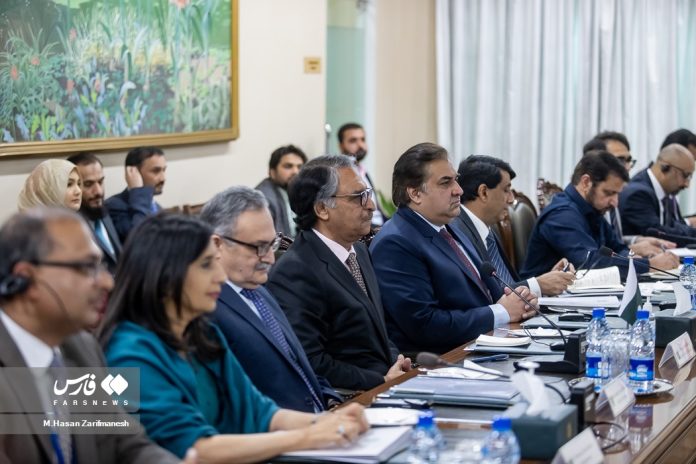
The two top diplomats took questions at a joint press briefing in Islamabad on Monday.

During the presser Jilani said he invited the Iranian foreign minister to Islamabad and “this shows the depth of ties between the two countries”.

Jilani noted that the Iran-Pakistan relations are based on cultural features, adding that the two foreign ministers discussed key bilateral issues at their meeting in the Pakistani capital and that they agreed that the ties are valuable for both nations and strengthen peace and stability in the region.

While stressing that Tehran and Islamabad are determined to expand their political and security ties, the Pakistani foreign minister said the threat of terrorism is the common challenge faced by the two neighbors.

Jilani added that Iran and Pakistan are also resolved to jointly fight terrorism and this goal can be achieved.

He underlined that Iran and Pakistan have never had border disputes and “we consider Pakistan’s security as Iran’s and the region’s security”.

The Iranian foreign minister for his turn thanked the Pakistani side for its warm hospitality during his visit to Islamabad, saying few countries in the world have so many cultural, historical and religious commonalities.

Amirabdollahian also echoed JIlani’s remarks, saying Iran and Pakistan have never had border disputes and “this is a bright chapter in their ties”.

He noted that Iran considers Pakistan’s security its own security and both sides respect each other’s territorial integrity.

On Iran and Pakistan’s fight on terrorism, Amirabdollahian said, “We are in Islamabad to say loudly that Iran and Pakistan will give terrorism no chance to undermine the security of these two countries”.

He noted that both Iran and Pakistan have suffered casualties in their fight against terrorists but it’s obvious that the terrorists are directed by third parties and they are not Iran and Pakistan’s friends.

Amirabdollahian and Jilani both noted that Iran and Pakistan are going to further expand their economic ties, especially the border markets and the tourism sector.

The Iranian foreign minister’s visit to Pakistan follows the recent brief and deadly tensions between the two states.

Iran says Tehran, Beijing share same views on Red Sea tensions

Yemen Houthis

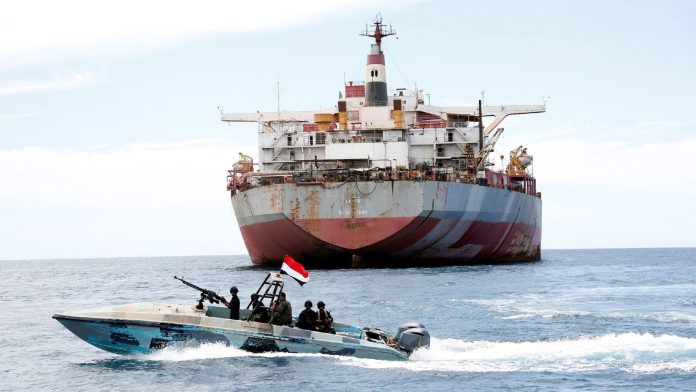
Speaking to reporters at a weekly press conference on Monday, Kanaani reacted to media reports that the Chinese officials have called on Iran to help rein in the attacks the Yemeni armed forces launch on Israel-bound ships in the Red Sea or risk harming business relations with Beijing.

Dismissing the stories on such a Chinese demand, the spokesman advised journalists to refer to the official sources in this regard.

Kanaani said the spokesperson for the Chinese Foreign Ministry has adopted a clear stance in this relation.

“We (Iran and China), as two countries favoring convergence, have expressed our commitment to and stance on the establishment of regional justice, settlement of conflicts, and countering tensions,” he added.

Pointing to the constant consultations between Iran and China, Kanaani stressed the explicit view of the two countries is that “the developments in the Red Sea are the spillover from the brazen cruelty we are witnessing in Gaza” against the Palestinian people.

He also warned that the Zionist regime’s threat of military action against Lebanon would jeopardize international peace and security.

He decried the Zionist regime for threatening to attack Lebanon in case the Hezbollah forces do not withdraw from the Lebanese southern border areas.

The spokesperson said the international community must be aware that the region does not need any new crisis and the spread of crises would not fulfill the interests of any side.

Describing Lebanon as a strategic country in West Asia and a pillar of security in the region, Kanaani warned that the Zionist regime is pursuing a new act of adventurism.

He also cautioned against Israel’s “perilous policies” that jeopardize international peace and security, saying the Zionist regime, already stuck in Gaza, sees its survival in the spread of war and getting other countries involved in clashes.

He called on the sponsors of Israel to advise the regime to abandon evil acts and stop its crimes in Gaza.

The Israeli regime is hammering more nails in its own coffin with its desperate attempts in the Gaza Strip, the spokesman added.

Ukraine conflict will turn into World War 3 if Russia not contained: Zelensky

Ukraine's President Volodymyr Zelensky

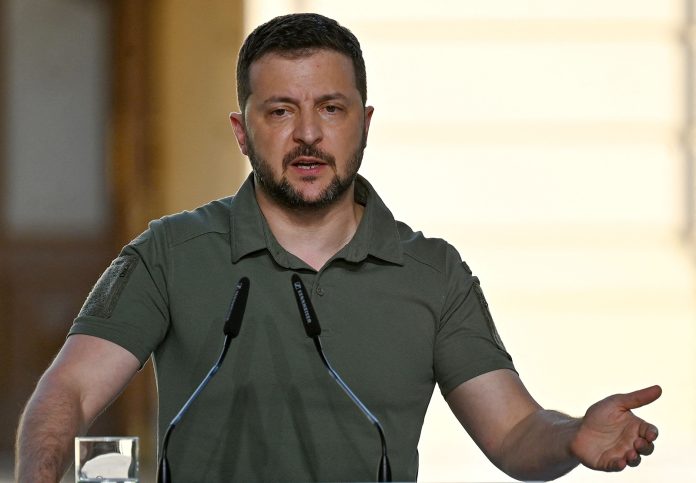
In an interview with German state broadcaster ARD, Zelensky warned that if Russia struck a NATO country it would be “the beginning of the Third World War”.

“It seems to me that the chancellor (Olaf Scholz) is aware of this risk,” he added.

He also urged Germany to use its economic weight to gather more support for Ukraine in the fight against Russia from EU partners, amid the prospect of potentially diminishing military aid from the US due to Republican objections in Congress.

“Passivity from the United States or the lack of support would be a bad signal.”

When asked whether Berlin would take a bigger role in the case if aid from the US dried up, Zelensky said: “Germany can manage to consolidate the EU.

“Many countries have important economic relationships with Germany and their economy is dependent on Germany’s decisions because Germany has a strong economy,” he added.

He also expressed his disappointment in Germany’s refusal to supply Ukraine with powerful Taurus cruise missiles and suggested Germany had not taken on “the role it should have played in the first occupation of Ukraine”.

He said that the West’s weak response to Russia’s invasion of Crimea in 2014 emboldened Moscow to launch the full-scale invasion in 2022 and said responsibility goes beyond the response from Germany.

“It’s not just about Olaf Scholz,” he continued, adding, “It concerns European leaders and the US.”

US President Joe Biden has called for continued support to Ukraine in the form of crucial weapons and financial assistance, but a package of aid is being blocked in Congress with Republicans insisting it must be tied to measures against illegal migration into the US.

Zelensky said the issue does not mean Republicans as a whole are against supporting Kyiv in its fight, and that Ukraine has received backing from across the American political divide.

“There are individual Republicans who do not support Ukraine, but the vast majority of Democrats and Republicans support Ukraine,” he added.