Thursday, April 9, 2026
Home Blog Page 93

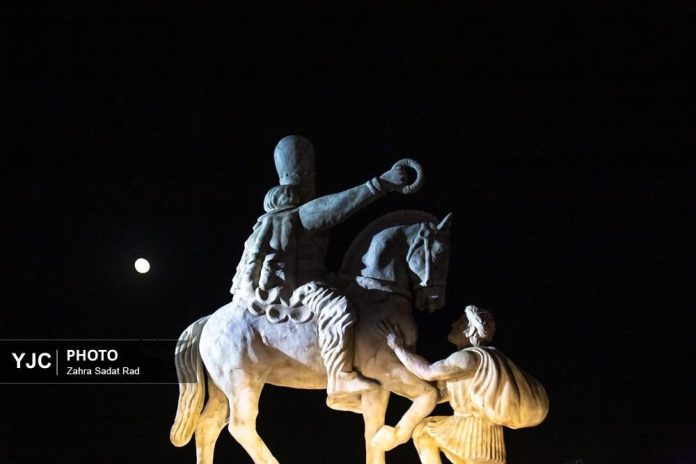
Statue depicting Roman Emperor Valerian installed in Tehran after public unveiling

City officials announced that the statue, currently displayed temporarily in the square, will later be installed at one of the main entry points to the capital.

The monument references the historic Battle of Edessa in 260 AD, during which the Roman army was defeated and Emperor Valerian was captured.

The scene echoes ancient rock reliefs at Naqsh-e Rustam, where Shapur I is shown on horseback while the Roman emperor kneels before him.

Tehran Mayor Alireza Zakani said during the ceremony that the statue symbolizes resistance and national pride.
He stated that the display highlights “moments in Iranian history when strength and dignity protected the nation.”

Abdolmotahhar Mohammadi, spokesperson for Tehran Municipality, said the final location will be chosen so that visiting foreign dignitaries first encounter a reminder of Iran’s historical power.

He noted that the statue is part of a broader series of cultural events initiated by the municipality in recent months.

The unveiling was attended by municipal officials, cultural representatives, and local residents.

Iran calls for U.S. accountability and reparations after Trump admits involvement in Israeli strikes

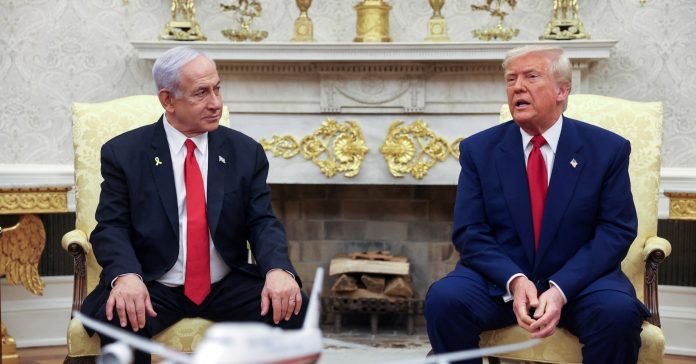
Trump and Netanyahu

In a letter addressed to UN Secretary-General António Guterres and Security Council President Michael Imran Kanu, Ambassador Amir Saeid Iravani cited Trump’s recent remarks, in which he openly accepted responsibility for leading and overseeing twelve days of Israeli military aggression against the Islamic Republic of Iran in June.

The strikes left 1,062 people dead and thousands more injured.

Iravani described Trump’s comments as undeniable proof of the United States’ direct involvement, command responsibility, and leadership in orchestrating and facilitating the Israeli regime’s unlawful military operations.

He emphasized that these actions constituted a blatant violation of the UN Charter, resulting in significant civilian casualties, widespread destruction of civilian infrastructure, and serious damage to Iran’s peaceful, safeguarded nuclear facilities.

The ambassador added that the confession by the highest-ranking U.S. official provides clear and legally binding evidence of America’s international responsibility for these aggressive acts.

He asserted that both the United States and Israel bear full and joint responsibility for their attacks and their consequences, including the killing of civilians, extensive property damage, and the deliberate targeting of Iran’s peaceful nuclear sites.

Iravani’s letter reaffirmed Iran’s inherent and sovereign right to pursue all available international legal avenues to ensure accountability, secure justice, and obtain full reparations — including compensation in accordance with international law — for the victims, the wounded, and all damages suffered by the Islamic Republic of Iran and its people.

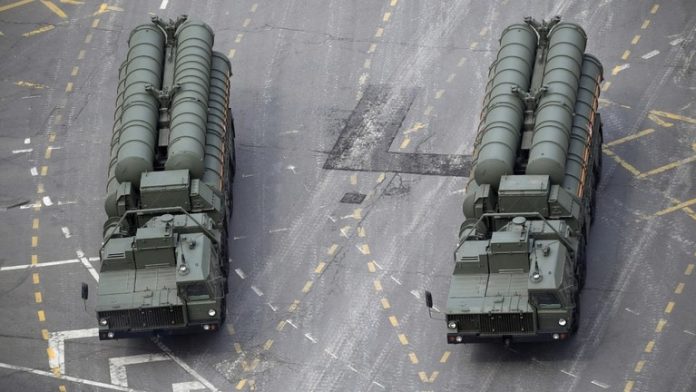
Türkiye rejects US pressure to give up S-400s: Bloomberg

The acquisition of S-400s by Ankara from Moscow in 2019 soured its relations with Washington, resulting in sanctions being imposed against Türkiye the next year and the NATO member’s exclusion from the US F-35 fighter jet program. The Turkish government has defended the purchase, insisting on their sovereign right to choose their arms suppliers.

Türkiye remains interested in buying 40 F-35s from the US, which would be impossible as long as the sanctions remain in place, the news agency said in an article on Friday.

Ankara is “willing to compromise” in order to make sure that Washington lifts its restrictions, sources told Bloomberg. The Turkish authorities could agree to a technical mechanism for supervising the S-400s together with the US, they said.

US President Donald Trump signaled he was open to Turkey purchasing F-35 fighter jets during a meeting with President Recep Tayyip Erdogan in late September. “He needs certain things, and we need certain things,” Trump said, adding that Erdogan would be “successful” in obtaining what he “would like to buy.”

However, no deal on the fighter jets has been announced since then.

“I do not think it is very becoming of a strategic partnership,” Erdogan said about Washington’s ban on F-35s purchase in an interview with Fox News during his US visit.

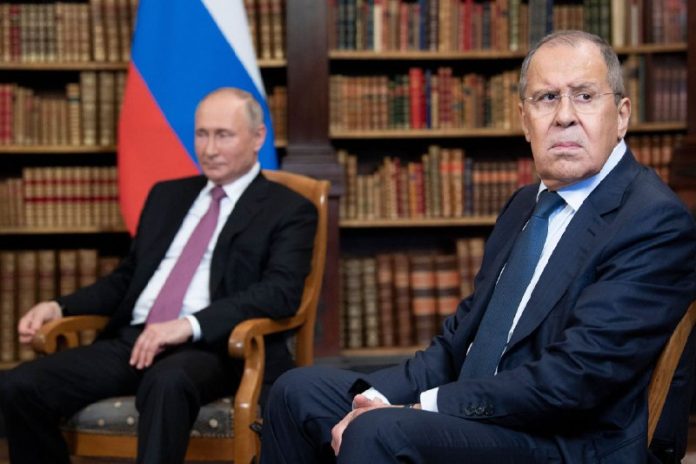
Kremlin dismisses Lavrov fell out of favor with Putin after canceled Trump summit

Lavrov Putin

“I will give you a brief answer: there is nothing true in these reports,” Peskov told Russian media during a briefing.

“Absolutely. Lavrov is working as the foreign minister, of course.”

The denial comes amid reports that Lavrov’s influence had waned after a conversation with U.S. Secretary of State Marco Rubio, which reportedly led to the cancellation of the planned Budapest summit between Putin and U.S. President Donald Trump.

Despite being a permanent member of the Russian Security Council, Lavrov was notably absent from a key meeting chaired by Putin on Nov. 5, raising questions about his standing within the Kremlin.

The top diplomat also lost his status as head of the Russian delegation at the G20 summit. This year, it will be led by Maxim Oreshkin, deputy head of Russia’s presidential administration.

Lavrov spoke with Rubio by phone on Oct. 21 to discuss terms for the Budapest summit. After that, Rubio reportedly recommended that the U.S. president cancel the planned meeting.

Sources familiar with the talks earlier told Reuters the cancellation stemmed from the Kremlin’s rigid negotiating stance, which demanded excessive concessions and refused to accept a ceasefire in Ukraine.

The summit’s collapse was followed by the first U.S. sanctions on Russia since Trump’s return to office, targeting oil giants Rosneft and Lukoil.

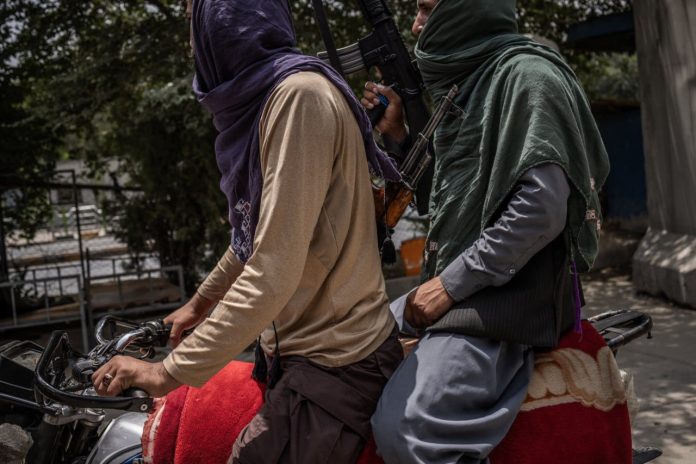
Afghanistan says peace talks with Pakistan failed again

Taliban

The two sides met on Thursday in Turkey to finalise a truce agreed on October 19 in Qatar, following deadly clashes between the South Asian neighbours.

Both have remained virtually silent on the content of the discussions, which are known only to have addressed long-standing security issues.

“During the discussions, the Pakistani side attempted to shift all responsibility for its security to the Afghan government, while showing no willingness to take responsibility for either Afghanistan’s security or its own,” Taliban government spokesman Zabihullah Mujahid wrote on social media.

“The irresponsible and uncooperative attitude of the Pakistani delegation has not yielded any results,” he added.

Neither Islamabad nor mediators immediately commented on the announcement.

Pakistan’s Information Minister Attaullah Tarar hinted a day earlier that the negotiations were falling through, saying that the onus lay on Afghanistan to fulfil pledges to clamp down on terrorism, “which so far they have failed”.

“Pakistan shall continue to exercise all options necessary to safeguard the security of its people and its sovereignty,” he wrote.

Relations between the one-time allies, who share a 2,600-kilometre (1,600-mile) frontier, have soured in recent years over accusations from Islamabad that Afghanistan harbours militant groups which stage attacks in Pakistan.

The Taliban government has consistently denied the allegations.

Islamabad wants guarantees from Afghanistan’s Taliban government that it will stop supporting armed organisations, in particular the Pakistani Taliban (Tehreek-e-Taliban Pakistan), which Kabul denies harbouring.

Afghanistan meanwhile wants its territorial sovereignty to be respected and accuses Islamabad of supporting armed groups against it.

Each side has threatened a resumption of hostilities that saw more than 70 people killed and hundreds wounded last month if the negotiations failed.

The talks were threatened on Friday after each side blamed the other for border fighting in Spin Boldak on the Afghan side.

A district hospital official told AFP that five people were killed in the fighting, including four women and one man.

Afghanistan did not retaliate “out of respect for the negotiating team and to prevent the loss of civilian lives”, the Taliban spokesman stated.

Islamabad also accuses Afghanistan of acting with the support of India, its historical enemy, during a period of closer ties between the two countries.

Britain lifts sanctions on Syrian president

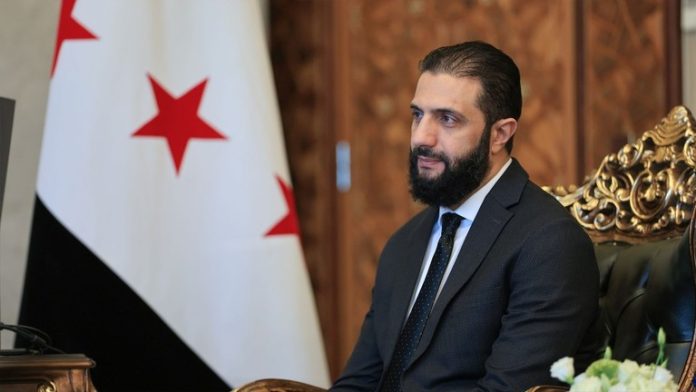
The Office of Financial Sanctions Implementation (OFSI) published an official notice on Friday, stating that al-Sharaa, as well as Interior Minister Anas Khattab, have been removed from its blacklist and “are no longer subject to an asset freeze.”

Both men were delisted by the UN Security Council the day before, after members voted in favor of a US-drafted resolution to remove them from the Daesh and Al-Qaeda Sanctions List.

Al-Sharaa, who once led the militant group Hayat Tahrir al-Sham (HTS) under his nom de guerre Abu Mohammad al-Julani, assumed power after wresting control from former President Bashar Assad.

The US has been urging the 15-member Security Council to ease sanctions on Syria since al-Sharaa met US President Donald Trump in Saudi Arabia in May – the first encounter between the two nations’ leaders in more than two decades. Trump later announced a major US policy shift, saying he would lift sanctions on Syria.

Last week, US Special Envoy to Syria Tom Barrack confirmed that al-Sharaa would visit Washington, DC, next week. During the visit, Damascus will “hopefully” join the US-led coalition to defeat Islamic State (Daesh), he added. It will be the first-ever visit by a Syrian president to the White House.

On Thursday, Reuters reported that Washington wants to expand its military presence in Syria and is in discussions with Damascus over the use of an airbase by American troops. The agreement, reportedly linked to a non-aggression pact between Syria’s new authorities and Israel, is expected to establish a demilitarized zone in the south of the country.

The US has maintained a foothold in Syria through a controversial base in its southeast, surrounded by an exclusion zone that Moscow has described as a safe haven for terrorists. Neither Assad nor the new government led by al-Sharaa has authorized an American presence in the country.

US admission ‘irrefutable’ evidence of its ‘direct involvement’ in Israeli attacks: Iran

Esmael baghaei

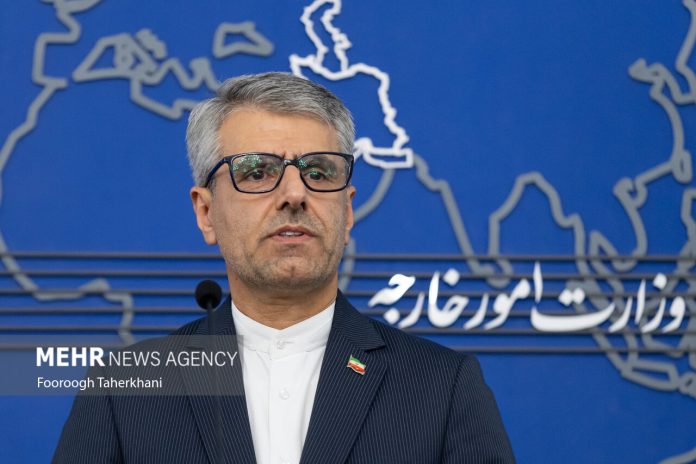
In a post on his X account on Friday, Iranian Foreign Ministry spokesman Esmaeil Baghaei said Trump’s public admission that he was “very much in charge” of the Israeli assault leaves no doubt about Washington’s being “actively involved” in an “unlawful” act of aggression.

“This admission constitutes irrefutable evidence of America’s direct involvement and active complicity in Israel’s unprovoked act of aggression against Iran,” Baghaei added.

He also recalled that, at the onset of the war, American officials had denied any role in the Israeli offensive. “US Secretary of State Marco Rubio declared on June 13, 2025, that Washington had no role in the war,” he noted, referring to Rubio’s statement at the time that the strikes were a “unilateral action” by Israel and that the US was “not involved in strikes against Iran.”

“That statement was an outright lie, of course; from the very beginning, it was clear that the United States was a full participant in Israel’s crime of aggression against the nation of Iran,” Baghaei continued.

The Iranian spokesman said Trump’s remarks now serve as an “unambiguous acknowledgment of US responsibility for a wrongful act and a serious breach of international law.”

He called on the international community to hold Washington accountable for its “flagrant violation and the atrocious wrong it has committed.”

On June 13, Israel launched an unprovoked war against Iran, assassinating many high-ranking military commanders, nuclear scientists, and ordinary civilians.

More than a week later, the United States also entered the war by bombing three Iranian nuclear sites in a grave violation of the United Nations Charter, international law, and the Nuclear Non-Proliferation Treaty (NPT).

On June 24, Iran, through its successful retaliatory operations against both the Israeli regime and the US, managed to impose a halt to the illegal assault.

Trump, who spoke at the White House on Thursday night, appeared to take full responsibility for what Washington had previously called an Israeli-only action.

“Israel attacked first. That attack was very, very powerful. I was very much in charge of that,” he stated.

Since the aggression, Trump has repeatedly taken credit for the outcome, claiming that the US “totally obliterated” Iran’s nuclear program. His comments on Thursday went further, suggesting he had orchestrated the war from the outset.

Trump had long campaigned as a “peace” candidate who claimed to oppose starting new wars.

At the time, Secretary Rubio stressed, “Tonight, Israel took unilateral action against Iran. We are not involved in strikes against Iran, and our top priority is protecting American forces in the region.”

Britain and Baltic countries simulate war with Russia: Politico

Moscow has repeatedly dismissed allegations of hostile intent toward Western nations and voiced concern over the growing military activity near its borders.

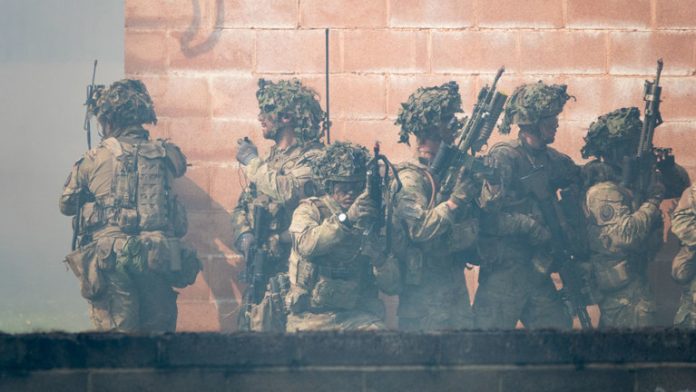
British military planners joined Nordic and Baltic defense ministers in Bodo, to simulate a conflict in a state bordering Russia, according to the outlet.

The drills in Bodo were conducted as part of a ‘Joint Expeditionary Force’ (JEF) of ten European NATO members – the Netherlands, Iceland, the UK, Denmark, Sweden, Norway, Finland, Latvia, Lithuania, and Estonia.

The latter five share borders with Russia and have been among the most vocal critics of Moscow since the Ukraine conflict escalated in 2022. All JEF countries are NATO members, with Finland having joined the US-led bloc in 2023 and Sweden following in 2024.

According to London, the meeting in Norway followed the conclusion last week of the JEF’s largest-ever military exercise. The two-month Tarassis operation held across the Nordic-Baltic region, involved over 1,700 British personnel alongside JEF allies.

British Defense Secretary John Healey told Politico that JEF nations could “best get NATO connected to take this (Russian aggression) more seriously.”

Since the escalation of the Ukraine conflict in 2022, Western officials have claimed that Russia could threaten EU states, prompting a military buildup across the bloc. European NATO members agreed to boost military spending to as much as 5% of GDP, citing the alleged “Russian threat.”

The push to boost spending followed renewed pressure from Washington. The administration of US President Donald Trump has repeatedly urged NATO’s European members to take greater responsibility for their own security and increase armed forces investment, arguing that the US bears too much of the burden.

Moscow has consistently rejected allegations of hostile intent toward Western nations as “nonsense” and fearmongering, condemning what it describes as the West’s “reckless militarization.”

Washington lifts terrorist label on Syria’s leader ahead of US visit

US Treasury

According to a notice on the U.S. Treasury Department website, the United States removed Specially Designated Global Terrorist designations on Sharaa and Syria’s interior minister, Anas Khattab.

“These actions are being taken in recognition of the progress demonstrated by the Syrian leadership after the departure of Bashar al-Assad and more than 50 years of repression under the Assad regime,” State Department Principal Deputy spokesperson Tommy Pigott said in a statement Friday.

“This new Syrian government, led by President al-Sharaa, is working hard to missing Americans, fulfill its commitments on countering terrorism and narcotics, eliminating any remnants of chemical weapons, and promoting regional security and stability as well as an inclusive, Syrian-led and Syrian-owned political process.”

Al-Sharaa is the former leader of U.S.-designated terror group al-Qaeda who was once wanted by the U.S. as a terrorist with a $10 million bounty on his head. He has even served time in the infamous Abu Ghraib prison.

The U.N. Security Council voted 14-0 in favor of adoption of the resolution, with one abstention.

“With the adoption of this text, the Council is sending a strong political signal that recognizes Syria is in a new era since Assad and his associates were toppled in December 2024,” U.S. ambassador to the United Nations Mike Waltz stated moments after the resolution was adopted Thursday.

“As President Trump previously indicated, now is Syria’s chance at greatness,” Waltz added, noting that al-Sharaa, as well as Syria’s interior minister, Khattab, were now ‘de-listed’ from a sanctions list.

Monday’s meeting between Trump and al-Sharaa marks the first-ever official visit by a Syrian president to the White House.

It’s also the third meeting between Trump and al-Sharaa this year, as the Syrian leader confronts the challenges of rebuilding the country, seeking to restore ties with Arab countries and the West after years of war under al-Assad’s government.

A senior Trump administration official said Monday’s meeting between Trump and al-Sharaa will focus on counterterrorism efforts. Syria is also expected to join the U.S.-led anti–Islamic State coalition, which includes some 80 countries working to prevent a resurgence of the extremist group, according to the official.

US sees ‘progress’ in resolving Ukraine conflict

Russia Ukraine War

The US president has long pledged to mediate an end to the Ukraine conflict and has repeatedly voiced frustration, alternately blaming both Moscow and Kiev for the deadlock.

During a White House dinner with the leaders of Central Asian nations, Trump claimed credit for ending “eight wars in eight months” and expressed hope to add another one to the list.

“We are looking at one more, that’s possible – Russia and Ukraine. We haven’t gotten that yet, but I think we’ve made a lot of progress,” Trump said.

The US president told the America Business Forum on Wednesday that his Russian counterpart, Vladimir Putin, stated during a recent phone call that Moscow has been trying to find a peaceful resolution to the Ukraine conflict for over a decade, and that Washington is more than welcome to compel Kiev to accept a negotiated solution.

Speaking at the same forum, Witkoff recalled his multiple face-to-face rounds of talks with Putin this year and said he similarly sees progress.

“There’s a lot of discussion that technical teams have to have at the lower level before the leaders can get to a deal. But I sense that there’s some progress today,” Witkoff added.

Moscow has consistently praised the Trump administration for what it describes as a genuine attempt to address the root causes of the conflict. At the same time, it has repeatedly stated that it seeks a lasting resolution rather than a temporary ceasefire, which it argues would only allow Kiev to regroup and rearm.

Meanwhile, Ukraine and its European backers continue to call for increased Western military support. Russia has accused them of resisting meaningful diplomatic engagement and of refusing to accept realities on the ground.

Last month, Moscow announced that its forces had encircled some 10,000 Ukrainian soldiers in several key strongholds. Putin urged Kiev to agree to an honorable surrender of the blockaded troops.

Kiev, however, continues to claim that it holds the cities and that the Russian Army is being pushed back. The Russian Defense Ministry announced that Ukraine’s President Volodymyr Zelensky is either “divorced from reality” or is deliberately lying to his nation.