Sunday, December 28, 2025
Home Blog Page 72

Israeli settler attacks hit highest monthly toll in nearly 2 decades: UN

Citing the Office for the Coordination of Humanitarian Affairs (OCHA), UN spokesperson Farhan Haq reported “a sharp rise in settler violence against Palestinians, both in frequency and severity,” during a news conference, adding: “Last month, OCHA recorded 264 settler attacks that caused casualties, property damage or both.”

He noted: “That’s the highest monthly toll in nearly two decades of record keeping, averaging more than eight incidents every single day since 2006.”

According to OCHA, more than 9,600 such attacks have been documented, with about 1,500 occurring this year alone — roughly 15% of the total, he said.

Emphasizing the “severe” impact on the humanitarian situation since October 2023, Haq stated: “More than 3,200 Palestinians have been displaced due to settler violence and related access restrictions. Entire herding communities have been completely depopulated. People have been killed, hundreds injured, including with live fire, and many more have lost access to their livelihoods.”

Haq also cited OCHA data showing that “the number of Palestinian children killed by Israeli forces in the West Bank so far this year has reached 42,” meaning “one in every five Palestinians killed by Israeli forces in the West Bank in 2025 has been a child.”

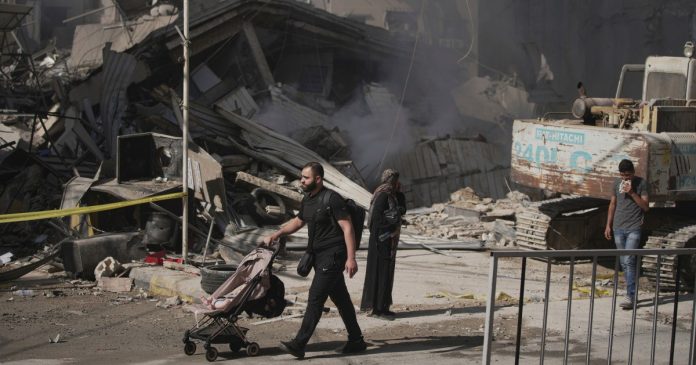
Israeli attacks have escalated across the occupied West Bank since October 2023, killing more than 1,066 Palestinians and injuring 10,300 others, according to Palestinian figures.

According to the official Colonization and Wall Resistance Commission, Israeli forces and illegal settlers carried out 766 attacks against Palestinians, their homes, property, and sources of livelihood across the West Bank in October alone.

In a landmark opinion last July, the International Court of Justice declared Israel’s occupation of Palestinian territory illegal and called for the evacuation of all settlements in the West Bank and East Jerusalem.

Israeli military lawyers doubted legality of Gaza onslaught: Reuters

Gaza War

Israel launched its military campaign in response to the Hamas-led raid on October 7, 2023, which killed around 1,200 people. The retaliatory strikes and ground operations have since killed nearly 69,000 Palestinians, according to Gaza’s health authorities.

A UN commission has accused Israel of committing acts amounting to genocide, as Tel Aviv is the subject of two international proceedings – one before the International Court of Justice (ICJ) and another at the International Criminal Court (ICC).

According to the Reuters report, even the Israeli military itself had doubts “about the legality of its tactics that contrasted sharply with Israel’s public stance defending its actions.”

Former officials from then-President Joe Biden’s administration, who spoke on condition of anonymity, described the material gathered and circulated by US intelligence ahead of a congressional briefing in December 2024 as among the “most startling shared with top US policymakers during the war.”

“There were concerns Israel was intentionally targeting civilians and humanitarian workers,” Reuters reported, without specifying which incidents had prompted the alarm.

US officials were also worried that the rising civilian death toll “might breach international legal standards on acceptable collateral damage,” the publication added.

Washington publicly defended Israel throughout the war, even after the Biden administration acknowledged in a May 2024 report that it had “reasonable concerns” Israel may have violated international humanitarian law. A formal determination that Israel had committed war crimes would have required the US to halt arms transfers and suspend intelligence cooperation.

Under President Donald Trump, Washington has launched a pressure campaign against the ICC. The Intercept recently described a broader US-backed effort to suppress documentation of alleged Israeli war crimes, noting that hundreds of related videos had been removed from YouTube.

Last month, the Israel Defense Force’s top legal officer, Maj. Gen. Yifat Tomer-Yerushalmi, admitted she had leaked footage showing soldiers abusing a Palestinian detainee and resigned amid pressure to halt the investigation into the incident.

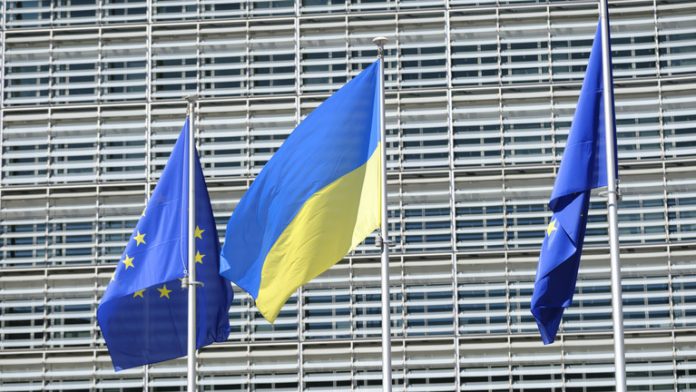
EU tightening visa rules for Russian

The move follows an assessment that Russia’s war against Ukraine has notably increased security risks connected to Russian visa applicants, including a potential misuse for espionage, sabotage, or propaganda.

Exemptions may be applied in humanitarian cases, such as those involving dissidents, journalists, human rights defenders, and their families.

Family members of EU citizens, Russian citizens who are legally residing in the EU, and certain professionals, such as transportation workers, may also be exempt.

“The EU is tightening visa rules for Russian nationals amid continued drone disruptions and sabotage on European soil,” top EU diplomat Kaja Kallas said.

“Travelling to the EU is a privilege, not a given.”

The EU also announced that visa applications by Russian nationals must be “scrutinised thoroughly and frequently” in order to “mitigate threats to public policy or internal security.”

The Russian Foreign Ministry denounced the move, with spokesperson Maria Zakharova commenting that Europe apparently does not need “wealthy tourists” when it has “migrants” and “draft dodgers” from Ukraine.

Since the outbreak of Russia’s full-scale invasion of Ukraine in 2022, the European Union has tightened entry rules for Russian citizens.

However, issuing visas remains the prerogative of individual member states, so the EU cannot impose a complete ban on Russian entry.

The EU is also reportedly planning to limit the movement of Russian diplomats in response to espionage and sabotage linked to Moscow.

European governments have been raising alarm over a surge in hybrid operations targeting Ukraine’s partners in the EU and NATO, including arson, cyberattacks, infrastructure sabotage, and drone incursions.

Western intelligence agencies have blamed Moscow-backed operatives, many of whom reportedly work under diplomatic cover, for coordinating these provocations.

Turkey issues genocide arrest warrant against Israeli PM over Gaza war

Netanyahu

Among 37 suspects listed were the Israeli defence minister, Israel Katz, the national security minister, Itamar Ben-Gvir, and the army chief Lt Gen Eyal Zamir, said a statement from the Istanbul prosecutor’s office, which did not publish the complete list.

Turkey has accused the officials of “genocide and crimes against humanity” which Israel has “perpetrated systematically” in Gaza.

The statement also refers to the “Turkish-Palestinian friendship hospital”, built by Turkey in the Gaza Strip and bombed by Israel in March.

Israel denounced the warrant as a “PR stunt”.

Turkey last year joined South Africa’s case accusing Israel of genocide at the international court of justice.

A fragile ceasefire has been in force in the devastated Palestinian territory since 10 October as part of President Donald Trump’s regional peace plan.

Tehran unveils “Kneeling Before Iran” monument at Enghelab Square

The statue features representations of several notable historical Iranian figures, including Ariobarzan, Rostam, Surena, Arash the Archer, Mirza Kuchak Khan, and Rais Ali Delvari, alongside Shapur I of the Sassanian era.

The figures are intended to symbolize moments in Iranian history in which foreign invaders were repelled.

City cultural officials stated that the installation seeks to highlight themes of national resilience and collective memory. According to the organizers, the monument references historical narratives in which Iran defended its territorial integrity against external powers.

Officials added that the statue will remain on display at Enghelab Square for now, though discussions are ongoing regarding its possible relocation to a major gateway into the city, where it would be visible to visiting dignitaries and travelers entering Tehran.

More in pictures:

Statue depicting Roman Emperor Valerian installed in Tehran after public unveiling

City officials announced that the statue, currently displayed temporarily in the square, will later be installed at one of the main entry points to the capital.

The monument references the historic Battle of Edessa in 260 AD, during which the Roman army was defeated and Emperor Valerian was captured.

The scene echoes ancient rock reliefs at Naqsh-e Rustam, where Shapur I is shown on horseback while the Roman emperor kneels before him.

Tehran Mayor Alireza Zakani said during the ceremony that the statue symbolizes resistance and national pride.
He stated that the display highlights “moments in Iranian history when strength and dignity protected the nation.”

Abdolmotahhar Mohammadi, spokesperson for Tehran Municipality, said the final location will be chosen so that visiting foreign dignitaries first encounter a reminder of Iran’s historical power.

He noted that the statue is part of a broader series of cultural events initiated by the municipality in recent months.

The unveiling was attended by municipal officials, cultural representatives, and local residents.

Iran calls for U.S. accountability and reparations after Trump admits involvement in Israeli strikes

Trump and Netanyahu

In a letter addressed to UN Secretary-General António Guterres and Security Council President Michael Imran Kanu, Ambassador Amir Saeid Iravani cited Trump’s recent remarks, in which he openly accepted responsibility for leading and overseeing twelve days of Israeli military aggression against the Islamic Republic of Iran in June.

The strikes left 1,062 people dead and thousands more injured.

Iravani described Trump’s comments as undeniable proof of the United States’ direct involvement, command responsibility, and leadership in orchestrating and facilitating the Israeli regime’s unlawful military operations.

He emphasized that these actions constituted a blatant violation of the UN Charter, resulting in significant civilian casualties, widespread destruction of civilian infrastructure, and serious damage to Iran’s peaceful, safeguarded nuclear facilities.

The ambassador added that the confession by the highest-ranking U.S. official provides clear and legally binding evidence of America’s international responsibility for these aggressive acts.

He asserted that both the United States and Israel bear full and joint responsibility for their attacks and their consequences, including the killing of civilians, extensive property damage, and the deliberate targeting of Iran’s peaceful nuclear sites.

Iravani’s letter reaffirmed Iran’s inherent and sovereign right to pursue all available international legal avenues to ensure accountability, secure justice, and obtain full reparations — including compensation in accordance with international law — for the victims, the wounded, and all damages suffered by the Islamic Republic of Iran and its people.

Türkiye rejects US pressure to give up S-400s: Bloomberg

The acquisition of S-400s by Ankara from Moscow in 2019 soured its relations with Washington, resulting in sanctions being imposed against Türkiye the next year and the NATO member’s exclusion from the US F-35 fighter jet program. The Turkish government has defended the purchase, insisting on their sovereign right to choose their arms suppliers.

Türkiye remains interested in buying 40 F-35s from the US, which would be impossible as long as the sanctions remain in place, the news agency said in an article on Friday.

Ankara is “willing to compromise” in order to make sure that Washington lifts its restrictions, sources told Bloomberg. The Turkish authorities could agree to a technical mechanism for supervising the S-400s together with the US, they said.

US President Donald Trump signaled he was open to Turkey purchasing F-35 fighter jets during a meeting with President Recep Tayyip Erdogan in late September. “He needs certain things, and we need certain things,” Trump said, adding that Erdogan would be “successful” in obtaining what he “would like to buy.”

However, no deal on the fighter jets has been announced since then.

“I do not think it is very becoming of a strategic partnership,” Erdogan said about Washington’s ban on F-35s purchase in an interview with Fox News during his US visit.

Kremlin dismisses Lavrov fell out of favor with Putin after canceled Trump summit

Lavrov Putin

“I will give you a brief answer: there is nothing true in these reports,” Peskov told Russian media during a briefing.

“Absolutely. Lavrov is working as the foreign minister, of course.”

The denial comes amid reports that Lavrov’s influence had waned after a conversation with U.S. Secretary of State Marco Rubio, which reportedly led to the cancellation of the planned Budapest summit between Putin and U.S. President Donald Trump.

Despite being a permanent member of the Russian Security Council, Lavrov was notably absent from a key meeting chaired by Putin on Nov. 5, raising questions about his standing within the Kremlin.

The top diplomat also lost his status as head of the Russian delegation at the G20 summit. This year, it will be led by Maxim Oreshkin, deputy head of Russia’s presidential administration.

Lavrov spoke with Rubio by phone on Oct. 21 to discuss terms for the Budapest summit. After that, Rubio reportedly recommended that the U.S. president cancel the planned meeting.

Sources familiar with the talks earlier told Reuters the cancellation stemmed from the Kremlin’s rigid negotiating stance, which demanded excessive concessions and refused to accept a ceasefire in Ukraine.

The summit’s collapse was followed by the first U.S. sanctions on Russia since Trump’s return to office, targeting oil giants Rosneft and Lukoil.

Afghanistan says peace talks with Pakistan failed again

Taliban

The two sides met on Thursday in Turkey to finalise a truce agreed on October 19 in Qatar, following deadly clashes between the South Asian neighbours.

Both have remained virtually silent on the content of the discussions, which are known only to have addressed long-standing security issues.

“During the discussions, the Pakistani side attempted to shift all responsibility for its security to the Afghan government, while showing no willingness to take responsibility for either Afghanistan’s security or its own,” Taliban government spokesman Zabihullah Mujahid wrote on social media.

“The irresponsible and uncooperative attitude of the Pakistani delegation has not yielded any results,” he added.

Neither Islamabad nor mediators immediately commented on the announcement.

Pakistan’s Information Minister Attaullah Tarar hinted a day earlier that the negotiations were falling through, saying that the onus lay on Afghanistan to fulfil pledges to clamp down on terrorism, “which so far they have failed”.

“Pakistan shall continue to exercise all options necessary to safeguard the security of its people and its sovereignty,” he wrote.

Relations between the one-time allies, who share a 2,600-kilometre (1,600-mile) frontier, have soured in recent years over accusations from Islamabad that Afghanistan harbours militant groups which stage attacks in Pakistan.

The Taliban government has consistently denied the allegations.

Islamabad wants guarantees from Afghanistan’s Taliban government that it will stop supporting armed organisations, in particular the Pakistani Taliban (Tehreek-e-Taliban Pakistan), which Kabul denies harbouring.

Afghanistan meanwhile wants its territorial sovereignty to be respected and accuses Islamabad of supporting armed groups against it.

Each side has threatened a resumption of hostilities that saw more than 70 people killed and hundreds wounded last month if the negotiations failed.

The talks were threatened on Friday after each side blamed the other for border fighting in Spin Boldak on the Afghan side.

A district hospital official told AFP that five people were killed in the fighting, including four women and one man.

Afghanistan did not retaliate “out of respect for the negotiating team and to prevent the loss of civilian lives”, the Taliban spokesman stated.

Islamabad also accuses Afghanistan of acting with the support of India, its historical enemy, during a period of closer ties between the two countries.