Saturday, December 20, 2025
Home Blog Page 4994

‘Takfiri Groups Pose Threat to All Muslims’

Iran supreme leader
Iran supreme leader


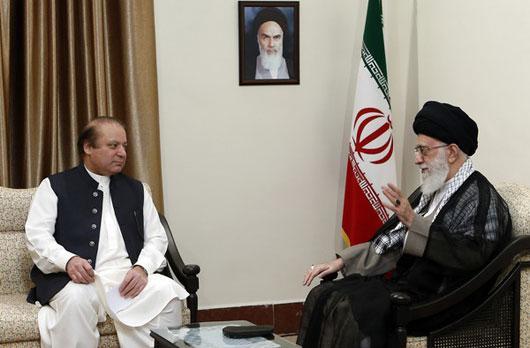
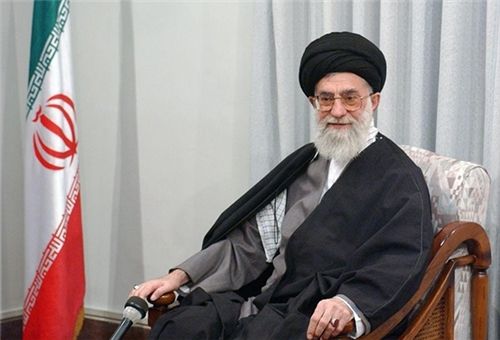
“If Takfiri groups are not confronted, they will inflict more damage and blows on the Muslim world,” Ayatollah Khamenei said in a meeting with Pakistani Prime Minister Nawaz Sharif in Tehran on Monday.
The Leader also stated that certain countries are making efforts to deliberately cause insecurity along Iran-Pakistan common border.
“There are hands at work to create division between the two friendly and sincere people of Iran and Pakistan through different methods including causing insecurity along [the two countries’] long common border, but the great opportunity for the expansion of ties between the two countries should not be allowed to be missed,” Ayatollah Khamenei stated.
The Leader emphasized that the US seeks to foment division between Iran and Pakistan, saying there are also other governments which are active in this regard.
Ayatollah Khamenei further pointed to the broad cultural and religious commonalities between the Iranian and Pakistani people and expressed regret over the decrease in the level of bilateral economic cooperation.
The Leader expressed hope that Tehran and Islamabad would further improve bilateral relations.
The Pakistani premier, for his part, expressed regret over the recent insecurity in the two countries’ border areas, saying that the Pakistani government will spare no effort to counter elements behind such incidents and will welcome Iran’s measures over the issue.
Sharif also pledged to make every effort to help restore the two countries’ trade ties to its previous level of three billion dollars and even improve on that figure.
Heading a high-ranking delegation, Sharif arrived in Tehran on Sunday for an official two-day visit to hold talks with senior Iranian officials.
Meanwhile, the plots hatched by the West, the Zionist regime and their Arab allies against the region have failed due to the influence of the Iranian Supreme Leader’s thoughts, on the regional nations, Ayatollah Khamenei’s top military aide said.
“The (reason behind the) failure of the western, Arab and Zionist regime’s strategies in the current developments in western Asia, specially Syria, Lebanon and Iraq, should be sought in the reflection of the leader’s thoughts,” senior Military Aide to the Iranian Supreme Leader Major General Yahya Rahim Safavi said, addressing a forum in Tehran on Monday.
Noting that the defensive guidelines and measures of Ayatollah Khamenei which have empowered Iran in the region can be considered as international defensive strategies to defend the Islamic Ummah in the world, he said, “Iran’s power guarantees the Persian Gulf’s security and plays an influential role in the establishment of global security.”
He stressed that Iran seeks establishment of justice-based peace in the world, and said, “The powerful Islamic Iran and its defensive power are at the service of defending the Islamic Ummah and the Muslim territories and Iran’s defensive power relies on the Iranian nation’s will and our country’s geopolitical situation.”
In relevant remarks in July, Vice-Speaker of the Iranian Parliament Mohammad Hassan Aboutorabi-Fard said in a meeting with envoys of the Muslim countries in Tehran that “the Islamic Republic of Iran’s defensive power belongs to all Muslim nations”.

Leader Warns of Attempts to Damage Iran-Pakistan Ties

Ayatollah Seyed Ali Khamenei - Nawaz Sharif


Ayatollah Khamenei, in a Monday meeting with Pakistan’s visiting prime minister in Tehran, underlined that certain foreign elements, including the US administration, seek to “create a rift” between the two friendly and cordial nations of Iran and Pakistan.

Among the plots hatched by the ill-wishers are “fomenting insecurity on the long shared border” between Iran and neighboring Pakistan, the Leader explained.

Ayatollah Khamenei further noted that “the great opportunity for the expansion of relations between the two countries should not be missed.”

Imam Khamenei underscored that enhancement of Tehran-Islamabad ties should not be subject to permission from others, and added, “Among the governments that are trying to create rift between Iran and Pakistan is the US, whose wickedness is publicly clear.”

The Supreme Leader then made a reference to the deliberate attempts to incite insecurity along Iran-Pakistan common borders, and said, “We cannot believe that such events are natural and unintentional.”

Ayatollah Khamenei said Iran has some information that activities are underway in Pakistan’s Balouchestan region to destabilize the shared borders.

Pakistani Prime Minister Nawaz Sharif, for his part, deplored the recent terrorist incidents along his country’s borders with Iran, and admitted that certain hands are behind instigating strife between the two neighbors.

Sharif also assured Ayatollah Khamenei that his administration will spare no efforts to confront those behind border insecurity, and pledged that Islamabad will support Tehran’s measures to establish border security.

The Pakistani premier arrived in Iran on Sunday for a two-day official tour.

This is the first time Sharif visits Iran as prime minister.


by Tasnim News Agency

Iran, Pakistan Sign Agreement on Extradition of Criminals

Nawaz sharif - Iran - Pakistan


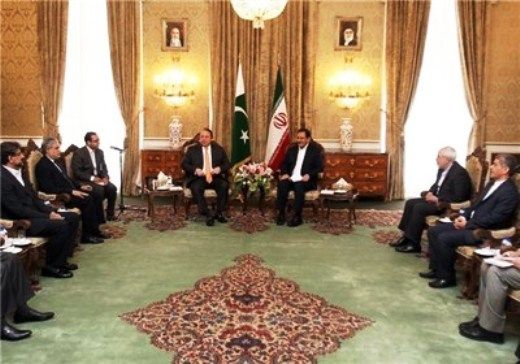
Iranian Minister of Justice Mostafa Pour-Mohammadi and Sartaj Aziz, the Pakistani prime minister’s adviser on national security and foreign affairs, signed the agreement on the extradition of prisoners.

During a meeting here in Tehran on Sunday attended by Iranian First Vice-President Eshaq Jahangiri and Pakistani Prime Minister Nawaz Sharif, high-ranking officials of the two countries signed 9 memoranda of understanding (MoUs) as part of efforts to strengthen ties between the two neighboring Muslim countries.

According to the documents, Tehran and Islamabad agreed to make joint efforts in various fields, including measures to counter money laundring and foreign financial supports for terrorism.

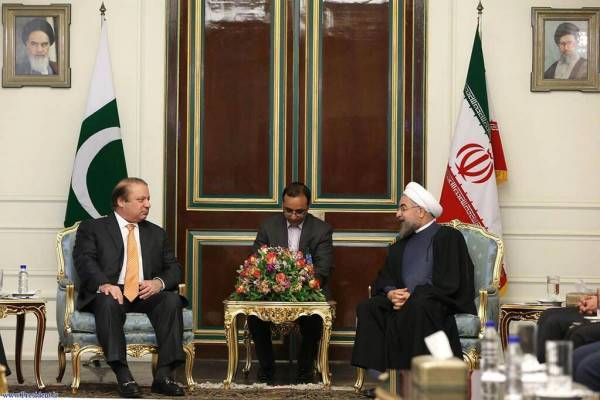
In a separate meeting, Sharif had also held a meeting with Iranian President Hassan Rouhani.

The two senior officials had reviewed the current status of Tehran-Islamabad bilateral relations and explored avenues for bolstering bilateral ties, and both highlighted the importance of stronger cooperation along the joint borders.

Sharif’s visit to Tehran is his first since the formation of new administrations in the two neighboring countries.


by Tasnim News Agency

President urges enhanced cultural, economic cooperation with Pakistan

Rouhani ad Nawaz Sharif
Rouhani ad Nawaz Sharif in Iran


President Rouhani made the remarks in a meeting with visiting Pakistani Premier Nawaz Sharif in Tehran.

The Islamic Republic of Iran is ready to connect the countries by means of rail tracks, roads and laying fiber optic, said President Rouhani.

Iran and Pakistan have a very long border which play a significant role in maintaining both sidesˈ security, he said.

He called for expansion of cultural and economic cooperation between the two countries particularly along joint border regions.

Rouhani expressed the hope that development of power transmission network could play a leading role in expanding economic cooperation between the two neighboring states.

Describing the conditions for expansion of cooperation in border regions as suitable, he said the Iranian government and nation call for restoration of stability and security to borderlines and have always endeavored to secure the areas to protect neighbors.

Recent unfortunate border incidents have affected both sidesˈ public opinions, Rouhani said and lauded the close cooperation of the Pakistani government and nation for release of kidnapped Iranian border guards who were under captivity of terrorist groups.

The efforts of the Pakistani government to control and maintain the security of border lines would help speed up pace of development both in Pakistan and the whole region, he said.

Iran has made huge investments in Tehran-Islamabad gas pipeline project dubbed as ˈPeace Pipelineˈ and has properly displayed its commitments, he said.

Iran is keen to improve its relations with neighboring states and with Pakistan in particular, President Rouhani said.

Referring to expansion of economic and commercial relations between the two countries, he said there are no limits to expansion of all out cultural and economic relations with Pakistan.

The current visit of the Pakistani premier and his entourage to Tehran and the firm determination of the two sidesˈ officials can remove all existing barriers to promotion of relations between the two states, he said.

Terrorism has posed a serious threat to all countries of the region, he said.

All regional countries should take into account the fact that presence of terrorist groups will jeopardize peace and stability of the entire region, he said.

Iran and Pakistan as two big and Muslim countries of the region can persuade other countries to broaden their security cooperation in order to uproot terrorism and violence from the region, said the Iranian president.

Referring to Iran-Pakistan good cooperation within international organizations, he said such cooperation should expand to cover regional issues.

Referring to consolidated cultural, historical and geographical bonds between the two countries, Rouhani said the two states have a very close understanding of Islam and Holy Quran and can help upgrade level of cooperation among regional countries.

The visiting Pakistani premier, for his part, his visit to Tehran was aimed at opening a new chapter in balateral relations.

The Pakistani government believes that the level of economic and commercial cooperation between the two countries should be increased, he said.

Islamabad is determined to remove existing barriers to help speed up construction of gas pipeline between the two countries, said the Pakistani premier.

He expressed the hope that the volume of trade exchange between the two countries wdould increase in the near future.

Due to shortage of electricity in Pakistan, he called on Iran to help remove its power shortages.

Expressing regret over horrible border incident, he said Pakistan is among victims of terrorism that has suffered huge economic losses.

The Pakistani government is determined to foil plots to tarnish relations between the two countries, he said.

Iran and Pakistan should devise a common mechanism to monitor and control and encounter terrorist incidents, he said.

Pakistan had very close cooperation with Iran in busting Jundallah terrorist group, said the Pakistani premier, adding that the Islamabad government and nation are determined to fully cooperate with Iran in deal with terrorist groups mainly Jeishol Adl.

The Pakisrani premier arrived here earlier Sunday morning on a two-day official visit.


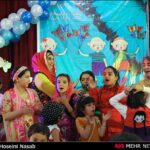
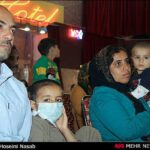
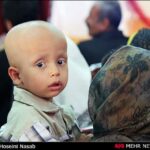
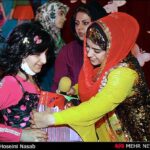
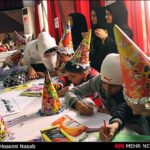
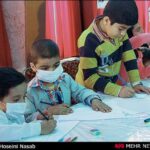
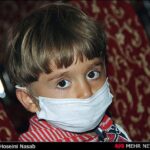
Birthday celebration of children with cancer in Iran

children with cancer- Iran

In the picture : Birthday celebration of children with cancer in Iran

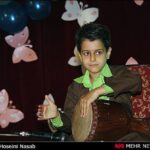
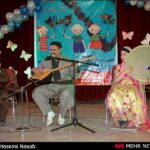
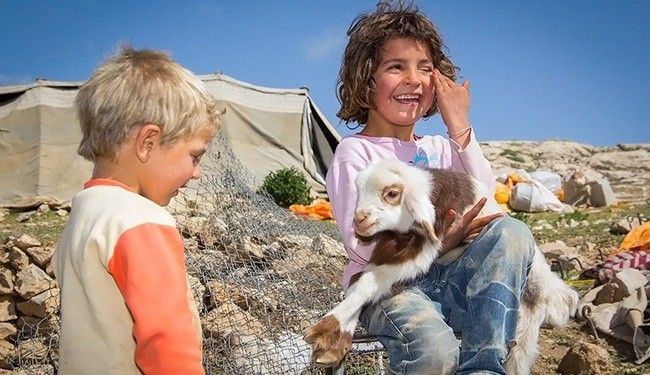
In picture: World Laughter Day celebrated in Iran

World Laughter Day celebrated in Iran


World Laughter Day was created in 1998 by Dr. Madan Kataria, founder of the worldwide Laughter Yoga movement. The celebration of World Laughter Day is a positive manifestation for world peace and is intended to build up a global consciousness of brotherhood and friendship through laughter. Its popularity has grown exponentially with that of the Laughter Yoga movement now counting thousands of Laughter Clubs in more than 72 countries.

Iran supports regional stability, security: Envoy

Iranian Ambassador to Lebanon Ghazanfar Roknabadi says Tehran supports stability, security and national solidarity in regional countries.
 

In a meeting with Lebanese Parliament Speaker Nabih Berri in Beirut on Friday, Roknabadi stated that support for the establishment of stability, security and national solidarity in regional countries, including in Lebanon, is an unchanging position in Iran’s foreign policy.

Berri, for his part, said that further unity and cooperation among regional states is essential and beneficial especially under the current circumstances.

The two officials also exchanged viewpoints on the latest developments in the Middle East and Lebanon during the meeting.

They also discussed parliamentary cooperation between Iran, Lebanon and other countries in the region particularly within the frameworks of the Asian Parliamentary Assembly (APA) and the Parliamentary Union of the Organization of Islamic Cooperation (OIC).

On March 12, Iranian President Hassan Rouhani underlined the need for the establishment of security in the Middle East, calling on Muslim nations to help reinforce regional peace and stability.

“As Muslim countries, we are duty-bound to make efforts to establish peace and stability in the region and we have always stressed that stability and tranquility in the region will be established by the regional countries,” Rouhani said.


Presstv

Iran to unveil three nuclear achievements: AEOI

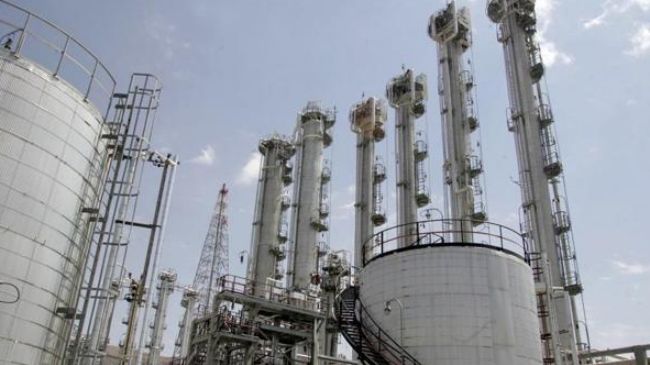
General view of the heavy water reactor near the Iranian city of Arak (filer photo)

The three nuclear achievements in the medical field will be unveiled by the Iranian President Hassan Rouhani on Sunday, IRNA quoted the AEOI as saying on Saturday.

The announcement comes ahead of a fresh round of high-level nuclear talks between Iran and the six powers – the US, the UK, France, Germany, China, and Russia -, scheduled to begin in the Austrian capital of Vienna on May 13.

Representatives from Iran and the six countries are working to hammer out a comprehensive deal following a landmark nuclear accord reached in the Swiss city of Geneva last November. The Geneva deal took effect on January 20.

On April 9, AEOI Head Ali Akbar Salehi said that Iranian scientists have launched an Oxygen-18 isotope production unit at Arak nuclear facility.

Salehi said Iran is seeking to produce stable radio isotopes which are commonly used in diverse industrial, medical and environmental fields.

Iran has announced that the Arak reactor, which uses natural uranium to produce radio medicine, is planned to gradually replace the Tehran Research Reactor to produce medical radioisotopes for cancer patients.

Iran and the six powers wrapped up their latest round of high-level nuclear talks in Vienna on April 9.

Hashemi’s Heavy Blow to Wall of Mistrust

Hossein Sadeghi, Iran’s former ambassador to Saudi Arabia

Iran’s relations with Saudi Arabia have had many ups and downs following the Revolution, to the extent that at one period the relations were close and at another time there were many challenges. But in this historic process, relations between Iran and Saudi Arabia have never led to the signing of any agreement in the cultural, economic and even security areas. Why has such an agreement never happened?

This question is raised by many that why the Kingdom of Saudi Arabia and the Islamic Republic of Iran, as two big regional or even international players or, cannot or have not yet been able to reach a comprehensive agreement; an agreement which, while comprehensive, would be sustainable and would not be affected by daily developments and could continue its path under any conditions. If we intend to divide the relations between Iran and Saudi Arabia into different periods, it would be as follows; the first stage is the formation of the victory of the Islamic Revolution. As you know, before the Revolution, Iran and Saudi Arabia, based on their strategies, each played their roles in the line towards the security and stability of the Persian Gulf. But following the victory of the Islamic Revolution, a vacuum was created on the ground of how a sustainable security could be established in the region. The second stage was the beginning of the War. At this juncture, due to the existing issues, relations between Iran and Saudi Arabia turned cold and the relations became critical. This situation continued until the acceptance of Resolution 598. The acceptance of this resolution was a new stage in the relations between the two countries. At that time, Iran was seriously damaged and needed reconstruction to repair the destructions caused by the war. At the same time there were tensions between Iran and Saudi Arabia which should have been resolved. Thus, there were collaborations with Saudi Arabia as the country which has the biggest oil reserves to increase the price of oil.

At this juncture, Mr. Hashemi, who I believe is a pragmatic politician and makes his moves based on realities, made a bold decision as the president at the time which was, of course, protested against inside the country. Mr. Hashemi dealt a heavy blow to the wall of mistrust. He believed that instead of creating tensions, we must pursue détente, hence, everybody would benefit. The next stage was the era of Mr. Khatami’s presidency, which I call the “golden era’ in the relations between the two countries. It was the golden era of political, economic, cultural, social and even military relations between the two countries on the grounds which were provided during Mr. Hashemi’s presidency. Mr. Khatami not only continued this path but also accelerated it. Mr. Khatami’s visit to Saudi Arabia was the turning point in these relations and created a new perspective in this regard. Then there was the era of the ninth and tenth administrations; the era when the relations returned to the past. I can say that at this juncture a new crisis was created in our relations with Saudi Arabia. The next stage was the formation of the Arab uprisings or the Arab Spring in the region. The last stage is the era of Mr. Rohani’s presidency. The view of this administration towards the issue of foreign policy is completely different from that of the previous administrations. This administration intends to continue the path of Mr. Hashemi and Mr. Khatami while understanding the new realities. Considering the existing potentials in the two countries, I am optimistic that a new atmosphere could be created in the relations between Iran and Saudi Arabia.

There are two viewpoints with regard to the relations between Iran and Saudi Arabia. Some believe that Iran’s policy regarding Saudi Arabia is based on the policy of “accommodation” and the others state that it has been on the basis of the policy of “compromise”. What is your assessment of Iran’s policy with regard to Saudi Arabia?

I do not know where these interpretations originate from. In the political relations between the countries we have had a period of hostility. At this period, both parties feel that they must use every possibility against the other party. In the next stage hostility does not exist but there is tension or crisis. Then there is the period of détente, normalization and expansion of relations. I believe that the era of Mr. Hashemi and Mr. Khatami’s presidencies were the era of détente and normalization of relations and they even bypassed these stages and entered the phase of development and expansion of relations. The next phase is the period of strengthening and stabilizing the relations which we could not take any measure in this regard to reach a common understanding and a constructive and positive interaction so that we could enter an atmosphere of competition instead of conflict which could also be positive. Negative competition has its own consequences. There should be a spirit of positive and constructive interaction. If we take steps in this area, then both countries and the region will benefit from it and the grounds will be prepared for the regional cooperation of Iran and Saudi Arabia. It is under the shadow of these developments that the two countries could move in the stage of self-construction.

Some believe that the relations between the two countries must be considered in security cooperation and aside from diplomatic relations. Is there enough capacity for security cooperation between Iran and Saudi Arabia?

I believe that there are good grounds for this matter. If we enter the scene, the others will certainly encourage and help as well. Extremism and violence prevents sustainable development and growth. I think that one of the common points of cooperation between the two countries is radicalism. The second area is terrorism. Terrorism is an issue against which both countries could have constant cooperation, particularly these days when radicalism and terrorism have expanded in the region and the cooperation of Iran and Saudi Arabia could have positive effects. The third area of cooperation is the area of energy. Iran and Saudi Arabia, as big producing countries, could play vital and serious roles in this regard. The next stage is economic cooperation. I believe there are grounds for vast joint cooperation between Iran and Saudi Arabia. Right now, our relations have reached a point where the gates are closed but this does not mean that the gates should remain closed and locked forever. These locks can be opened so that we could enter a new atmosphere.

You said that both Iran and Saudi Arabia suffer from radicalism, but the developments in the region, particularly in Syria, showed that Saudi Arabia is a supporter of radical groups. It does not seem that Saudi Arabia is suffering from this issue, thus, how could radicalism be considered as an issue for security cooperation between Iran and Saudi Arabia?

Based on my experiences, violence and radicalism may sometimes lead to the formation of terrorism. This issue is like a fire which is lit in some place. I do not intend to enter the discussion of who enflamed this fire but what is important is that the flames of this fire which will cover everybody. Therefore, if the two countries pursue expanded cooperation, they will be able to extinguish this fire. If both sides feel determined in this regard, and today this feeling does exist in both countries, then they will show serious willingness to expand their relations. The conditions are not easy and simple. Iran and Saudi Arabia must sit down and begin a direct, serious, challenging and difficult negotiation without any mediator. One could hope that under such challenging dialogue, we could bypass this difficult stage and enter a new one.

When we say that a country is a regional power, this means that the country could balance several areas of power as a regional player. With this definition, could Saudi Arabia be considered as a regional power? Does Saudi Arabia have the capability to balance the powers?

I believe that no country could play this role alone, whether it is Iran, Saudi Arabia or any other country. We must reach a collective understanding and then we could present a new definition of regional collective power.  Under these conditions, we might be able to prepare the grounds for the development and growth of the entire region. When there are unstable, underdeveloped and poor countries in a region, then poverty will naturally overflow into other countries. Therefore, if this cooperation exists, then measures could be taken to help those neighboring countries which are faced with crisis and poverty to reach growth and development and uproot radicalism and violence.

The point of conflict between Iran and Saudi Arabia was Syria. Saudi Arabia’s emphasis on the downfall of the Assad government and Iran’s support of this regime led to challenges in the bilateral relations. What issue could cause Iran and Saudi Arabia to reconcile in Syria?

There is no other solution but to enter dialogue on this matter. If Saudi Arabia attempts to look at its own benefits in Syria or if Iran does the same for that matter, then it is natural that we will not be able to move in the path of dialogue. If both parties agree to enter serious talks and discuss their interests and find their common and different points of view, then they could find a solution. It is very unfortunate that people in Syria are being killed and the country is being destroyed. This crisis is not to any body’s benefit. With a realistic outlook we will comprehend that there is no solution but dialogue. It will be very difficult in the future to control radicalism which is forming in the region. Radicalism will overflow into other countries in the future and will have serious consequences.

Is the existing mistrust between Iran and Saudi Arabia rooted in sectarianism and the issue of the Shiites and the Sunnis?

I believe that this issue has impacted this mistrust but I do not think that this is the determining factor. Unfortunately ethnic and sectarian conflicts have expanded in the region. It is not limited to one country. In order to prevent these sectarian conflicts, Iran and Saudi Arabia could play key roles in this regard.

One of the very important events with regard to the issue of Syria is the US’ lack of support of Saudi Arabia and its pursuit of the dismissal of Bandar-bin-Sultan. What are the reasons behind the US’ change in approach, especially on the issue of Syria, and even the dismissal of Bandar which is said to have been done due to US pressure?

I believe that one of the concerns of the US or moderate countries in the region with regard to the developments in Syria is the growth of the Takfiri groups; those groups which take blind measures, have closed outlooks and do not believe in interaction, dialogue and tolerance. They do not see any other path but the path of violence. The moderate countries believe that if they take power, the region will be seriously threatened.

There seems to be closeness and a deepening of relations between Saudi Arabia and Pakistan. What is the reason behind this closeness?

There are mutual needs. Saudi Arabia needs the potential possibilities which exist in Pakistan including the labor forces. Pakistan, on the other hand, needs Saudi Arabia’s financial possibilities. This need has brought the two sides closer to each other and deepened their relations.

 

Irdiplomacy.ir

Larijani advises G5+1 to adopt rational stands on Iran

Iran and slovenia majlis


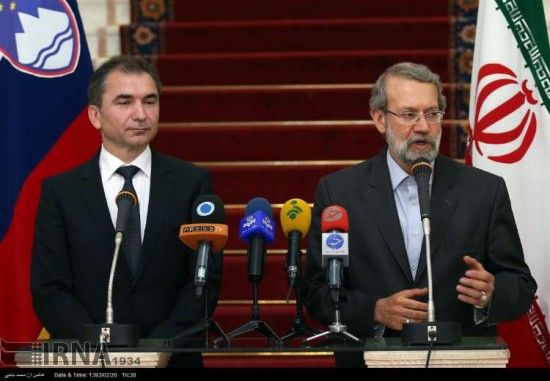
Larijani made the remarks in a meeting with his Slovenian counterpart Yanku Webber.

The Islamic Republic of Iran is ready to broaden economic cooperation with Europe and transfer its gas to that region including Slovenia, he said.

Referring to existing good relations between the two countries, Larijani said Iran is very positive about expansion of political, economic and parliamentary relations and cooperation with Slovenia and the grounds are prepared to achieve such a goal.

Referring to huge economic potentials of both countries, he said there is no barrier to expansion of industrial and commercial cooperation between the two sides.

He called for more active role of the two sidesˈ private sectors in broadening the level of mutual cooperation.

Talks between Iran and G5+1 have provided a suitable opportunity for the European states, Larijani said adding that adopting rational stands by G5+1 would lead to expansion of economic and commercial relations between the two sides.

The Slovenian parliament speaker, for his part described Iran as a secure and stable country in the region and said Iran and Slovenia are now regarded as two stable countries in central Europe and the Middle East regions.

Expansion of economic cooperation between Iran and Slovenia would lead to expansion of political and economic relations between the two countries, he said.

The Slovenian government and parliament are determined to broaden cooperation with Iran in energy and information technology fields, he said.

Exchange of visits between the two sidesˈ officials and businessmen would lead to promotion of cooperation in other sectors, he said.


Islamic Republic News Agency