Saturday, December 27, 2025
Home Blog Page 4939

Supreme Leader’s message is catching on with the youth

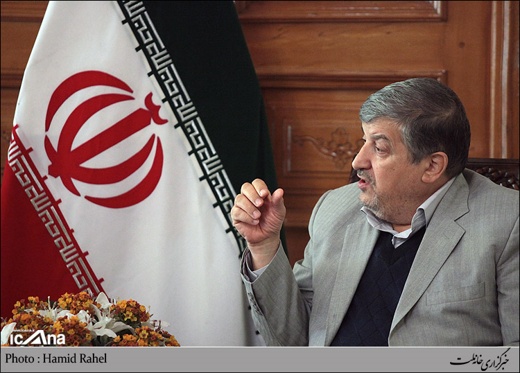
Mohammad Javad-Larijani

The secretary of Iran’s Human Rights Council has described Supreme Leader Ayatollah Seyyed Ali Khamenei’s message to the youth in Europe and North America as a shrewd step toward developing a mutual understanding with the world.

Mohammad Javad Larijani drew a comparison between the leader’s message and the letter of the late Imam Khomeini to the Soviet leader and said, “Imam’s message was addressed to officials and pundits; the leader’s is aimed at the public. The two are interrelated though.”

The following is the translation of part of what Larijani, who was a member of the three-man team that delivered the late Imam’s letter to Mikhail Gorbachev, said in the interview reported by Khabaronline on February 5:

The leader’s message to the youth, which has new features, deals with the West’s expansionist policies and its showdown with Islam.

The Islamic Revolution is one major reason why Westerners are sensitive to the political Islam model we have championed. Islamic Awakening is one of the phenomena the Islamic Revolution set in motion in the world of Islam.

Confrontation with the Muslim faith is being pursued vigorously in the West. A victory for Iran in this confrontation would result in the revival of the faith the West is so afraid of. They were hopeful Iran’s Islamic model would not find its way beyond Iranian borders.

In Egypt, for instance, the popular movement turned into a revolution followed by formation of a government. But the Muslim Brotherhood could not offer what Egyptians favored and anticipated. People were allowed to choose between two options: a secular system – like Turkey’s – and a Salafi system. But they wanted neither of them. In other words, efforts to establish a government failed, but the movement has not failed yet.

The leader’s message to the youth, which has new features, deals with the West’s expansionist policies and its showdown with Islam.

That they say the Islamic Awakening movement has foundered is not true, because the yardstick on this question is Iran [whose Islamic Revolution continues to inspire people]. An Islamophobia project has been set in motion. Paris terror attacks are just one act in this long-running play. For sure, it’s not the first one, nor will it be the last.

How can one reveal what is unfolding behind the scene? The path the Supreme Leader has chosen [writing a direct letter to the Western youth] is shrewd. When the youth fathom the message, they will pose the following question: ‘Is the West entitled to pursue terrorist acts, create ISIL and pit terrorist groups against people?’

That’s why people in the West, the youth in particular, should understand that Islam and freedom are not the main points here, and that the image they have painted of the Muslim faith has nothing to do with genuine Islam. What they are depicting is an American-style Islam. The late Imam [Khomeini] once said: They [the West] tarnish Islamic principles through their own agents.

You see that under a flag which bears “There is no god but Allah”, which is the most popular slogan in history and is all about monotheism and freedom-seeking, [a reference to the black flag of ISIL under which members of the notorious terrorist group brutally behead their hostages in the name of Islam] the terrorists decapitate people as they shout ‘God is the greatest’.

So when people in the West hear this slogan “There is no god but Allah”, they automatically recall the beheading of an innocent person. These are new techniques through which they enslave people by engineering the public opinion.

When the Islamic Revolution emerged victorious, nobody would have imagined that its message would one day gain traction.

The Leader’s message is very significant for the future of the West. If you take a look back at history, you will learn that the Great French Revolution [1789-1793] to which the Western history is greatly indebted had three key slogans.

Number one is equality which bans the exploitation of others at the hands of one group. But equality is non-existent in the West today. Those who are rich hold power.

The second slogan is liberty. In the West, liberty is treated as a petty issue, and you are not allowed to challenge or examine the rationality or foundations of things. “There is no compulsion in religion” says you should not impose an ideology on us; let us decide – as humans – to be laic or religious persons. There is no such opportunity to choose [in the West].

Fraternity is the third slogan which is nowhere to be seen in the West today. In one world war, for instance, as many as 56 million people were killed. Acts of violence – which were later committed during the Vietnam War and has since been repeated – civil unrest, racism, self-centeredness, and egomaniac behaviors in a country which claims to be the cradle of freedom are all the direct result of this civilization. Such a civilization is doomed to fail and its prospects are not bright.

We need to be patient [for the leader’s message to sink in]. Words are like seeds which are sown; they grow gradually. When the Islamic Revolution emerged victorious, nobody would have imagined that its message would one day gain traction. Truthful words will definitely grow, especially through modern devices, and rational, simple, fluent and dialectical literatures.

Explaining well-founded knowledge in a simple language is an art. The holy Prophet (PBUH) spoke in a way that everyone could understand depending on their knowledge.

The content of this message [the Leader’s] shows a new method has been utilized. It should be promoted. Perhaps it is the first time after the revolution that we use this language to develop a mutual understanding with the world.

World Free of Violence poster exhibition opens in Tehran

World Free of Violence poster exhibition 11

A poster exhibition dubbed ˈWorld Free of Violenceˈhas opened in Tehran, displaying selected works of Iranian and world graphic artists.

In the inauguration ceremony, President Rohani’s Chief of Staff Mohammad Nahavandian and Minister of Culture and Islamic Guidance Ali Jannati and his Deputy for Art Affairs Ali Mouradkhani were present.

Jannati said, “Artists should join others in the fight against violence, and try their best to make peace a feature of the world.”

Meanwhile, Nahavandian told the opening ceremony, “Over the past 18 months, thanks to Iranian unity, we have managed to ease the economic problems of the nation. The Iranian solidarity has forced Westerners to accept the realities and stop making illegitimate threats.”

The exhibition shows 93 works of world and Iranian artists in the venue of Niavaran Cultural Center.

Artists from Iran, Italy, France, Finland, Poland, Serbia, China, Ukraine, Belarus, Turkey, Mexico, South Korea, Russia, Ecuador, Iraq, Taiwan and Macau have displayed their works in the exhibition.

The exhibition will be open until February 24, 2015.


Iran launches world’s largest floating oil terminal in Persian Gulf

Oil-Iran

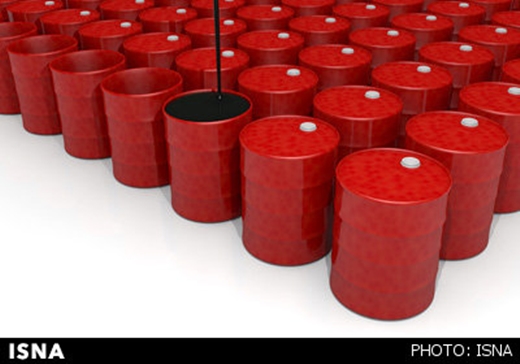
Iran has launched the world’s largest floating oil export terminal in the Persian Gulf.

The 2.2-million-barrel floating oil storage unit (FSU), dubbed the Persian Gulf, came on stream in Soroush oil region on Sunday.

The FCU can take in some 200,000 barrels of heavy crude oil produced in Iran’s offshore oil fields of Soroush and Nowruz per day.

The floating terminal has a length of 337 meters, a width of 60 meters and a height of 33 meters.

The launch of the FSU will significantly increase Iran’s capacity for crude oil storage and exports.

Iran’s total in-place oil reserves have been estimated at more than 560 billion barrels, with about 140 billion barrels of recoverable oil. Heavy and extra-heavy varieties of crude oil account for roughly 70-100 billion barrels of the total reserves.


Iran ready to export technical services to Egypt: Deputy minister

Mohammad Khazaei
Mohammad Khazaei

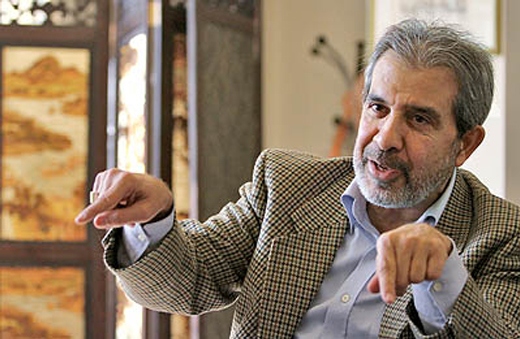
Deputy Minister of Economy and Financial Affairs and head of Iranian Technical and Economic Investments and Services Center Mohammad Khazaei said on Saturday Iran is ready to export technical and engineering services to Egypt.

Mohammad Khazaei told a conference titled “Iran and Egypt: Future Prospect”, co-sponsored by the Iranian Foreign Ministry and the Egyptian Al-Ahram Institute in Tehran, that despite the imposed sanctions, Iran’s economic capacities are very high.

“That is the reason why Iran has exported technical and engineering services to various countries and Iranian engineers are currently busy constructing dams and other infrastructure facilities around the globe,” he said.

Khazaei said that Egypt can earn $2 billion to $3 billion each year through visits by Iranian tourists.

The official described Iran’s health tourism capabilities as a field for bilateral cooperation.

He expressed hope that Tehran-Cairo relations would reach a level that the two countries will focus on the establishment of a joint economic commission.

Iran’s former ambassador to the UN said that the Iran-Egypt disputes have never been deep-rooted and regardless of changes of governments in both countries Tehran and Cairo have a common stand on various regional and international issues.

He said that he had been a colleague of three Egyptian permanent UN envoys, adding: “I do not remember a single instance of Iran and Egypt having different views on any human rights or disarmament resolution put to vote at the UN.

A sand cat is set free from trap in northeastern Iran

Iran-sand cat

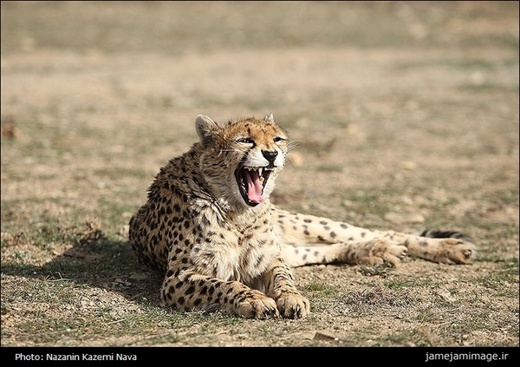
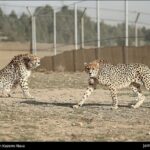
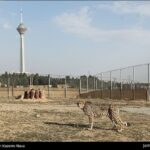
The environment police in Khvaf [a town in Khorasan Razavi Province] have acted swiftly on a report that a sand cat has been caught in a trap to capture houbara bustards alive in Sirkhoun Protected Area and rushed there to set the entrapped cat free.

According to the website of Iran Environment and Wildlife Watch (www.iew.ir), after medical examinations which gave the sand cat a clean bill of health, the feline was released in the wild within a day. After the rescue operation, the environment police destroyed all the traps set by poachers in the region. The following is a photo gallery which features the rescue of the sand cat caught in the trap:


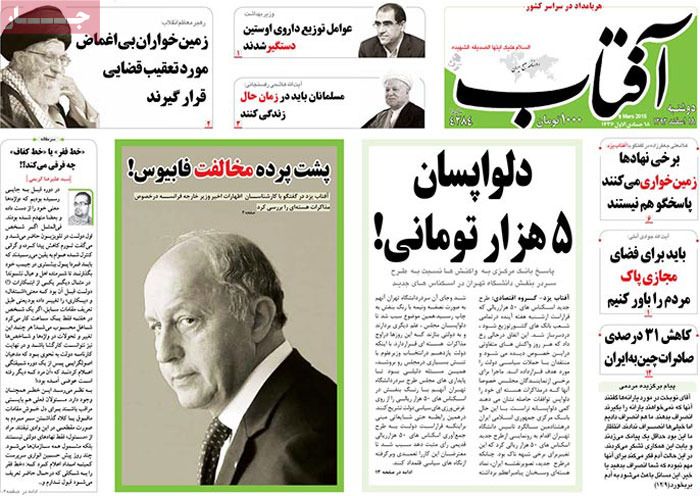
A look at Iranian newspaper front pages on Feb. 8

Iranian Newspapers Headlines

Talks in Munich, Germany between Iranian Foreign Minister Mohammad Javad Zarif and top diplomats from P5+1 and other world figures dominated the front pages of Iranian newspapers on Sunday.


Afarinesh: The new chairman of the Assembly of Experts will be named March 10.


Afarinesh newspaper 2 - 8 - 2015


Aftab-e Yazd: Jannati Junior, the new target of hardliners

The minister of culture and Islamic guidance has said opponents of President Rouhani’s government have set up a nerve center to steer their anti-government measures.


Aftabe yazd newspaper 2 - 8 - 2015


Arman-e Emrooz: “The true Islam does not warrant violence,” said Seyyed Hassan Khomeini.

Arman-e Emrooz: A first phase of revelations by the culture minister

Ali Jannati has said those who were defeated in the elections are now throwing a wrench in the works.


Armane emruz newspaper 2 - 8 - 2015


Asrar: In Munich, Zarif and Kerry have agreed to meet again.

Asrar: “Some principlists are doubting republicanism in the name of Islam,” said a reformist former interior minister.

Asrar: “Some are constantly trying to ensure nuclear talks remain inconclusive,” said an aide to the president.

Asrar: “The rights of women are not fully observed in workplace,” said the labor minister.


Asrar newspaper 2 - 8 - 2015


Etemad: “Restore the authority of the science ministry,” appealed the science chief in a letter to the president.

Etemad: Jack Straw hailed the letter of the Supreme Leader to Western youth as amazing.

Etemad: The government owes Tehran Municipality $2.4 billion.


Etemad newspaper 2 - 8 - 2015


Ettela’at: “Child obesity rates are alarming,” said the Iranian health minister.

Ettela’at: Iran and P5+1 foreign ministers hold talks in Munich

“We won’t allow the other side to capitalize on the barrage of attacks aimed at Iranian nuclear negotiators at home,” said Foreign Minister Mohammad Javad Zarif.

Ettela’at: Iraqi Peshmerga fighters are positioned on the edge of Mosul


Ettelaat newspaper 2 - 8 - 2015


Ghanoon: A Revolution Guards commander has confirmed that Israel has sent Iran a message.


Ghanoon newspaper 2 - 8 - 2015


Iran: Hamid Rasaei [a parliament deputy] has been banned from holding public office.


Iran newspaper 2 - 8 - 2015


Kaenat: There have been 61 armed robberies in the capital so far this year [ends March 21, 2015]


Kaaenaat newspaper 2 - 8 - 2015


Kar va Kargar: Treatment of refractory diseases in public hospitals is now free of charge.


Karo kargar newspaper 2 - 8 - 2015


Kayhan: Zarif has denied reports that he told Secretary Kerry that failure of talks would endanger the future of President Rouhani.


Kayhan newspaper 2 - 8 - 2015


Kayhan International: [Iranian] Defense minister to visit Moscow


Kayhan international newspaper 2 - 8 - 2015


Khorasan: The first phase of Khorasan Grand Museum has opened.


Khorasan newspaper 2 - 8 - 2015


Sayeh: Some 600 lakes across Iran are on the verge of disappearance.


Sayeh newspaper 2 - 8 - 2015


Shahrvand: Central Bank has banned online trade in foreign exchanges.


Shahrvand newspaper 2 - 8 - 2015


Tejarat: Iran is not to press for compensations from Pakistan for its failure to keep its end of the bargain in a pipeline deal.


Tejarat newspaper 2 - 8 - 2015


Iranian Kamancheh player to perform with Estonian string orchestra

Iran-Music-Kamancheh

The Estonian string orchestra conducted by Sigrid Kuulmann will perform a few pieces with Iranian Kamancheh player Hamid Reza Afarideh at the international section of the 30th International Fajr Music Festival.

The festival brings together Iranian and foreign artists and troupes together each year. The following is the translation of a report on the annual music event by Mehr News Agency on February 7:

Over the past few years, the orchestra which brings together 11 musicians and is led by Kuulmann has performed in different countries, namely Switzerland, Austria, Italy, Finland, Germany, Belgium, Brazil, Chile, Argentine and Uruguay. It has also taken part in a music festival in Brussels, the International Piano Festival of Brescia and Bergamo and a music festival in Emilia-Romagna, Italy, the International Oleg Kagan Music Festival in Germany, a music festival in Saint Petersburg in Russia, along with festivals in Finland and Latvia.

Sigrid Kuulmann has been trained by prominent maestros. He has recently become a professor at the Estonian Academy of Music and Theatre.

The 30th Fajr International Music Festival has been scheduled for February 13-20, 2015. The Fajr festival which is Iran’s most prestigious music festival includes national and international competition sections.

The annual event is attended by domestic and foreign artists performing different pieces in various categories among them International and Folk Music, Classical Music and Youth and Women’s Music.

Who has the final say in the US?

Barack Obama in Congress

Trita Parsi, the president of the National Iranian American Council (NIAC), has described the decision of the US Congress to hold up new anti-Iran sanctions as a shift in Washington’s Iran policy.

On February 7, Ettela’at newspaper filed part of an opinion piece by Trita Parsi reported by The Japan Times (dated February 4). The following is the translation of what the Iranian daily wrote:

From the moment US President Barack Obama took office, the Iranian government had its doubts about his administration. There were two schools of “doubt.” The first questioned his intentions. They believed his rhetoric and promises were just that — empty words. In deeds, the argument read, he was no different from his war-prone predecessor. The other school doubted Obama’s abilities, not his intentions. Could an inexperienced, outsider president really shift America’s long-standing policy and attitude toward Iran? Was he even the real decision maker?

Parsi goes on to say, “Tehran’s doubts [about who the real decision maker is] were not unfounded. What used to be perhaps an academic question [in Iran], is today a very practical and pertinent one.”

Referring to the question of removal of US sanctions against Iran in the ongoing nuclear talks, he says, “By now, however, there should be less confusion in Tehran. The sanctions relief Obama is promising Iran in the nuclear talks are not his to lift. Obama has waiver rights, but only Congress can lift sanctions. Congressional opposition to a nuclear bargain with Iran has consequentially weakened Obama’s hand in the negotiations, […].

“It’s simple economics: Since the risk of dealing with a president that does not control the sanctions relief process is higher, the price Iran must ask for giving concessions must increase accordingly.”

Parsi then says, “[…] Some extraordinary changes to the political landscape in the US have occurred that should prompt Iran to reevaluate Obama’s abilities [about lifting of sanctions].”

[…]

Recalling redoubled efforts in the US Congress to pass fresh sanctions against Iran and the adverse effect of anti-Iran measures on the ongoing nuclear talks, he says, “Rather than seek a compromise with the Senate, he threatened a veto and warned it about the consequences of sabotaging the talks. […] But Obama stood firm. The threat worked. So far only two Democratic senators have co-sponsored the new sanctions bill.”

[…]

“Even more shocking, perhaps, was Hillary Clinton’s backing of Obama in this contest. In the midst of preparations for her presumed 2016 presidential run, Clinton came out against both AIPAC [the Zionists’ biggest lobby in the US] and Netanyahu.” and called the sanctions bill “a very serious strategic error.”

Parsi who leads a think tank, which is an ardent supporter of Washington-based Zionists, calls these developments a sign of Obama’s success in shifting Washington’s policy on Iran’s nuclear case and adds, “Any measure that undermines diplomacy, such as new sanctions, automatically enhances the risk of war.

“Passing sanctions on Iran used to be the safest political move in Congress. But today, imposing sanctions means supporting war, which is a move that carries a tremendous political cost. So high that Clinton chose to come out against AIPAC and Netanyahu instead.”

He also says, “This is not to suggest that Obama has taken control over the process of lifting sanctions. That authority remains in the hands of Congress. But what the recent wrangling in Congress shows is that Obama can redefine what is politically feasible and unfeasible.”

[…]

Zarif meets with British counterpart, Lebanese PM

Zarif-Hummon

Iranian Foreign Minister Mohammad Javad Zarif met separately with his British counterpart Philip Hammond and Lebanese Prime Minister Tammam Salam on the sidelines of the 51st Munich Security Conference in the south German city on Saturday.

Zarif and Hammond discussed the latest developments in the Iran nuclear negotiations process as well as the state of bilateral ties.

Iran’s top diplomat was also scheduled to meet with the Deputy Secretary General of the United Nations Jan Eliasson.

Later in the day, Zarif will hold talks with EU foreign policy chief Federica Mogherini and Iraqi Prime Minister Haider al-Abadi.

Meanwhile, Iran’s top nuclear negotiators Abbas Araghchi and Majid Takht-Ravanchi will also meet with their US counterparts Wendy Sherman and William Burns.

Nuclear talks failure will be a disaster: Straw

Straw

Former British Foreign Secretary Jack Straw said failure of nuclear negotiations with Iran will be a catastrophe.

In an exclusive interview with IRNA, he evaluated as positive the present conditions for signing a nuclear agreement between Iran and P5+1 and said the UK will welcome an agreement.

Stressing Iranˈs right for peaceful nuclear technology, he said the majority of political figures in the UK administration favored an agreement with Iran and are not sensitive about the terminology used in the documents.

He said it would be wise even to get to a solid though temporary agreement with Iran if a final one is impossible to achieve.

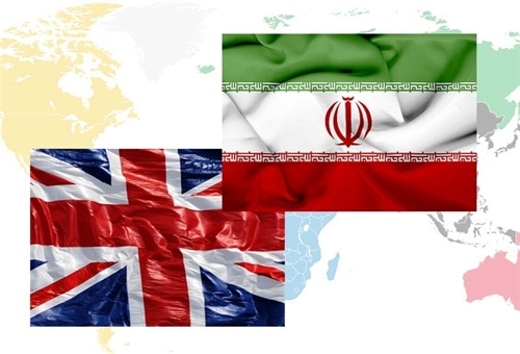
Straw who represents Blackburn in the parliament for the Labor Party further commented on the reopening of the British Embassy in Iran.

He referred to the issue of the consignments Britain is sending for its embassy in Tehran and the situation of a number of Iranian nationals in the UK who lack any legal permits as two topics which have to be settled by the two countries.

The British politician noted that many people in the UK are aware of the way Iranians feel towards the Great Britain because of its history in Iran.

He further termed the recent letter of the Iranian Supreme Leader addressed to Western youth as very timely and important.

As the member of Iran Friendship Group in the British Parliament, he said a parliamentary delegation is scheduled to visit Iran by mid-March 2015.