Wednesday, April 22, 2026
Home Blog Page 4251

Iran, Japan Must Boost Energy Cooperation after JCPOA: Minister

Hamid Chitchian

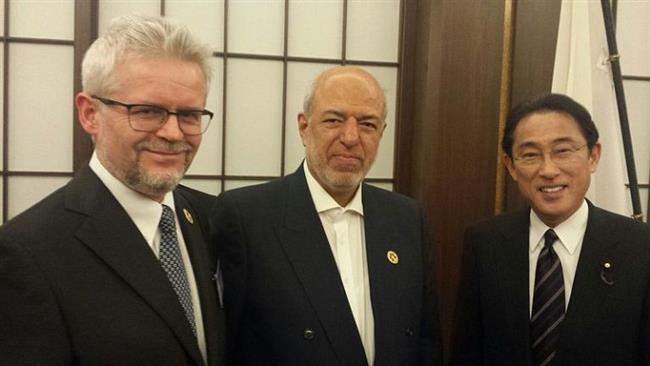
Hamid Chitchian made the remarks in a meeting with Japanese Foreign Minister Fumio Kishida in Tokyo on Friday on the sidelines of the 27th meeting of the Energy Charter Conference.

He said the nuclear agreement, known as the Joint Comprehensive Plan of Action (JCPOA), signed between Iran and the P5+1 group of countries in July 2015, is an international deal.

“It is imperative that all countries support the achievement of this important agreement which is beneficial to the international community,” the Iranian minister added.


Iran and the five permanent members of the United Nations Security Council – the United States, France, Britain, Russia and China – plus Germany started implementing the JCPOA in January 2016.

Under the JCPOA, Iran undertook to put limitations on its nuclear program in exchange for the removal of nuclear-related sanctions imposed against Tehran.

The Japanese foreign minister, for his part, said his country has always supported the JCPOA and would spare no efforts for its success.

Chitchian and Kishida also exchanged views about important issues in mutual relations including Japan’s investment in the renovation of Iran’s power plants and a visit by Japanese Prime Minister Shinzo Abe to Tehran.

The Iranian minister is in Tokyo for a four-day visit to participate in the 27th meeting of the Energy Charter Conference and hold talks with senior Japanese officials.

The Energy Charter Conference is the governing and decision-making body for the Energy Charter Process, and was established by the 1994 Energy Charter Treaty.
Iran Signs International Energy Charter Declaration

hamid chitchian

The International Energy Charter is a political declaration aimed at boosting global energy security and promoting access to modern energy services.

Iranian Energy Minister Hamid Chitchian signed the declaration during a special ceremony attended by the Secretary General of the Energy Charter Secretariat Urban Rusnák and Japanese Foreign Minister Fumio Kishida in Tokyo on Friday.

Iran is viewed as a resource-rich country. It holds the fourth largest proven crude oil reserves and the second largest natural gas reserves in the world.

Iraq and Guatemala, as well as three international organizations including the East African Community, G5 Sahel and the Economic Community of Central African States also signed the International Energy Charter declaration, bringing the overall number of IEC signatories to 80.

The signing ceremony was held on the sidelines of the 27th Meeting of the Energy Charter Conference which kicked off in Tokyo on Friday.

The two-day event is aimed at reviewing the latest global challenges facing energy sector.

The Energy Charter Conference was established by the 1994 Energy Charter Treaty as part of efforts to promote long-term energy cooperation at regional and global levels.

Army Commander: Iran’s Indigenous Vessels Ready for Naval Voyages

general-ataollah-salehi

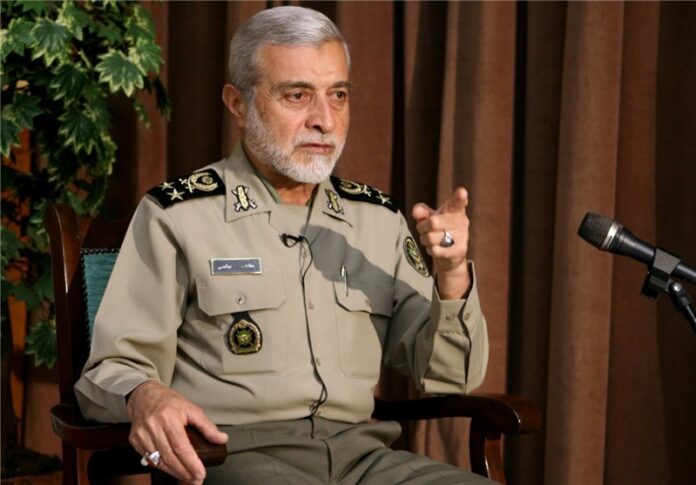
Addressing high-ranking Navy commanders in Tehran on Saturday, Major General Salehi hailed the Navy as a strategic force with great capabilities, calling on the forces to work on long voyages in the Atlantic Ocean.

The top commander also noted that Tareq submarine and Khark warship have been optimized by the indigenous forces and are ready for military missions.

He further unveiled plans for achieving new products in the current Iranian year (which ends in March 2017) that will improve the country’s naval power.

Tareq is a super-heavy class of locally-manufactured submarines, and Khark is a homegrown warship employed in most of the Navy’s overseas missions.

Saudi Arabia Founder’s Handwriting Shows Use of “Persian Gulf”

Iran Says Persian Gulf Always ‘Persian’ Gulf, not ‘Washington’ Gulf

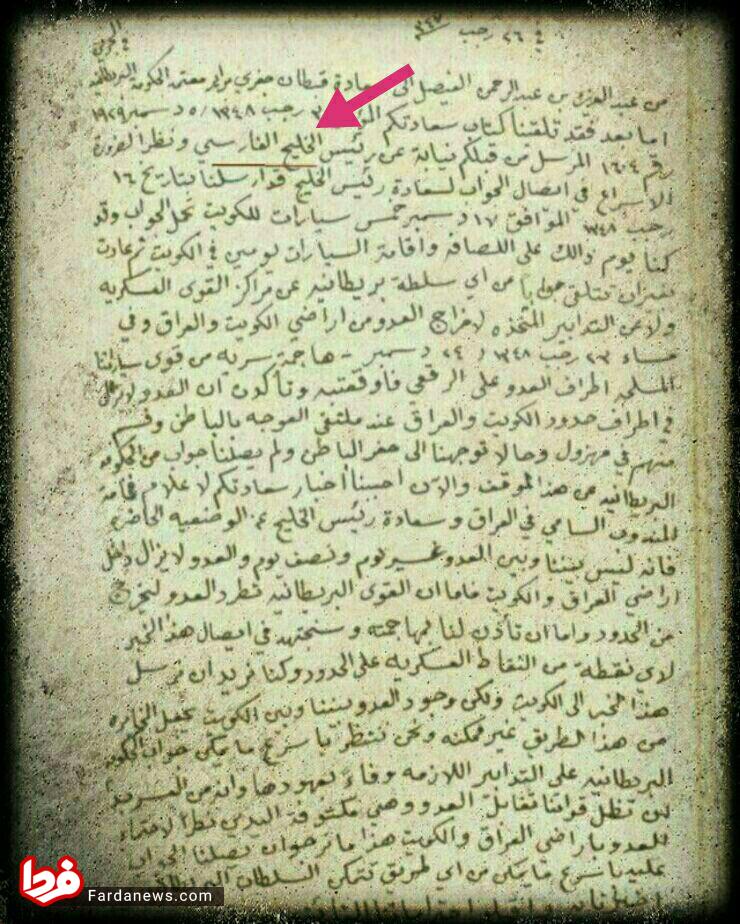
In a handwritten and signed letter dated 1347 AH (1928-29), Abdulaziz, the founder of Saudi Arabia, has referred to “Persian Gulf” using its correct name.

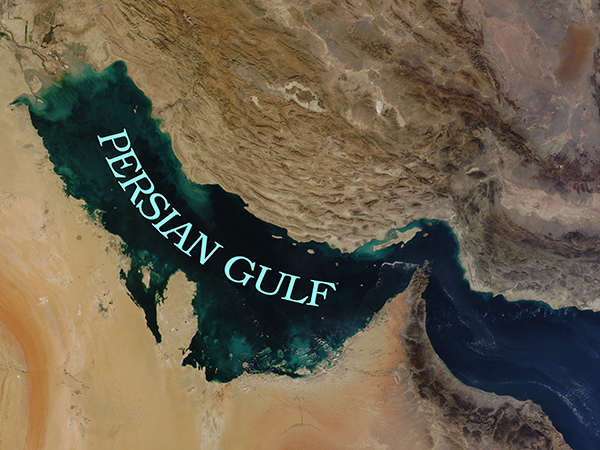
This body of water has been historically known as “Persian Gulf”; however, some Arab countries has insisted on using the false term “Arabian Gulf” since 1960s. International organisations continue to use “Persian Gulf” and never accepted its alternative. The dispute still goes on.

Persian Gulf

US Was behind Attack on Iraq’s Popular Forces: Statement

Iraq’s Popular Forces

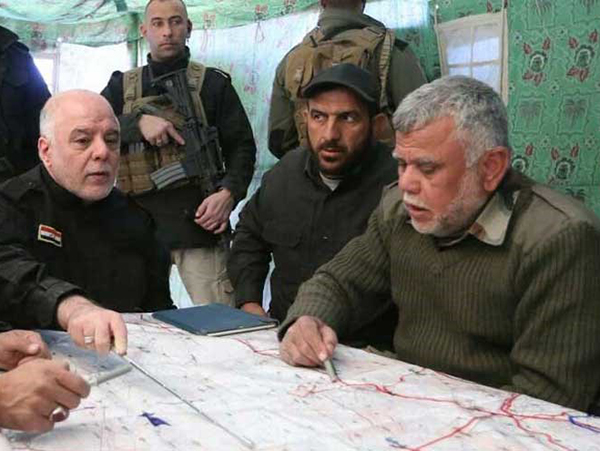
“The tent in Tal Afar Airport where the commanders of Iraqi popular forces and Iraqi Primer Minister had convened was targeted by a missile on Thursday, November 25, 4:15 pm local time. The attack wounded several members of popular forces,” Popular Mobilization Forces announced in a statement, according to a report by Al-Alam, as translated by IFP.

“According to investigations, the missile was not fired by ISIS forces. This laser missile, thrown by an aircraft, fell 1.5 meters away from the tent.”

“Meanwhile, the drones of Anti-ISIS International Coalition were flying over the region,” stated the organisation, asking the US-led Coalition to explain about this incident “because the sky in western Mosul is completely at the disposal of Coalition aircraft and drones.”

Ahmad al-Assadi, the spokesman for Iraq’s Hashd al-Shaabi announced on Friday that three commanders had been wounded in the missile attack on Tal Afar airport.

Commander of Iraqi Popular Forces End Rumours by Appearing on TV

There were speculations that the commander of Iraqi popular forces Abu Mahdi al-Muhandis has been killed in the airstrike.

However, he put an end to the rumours by appearing in a televised interview with Al Alam News Network, showing that he is alive and the ongoing anti-ISIS operations will go on more strongly than ever.

Saudi Prince Says He’ll Finance Israel and Arab States to Invade Russia!

saudi-prince

According to a report by El Nashra, al-Waleed bin Talal, a Saudi business magnate and investor who is a member of the Saudi royal family, accused Russian and Syrian forces of mass atrocities during their advance in Aleppo.

The Saudi Prince, who recently met with Israeli officials in Tel Aviv and signed a memorandum of understanding (MoU), threatened the Russian President that he would finance Israel and Arab countries to invade Russia in case Vladimir Putin does not return to the negotiating table.

“The Syrian regime and Russia’s use of incendiary weapons have contributed to the unconscionable civilian deaths and suffering,” bin Talal said, as reported by Awd News.

“We are so delighted today to see that Arab mentality changes and the Arab states do not consider Israel as their enemy anymore. We should work together to save Syrian citizen from Russia’s atrocities.”

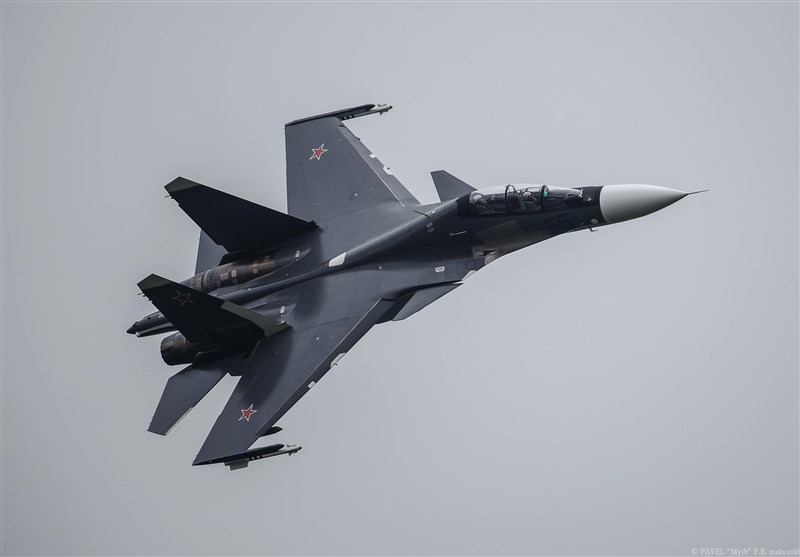
Russia Agrees to Iran’s Condition for Purchase of Su-30 Jets: DM

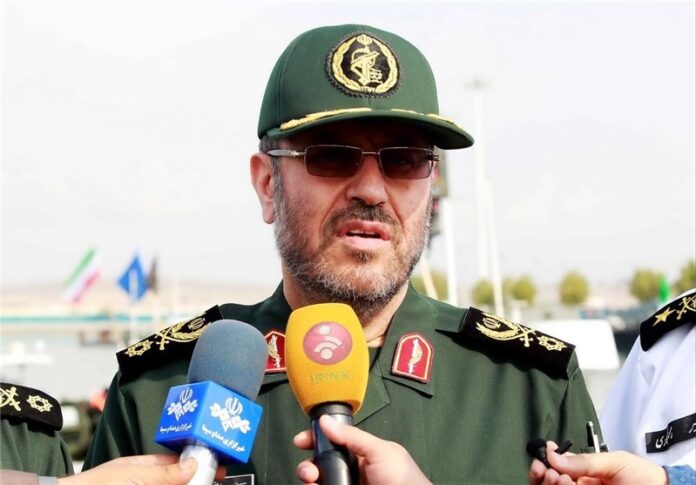
General Hossein Dehqan

Speaking to reporters in Tehran, Dehqan said the Defense Ministry has put the purchase of Su-30 fighter aircraft from Russia on the agenda.

However, any purchase of the military planes from Russia should include receiving technology and joint investment, he underlined, saying Russia accepted it in the negotiations.

Russia Agrees to Iran’s Condition for Purchase of Su-30 Jets: DM

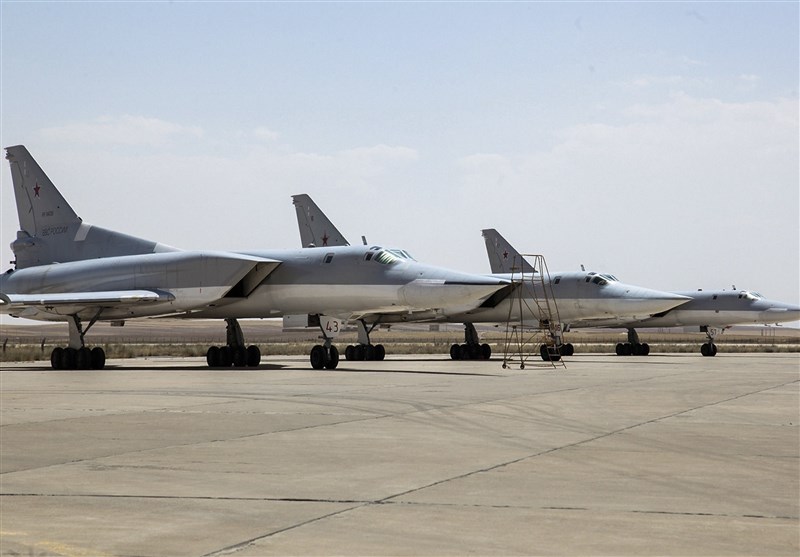
Asked about about any plans to let the Russian Air Force use Nojeh Airbase in Iran’s western province of Hamedan again, Brigadier General Dehqan said Iran and its friends, including Russia, work in cooperation to help the Syrian government in the fight against terrorism.

If necessary, he added, Iran will once again allow Russian jets to fly from Hamedan’s Nojeh Airbase.

Russia Agrees to Iran’s Condition for Purchase of Su-30 Jets: DM

He finally made it clear that in order to fulfill its defense needs, Iran will hold talks with any source capable of meeting those demands, except with the US and the Zionist regime of Israel.

In February, the Iranian defense minister had announced plans for a contract with Russia on the purchase of Sukhoi-30 jets, but had not specified how many fighter planes will be bought.

Dehqan noted then that under an agreement, Iran would be involved in the production of the aircraft.

Iran needs to “seriously focus on the air force and fighters,” he said at the time. “We are moving toward a contract. We told them that we need to be involved in the production (of the planes) as well.”

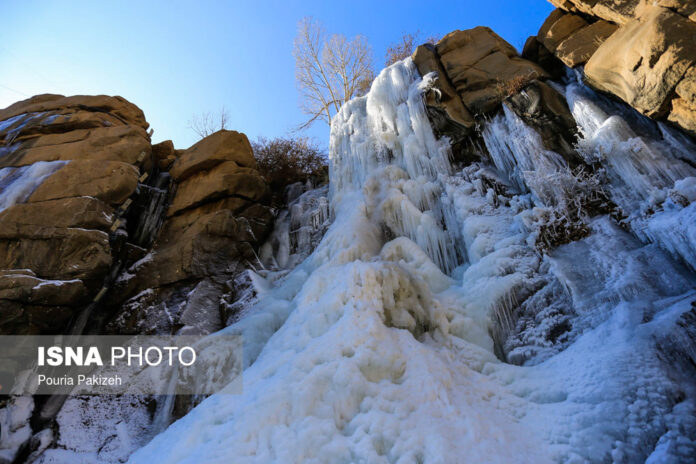
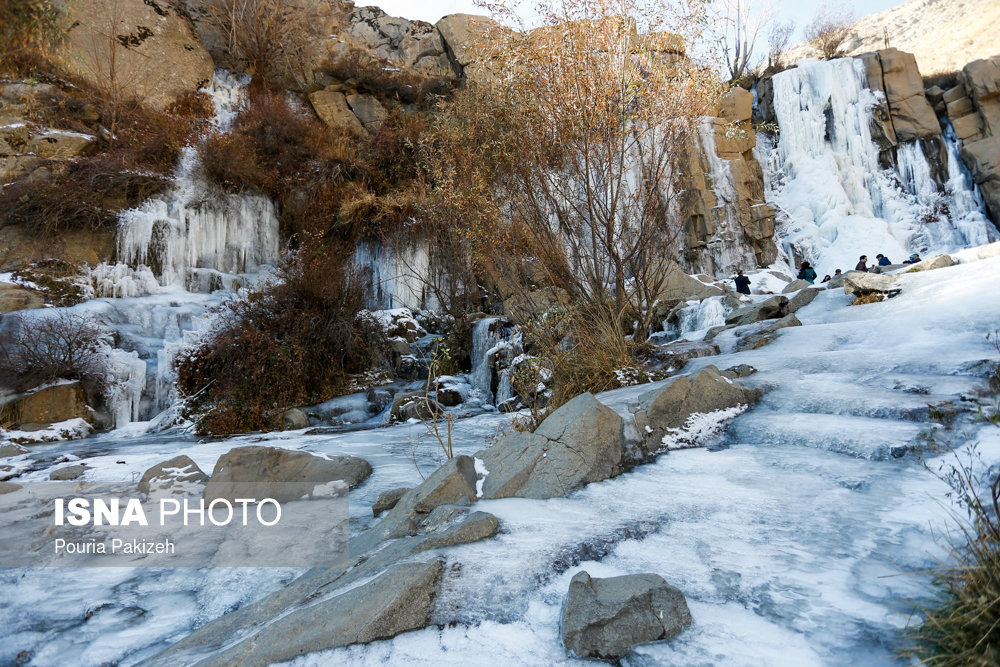
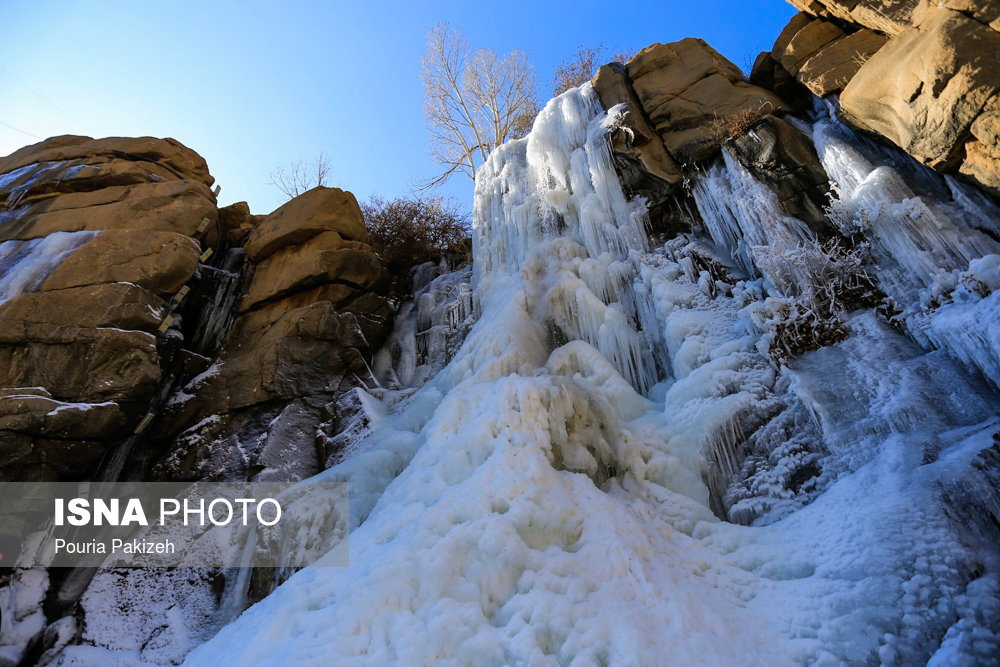
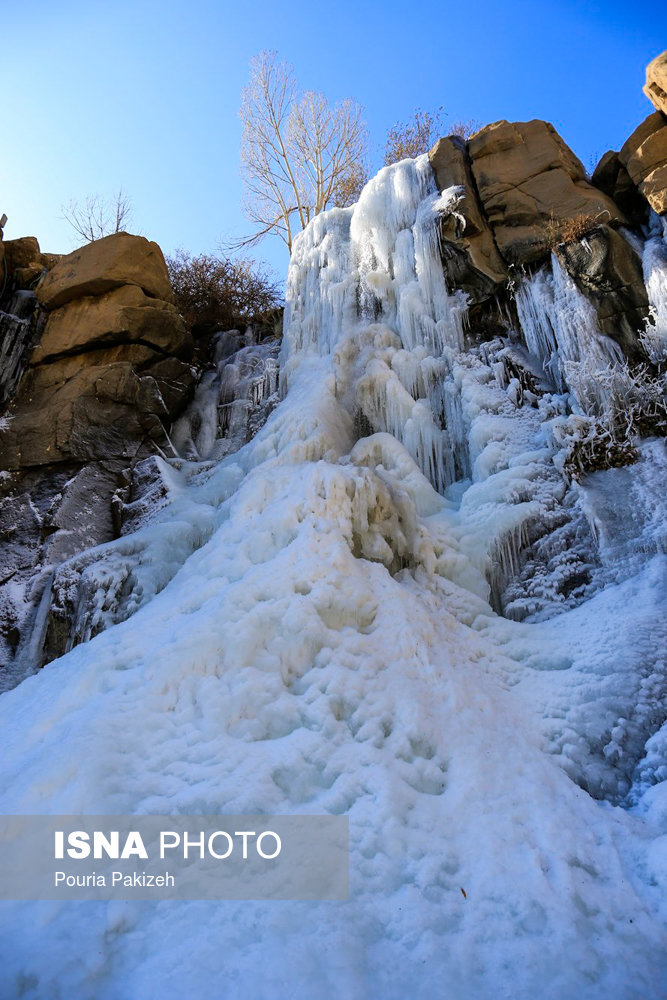
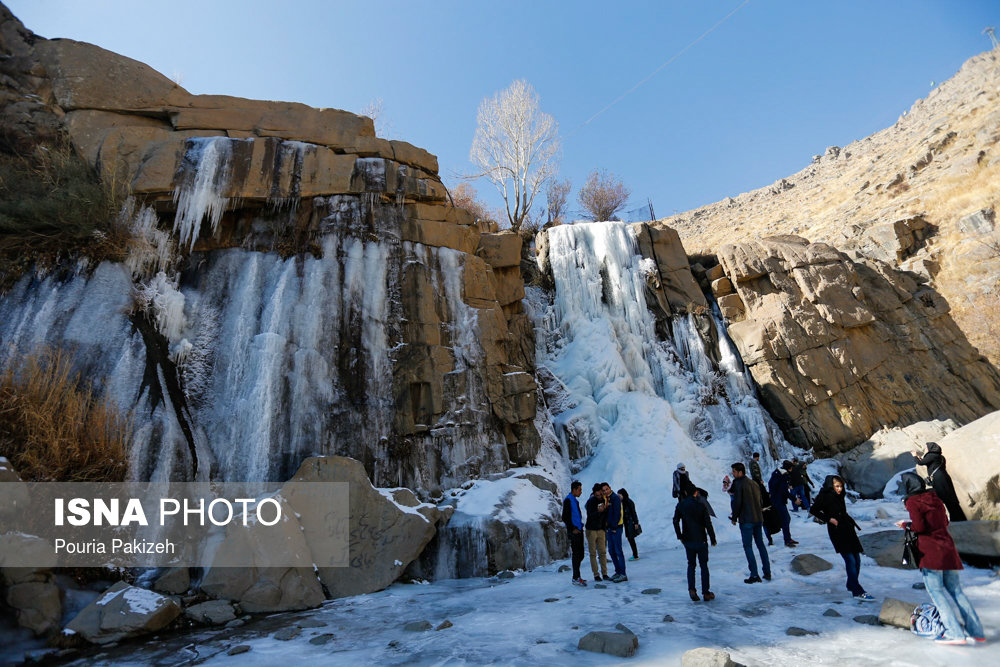
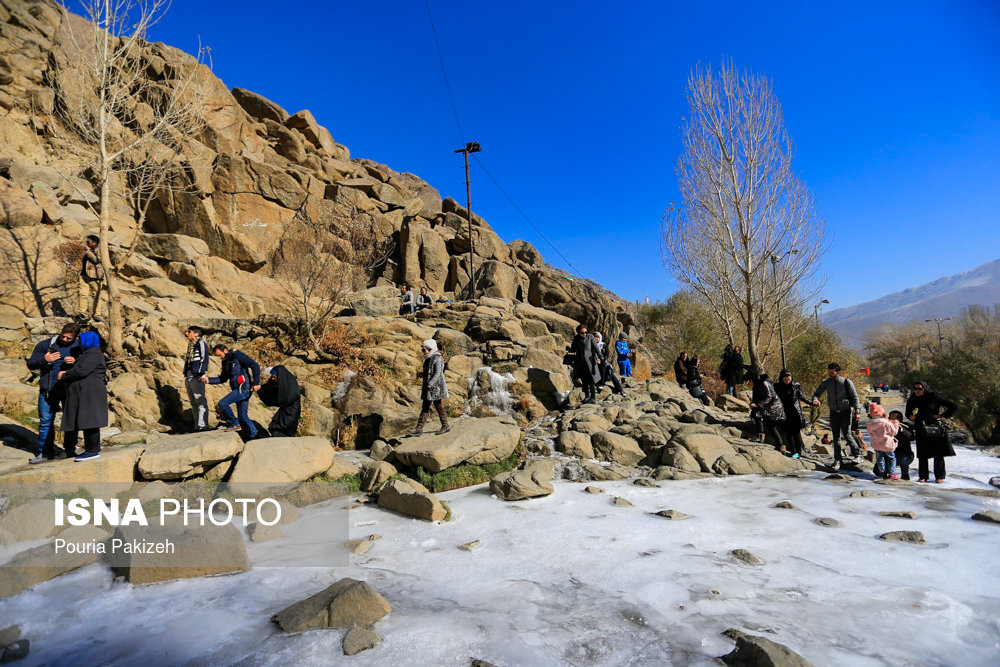
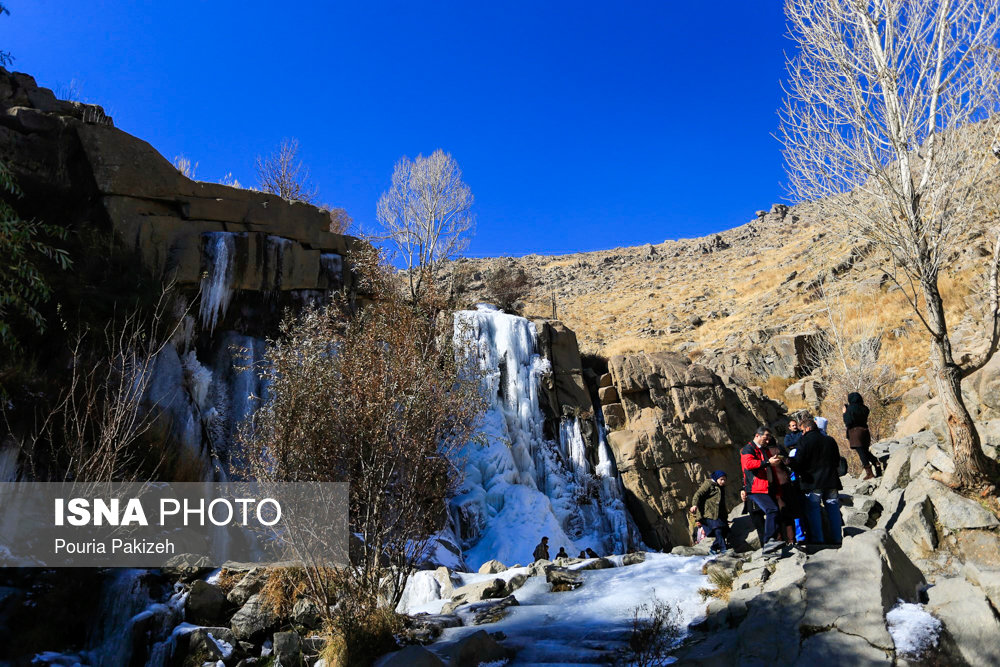
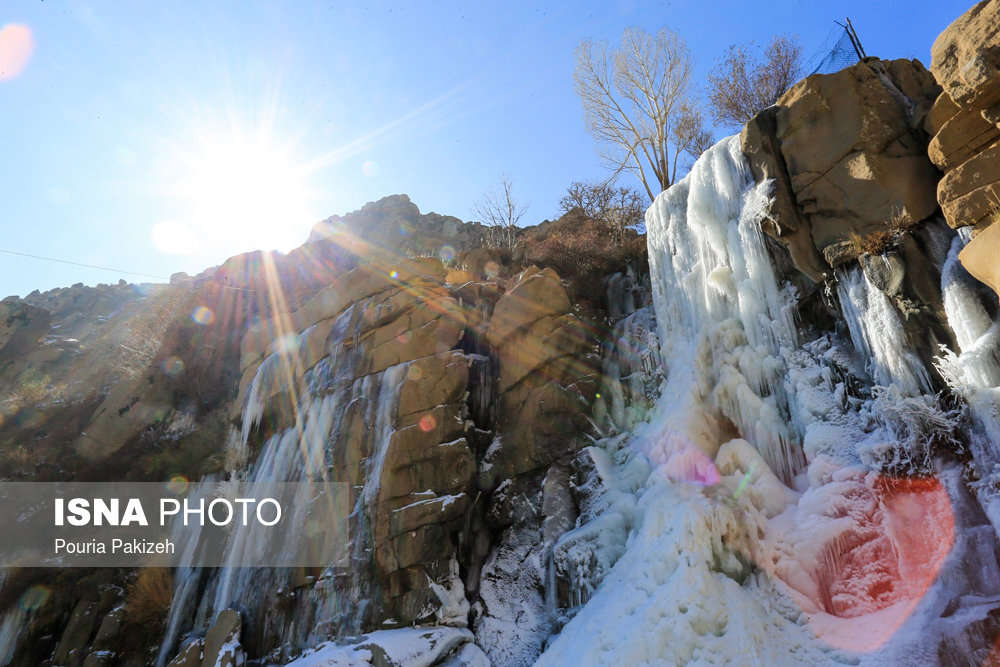
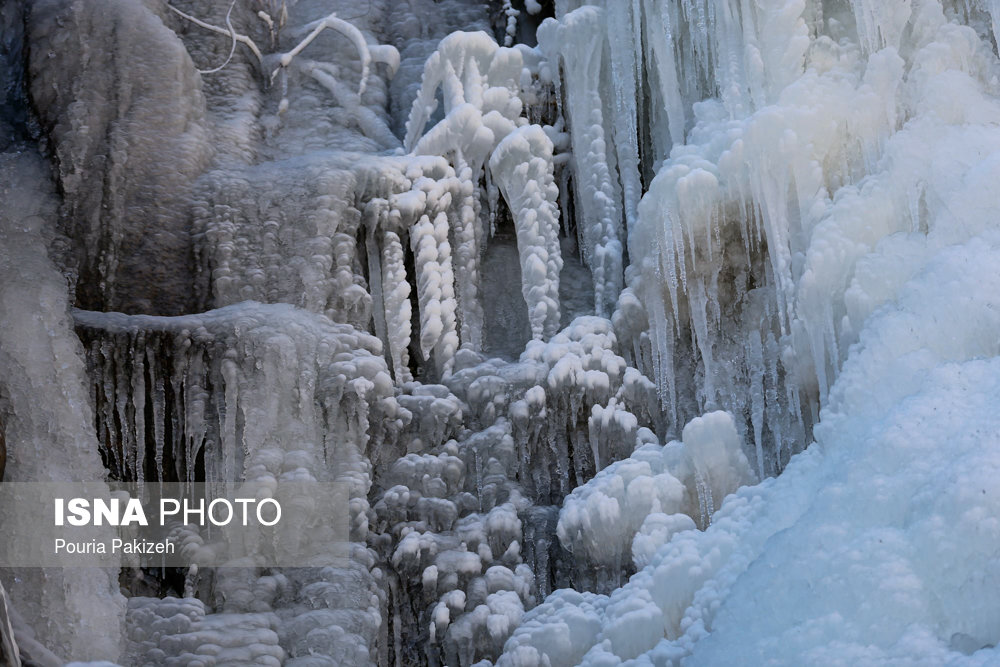
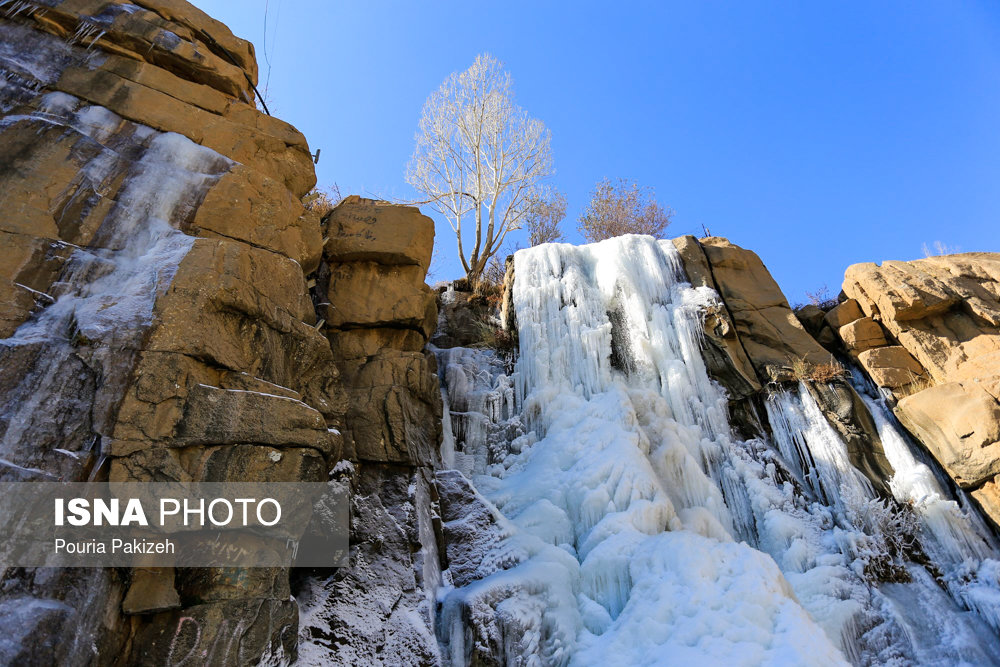
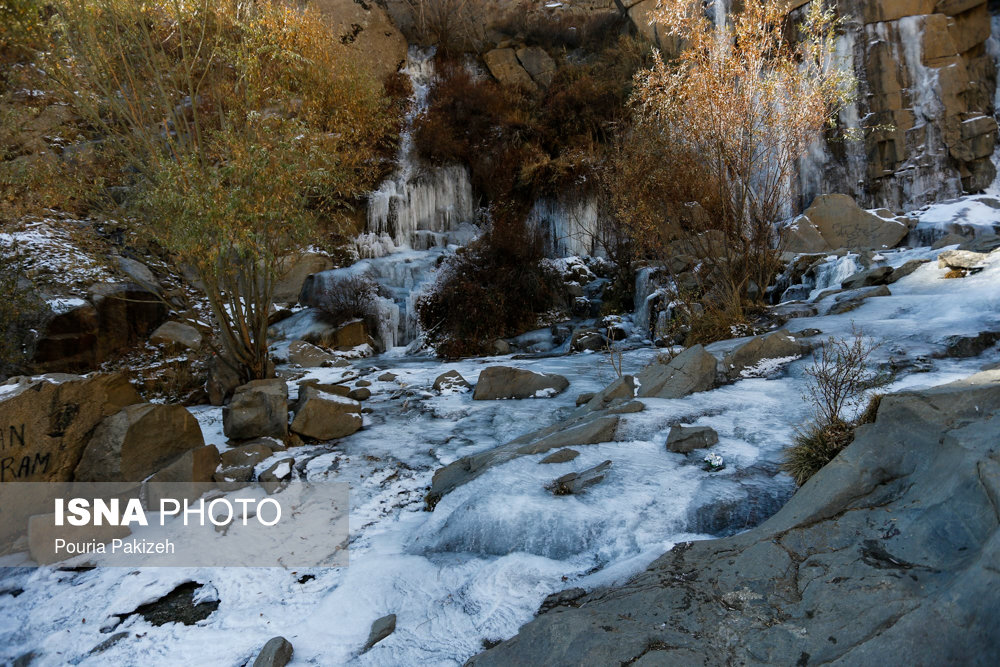
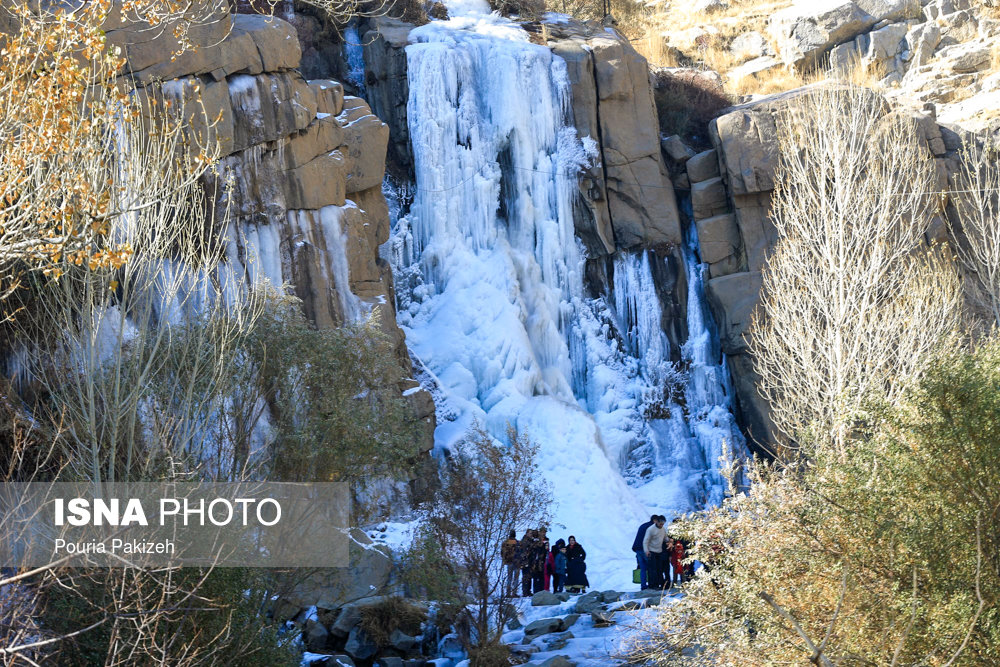
Iran`s Ganjnameh Waterfall Freezes

According to a report by ISNA, as translated by IFP, Ganjnameh Waterfall is located in Alvand Mountain skirts in Hamadan, northwest of Iran. Going through the coldest days of year, this waterfall has become frozen in sub-zero temperature.

Here are ISNA’s photos of the frozen waterfall:

Top Iraqi Cleric Says He Prays for Elimination of Anti-Iran Sanctions Every Day

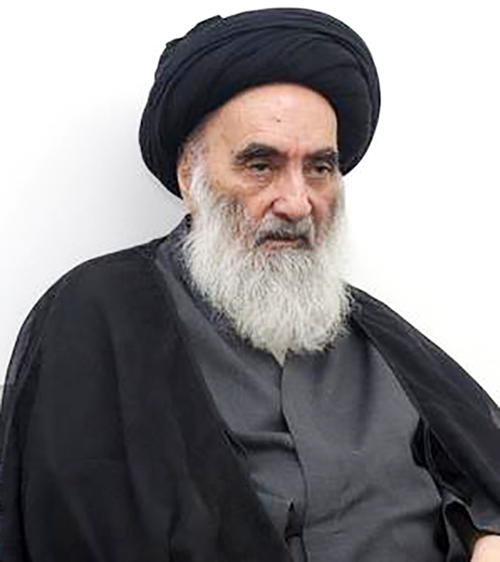
Ayatollah Sistani

According to a report by Fars, Ayatollah Sistani said, “Every day, including before the dawn prayer, I pray for all the people of Iran. And I particularly ask God, for elimination of the cruel sanctions of the West against Iran, the sanctions that are increasing every day.”

According to a report by Awd News, the top Shiite cleric in Iraq said in a recent meeting with a group of Iranians, “These sanctions which were imposed in the fields of medicine, industry, transportation and many other essential goods and services, make me sad and I pray constantly to God for their elimination.”

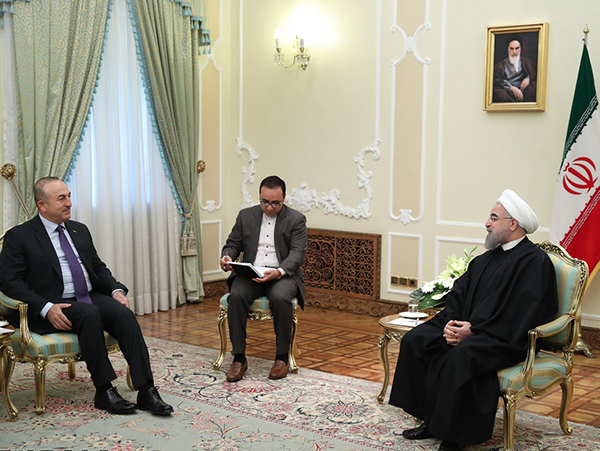
Turkish FM Travels to Iran, Meets With President Rouhani

Turkey-Iran

The top Turkish diplomat was also due to meet his Iranian counterpart Mohammad Javad Zarif later Saturday, the official IRNA news agency reported.

Iran and Turkey hold regular consultations on regional issues, notably the crises in Syria and Iraq. While differing on Syria, Ankara and Tehran are both concerned about the threat of terrorism.

Despite their differences, “officials of the two countries are looking for solutions and seeking to draw closer their points of views, especially on Iraq and Syria,” IRNA said.

Iran firmly rallied behind the Turkish government against a July coup attempt in Turkey even as many countries, including Ankara’s own allies, took their time to denounce the subversive act.

Iranian First Vice President Es’haq Jahangiri said during a visit by Turkish Minister of Economy Nihat Zeybekci to Tehran earlier this month that differences of opinion would not prevent Tehran from supporting Ankara in the face of regional threats and instability.

Iran is a main ally of President Bashar al-Assad in Syria’s war on foreign-backed terrorists while Turkey has been one of the key supporters of militants fighting to topple the Syrian government.

Iran has also joined Iraq in criticizing the Turkish military presence in Syria and northern Iraq, which they denounce as a breach of the two Arab countries’ sovereignty.