Thursday, April 23, 2026
Home Blog Page 3958

Iranian, Turkish FMs Meet in Istanbul

During the meeting on Tuesday, Zarif underlined the importance of the extraordinary meeting of the OIC’s Executive Committee at the level of foreign ministers, which will be held to discuss the issue of Palestine.

He also expressed the hope that the meeting would result in further unity among Muslim countries in countering the Zionist regime’s oppression against Palestine.

The two foreign ministers further conferred on Tehran-Ankara bilateral ties. Efforts to increase the value of trade exchanges between the two sides to $30 billion and removing the barriers to promotion of mutual cooperation were among issues discussed in the meeting.

The two sides also agreed that Iran-Turkey High Council for Strategic Cooperation will hold a meeting in Tehran in future.

Zarif and Çavuşoğlu further exchanged views on regional issues, including the Syria crisis, and stressed the need for reinforcing Astana talks on Syria peace.

Saudi Arabia Continues to Deny Syrians’ Right to Hajj

In a statement on Monday, the Syrian Ministry of Awqaf (Religious Endowments) said that the requirement to perform pilgrimage is not ensured because this duty is being “politicized by the Wahhabi Saudi authorities despite the Ministry’s repeated contacts with the Organization of Islamic Cooperation and the Saudi Ministry of Hajj in this regard through the Syrian Foreign and Expatriates Ministry.”

The statement dismissed the “political and financial exploitation” practiced by the Saudi authorities against some individuals through some tourism offices in Lebanon as they are investing “one of the great pillars of Islam” through the so-called “Syrian High Hajj Committee” which is affiliated “to the enemies of the homeland”.

Syria’s statement came after Qatar harshly criticized Saudi Arabia for politicizing the annual pilgrimage and putting restrictions on Qatari citizens flying to Mecca.

Qatar’s National Human Rights Commission (NHRC) lodged a complaint with the UN Special Rapporteur on freedom of belief and religion over what it called a “stark violation of international laws and agreement that guarantee the right to worship.”

In a statement cited by Al Jazeera, the commission said it is “extremely concerned over [Saudi Arabia] politicizing religious rituals and using [Hajj] to achieve political gains” and said it was filing another claim against Riyadh with UNESCO over the maltreatment of Qataris.

Qatar’s human rights commission also protested that Saudi Arabia has made it extremely difficult for many Qataris to reach Mecca by stipulating that they can only land at two Saudi airports – King Abdul Aziz International Airport in Jeddah and Prince Mohammed bin Abdul Aziz Airport in Medina.

However, following a Sunday meeting of the so-called Anti-Terror Quartet (ATQ) of Arab states which are embroiled in a conflict with Qatar, Saudi Foreign Minister Adel al-Jubeir lashed out at Doha, accusing it of politicizing the Hajj – the annual pilgrimage to Mecca that every Muslim has to perform at least once in their lifetime, according to RT.

Speaking following Sunday’s meeting, al-Jubeir dismissed allegations that Saudi Arabia is infringing on religious freedoms, saying it “welcomes all Muslims from around the world who visit the country for their pilgrimage.” He accused Qatar of blowing the issue out of proportion as a pretext to “sway people’s attention from the core issue at the heart of this crisis – its [Doha’s] support and funding of terrorism.”

Why Iran’s Missile Tests Don’t Violate UNSC Resolution 2231

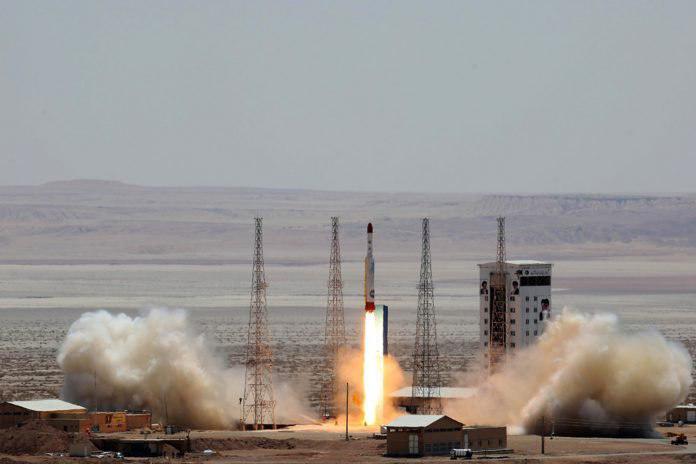
Last Thursday, Iran test-launched its Simorgh satellite carrier from the newly-established Imam Khomeini Space Centre. After the launch, the US, France, Germany, and Britain referred to the move as a violation of the United Nations Security Council Resolution 2231, which had been ratified by the UNSC in 2015 after the signing of the nuclear deal between Iran and the P5+1 group of countries.

However, Iranian officials have repeatedly rejected the claims that the country’s missile tests are illegal.

Yaser Salarian and Mahdi Khalili, two graduates of international law from the Iranian Foreign Ministry’s Faculty of International Relations, have tried to legally prove that the Islamic Republic’s missile tests do not violate the UNSC Resolution 2231.

Here is the full text of their argument:


Interpretation of UNSC resolutions and applicable law

It is fitting to note that the issue of how to properly interpret the UN Security Council resolutions is an important and critical subject of international law today. Applying the general rules of interpretation, as enshrined in the Vienna Convention on the Law of Treaties (VCLT), Articles 31 and 32, on the UNSC resolutions is a simple and ordinary way.

Michael Wood, a member of the International Law Commission, has made it clear that the VCLT Articles 31 and 32 cannot simply be applied mutatis mutandis to the interpretation of UNSC resolutions. The resolutions are not treaties, they are “unilateral pronouncements of an organ of an international organization.”

The International Court of Justice, ICJ, made these points clear in its 1971 Namibia advisory opinion, in Paragraphs 108-114. The ICJ pointed out that:

“The language of a resolution of the Security Council should be carefully analysed before a conclusion can be made as to its binding effect. In view of the nature of the powers under Article 25, the question whether they have been in fact exercised is to be determined in each case, having regard to the terms of the resolution to be interpreted, the discussions leading to it, the Charter provisions invoked and, in general, all circumstances that might assist in determining the legal consequences of the resolution of the Security Council. (Para 113- 114)”

Accordingly, the UNSC resolution should be interpreted “as per the terms of the resolution”. The UNSC uses a number of words for expressing its intention. The leading words – typically verbs occurring at the beginning of each operative paragraph of the resolutions – are critical instruments for interpretation of the resolutions.

The question of which words will indicate the Council’s intent to create a binding legal obligation depends on the leading words of the resolution.

The following table explains the amount of authority in each of the words used by the Security Council to create a legal obligation. In resolutions the gentlest leading word is “decides” and the strongest term is “demands”.

Why Iran’s Missile Tests Don’t Violate UNSC Resolution 2231“Demands”

The strongest leading word commonly used by the Security Council is “demands.” The Council uses “demands” for two purposes:

(I) First, the Council uses ‘demands’ to command an addressee to abide by its obligations existing independently in international law. In the Resolution 687 against Iraq, the UNSC used this term for adhering to “its obligations concerning servicing and repayment of its foreign debt.” In the operative paragraph 17 of Resolution 687, the Council:

“Demands that Iraq adhere scrupulously to all of its obligations concerning servicing and repayment of its foreign debt”

In the operative paragraph 4 of Resolution 403, the Council has used “demand” and referred to the obligation of cessation, which exists independently in international law:

In this resolution the Security Council:

“Demands the immediate and total cessation of all hostile acts committed against Botswana by the illegal régime in Southern Rhodesia”

(II) Secondly, the word “demand” has also been used by the Council to create new legally binding obligations. In the operative paragraph 1 of Resolution 1054, the Security Council created new legal obligation and imposed to the Government of Sudan. The Council:

“Demands that the Government of Sudan comply without further delay with the requests set out in paragraph 4 of resolution 1044 (1996)”

It is interesting to note that, when the Council intends to create legal binding obligation for an addressee or command for adhering to an already existing international legal obligation by the addressee, deploys the word “demands”.


“Calls upon”

The weakest leading word that actually instructs an addressee to perform an action is “calls upon.”

Most of the interpreters and scholars have specified the “calls upon” language as legally non-binding.

In the operative paragraph 7, section (b) of Resolution 2231, the Council says that:

 “(b) All States… are called upon to comply with paragraphs 3 and 7 of Annex B;”

And paragraphs 3 of Annex B in JCPOA stipulates that:

“Iran is called upon not to undertake any activity related to ballistic missiles designed to be capable of delivering nuclear weapons, including launches using such ballistic missile technology, until the date eight years after the JCPOA Adoption Day or until the date on which the IAEA submits a report confirming the Broader Conclusion, whichever is earlier.”

The Council has used two forms of “calls upon” in resolution 2231; (1) first of all, the Council called upon all States to comply with paragraphs 3 and 7 of Annex B, (2) secondly in the paragraphs 3 of Annex B “Iran is called upon not to undertake any activity related to ballistic missiles designed to be capable of delivering nuclear weapons, including launches using such ballistic missile technology”

However, the Council used a non-mandatory language in the operative paragraph 7 of resolution 1929, saying the Council:

“Decides that Iran shall not undertake any activity related to ballistic missiles capable of delivering nuclear weapons, including launches using ballistic missile technology, and that States shall take all necessary measures to prevent the transfer of technology or technical assistance to Iran related to such activities;”

A distinction should be established between operative paragraph 7 of resolution 1929 and the operative paragraph 7, section (b) of Resolution 2231. The Council in resolution 1929 has used a broad scope of implementation; but resolution 2231 has a narrow scope. Accordingly in 2231 States and Iran are called upon to comply with the JCPOA not the resolution. The JCPOA has a certain scope and specific areas of action.

In resolution 2231, in comparison with resolution 1929, obviously a language change has occurred. In other words, the language which has been used in resolution 2231 is hortatory. The language change from “decides that Iran shall not” in resolution 1929 to “Iran is called upon” in resolution 2231 indicates a softening in tone, and it stems from the non-legally-binding language used in resolution 2231. The obligations concerning Iran’s missile tests that were moved from operative paragraphs of resolution 1929 to the annex B of JCPOA, endorsed by resolution 2231, is on the right track. The missile concerns are not mentioned in the operative paragraphs of resolution 2231, and the JCPOA itself does not include any limits and restrictions on the Iran’s missile programs. It is clear that the JCPOA lifts missile-related sanctions without requiring Iran to limit its missile programs.

Another language change in the resolution has occurred in the issue of missiles. The UNSC Resolution 2231 refers to missiles “designed to be capable of delivering nuclear weapons,” while resolution 1929 states “capable” of such delivery. Technically it is impossible to prove that the Iran’s missile are designed for such capability.

Accordingly, if the Council intended to create new legally binding obligation in the resolution concerning Iran’s missile tests, it would use the term “Demands” rather than “Calls upon”. The Council has intentionally changed its language toward Iran’s missile test, and the issue is thus de-securitized in the view of the UN Security Council.  Hence Iran’s Missile Tests did not violate neither resolution 2231 nor the JCPOA.

Iran, South Africa Hold Joint Political Commission Meeting in Tehran

Iran, South Africa Hold Joint Political Commission Meeting in Tehran

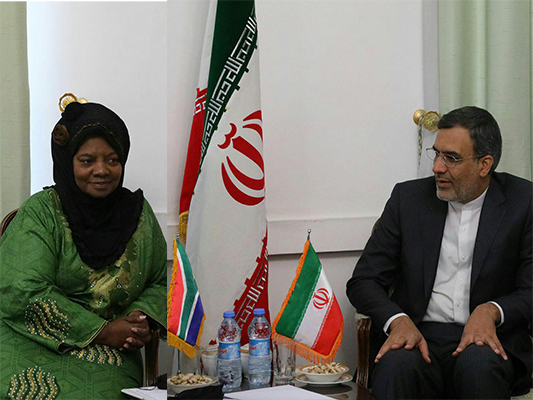
In this meeting, which was held in the presence of delegations from the two countries, economic and political cooperation between Tehran and Pretoria was discussed.

The two sides also expressed satisfaction with the growing trend of collaborations in different fields including economic and technical ones.

It was further emphasized that the remaining barriers have to be removed to prepare the ground for the forthcoming visit of the president of the Islamic Republic of Iran to Pretoria and further success of the new round of bilateral Joint Economic Commission.

In addition to bilateral issues, cooperation between the two countries in various regional and international areas were discussed.

Supporting the rights of Palestinians, opposition to the instrumental use of human rights, confrontation with terrorism and extremism, diplomatic resolution of the Syrian crisis and other regional and international issues were among other topics discussed during the meeting.

Saudi Arabia Issues Visas for Iran’s Hajj Diplomatic Team

There is no problem for members of the Foreign Ministry’s delegation to be stationed in the holy cities of Mecca and Medina, Salehi Amiri told IRNA on Monday.

“All necessary preparations for this year’s Hajj have been made and we hope that we will witness a calm and dignified Hajj given the promises made by Saudi Arabia,” he said.

He anticipated successful Hajj rituals for Iranians with regard to all strategies drawn up by the Islamic Republic.

Iran on Sunday flied a first group of its pilgrims for Hajj in Saudi Arabia since the kingdom ruptured diplomatic ties with the Islamic Republic and withheld cooperation towards enabling Iranians to attend the rituals.

Riyadh cut its ties with Tehran in early 2016 after violent protests in front of its Iran-based diplomatic missions against the kingdom’s earlier execution of leading Saudi Shia cleric Sheikh Nimr al-Nimr. It then prevented Iranians from joining the religiously-momentous rituals that year by refusing to set up an ad hoc mechanism enabling their travel to the kingdom.

A year earlier, a deadly human crush had occurred during Hajj rituals in Mina, near the Saudi holy city of Mecca, killing thousands of pilgrims, including hundreds of Iranians. The incident had also cast doubt on the kingdom’s efficiency in hosting the rituals.

In January, however, Iran said it had been sent an invite by Saudi Arabia announcing the latter’s willingness to host Iranian pilgrims.

Earlier in July, Salehi Amiri said Riyadh had provided “written assurances” that it would meet all of Tehran’s conditions with regard to ensuring security for Iranian pilgrims in the upcoming Hajj ceremony.

Tight Security Measures Planned for Iran President’s Inauguration Day

Considering the large number of officials and foreign dignitaries attending the swearing-in ceremony, the level of security at the Parliament’s premises will be raised to ‘critical’, Deputy Interior Minister for Security Affairs Hossein Zolfaqari said on Monday.

He said various security forces, including the Islamic Revolution Guards Corps (IRGC), Police, Intelligence Ministry and Air Defense have been assigned tasks for a safe ceremony.

The swearing-in ceremony for President Rouhani will be held in the Parliament on August 5.

An advisor to the foreign minister told Tasnim on Monday that officials representing around 100 countries are scheduled to take part in the event.

On June 7, terrorists launched simultaneous attacks on Iran’s parliament building in downtown Tehran and on the mausoleum of the late founder of the Islamic Republic Imam Khomeini.

The Daesh (ISIL) terrorist group claimed responsibility for the attacks, which killed 17 people and wounded more than 40.

All five gunmen involved in the attacks were killed by security forces.

Fortune Telling: A Booming Business in Iran Cyberspace

Fortune Telling: A Booming Business in Iran Cyberspace

The Persian-language Jame Jam newspaper has, in an article, elaborated on the thriving business of fortune-tellers in the Iranian cyberspace. The following is the full text of the piece:

Fortune tellers and geomancers have tiptoed into the virtual space. Their number as well as the number of their fans is growing. Their audiences are interested to know what future holds, and this is exactly the weak point that fortune-tellers cash in on.

Psychics have had pages of their own on Instagram for quite some time with large numbers of followers. They have channels and groups on Telegram, too. They also advertise their work in other channels and groups which have a lot of fans. They tell you about the unknown future, and their advertisements easily reach users to become their fans.


A Quick Search in Virtual Space and It’s Done

It is not difficult to find modern fortune-tellers, who have updated themselves in tandem with science and technology, and who offer their services online on the Internet and social media. All you have to do is search the phrase “fortune telling” on Instagram. Then you will get pages with a considerable number of followers, from 10 to 131 thousand.

Fortune-tellers working in the virtual space have a whole variety of services to offer: Tarot reading, coffee reading, card reading, Oracle reading, Madame Lenormand reading! Some fortune-tellers break spells, too. They make the beloved return to the lover, solve problems, and even guarantee that two people match each other based on the positions of stars.


Online Fortune-Tellers’ Business Booming

They offer mobile phone numbers or Telegram links to the public to contact them.

We call one of these numbers. A young lady answers and says she is too busy and cannot accept any new clients for the next 15 days!

After our insistence, she tells us the list of prices: “Coffee reading Rls.350,000, Tarot reading Rls.450,000 – coffee and Tarot reading together Rls.500,000.” Then she says, “If you want to know whether it is good or not to do something, transfer Rls.200,000 to my bank card No. … in the name of …, send me a photo of the receipt, and wait for your turn. Then contact me again on this number, I’ll read your fortune while I’m on the phone and tell you whether or not it would be advisable to do what you have in mind.”

The next number belongs to another young lady who claims she can break the jinx and find love for people. On her Instagram page, you may find lots of screenshots of her conversations with her clients for whom she claims she has been able to find a partner for marriage. She asks for Rls.1,000,000 to open up the gateways to happiness for those looking for a spouse! Just Rls.1,000,000!


Cyberspace: An Assist to Offenders

But how is it that people involved in these sorts of jobs have rushed to the cyberspace? We put the question to Ja’far Bai, the former head of the Judiciary’s department responsible for social affairs and preventing social maladies.

“People working in these fields are not allowed to work in the real world and face limitations to offering their services. Now the virtual space has given them the chance to work,” says the sociopathologist.

“We are witnessing that the virtual space has provided them with an all-out organized opportunity, which serves as an assist to them to render their services. They take advantage of this chance, play it safe and usually do not swallow the bait,” he said.

He says the way to tackle the social malady is to focus on fortune-tellers’ target groups.

“In my idea, it would be hard to counter banned activities such as fortune telling, selling alcoholic beverages, etc. in the virtual space. But if we focus on their target groups, we will naturally achieve better results. The reason is when there is no demand, there is no supply, either.”


Profiteers Cashing in on Laxity of Rules in Virtual Space

The great demand for the services offered by banned professions in the virtual space can have different reasons. Aziz Najafpour, a cyberspace expert, says the key reason is the way that the virtual space is managed.

“The virtual space is a space where our domination over it has not been stabilized; we have not yet been able to clarify, stabilize and put into effect our legal, economic, cultural and …rules in the space; as a result, the virtual space turns into a place for crimes and offenses, which, will gradually poison positive economic, social, political, cultural and … activities as well,” he says.

Hassan Norouzi, the spokesperson for the Iranian Parliament’s Judicial and Legal Commission, has also weighed in on the violations committed in the virtual space by those doing banned jobs.

“Since all these activities are public and their consequences affect the whole society, they are considered offenses; so, even if no one has filed a complaint against them, it is possible to sue them. The prosecutor and public prosecutor can file a lawsuit against them. Even the Ministry of Communications and Information Technology can do it.”


Cyber-Police Monitoring Offences in Virtual Space

Every now and then, newspapers and news agencies carry news of cyber-charlatans being apprehended, among them fortune-tellers and geomancers. The news reports show despite the laxity of rules on activities in the virtual space, the Cyber-police have, as a legal entity, shouldered part of the responsibility in this regard.

“Under the law, any action regarded as an offense or crime in the real world is also considered the same in the cyberspace; accordingly, the Cyber-police have a duty to monitor, control and deal with such activities, and they are discharging this responsibility at the moment,” says Colonel Javad Jahanshiri, the Cyber-police chief in the northeastern Iranian province of Khorasan Razavi.

Iran FM Due in Istanbul to Attend OIC Meeting on Al-Quds

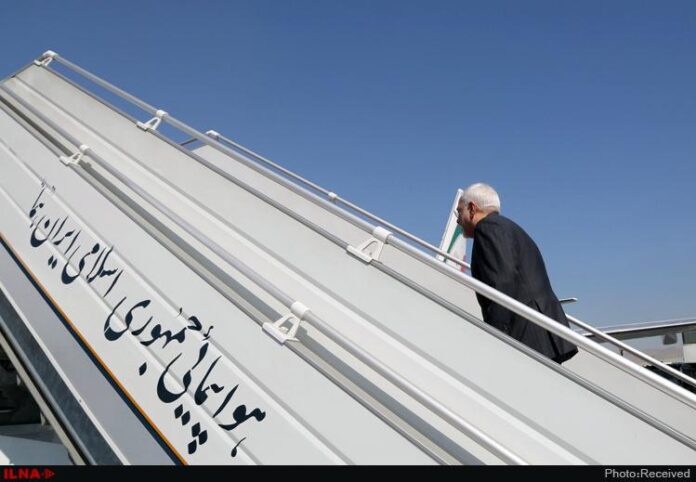
Foreign Ministry Spokesman Bahram Qassemi announced Zarif’s plan to attend the OIC meeting and said, “The need for consultation and cooperation among Muslim countries is now felt more than ever in the wake of the recent developments in the occupied territories and the increased pressure on Palestinian people, particularly in Al-Quds.”

“Islamic countries should never forget the fact that, despite certain disagreements, Palestine is the top priority of Muslim world,” Qassemi noted on Monday.

“The issue [of Palestine] will not be resolved unless the Islamic society (Ummah) maintains its unity and exerts pressure on the occupying regime of Israel,” he added.

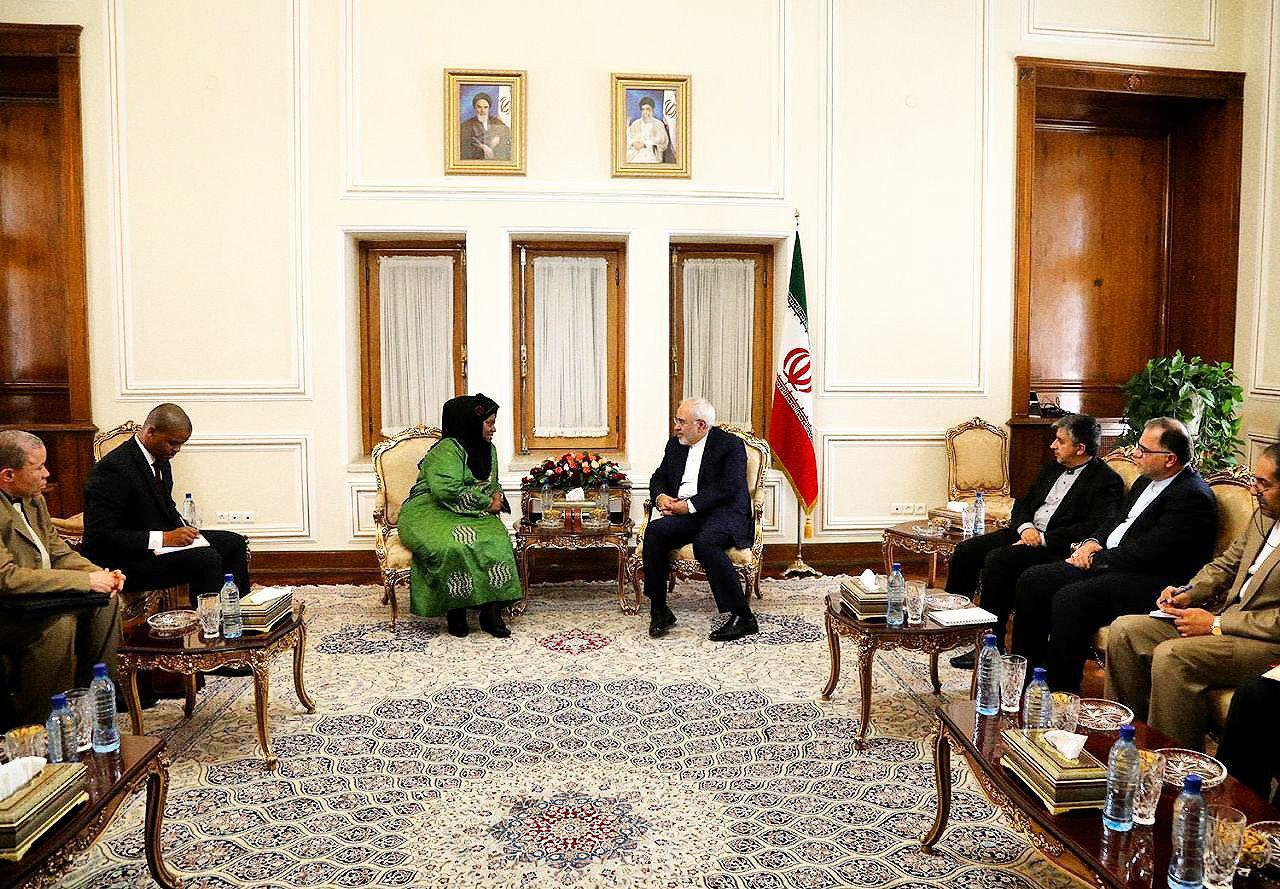
Iran, South Africa Call for Promotion of Bilateral Ties

Iran, South Africa Call for Promotion of Bilateral Ties 1

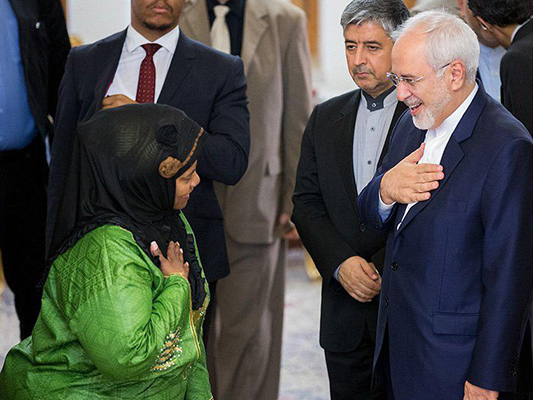
During the meeting, Zarif expressed the hope that the Joint Commission for Iran-South Africa mutual cooperation would hold a meeting in an appropriate time to deepen bilateral ties between the two sides.

Iran, South Africa Call for Promotion of Bilateral TiesThe Iranian top diplomat also noted that the reinforcement of Tehran-Pretoria banking cooperation can pave the way for development of bilateral ties in other fields.

Nomaindiya Mfeketo, for her part, underlined South Africa’s determination to enhance its ties with the Islamic Republic of Iran, and expressed the hope that the grounds will be prepared for South African president’s visit to Tehran.

She also noted that the two sides will focus on issues of mutual interest, including the financing of projects, as soon as the Joint Commission holds its meeting.

Iran State TV Correspondent Wounded in Kabul Attack

Abadi who was on his way to the accident site has been injured in the leg, according to IRNA reporter in Kabul.

Media reports, however, later added that he is in stable conditions.

Four blasts rocked centre of Kabul which is one of the most crowded areas of the city on Monday.

Iraqi embassy was particularly targeted, but no death has been reported yet.

The ISIS terrorist group later claimed responsibility for the attack on the Iraqi mission.