Saturday, April 25, 2026
Home Blog Page 3064

Iran Says May Leave NPT If JCPOA Parties Fail to Fulfill Commitments

Iran Says May Leave NPT If JCPOA Parties Fail to Fulfill Commitments

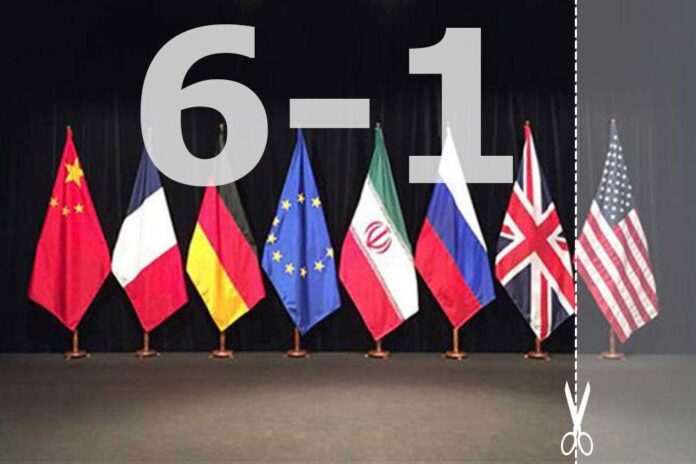
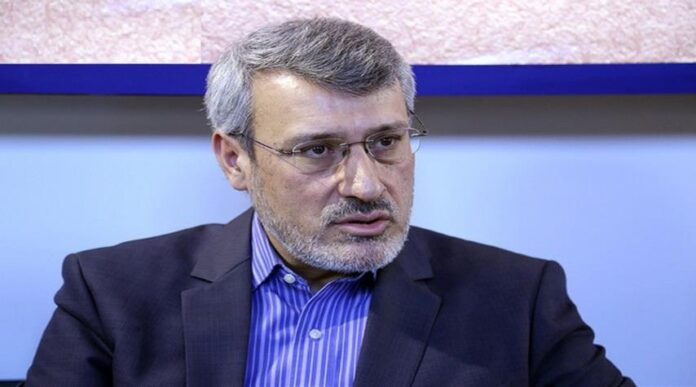
Iran’s resuming of uranium enrichment will be followed by similar steps every two months unless European states do more to save the country’s nuclear deal with international powers, Hamid Baeidinejad has declared.

He also warned that influential figures in Iran are advocating leaving the Nuclear Non-Proliferation Treaty in response to perceived failure by European signatories to fulfil obligations under the treaty and crippling sanctions imposed by the Trump administration.

“We cannot continue to fulfil one-sidedly so we have taken these decisions. If the other does not take the warning seriously, maybe through the use of INSTEX we shall be in a very difficult situation, all of us. But we hope with these steps we are conveying a strong, real and serious message to implement the nuclear deal,” Baeidinejad said.

“We gave ample time to our partners and then we adopted this policy. In two months we will absolutely take the fifth step after analyzing the situation. Like the other steps it will be very calculated and measured. So the ball is in their court, we hope to resolve the situation.”

“These steps will be every two months, this has been decided at the highest level. I understand the concern that after more of these steps we run out of initiatives and have steps which are not easily reversible and this will affect the implementation of the JCPOA, that is why we are asking our partners to fulfil their obligations and resolve this issue and protect the JCPOA.”

Speaking of internal pressure within Iran to pull out of the Treaty of the Non-Proliferation of Nuclear Weapons (NPT), the ambassador said the treaty is at risk of being in “total jeopardy” as it comes up for review next year.

Israel, India and Pakistan are outside the NPT and North Korea is continuing on its path of acquiring a nuclear arsenal, he wanted to point out.

“It is viewed in some circles, some personalities in Iran that we are not benefiting from membership of the NPT at the moment.”

“That is not the policy of the government. President [Hassan] Rouhani and the government of Iran are trying their best to convince the people, all the people and important personalities that it would not be in the interest of Iran to withdraw from the NPT.”

Baeidinejad acknowledged that the Leader of Iran’s Islamic Revolution Ayatollah Ali Khamenei, has issued a fatwa, or religious order, against the country having nuclear weapons.

“But unfortunately after problems with the JCPOA more and more people are listening to arguments to leave the NPT. We have renounced nuclear weapons, but the US is pressuring us and putting impediments on the path of us getting peaceful nuclear technology.  So they don’t see any positives.”

Iran does not see that anything can be gained by dialogue with the US as long as the Trump administration continues with its current policies, said the ambassador.

“There is no interest in talking to the US. They have a hostile policy towards Iran, there is no sincerity in what they say, they are seeking the collapse of Iranian economy, of Iranian society.

“At one stage they said they want to have the same policy towards us as they have towards toward North Korea. But there have been no fruits from that at all. The US policy is one of incoherence.”
Iran Has Capacity to Enrich Uranium Up to 60%: Spokesman

Iran Has Capacity to Enrich Uranium Up to 60% Spokesman

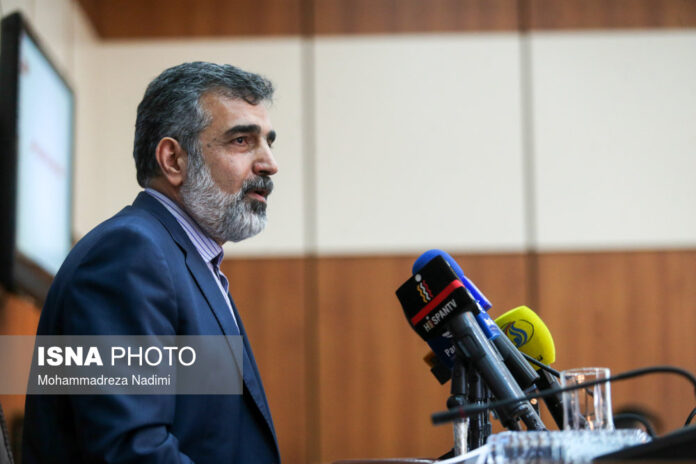
While Israel, the US, and some Persian Gulf states have claimed that Iran has kept enrichment at 5% level, Iran has the capacity of increasing its enrichment level up to 60 percent, Behrouz Kamalvandi said in a press conference at Fordow nuclear plant on Saturday.

He further noted that the transparency of the actions and activities of each country is verified by the International Atomic Energy Agency (IAEA).

“We have called on the agency to monitor the steps, and their inspectors will see the samples tomorrow and report the final verification,” continued Kamalvandi.

He also said that November 10th is an important day for the Iranian nuclear industry. “God willing, the second phase of Bushehr power plant will be operational tomorrow and despite all the pressures we will enter the next phase of the third plant after that.”

Although the US does not want Iran to make progress in the nuclear field, it put the name of the Bushehr nuclear power plant in its sanctions list. However, these moves show that good steps have been taken in the nuclear field, and by 2025 the plant will be connected to the grid, and two years later a third plant will be connected, he underlined.

Iran has resumed uranium enrichment at its Fordow nuclear plant, stepping further away from its 2015 nuclear deal with world powers after the United States pulled out of it.

Addressing a press conference on Saturday, the spokesman of the Atomic Energy Organisation of Iran said, the operation began after the transfer of 2,000 kilograms of UF6 from Natanz nuclear facility to Fordow – near the city of Qom, where 1,044 centrifuges are installed.

A Look at Iranian Newspaper Front Pages on November 9

A Look at Iranian Newspaper Front Pages on November 19

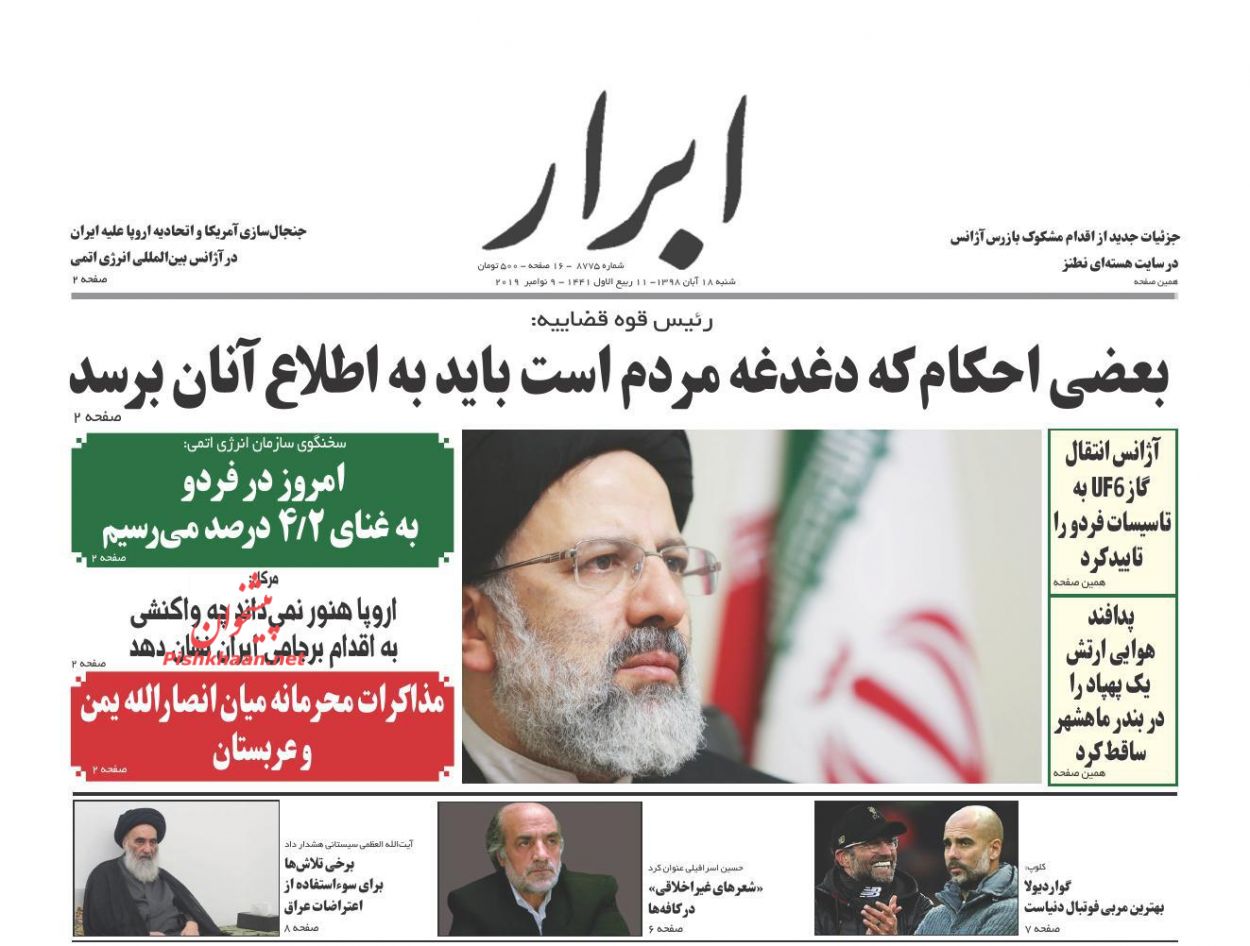
Abrar:
1- US, EU Making Fuss against Iran at IAEA
2- IAEA Confirms Transfer of UF6 to Fordow Facility
3- Iranian Spokesman: We’ll Reach 4.2-Percent Enrichment Saturday

A Look at Iranian Newspaper Front Pages on November 9


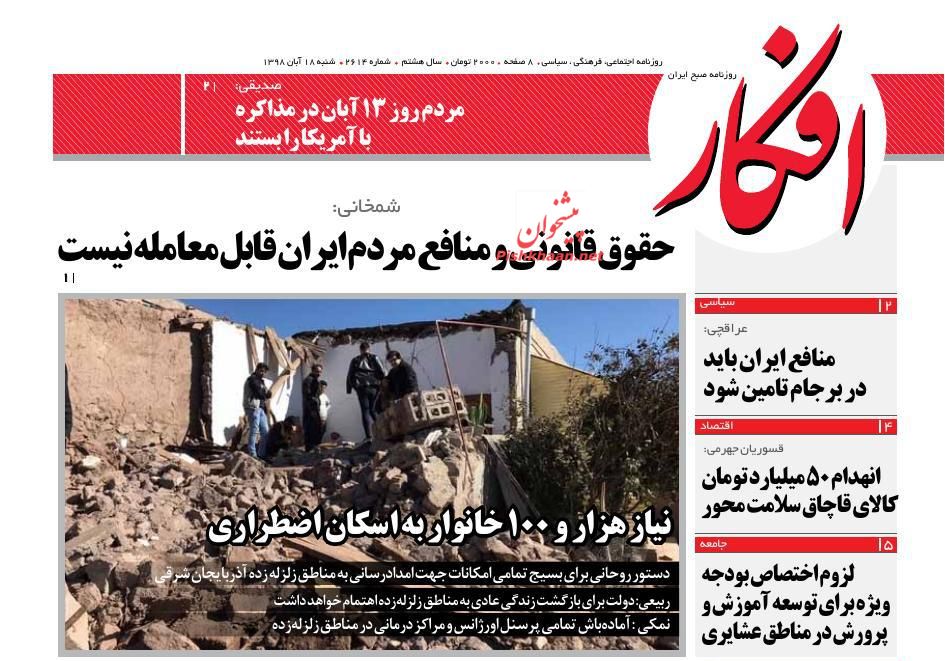
Afkar:
1- Araqchi: Iran’s Interests in JCPOA Must Be Met
2- Shamkhani: Legal Rights, Interests of Iranian People Not Negotiable

A Look at Iranian Newspaper Front Pages on November 9


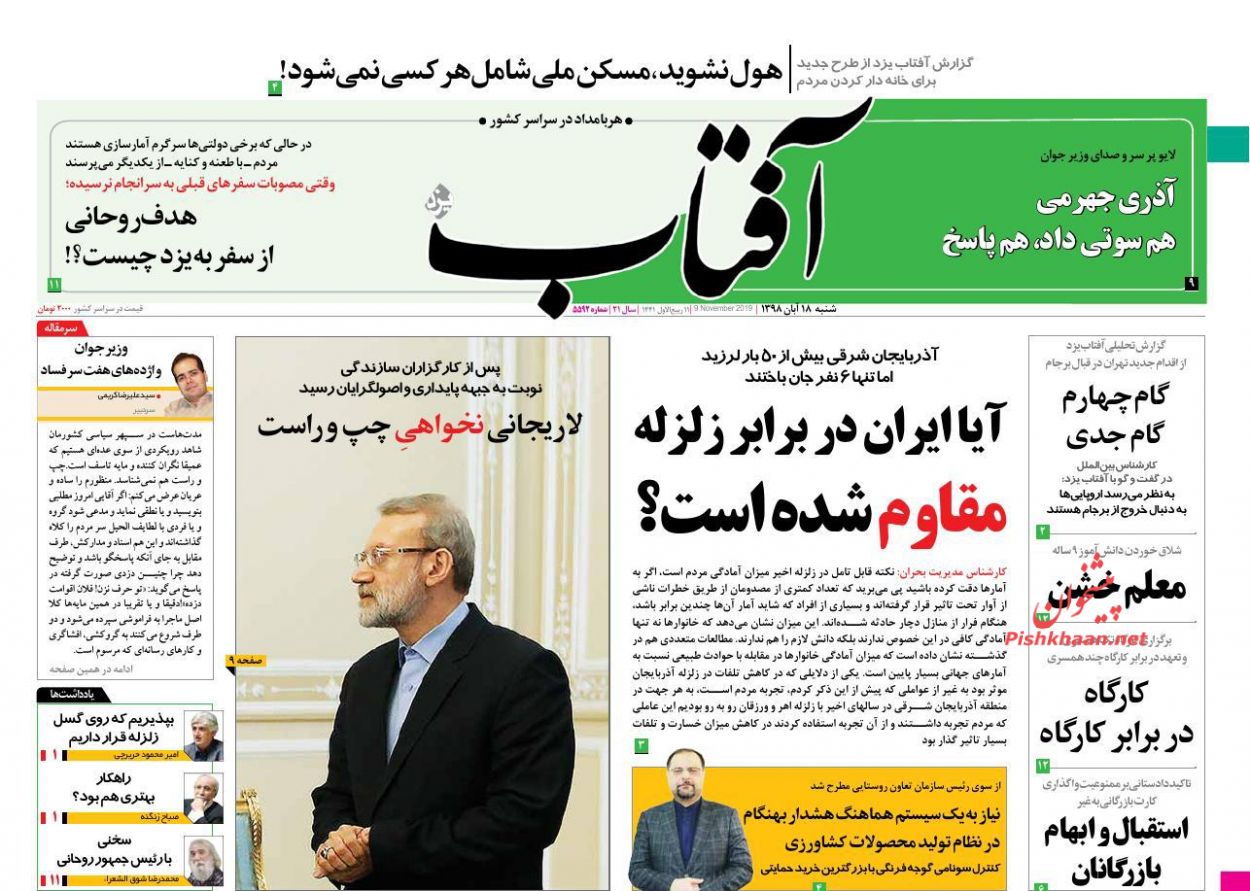
Aftab-e Yazd:
1- Has Iran Become Resistant to Earthquake?
* East Azarbaijan Jolted for Over 50 Times, but Only Six Died

A Look at Iranian Newspaper Front Pages on November 9


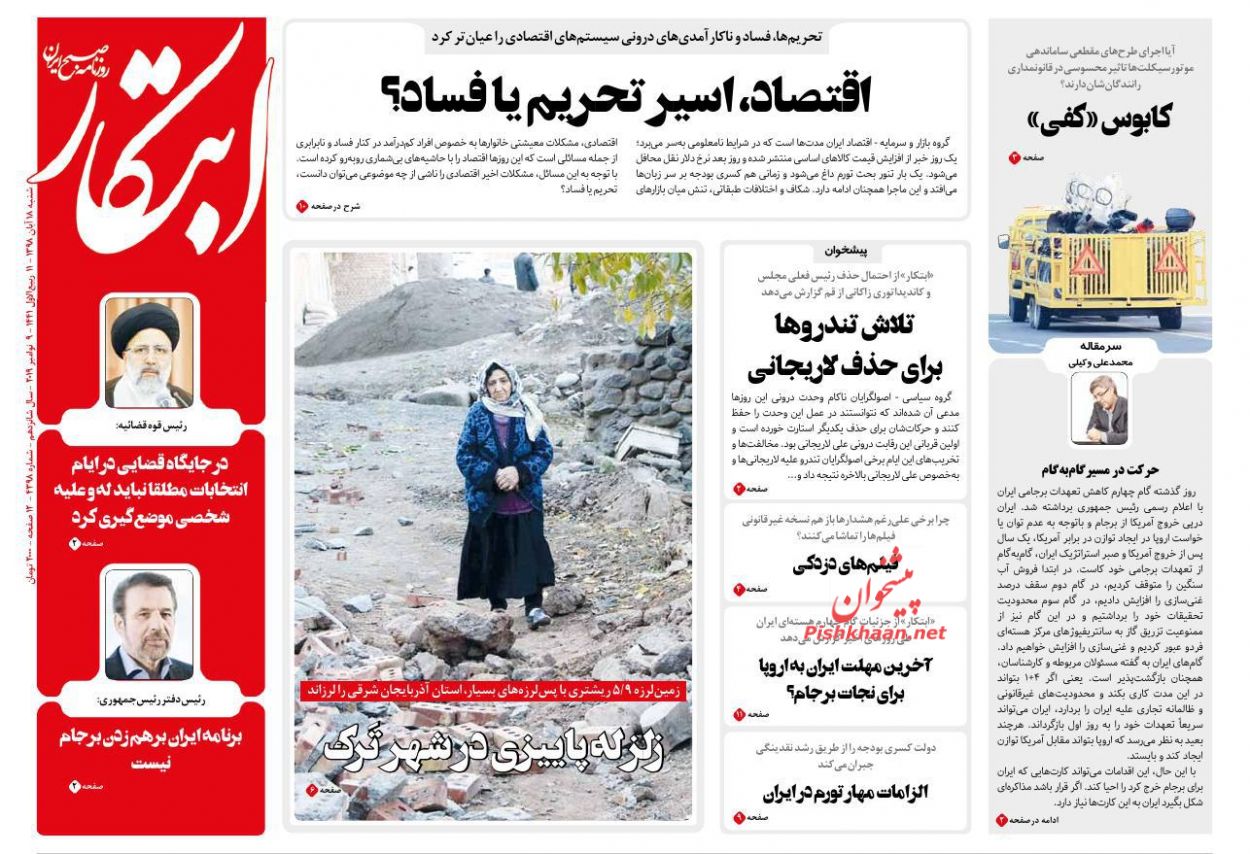
Ebtekar:
1- Autumn Quake in Tark Town
2- Iran’s Last Ultimatum to Europe for Saving JCPOA?
3- Rouhani’s Chief of Staff: Scrapping JCPOA Not Iran’s Plan

A Look at Iranian Newspaper Front Pages on November 9


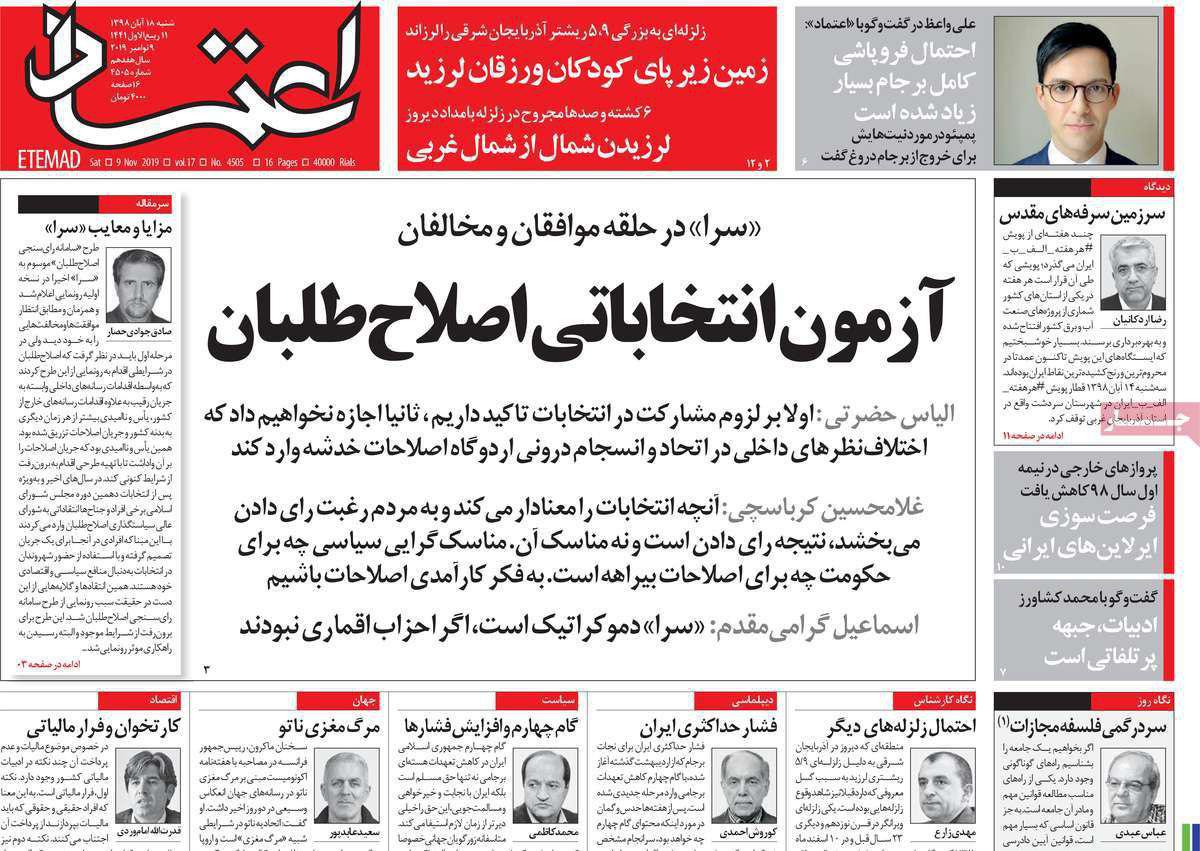
Etemad:
1- Ali Vaez: JCPOA’s Collapse Very Likely Now
2- Iran Shaking from North to North-West

A Look at Iranian Newspaper Front Pages on November 9


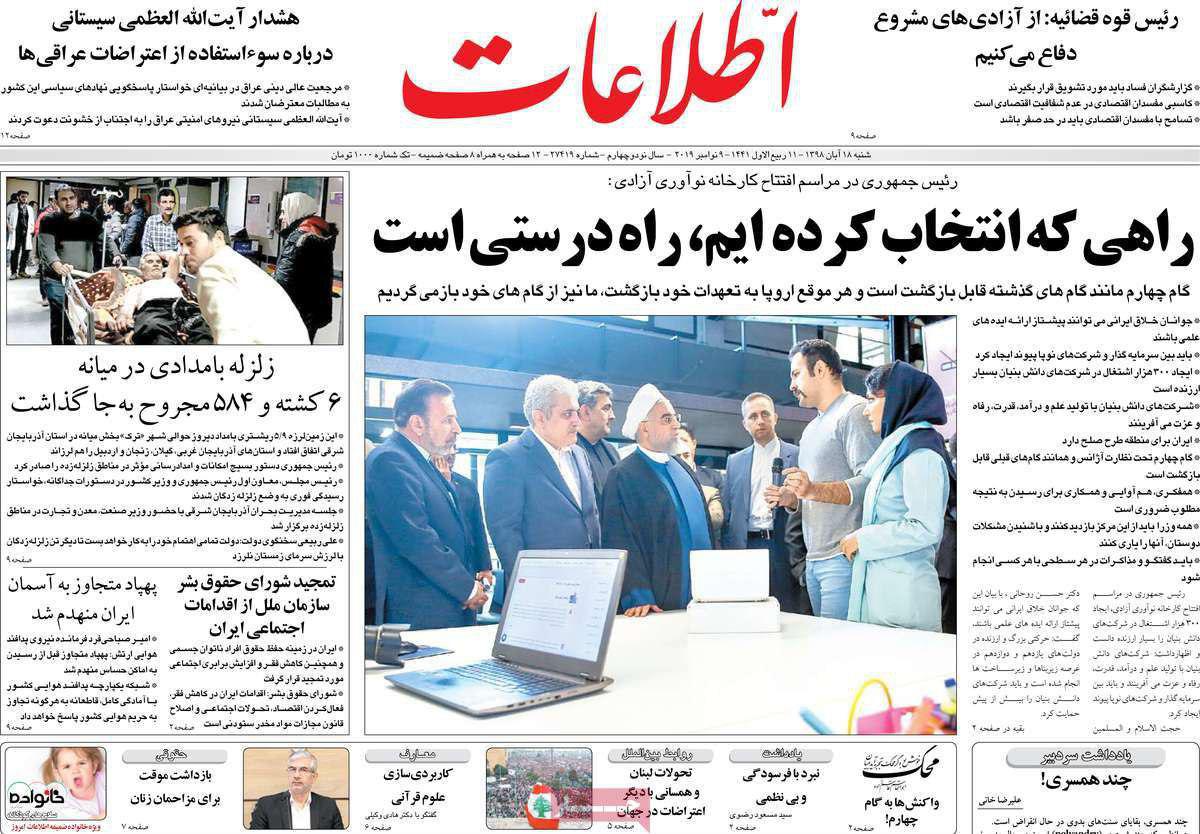
Ettela’at:
1- Judiciary Chief: We Defend Our Legitimate Freedoms
2- UN Human Rights Council Praises Iran’s Social Measures

A Look at Iranian Newspaper Front Pages on November 9


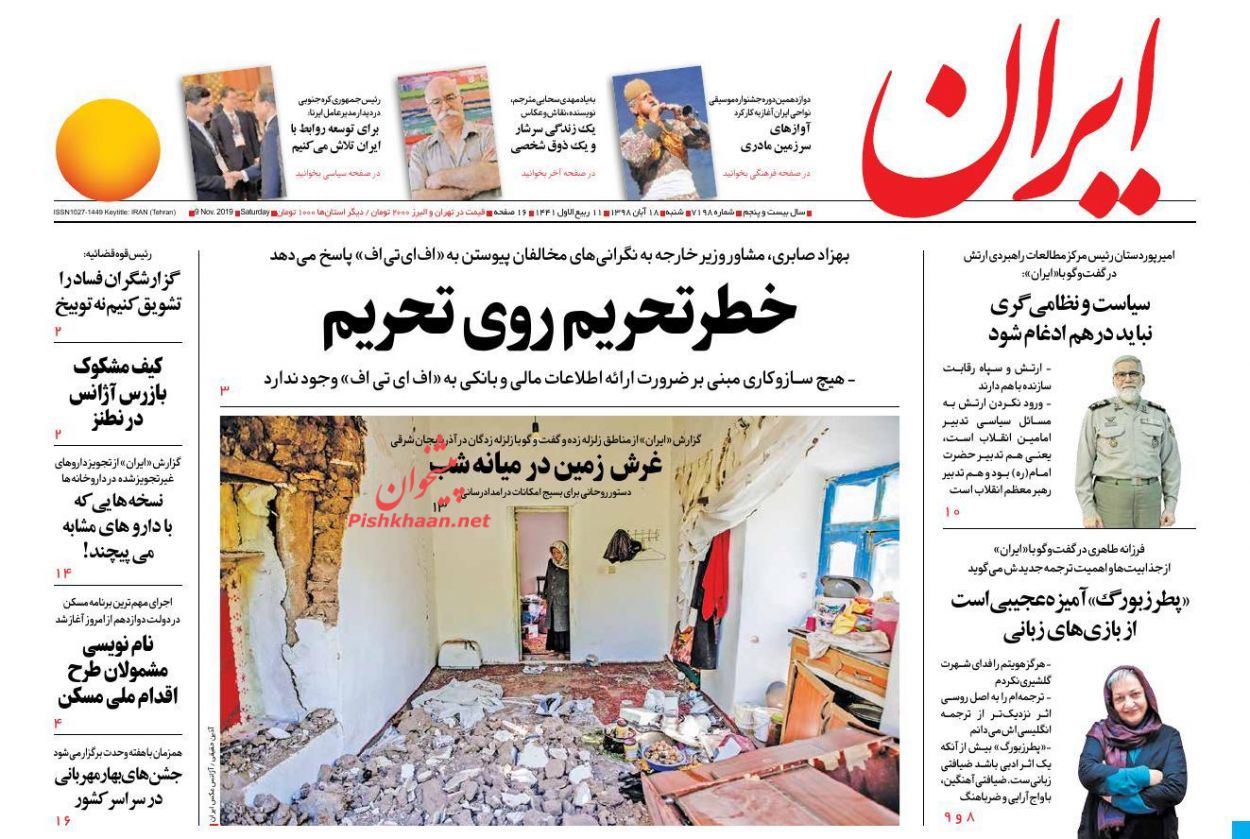
Iran:
1- Threat of More Sanctions with Failure to Join FATF
2- IAEA Inspector’s Suspicious Bag in Natanz

A Look at Iranian Newspaper Front Pages on November 9


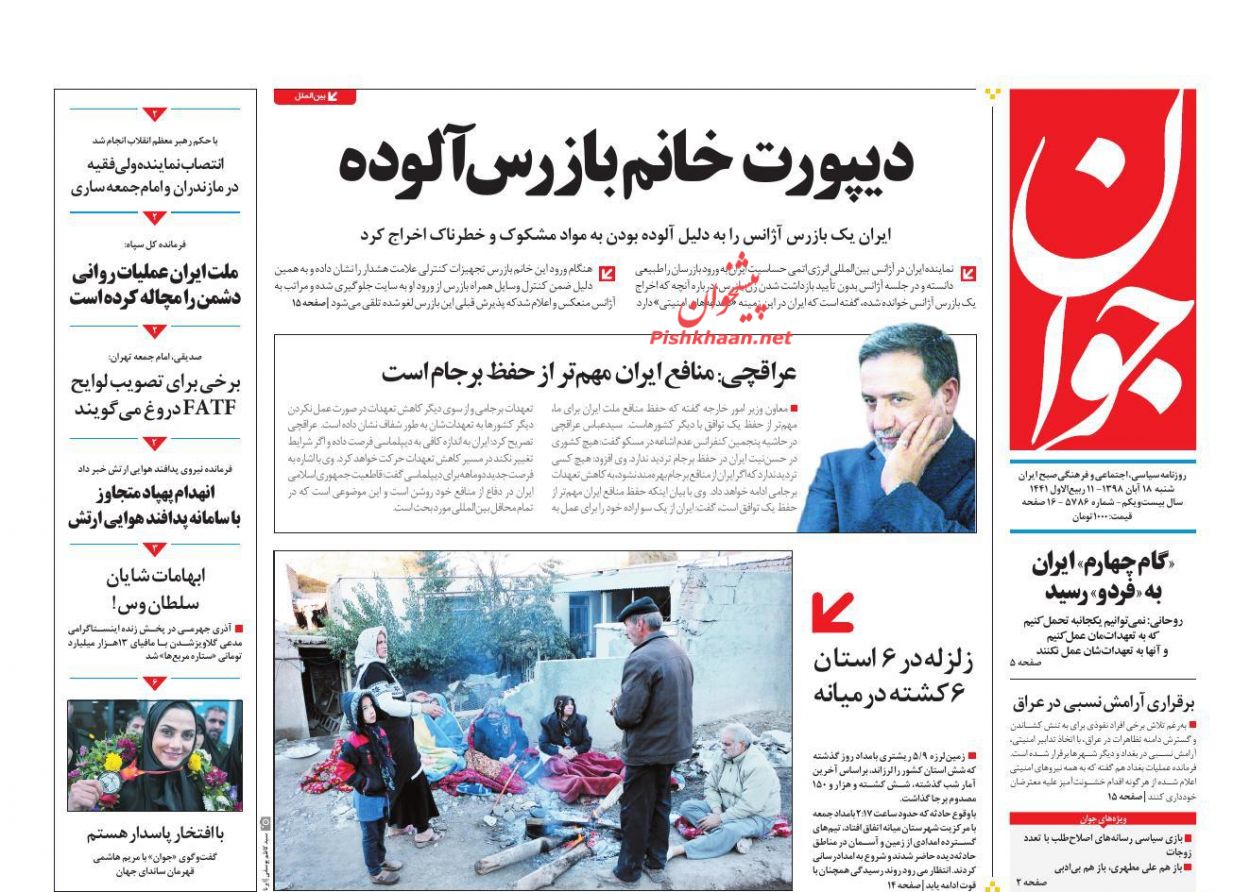
Javan:
1- Iran Deports Woman IAEA Inspector over Suspicious Material Pollution
2- Iran’s Fourth Step in Fordow
3- IRGC Chief: Iranian Nation Foiled Enemy’s Psy-War
4- Army Air Defence Chief: Intrusive Drone Shot Down by Army

A Look at Iranian Newspaper Front Pages on November 9


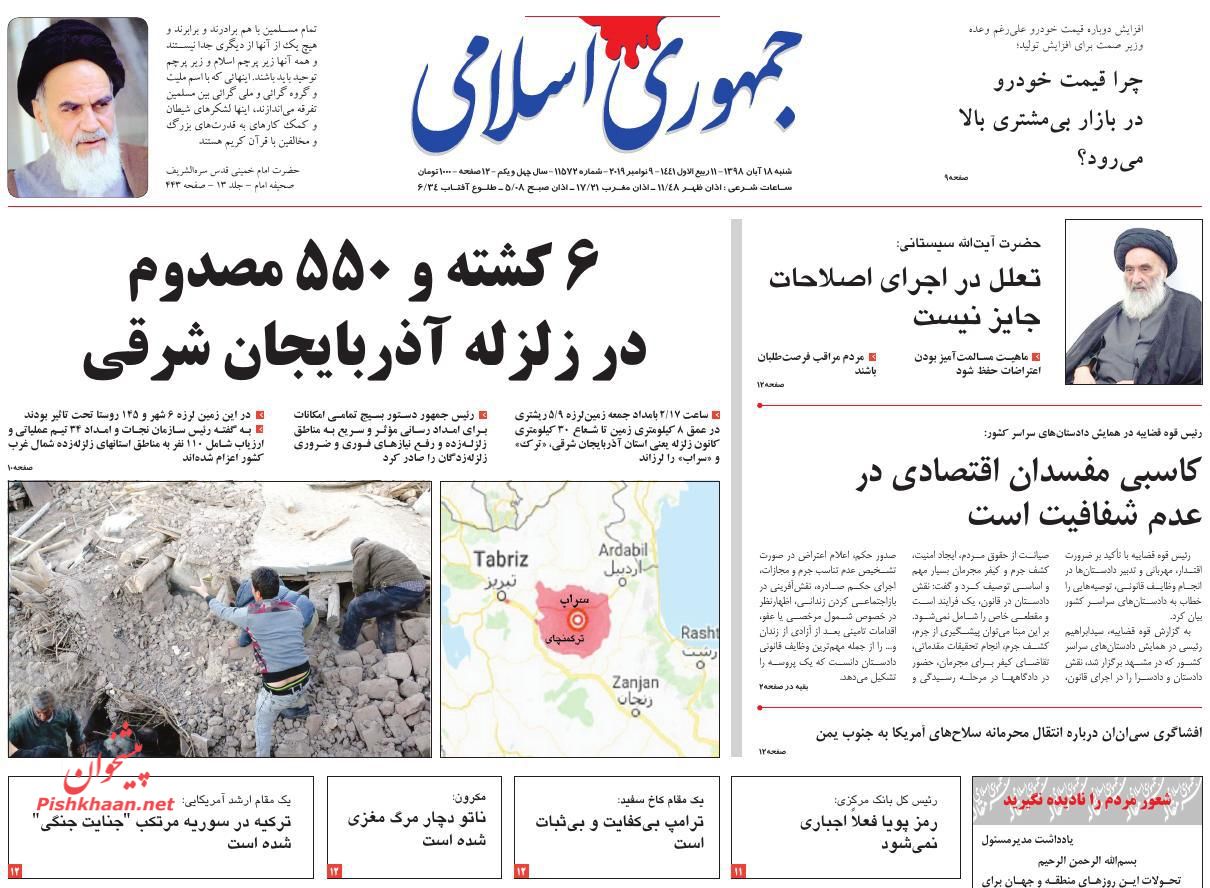
Jomhouri Eslami:
1- Six Killed, 550 Wounded in East Azarbaijan Quake
2- Ayatollah Sistani: No Delay in Implementation of Reforms

A Look at Iranian Newspaper Front Pages on November 9


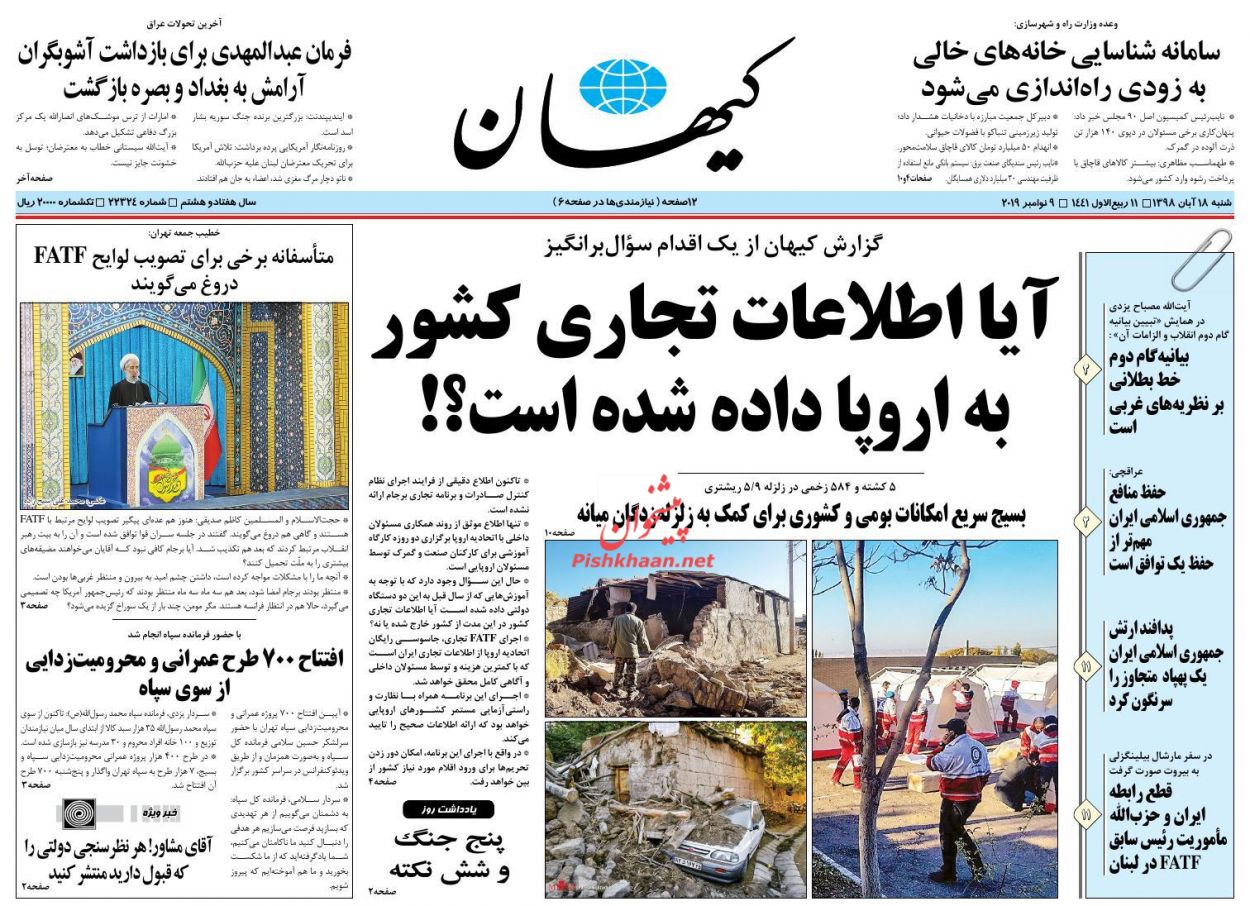
Kayhan:
1- Has Iran’s Trade Information Been Given to Europe?
2- Former FATF Chief’s Mission in Lebanon: Cutting Iran’s Ties with Hezbollah

A Look at Iranian Newspaper Front Pages on November 9


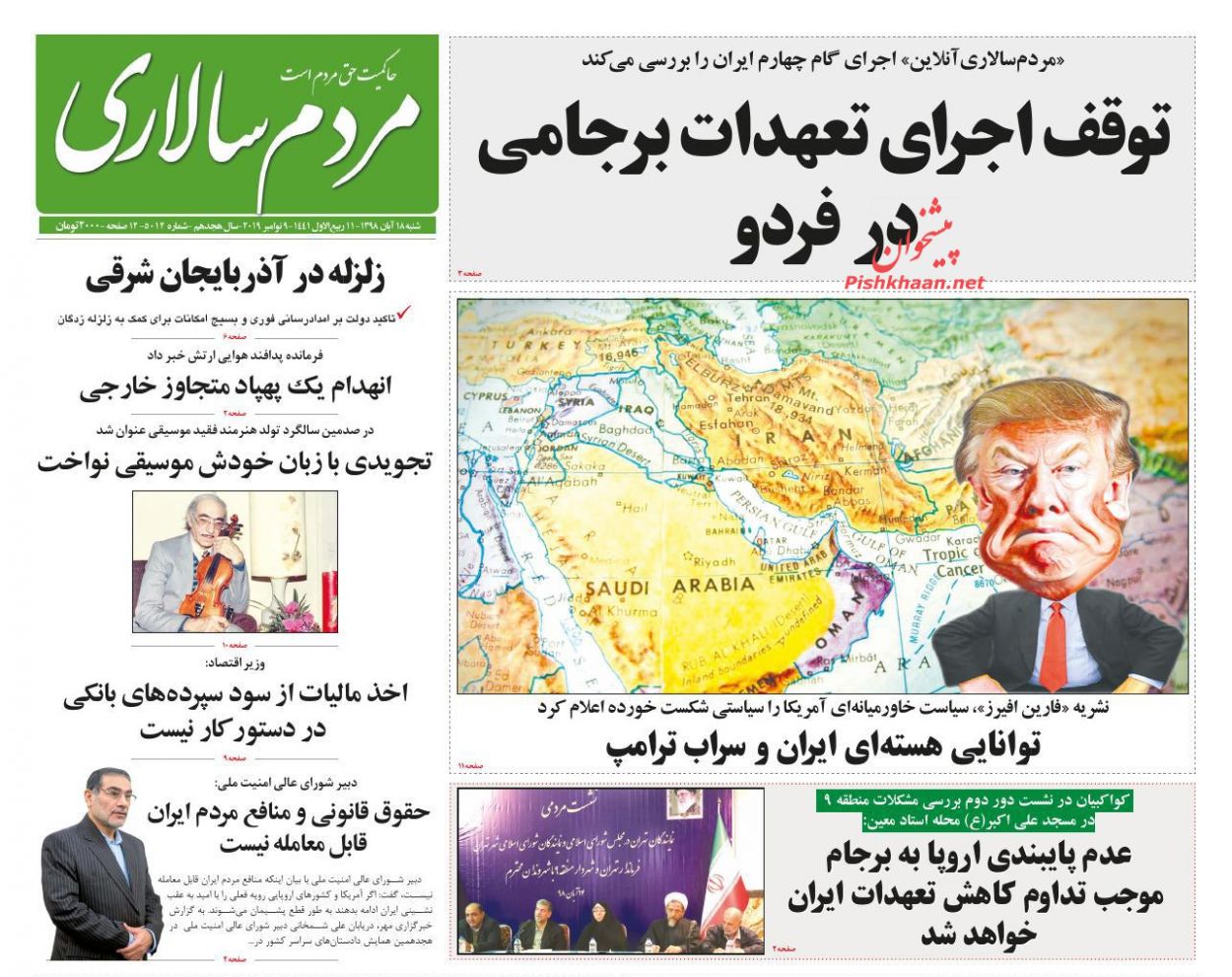
Mardom Salari:
1- Cessation of JCPOA Commitments in Fordow
2- Iran’s Nuclear Capabilities and Mirage of Trump
* Foreign Affairs: US’ Mideast Policy a Failed One

A Look at Iranian Newspaper Front Pages on November 9


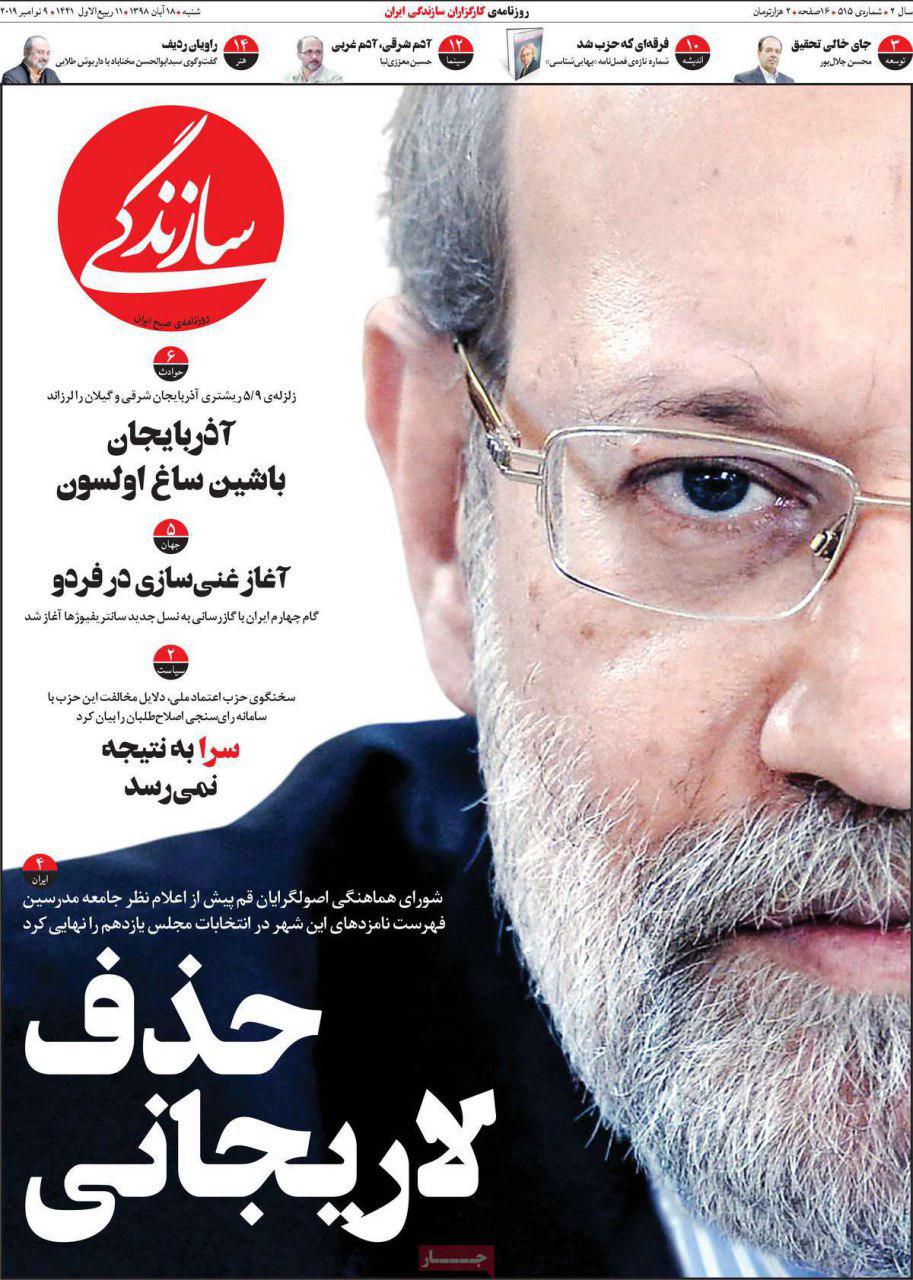
Sazandegi:
1- Ali Larijani Won’t Be Nominated for Parliamentary Votes in Qom

A Look at Iranian Newspaper Front Pages on November 9


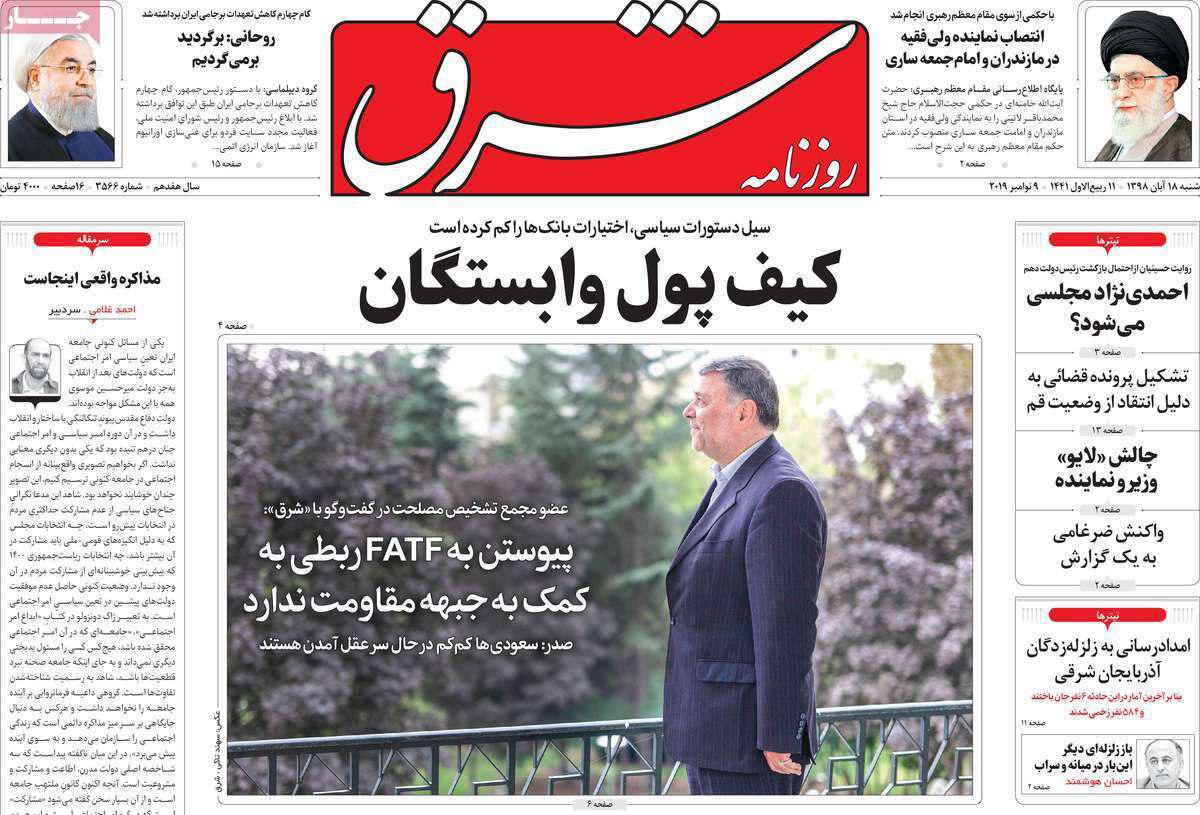
Shargh:
1- Expediency Council Member: Joining FATF Has Nothing to Do with Helping Resistance Movement
2- Rouhani: We’ll Return to JCPOA If You Return to Fulfilling Commitments

A Look at Iranian Newspaper Front Pages on November 9

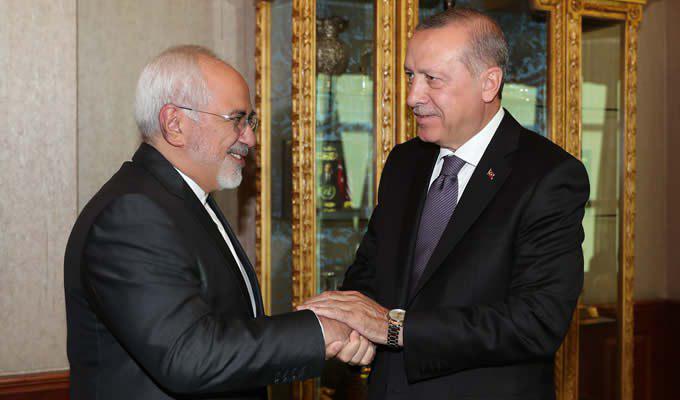
Zarif Hails Erdogan’s ‘Illuminating’ Remarks on Iraq Protests

Zarif Hails Erdogan’s ‘Illuminating’ Remarks on Iraq Protests

He made the comments in a Saturday meeting with his Turkish counterpart Mevlut Cavusoglu have met on the sidelines of the 24th Meeting of the ECO Council of Ministers (COM) in the Turkish city of Antalya.

In the meeting, the two sides conferred on issues of bilateral interest including Tehran-Ankara ties, regional developments, and the two countries’ cooperation within the Economic Cooperation Organization (ECO).

During the talks, the Iranian top diplomat appreciated Turkish President Recep Tayyip Erdogan’s recent illuminating remarks about the developments in Iraq.

In his remarks on Friday, President Erdogan referred to hidden plots behind the recent developments in Iraq and said they are aimed at disintegrating the Muslim world and pitting Islamic countries against each other.

In his remarks on Friday, President Erdogan said “what makes us worry about the problems of people who are thousands or tens of thousands of kilometres away from our country is Islam as a common denominator and the consciousness of being an Ummah.”
“Universal Muslim fellowship has no limits. No one can sow discord among us,” Anadolu news agency quoted him as saying.

Erdоgаn also speculated that he knows who is behind the recent anti-establishment uprising in Iraq, and they probably planned to spread the protests into Iran.

Referring to the anti-Islamic Republic slogans protesters chant in Iraq’s mainly Shiite populated regions, as well as the attack on Tehran’s consulate in the city of Karbala, Erdogan argued, “We can guess who is behind the unrest in Iraq. Our analysis points to the fact that spreading the protests into Iran is on their agenda.”

Iran Says Its Interests More Important than Preserving JCPOA

Iran Says Its Interests More Important than Preserving JCPOA

Araqchi said Iran has made clear its will to fulfil its obligations and on the other hand to reduce its obligations if the other countries fail to fulfil their commitments.

Speaking on the sidelines of “Non-proliferation Conference” in Moscow on Friday, Araqchi said at the same time, no country doubts that Iran will continue to reduce its commitments if Tehran does not enjoy the benefits of deal.

“Iran has given diplomacy enough chance, and if conditions do not change, Tehran will move towards reducing commitments,” he reiterated.

Pointing to the new two-month chance for diplomacy, he said, “the determination of the Islamic Republic of Iran in defending its interests is clear, and it is a topic being discussed in all international circles.”

The Iranian senior negotiator also referred to the US’s international isolation, noting that many countries, including participants of the international conference, condemn Washington’s unilateralism.

“Even many European countries censure the excessive unilateralism of the United States, and there is a worldwide movement today against this unilateralism that is being reinforced every day.”

He described the JCPOA as a symbol of this global movement, saying that this issue is a matter of debate in all international circles.

The 2019 Moscow Non-proliferation Conference (The 2019 MNC), which started on Thursday, is being held for three days with the participation of 40 countries and 250 international figures.

Meetings with officials from the participating countries and delivering speech at a special meeting on the JCPOA will be among other programs on the agenda for Araqchi in Moscow.

Iran, Russia Discuss Regional Developments

Iran, Russia Diplomats Discuss Regional Developments

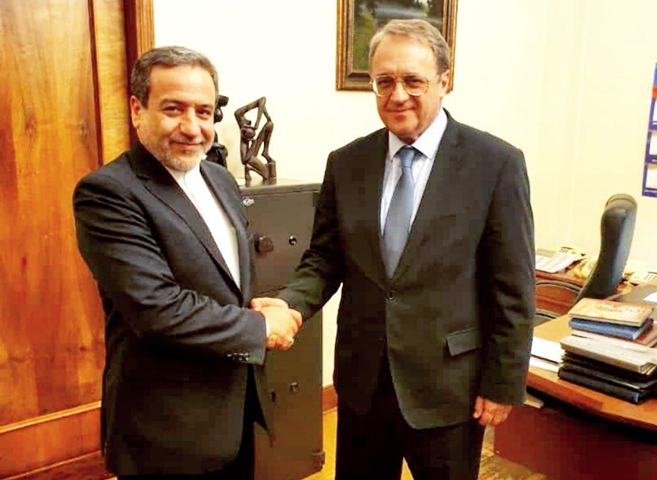
In the Saturday meeting, the two sides exchanged views on developments in West Asia and the Persian Gulf, including the situation in Iraq, Lebanon, Syria and Yemen, as well the Hormuz Peace Endeavour (HOPE) initiative proposed by Iran.

Araqchi and Bogdanov, who is also the Russian president’s special envoy for the Middle East and North Africa, further discussed Moscow’s plan on collective security in the Persian Gulf.

They also stressed the need to continue consultations and talks between the two countries on regional developments.

Araqchi is in Moscow to attend and deliver a speech at the Nuclear Energy, Disarmament and Non-Proliferation Conference where the Iran nuclear deal known as the Joint Comprehensive Plan of Action (JCPOA) is to be reviewed as well.

Iran Ready to Host Up to 3m Chinese Tourists: Minister

Iranian Tourism Delegation Due in China, Russia

The minister of cultural heritage, tourism and handicrafts said Iran boasts good potential to draw more tourists.

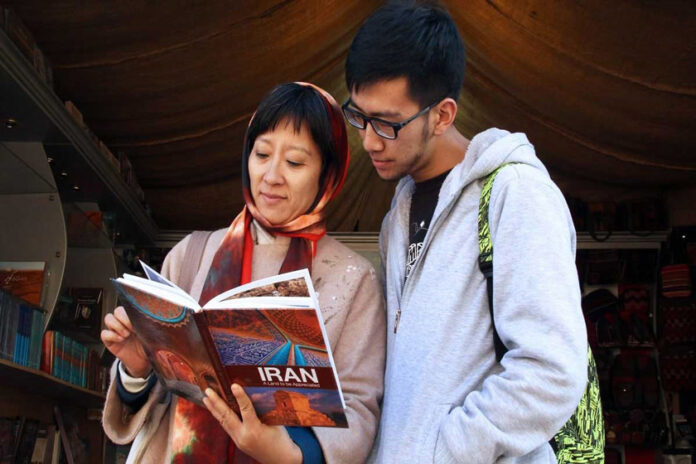
“After the lifting of visa requirements, the number of Chinese tourists to Iran has risen, but that number is still low. With the good potential that we have in Iran, we can increase from 70,000 to 2 to 3 million the number of Chinese tourists visiting Iran’s historical and cultural attractions,” said Ali-Asghar Mounesan in a meeting with Chinese Ambassador to Tehran Chang Hua.

“I know that you have many problems due to sanctions, but it is easier to conduct activities in Iran’s cultural sector rather than other sectors,” said the Iranian minister.

“Over the past month, we have invited influencers from China and Hong Kong to travel to Iran to visit our cultural and historical attractions. Fortunately, they sent good messages after this trip,” added Mounesan.

He also expressed Iran’s willingness to attend an upcoming ministerial meeting of the Ancient Civilizations Forum in Beijing.

“We will take part in this conference with a large delegation comprising the private sector and authorities from the tourism sector, and we would like to have the opportunity to sit down with Chinese tourism officials and sign an executive program drawn up under the memorandum of understanding,” he said.

“Tourism has the fewest problems with sanctions and can boost the two nations’ understanding of one another and bring them closer together,” said the Iranian minister.

“We have good political and economic relations, but the two nations do not know each other very well. This is while Iran and China both enjoy age-old civilizations,” he noted.

The Chinese diplomat, in turn, said the number of Chinese tourists visiting Iran has increased, expressing hope mutual cooperation will increase in the tourism sector.

Iran Urges IAEA to Introduce New Inspector

Iran Reacts to IAEA’s Latest Report on Its JCPOA Commitments

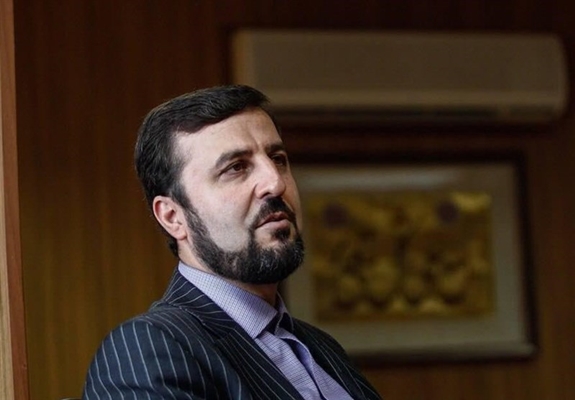
Iran’s Permanent Mission to the International Atomic Energy Organisation Kazem Gharibabadi says Tehran has asked the IAEA to introduce another inspector.

After attending a meeting of the IAEA Board of Governors to discuss a safeguards issue and the status of one of the IAEA’s inspectors in Iran, Gharibabadi explained new aspects of the matter, criticising the holding of immediate meetings to examine two common issues that have no immediacy.

He said the issue has been criticised by some other countries as well.

Regarding the suspected anti-security action by the IAEA inspector, he said Tehran has presented a detailed report to the Board of Governors and the Agency on this issue.

“On October 28, 2019, a team of inspectors paid a visit to the Natanz Nuclear Site and, as usual, a routine inspection process was performed at the entrance to the complex, using special chemical detection devices to detect a range of explosives containing Nitrates. During the routine inspection process, the alarms on a certain person reoccurred, and the security team repeated this process several times, but the results were the same for the same inspector.”

The Iranian ambassador noted that the security team suspected that the alarms might be lit because of the inspector’s clothes or his personal belongings.

“The security team even checked the toilets used by the inspector with special devices but they released more alarms. With the consent of the inspector, and in the presence of him and his colleagues, and in coordination with the Agency’s authorities, security guards visited his residence and checked some of his belongings and medications, but his medications had no problem. However, the machines gave alarms on his empty handbag. After contacting the IAEA Secretariat and with the agreement of the IAEA authorities, some sampling was carried out on the same handbag and it was jointly sealed,” stressed Gharibabadi.

Fars News Agency quoted Gharibabadi as saying that from the very beginning, the IAEA inspectors reported the issue to the relevant authorities at the organisation’s headquarters in Vienna, and the secretariat was in full contact with the Iranian Safeguards Department and Iranian Permanent Mission in Vienna.

“Nothing can replace the Agency’s commitment to cooperate in the investigation of possible violations by its employees or inspectors. As stated in the relevant provisions of the Agency’s Immunities Agreement, the Islamic Republic of Iran is fully aware of the immunities of the inspectors and has, over the years, cooperated with the Agency under all circumstances, and demonstrated its compliance with agreement.”

It goes without saying that Iran, like all other members of the IAEA, cannot ignore any behaviour or action against the safety and security of its nuclear facilities, particularly that there were some efforts to sabotage Iran’s nuclear sites in the past, he added.

At the end, Gharibabadi pointed out that repeated measurements using different diagnostic equipment showed the same results. Therefore, there is no doubt that there existed some suspicious material in the case.

“The results of the sample examination by Iran and the Agency may provide further information on the nature of the materials in future. In order to complete the current investigation, consultations between Iran and the Agency on this issue are ongoing, and Iran expects the Agency to offer necessary and appropriate cooperation.”

On the issue of safeguards discussed at the Board of Governors Iran’s mission to Vienna also said that Tehran has commitments in the three areas of the JCPOA, the Additional Protocol and the Safeguards and is cooperating with the Agency in this regard.

“In the meantime, if there are any questions or ambiguities raised by the Agency, we will do our best to investigate them and take the necessary action. The process is ongoing and there is no particular concern or urgency, as some countries have put it.”

Gharibabadi added that he emphasised that Iran cooperates extensively and constructively with the IAEA, in a way that it accepts 20% of IAEA inspections and on average there are three inspectors in Iran every day.

“Therefore, this level of cooperation should be appreciated, and the Agency and some countries should refrain from exaggerating some of the common issues that can be resolved through routine interactions between Iran and the Agency. Otherwise it will have a detrimental effect on cooperation,” he concluded.

Europe Must See Iran’s JCPOA Commitment Cut as ‘Wake-Up Call’

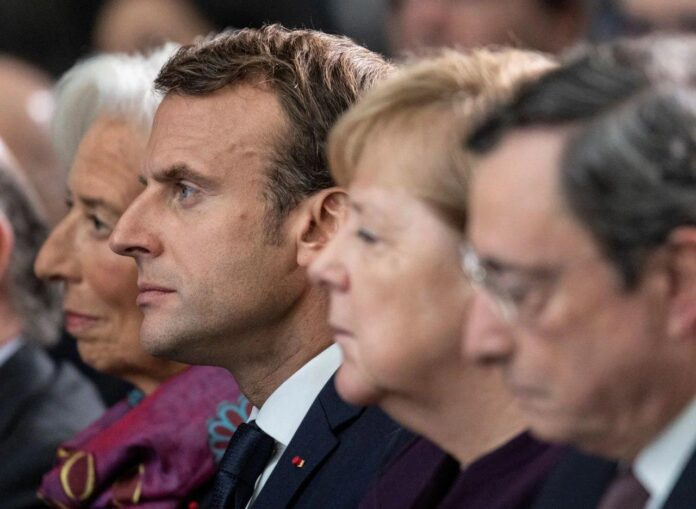
French President Emmanuel Macron, seated between German Chancellor Angela Merkel and Christine Lagarde, the president of the European Central Bank, at left, in Frankfurt, Germany. / Photo by Reuters

Speaking at a meeting with representatives of British newspapers and mainstream media at the Iranian embassy in London on Thursday, Hamid Baeidinejad said if some partners and the signatories fail to live up to their commitments, it is natural that the treaty cannot be continued unilaterally.

He noted that Iran’s efforts and some of the JCPOA parties have so far failed to return the agreement to its normal course, adding that Iran has adopted a “wake-up” policy in order to force the parties to find a solution to get out of the current bad situation.

Iran’s ambassador to London said that the Islamic Republic has long been fulfilling its unilateral commitments, and the IAEA has so far confirmed Iran’s compliance 14 times, but the other parties have not yet fulfilled their commitments.

He said one plan in the current situation might be the complete withdrawal of Iran from the deal, which would certainly be the end of the JCPOA, but Iran is not after destroying the agreement.

Instead, he explained, Iran has adopted a policy to warn the other side and give it time to live up to its commitments. “Iran’s move gives diplomacy and negotiation a chance again.”

He reiterated that reducing Iran’s commitments as enacted at the highest levels in the country would now continue every two months until the desired outcome is achieved, but the opportunity would not be unlimited.

According to the ambassador, all of these actions are reversible, and as soon as the other parties fulfil their obligations under the agreement, all such measures will be stopped and conditions will be restored.

“Iran has taken the fourth step in reducing some of its commitments on Thursday. This reduction is taking place at the Fordow facility. The facility has operated about 1,000 centrifuges without gas, which Iran has decided to inject uranium gas into.”

Baeidinejad reiterated that Iran’s goal is to preserve the JCPOA fully and not to terminate it.

The ambassador introduced Iran’s fourth step as a warning to the other party, pointing out that it is now up to other parties to take this step seriously and find a solution to their obligations. Referring to the upcoming Nuclear Non-Proliferation Treaty (NPT) conference in New York next year, he said failure to do so would undoubtedly lead to a weakening of the NPT.

He further accused the US of being gripped by illusion, saying that Washington thought leaving the deal was a means to put pressure on Iran to harm the Iranian economy and society.

Baeidinejad pointed out that the misconception on the part of the US would also damage the NPT.

At the end of his remarks, Iran’s ambassador expressed hope that the country’s new step would be a wake-up call to the remaining parties in the JCPOA as well as the international community.

Europe, Not US, Audience of Iran’s Message

In response to a reporter who asked if Iran’s goal was to send a message to the US to return to deal, he said the US is out of the deal and no longer a member of the accord.

“Now our main addressee is Europe. It is the Europeans’ duty to fulfil their obligation. We are not dealing with Washington. Now the Europeans are our addressees. However, it’s not our problem whether European countries have to coordinate issues with the United States to fulfil their commitments.”

The Iranian ambassador said that in addition to the three European nations of the UK, Germany and France, the European Union is also a signatory, adding that it would not carry a good message for the international community if the European powers admit they have no control over their economic, trade and national security priorities and cannot fulfil their obligations without the US’ permission.

Responding to another question about the possibility of talks with Washington, he noted that the US now has the illusion that it could harm Iran’s economy and society. Given this illusion, no dialogue with the United States that can change its hostile behaviour is possible.

“Even the US conditions and their announcement of readiness to start negotiations are part of this generally hostile strategy,” he underlined.

Talks Possible Only If US Changes Policy

According to him, America’s goal is not to resolve the crisis, but to send other nations the message that it has succeeded in forcing Iran to surrender and bringing it to the negotiating table.

Iran’s ambassador went on to describe the US policies as untruthful, saying that negotiation is only possible when Washington completely changes its policy towards Iran, and by lifting sanctions it returns to the nuclear deal with Iran.

He also emphasised that Europeans should seriously consider that they must pay costs to preserve the deal and benefit from it. According to him, Europe must solve its problem with the US because the US is no longer a member of the JCPOA, and Iran is not holding talks with the US anymore.

Stating that trade between Iran and Europe has decreased sharply and Iran has no choice but to find alternatives for its economic and trade deals, he pointed out that Russia and China have fulfiled their commitments regarding Iran and they have good business with Iran at the moment.

No Link between Iran’s Nuclear Decisions, US Elections

He further rejected any link between Iran’s recent policy of reducing its commitments to the US election and trying to keep the agreement alive until Trump’s successor is elected, adding that the Islamic Republic does not link its policy to the US election.

In response to a question about Iran’s possible withdrawal from the NPT, Baeidinejad referred to the fatwa of the Leader of Islamic Revolution that Iran would not seek nuclear weapons at all.

However, he said there are some people inside Iran who argue that Tehran has not benefited from the NPT membership and has only paid the costs.

He, nevertheless, reiterated that the government is trying to convince these people that leaving the NPT is not in Iran’s interest.

Responding to a question about China and Russia’s opposition to Iran’s recent move to reduce its commitments, he said those countries had not objected, and just said they understand Iran’s concerns and stance. However, they, like Iran, are unhappy with non-implementation of the JCPOA.

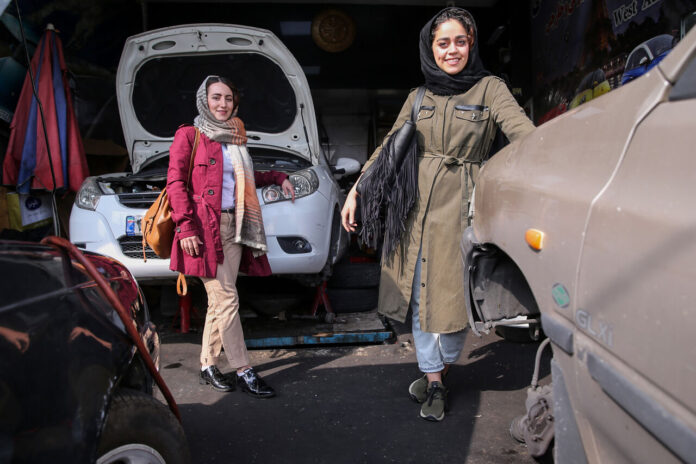
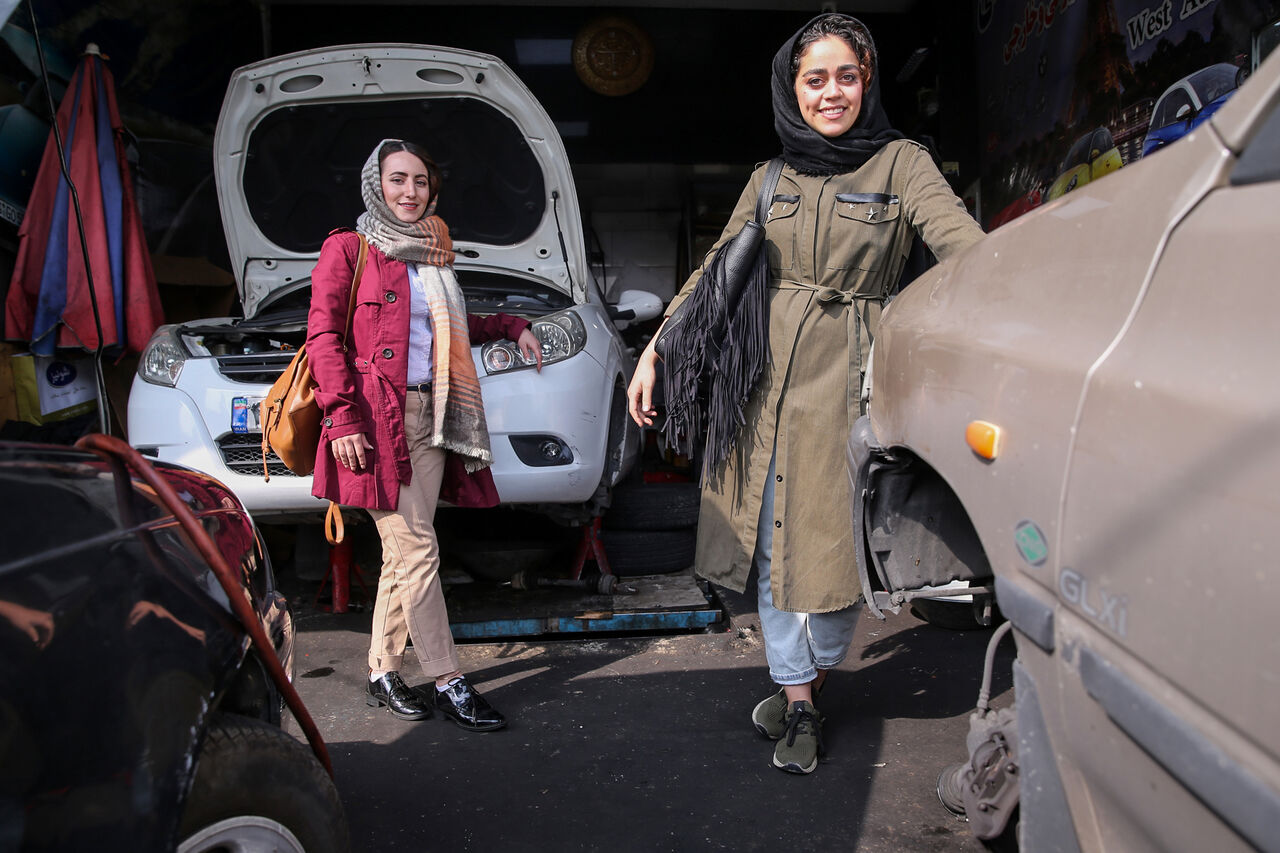
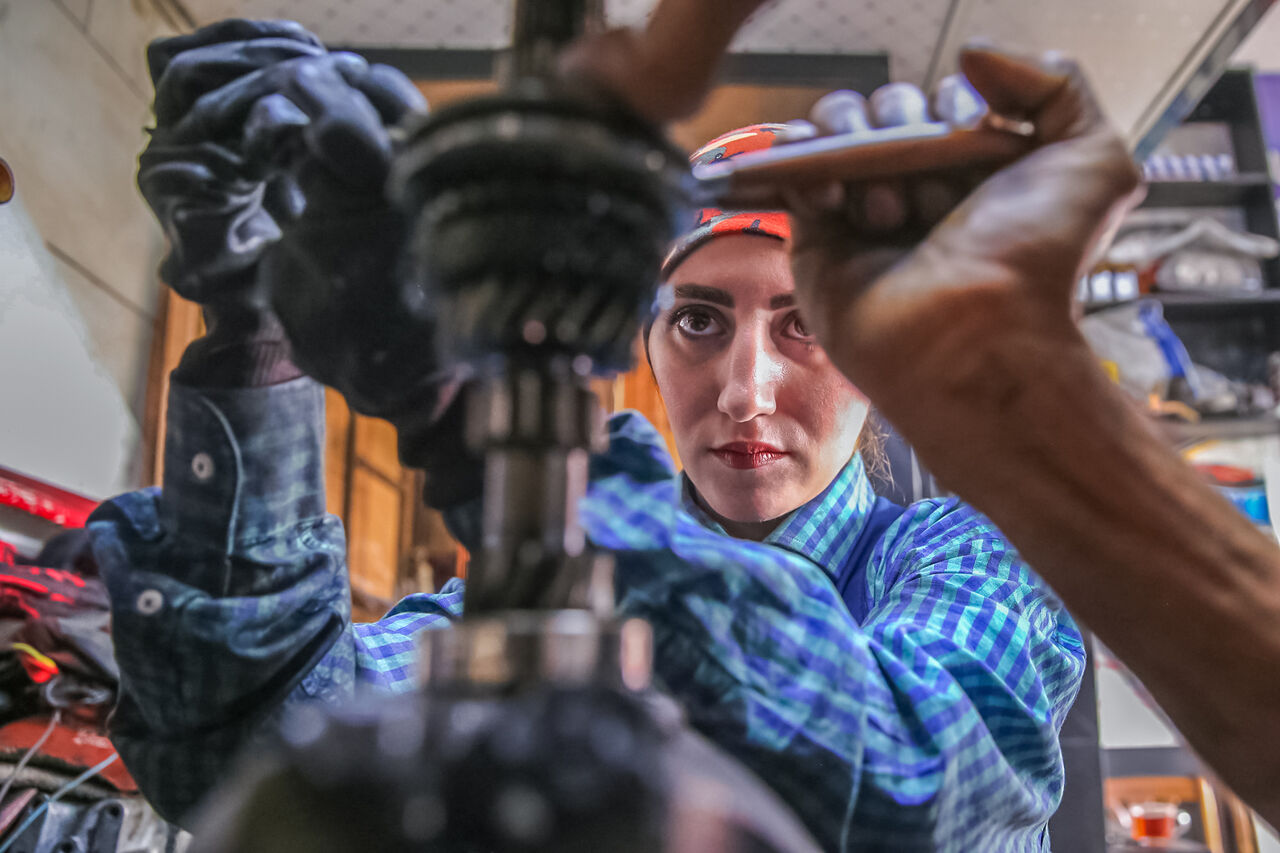
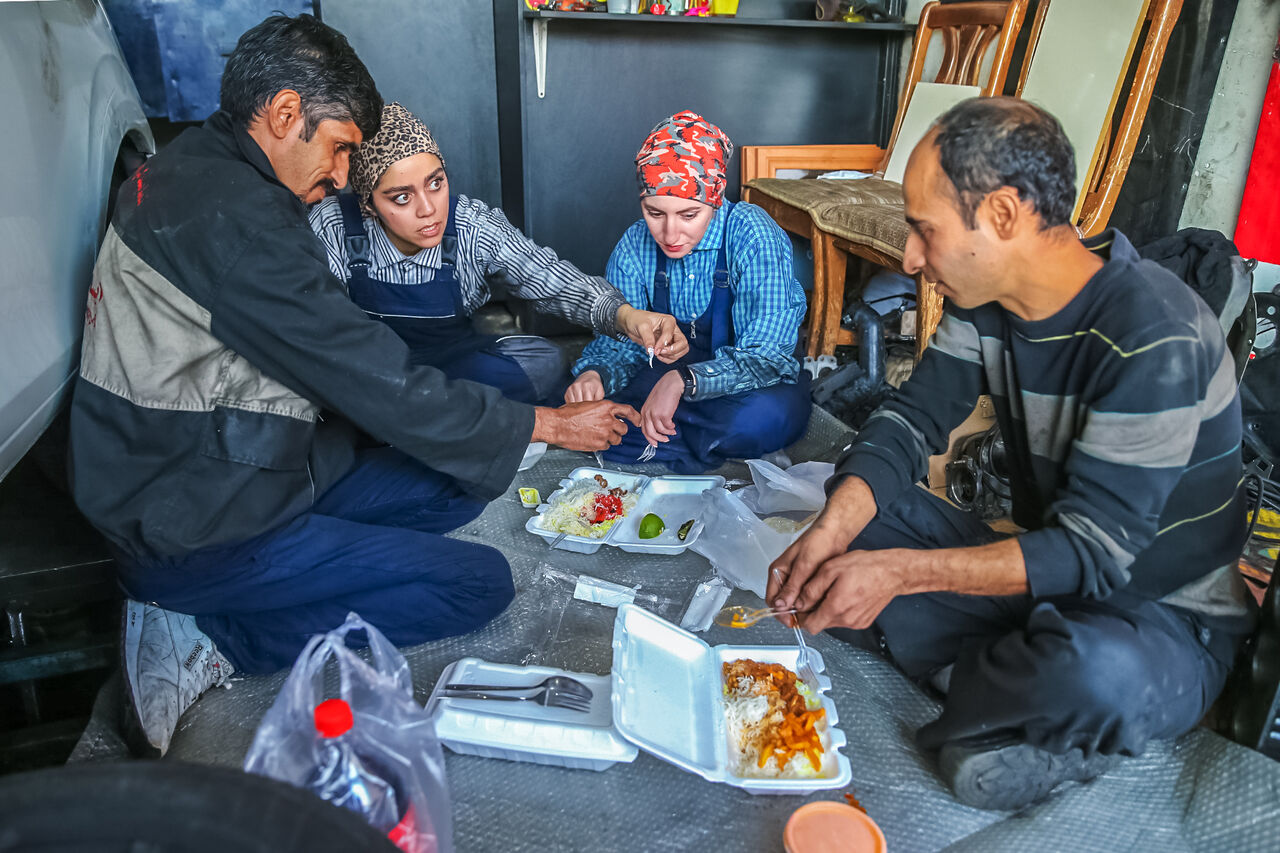
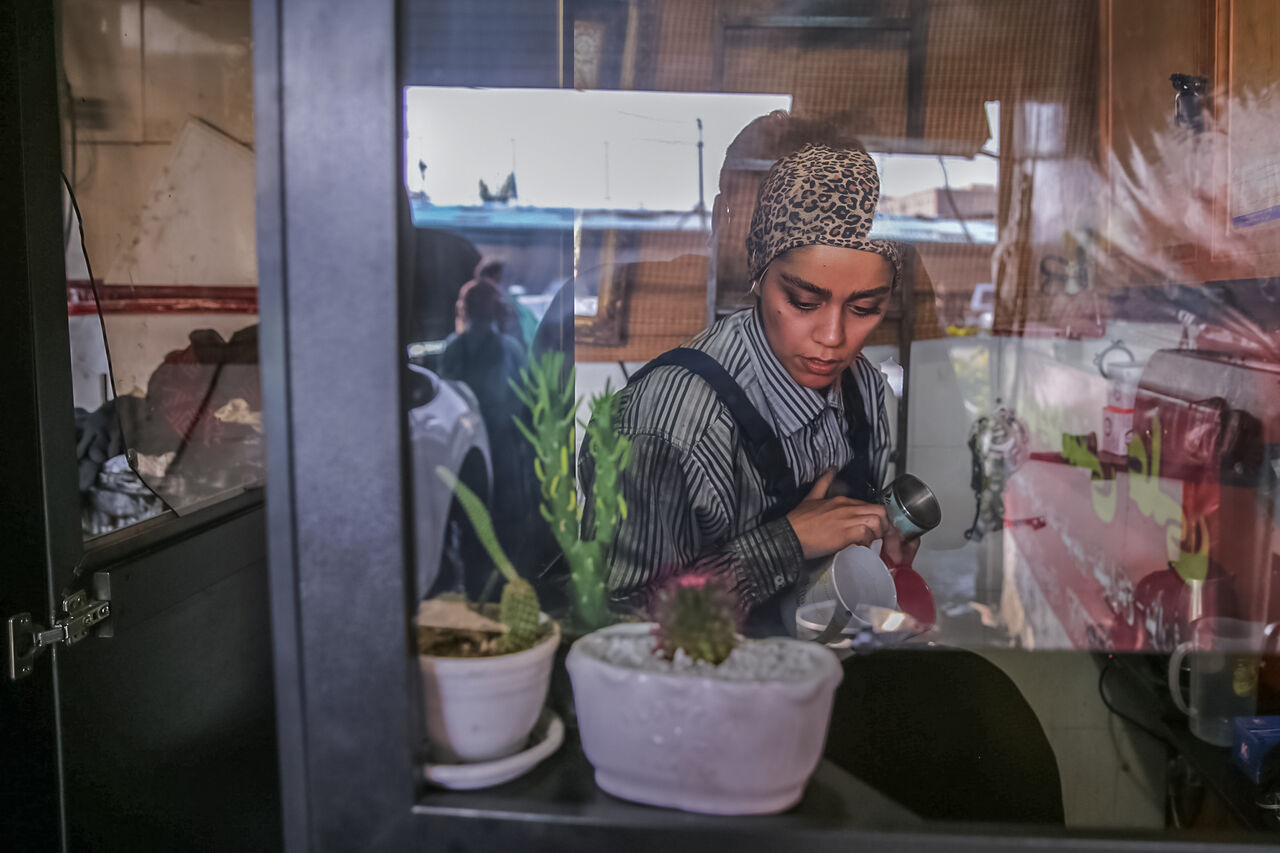
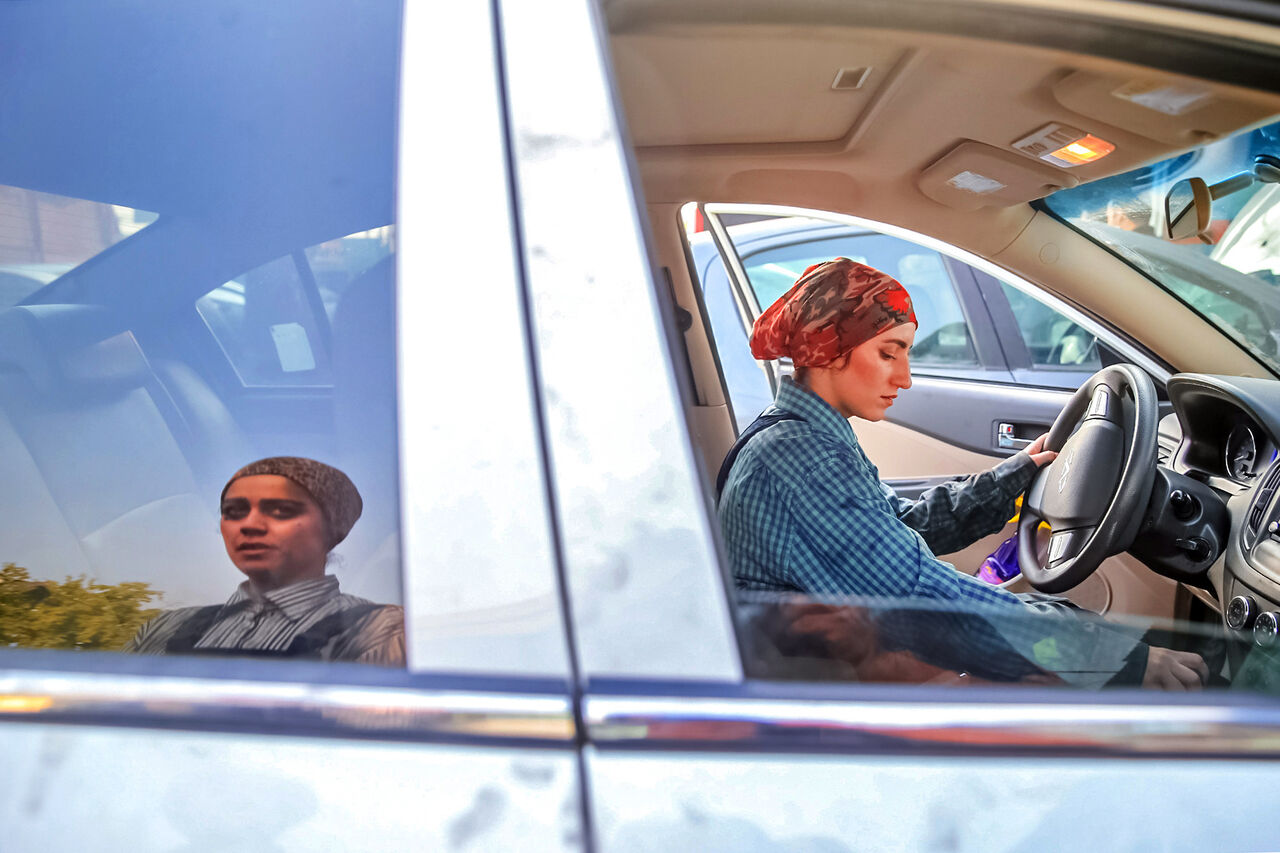
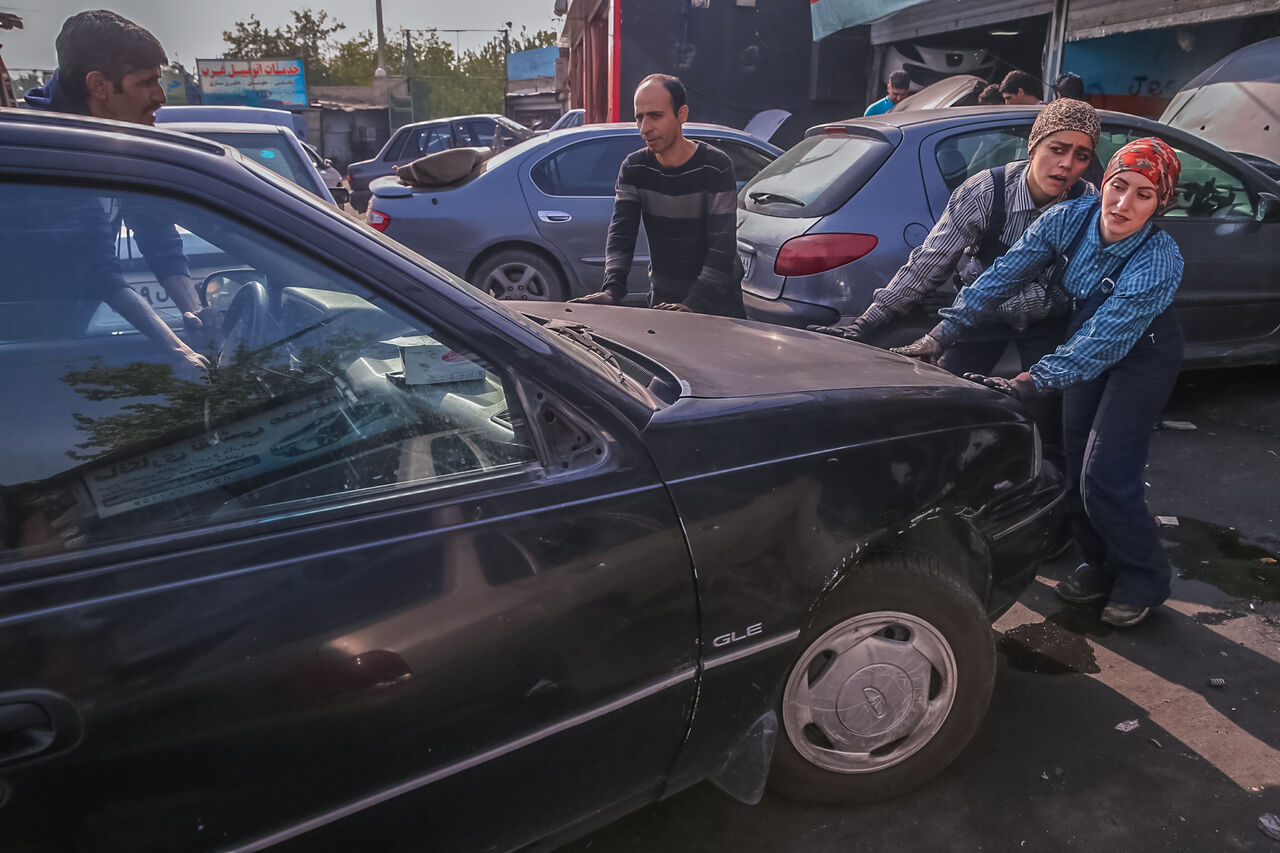
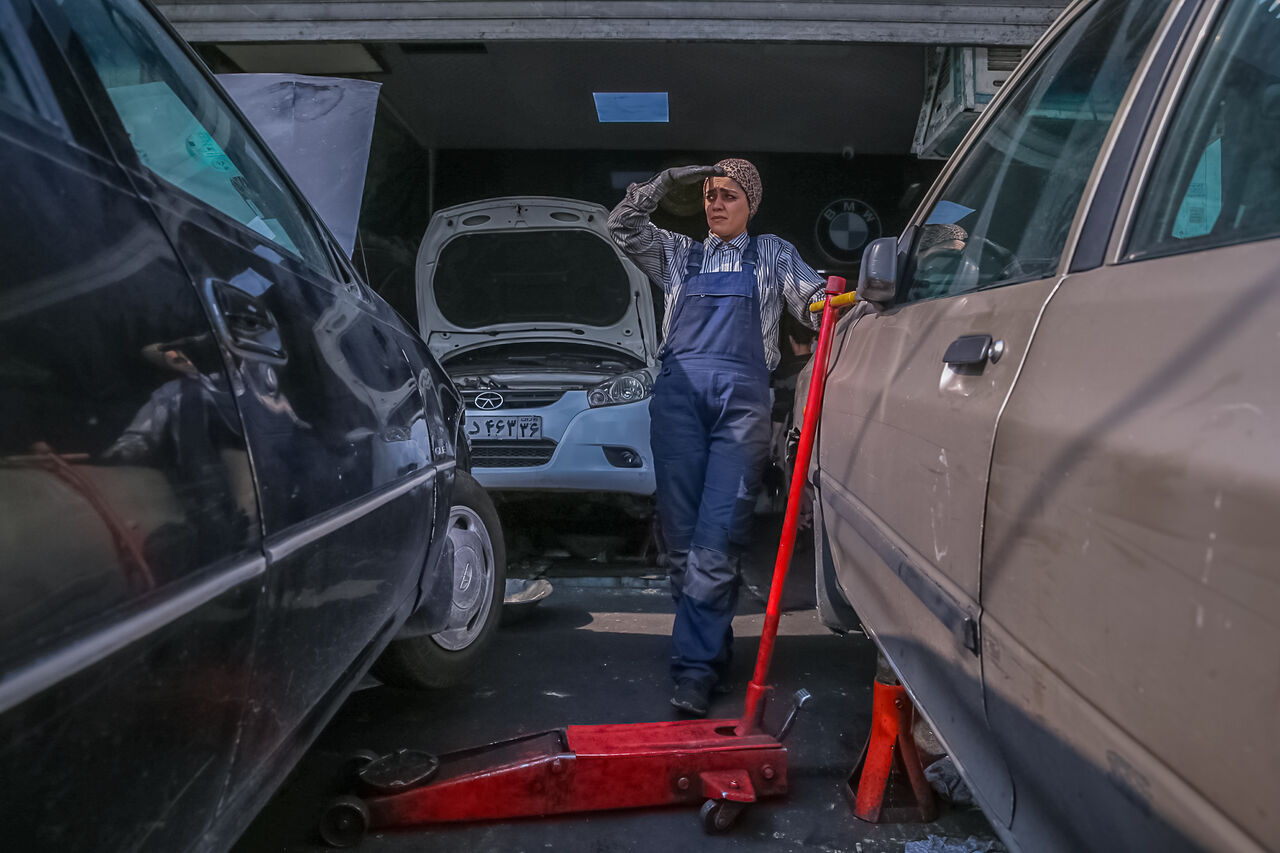
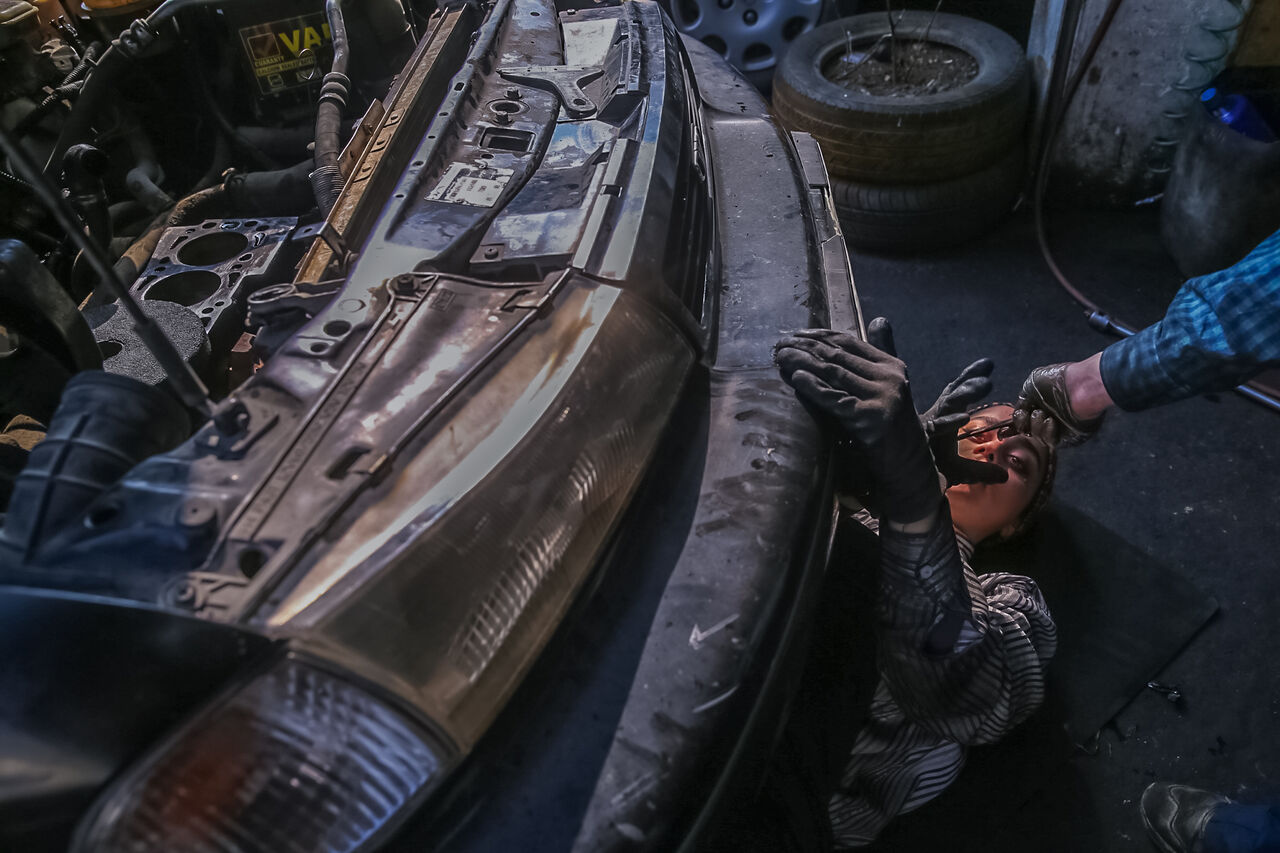
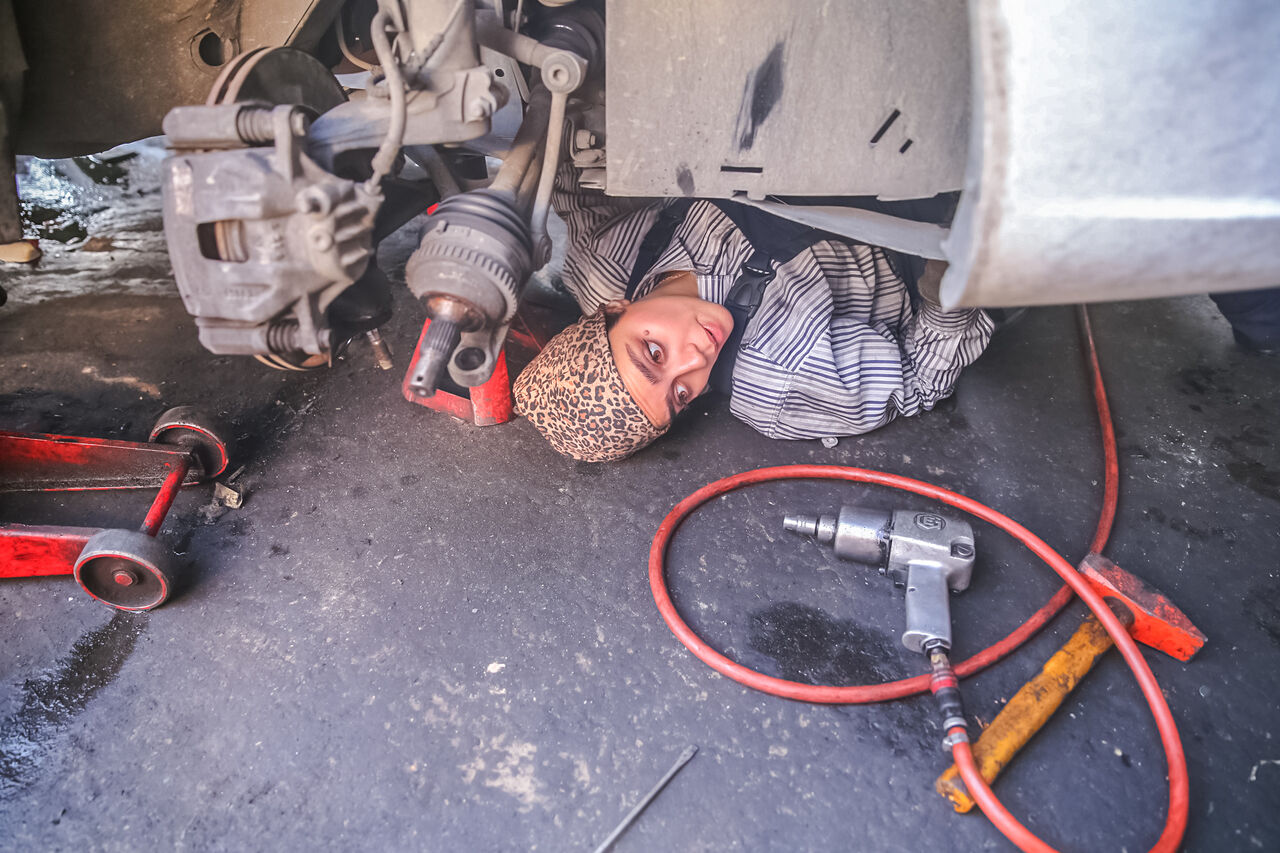
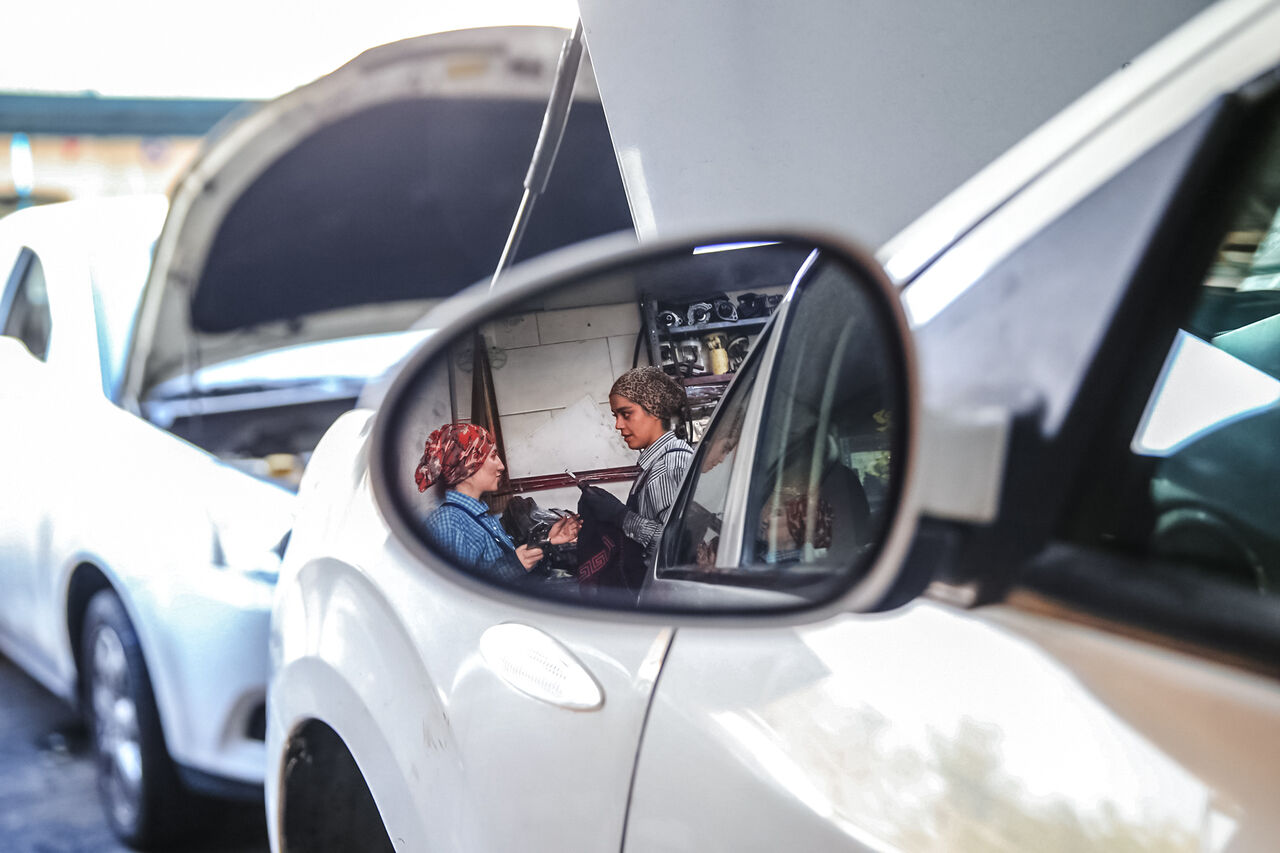
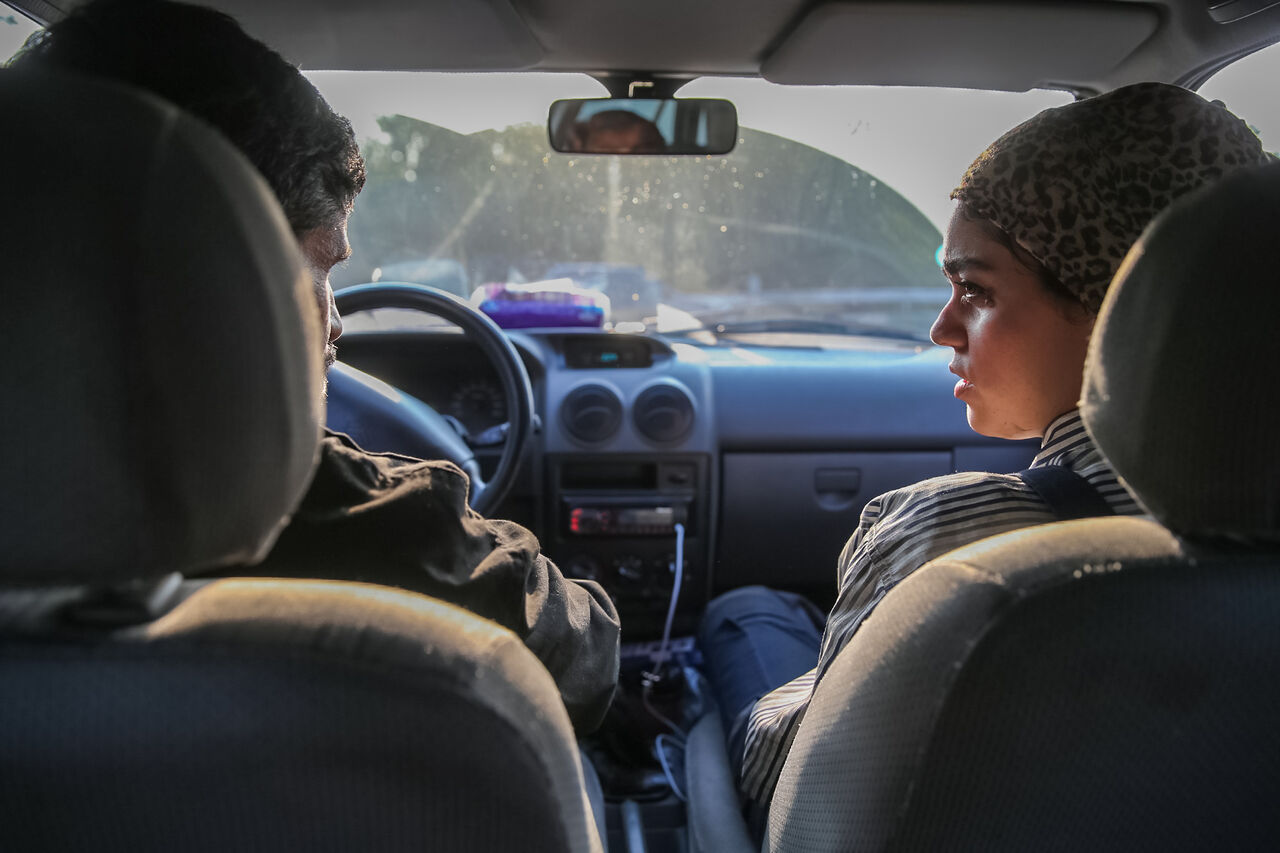
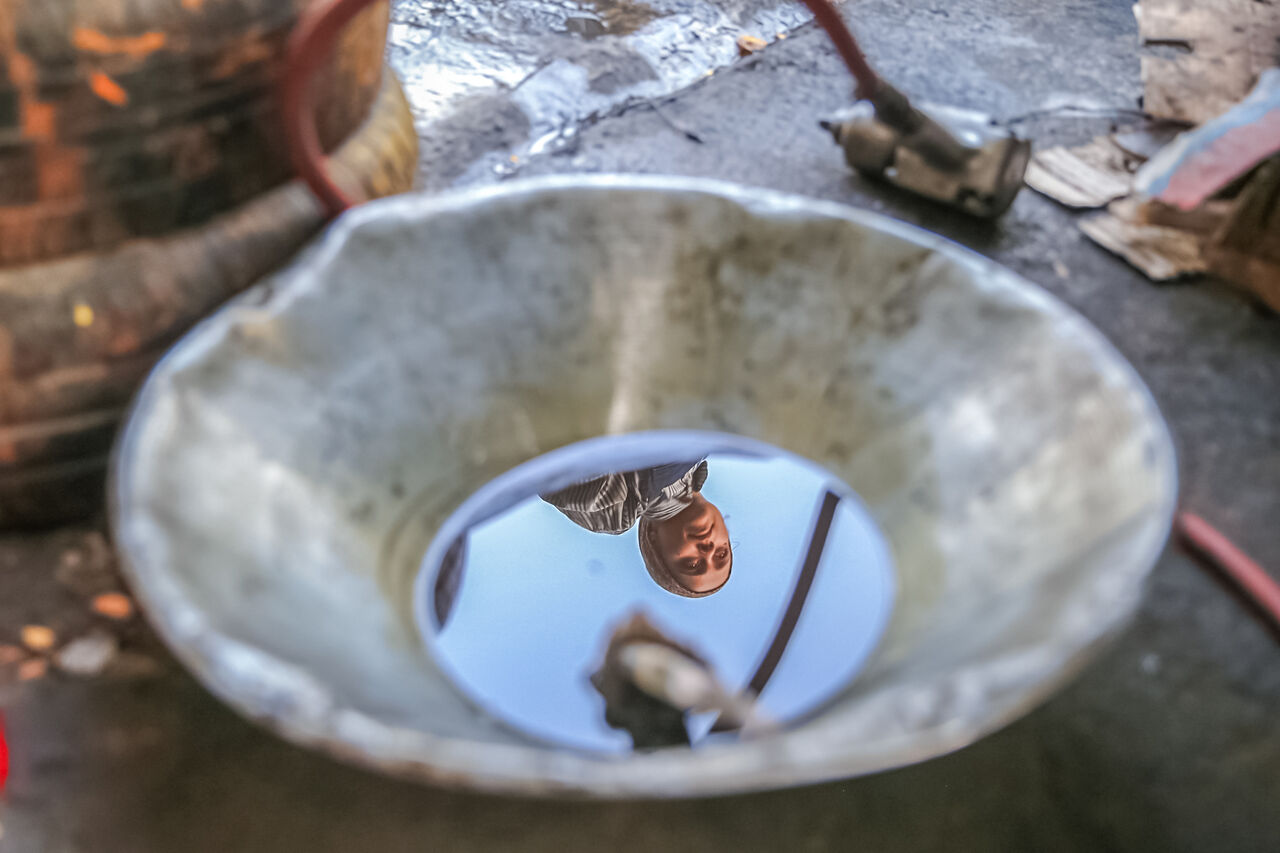
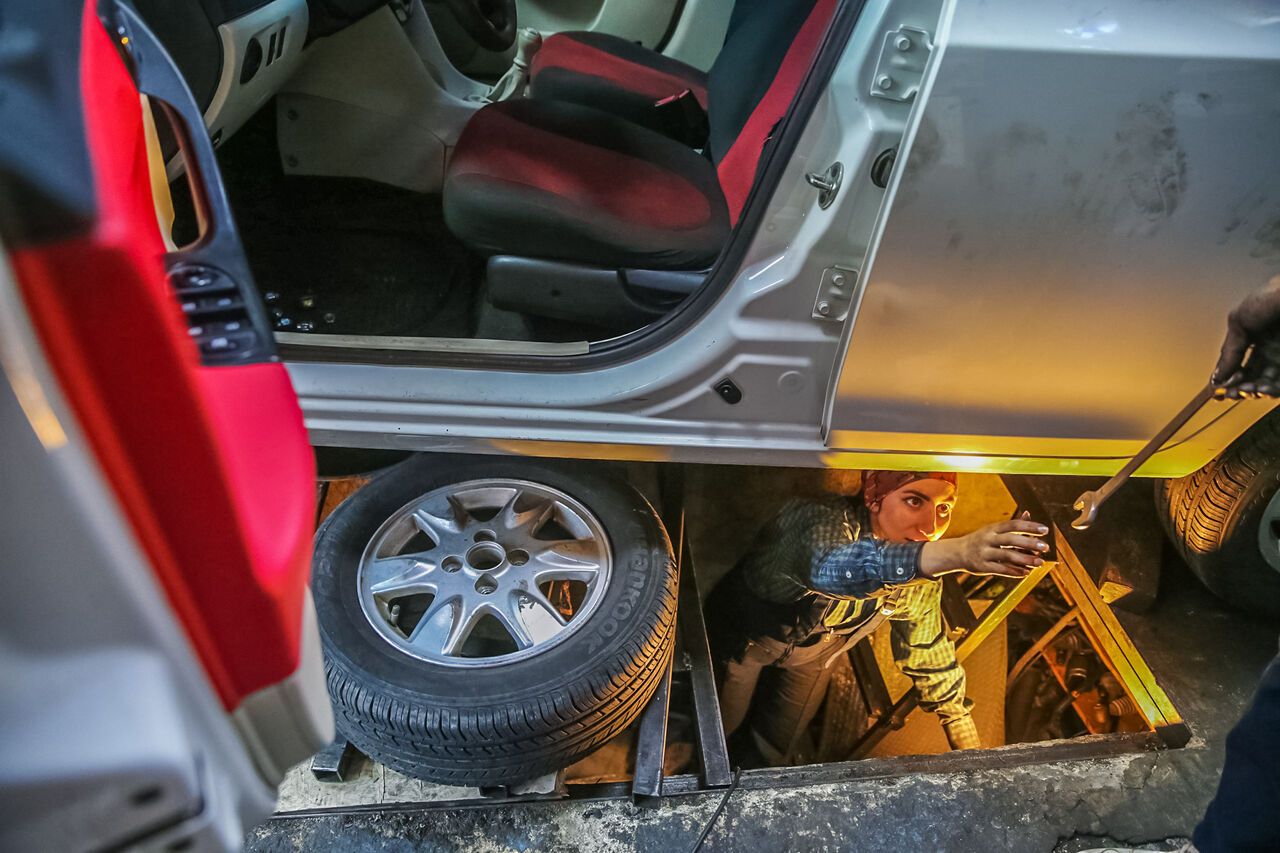
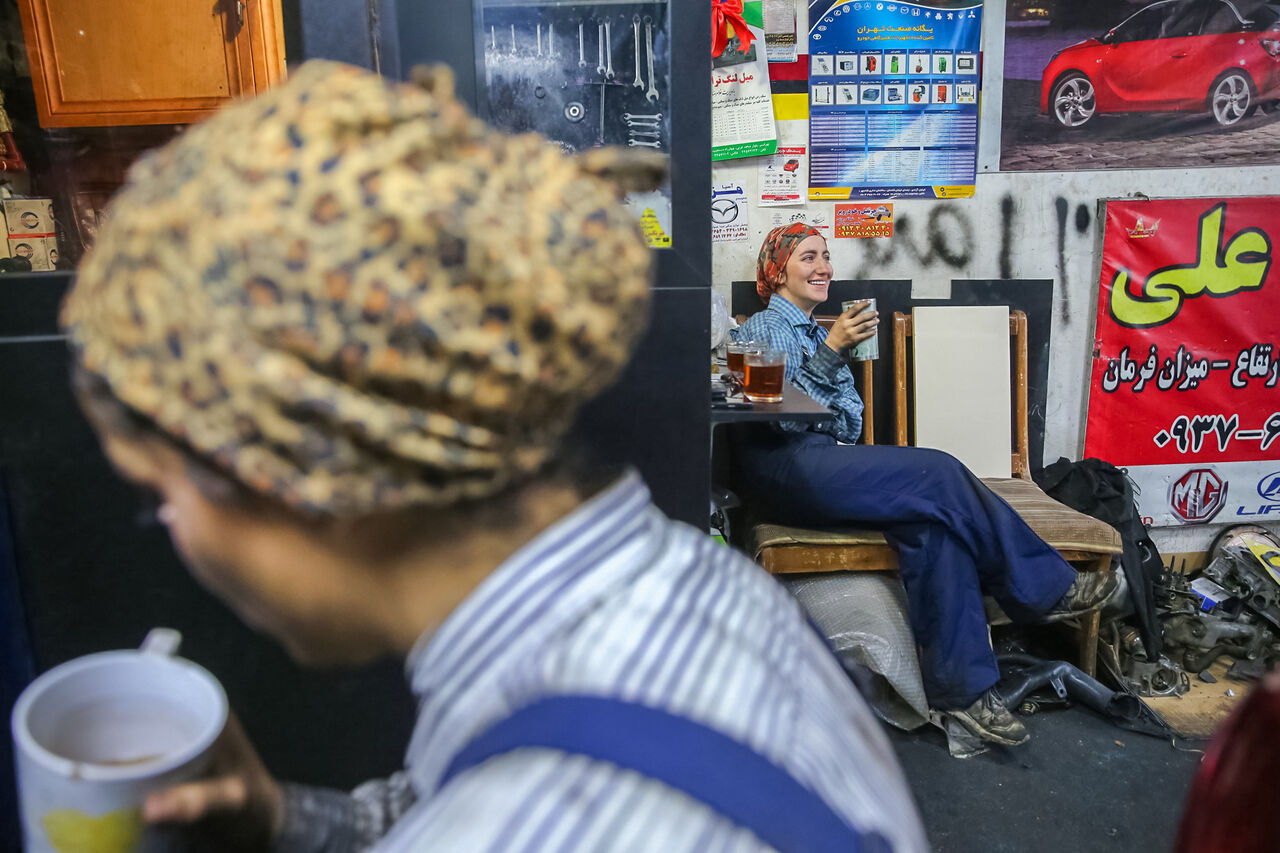
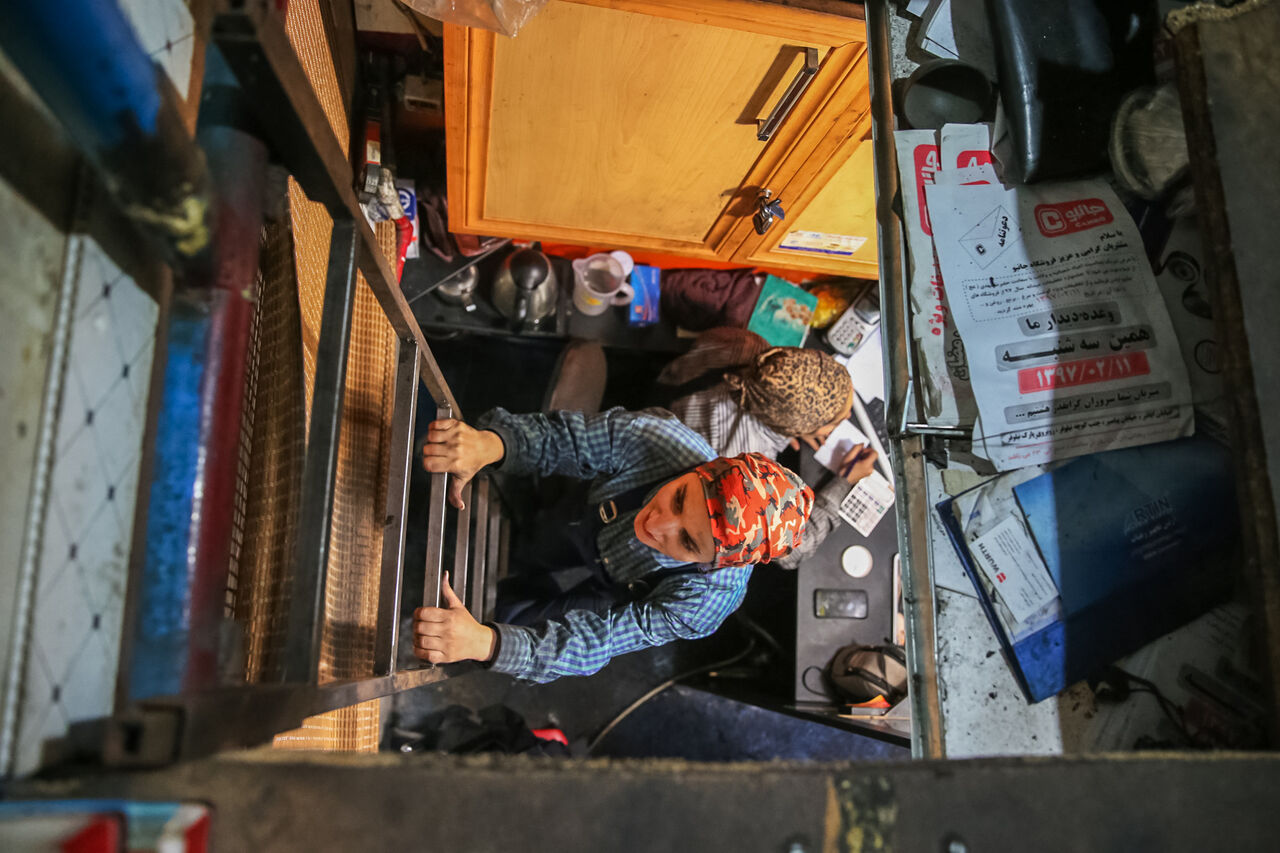
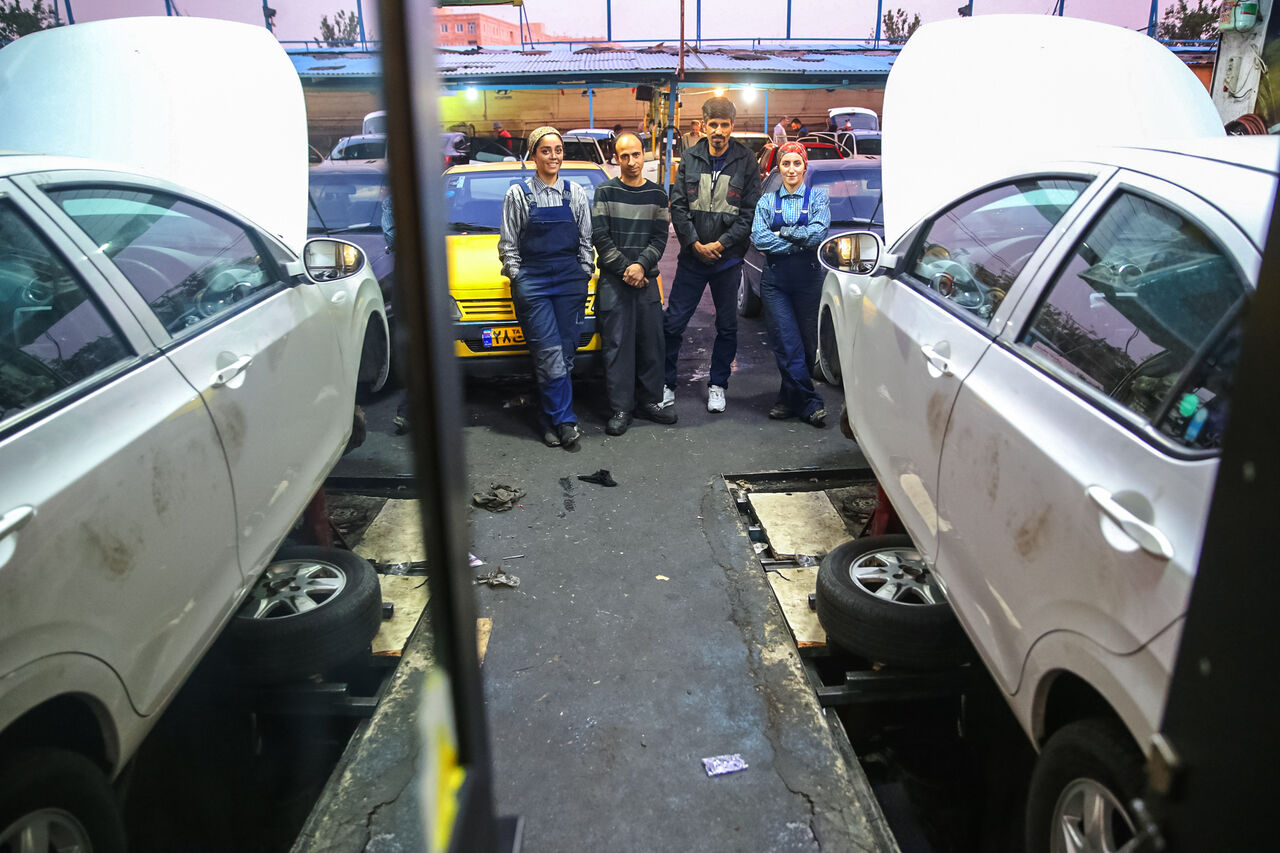
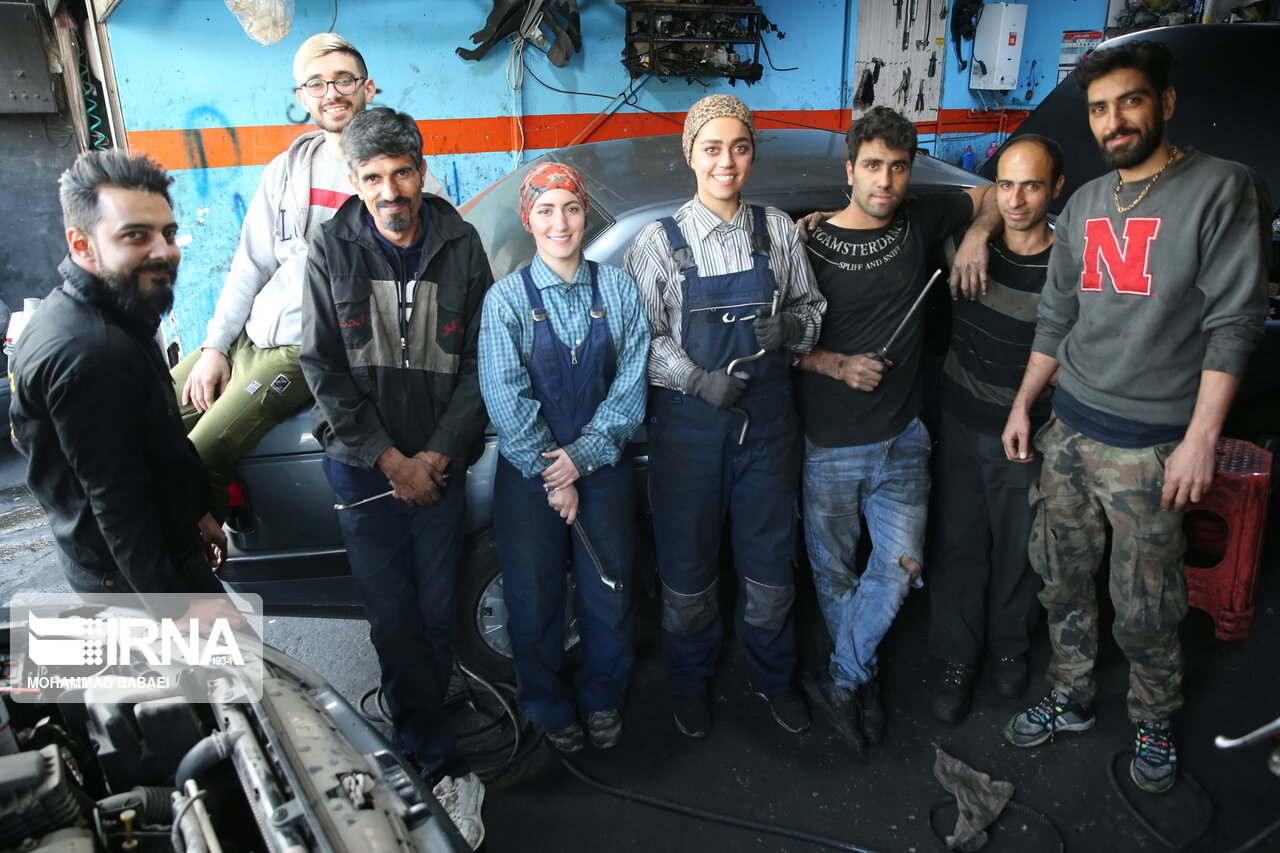
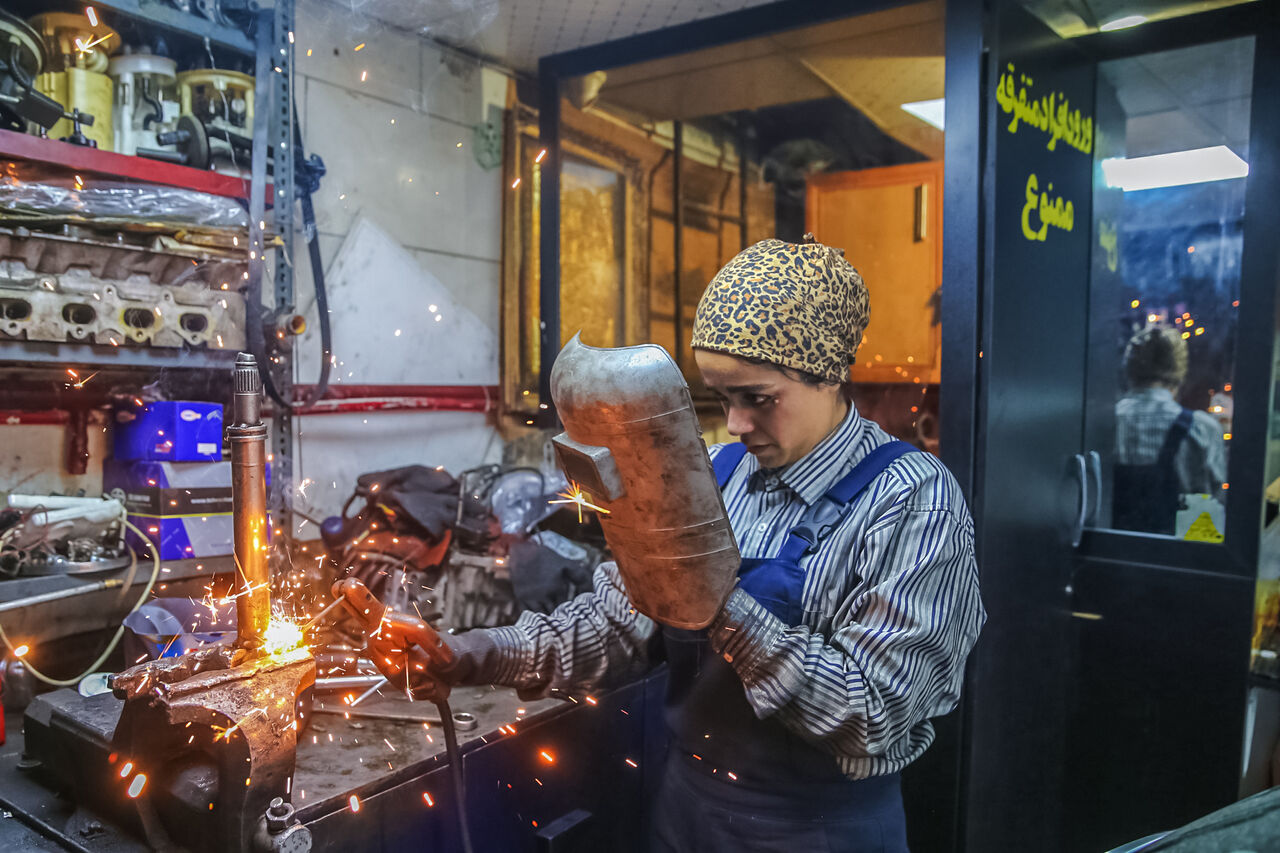
Two Iranian Girls Training to Become Mechanics

Kiana Yarahmadi, holder of a BA degree in Law, and Niloufar Farahmand, with a BA in Graphic Design, both 29 years old, have been learning how to repair cars for 5 months now.

They are friends. As they were interested in becoming mechanics, and after consulting with their families, they began to work as apprentices at a mechanic’s in Tehran.

They believe they can share their experiences with other women after receiving the necessary training.

Ali Hamooni, the owner of the mechanic’s, and his colleague Hadi believe the two girls have a flare for repairing cars.

Kiana and Niloufar even go to work on holidays to keep learning about repairing cars.

What follows are IRNA’s photos of the two girls getting trained: