Thursday, April 23, 2026
Home Blog Page 299

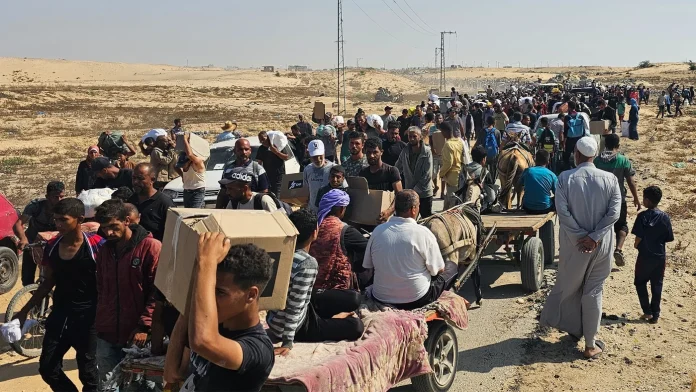
US contractors fired live bullets at Gazans queuing for food: AP

The report published on Thursday was based on testimony from two US contractors and videos obtained by AP.

The contractors said their colleagues frequently threw stun grenades and fired pepper spray in all directions at the sites, including towards Palestinians.

They also added that staff hired to secure the aid distribution sites were often unqualified, heavily armed and had an open licence to do as they wished.

“There are innocent people being hurt. Badly. Needlessly,” one contractor said, adding that staff monitor anyone deemed “suspicious” and pass that information over to the Israeli military.

The US and Israeli-backed GHF began operating in late May, following a three-month total blockade on the Gaza Strip by Israeli forces.

Since then, at least 600 Palestinians have been killed and around 4,000 wounded by Israeli soldiers while attempting to access food and aid supplies.

Internal communications seen by the AP revealed that during a single distribution of aid last month, security contractors used 37 stun grenades, 27 rubber and smoke “scat shell” projectiles and 60 cans of pepper spray.

The report added that this tally did not include the use of live ammunition.

One of the contractors shared a photo with the AP of a woman lying in a donkey cart after being struck in the head by a stun grenade.

Videos shared by the sources showed crowds of Palestinians trying to receive aid at the sites, “amid the sound of bullets, stun grenades and the sting of pepper spray”, the AP reported.

In other videos, English-speaking men are heard talking about how to disperse crowds and encouraging each other following a volley of gunfire.

One contractor stated that he saw other contractors shooting at Palestinians from a tower above the site as they were leaving the area, having collected food parcels. He said it was unclear why they were shooting at people departing the site.

AP used audio forensic experts to verify the sound of ammunition in the videos.

The contractors noted that Israel’s army was also using the aid distribution system for accessing intelligence.

The sources added that cameras monitoring the sites are screened by American analysts and Israeli soldiers in a control room on the Israeli side of the Karem Abu Salem (Kerem Shalom) crossing into Gaza.

One said that some of the cameras have facial recognition software, and flag people of interest. Israeli soldiers often watch the screen and cross-check it with their own drone footage from the sites, he added.

A spokesperson for Safe Reach Solutions, a logistics company subcontracted by the GHF, told the AP that there hadn’t been any serious injuries at their sites.

The GHF announced its team was composed of seasoned humanitarian, logistics and security professionals, and that people with a “vested interest” were trying to make the aid organisation fail.

Earlier this week, more than 170 NGOs called for immediate action to close the GHF scheme and revert back to United Nations-led aid coordination mechanisms.

Previously, during the two-month ceasefire between mid-January and mid-March, 400 aid distribution points were in operation in the enclave. These have now been replaced by four militarised distribution sites, forcing over two million people into crowded zones where they face Israeli gunfire.

Israeli military officials admitted they fired at Palestinian civilians lining up for aid in Gaza even though they posed no threat, according to a report by Haaretz newspaper on Monday.

The admission follows a report by the newspaper on Friday in which Israeli soldiers admitted they were directed to fire at starving civilians at the GHF distribution points in Gaza.

Haaretz reported that officials in the Southern Command unit said they were “ordered to fire at unarmed crowds near food distribution sites in Gaza, even when no threat was present”, and that senior Israeli officers acknowledged that civilians had been killed due to “inaccurate and uncalculated” artillery fire.

Last week, 15 human rights and legal organisations cautioned that the GHF may be complicit in international crimes.
Netanyahu’s son quietly purchased UK apartment under different name: Report

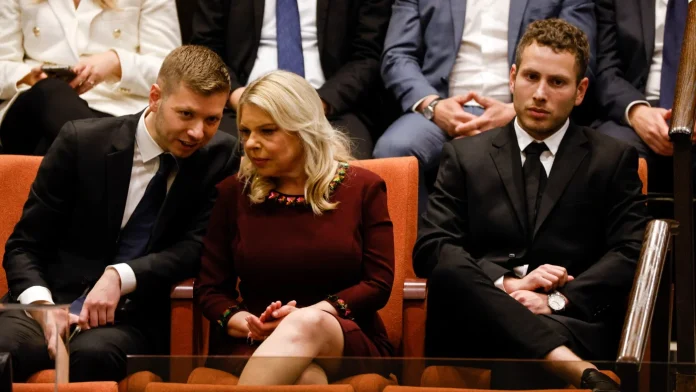
Israeli business and economics daily the Calcalist reported on Wednesday that Avner Netanyahu purchased a £502,500 ($680,000) apartment in Oxford in October 2022, following a proposed mini-budget set out by then-UK Prime Minister Liz Truss that sent the pound plummeting.

According to the newspaper, Netanyahu paid exactly 1.98 million shekels for the apartment, slightly below the foreign asset reporting threshold of two million shekels.

According to the Calcalist, had the apartment been purchased “just 10 days before or after” Truss’s mini-budget, it would have been worth more than two million shekels, which would have required mandatory reporting of overseas property to Israeli tax authorities.

Citing the UK’s Land Registry website, the Calcalist also reported that Netanyahu made the purchase under the name Avi Avner Segal – a legal alias Avner adopted based on his paternal grandmother’s maiden name.

It added that Netanyahu made the purchase without having to take out a mortgage. As of 2025, Israeli Prime Minister Benjamin Netanyahu earns an annual salary of at least $150,000.

Avner Netanyahu defended the purchase, telling the Calcalist that the name change was legal and had been registered with the interior ministry.

“I changed my name on my ID card at the Israeli interior ministry, and then changed my passport and driver’s licence. It’s a package deal,” he said.

“We reported everything that was necessary to the tax authorities in Israel and Britain,” he continued, adding, “All of my conduct was legal, both here and there.”

Now working at the strategic consulting firm Strategy&, part of the accounting firm PwC, Netanyahu said the name change had been prompted by security concerns.

At the time, his father was serving as opposition leader, and his request for Shin Bet protection while studying abroad had been denied.

“I didn’t have security at the time,” he told the Calcalist.

“I knew that if I walked around with that name, in another country with Muslims, I would get stabbed by the first person who heard it at a train station.”

Senior Tehran clerics declare Trump, Netanyahu ‘Enemies of Islam’ in harsh religious ruling

Trump Netanyahu

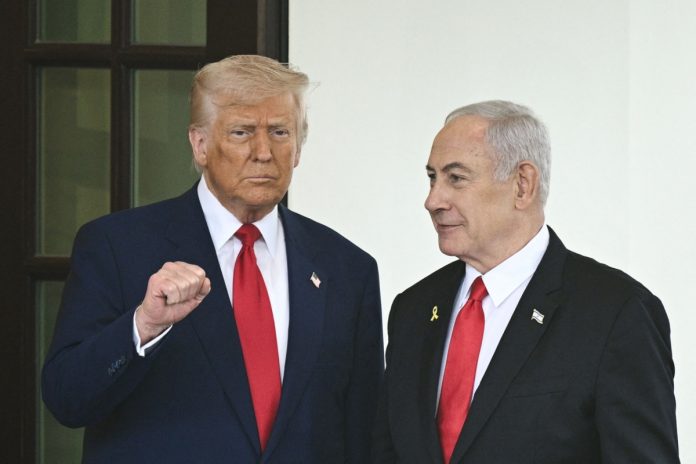
The statement brands both leaders as “Kafir Ḥarbi” (belligerent non-believers), “Mufsid fī al-Arḍ” (corrupt on Earth), and “Mahdur al-Damm” (worthy of death), citing threats made against senior Shia religious figures.

The ruling, signed by over a dozen senior clerics and teachers of jurisprudence from the Tehran seminary, was in response to statements by Trump targeting Iran’s Leader Ayatollah Seyyed Ali Khamenei.

The scholars described the US president as a “reckless clown” and warned that any aggression against Islamic leaders would provoke wide-scale retaliation from Muslims around the world.

Quoting Quranic verses and Islamic legal principles, the statement slammed Trump and Netanyahu for war crimes, including inciting regional conflict, violating international agreements, and causing mass civilian casualties in the Middle East.

The signatories called on Muslims globally, especially the youth, to remain vigilant and follow the directives of religious leaders in resisting perceived foreign aggression.

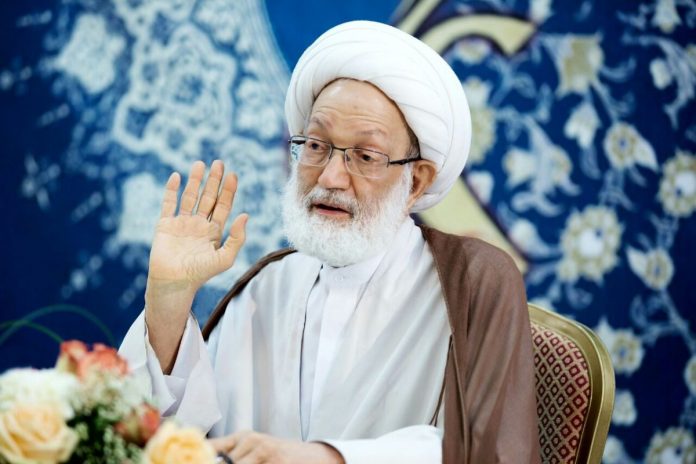
Bahrain’s most prominent cleric: Threats against Iran’s Leader an affront to all Muslims

In a statement on Thursday, Sheikh Qassim strongly condemned US President Donald Trump’s threats against Ayatollah Khamenei.

He said Trump’s insults and threats reflect the US president’s ignorance, foolishness, and his sense of inaccuracy in assessing issues and their consequences.

Trump’s behavior constitutes an affront to all Muslims and their sanctities and places a heavy responsibility on all noble Muslim nations, he added.

The leading Bahraini cleric hailed Ayatollah Khamenei as a great epitome of Qur’anic essence and a unique leader in the current era.

He emphasized that Ayatollah Khamenei’s leadership of Iran and his significant role demonstrate the Leader’s sincere loyalty to the Holy Qur’an.

In his customary vile language last week, US President Donald Trump launched a tirade of abuse at Ayatollah Khamenei, claiming that he had prevented the Israeli regime and the American armed forces from assassinating him.

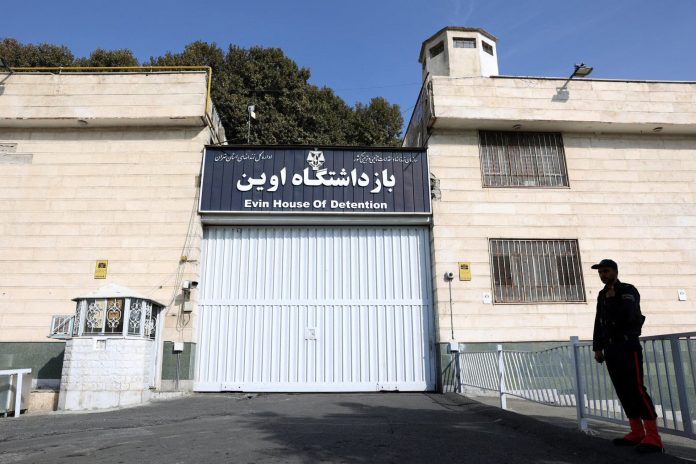
Conflicting reports on the release of Iranian sociologist Saeed Madani

Evin Prison

Earlier on Thursday, journalist and rights advocate Emadeddin Baghi claimed in a social media post that Madani had been released from prison, calling it “one of the best pieces of news in these wartime days” and a “strong response to Iran’s enemies who are counting on internal divisions.”

However, Madani’s wife, Mansoureh Etefagh, later denied the claim, clarifying that her husband remains incarcerated.

She explained that the misunderstanding arose after a phone call between Madani and Baghi was arranged, during which Baghi mistakenly assumed Madani had been freed. “There has been no indication or action toward his release,” she confirmed.

Madani, a well-known sociologist and reformist thinker, was arrested on May 16, 2022. Authorities accused him of “contact with suspicious foreign actors” and “transmitting operational plans to internal elements.”

In a leaked audio file published by BBC Persian in November 2022, a senior intelligence official allegedly cited Madani as one of three key figures targeted by the US for coordinating protests inside Iran.

EU presses China over exports of rare earth elements and Russia-Ukraine war

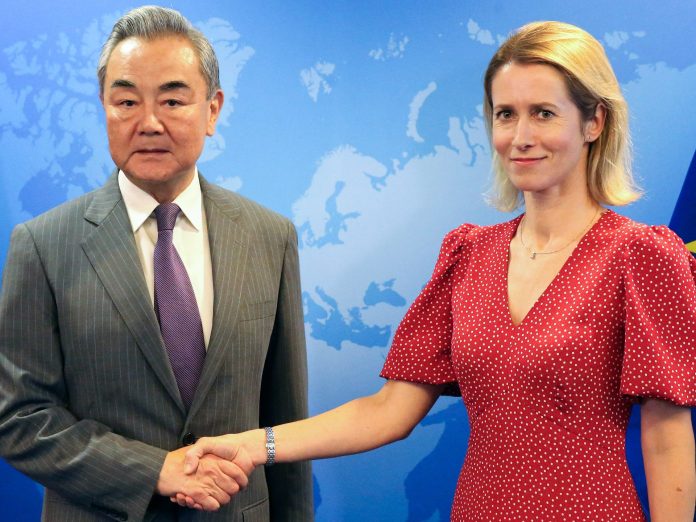
The statement from Kaja Kallas came on Wednesday after a meeting with Chinese Foreign Minister Wang Yi in Brussels.

The EU is seeking to improve its relations with China amid United States President Donald Trump’s tariff war, which has rocked major trading powers.

But instead of improvements, a trade spat has only deepened between Brussels and Beijing over alleged unfair practices by China. The 27-nation bloc is also railing against the flow of vital tech to Russia’s military through China.

On Wednesday in her meeting with Wang, Kallas “called on China to put an end to its distortive practices, including its restrictions on rare earths exports, which pose significant risks to European companies and endanger the reliability of global supply chains”, a statement from her office said.

On trade, Kallas urged “concrete solutions to rebalance the economic relationship, level the playing field and improve reciprocity in market access”.

She also “highlighted the serious threat Chinese companies’ support for Russia’s illegal war poses to European security”.

China announced it does not provide military support to Russia for the war in Ukraine. But European officials say Chinese companies provide many of the vital components for Russian drones and other weapons used in Ukraine.

Kallas called on China “to immediately cease all material support that sustains Russia’s military industrial complex” and support “a full and unconditional ceasefire” and a “just and lasting peace in Ukraine”.

Wednesday’s discussions were to lay the groundwork for a summit between EU and Chinese leaders on July 24 and 25. European Council President Antonio Costa and European Commission President Ursula von der Leyen will travel to China for the summit with Chinese President Xi Jinping and Premier Li Qiang.

Earlier in the day, Wang also met Costa as part of those preparations.

In that meeting, Wang called on both sides to respect each other’s core interests and increase mutual understanding, adding that “unilateralism and acts of bullying have seriously undermined the international order and rules”, according to a Chinese Foreign Ministry statement.

Besides discussions on improving bilateral ties, Kallas and Wang also discussed the situation in Iran.

While both leaders welcomed the de-escalation between Israel and Iran, Kallas stated she had “urged Iran to immediately restart negotiations on its nuclear programme and that Europe stands ready to facilitate talks”, according to a statement from her office.

Kallas and Wang also “agreed on the importance of the Nuclear Non-Proliferation Treaty as the cornerstone of the global nuclear non-proliferation regime”.

British MPs vote to ban Palestine Action as ‘terrorist’ group

Parliament voted 385-26 in favour of the measure against the group on Wednesday, the move coming after its activists broke into a military base last month and sprayed red paint on two planes in protest at the UK’s support for Israel’s war on Gaza.

Critics decried the chilling effect of the ban, which puts Palestine Action on a par with armed groups like al-Qaeda and ISIL (ISIS) in the UK, making it a criminal offence to support or be part of the protest group.

“Let us be clear: to equate a spray can of paint with a suicide bomb isn’t just absurd, it is grotesque. It is a deliberate distortion of the law to chill dissent, criminalise solidarity, and suppress the truth,” said lawmaker Zarah Sultana, a member of the ruling Labour party.

Sacha Deshmukh, chief executive of Amnesty International UK, slammed the move as “unprecedented legal overreach”, pointing out that it gave the authorities “massive powers to arrest and detain people, suppress speech and reporting, conduct surveillance and take other measures”.

“Using them against a direct-action protest group is an egregious abuse of what they were created for,” he added.

The proscription order will reach parliament’s upper chamber, the House of Lords, on Thursday. If approved there, the ban on Palestine Action would become effective in the following days.

The group, which has called its proscription unjustified and an “abuse of power,” has challenged the decision in court and an urgent hearing is expected on Friday.

Launched in July 2020, Palestine Action says it uses “disruptive tactics” to target “corporate enablers” and companies involved in weapons manufacture for Israel, such as Israel-based Elbit Systems and French multinational Thales.

The British government has accused the group of causing millions of pounds of damage through its actions.

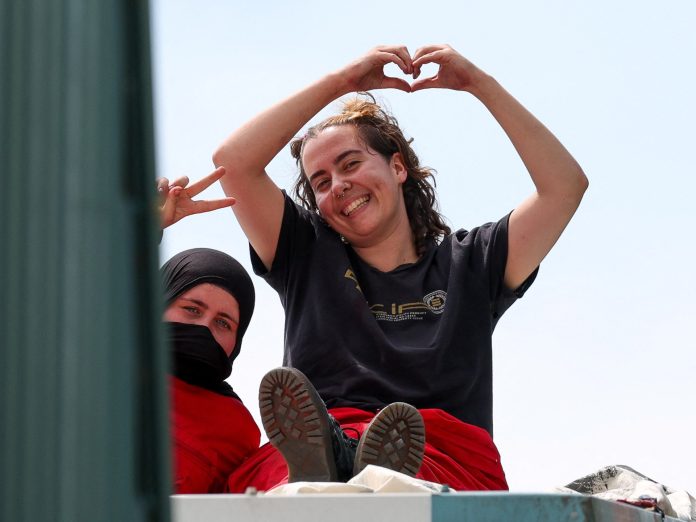
On Tuesday, the group announced its activists had blocked the entrance to an Elbit site in Bristol, southwestern England. Other members reportedly occupied the rooftop of a subcontracting firm in Suffolk, eastern England, that the group had linked to Elbit.

United Nations experts appointed by the UN Human Rights Council had previously urged the UK government to reconsider its threat to proscribe the group, arguing that acts of property damage without the intention to endanger life should not be considered “terrorism”.

Home Secretary Yvette Cooper, the UK’s interior minister, states that violence and criminal damage have no place in legitimate protest, and that a zero-tolerance approach was necessary for national security.

In addition to Palestine Action, the proscription order approved by parliament includes neo-Nazi group Maniacs Murder Cult and the Russian Imperial Movement, a white supremacist group which seeks to create a new Russian imperial state.

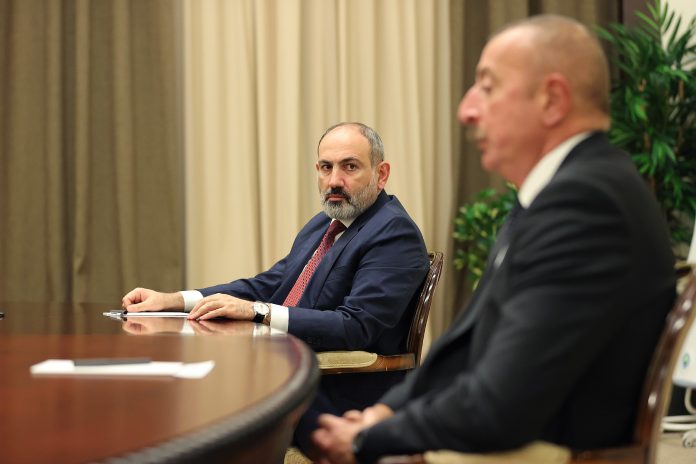
Azerbaijani and Armenian leaders to meet in UAE later in July

Pashinyan Aliyev

The two leaders last met in May on the sidelines of the European Political Community Summit in Tirana, Albania, where they pledged to keep communication channels open.

Although Armenia and Azerbaijan reached consensus on a draft peace agreement in March, Baku is still insisting on several additional conditions before formally signing the deal.

Azerbaijan demands that Yerevan amend its constitution to remove references to Azerbaijani territory, end the European Union Monitoring Mission (EUMA) in Armenia, and dissolve the OSCE Minsk Group, which Baku has accused of bias over the past three decades.

Armenia and Azerbaijan have been in conflict since the 1993 Nagorno-Karabakh war, when Armenian forces seized the disputed enclave in the wake of the collapse of the Soviet Union.

After a bloody six-week war in late 2020, Azerbaijan launched a military operation in September 2023 to take back Nagorno-Karabakh, resulting in a ceasefire agreement. Most ethnic Armenians fled, and Artsakh, the breakaway region, was officially dissolved on 1 January 2024.

Two sources familiar with the matter told MEE that the planned meeting in Dubai is a positive sign, indicating that both parties remain willing to engage despite ongoing disagreements.

Pashinyan faces elections next year, and experts say it is unlikely he could push through a constitutional referendum before the vote.

Meanwhile, Turkey has been quietly urging Baku to sign the peace agreement, reminding Azerbaijani officials of shifting dynamics in the region, such as Iran’s waning power.

Ankara’s own normalisation process with Armenia is tied to the potential peace deal between Azerbaijan and Armenia.

Turkish officials view Armenia as a key country for the so-called Middle Corridor, which would directly connect Turkey to Central Asia. Turkish companies are also eager to participate in infrastructure projects in Armenia.

Despite Baku’s objections, sources said Turkish President Recep Tayyip Erdogan hosted Pashinyan last month in the first official visit by an Armenian leader to Turkey.

A separate source familiar with Azerbaijan’s relations with the United Arab Emirates noted that Aliyev has a close relationship with UAE ruler Mohammed bin Zayed Al Nahyan.

The source added that the UAE is eager to host the talks as part of its efforts to improve relations between the two Caucasian nations.

On 25 June, UAE Foreign Minister Sheikh Abdullah bin Zayed Al Nahyan held phone calls with both Armenian Foreign Minister Ararat Mirzoyan and Azerbaijani Foreign Minister Jeyhun Bayramov.

“Minister Mirzoyan and Sheikh Abdullah bin Zayed Al Nahyan exchanged views on efforts aimed at ensuring peace in the South Caucasus and the Middle East,” according to a readout from the Armenian foreign ministry.

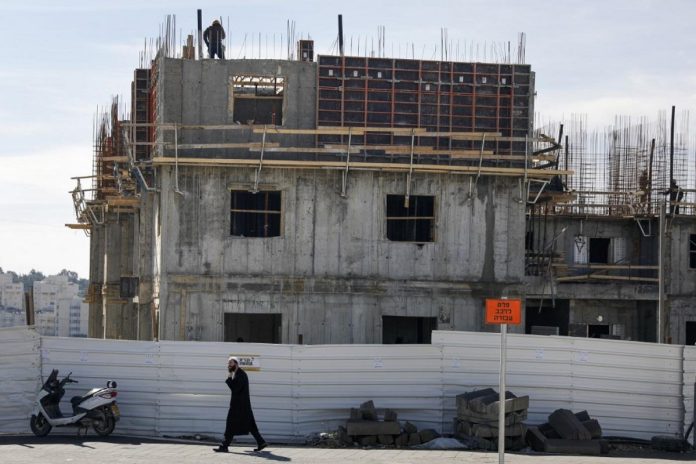
US says ‘stands with Israel’ after calls by Israeli ministers to annex West Bank

Israeli settlement

Asked by Anadolu about Israeli ministers’ urging Prime Minister Benjamin Netanyahu to immediately annex the occupied West Bank, State Department spokesperson Tammy Bruce directed questions to the White House.

“Our position regarding Israel, the choices it makes, is that we stand with Israel and its decisions and how it views its own internal security,” she said.

Pressed on whether the US still backs a two-state solution to the Israeli-Palestinian conflict, Bruce stated President Donald Trump is “realistic about the current state of affairs.”

“Clearly, Gaza is an uninhabitable place. It needs to be rebuilt with the help of Arab partners,” she continued, adding, “We don’t have a ceasefire yet. Hopefully, that will change. But that is getting quite ahead of the dynamic in general. So that is what the president is focused on.”

Fourteen ministers from Netanyahu’s Likud Party urged the premier on Wednesday to immediately annex the occupied West Bank.

In a letter addressed to Netanyahu and shared by far-right Finance Minister Bezalel Smotrich on X, signatories demanded the government “apply sovereignty over Judea and Samaria (West Bank) before the end of the Knesset summer session,” which ends July 27.

The ministers argued that the current “strategic partnership and backing and support of the US and President Donald Trump create a favorable time to lead this move (annexation) now.”

It warned that recognizing settlement blocs while establishing a Palestinian state on the remaining land poses an “existential threat to Israel.”

Among the signatories were the ministers of defense, economy, agriculture, energy, communications, transportation, justice, tourism, innovation, culture, diaspora affairs, education, social equality, regional cooperation and Knesset Speaker Amir Ohana.

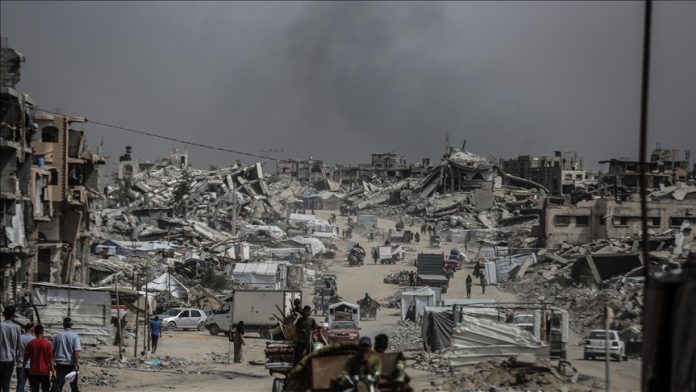
85% of Gaza Strip under Israeli military orders, militarized zones: UN

Gaza War

The displacement orders are “severely hampering people’s access to essential humanitarian support and the ability of aid workers to reach those in need,” spokesperson Stephane Dujarric stated at a news conference.

Saying that Israel’s latest displacement order for two neighborhoods in Khan Younis, which hosts up to 80,000 residents, he noted that UN partners “working on water, sanitation and hygiene also tell us that Al Satar, a key water reservoir, has become inaccessible as a result of the order.”

Al Satar is the main water distribution hub for Khan Younis and a critical supply point for water coming through the Israeli pipeline in the area.

“Any damage to the reservoir could lead to a collapse of the city’s water distribution system, with grave humanitarian consequences,” he added.

Warning that displacement orders also “strain vital services and push people into increasingly smaller swaths” in the enclave, Dujarric said that “since the breakdown of the ceasefire in March and as of yesterday, some 714,000 people have been forcibly displaced once more across Gaza, with nearly 29,000 displaced in just 24 hours between Sunday and Monday.”

He noted “that no shelter assistance has entered Gaza in four months,” and added: “Our shelter partners say that 97% of the sites surveyed reported displaced people sleeping in the open.”

Despite international calls for a ceasefire, the Israeli army has pursued a genocidal war on Gaza, killing more than 57,000 Palestinians, most of them women and children, since October 2023.

Last November, the International Criminal Court issued arrest warrants for Israeli Prime Minister Benjamin Netanyahu and his former Defense Minister Yoav Gallant for war crimes and crimes against humanity in Gaza.

Israel also faces a genocide case at the International Court of Justice for its war on the enclave.