Saturday, May 2, 2026
Home Blog Page 2660

Russia, China to Doubt Iran’s Sincerity If It Holds Talks with US: Conservative Daily

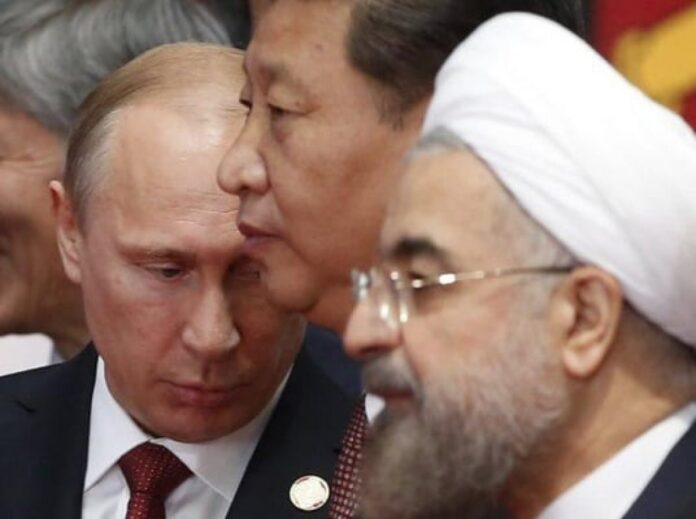
Iranian President Hassan Rouhani (right), Chinese President Xi Jinping (centre), and Russian President Vladimir Putin (left)

The Kayhan daily wrote on Saturday that even talk of negotiations could make the situation more difficult for Iran.

“Even the talk of negotiations will make channels other than the US and Europe insecure for us as it will leave countries such as China, Russia and India in the dark,” wrote the paper.

“Talk of negotiations will make these countries doubtful about sincerity in seeking to reform our foreign policy and turning to “the policy of prioritizing the East” as they have already become doubtful and shown reluctance,” Kayhan added, apparently referring to India’s failure to invest in Iran’s Chabahar port and China’s postponement of signing the 25-year strategic cooperation deal with Tehran.

“What lies before us is an arena to overcome and achieve victory against the US,” it noted.

“We have weathered difficult times by defeating American politicians and have reached a point where we can overcome the United States’ future policies against us more easily than before,” added the paper.

“This success tells us to increase pressure on the United States under [Joe] Biden to have a healthier and more convergent region,” it said.

The newspaper added the US is now in a position which economists describe as “diabolical decline,” meaning there is no end to this downward trend.

“The United States under Biden will annoy the world less than before as the US has lost its power of containment,” it said.
How Iran-Thailand Trade Can Affect Global Currency Markets

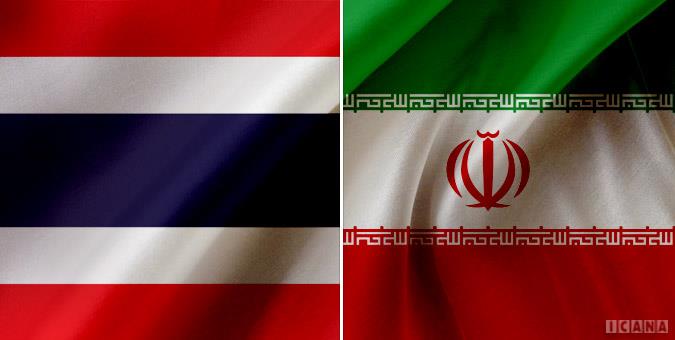
But the opportunities that exist for Iran and Thailand to build on an historic political and economic relationship in recent years have been limited by external factors. But what might growing trade links between the two now mean for the global currency market?

The most restrictive factor standing in the way of Iran-Thai trade links for a number of years were US sanctions. Relaxed as part of a multi-nation deal concerning Iran’s nuclear program, the lifting of sanctions offered hope of new links between Iran and Thailand. But these would be dampened once again following the election of Donald Trump as US president – and rising tensions between Iran and US that threatened to leave Thailand in a highly difficult position.

The impact of US sanctions on bilateral trade

For trade between Iran and Thailand, hopes are again high after the 2020 US election. As Joe Biden looks to distance himself from his predecessor’s policies, Iran have urged the president-elect to lift the sanctions once more. The potential for Iran and Thailand is clear. In 2012, Thai foreign minister Surapong Towichukchaikul explained: “Trade between Thailand and Iran could not increase for a long time because of the sanctions.”

Oil and petrochemicals are key export markets affected by the US sanctions. For Thailand, the return of sanctions saw Thailand lower its imports of petrochemical products from Iran to zero. Other countries followed suit, which led to a spike in global oil prices. For international traders, the price of crude oil often proves a key economic indicator; a key factor that drives the global forex calendar. For Iran, it has forced officials to focus on non-oil exports.

The challenges facing the Iranian economy

Amid the initial sanctions placed on Iran, the nation sought to strengthen its links with Thailand through barter trade. In exchange for oil and gas for domestic energy needs, Iran would import millions of tonnes of rice from Thailand. But, with sanctions cutting the ability to export its core product of oil, Iran is at risk of a deeper trade deficit – despite nations such as Thailand seeking to foster stronger ties.

The abandonment of the ‘nuclear deal’ and the reimposition of US sanctions has seen the value of the Rial halve against the US dollar. With the pressure placed on the currency, it has led to a shortage of imported goods. The impact of this could be seen from data that shows a slowdown in non-oil trade between Iran and Thailand for the year ending 20 March 2019. This came after a period of promising growth for the two years leading up to the US exiting the ‘nuclear deal’.

Renewed hopes for Iran-Thailand trade links

The election of Joe Biden, however, restores hope. If sanctions are indeed lifted, there may be a significant bounce in trade between Iran and Thailand – much like first time around. A major uptick could be generated if Thailand is again free to import Iranian oil free from the threat of US retaliation. For Iran, establishing stronger trade links with Thailand could also open up the rest of the ASEAN region – not least due to a new regional free trade deal signed in late 2020.

For Iran and Thailand, stronger bilateral trade links have the potential to strengthen the value of their respective currencies. It could also have implications for the global oil price. If it leads to a drop in global prices, the expectation is that it will increase the value of the US dollar.

For investors, the impact of sanctions coming to an end will be felt across the global forex and commodities markets. But recent trade developments in the south-east Asian region too could shift perceptions on the role of the US. As western countries continue their unsure relationship with Iran, nations such as Thailand stand ready to forge new ties with their historic partners.

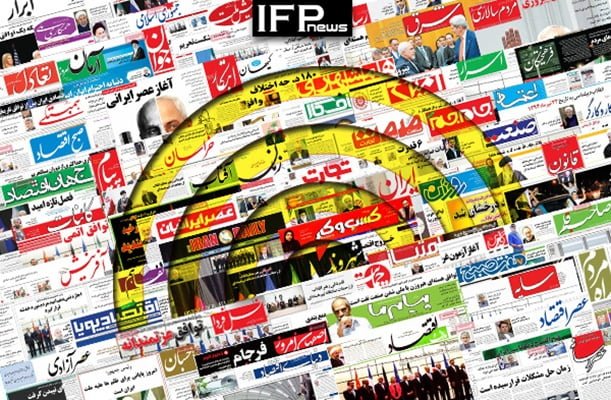
A Look at Iranian Newspaper Front Pages on November 21

Iranian Newspapers

Aftab-e Yazd Newspaper:

1- Sanctions Will Be Removed If Biden Wants So

A Look at Iranian Newspaper Front Pages on November 21


Arman-e Melli Newspaper:

1- Democrats to Start with Removal of Food and Medicine Sanctions

2- Wave of Shutdown amid Horrific Surge in COVID-19

3- They Tried to Prevent Major Regional Transit Routes from Passing through Iran

A Look at Iranian Newspaper Front Pages on November 21


Ebtekar Newspaper:

1- Iran’s Foreign Ministry Spokesman Denies Exchange of Message between Tehran, Washington

2- Fate of World’s Populists after Trump

A Look at Iranian Newspaper Front Pages on November 21


Etemad Newspaper:

1- Iran, P4+1 Have the Political Motivation to Revive JCPOA

2- Trump Lovers Embarrassed in Iran [Editorial]

A Look at Iranian Newspaper Front Pages on November 21


Ettela’at Newspaper:

1- Leader’s Military Aide: Iran Not to Negotiate with Anyone over Its Military Power

A Look at Iranian Newspaper Front Pages on November 21


Iran Newspaper:

1- Two Vital Weeks to Contain Coronavirus Outbreak

2- IRGC Chief: Iran Not Geographically Bound in Defending Its Security, Vital Interests

A Look at Iranian Newspaper Front Pages on November 21


Javan Newspaper:

1- IRGC to Navigate World Waters with Ocean-Going Warship

2- Europe Feels Pain after Iran’s Nuclear Fuel Injection

A Look at Iranian Newspaper Front Pages on November 21


Kayhan Newspaper:

1- Shahid Rudaki Warship Joins IRGC Navy Fleet

2- Coronavirus Totally Defeated in China

A Look at Iranian Newspaper Front Pages on November 21


Khorasan Newspaper:

1- Iran among 20 Leading Countries Involved in COVID-19 Vaccine Development

A Look at Iranian Newspaper Front Pages on November 21


Mardom Salari Newspaper:

1- Iran Denies Claim Araqchi Contacted Biden

2- Trump Thinking of Taking Revenge against Biden

A Look at Iranian Newspaper Front Pages on November 21


Shargh Newspaper:

1- Coronavirus and Destruction of Salman’s Dreams

2- Americophobia or Delaying Negotiations (until 2021 Iran Elections) [Editorial]

A Look at Iranian Newspaper Front Pages on November 21

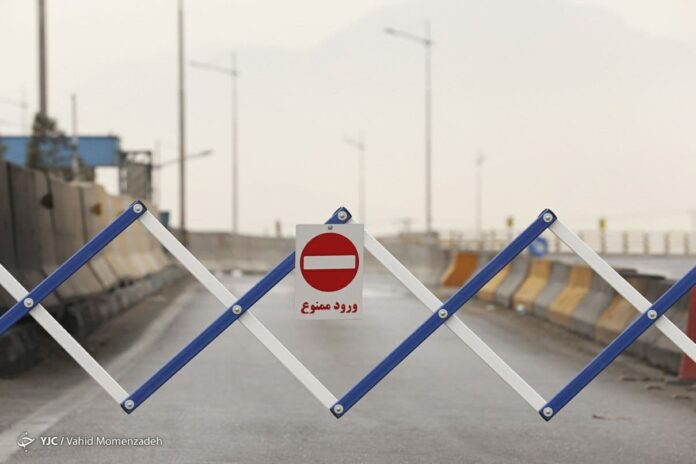
Iran Starts Enforcing Partial Lockdown to Contain COVID-19

Speaking in a Saturday meeting of the National Coronavirus Headquarters, President Hassan Rouhani urged citizens to feel responsible and cooperate with relevant bodies to successfully implement the partial lockdown.

“All state and non-governmental institutions should join hands to enforce these restrictions,” he said.
“Undoubtedly, we can implement this plan successfully by fully abiding by health protocols and avoiding family and social gatherings and reducing travel,” he said.

The president noted the new measures are put in place following the third surge in the disease.

“The main objective is to contain the spread of the virus and identify and treat infected people as soon as possible and offer good healthcare to people who must be put in quarantine,” President Rouhani said.

He urged people to take the danger posed by COVID-19 seriously and observe social distancing rules.

The president said monthly cash handouts will be offered to around 30 million people for 4 months whose businesses and income have been affected by the new closures.

“Moreover, ten million households will each receive a10-million-rial loan, which will be repaid by installment in 30 months,” he said.

According to the spokesperson for the National Coronavirus Headquarters, more than 100 cities categorized as high-risk red zones are partially shut down under the new program. In these areas, which include almost all provincial capitals, restrictions are imposed on the businesses and activities of the occupation categories 2, 3, and 4 (non-essential occupations).

The limitations enforced in the orange zones would apply to 150 cities, while at least 155 other towns will come into the category of yellow zones with low risk of coronavirus, the spokesperson added.

According to the new restrictions in the areas categorized as red zone, only a third of the employees will be allowed to leave home for work purposes, and road travels (entering and leaving the zone) would be also limited.

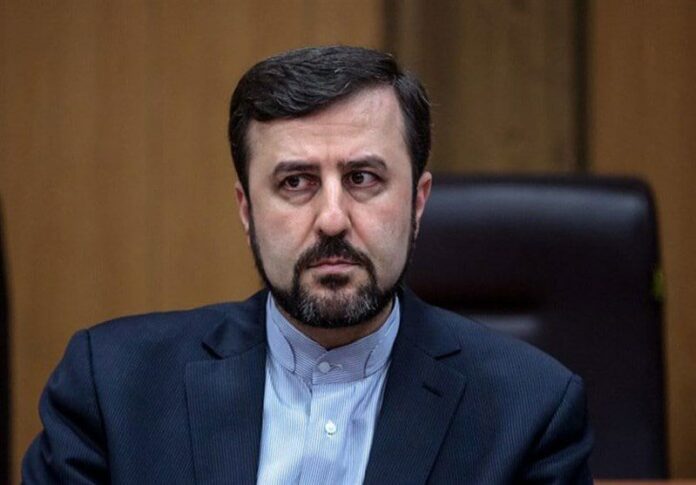
Iran Urges Int’l Community to Pressure Israel into Joining NPT

Kazem Gharibabadi added all Israeli nuclear activities, installations and materials should be subjected to the safeguards agreements of the International Atomic Energy Agency (IAEA).

“It is regrettable that the Israeli regime is the only non-party to the NPT in the Middle East and, accordingly, prevents the treaty from becoming universal,” he said in a speech at a seasonal meeting of the IAEA’s Board of Directors.

The top official noted that Israel’s covert nuclear capabilities coupled with the regime’s full non-compliance with international rules and norms pose a serious threat to security and stability in the region and across the world.

Not being a signatory to the NPT and not having joined the IAEA’s Comprehensive Safeguards Agreement (CSA) have apparently turned into an excuse for some countries to dodge their responsibility with regards to the full and verifiable implementation of their obligations. Accordingly, he expressed concern over Saudi Arabia’s refusal to implement the IAEA’s Comprehensive Safeguards Agreement as well as the condition of the United Arab Emirates (UAE) in that regard.

“Riyadh is not fully implementing the SCA by possessing small amounts [of materials], and the UAE still officially has a protocol with the IAEA which allows the country to possess small amounts,” added the top Iranian diplomat.

“As long as they refuse to revoke the protocol, as the IAEA’s Secretariat has demand time and again, the UAE will not feel responsible at all to fully and effectively implement the CSA,” he said.

“As for Saudi Arabia, the reality is that the IAEA is not given the least authority to verify the country’s nuclear activities,” said the official.

“With regards to the UAE, although the country is, in Emirati officials’ own estimation, implementing the CSA and the Additional Protocol, the country still maintains a protocol which authorizes them to possess small amounts; hence, they can stop fulfilling their commitments whenever they wish,” he said.

Gharibabadi noted failure to implement the IAEA’s safeguards agreements allows Riyadh and Abu Dhabi to conceal some of their nuclear activities without allowing them to come under the IAEA’s supervision.

He criticized the so-called advocates of non-proliferation, who have sealed their lips in the face of these countries’ non-compliance. He also slammed some IAEA member states for cooperating with non-compliant countries to help them develop their nuclear capabilities.

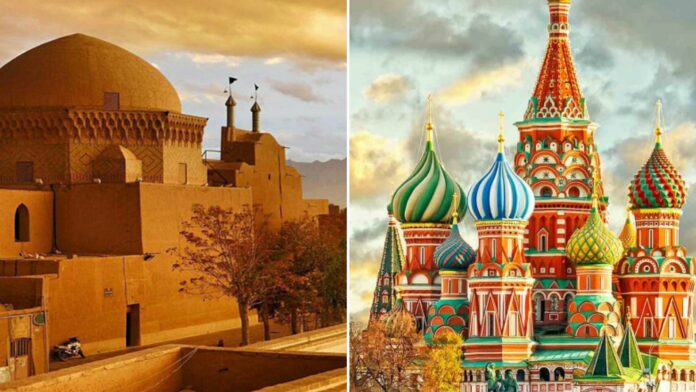
Tehran, Moscow to Boost Tourism Cooperation after Pandemic

Iranian Minister of Tourism, Cultural Heritage, and Handicrafts Ali-Asghar Mounesan said the COVID-19 outbreak has kept the two sides from moving forward with bilateral cooperation programs.

“We had drawn up a special plan for Russia, but unfortunately we were hit by the coronavirus outbreak,” said the minister in a meeting with Russian Ambassador to Tehran Levan Dzhagaryan.

Mounesan said Iran wanted to hold a meeting like the one it held with authorities of China’s private and tourism sectors in order to establish links between tourism agencies of Iran and Russia.

“Iranian tourists like Russia and are interested in traveling to this country. Therefore, a large number of Iranian tourists travelling to Europe can go to Russia as well. We would like to see the number of Iranian tourists to Russia rise,” said the minister.

He said trips to Iran and Russia by tourists of both countries can bring the two nations closer together and make them get more familiar with each other.

“The coronavirus outbreak restricted our programs.

We intended to … travel to Russia with a 40-strong delegation and hold a handicrafts exhibit there and run Iranian performances for several nights, so that Russian travel agencies would get more familiar with Iran’s tourist potential, and so would Iranian agencies,” he said.

The Russian ambassador, in turn, said he agreed with Mounesan’s viewpoints on the promotion of mutual tourism cooperation.

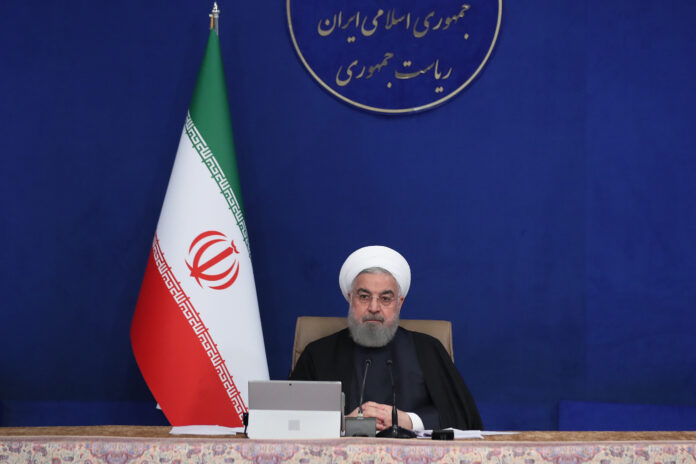
President Thanks Domestic Firms for Developing Rapid COVID-19 Diagnosis Test

Speaking in a Wednesday cabinet session, President Rouhani said the kits can diagnose the disease in a very short time.

“When these kits are used, the result of the test is known in less 20 minutes. This is of great help,” he said.

The president noted domestic firms are now developing many pieces of equipment used to treat coronavirus patients.

“We are now self-sufficient in producing CT-scan devices and ventilators. We do not need to import these products from abroad and our knowledge-based companies are producing them inside the country,” President Rouhani said.

“We are now producing in the country all the medicines said to be useful in treating COVID-19,” said the president.

He underlined Iranian companies are also working hard to produce vaccines for coronavirus.

“Efforts are being made to develop a vaccine for coronavirus,” said Rouhani.

“Of course, we have been trying to buy vaccines from other countries as well, so that we can purchase vaccines from other countries if they develop it sooner,” he said.

“Still, we will help all knowledge-based companies trying to develop vaccines for COVID-19. We hope to develop a safe vaccine sooner or later,” said the president.

Iran Condemns E3’s ‘Irresponsible’ Statement on JCPOA Commitment

No Change in Iran’s Borders as Karabakh Peace Deal Unfolds: Spokesman

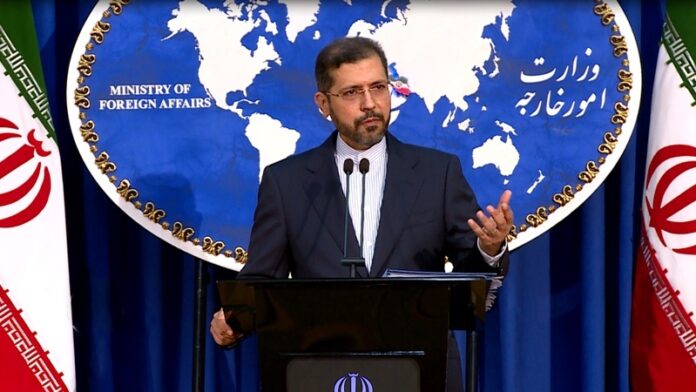
In a Friday statement, Khatibzadeh said the E3 is expected to implement its JCPOA commitments in full, act upon what the Joint Commission has approved, and return to the full implementation of the JCPOA instead of playing such political blame games.

“The Islamic Republic of Iran’s peaceful nuclear activities are totally legal, legitimate, and within the framework of the international law, and are pursued as part of the inherent and essential rights of the world countries,” he noted.

“Following the United States’ withdrawal from the JCPOA and the reimposition of sanctions, and considering Europe’s continued failure to live up to its commitments to helping Iran reap the economic benefits of the removal of sanctions as per the JCPOA, the Islamic Republic took nuclear steps according to the articles 26 and 36 of the JCPOA,” Khatibzadeh said.

“These steps were taken in full compliance with the JCPOA, and the country has always stressed that they will be reversible once the other parties to the JCPOA implement the deal in full,” he added.
The remarks came after France, Germany, Britain in a joint statement on Thursday urged Iran to return to its commitments under the JCPOA.
The Comprehensive Plan of Action (JCPOA) was signed in 2015 between Iran and six world states — namely the US, Germany, France, Britain, Russia and China — and was ratified in the form of Resolution 2231.

However, the US under President Donald Trump unilaterally pulled out of the JCPOA in May 2018 and reinstated the sanctions that had been lifted by the deal.

As the remaining European parties failed to fulfill their end of the bargain and compensate for Washington’s absence, Iran moved in May 2019 to scale back its JCPOA commitments.

Iran’s New COVID-19 Cases Still Above 13,000: Ministry

Coronavirus Figures Continue to Rise in Iran

In a press briefing on Friday, Sima-Sadat Lari said the virus has killed 479 patients since Thursday noon, increasing the overall death toll to 43,896.

So far, she added, 589,025 patients have recovered from the disease or been discharged from the hospital.

Lari said 5,756 patients are also in critical conditions caused by more severe infection.

The spokeswoman noted that 5,706,834 COVID-19 tests have been taken across the country so far.

She said the high-risk “red” zones include Tehran, Qom, Mazandaran, East Azarbaijan, Isfahan, Yazd, Ardabil, Khorasan Razavi, Khuzestan, Hamadan, West Azarbaijan, Bushehr, Chaharmahal and Bakhtiari, Kohgiluyeh and Boyer-Ahmad, Alborz, Lorestan, Markazi, Ilam, South Khorasan, Kermanshah, North Khorasan, Semnan, Gilan, Zanjan, Qazvin, Kurdistan, and Kerman provinces.
The “orange” and “yellow” zones also include Golestan, Hormozgan, Fars, and Sistan and Baluchestan provinces, she added.

Biden Unlikely to Have Smooth Transition of Power: Iran FM

Speaking in an interview with Iran newspaper, Zarif said the US will probably not see a smooth transition period if Biden is confirmed as president.

“It is clear that such a thing will not happen this year. They have already lost two weeks, and two weeks out of seventy days is quite a considerable amount of time,” said the top Iranian diplomat.

“Now, supposing that Mr. Trump stops his bothersome moves and Mr. Biden is confirmed as president, Biden will definitely not go to the White House under normal, conventional circumstances,” he said.

“Several months ago, seasoned American diplomat Mr. Bill Burns, who has seen the transition periods of several US presidents, wrote an article where he predicted that Trump and his team at the White House would not cooperate with Biden if the latter is elected president,” he said.

“So, what we are seeing today are not things which were unimaginable or unpredictable. Given Mr.

Trump’s character and the local base that his has built for himself, and the kind of language that he has used over the past four years, i.e., the language of sowing discord inside the US as he has done in the rest of the world, we are likely to see a period of time full of tensions in the United States,” Zarif explained.