Saturday, December 27, 2025
Home Blog Page 2642

Iran, Italy Eager to Enhance Cultural Ties

Iran, Italy Eager to Enhance Cultural Ties

Yaroslava Romanova, an attaché at the Cultural and Press Section of the Italian Embassy in Iran has held a meeting with president of Niavaran Cultural Centre in Tehran.

After visiting the 11th National Biennial of Contemporary Iranian Ceramic Art in the cultural centre, the Italian diplomat said her country welcomes collaboration with Iran in holding arts events.

Highlighting the history of cultural relations between the two nations and the significant impact of such interaction on the friendship between Italy and Iran, Romanova said her country is trying to create a new period of arts and cultural relations with Iran in the post-coronavirus era through cooperation with renowned centres and galleries, such as Niavaran Cultural Centre.

For his part, the Iranian official expressed Niavaran Cultural Centre’s readiness to sign a cooperation agreement with a major Italian cultural and historical centre.

An agreement would result in closer cooperation and constructive interaction between the artists and cultural figures of the two countries, Ebadreza Eslami Kolaee added.

Nose Job in Iran – 26 Tips for Rhinoplasty

Nose Job in Iran – 26 Tips for Rhinoplasty

What to do before and after a nose job

Rhinoplasty or nose job in Iran is one of the priorities in the life of people, especially young people. while rhinoplasty takes only 2 to 3 hours, but the result can be with the person for the rest of his life. So, it’s really important to follow the Before and after rhinoplasty, tips to achieve the best results from your surgery. In this article, we are going to talk about 26 important preoperative and postoperative care tips that you should observe to have the best rhinoplasty recovery. So, if you decide to have a nose job in Iran or any other country, stay with us.


The purpose of nose job

Before a nose job in Iran, you should determine the purpose of the operation and in case of mental problems, these problems should be treated first. First of all, the applicant’s motivation for rhinoplasty must be completely reasonable and correct in order to get an acceptable result from his rhinoplasty. It doesn’t matter if you want to do a nose job in Iran or any other country can be performed for a variety of purposes, so a person who is a candidate for rhinoplasty (even for the treatment of nose problems) will definitely undergo cosmetic changes. The purpose of rhinoplasty may be one of the following:

  • Shrink the nose
  • Enlargement of the nose
  • Treatment of nasal deviation
  • Removing the nose hump
  • Nasal polyps


Visiting the doctor; most important part of a nose job in Iran

The surgery you choose can definitely have a huge impact on your happiness or discomfort after your nose job. Especially, if you want to enjoy medical tourism in Iran, make sure the surgeon is an expert and see before and after photos of patients. Each person’s request and perception of the postoperative appearance is different, so you cannot achieve the desired result by imitating others. Keep notes of what you learned from the process of having rhinoplasty in mind, and after consulting, choose any doctor who is closer to your criteria. Be sure to consider your health as well, as respiratory problems after surgery can bother you for the rest of your life.


26 tips for before and after rhinoplasty

Preoperative care of nose job

Before rhinoplasty, the person seeking surgery must do some preparative care to have a better recovery period. Here are the most important tips for before nose job in Iran or other countries. But note that you should consult your doctor for more detailed information.

1) You should not use aspirin for two weeks before the operation.

2) Tobacco and nicotine cause narrowing of blood vessels and also impair blood circulation, so avoid using it at least 2 weeks before rhinoplasty.

3) 8 hours before the operation, avoid eating and drinking.

4) Drink plenty of water the day before surgery.

5) Take a shower the night before the operation. In addition to cleansing the body of any makeup, lotions, and creams, it can also help you relax.

6) If you have nail polish, clean it.

7) Be sure to check the ways to get to the clinic or hospital where you are going to go so that you do not have stress on the day of surgery.

8) No jewelry should be with you on the day of the operation.

9) Avoid eating and drinking separately on the day of surgery.

10) Bring your medical test with you on the day of surgery.


Postoperative care of nose job

The first 24 hours after surgery are the most difficult time for a person to recover. During this time, the effects of anesthetics have not disappeared. You may experience some headache, swelling, bruising, and nosebleeds at this time. It is better for the person to just rest at this time and use the painkillers prescribed by the doctor. Here are all the things you should do after your nose job.

1) Be sure to ask your doctor about the best time to take a bath after rhinoplasty.

2) Use an ice compress around the nose and under the eyes for at least 24 hours after surgery to reduce bruising and swelling.

3) Use mixed and soft liquids and foods for up to 24 hours. Avoid foods and fruits that need to be chewed, such as carrots, apples, and so on.

4) Traveling by plane in the first days after rhinoplasty is not recommended.

5) Sneeze or cough with your mouth open so that no pressure is applied to your nose.

6) Avoid pinching and pressing on the nose as it may cause bleeding.

7) Avoid laughing and talking a lot in the first weeks.

8) Avoid eating salt.

9) Do not neglect foods that are useful to reduce facial swelling. Pineapple juice, aloe vera, and celery can help reduce facial swelling. To improve the taste of celery juice, you can mix it with carrot juice.

10) When resting and sleeping, put a few pillows under your head.

11) Use a soft toothbrush.

12) Do not wear prescription glasses or sunglasses for two months. You can replace the lens.

13) For the first few weeks, avoid lowering your head and lifting heavy objects, as well as strenuous exercise.

14) It will take time to reduce the swelling and sticking of the skin of the nose to the skeleton, so the swelling on both sides of your nose will definitely be different, even if both sides are treated the same. So do not worry about this.

15) Gluing is to reduce swelling and the skin of the nose to stick to the skeleton, so be careful how to glue the nose.

16) In the first days and months after rhinoplasty, the shape of your nose is not completely clear, so do not allow other people to judge.


Source: Saadat Travel

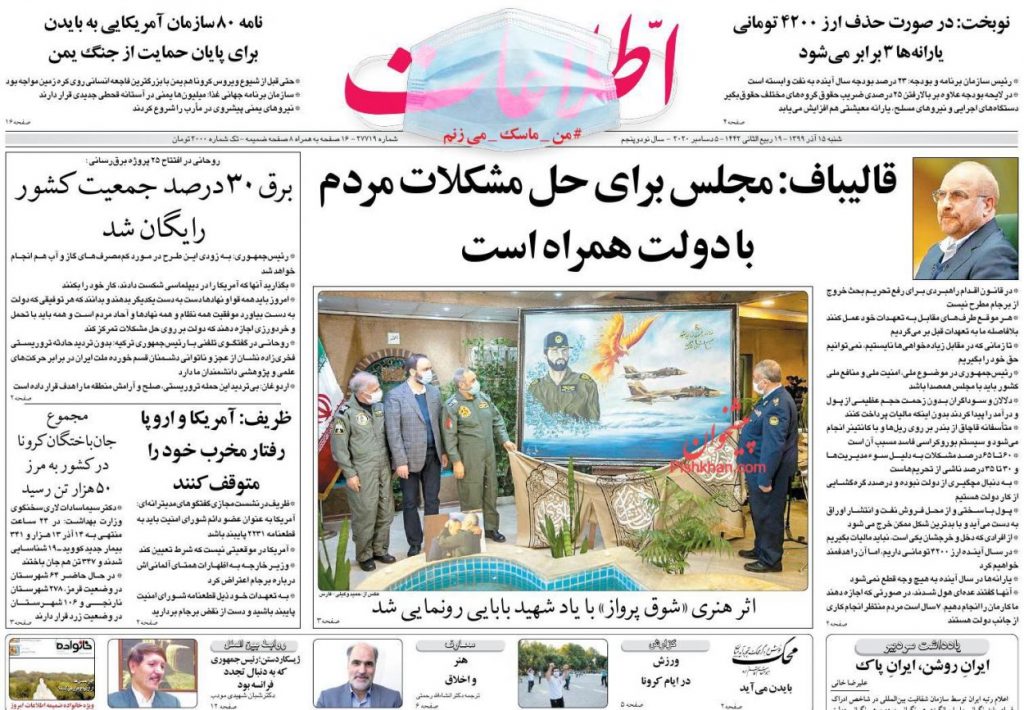
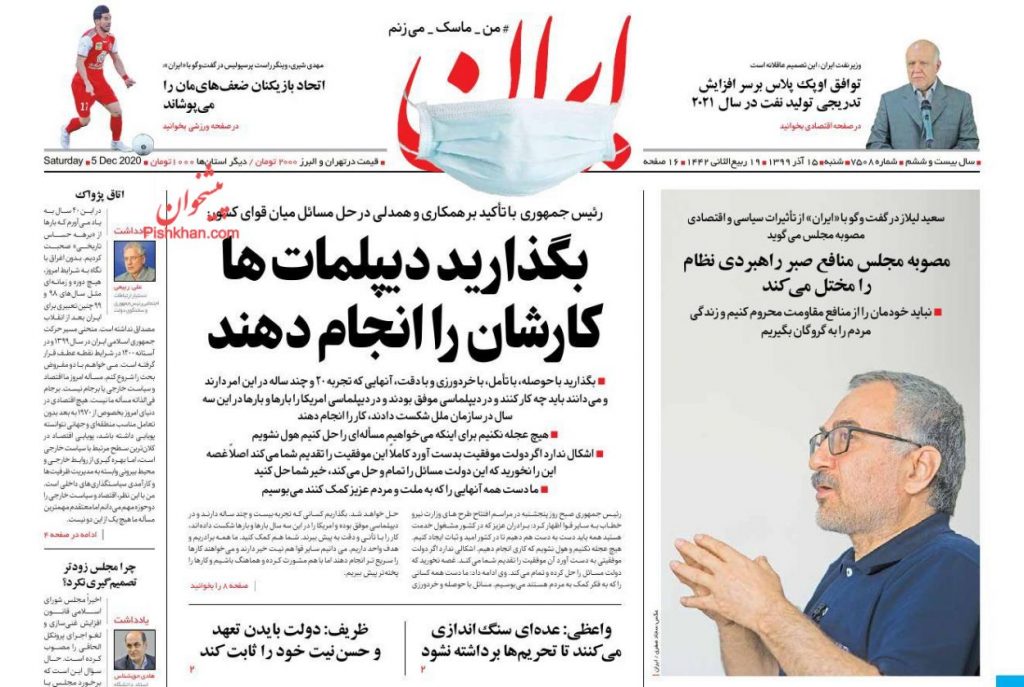
A Look at Iranian Newspaper Front Pages on November 14

A Look at Iranian Newspaper Front Pages on November 18

Iranian Newspapers

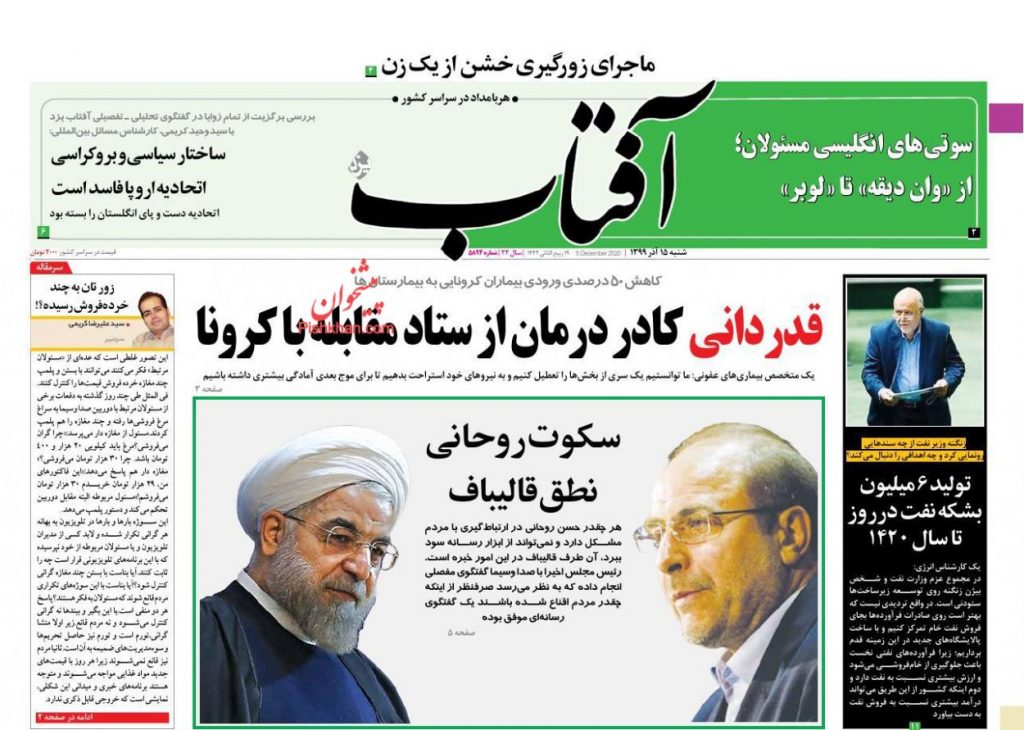
Aftab-e Yazd Newspaper:

1- Reformists Hopeful about Revival of JCPOA

2- US Government Responsible for Daily Deaths of Over 400 COVID-19 Patients

* Oil Minister: US Bans Deprive Iran of Oil Revenues, Hence Challenges in Fighting COVID-19

A Look at Iranian Newspaper Front Pages on November 14


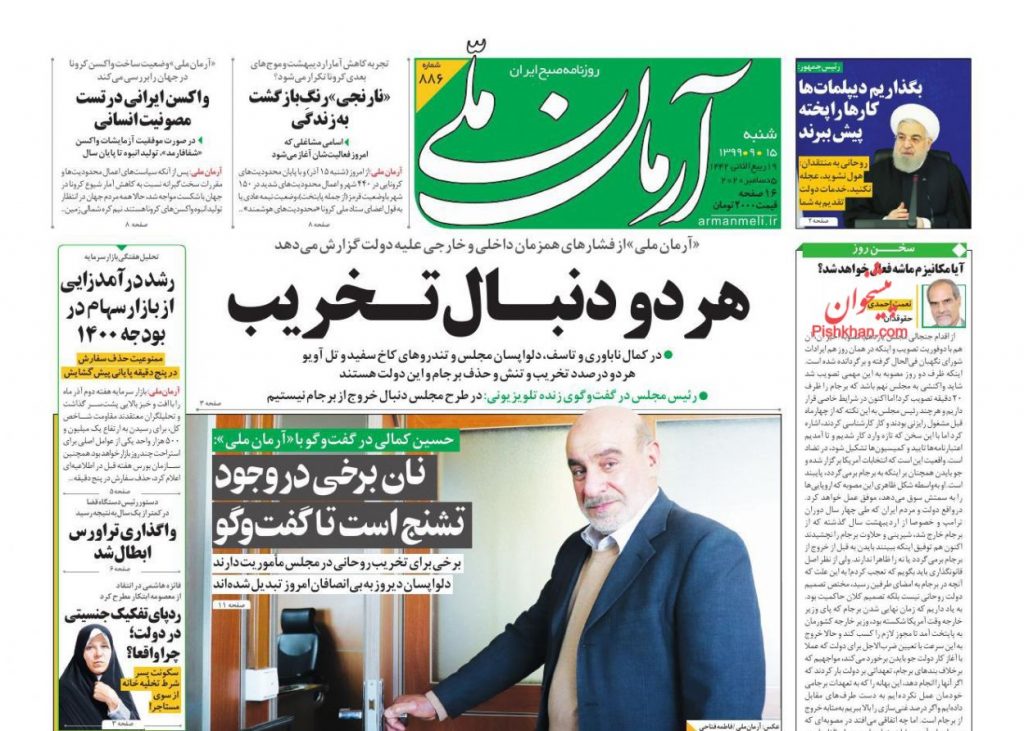
Arman-e Melli Newspaper:

1- Populist Politicians Hold Economy Hostage

2- Ahvaz Buried Under Water with First Autumn Rain

A Look at Iranian Newspaper Front Pages on November 14


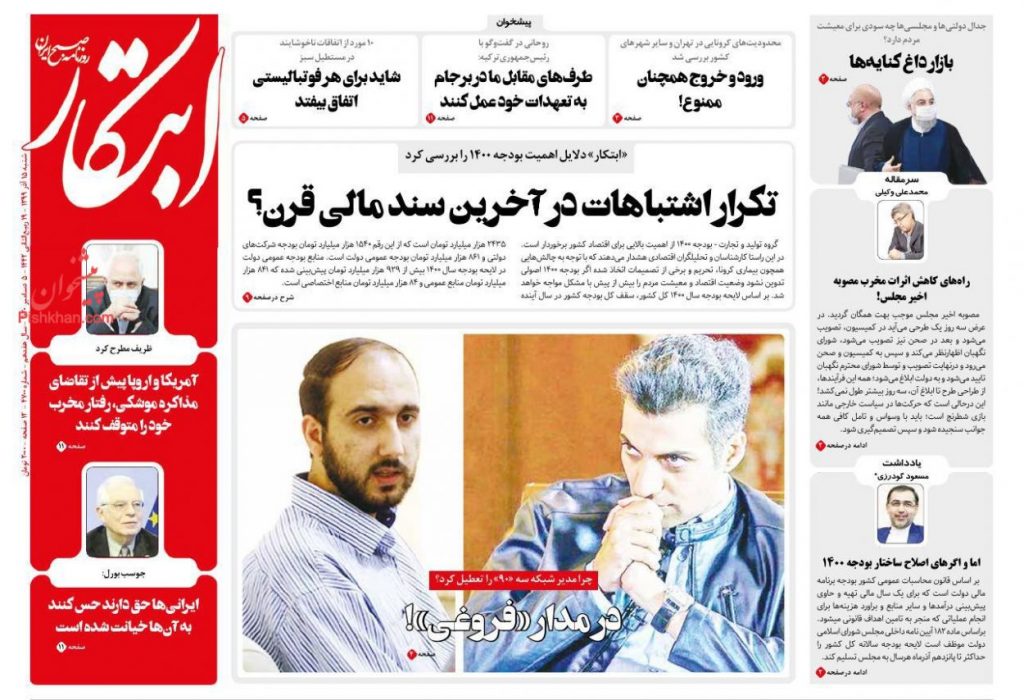
Ebtekar Newspaper:

1- Iran’s Economy in World without Coronavirus

2- Is Iranian Capital on Verge of Shutdown?

3- Challenges of Trump’s Leaving Office

4- Biden: Opportunity or Threat? [Editorial]

A Look at Iranian Newspaper Front Pages on November 14


Etemad Newspaper:

1- Tehran’s Two-Week Shut-Down Awaiting Rouhani’s Approval

2- US Shouldn’t Leave Afghanistan Irresponsibly

A Look at Iranian Newspaper Front Pages on November 14


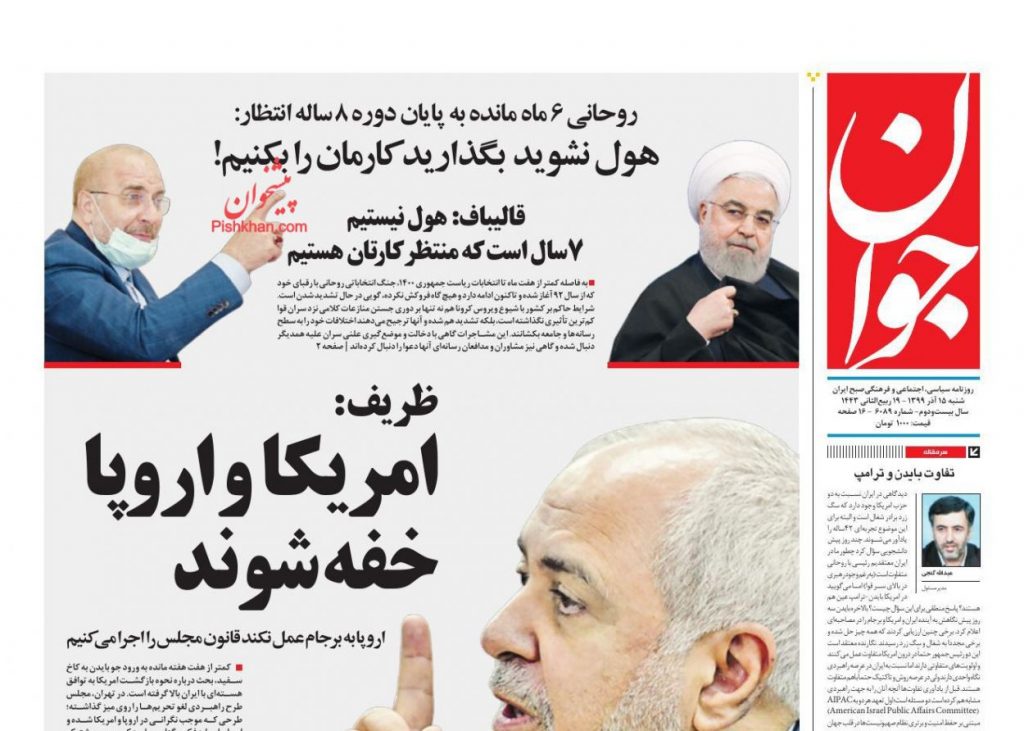
Javan Newspaper:

1- 150 Security Officials Warn about 10 Dangerous Weeks in US

2- Trump Leaves Office with Regret of a Phone Call with Iran

3- Traditional GOP Apparently Moving on from Trump

A Look at Iranian Newspaper Front Pages on November 14


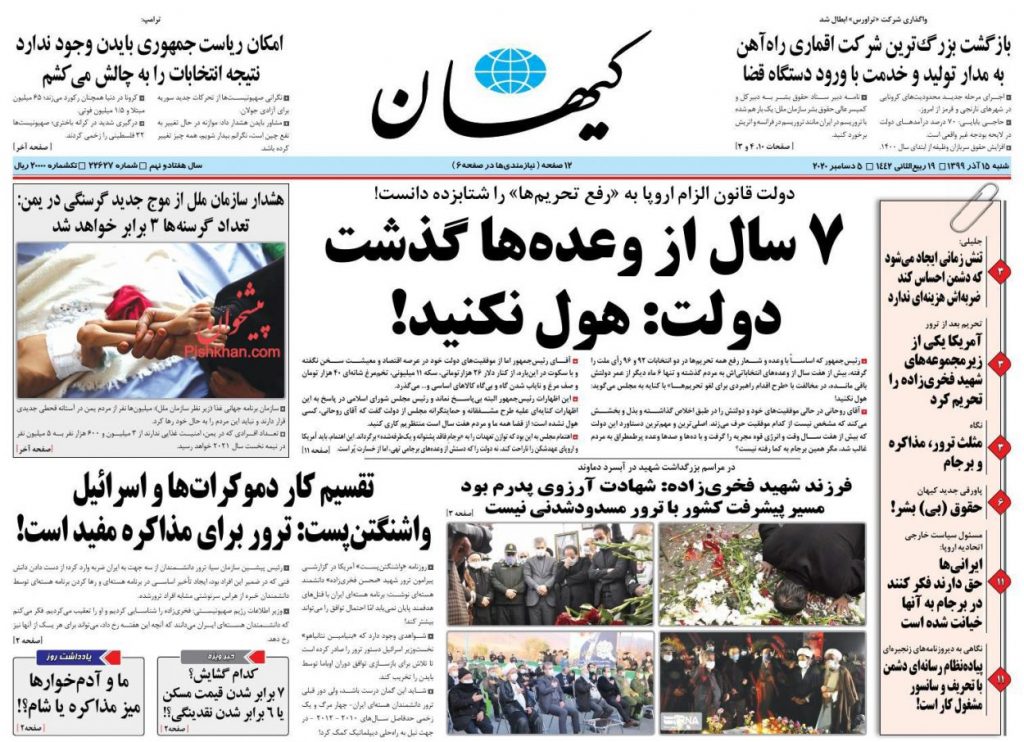
Kayhan Newspaper:

1- JCPOA Shrank People’s Livelihoods by 30% from 2016 to 2019

2- Trump Fans Flock to Washington DC

3- Five Iranian Vaccines for Coronavirus Shortlisted by WHO

A Look at Iranian Newspaper Front Pages on November 14


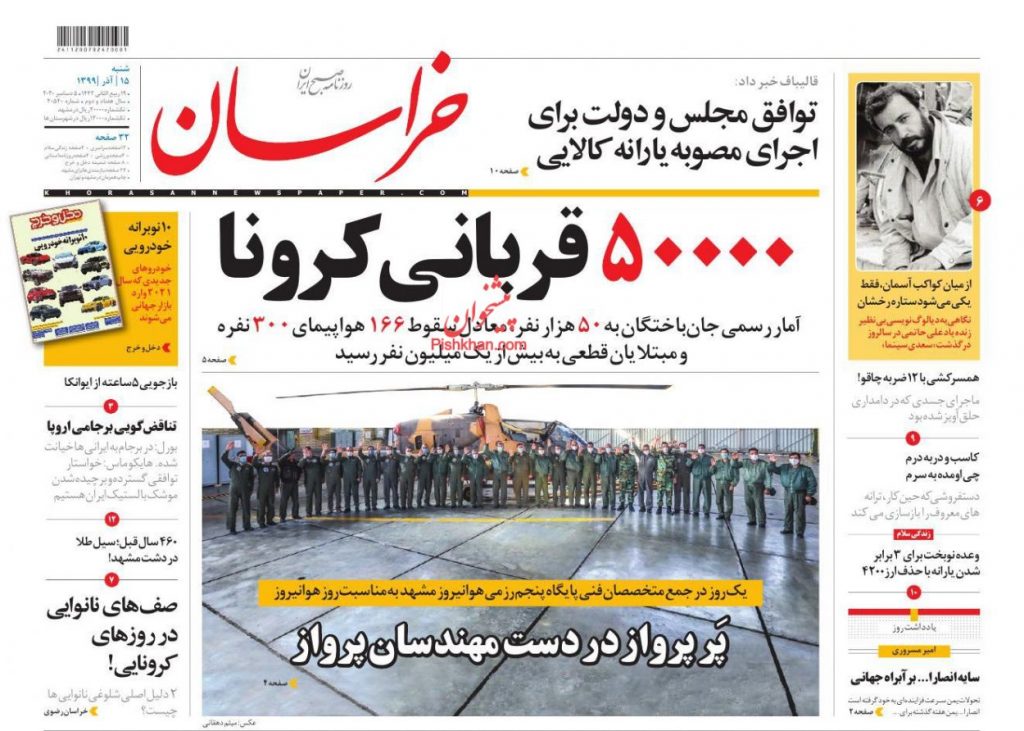
Khorasan Newspaper:

1- The GOP’s Scenarios to Keep Trump in Power

A Look at Iranian Newspaper Front Pages on November 14


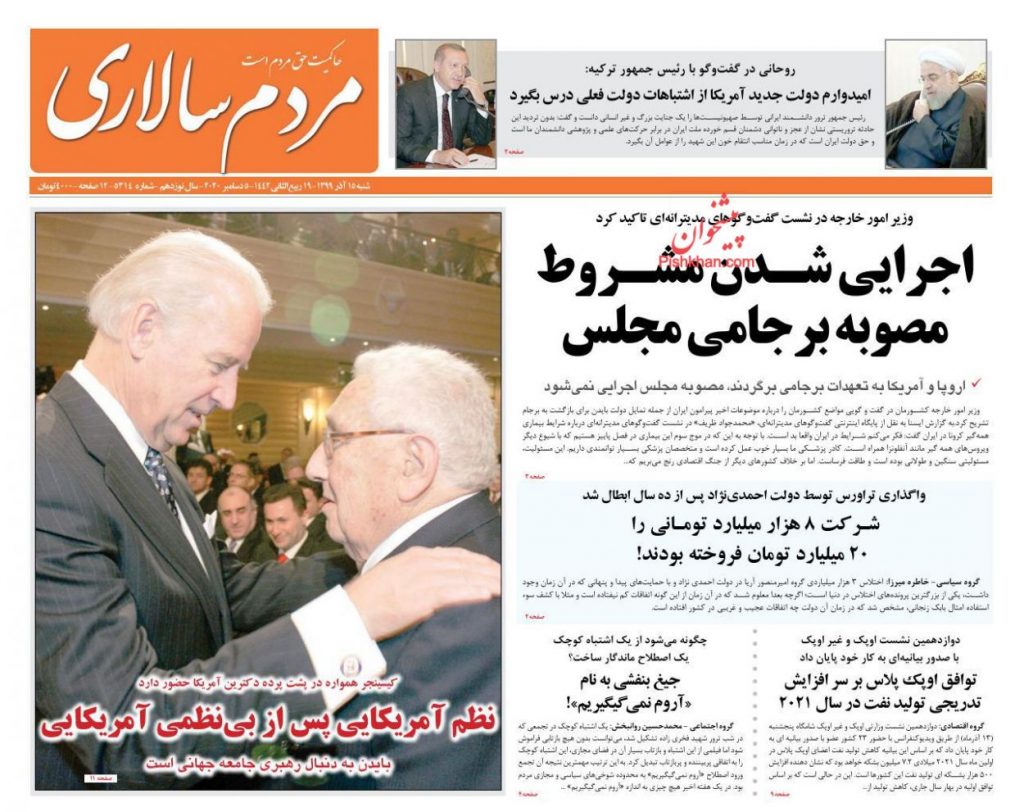
Mardom Salari Newspaper:

1- US Security Services Reject Trump’s Request

2- Rouhani: Era of Maximum Pressure Is Over

3- Ahwaziya Group Ringleader Arrested by Iran

A Look at Iranian Newspaper Front Pages on November 14


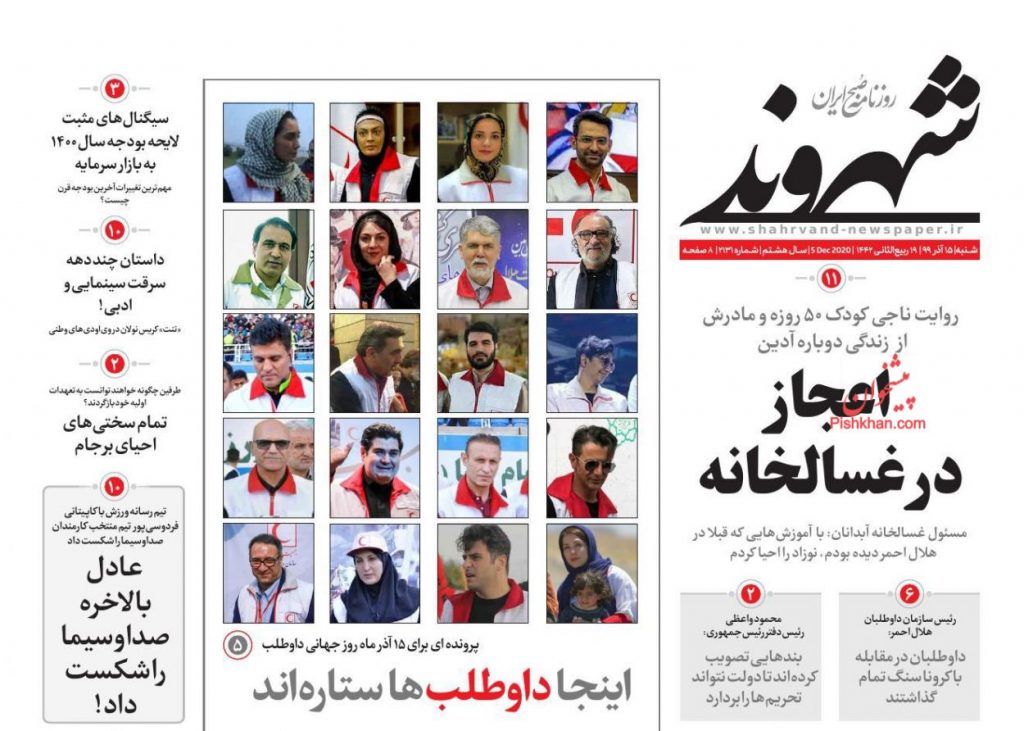
Shahrvand Newspaper:

1- Tehran Province on Verge of Lockdown

A Look at Iranian Newspaper Front Pages on November 14


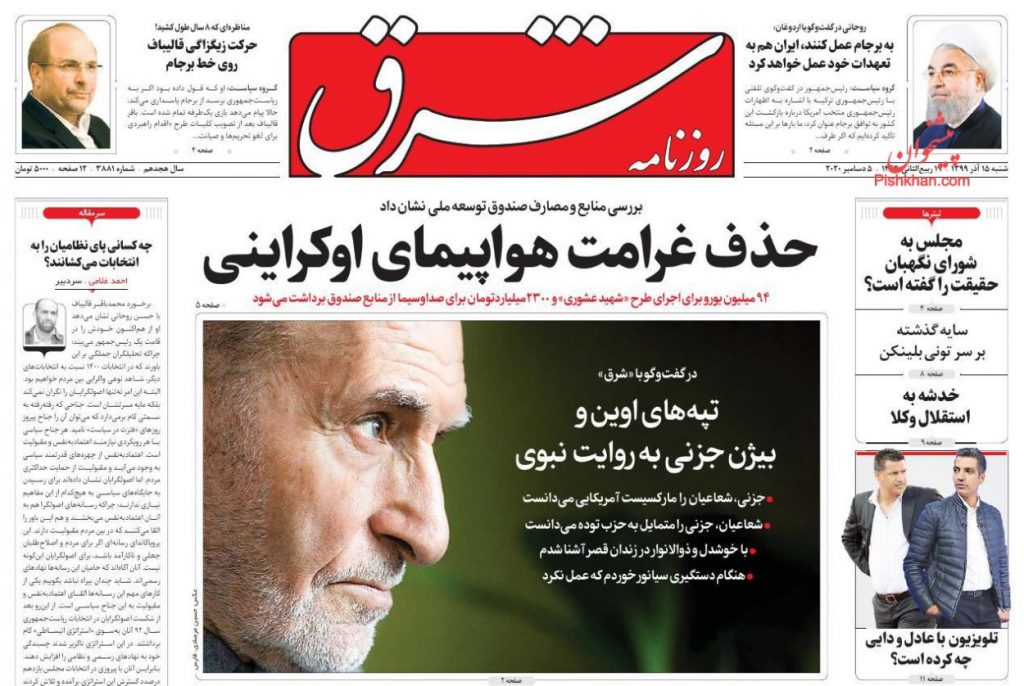
Shargh Newspaper:

1- Reza Zarrab in FBI’s Safe House

2- Trump to Deal Final Blow Before Leaving White House

A Look at Iranian Newspaper Front Pages on November 14

Over 550,000 Patients Recover from COVID-19 in Iran

Over 550,000 Patients Recover from COVID-19 in Iran

In a press briefing on Saturday, Sima-Sadat Lari said the virus has killed 452 patients since Friday noon, increasing the overall death toll to 41,034.

She said 749,525 patients have contracted the novel coronavirus so far, including 11,203 new cases identified in the past 24 hours.

Lari said 5,642 patients are also in critical conditions caused by more severe infection.

The spokeswoman noted that 5,464,191 COVID-19 tests have been taken across the country so far.

She said the high-risk “red” zones include Tehran, Qom, Mazandaran, East Azarbaijan, Isfahan, Yazd, Ardabil, Khorasan Razavi, Khuzestan, Hamadan, West Azarbaijan, Bushehr, Chaharmahal and Bakhtiari, Kohgiluyeh and Boyer-Ahmad, Alborz, Lorestan, Markazi, Ilam, South Khorasan, Kermanshah, North Khorasan, Semnan, Gilan, Zanjan, Qazvin, Kurdistan, and Kerman provinces.

The “orange” and “yellow” zones also include Golestan, Hormozgan, Fars, and Sistan and Baluchestan provinces, she added.

Measures Adopted to Boost Iran’s Medical Infrastructure amid COVID-19 Pandemic

Measures Adopted to Boost Iran’s Medical Infrastructure amid COVID-19 Pandemic

According to the Science and Technology Department of the Presidential Office, the country’s medical infrastructure is associated with the pharmaceutical industry, human vaccines, medical equipment, hygienic and cosmetic products, reconstructive medicine and pharmaceutical probiotics.

Quite a few steps have been taken in this domain, and authorities in the country’s health sector have been able to meet a great part of the needs in this sector with the help of innovative and technological ecosystems. The pharmaceutical industry as well as medical treatment is one of the areas which have been overhauled and experienced major progress thanks to the tireless efforts of domestic scientists.

Accordingly, many medicines have been produced domestically which would have otherwise been imported at high costs. The Science and Technology Department of the Presidential Office is offering special support to such efforts.

As a case in point, the production of eight pharmaceutical accelerators has been supported so far, a move which, in turn, has led to the production of some 100 end products.

The Biotechnology Development Commission of the Science and Technology Department of the Presidential Office is one of the institutions backing the technological ecosystem.

Among the measures adopted by the commission in the domain of medicines is the creation of a green channel to receive permits from the Iranian Food and Drug Organization for knowledge-based companies.

Iran Opens New Mask Producing Facility

Iran Opens New Mask Producing Facility

The production unit was inaugurated in a ceremony attended by Minister of Industry, Mine and Trade Alireza Razm-Hosseini during his trip to southern province of Hormozgan.

The facility has been constructed with a price tag of Rls. 58 billion, creating jobs for some 40 people.

The minister has travelled to Hormozgan to follow up on the clearance from customs of basic commodities and raw materials for sedimentary factories.

Iran’s President Unveils New COVID-19 Restrictions

Iran's President Unveils New COVID-19 Restrictions

Addressing a Saturday session of the National Coronavirus Headquarters, President Rouhani said the new restrictions for the battle with COVID-19 will come into force on November 21.

Details of the new scheme would be finalized this week and the restrictions will be in effect until the eradication of the pandemic, even in the next Iranian year, the president said, noting that the Health Ministry and the executive base of the National Coronavirus Headquarters have the main responsibility to carry out the plan.

President Rouhani reiterated that the only option for people is to take care of themselves, their families and friends.

Although the restrictions entail closure of certain businesses and punishments, this is indeed a warning to people that the circumstances are delicate, he said.

In separate comments, the spokesperson for the National Coronavirus Headquarters said more than 100 cities will be categorized as high-risk red zones under the new program, meaning restrictions on the businesses and activities of the occupation categories 2, 3, and 4.

The limitations enforced in the orange zones would apply to 150 cities, while at least 155 other towns will come into the category of yellow zones with low risk of coronavirus, the spokesperson added.

According to the new restrictions in the areas categorized as red zone, only a third of the employees will be allowed to leave home for work purposes, and road travels (entering and leaving the zone) would be also limited.

The death toll from the novel coronavirus in Iran has surpassed 40,000 and the number of cases of infection has exceeded 740,000. Nearly 550,000 patients have recovered from the disease in Iran or been discharged from the hospital.

Iran’s Nature in Photos: Darband Rashi Cave

Darband Rashi Cave 1

Darband Rashi is indeed an ancient site including a large cave named “Kavilgar”, with an approximate length of 60 metres; and a smaller cave of about 30 metres named “Darband B” (Jokavileh). The mouth of both caves is located in the southern part of the site.

It is the only known Iranian cave with ancient remains belonging to the Lower Paleolithic.

What follows are Tasnim News Agency’s photos of Darband Rashi Cave, which is registered in the list of Iranian national monuments:

5 Iranian COVID-19 Vaccines on WHO’s List of Vaccine Candidates

5 Iranian COVID-19 Vaccines on WHO’s List of Vaccines Candidates

The news was announced in a tweet by Kianoush Jahapour, the spokesman for the Iranian Food and Drugs Organization.

Iran Unable to Buy COVID-19 Vaccine Due to US Sanctions: Tehran

Iranian researchers have been trying hard to develop a vaccine for the deadly virus since its outbreak.

They have made major breakthroughs in that regard and introduced several vaccines for coronavirus

The Islamic Republic is trying to develop its own vaccine as the US sanctions are expected to impede the country’s purchase of the vaccine already developed by American and German companiea, according to Health Ministry spokesman.

Spokesman Rejects NY Times’ Report on Killing of Al-Qaeda Element in Iran

Iran Condemns Canada’s Human Rights Resolution

Asked by reporters about the reports released by Israeli sources and a recent story by the New York Times which claims that an official of the al-Qaeda terrorist group has been assassinated in Iran, the Foreign Ministry spokesperson strongly denied any presence of the terrorist group’s members in Iran.

Khatibzadeh also advised the American media not to be entrapped by the Hollywood-style scenarios fabricated by the US and the Zionist regime’s officials.

The al-Qaeda terrorist group is a result of the wrong policies adopted by the US and its allies in the region, he noted, adding, “In order to shirk responsibility for the criminal activities of that group (al-Qaeda) and the other terrorist groups in the region, Washington and Tel Aviv try every now and then to draw a link between Iran and such groups through falsification and the leakage of fabricated information to the media.”

“Although the US has not refrained from levelling any false accusation against the Islamic Republic of Iran in the past, such approach has become a permanent modus operandi at the current US administration, as the White House has attempted to make advances in implementing its Iranophobia plot by repeating such allegations,” the spokesman added.

“Such accusations are undoubtedly part of the full-fledged economic, intelligence and psychological war against the Iranian people, and the media should not act as a tribune for spreading the White House’s purposeful lies about Iran,” the Foreign Ministry’s spokesperson concluded.

His comments came after the New York Times reported on Friday that al-Qaeda’s second-in-command, accused of helping to mastermind the 1998 bombings of two US embassies in Africa, has been killed in Iran in August by Israeli operatives acting at the behest of the US.

The US newspaper claimed that Abdullah Ahmed Abdullah, who went by the nom de guerre Abu Muhammad al-Masri, was shot dead by two men on a motorcycle in Tehran more than three months ago.