Sunday, January 18, 2026
Home Blog Page 2581

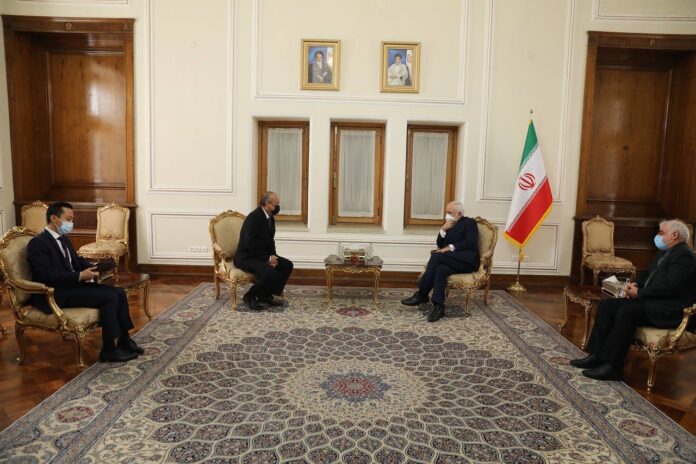
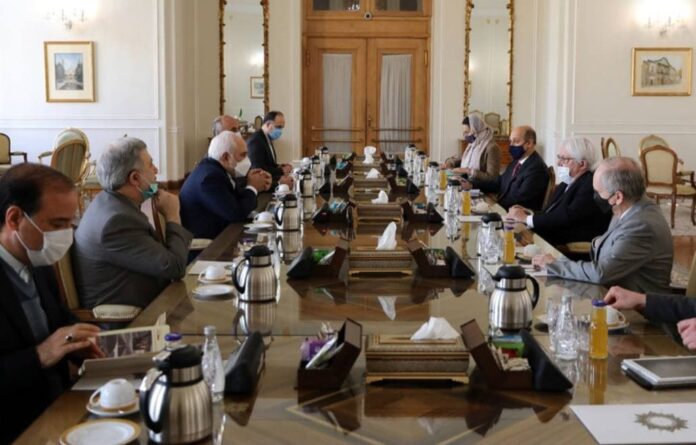
Iran FM, UN Envoy Exchange Views on Settlement of Yemen Crisis

During the Monday talks, the two sides discussed the latest status of the Yemen crisis, and explored avenues to achieve peace and stability in the Arab country.

Foreign Minister Zarif highlighted the developments following the beginning of the Yemen crisis, especially the history of Iran’s moves and initiatives in these years through different channels, and elaborated on the Islamic Republic’s viewpoint regarding the need for ending this big humanitarian crisis in the region, and the necessity of mitigating the pains and problems of the deprived people of Yemen.

He also noted that a political solution, rather than an imposed war, is the only way to resolve the Yemen crisis.

The Iranian top diplomat said Tehran is fully prepared to support any effective role played by the UN in settling the crisis considering the very difficult conditions caused by the war and economic siege imposed on the people of Yemen.

The UN envoy, in turn, highlighted the importance of being aware of Iran’s views on the establishment of peace and calm in Yemen.

He also elaborated on the UN’s viewpoint on the settlement of the Yemen crisis through the establishment of a ceasefire, delivery of economic aid and resumption of political talks.

Iran Leader Grants Clemency to 3,840 Prisoners on Revolution Anniversary

Iran Leader Grants Clemency to Large Group of Iranian Inmates

Ayatollah Khamenei granted the clemency on the occasion of the 42nd anniversary of the victory of the Islamic Revolution in response to a letter from Judiciary Chief Ebrahim Raisi who had demanded amnesty for a large group of eligible convicts.

Those granted clemency through the Leader’s approval had been convicted at the country’s public and Islamic Revolution courts, the Judicial Organization of the Armed Forces, and the State Discretionary Punishment Organization.

Article 110 of the Constitution grants the country’s Leader the right to pardon or reduce the sentences of convicts upon a recommendation from the head of the Judiciary.

The clemency, however, does not apply to all types of convicts, including those who have been sentenced for their role in armed struggle against the country, armed or organized drug trafficking, rape, armed robbery, arms smuggling, abduction, bribery and embezzlement, fraud, counterfeiting of banknotes and coins, money laundering, sabotaging the country’s economic system, smuggling of alcoholic beverages, as well as organized or professional smuggling of goods and foreign currencies.

Each year in February, when Iran marks the victory anniversary of the 1979 Islamic Revolution, Ayatollah Khamenei grants an amnesty for a number of prisoners.

On Wednesday, Iran will mark the 42nd anniversary of the Islamic Revolution, which put an end to the monarchical rule of the US-backed Pahlavi regime.

Ayatollah Khamenei’s Message for Putin Delivered to Russian Duma Chairman

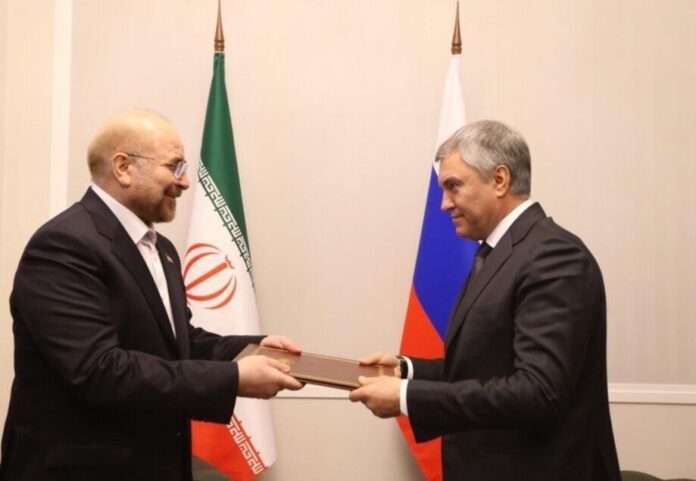
Qalibaf sought to deliver the message to Putin in a bilateral meeting; however, after the Russian president declined to meet him, he handed over the message to chairman of the Russian State Duma Vyacheslav Viktorovich Volodin.

The Iranian top lawmaker had earlier said he was carrying an “important message” from Ayatollah Khamenei for Putin in his visit to Moscow.

“On my first official visit, I am carrying the Leader’s message for [Russian President Vladimir] Putin,” Qalibaf said upon arrival in Moscow on Sunday night, adding the message concerns the strategic ties between the two states. 

“Relations between the Islamic Republic and the Russian Federation are based on a long-term strategic approach, and accordingly, the parliaments of the two countries will negotiate and cooperate to deepen, direct and lay the groundwork for bilateral ties.”

Iran’s top parliamentarian further touched on the West’s oppressive sanctions on Russia and Iran, saying the two countries are working together in various economic fields to reduce the impact of the measures.

Moreover, he noted, the 2015 nuclear agreement between Tehran and world powers, the coronavirus pandemic, the import of the Russian Sputnik V vaccine, and the continuation of Iran-Russia cooperation in the healthcare sector are on the agenda of the talks in Moscow.

In his trip to Moscow, Qalibaf is expected to sit down for talks with Russian Foreign Minister Sergei Larvov and Security Council Secretary Nikolai Patrushev

340 Combat Speedboats Added to IRGC Navy’s Fleet

The speedboats, which were delivered to the IRGC Navy in a Monday ceremony, are capable of carry and fire a wide range of missiles and rockets, and provide support for diving operations.

The speedboats will be used in operations in the Persian Gulf, Sea of Oman, and the Caspian Sea.
Addressing the Monday ceremony, IRGC Chief Commander Major General Hossein Salami said getting more powerful is the path chosen by the Islamic Republic, because “in today’s world, you should either be strong or surrender. There’s no third path.”
He said over the past 40 years, the enemies of Iran have lost their satanic splendour.
“The US no longer has the face of a dominant global power. It’s not anymore capable of advancing its desired policies wherever it wants. The driving forces of its power have been worn out by the Islamic Revolution, either in Iran or in other Islamic countries.”
He addressed American statesmen and said, “You have failed in the field of pressuring the Iranian nation. Don’t repeat your failed policies, and abandon the lens through which you were looking at the Iranian nation so far.”
Salami said Iran has overcome the US sanctions and its consequences, and has defeated its architects.
“What you’re seeing today was achieved in the time of sanctions,” he added.

Iranian Delegation in Moscow for Talks on Co-Production of COVID-19 Vaccine

A medical specialist holds a vial of Sputnik V (Gam-COVID-Vac) vaccine against the coronavirus disease (COVID-19) at a vaccination centre in the State Department Store, GUM, in central Moscow, Russia January 18, 2021 / By Reuters

The Iranian delegation, which arrived in Moscow on Sunday, is set to hold talks with Russian officials, including the health minister, on the co-production of Sputnik-V vaccine.

An agreement is expected to be signed between the Iranian side and the Gamaleya Research Institute of Epidemiology and Microbiology, which has developed the vaccine.

The Iranian deputy health minister and his entourage also plan to visit the vaccine production line at a factory outside of Moscow.

Upon arrival in Moscow, Shanehsaz told reporters that preliminary talks over the purchase and co-production of Sputnik-V started a few months ago, thanks to the efforts made by Iran’s Embassy in Moscow and the Iranian Foreign Ministry.

“During this visit, we will hold the final round of talks for the co-production of the Russian vaccine,” said Shanehsaz, who is also the head of Iran’s Food and Drug Administration.

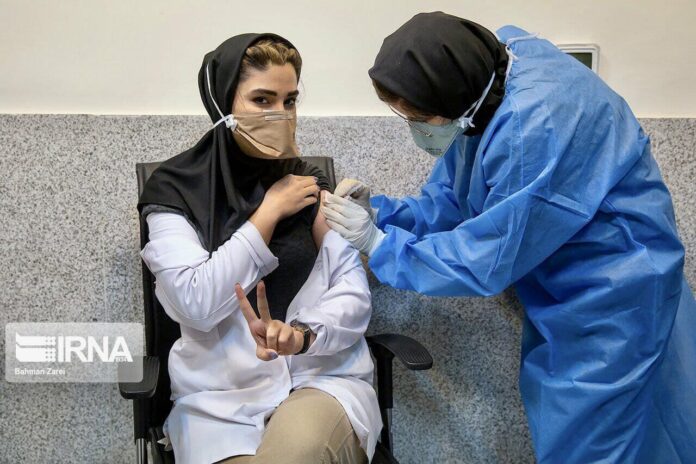
Iran has purchased 2 million doses of the vaccine, the first batch of which arrived at Iran’s Imam Khomeini International Airport on February 4.

The medical journal Lancet recently published an article proving the effectiveness of Sputnik-V based on trial vaccination of nearly 22,000 volunteers. The results showed a 91.6% efficacy of the vaccine.

Iran Sympathises with India over Deadly Flooding

In a statement on Sunday evening, Khatibzadeh also expressed sympathy with the Indian nation and government, especially the families of the victims.

At least seven people have been killed and more than 100 people are missing after a glacier burst, triggering flash floods in India’s northern Uttarakhand state on Sunday.

Some workers could be trapped in a tunnel at a state-owned NTPC hydro project, clogged with debris from the avalanche triggered by the glacial burst, Chief Minister Trivendra Singh Rawat said at a press conference late on Sunday evening.

“Uttarakhand has witnessed a terrible disaster,” Rawat said, adding that the state is expecting “significant loss to human lives and infrastructure.”

Indian Army and members from India’s National Disaster Response Force (NDRF) have been assisting rescue efforts, and more NDRF teams are being airlifted from New Delhi and expected to arrive on Monday.

Iran Urges Further UN Intervention to End Yemen Plight

In the Sunday meeting, the two sides discussed issues and various aspects of the Yemen crisis, and explored avenues to achieve peace and stop the crisis in the Arab country.

Khaji highlighted the miserable situation of the resilient people of Yemen and the very difficult conditions imposed on them due to war and a cruel economic siege, and called for further intervention by the UN and the international community to stop the war and lift the inhumane blockade.

He also expressed Iran’s preparedness to offer humanitarian and medical aid to the Yemeni nation in fight against the novel coronavirus.

The Iranian diplomat stressed the resolution of the Yemen crisis through political ways, the holding of Yemeni-Yemeni talks, and the formation of an all-inclusive government across the entire Yemeni territory with the participation of all political parties and groups of the country.

The UN envoy, in turn, highlighted Iran’s major role in helping the establishment of peace in Yemen and the region, and elaborated on the UN’s measures to establish a ceasefire, have the economic siege lifted, and resume the political dialogue in Yemen.

Iran Reports Lowest Daily Rise in COVID-19 Deaths Since June 1

In a press briefing on Sunday, Health Ministry spokeswoman Sima-Sadat Lari reported 7,065 new cases of COVID-19 infection, raising the total number of cases to 1,466,435.

So far, Lari added, 1,253,554 patients have recovered from the disease or been discharged from the hospital.

Lari said 3,789 patients are also in critical conditions caused by more severe infection.
The spokeswoman noted that 9,667,260 COVID-19 tests have been taken across the country so far.

She said currently 36 cities are in the “orange” zone, 178 are in the “yellow” zone, and 234 are in the “blue” zone in terms of coronavirus outbreak.

The “orange” cities include Amol, Babol, Babolsar, Behshahr, Tonekabon, Juybar, Ramsar, Sari, Savadkuh, Qaemshahr, Mahmoud Abad, Neka, Noor and Nowshahr in Mazandaran province, Astaneh Ashrafieh, Bandar Anzali, Rasht, Rudbar, Some’eh Sara, Rudsar, and Lahijan in Gilan province, Ajabshir in East Azarbaijan province, Ardestan in Isfahan province, Esfarayen in North Khorasan province, Garmsar in Semnan province, Baft in Kerman province, Paveh in Kermanshah province, Bandar Gaz and Kordkuy in Golestan province, Bastak, Bandar Lengeh, and Qeshm in Hormozgan province, Bahar, Tuyserkan and Razan in Hamadan province, and Abarkuh in Yazd province.

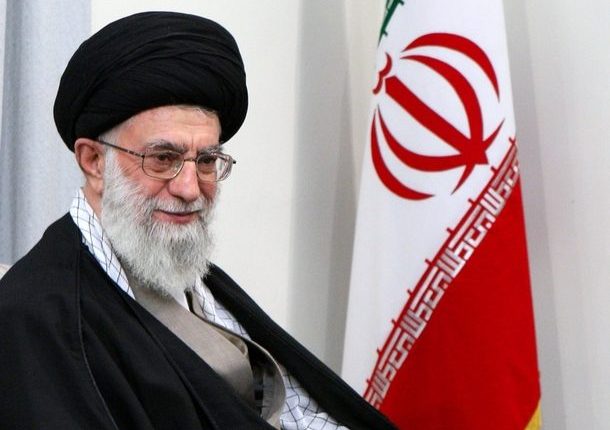
Iran to Return to JCPOA Obligations Only If US Sanctions Lifted: Ayatollah Khamenei

Iran Supreme Leader Seyyed Ali Khamenei

Ayatollah Seyyed Ali Khamenei said Iran will not listen to words of drivel with regards to sanctions.

“As far as sanctions are concerned, first of all, no one in the Islamic Republic of Iran would listen to those talking nonsense whether in Europe or in the United States,” said the Leader in a Sunday meeting with Air Force commanders and personnel.

“Secondly, if we want to talk logically, the US and the three European countries which have violated all their JCPOA commitments are not entitled to set conditions as they have failed to make good on their obligations under the nuclear deal,” Ayatollah Khamenei said.

“The party which has the right to set conditions is Iran because it has delivered on all its commitments,” he noted.

Ayatollah Khamenei said Iran, after verifying that sanctions have been lifted in practice, will return to its obligations.

“This is Iran’s definitive policy and the country’s officials have consensus on that and we will not drop this policy,” he stressed.

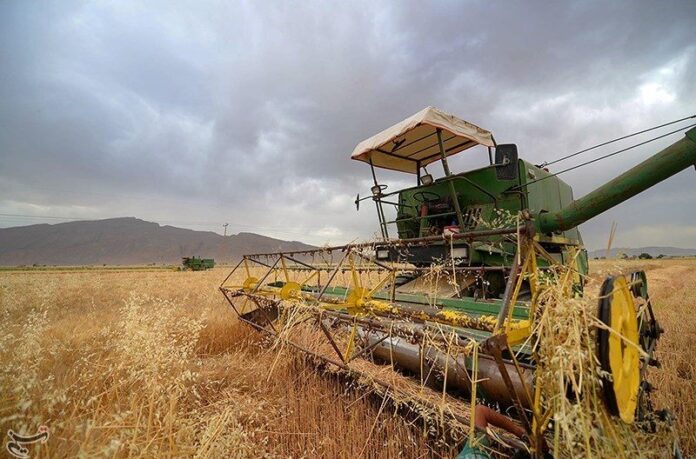
Iran Inaugurates over 950 Hectares of Greenhouses in One Day

That came in a ceremony where several agricultural projects came on line and exemplary farmers were recognized for their services.

Present at the ceremony was President Hassan Rouhani, who said farmers have secured the country’s self-sufficiency and independence as well as people’s food security by making efforts day in day out.

“One of the honours of this administration is the implementation of major works in different agricultural areas,” he said.

The president added plans have been drawn up to reap more harvest from limited amount of land and water.

“4.3 million people are working in the agriculture today, which is very important for us,” he noted.