Tuesday, December 23, 2025
Home Blog Page 2346

WH sends grim holiday warning to Americans over supply chain

The supply crisis, driven in part by the global COVID-19 pandemic, not only threatens to dampen US spending at a critical time, it also poses a political risk for President Joe Biden.

The latest Reuters/Ipsos poll shows the economy continues to be the most important issue for Democrats and Republicans alike.

The White House has been trying to tackle inflation-inducing supply bottlenecks of everything from meat to semiconductors, and formed a task force in June that meets weekly and named a “bottleneck” czar to push private-sector companies to ease snarls.

Biden himself plans to meet with top executives from retail giants Wal-Mart Inc (WMT.N) and Home Depot Inc (HD.N) and with unions and other stakeholders on Wednesday to discuss efforts to relieve transportation bottlenecks before delivering a speech on the topic.

Supply chain woes are weighing on retail and transportation companies, which recently issued a series of downbeat earnings outlooks. Meanwhile, the Federal Reserve last month predicted a 2021 inflation rate of 4.2%, well above its 2% target.

American consumers, unused to empty store shelves, may need to be flexible and patient, White House officials stated.

“There will be things that people can’t get,” a senior White House official told Reuters, when asked about holiday shopping.

“At the same time, a lot of these goods are hopefully substitutable by other things. … I don’t think there’s any real reason to be panicked, but we all feel the frustration and there’s a certain need for patience to help get through a relatively short period of time,” the official added.

Inflation is eating into wages. Labor Department data shows that Americans made 0.9% less per hour on average in August than they did one year prior.

The White House argues inflation is a sign that their decision to provide historic support to small businesses and households, through $1.9 trillion in COVID-19 relief funding, worked.

US consumer demand stayed strong, outpacing global rivals, and the Biden administration expects the overall economy to grow at 7.1%, as inflation reaches its highest levels since the 1980s.

“We recognize that it has pinched families who are trying to get back to some semblance of normalcy as we move into the later stages of the pandemic,” said a second senior White House official.

In August, the White House tapped John Porcari, a veteran transportation official who served in the Obama administration as a new “envoy” to the nation’s ports, but he’s known as the bottleneck czar.

Porcari told Reuters the administration has worked to make sure various parts of the supply chain, such as ports and intermodal facilities, where freight is transferred from one form of transport to another, are in steady communication.

Now it is focused on getting ports and other transportation hubs to operate on a 24-hour schedule, taking advantage of off-peak hours to move more goods in the pipeline. California ports in Long Beach and Los Angeles have agreed to extended hours, and there are more to follow, he said in an interview Monday.

“We need to make better use of that off-peak capacity and that really is the current focus,” Porcari added.

The administration is also seeking to restore inactive rail yards for extra container capacity and create “pop-up” rail yards to increase capacity.

“It’s important to remember that the goods movement system is a private sector-driven system,” he said, adding, “There’s problems in every single part of that system. And, they tend to compound each other.

Putin: Arms race underway since US pullout from ABM Treaty

The weapon race between Russia and the US is on the move after Washington’s withdrawal from the ABM Treaty, Putin stated on Wednesday at a plenary session of the Russian Energy Week.

“The arms race is on the march, unfortunately. And it has started after the US withdrawal from the ABM Treaty,” the Russian president added.

Putin recalled that back in 2003 he urged the US not to withdraw from the ABM Treaty. 

He noted that “this is a fundamental thing, the cornerstone of global security. What is the ABM Treaty? This is not just protection, it is an attempt to gain strategic advantages by de-energizing the nuclear potential of a probable opponent, that is, ours”.

“What should we do in response? Either create the same system, which costs a lot of money and may be not so efficient, or establish another system that will certainly outperform the ABM Treaty,” the head of the state went on to say. 

“And I said that we would do it. The American partners replied that their missile defense system was not against [Russia], so we could do what we want, and [the US] would proceed from the assumption that this was not against it. And we did it, so what is the problem? And now [the US] does not like it,” the president added.

“We are ready to consider the existing circumstances and hold a constructive dialogue in this direction,” Putin concluded.

The Anti-Ballistic Missile Treaty between the USSR and the US was signed in Moscow on May 26, 1972. However, it was terminated on June 13, 2002, following the unilateral US withdrawal.

On NATO, Putin said Russia is always ready for direct talks with NATO, but has no plans of delivering reports to any side about military drills on its own territory.

“We are ready to hold direct talks with NATO,” Putin stated, adding, “However, if speaking about our soldiers, I must say that they are deployed on the territory of Russia.”

“It is true that we recently held military drills, the Zapad-2021 [strategic military exercise], and it was a large-scale military exercise,” he continued, stressing, “I reiterate that we are holding our [military] exercises on the territory of our own country.”

“There is nothing strange about it and we are not obliged of filing reports in this regard to any other party,” Putin added.

The Russian president also said that the US and NATO military forces regularly hold combat drills not on their territories, including near the state borders of Russia.

“In fact, it is our partners, who breach all earlier reached agreements, including on the measures of trust in Europe,” Putin stated, adding, “It also goes for NATO’s expansion to the East and I have repeatedly pointed out to this fact.”

“This also relates to certain imbalances in the Baltic states that are excluded from any troop counts,” the Russian president said.

Putin also recalled that the United States exited earlier from the Anti-Ballistic Missile Treaty (ABM), Open Skies and Intermediate-Range Nuclear Forces (INF) Treaties.

“We did not do it. It was what our American partners did,” Putin stated.

On energy crisis, Russia insists on the need for an honest and open dialogue with European countries and is ready to work to prevent problems in the energy markets of Europe, Putin said.

“What is happening today in the energy markets of Europe is, to a certain extent, a man-made result of short-sighted policy. But these are their problems. We are ready to participate in preventing such problems. We just need, I repeat, an honest and open dialogue,” he added.

Putin noted that Russia does not stop working with European partners. 

“And it seems to me that there is an understanding that this frank, transparent dialogue needs to be established, but we will see how this will happen in reality,” Putin concluded.

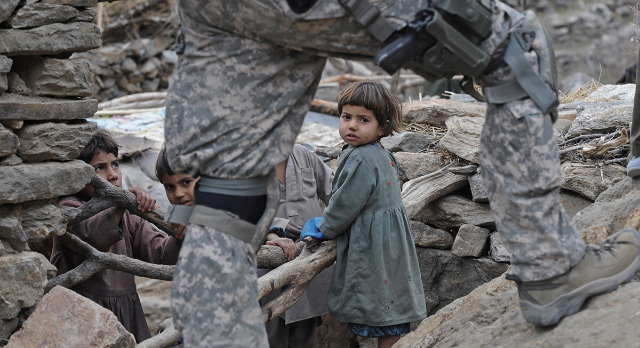
On Afghanistan, Putin said the United States ignored the history and culture of the Afghan people, which entailed a tragic result.

“Freedom and democracy cannot but be linked with the culture and traditions of a certain people. The United States intruded into Afghanistan in defiance of the traditions, culture and history of the Afghan people. The result was tragic,” he added.

Putin stressed that US interference in Afghanistan had brought about a colossal upsurge of terrorism in the region and around the world.

The Taliban movement launched a massive operation for establishing control of Afghanistan after the United States last spring declared the intention to pull out its troops. On August 15, President Ashraf Ghani stepped down and left the country, while the Taliban entered Kabul without encountering resistance. The Western countries by August 31 had completed the evacuation of their citizens and Afghans who had worked for them.

Iran says Tehran-Beijing Cooperation Deal Moving forward

“What is known as the 25-year Iran-China Road Map is an agreement on comprehensive cooperation between the two countries,” said the spokesman.

“This pact has different dimensions, including parliamentary ties, the private sector and even judicial relations; so, different institutions are following up on this document,” he added.

“Some more detailed documents, namely on private sector interactions in the fields of energy, new technologies and IT have been prepared, interactions between Iranian ministries and their Chinese counterparts started long ago and have been taking place on a regular basis, namely in the domains of energy and expansion of ports,” he explained.

He said visit to both countries have been limited due to coronavirus restrictions, but added the two sides have been in contact online.

He said one of the outcomes of the Tehran-Beijing cooperation agreement has been the import of tens of millions of vaccines from China.

US rules out normalisation with Syria

Damascus has on several occasions said Washington has been supporting terrorist groups inside Syria, while demanding immediate withdrawal of the US forces.

The United States does not intend to support any efforts to normalise ties with Assad or rehabilitate him until there is irreversible progress towards a political solution in Syria, Blinken said.

Blinken’s comments at a news conference on Wednesday came at a time when a shift was under way in the Middle East among the Arab allies of the US, who are bringing Assad in from the cold by reviving economic and diplomatic ties.

Jordan, a staunch US ally, fully reopened its main border crossing with Syria in late September, to boost the countries’ struggling economies and reinforce a push by Arab states to reintegrate Syria after shunning it during the Syrian war.

Jordan’s King Abdullah also spoke to Assad for the first time in a decade this month while the Egyptian and Syrian foreign ministers met last month on the sidelines of the United Nations General Assembly in New York, in what Egyptian media reported was the first meeting at that level for about a decade.

Similarly, the United Arab Emirates’ economy ministry stated on Sunday that the Gulf state and Syria had agreed on future plans to enhance economic cooperation and explore new sectors.

The UAE also reopened its embassy in Damascus in 2018 – and earlier this year, said sweeping US sanctions imposed on Syria made it more challenging for the war-torn country to return to the Arab League.

“What we have not done and what we do not intend to do is to express any support for efforts to normalise relations or rehabilitate Mr Assad or lifted a single sanction on Syria or changed our position to oppose the reconstruction of Syria, until there is irreversible progress towards a political solution, which we believe is necessary and vital,” Blinken stated.

The US has suspended its diplomatic presence in Syria since 2012.

Blinken added in the nine months since President Joe Biden took office on January 20, Washington has focused on expanding humanitarian access to Syria, sustaining the campaign against the Daesh group and making clear the US commitment to demand accountability from al-Assad’s government.

Under Washington’s Ceasar Act passed last year, the US has attempted to prevent any reconstruction efforts or trade deals from being made without first enacting human rights reforms.

But Syria has not been a foreign policy priority for the Biden administration, analysts noted, as Washington has largely concentrated on countering China. The administration has yet to apply sanctions under the Caesar Act.

“As we’re moving forward in the time ahead, keeping violence down, increasing humanitarian assistance, and focusing our military efforts on any terrorist groups that pose a threat to us or to our partners … These are going to be critical areas of focus for us,” Blinken continued.

Several killed in bow and arrow attack in Norway

Norway’s acting Prime Minister Erna Solberg on Wednesday described the attack against shoppers in the town, near Oslo, as “gruesome”.

“It is a very dramatic situation that hits the community in Kongsberg hard. The events shake us. I understand that many are afraid,” she said.

Police official Øyvind Aas told a news conference on Wednesday evening that the attacker had been arrested.

“The man who committed the act has been arrested by the police and, according to our information, there is only one person involved,” Aas added.

Police say the motive for the attack is still being determined.

“We will also have to look at whether this is an act of terror or not. The apprehended person has not been questioned, and it is therefore too early to say anything about this related to motivation,” Aas continued.

“Based on the information we have now, this is a person who has carried out these actions alone” he added, confirming there was no active search for any more suspects.

The police announced earlier on Wednesday evening on Twitter that a person had been seen shooting people with a bow and arrow in central Kongsberg, and they warned people to stay indoors.

Officers first received reports of an attack from people in the town’s centre shortly after 18.00. The suspect was apprehended around 30 minutes later.

The two victims who were wounded are in intensive care, and they include an officer who was off duty and inside the shop where the attack took place, police said in a statement.

The prime minister-designate, Jonas Gahr Stoere, who is expected to take office on Thursday, called the assault “a cruel and brutal act” in comments to Norwegian news agency NTB.

The Norwegian Police Directorate announced on Wednesday night it has issued a national order for police to be armed, to increase preparedness and the force’s ability to respond quickly.

However it said while this was an “additional emergency measure” there were “no concrete indications” of a change in the threat level in the country.

“There is still a lot of police activity in the area … because the perpetrator has moved over a large area,” Aas told reporters.

“We are now working, among other things, to secure clues, and obtain as much information as possible about what has happened,” Aas added.

The local municipality in Kongsberg has also set up a crisis team following the attacks.

Iran Warns Israel against Any Military Threats

Iranian Ambassador to the United Nations Majid Takht-Ravanchi issued the warning in a letter to the UN Security Council in response to Tel Aviv’s recent threats.

“Over the past months, the number and intensity of the Israeli regime’s provocative and adventuristic threats have constantly increased and reached alarming levels,” wrote the letter.

“Its last case came from the head of the regime’s military, who has threateningly said that operational plans against Iran’s nuclear program were expanding, and that operations to destroy Iran’s capabilities on different fronts will continue at any time,” Iran’s ambassador noted in the letter.

He said Iran has, in several letters, already expressed its objection to the UN Security Council over Israel’s previous threats.

“Such blatant and systematic threats by the Israeli regime against one of the founding members of the United Nations amounts to gross violation of international rights, particularly … the UN Charter,” he said.

“The fact that the Israeli regime keeps ‘destroying Iran’s capabilities’ undoubtedly proves that this regime was responsible for terrorist attacks against our peaceful nuclear program in the past,” he added.

“Given the evil history of the Israeli regime’s destabilizing methods in the region as well as its covert operations against Iran’s nuclear program, this regime should be tackled and made to halt all its threats and disruptive behaviour,” he said.

French military fatality in Mali reaches 53

The soldier, identified as non-commissioned officer Adrien Quélin, “died [on Tuesday] following an accident that occured during a maintenace operation in Timbuktu”, Defence Minister Florence Parly wrote on Twitter on Wednesday.


The government spokesperson, Gabriel Attal, told French TV an investigation was under way.

A total of 53 French soldiers have died in the restive Sahel region since Paris deployed a counter-terrorism force in 2013 to drive back militant groups that seized cities and towns in northern Mali.

A poor and landlocked nation, Mali continues to battle militant attacks and intercommunal violence, which often spill over to neighbouring countries.

France has begun re-organising its forces in the region this year, including by pulling out of its northernmost bases in Mali at Kidal, Timbuktu and Tessalit.

Total French troops in the region are to be cut from 5,000 today to between 2,500 and 3,000 by 2023.

France says EU official visit to Tehran vital for nuclear talks

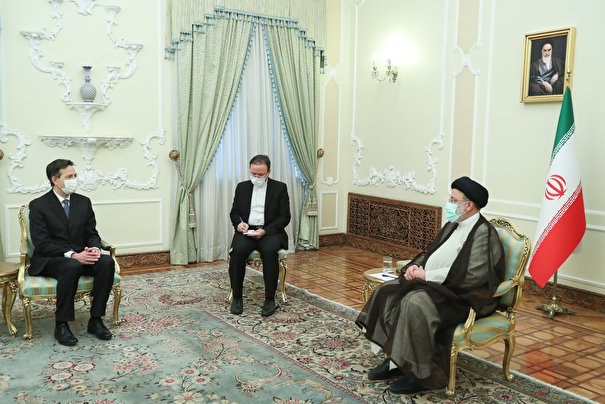
Mora is due to hold talks on Thursday with members of Iran’s nuclear negotiating team four months after talks stalled between Iran and world powers, including the United States, to revive the 2015 deal.

“Through its statements and actions on the ground, the new Iranian administration of President (Ebrahim) Raissi raises doubts about its intention to return to the Joint Comprehensive Plan of Action (JCPoA),” French Foreign Ministry spokeswoman Anne-Claire Legendre told reporters in a daily online briefing.

“While refusing to negotiate, Iran creates facts on the ground that further complicate the return to the JCPoA. It is therefore in a context of crisis and at a critical moment for the future of the nuclear agreement that this trip by…Mora to Tehran takes place,” Legendre noted.

The Islamic Republic has repeatedly said it will return to the negotiations “soon” without giving any sense of what that actually means. Western diplomats have tentatively said a return to the Vienna talks may be possible before the end of October.

Legendre added that Tehran would also need to be clear about its intentions should it come back to the talks.

Since then-U.S. President Donald Trump ditched the deal in 2018 and reimposed sanctions on Iran, Tehran has been rebuilding stockpiles of enriched uranium, refining it to higher levels of fissile purity, and installing advanced centrifuges to speed up production.

President Joe Biden aims to restore the deal but the sides disagree on which steps need to be taken and when.

Key issues include what nuclear limits Tehran will accept, what sanctions Washington will remove, whether there will be any guarantees and the prospect of follow-on talks on Iran’s future nuclear programme, regional and ballistic missile activities, diplomats have stated.

“In line with recent regional and international consultations, I will host @eu_eeas Deputy Secretary General @enriquemora_ on Thursday,” Iranian Deputy Foreign Minister Ali Bagheri Kani, who is expected to lead Iran’s new negotiating team, said in a Twitter post on Wednesday.

“Exchanging views on bilateral & regional issues including Afghanistan, as well as talks on removal of cruel sanctions, are on the agenda,” he added.

In late September, Iranian Foreign Ministry spokesman Saeed Khatibzadeh stated the talks on restoring the nuclear deal to the full extent would begin in Vienna within a few weeks.

President Ebrahim Raeisi has dismissed the idea of holding negotiations over the revival of the country’s nuclear agreement under pressure, saying such tactics has never yielded the US and Europe any result.

“Negotiation and dialog have always been and will continue to be part of the instruments that are in the service of diplomacy. We do not balk at negotiation and dialog,” he stated early September.

“But the Americans and the Westerners are after negotiation in conjunction with pressure,” he added, “This is while negotiations are there to avoid pressure.”

Such pressure tactics have nothing to do with negotiation, the Iranian chief executive said, adding, “I have directed them (the country’s authorities) to include negotiation on the agenda, but not under the shadow of the pressure that they (the West) are pursuing.”

The United States and the Europeans have experienced this in the past too that applying such tactics to negotiation procedures “do not work,” Raeisi noted.

At the same time the country rules out any such notion as “negotiation for the sake of negotiation” the president stressed.

He, therefore, urged that any interaction of the type reward the country with its expected results, namely the removal of Washington’s oppressive sanctions targeting the Iranian nation

China, India ramp up rhetoric in border row

Earlier in the day, Beijing announced that it firmly opposes Indian vice president’s visit to to a disputed area on the China-India border, urging New Delhi to refrain from moves that complicate boundary issues and bring China-India relations back on the right track and steady development.

Foreign Ministry Spokesperson Zhao Lijian made the remarks when asked about Indian Vice President M. Venkaiah Naidu’s visit to the so-called “Arunachal Pradesh”, CGTN reported.

China has never recognized the so-called “Arunachal Pradesh”, the spokesperson noted.

Zhao also called on the Indian side to truly respect China’s major concerns and take concrete actions to maintain peace and stability in the China-India border region.

Later, the Indian foreign ministry announced New Delhi rejects China’s criticism of the Indian vice president’s visit to the disputed Arunachal Pradesh area, and sees the region as an integral part of India.

“We have noted the comments made today by the Chinese official spokesperson. We reject such comments. Arunachal Pradesh is an integral and inalienable part of India. Indian leaders routinely travel to the state of Arunachal Pradesh as they do to any other state of India. Objecting to the visit of Indian leaders to a state of India does not stand to reason and understanding of Indian people,” the spokesperson for the Indian foreign ministry, Arindam Bagchi, said.

Bagchi added that the deteriorated situation on the Line of Actual Control (LAC) was caused exclusively by China’s attempts to unilaterally change the status quo in the area.

“Therefore, we expect the Chinese side to work towards early resolution of the remaining issues along the LAC in Eastern Ladakh while fully abiding by bilateral agreements and protocols rather than trying to link unrelated issues,” Bagchi concluded.

Since May 2020, the region near the Chinese-Indian border has witnessed numerous standoffs. The two neighboring countries have stepped up their military presence in the area.

Iran: Baku has yet to release two Iranian truck drivers

Khatibzadeh added that they will serve the rest of their sentence inside Iran.

The Foreign Ministry spokesman however noted that Iran is pursuing the case of the two drivers and is trying to secure their release.

Earlier, Iran’s Fars News Agency quoted a western news outlet as saying the release happened a day after a phone conversation between Iran’s Foreign Minister Hossein Amir Abdollahian and his Azeri counterpart Jeyhun Bayramov.

Iran blames the tensions on the Israeli regime’s presence in Azerbaijan, saying the issue poses a threat to the Islamic Republic’s national security.

In response to the threat, Iran conducted military drills near the border with the Republic of Azerbaijan. The drills drew criticism from Baku, which denies the presence of the Israeli regime in the Republic of Azerbaijan.

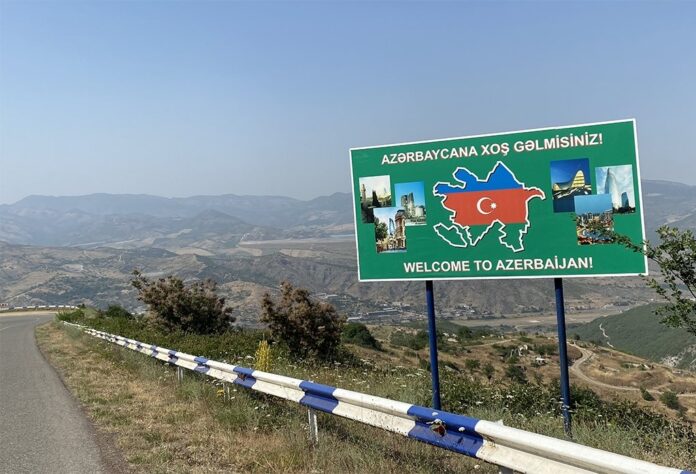
Iran’s trade ties with Armenia also emerged as a flashpoint after Azerbaijan began imposing a road tax on Iranian trucks that use a critical trade corridor to ship goods to the Armenian capital.

That’s the Goris-to-Kapan highway. Azerbaijan detained the two Iranian truck drivers on the highway.