Wednesday, April 22, 2026
Home Blog Page 169

Trump administration approves first Ukraine weapons aid funded by NATO allies: Reuters

The aid will be the first use of the Prioritized Ukraine Requirements List (PURL), a mechanism developed by NATO members and the United States to coordinate and fund Kyiv’s most urgent battlefield needs.

The shipments, valued at up to $500 million each, were cleared by Undersecretary of Defense for Policy Elbridge Colby, according to Reuters. The packages could ship “soon” as Washington is resuming arms deliveries to Ukraine, this time financed by allied governments.

Through PURL, allies pool contributions to buy American weapons, munitions, and equipment from U.S. stockpiles. The initiative could ultimately provide as much as $10 billion worth of weaponry, according to the sources cited by Reuters.

Since taking office in 2025, U.S. President Donald Trump’s administration has sold weapons to Ukraine or shipped deliveries authorized under former U.S. President Joe Biden. The new mechanism marks the first aid packages initiated during Trump’s second term.

“It’s the stuff they’ve been asking for. A lot of stuff,” one source reportedly said.

In August, President Volodymyr Zelensky said that Ukraine aims to secure at least $1 billion a month from its allies to purchase American-made weapons.

The plan also calls for a $50 billion partnership with Ukrainian companies to produce drones and includes at least 10 U.S.-made Patriot air defense systems.

US pressuring other states not to support Tehran’s IAEA resolution: Iran envoy

IAEA

The draft, submitted by Iran and five other nations to the 69th General Conference of the International Atomic Energy Agency (IAEA), calls for a ban on any attack or threat against nuclear sites under the IAEA Safeguards.

Reza Najafi said on Tuesday that the US has no valid argument against the resolution, which is rooted in longstanding international norms, including UN Security Council Resolution 487, which condemned Israel’s 1981 strike on Iraq’s nuclear reactor.

He added the resolution’s principles align with the UN Charter, the IAEA Statute, and the Non-Proliferation Treaty (NPT), and have previously been endorsed at NPT review conferences.

Najafi also noted that IAEA Director General Rafael Grossi, though inadequately, affirmed that no attack should occur under any circumstances.

He warned that attacks on facilities containing nuclear material could have devastating environmental and public health consequences.

The resolution comes in the wake of the US-Israeli aggression against Iran in June, which targeted the country’s nuclear facilities.

Iran says the attacks on its safeguarded nuclear facilities have endangered personnel, nuclear material security, the environment, and the credibility of the non-proliferation regime.

Iran has sought international support for the resolution, with its ambassadors meeting foreign ministries in various capitals, and similar consultations taking place in Tehran.

Despite broad agreement on the resolution’s principles, Najafi said political pressure has led some countries to withhold support. So far, only five nations, in addition to Iran, have endorsed the draft.

The Iranian envoy added that it remains unclear how far the US pressure will influence the final vote, which is scheduled for September 18.

He said reason dictates support for the resolution, though reason does not always prevail in international politics.

Najafi cited two years of Israeli crimes against the Palestinians, particularly women and children, that have gone unaddressed by the international community.

He criticized the post-WWII international system for concentrating power in the hands of a few states, citing the US veto in the Security Council as a barrier to even basic ceasefire resolutions.

Iran, along with Belarus, China, Russia, Venezuela, and Nicaragua, has submitted the draft resolution to the IAEA General Conference.

It stresses the need to prohibit any attack or threat against peaceful nuclear facilities under the IAEA Safeguards, considering such actions a serious violation of international law and a threat to global peace and security.

The 69th IAEA General Conference opened on Monday and will run until September 19.

Russia warns oil producers of possible output cuts after Ukrainian drone attacks: Reuters

The warning comes as Ukraine intensifies strikes on Russian energy infrastructure in an effort to undermine the Kremlin’s war effort and revenues.

Ukrainian forces have targeted at least 10 refineries since last year, reducing Russia’s refining capacity by almost a fifth at one point, according to Reuters.

Transneft, which handles more than 80% of Russia’s crude output, has restricted firms’ ability to store oil in its pipelines and warned it may have to accept less oil if infrastructure sustains further damage, Reuters reported.

President Volodymyr Zelensky has described drone strikes on Russian energy assets as “the sanctions that work the fastest.” Kyiv maintains that oil facilities are legitimate military targets, as they finance and fuel Moscow’s war against Ukraine.

Russia’s oil and gas sector has long been its most important source of state revenue, providing between a third and half of the federal budget. The country has managed to redirect much of its crude to Asian buyers despite Western sanctions, but recurring drone strikes have forced suspensions, disrupted exports, and deepened domestic fuel shortages.

In the past week, Ukrainian drones struck Russia’s largest oil-loading port of Primorsk, temporarily halting operations, and hit the Kirishi refinery in Leningrad Oblast, one of the country’s biggest, with an annual processing capacity of 60 million tons.

The Kirishi site had previously been targeted in March, Ukraine’s military intelligence announced.

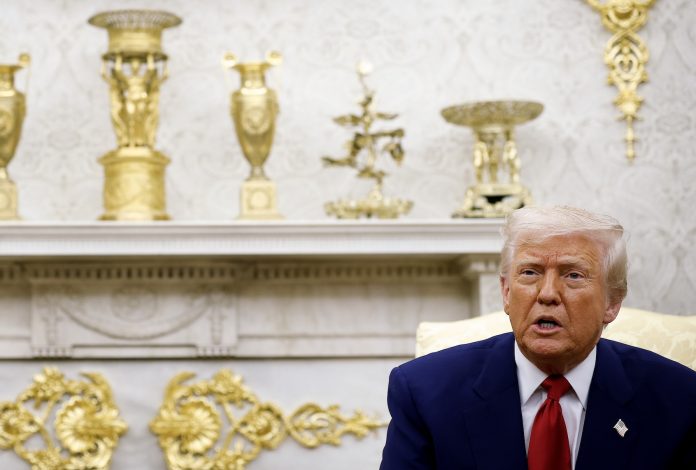
Zelensky will have to make a deal with Putin: Trump

WASHINGTON, DC - APRIL 07: U.S. President Donald Trump, accompanied by Israeli Prime Minister Benjamin Netanyahu, speaks during a meeting in the Oval Office of the White House on April 7, 2025 in Washington, DC. President Trump is meeting with Netanyahu to discuss ongoing efforts to release Israeli hostages from Gaza and newly imposed U.S. tariffs. (Photo by Kevin Dietsch/Getty Images)

Trump, who has been pushing for direct talks between Zelensky and Russian President Vladimir Putin to bring an end to the hostilities, previously claimed that he would need to “intervene” personally to bring them together.

Speaking to reporters on Tuesday as he was departing for London, Trump repeated several times that “Zelensky’s gonna have to make a deal.”

Putin has said he is ready in principle to meet Zelensky and suggested the Ukrainian leader could travel to Moscow for talks. Kiev has rejected the idea, saying it would not accept “deliberately unacceptable proposals.”

At the same time, the Russian president has questioned Zelensky’s legitimacy and also expressed doubt about whether talks with him would be “meaningful.” Zelensky’s presidential term expired in May 2024, but he has refused to hold elections, citing martial law.

Moscow has insisted on a peace agreement that addresses the underlying causes of the conflict. It has demanded that Ukraine maintain neutrality, stay out of NATO and other military blocs, demilitarize and denazify, and accept the current territorial reality – including the status of Crimea and the other regions that voted to join Russia in referendums in 2014 and 2022.


Iran: Any hostile action against Tehran to End understanding with IAEA

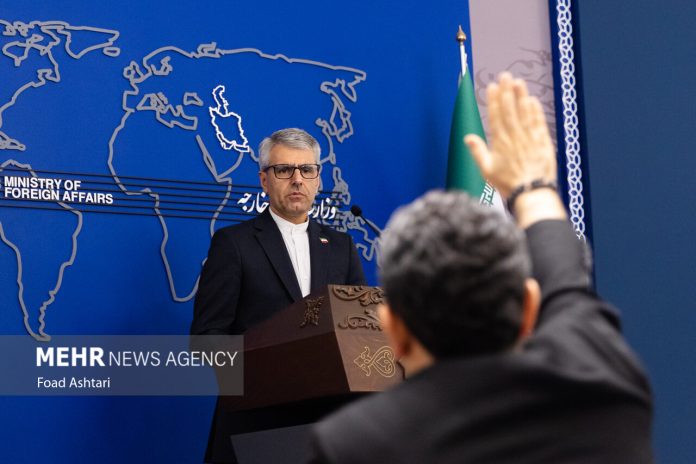
Esmail Baghaei

Esmail Baqaei, commenting on the Iran–IAEA understanding, said: “The IAEA has its own narratives regarding how Iran should implement its safeguards commitments under the new circumstances, but Iran insists that the Agency must only perform its technical duties, and no country can oblige Tehran to adhere to an understanding whose very basis has changed.”

Regarding the ongoing IAEA General Conference in Vienna, the Iranian Foreign Ministry spokesperson stated: “The draft resolution proposed by Iran at the IAEA General Conference is based on well-established rules of international law, including IAEA Resolution 533, and its purpose is not to create a new rule.”

Referring to US threats to oppose the adoption of this resolution, he added that these threats are a continuation of the recent US policy of either threatening or withdrawing from various international organizations such as the International Criminal Court, the World Health Organization, and UNESCO over the past months.

Baqaei emphasized that such actions are an example of unprecedented threats against multilateralism and the rules that have formed the basis of international relations among states for the past 80 years, adding Iran expects all countries to stand up against the violation of these rules.

Regarding the European reaction to the Iran–IAEA agreement, Baqaei said: “Iran has always shown that it does not turn away from diplomacy, and now it is time for the other parties to adopt a positive and reciprocal approach.”


Families of American citizens killed by Israel say Trump administration refuses to investigate

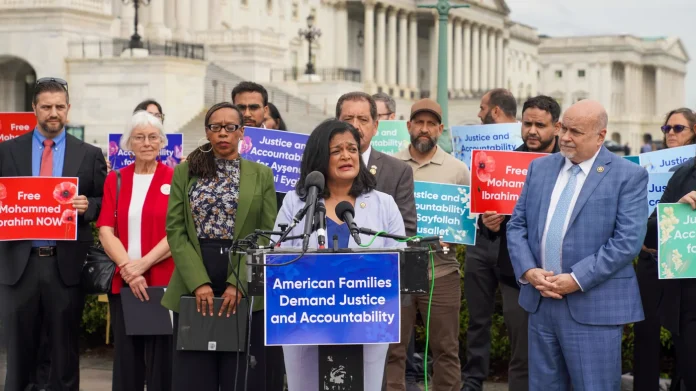
“My colleague and I pushed over and over again for accountability with absolutely no forward movement, no transparency, no insistence that the US protect, at the very minimum, its own citizens against Israeli government forces that have now killed eight US citizens and countless others with impunity,” Jayapal said.

Jayapal was speaking at a press conference alongside the families of Rachel Corrie, Sayfollah “Saif” Musallet, Tawfic Abdel Jabbar, Aysenur Ezgi Aygi and Mohammed Ibrahim, all US citizens who were killed either by Israeli forces or settlers.

Eight US citizens have been killed, primarily in the last three years, and it is the first time that the families have joined forces to demand a US-led investigation and accountability into their deaths.

The US government has so far failed to investigate the deaths of those killed, and there have been no prosecutions of the Israelis behind the killings or justice for the families left behind.

Jayapal stated that she had recently spoken to the US ambassador to Israel, Mike Huckabee, and he promised to demand answers and accountability, but has failed to do this so far.

“The American people and these families deserve answers, and the US government has to use our leverage to ensure that the Israeli government cannot kill our citizens and cannot continue to commit genocide of Palestinians,” Jayapal added, referring to the genocide in Gaza that has killed nearly 65,000 Palestinians so far.

Jayapal noted the US had leverage as the most prominent backer of military aid to Israel and needed to demand that Israel’s government “comply with international law”.

Representatives Jesus “Chuy” Garcia, Rashida Tlaib, Mark Pocan, Summer Lee, Lateefah Simon and Delia Ramirez were also at the press conference and have been pushing for accountability.


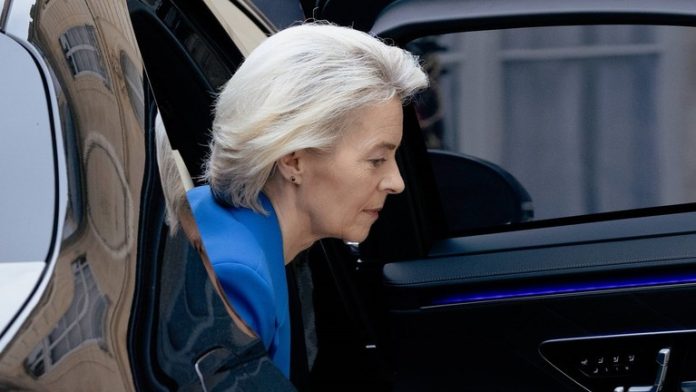
European Commission President facing two no-confidence motions over trade deals, Gaza war: Politico

The motions of censure are scheduled to be debated during the plenary session from October 6 to 9. The motions submitted against von der Leyen, a divisive figure in Brussels, come from both right and left – the Patriots for Europe and The Left parliamentary groups.

The Patriots for Europe have accused her of lacking transparency and accountability, particularly in relation to the EU’s trade agreements with the United States and the South American trade bloc Mercosur. “The EU is weaker today than ever due to the persistent failure of the president of the Commission to cope with the most pressing challenges,” the group stated in its motion, as quoted by Politico.

The Left has also criticized von der Leyen’s trade policies but placed greater emphasis on the EU’s handling of the conflict between Israel and Hamas in Gaza. The group argued that the Commission has shown inaction and failed to hold Tel Aviv accountable.

Both motions were filed at midnight on September 10, which was the earliest opportunity following a previous no-confidence vote in July. Von der Leyen survived that vote, which was initiated by Romanian right-wing MEP Gheorghe Piperea and focused on the so-called Pfizergate scandal. The controversy stemmed from the disappearance of text messages between von der Leyen and Pfizer’s CEO during negotiations for a major Covid-19 vaccine procurement.

Von der Leyen, a former doctor and German defense minister, was accused of a lack of transparency in negotiating the multi-billion-euro deal. She dismissed the allegations against her as “simply a lie” and branded her critics “conspiracy theorists.”

The initiative ultimately failed, supported only by 175 MEPs with 360 voting against it. To pass, two-thirds of the 720 MEPs must vote in favor. No-confidence motions used to be quite rare at the EU Parliament. Prior to the July vote, such a motion was last tabled against Jean-Claude Juncker in 2014.

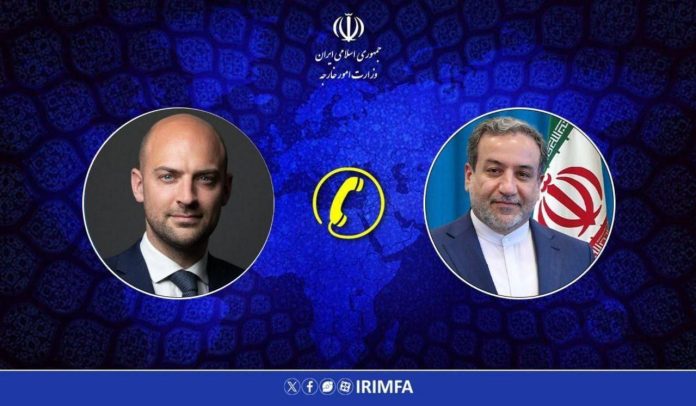
Iran FM: E3 move to activate snapback lacks political, legal legitimacy

Araqchi also reiterated the purely peaceful nature of the Islamic Republic of Iran’s nuclear program.

Referring to the recent agreement between Iran and the International Atomic Energy Agency (IAEA), he stated that the Islamic Republic of Iran has always considered diplomacy the only solution to international issues, including its nuclear program, and is ready to engage in any fair and balanced solution that ensures mutual interests.

During the talks, French Foreign Minister Jean-Noël Barrot also expressed concern over the growing tensions and emphasized the importance of maintaining dialogue and the need to return to a diplomatic path.

Both sides also discussed the state of bilateral relations, including consular matters, and stressed the need to continue direct contacts and consultations.

Top aid groups urge world leaders to stop Israel’s genocide in Gaza

With an estimated 65,000 Palestinians killed in Israeli attacks so far in Gaza, including more than 20,000 children, the agencies warned early on Wednesday that almost 1 million more people are now “on the precipice of an even deadlier period in Gaza’s story if action is not taken”.

“The inhumanity of the situation in Gaza is unconscionable,” the groups said in a joint statement, warning that Israel’s latest efforts to forcibly displace Gaza City’s population through a ground occupation are aimed at making the enclave’s largest urban area “deliberately… uninhabitable”.

“As humanitarian leaders, we have borne direct witness to the horrifying deaths and suffering of the people of Gaza. Our warnings have gone unheeded and thousands more lives are still at stake,” the agencies added.

“More than half a million people are starving. Famine has been declared and is spreading. The cumulative impact of hunger and physical deprivation means people are dying every day.”

Despite the well-documented horrors that have unfolded for almost two years under Israel’s siege of the Palestinian territory and enforced starvation of the enclave’s civilian population as they try to survive under military fire, “world leaders fail to act”.

“States must use every available political, economic, and legal tool at their disposal to intervene. Rhetoric and half measures are not enough. This moment demands decisive action,” the aid groups said.

“History will undoubtedly judge this moment as a test of humanity,” they stated, adding that UN members must take action, or their “complicity” will set a “dangerous precedent for the future”.

Christopher Lockyear, a signatory to the joint statement and the secretary-general of Doctors Without Borders, known by its French acronym MSF, said on Monday that Israel’s military onslaught in Gaza amounts to “the systematic destruction of a people”.

MSF is clear, Lockyear said: “Israel is committing genocide against Palestinians in Gaza and doing so with absolute impunity.”

“The Israeli military has attacked everything and everyone in Gaza,” he added.

Signatories to the statement also include Islamic Relief Worldwide, ActionAid International, CARE International, Handicap International, Save the Children International, the Norwegian Refugee Council and Médecins du Monde.

On Tuesday, Navi Pillay, the chairwoman of the UN’s Independent International Commission of Inquiry on the Occupied Palestinian Territory, said the world body had determined that Israel was carrying out genocide in Gaza.

Among those most responsible, based on their own statements, for the genocide were Israeli Prime Minister Benjamin Netanyahu, former Minister of Defence Yoav Gallant and President Isaac Herzog, Pillay added.

The UN Commission, in its report, “concludes that the Israeli authorities and Israeli security forces have the genocidal intent to destroy, in whole or in part, the Palestinians in the Gaza Strip”.

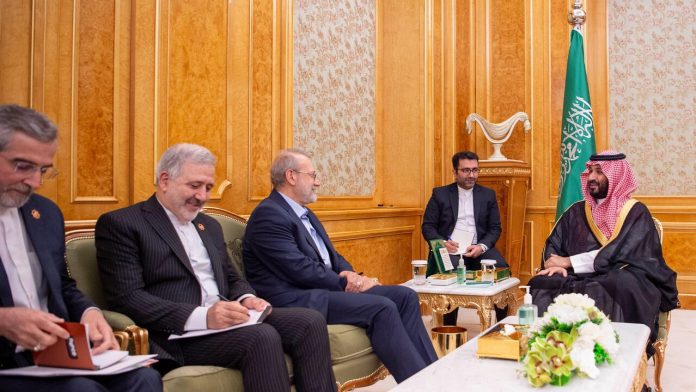
Iran’s security chief meets MbS in Riyadh

The meeting took place at Al-Yamamah Palace in Riyadh on Tuesday. It marks a new phase in the Tehran–Riyadh diplomatic engagement.

Larijani traveled to Saudi Arabia at the invitation of the kingdom’s defense minister, leading a delegation that included Deputy Secretary for International Affairs Ali Bagheri Kani and Persian Gulf Affairs Advisor Mohammad Ali Bek.

The visit follows a series of high-level exchanges between the two countries, including the Saudi defense minister’s trip to Tehran earlier this year.

The meeting comes just one day after President Masoud Pezeshkian met with bin Salman on the sidelines of the emergency Arab-Islamic summit in Doha, where both sides expressed satisfaction with the growing momentum in bilateral ties in the wake of the China-brokered detente in 2023.

Larijani’s visit to Riyadh is his third regional trip since assuming office on August 5, following earlier stops in Iraq and Lebanon.

Iranian officials say the renewed diplomatic outreach reflects efforts to stabilize regional dynamics and expand cooperation with neighboring states.