Friday, January 16, 2026
Home Blog Page 1161

Israeli PM says impossible to bring all hostages back in tense meeting

Israel Hostages

According to Haaretz, Netanyahu added: “Can anyone imagine that if there was such a possibility, someone would have refused?”

The Times of Israel reported that several freed hostages attended the meeting with Netanyahu and that the meeting was “markedly tense and hostile and that some families have left early”.

Those who were present at the gathering in Herzliya told media outlets afterward that voices were raised and that Netanyahu did not engage directly with any of their demands, largely reading remarks off of a piece of paper, angering those present. In recordings, some attendees could be heard screaming at the prime minister to resign.

In leaked excerpts from the meeting, Netanyahu could be heard telling the families “there is no possibility right now to bring everyone home. Can anyone really imagine that if that was an option, anyone would refuse it?” — a statement met with outrage from many. Some even stated they got up and left the meeting midway through.

The Kan public broadcaster reported that Netanyahu also told those gathered: “Hamas has demands that even you would not accept.”

In a recording published by Kan, Netanyahu can be heard saying “the one who stopped the [hostage release] deal was the other side, not us!” as some in the audience accuse him of lying. He responds: “What I’m saying are clear facts. I’m telling you things; I respect you too much. I have heard you, the stirring of your hearts.”

Under a weeklong truce deal that expired on Friday, 105 civilians were released from Hamas captivity in Gaza: 81 Israelis, 23 Thai nationals and one Filipino. Earlier, four hostages were released and one was rescued, and at least three bodies have been recovered. It is believed that 138 hostages remain in Gaza, including around 20 women.

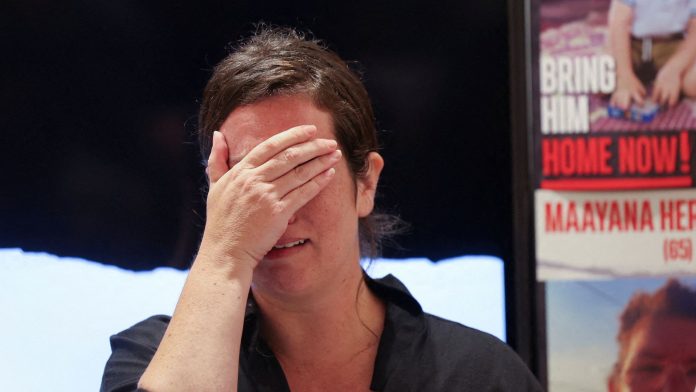
Reuven Yablonka, the father of hostage Hanan Yablonka told Maariv that “there was chaos and yelling. They shouted that they want all the hostages to come home. The female [freed] captives talked about unpleasant things that happened to them, one of them was completely exhausted”.

In an excerpt broadcast on Channel 12, the mother of a hostage shouted at Defense Minister Yoav Gallant: “I’m not prepared to sacrifice my son for your career or for those of any of the notables here. Really not. My son did not volunteer to die for the homeland. He was a civilian abducted from his home and his bed… Promise me that you’ll get back my son and all the other hostages, alive.”

In response, Gallant promised to make “every effort” to do so.

Simcha Goldin, the father of Hadar Goldin, a fallen IDF soldier whose body has been held by Hamas since 2014, was said to have shouted at the ministers: “How many more Hadar Goldins and Ron Arads will there be?!” — a reference to his son and to another IDF soldier who has been considered MIA since 1986 in Lebanon.

Aviva Siegel, who was freed from Hamas captivity last week and whose husband Keith, a US citizen, is still a hostage, added during the meeting that “airstrikes exploded above us and the Hamas operatives just kept sleeping. Your airstrikes don’t bother them”.

Reports also quoted her as saying that women hostages are “being touched”.

Channel 12 quoted Siegel telling Netanyahu that her husband Keith “is not well, they broke his ribs and he can barely sit or eat. I didn’t sleep, I didn’t eat there because I couldn’t. We kept moving from place to place. I thought I would be blown up every second”.

Quotes attributed to unnamed hostages provided by the umbrella family group include that “they dressed us in hijabs and head coverings so that Israel wouldn’t distinguish us from them”. Another was said to tell the ministers: “I was dehydrated for 51 days, they didn’t give us water, they are inhumane.”

According to Ynet, the freed hostages who attended the meeting also included Raz Ben Ami, whose husband Ohad is still held captive; Sharon Cunio, whose husband David and other family members are also still hostages; Yarden Roman-Gat, whose sister-in-law Carmel Gat is held in Gaza; and Irena Tati and her daughter Yelena Trufanov, whose son Sasha is still a hostage.

In a recording aired by Channel 12, Trufanov told the ministers that “I was there, I know how hard it is — it’s hard in captivity every day… you don’t know”, describing airstrikes around where they were being held.

“You have no idea what you’re doing there… and I know the conditions they’re holding the men in are worse, worse than for the women.”

Ronen Tzur, the director of the Hostages and Missing Families Forum, stated after the gathering that “this was an unusual meeting. Members of the cabinet heard for the first time from freed female hostages describing the difficult things that are going on in the tunnels, including sexual abuse, and the fact that the airstrikes are happening very close to where the captives are being held.”

Cunio told the war cabinet ministers, in quotes provided by Channel 12, that she felt “that you have no idea what’s even going on there at all. You claim that you have intelligence but the fact is we were bombed. My husband was separated from me three days before I was freed. My daughters keep asking me ‘Where’s Dad?’ and I have to tell them that the bad people don’t want to release him.”

“You are putting politics above returning the hostages,” Cunio was quoted as saying, noting that she watched hostages die next to her. “You think the men are strong? It’s too hard for them. Bring them all home… don’t wait another month or another year.”

In a partial recording aired by Channel 12 meeting, a family member can be heard asking Netanyahu why he is not wearing the dog-tag necklaces the forum has been selling, which call for the release of all the hostages. The prime minister replies, “It’s next to my bed” and someone yells out, “No, around your neck!”

Sharon Sharabi, whose brothers Eli and Yossi are both still held hostage in Gaza, was quoted by Channel 13 news after leaving the meeting as saying “the prime minister and the cabinet understand that they can’t stay another moment there. The situation for the hostages is only getting worse.”

According to Army Radio, Sharabi added ministers promised the family members “that all of their decisions moving forward will be made with the consideration that the hostages are in immediate life-threatening danger.”

Danny Miran, the father of hostage Omri Miran, told Maariv that the entire meeting was chaotic.

The meeting was a model of how the country is run. We were invited for 3 p.m.; they showed up only at 3:45 p.m. They let us get mad and fight amongst ourselves — I left in the middle, it’s not acceptable.”

Tuesday’s meeting came after the family members of the hostages demanded on Monday that they be granted an audience with the war cabinet, saying they had been asking to meet for several days.

Netanyahu denied the accusations that the cabinet is ignoring the hostages’ families, and stated a meeting with them had already been set for later in the week, but that he would move it up to Tuesday.

The prime minister first met with the families of hostages on October 15 amid harsh criticism by relatives at the time that the government had forsaken those being held in Gaza. Gallant has held weekly meetings with the families.

Flooding Gaza tunnels with seawater ‘a good idea’: Israel

Hamas

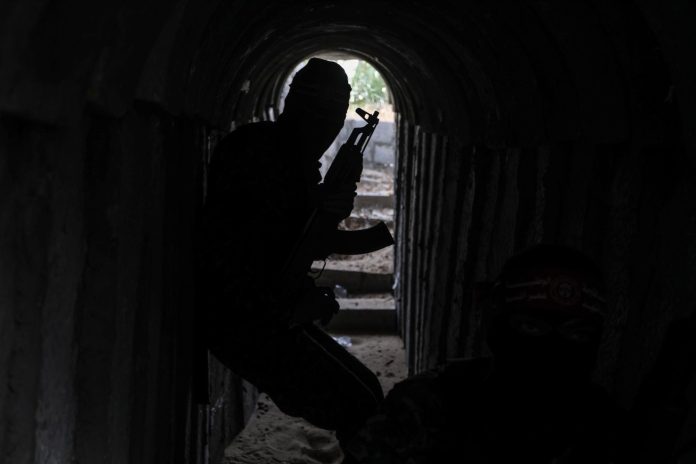
“We are seeing a lot of underground infrastructure in Gaza, we knew there would be a lot. Part of the goal is to destroy this infrastructure,” Halevi said Tuesday in response to a question regarding a report in The Wall Street Journal.

“We have various ways [to deal with the tunnels], I won’t talk about specifics, but they include explosives to destroy, and other means to prevent Hamas operatives from using the tunnels to harm our soldiers,” he stated.

“Therefore, any means which give us an advantage over the enemy that [uses the tunnels], deprives it of this asset, is a means that we are evaluating using. This is a good idea, but I won’t comment on its specifics,” Halevi added.

Israel is considering using seawater to flood the extensive network of tunnels under Gaza, used by Hamas fighters to smuggle goods in and out of the Palestinian enclave, the Wall Street Journal reported on Monday, citing sources.

According to US officials interviewed by the paper, the Israeli military assembled an extensive flooding system not far from Al-Shati refugee camp in northwest Gaza in mid-November. The unit reportedly consists of five pumps capable of drawing thousands of cubic meters of water per hour from the Mediterranean Sea, potentially allowing Israel to flood the underground maze within a few weeks.

The Israeli government informed the US, its key ally, of the initiative last month, sparking debate about whether the plan was feasible, as well as its pros and cons, WSJ sources stated. They noted that no final decision on its execution has yet been made and that it is unclear how ready Israel is to implement it.

The plan, the daily added, could drive Hamas fighters out of the sprawling system of tunnels, which span hundreds of kilometers, with some passages reaching into Egypt.

The network also provides Hamas and other local groups with formidable cover from missile strikes and allows them to evade Israel’s blockade. Some tunnels are tall enough for an average man to stand up in, are built from reinforced concrete, and boast a network of communication lines.

However, some US officials are said to have serious doubts about the plan.

“We are not sure how successful pumping will be, since nobody knows the details of the tunnels and the ground around them,” one source stated.

The current hostilities between Israel and Hamas were sparked in early October and have resulted in thousands of dead on both sides, while Hamas took more than two hundred hostages, many of whom have since been released.

Russia says still ready for talks with Ukraine

Kremlin

Russia launched its military operation in Ukraine in February 2022 to protect the Russian-speaking population of the two Donbass republics. The former Ukrainian territories declared independence from Kiev in the wake of the 2014 Maidan coup, leading to years of conflict.

Moscow has repeatedly stated that it is ready to talk with Kiev as long as the situation on the ground is considered. In autumn 2022, the two republics, alongside two other Ukrainian territories, officially joined Russia following a series of referendums.

Kiev has ruled out any negotiations with Moscow on multiple occasions. Ukrainian President Volodymyr Zelensky signed a decree last autumn banning any talks with the current Kremlin leadership. He also put forward his own peace plan, demanding that all Russian troops withdraw from all the territories within Ukraine’s 1991 borders before any talks could commence. Moscow rejected the idea, calling it detached from reality.

“President [Vladimir Putin] has repeatedly stated that achieving our goals [in the conflict with Kiev] is our top priority. And we would prefer to do that through political and diplomatic means,” Peskov
told the news media outlet RTVI on Tuesday, commenting on potential talks with Ukraine.

“We are still ready for negotiations,” he added.

The Kremlin spokesman then said that Kiev itself had derailed the talks with Moscow that were held in spring 2022. “They [the Ukrainian officials] have themselves admitted that it was done on the orders of the UK… The situation is pretty obvious,” he told RTVI.

Peskov was referring to an earlier interview that Ukraine’s highest-ranking legislator, David Arakhamia, gave to the Ukrainian TV channel 1+1. The politician, who heads Zelensky’s Servant of the People party in parliament and led the Ukrainian delegation at the Istanbul talks, admitted that the conflict could have ended in spring 2022.

Moscow had essentially offered Ukraine peace in exchange for neutrality and a promise not to join NATO, he said in late November. He also revealed that then-British Prime Minister Boris Johnson, who visited Kiev in early April, told Ukrainian officials not to “sign anything” with the Russians and to “just continue fighting” instead.

Iran FM: U.S. cannot decide about post-war Gaza

Hossein Amirabdollahian

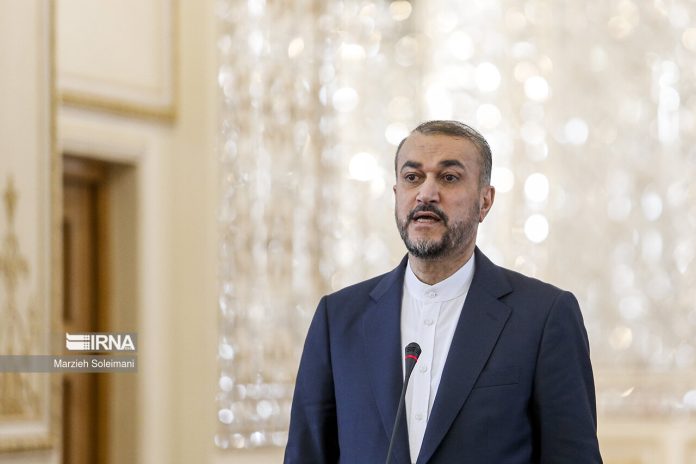
“The U.S. cannot decide for Palestinian people about Gaza in the post-war era,” Hossein Amirabdollahian told reporters in Moscow on Tuesday evening.

He touched upon a mission assigned to the U.S. national security advisor for Middle East and South Africa to float a plan on post-war Gaza, adding the Americans should abandon this strategic mistake.

“Leave Palestine to Palestinians and do not leave behind another regional failure for the United States in the run-up to the [U.S.] presidential election,” said the top Iranian diplomat addressing U.S. officials.

“Based on the information received from resistance leaders in the region, we can say that the resistance front is highly capable of enduring under the current situation and can continue its day and night attacks in response to Israeli crimes,” Amirabdollahian added.

“War will bear no fruit for the United States and Zionists,” he said.

More than 16,000 Palestinians, 10,000 of them women and children, have been killed since Israel launched its carnage against Gaza in early October.

Major Iranian petchem company, 2 local knowledge-based firms sign contracts worth $20mn

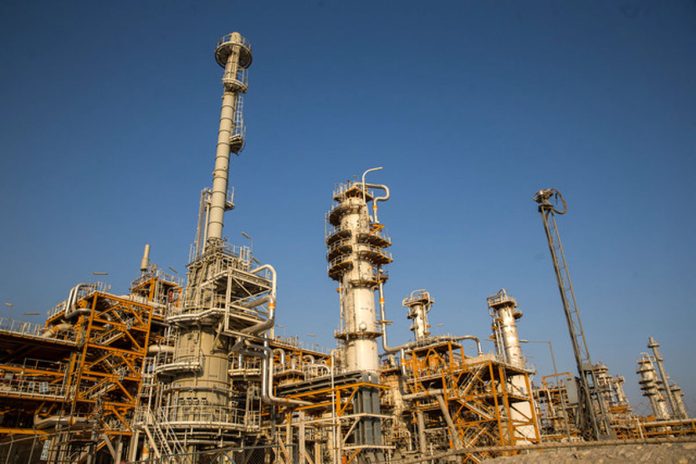
petrochemical factory in the southern Iranian port city of Mahshahr

“The Bandar Imam Petrochemical Company works with knowledge-based companies in various fields, namely catalysts, equipment, machinery and raw materials, and has signed two major contracts worth more than $20 million with Iranian knowledge-based firms in the field of catalyst production in the past three months,” said Sepahdar Ansar, the company’s CEO.

He added one of the company’s subsidiaries is turning into a knowledge-based company, adding, “This company has long-term plans for cooperation with knowledge-based firms.”

“One of our programs is to introduce one of our subsidiaries as a knowledge-based company to operate as the superintendent of the knowledge and petrochemical technology domain,” he added.

Bandaramam Petrochemical Company operates in the production of various chemicals, Aromatics, Polymers and LPG. This company is the largest producer of three chains of Olefins, Aromatics and Chloro Alakali in Iran.

WFP warns Israeli war on Gaza to intensify ‘catastrophic hunger crisis’

Gaza War

The WFP said in a statement late on Tuesday that the international organization managed to scale up its distribution network and reach around 250,500 people in Gaza during the seven-day truce last week but the resumption of the Israeli war had made food assistance to Palestinians in the strip “almost impossible.”

“The renewed fighting makes the distribution of aid almost impossible and endangers the lives of humanitarian workers,” the statement added.

“Above all, it is a disaster for the civilian population of Gaza, more than 2 million people, whose only lifeline is food assistance.”

It stressed that humanitarian workers require “safe, unimpeded and sustained access” to the Gaza Strip in order to deliver life-saving aid, adding, “Only a lasting peace can end the suffering and avert the looming humanitarian catastrophe in Gaza.”

The international organization noted, “WFP calls for a humanitarian ceasefire and urges all leaders to work with the utmost urgency to find political solutions that can end the suffering of families on all sides of this harrowing conflict.”

The Israeli regime has pressed ahead with its deadly attacks across the besieged Gaza Strip, vowing to eradicate Hamas after the Palestinian resistance movement carried out Operation Al-Aqsa Storm on October 7 into the occupied territories in retaliation for Israel’s intensified atrocities against the Palestinian people.

Since the start of its genocide in Gaza, the Tel Aviv regime has claimed the lives of more than 16,000 Palestinians, including women and children, and razed to the ground vast swathes of residential areas in the coastal silver.

Israel has also imposed a “complete siege” on Gazans, cutting off their fuel, electricity, food and water.

Persian Gulf leaders, Tukey president call for end to Israel’s war on Gaza

Gaza War
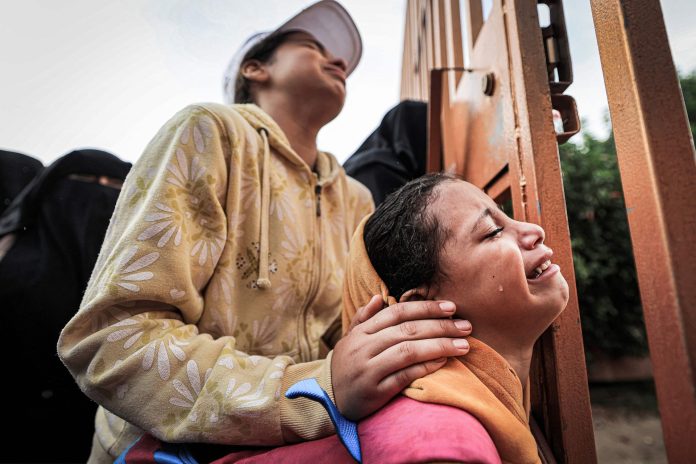
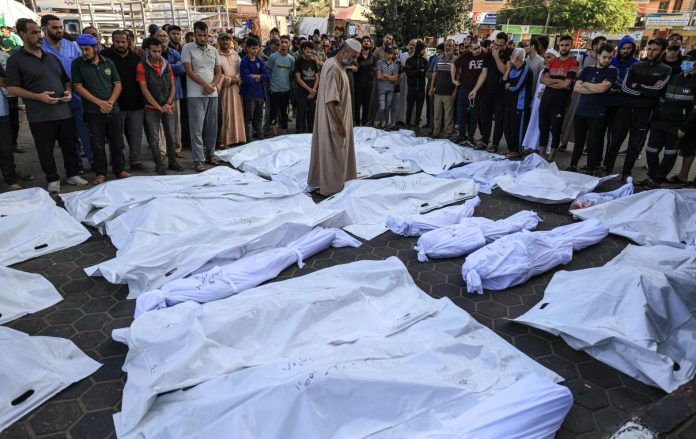
People mourn as they stand behind a metal fence before the burial of victims killed in an Israeli bombardment in Khan Younis, Gaza.

They also warned that the Israeli regime’s war on the Gaza Strip will have “dire consequences” for the entire region and the international community as well.

The leaders of the six nations of the PGCC —Saudi Arabia, Qatar, Oman, UAE, Bahrain, and Kuwait — and President Erdogan stated at the end of the 44th session of the Council in the Qatari capital Doha, on Tuesday.

They condemned Israel’s relentless bombardment of the Gaza Strip and called for the implementation of a permanent ceasefire in the Palestinian territory, where Israeli forces have killed more than 16,000 people, 70 percent of whom were women and children, since October 7.

The leaders also warned that Israel’s war on Gaza would lead to “dire consequences for the peoples of the region and international peace and security”.

In the statement, the leaders also called on the international community to intervene to establish a permanent ceasefire.

They also agreed to help rebuild “what the Israeli war machine destroyed in its attacks on the Strip during the past years.”

Qatar’s ruling emir and Saudi Crown Prince Mohammed bin Salman also condemned Israel’s war crimes and called for a ceasefire, in separate remarks at the summit.

Russian oil price cap has ‘largely failed’: Report

Russia Oil

The mechanism was agreed last year and bans Western firms from providing insurance and other services to shipments of Russian crude unless the cargo is purchased at or below the $60-per-barrel price cap. Similar restrictions were introduced in February for exports of Russian petroleum products. The measures were intended to substantially reduce Moscow’s energy revenues.

According to new analysis from the Center for Research on Energy and Clean Air (CREA), shared with Politico, over the last year the scheme has cost the Kremlin €34 billion ($37 billion) in export revenues, the equivalent of around two months’ earnings this year. However, that amount is “far less than those who designed the rules had hoped,” the report said, adding that the impact had been felt most intensely in the first half of 2023 before starting to fade.

Russian oil now consistently sells for more than the $60-a-barrel limit, Politico wrote.

“The impact of the price cap has been limited due to inadequate monitoring and enforcement,” Isaac Levi, who leads CREA’s work on Europe and Russia, was quoted as saying. He added that Western nations have failed to crack down on sanctions loopholes.

According to the report, the shortfall is partly due to traders simply ignoring the price ceiling, with Russian oil selling for roughly $70 a barrel.

CREA researchers found that around 48% of Russian oil cargoes were carried on tankers owned or insured in G7 and EU countries. In theory, the price cap should apply to these vessels, the report said, adding that in practice few operators have been targeted.

The researchers further stated that a “refining loophole” has undermined Western efforts to limit Russian exports, as countries such as India have ramped up energy purchases from Moscow.

EU countries are currently negotiating new ways to tighten enforcement of the cap as part of their 12th package of sanctions against Russia, according to a draft seen by Politico. Restrictions could reportedly include new obligations for traders and ship charterers to provide data on deliveries.

Iran FM calls for prosecution of Israeli leaders for “war crimes” in Gaza, West Bank

Hossein Amirabdollahian

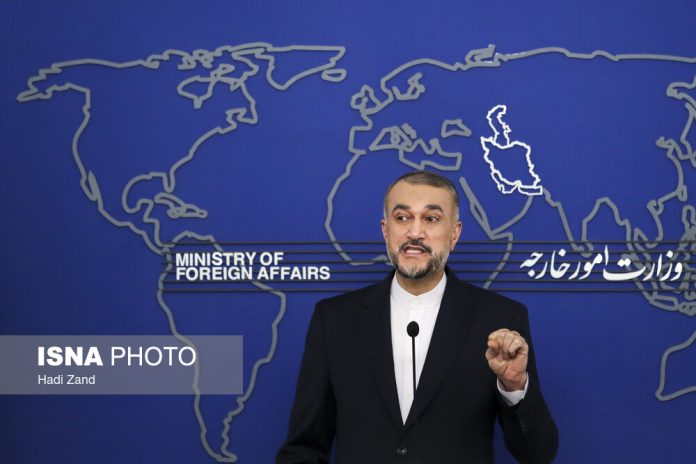
Hossein Amirabdollahin, in a speech at the annual meeting of the foreign ministers of the Caspian Sea littoral states in Moscow on Tuesday, said, “The war criminals within the Israeli regime must face trial and subsequent punishment in an international court.”

Amirabollahian added, “The Islamic Republic of Iran, in adherence to customary practices, international law, and United Nations resolutions, acknowledges the legitimate right of the Palestinian people to resist occupation.”

Reaffirming that Iran recognizes Hamas as a Palestinian liberation organization, the top Iranian diplomat added, “Iran underscores the imperative of exercising the right to self-determination and establishing a Palestinian state with the holy Quds as its capital and the return of the displaced Palestinians.”

He also called for ceasing the export of goods and energy to Israel saying a boycott of Israeli-made products is the minimum action to display solidarity with the people of Gaza and the West Bank.

Amirabdollahiam said, coordinated and effective measures must be taken to activate all available pressure mechanisms, aiming to promptly halt the assaults by the Israeli army on Gaza, facilitate the immediate delivery of humanitarian aid to this region, lift the blockade of Gaza, and stand against any perilous policies enforcing the displacement of the people.

More than 16,000 Palestinians, including 10,000 women and children, have been killed in the Israeli military campaign in Gaza since October 7.

In other comments, the Iranian foreign minister underscored the need for a unified stance among the Caspian Sea littoral states to tackle the regional challenges.

Referring to the convention on the legal status of the Caspian Sea, Amirabdollahian said the compilation and implementation of several cooperation documents involving all five nations in the Caspian Sea hinge upon reaching an agreement on demarcation lines.

He also urged the Caspian Sea states to promptly tackle challenges and threats facing the sea, particularly the decreasing water level of the Caspian.

Dangerous false narrative’: UNICEF dismisses claims of ‘safe zones’ in Gaza Strip

Gaza War

Speaking to BBC, James Elder, who is currently in Gaza, said the areas Israel has asked Palestinians to evacuate to are “patches of barren land” that have “no water, no facilities, no shelter from the cold, no sanitation”.

Elder also added that Israeli-made maps with QR codes purportedly showing these “safe areas” won’t be accessible to many people due to internet and power outages.

“If you are going to forcibly evacuate people you cannot send hundreds of thousands of people to places where there is no water and no toilets. I genuinely mean no toilets. Every corner I had turned to, there were another 5,000 people who would appear overnight. They don’t have a single toilet, they don’t have a drop of water,” Elder told BBC.

“The only safety in Gaza now is for hell to stop raining down from the sky,” he continued.

At least 15,900 people have died in Gaza since October 7, Palestinian health officials have confirmed, adding that more than 6,000 of these are children and that hundreds of medical personnel have also died as a result of Israeli artillery, airstrikes or ground offensives.